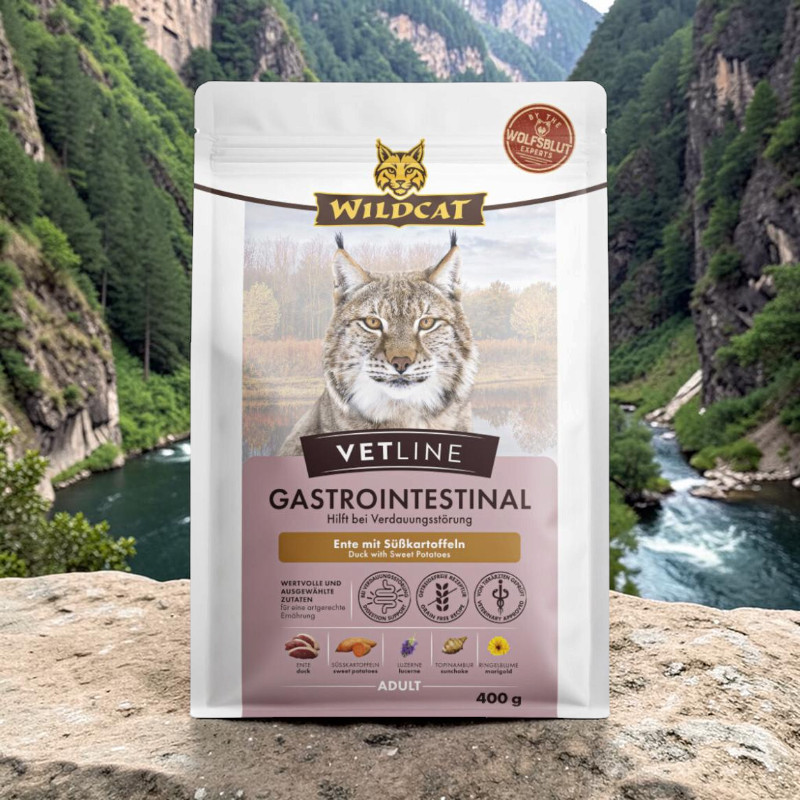
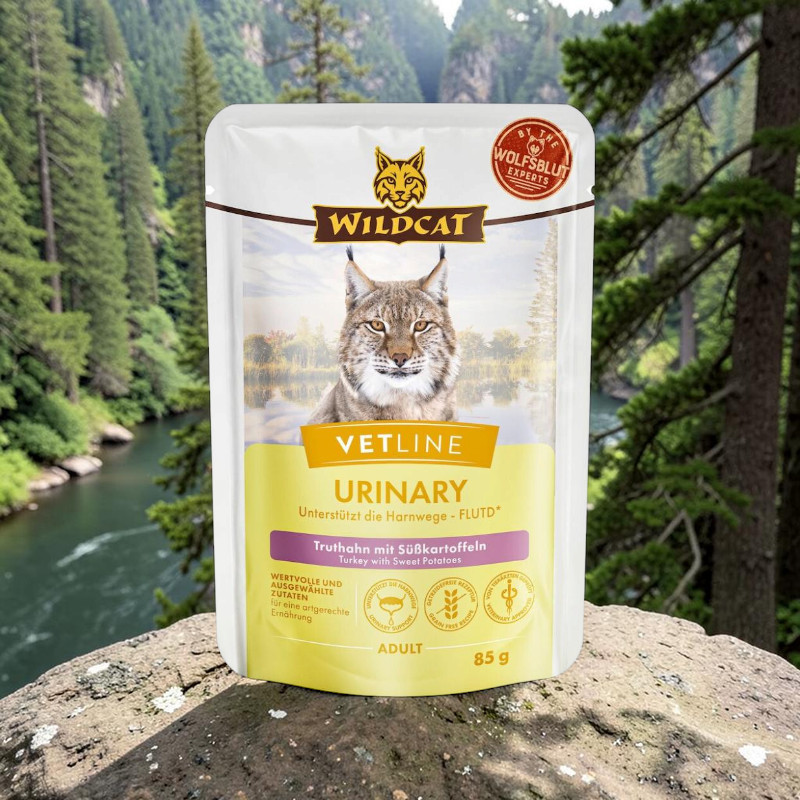
Product information "Wildcat Fel Adult Gastrointestinal Duck"
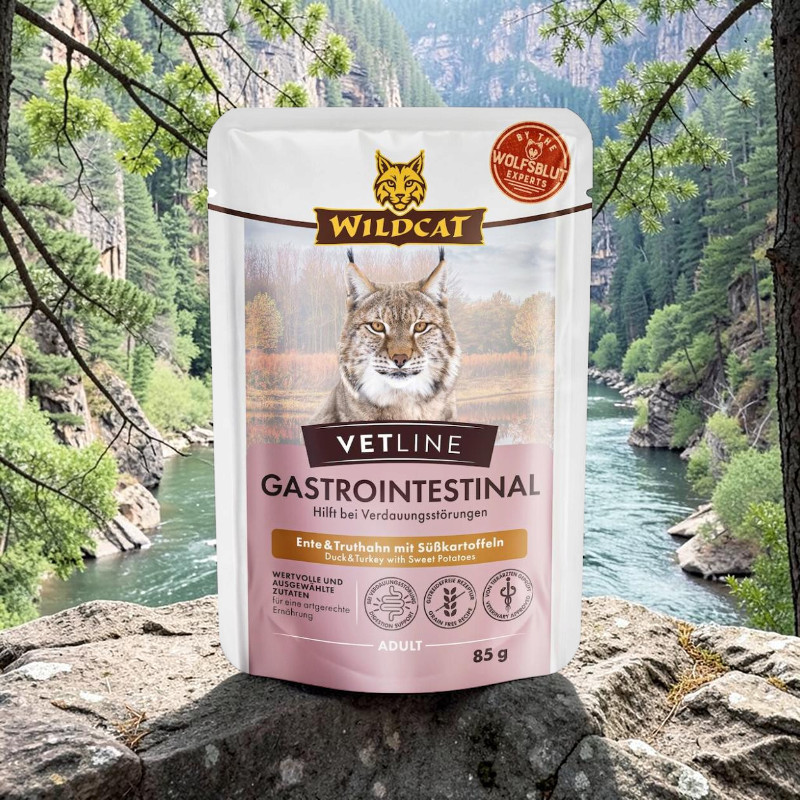
Wildcat VetLine Gastrointestinal Duck
Wildcat VetLine Gastrointestinal Duck with 37% duck and 40% sweet potatoes. Grain-free diet dry food for cats with digestive problems. Available in 400 g and 3 kg packs.
Wildcat VetLine Adult Gastrointestinal Duck is a specially formulated complete dietetic food for adult cats with digestive problems. The easily digestible formula supports nutrient absorption in cases of intestinal malabsorption and helps to compensate for inadequate digestion, for example in cases of exocrine pancreatic insufficiency.
A sensitive gastrointestinal tract can manifest itself in cats through various symptoms. Soft stools, diarrhoea, bloating, vomiting or a reduced appetite may indicate impaired digestive function. A specially formulated diet can help to ease the strain on the digestive tract and support an adequate supply of nutrients.
The recipe contains 37% duck, of which 23% is dried duck and 14% is fresh duck. Duck meat provides valuable animal proteins and essential amino acids. Thanks to its savoury flavour, this food is also suitable for cats who have a reduced appetite due to digestive problems.
As a selected source of carbohydrates, this dry food contains 40% sweet potatoes. These are naturally grain-free and provide energy as well as plant-based fibre.
With a crude protein content of 35%, this food provides a high-quality source of protein. The adjusted fat content of 10% takes into account the specific nutritional needs of cats with certain digestive disorders.
A key feature is the increased electrolyte content. The minerals sodium and potassium help maintain electrolyte balance, which can be particularly affected by diarrhoea and other digestive disorders.
The formula also contains dried eggs, chicken fat, chicken stock and salmon oil. These ingredients contribute to the nutritional content and ensure the food is well accepted.
The prebiotic fibres mannan-oligosaccharides (MOS) and fructo-oligosaccharides (FOS) can support a balanced gut flora. Together with Jerusalem artichoke and alfalfa, they complement the carefully balanced recipe.
The salmon oil contained in this product provides valuable omega-3 fatty acids, whilst marigold extract is a natural source of lutein.
Wildcat VetLine Gastrointestinal was developed in collaboration with vets and nutritionists. The formula is grain-free and contains no added maize, gluten, soya or flavour enhancers.
The diet dry food is available in 400 g and 3 kg packs. The smaller pack is ideal for trying out the recipe, whilst the 3 kg pack is a practical stock-up size for long-term feeding.
Wildcat VetLine Gastrointestinal Duck is a complete dietetic feed for specific nutritional purposes. It should be used in accordance with veterinary advice and is not a substitute for medical treatment.
Your benefits at a glance
- Available in 400 g and 3 kg dry food packs
- Dietary complete feed for adult cats
- With 37% duck as the main animal ingredient
- Contains 40% sweet potatoes as a grain-free source of carbohydrates
- Adjusted fat content of 10%
- Increased sodium and potassium content to maintain electrolyte balance
- With prebiotic fibres MOS and FOS
- Grain-free formula to support digestion
Instructions for use
Wildcat VetLine Adult Gastrointestinal Duck is a complete dietetic food for adult cats, designed to alleviate intestinal malabsorption and to compensate for inadequate digestion, including exocrine pancreatic insufficiency.
Feeding should be carried out in accordance with veterinary advice. Persistent digestive problems can have various causes and should be investigated before starting a long-term dietary regimen.
Recommended duration of use
- For intestinal malabsorption, up to 12 weeks
- To compensate for poor digestion, initially for 3 to 12 weeks
- In cases of chronic exocrine pancreatic insufficiency, lifelong feeding may be necessary
- Veterinary advice should be sought before use and before extending the duration of feeding
Changing your cat’s diet
- Unless otherwise recommended by your vet, the switch to Wildcat VetLine Gastrointestinal Duck should be made gradually over a period of approximately 14 days
- Start with a small amount of the new food and gradually increase the portion size. During the transition, monitor your cat’s food intake, the consistency of its stools and its general well-being
- In the case of acute illnesses, an immediate change of diet may be necessary. In this case, follow your vet’s instructions
Feeding and storage
- Where possible, divide the daily food intake into several smaller meals. Smaller portions are generally better tolerated, particularly by cats with sensitive digestion
- Ensure your cat always has access to fresh drinking water
- Store the dry food in a cool, dry place and keep it tightly sealed to preserve its quality and freshness for as long as possible
Important notes
- Not suitable for kittens
- Not suitable for pregnant or nursing cats
- Use only on veterinary advice
- If your cat has any underlying conditions, consult your vet to check whether this diet is suitable
- Check food intake and stool consistency regularly
- Seek veterinary advice in the event of persistent diarrhoea or repeated vomiting
- If there is blood in the stools, obvious weakness or signs of dehydration, consult a vet immediately
Zoo Roco Tip
Cats with sensitive digestion often benefit from a well-tolerated diet that is as consistent as possible. Frequent changes to their diet and additional treats that are difficult to digest should be avoided, particularly during and after a gastrointestinal illness.
Wildcat VetLine Gastrointestinal Duck combines selected ingredients with an adjusted fat content and an increased electrolyte content. This enables the food to provide nutritional support for the veterinary treatment of certain digestive disorders.
Divide the daily food ration into several smaller meals. These are less likely to put a strain on the digestive tract than a single large portion.
If your cat prefers dry food but drinks very little, you can moisten the kibble with a little lukewarm water. Allow the food to soak for a short while and remove any uneaten leftovers promptly.
Pay particular attention to ensuring adequate fluid intake during a gastrointestinal illness. Diarrhoea and vomiting can cause the body to lose significant amounts of water and electrolytes.
During a vet-prescribed gastrointestinal diet, avoid giving your cat any extra treats or other food as far as possible, unless these have been expressly agreed with the treating veterinary practice.
Monitor your cat’s appetite, stool consistency and general well-being, and consult a vet if any symptoms persist.