Product information "NTV - Water Cups Cryptocorynes in Aquariums"
The NTV - Wasserkelche Cryptocorynen im Aquarium presents the most popular aquarium plants over 64 pages.
64 pages
many colour photos
Paperback
Authors Cord Hildebrand and Maike Wilstermann-Hildebrand
Species by species, the books in this series introduce you to the most popular freshwater aquarium inhabitants. Each volume provides easy-to-understand information about a specific group of aquarium inhabitants, explains their biology and describes how to keep them. Experts with many years of experience provide detailed, practical care instructions, and you will find all the information you need for successful keeping.
Composition
Feeding recommendation
Technical details
Size information
0 of 0 reviews
Give us a rating!
Share your experience with the product with other customers.
Login
No reviews found. Go ahead and share your findings with others.
Primordial Crayfish PrimerPrehistoric crabs lived on our planet before the dinosaurs. They have the fascination of living fossils. The rapid development from an inconspicuous egg from dry earth to an archaic-looking creature has fascinated Kai Alexander Quante since his childhood. Today the aquarist is a recognised expert and experienced practitioner in the field of ecology, aquarium equipment, breeding, care, reproduction and socialisation of prehistoric crayfish in the aquarium. In addition to the well-known brine shrimp Artemia (also known as fish food), the author shows in this practical handbook how to keep, breed and feed prehistoric crustaceans in an aquarium world that will delight young and old.
Practical Aquarium HandbookWell-maintained aquariums give us an insight into the fascinating underwater world. To ensure that everything runs smoothly in the "mini biotopes" and that the inhabitants feel at home, aquarium expert Ulrich Schliewen provides expert information on the natural habitats and interesting behaviour of the fish in the standard reference book, Praxishandbuch Aquarium. Everything important about water and technology is explained in an easy-to-understand way. Topics such as decoration and planting, set-up and care, socialising fish as well as reproduction and breeding leave no questions unanswered. The comprehensive portrait section with over 400 species of fish, amphibians and invertebrates provides an excellent overview and opens up a wide range of possible combinations for your dream aquarium. Extras: "Nano aquariums - small fish in mini tanks" and "Getting started in marine aquariums - a home for Nemo". Many practical tips, checklists, tables, tests and special elements such as the Quickfinder (knowledge from A to Z at a glance, with topic-related chapter references), question-and-answer pages (practical knowledge transfer), science-and-practice pages (up-to-date specialist knowledge, practical for all aquarists, whether beginners or advanced) and the "What to do if ..." section (expert help with everyday problems). (competent help with everyday problems) make the book an indispensable standard work for every aquarist.
Hobby: Catfish by Dr Jürgren SchmidtThere are many small species of catfish, some of which are currently available in specialised shops. These include a large number of highly interesting species. They really bring life into the aquarium during feeding and especially at night. The interested aquarist will not miss it when the lights go out in the evening. Catfish are simply fascinating. Contents: -The catfish aquarium -The reproduction of catfish - Species section.
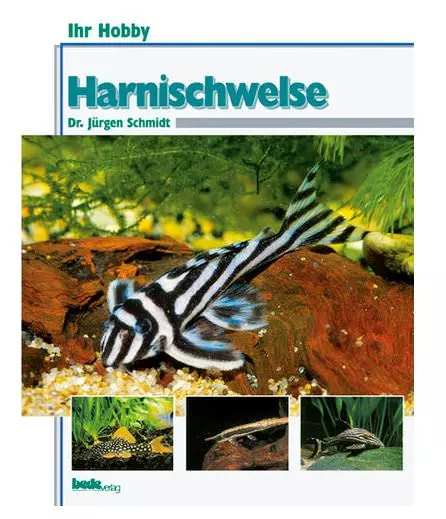
Your Hobby Armoured catfish - 80 fascinating pages about armoured catfish
80 pages
70 colour pictures
hardback
Author Dr Jürgen Schmidt
Publisher Bede at Ulmer
The Loricariidae family is one of the 35 catfish families. The more than 700 described species can be divided into five subfamilies. The lively aquaristic interest since 1988 has ensured that over 400 forms of loricariids have been imported as new or apparently new species. These catfish belong to numerous different genera and subfamilies, but most of them fall into the popular aquarium subfamily Ancistrinae.
Aquarium plants - The natural colored world under water
80 Seiten
zahlreiche Farbabbildungen
gebunden
Autor Jürgen Schmidt
Verlag Bede Verlag
Schöne Wasserpflanzenwelten und Gesellschaftsaquarien sind der Traum jeden Aquarianers. Trotzdem ist immer wieder festzustellen, dass die angehenden Wasserpflanzenfreunde nach anfänglicher Euphorie oft sehr bald aufgeben und sich anderen Schwerpunkten zuwenden. Ein wesentlicher Grund für die mögliche Aufgabe dieses schönen Hobbys ist dann meist in der zunächst falschen Anlage der Aquarien zu suchen. Hier soll aber selbstverständlich das richtige Herangehen an die Pflanzenpflege im Vordergrund stehen. Inhalt:
Einleitung
Das Wasserpflanzenaquarium
Das Einpflanzen der neuen Wasserpflanzen
Artenteil
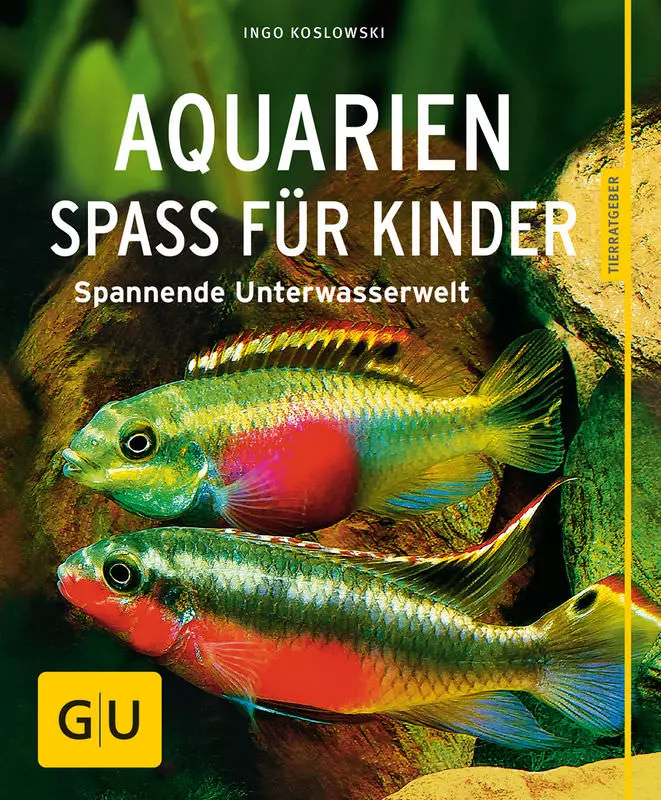
GU Book - Aquarium fun for kids
Many great observation tips and explanations about the behavior of the fish make children feel like having their own aquarium and make it easier for them to get into the aquarium.
In exciting and vividly structured chapters, the hobby aquarium with this animal guide is made palatable to children. The fish expert Ingo Koslowski prepares only the theoretical background before it goes into practice. A pool, a little technology and you're ready to go. The educated pedagogue answers all important questions: What is the basic equipment? How and which plants do I choose? Which fish swim in which basin? Which species go well together? How is it to keep up with the care? In addition, a whole chapter is dedicated to the behavior of the fish. Small experiments invite you to find out more about the animals and their behavior. Colorful guppies, bright neon fish and filigree shrimps make you want to have your own aquarium.
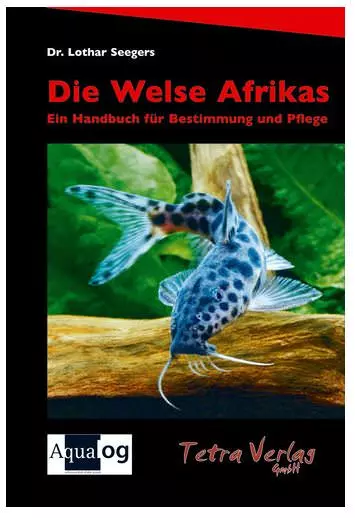
The catfishes of Africa - handbook for identification and care
In the book The Catfishes of Africa, these fish are presented in an overview and it provides a lot of information about the care and breeding of catfishes.
608 pages
more than 1108 colour photos
drawings
distribution maps
hardcover
standard work
Author Dr Lothar Seegers
Publisher Tertra Verlag
Now, for the first time, "The Catfishes of Africa" is a book that presents an overview of all African catfishes. Many of the photos show the species of fish depicted here for the first time ever. Some are described for the first time by the author, Dr Lothar Seegers, in this book and are given a valid name. The comprehensive book not only provides a systematic overview of the African catfishes, but also gives advice on the care and breeding of species known to aquarists. Particularly valuable are the many details about the habitats of these fish, which the author, himself an avid field researcher in Africa, has painstakingly gathered and, for the first time, brought together in such a complete and impressive overview.
Bede at Ulmer - Nano-Aquariums Your Hobby
80 pages
100 colour photos
hardback
Author Kai Alexander Quante
Ulmer Eugen Verlag
The trend: The small aquarium...
Nano aquariums are attractive and can be set up wherever you spend a lot of time, in the living room, kitchen, office or even bedroom. But small aquariums require special care and attention. However, always think about the needs of the aquarium inhabitants first. This book shows you how to set up your nano aquarium and look after it properly.
From the contents
How does a nano aquarium work and how do I set it up?
How do I plant and care for my aquarium?
How do I care for the animals in a nano aquarium?
A portrait of suitable inhabitants
Fighting fish primer - The most important basics of keeping fighting fish are described here.
96 pages
150 colour photos
hardback
Bestseller
Author Peter Bärwald
Publisher Dähne Verlag
Betta fish have become increasingly popular due to their different fin shapes, colours, behaviour and interesting reproduction. The book describes the most important basics of keeping and breeding these fantastic fish. The author has kept fighting fish since his youth and breeds them very successfully today.
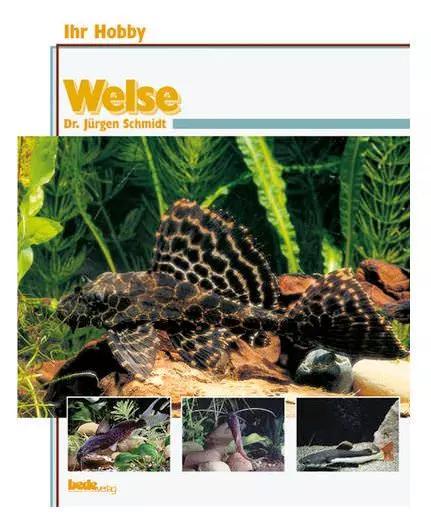
Your Hobby Catfish - 80 pages on the fascinating world of catfish.
80 pages
100 illustrations
hardback
Author Dr Jürgen Schmidt
Publisher Bede at Ulmer
Many small catfish species are available in specialised shops. The number of interesting catfish is high. From the contents: -The catfish aquarium -Reproduction of catfish -Species section.
Corydoras-Fibel - The most popular armoured catfish in the aquariumA book about the 30 most popular armoured catfish for beginners and experienced aquarists.
96 pages
150 colour photos
hardback
1st edition 2014
Author Ingo Seidel
Published by Dähne Verlag
The most popular armoured catfish
In this book, the 30 most popular armoured catfish are clearly presented by the internationally recognised catfish specialist. He writes about their origin, behaviour, diet, mating and breeding. The book is suitable for beginners as well as experienced aquarists.
The Aquarium Blurb An aquarium provides amazing insights into life under water and gives your home a unique atmosphere. Aquarium expert Axel Gutjahr explains everything you need to know about aquariums in the GU animal guide "The Aquarium": how to set up and start up the tank, how to keep it running smoothly and which fish go well in an aquarium. There are also detailed portraits of the most popular aquarium fish. Many tried-and-tested tips and ideas help to create fantastic underwater landscapes. The behaviour interpreter also explains typical aquarium fish behaviour. And with SOS - what to do? help is guaranteed in an emergency.
Microsorum pteropus (Java fern)
max. growth height
- 40 cm
Country of origin
Southeast Asia
Suitability
Discus aquarium, NanoCube
Type
family
Scrophulariaceae
Genus
Microsorum
Propagation
Daughter plants from leaves and roots
Growth rate
medium
pH
5 - 8
Water hardness
0 - 20 °dh
Notes
The Java fern is the most popular fern species in the aquarium hobby and is widespread in tropical Asia. The species is very variable with many leaf shapes and sizes. Its undemanding nature makes it the perfect plant for beginners. The plants grow best with their rhizomes tied up on stones and roots. Moderate to normal lighting is sufficient, although the plant also grows well in stronger light. Daughter plants are often formed on older leaves, which can be tied up again elsewhere with a thin fishing line.
Aquarium Soil - Gravel Black approx. 1 - 3 mm
Aquarium Ground is a ready-to-use, both decorative and functional ground for aquariums.
Carefully selected raw materials guarantee optimum quality. Special cleaning makes life difficult for pathogens and algae. This benefits the biological balance and clarity of the water in the aquarium. To make it easier for aquatic plants to get started, we recommend laying a layer of nutrient or substrate soil under the gravel. Wash before use!
Content: 9 kg
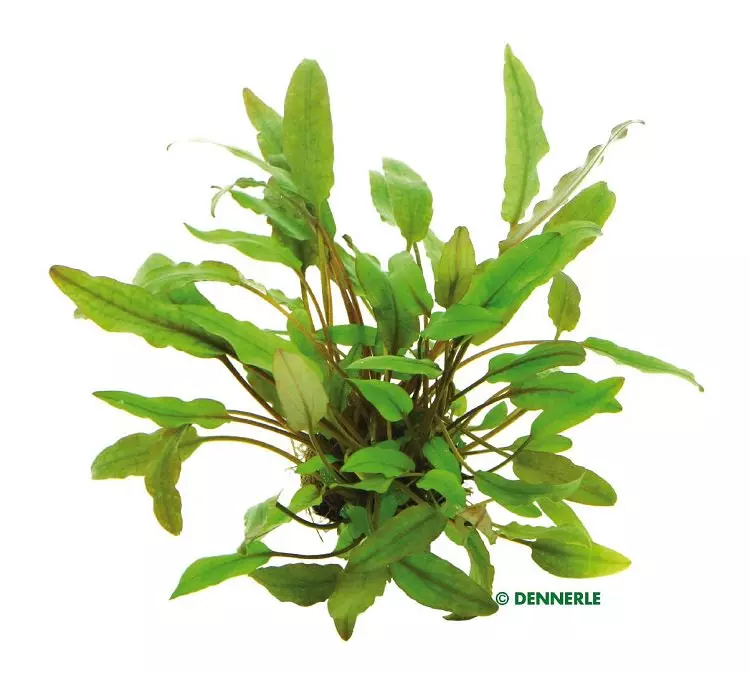
Cryptocoryne beckettii
max. growth height
10 - 20 cm
Country of origin
Sri Lanka
Suitability
NanoCube, community aquarium and aquascaping
Type
Rosette plant
Family
Araceae
Genus
Cryptocoryne
Propagation
Stolons
Growth rate
medium
pH
6 - 8
Water hardness
10 - 20 °dh
Notes
Easy to care for and undemanding.
Sri Lanka is home to many species of calyx, including Cryptocoryne beckettii. It has also been successfully cultivated in aquaria for decades. In its natural habitat, it can be found in shady spots on the banks of streams and rivers, where it grows amphibiously above and below the water. The colouring of its submerged leaves varies from green to brown tones. Different leaf colours in one and the same species are typical of the genus Cryptocoryne.
Bucephalandra sp. "Aqua Artica
Bucephalandra sp. "Aqua Artica" is an aquarium plant that likes to grow on rocks and roots. It is an endemic species from Borneo.Difficulty of cultivation: easyLight requirements: lowCO₂ requirements: lowHeight of adult plant: 10 cmGrowth: very slowTemperature: 20-27°CPlacement in aquarium: Second levelOrigin: Borneo Island, Southeast AsiaCup diameter: 6 cmThe genus name is derived from the Greek term 'bull's head' and refers directly to the dust sacs in the horn-like inflorescences. Bucephalandra sp. Aqua Artica is a beautiful and rather rare species native to Southeast Asia. It is an endemic plant from Borneo that is not often found in aquariums and can be considered a rarity.Bucephalandra sp. Aqua Artica belongs to the Araceae family, the picture plant family. The family counts up to 2,500 species, among which there are some epiphytes like Bucephalandra sp. Aqua Artica. In the wild, it grows on rocks, in streams and rivers with rushing currents, or on the walls of waterfalls.It prefers partial shade or even full shade. Its natural habitat is humid tropical forests where there is very little light. Borneo is in an equatorial climate zone, which means that there are dry and rainy seasons. As the rains come, the levels of the rivers rise, causing Bucephalandra to flood for months at a time. For this reason, the plant has taken on submersible characteristics and does well under water. When fully submerged, it is more intensely colored and has a finer leaf structure.Bucephalandra sp. Aqua Artica has creeping stems with the tip pointing vertically upward. The characteristic elongated green leaves with a prominent central vein are its special ornament.It grows slowly and does not exceed 10 cm in height.
It is a low-maintenance species that needs no pruning and no intense lighting. It tolerates temperatures from 20 to 27 °C. However, it should be noted that it may lose its leaves in case of sudden changes in water or light parameters. Even if the plant loses its leaves but has a healthy rhizome, there is a good chance that it will recover and grow well again. Bucephalandra grows well in soft, slightly acidic water. The supply of carbon dioxide and fertilizers will favor the growth of the plant.It is not difficult to grow and can be recommended to beginners in aquaristics.
It looks great in the background, attached to a root or rock. In any case, the roots of Bucephalandra should not be covered with substrate. Outside the aquarium, this species is also well suited for paludariums, where, however, it has less color and stiffer leaves.Planting: The plant must be removed from the cup and thoroughly rinsed from the gel under running water. This is best done by placing the plant in a container of lukewarm water. Most of the gel will then fall off by itself. Divide the contents of the cup into 1-2 cm lumps and then place them at a small distance on the selected items.
CHF 16.90
❅
❆
❅
❆
❅
❆
❅
❆
❅
❆
❅
❆
This website uses cookies to ensure the best experience possible. More information...