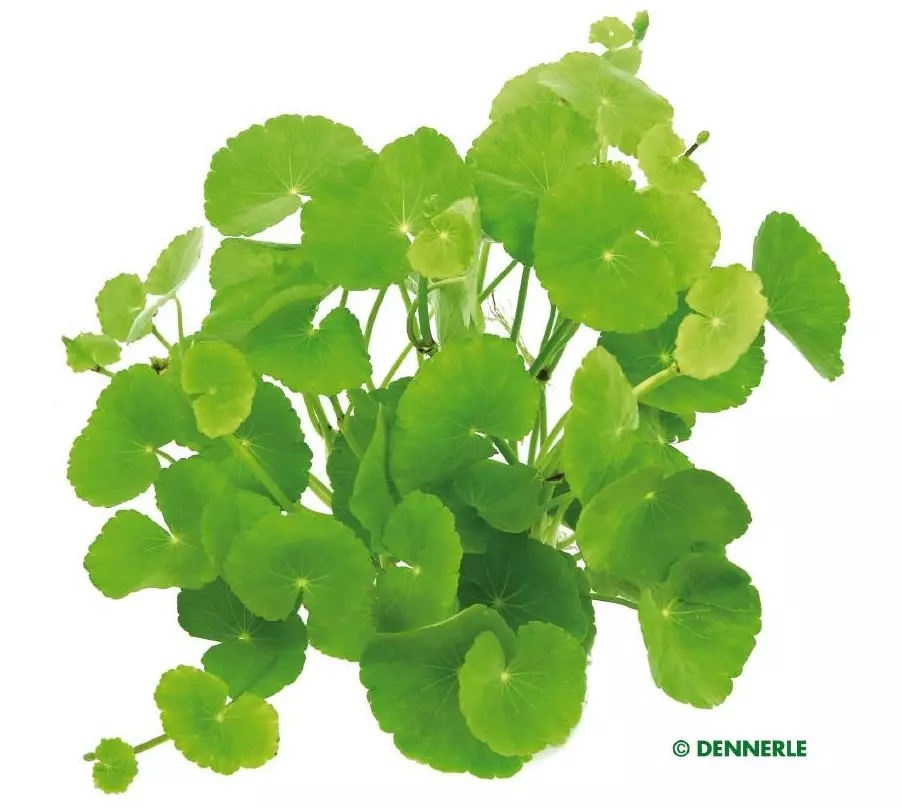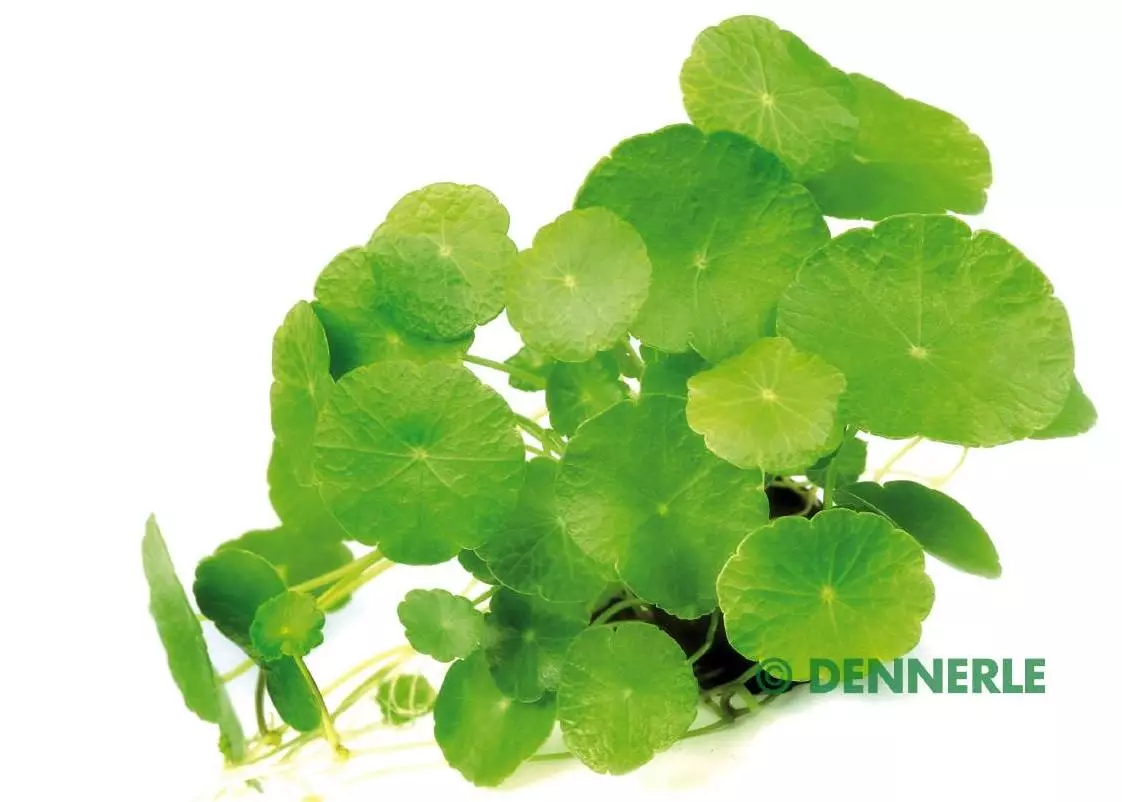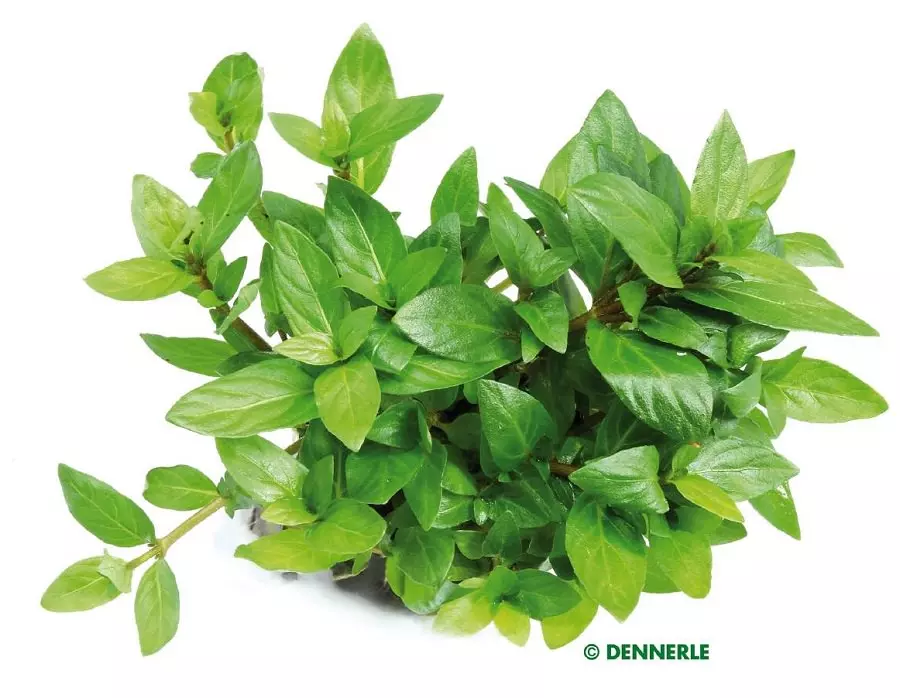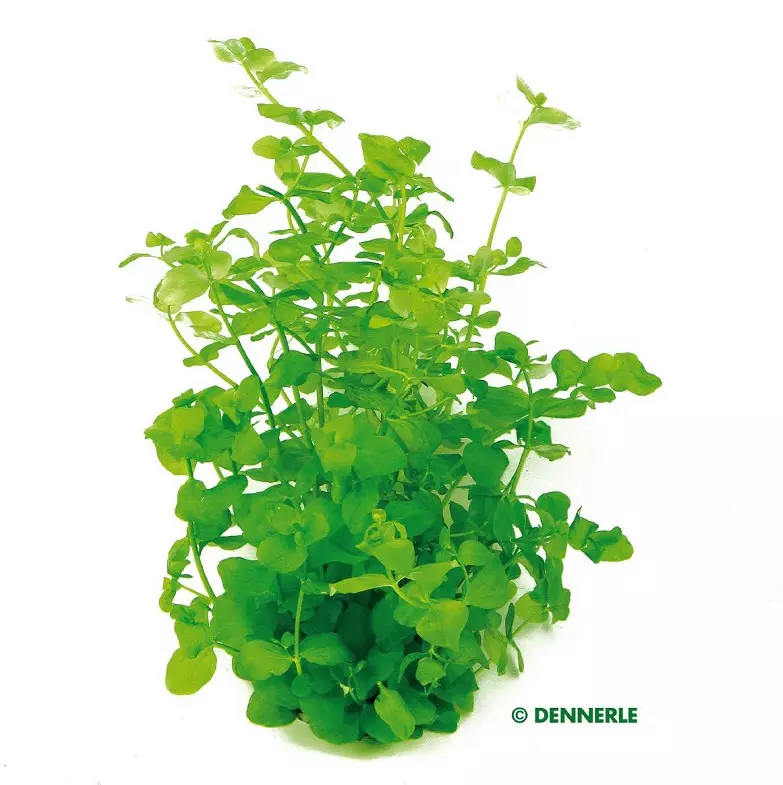
Bacopa australis

Article no: DE-108
Quantity Unit price
To 4
CHF 8.90
From 5
CHF 6.90

Stock: 0

Ready for dispatch in 1-3 days, delivery time 14 working days

Delivery between Tuesday, 5 May and Wednesday, 6 May
Zahlungsarten
Product information "Bacopa australis"

Bacopa australis

Aquatic plant from Argentina & Brazil

max. growth height - 50 cm Country of origin Argentina, Brazil
Suitability community aquarium, NanoCube and aquascaping Type stem plant
Family Scrophulariaceae Genus Bacopa
Propagation top cuttings, side shoots Growth rate medium
pH 6 - 8 Water hardness 5 - 15 °dh
Notes  regular shortening is recommended.

The stem plant Bacopa australis has only recently become commercially available. We found this green beauty on our Plantahunter tour in Brazil in 2010. In the spring pool of the Rio Sucuri, we discovered beautiful populations in the crystal-clear water alongside other aquarium plants. Cultivating the plant is very easy. In the emersed stage, its leaves are smaller and fleshier, in the aquarium, however, they are very delicate and thin-skinned. Regular pruning is recommended to achieve a compact group of plants.

Aquarium: Community aquarium, Landscape/Aquascaping, Nano aquarium
Feature: In the background, Stem plants
Genus: Bacopa
Growth: fast
Origin: South and Central America
Properties: Stem plants
Stand: In the background
Composition
Feeding recommendation
Technical details
Size information

1 of 1 reviews

5 out of 5 stars


100%

0%

0%

0%

0%


Give us a rating!

Share your experience with the product with other customers.


30 November 2018 14:38

Top

Top

Suggested products

New
Ludwigia ovalis Invitro aquarium plant
Ludwigia ovalis invitro cup This plant, with a characteristic oval leaf oval leaf shape in orange-pink color, is easy to grow and an interesting addition to the aquarium. interesting addition to the aquarium. The leaves are slightly smaller than those of the popular Repens variety. Due to their rapid growth the clumps must be trimmed and thinned out regularly to prevent excessive growth. prevent excessive growth. The original shape of the leaf blade makes it an attractive addition to the plant composition in the aquarium. aquarium.To use this plant, remove it from the cup and rinse the gel. cup and rinse the gel thoroughly under running water. Then divide it into small clumps of 1-2 cm and plant them at short intervals. them at short intervals. As it grows, it will form a form a uniform group of adult plants.This plant comes from in vitro cultivation and is free from snails, parasites and algae. and algae. High-quality gel was used as a medium, so it will establish itself quickly establish itself in the aquarium. Light requirement: medium to intensive Optimum temperature: 10 to 28 °C Water values: soft to hard pH value: 4 to 7 CO2 and nutrients: recommended Propagation: cuttings

CHF 16.90

New
Ludwigia ovalis Invitro aquarium plant
Ludwigia ovalis invitro cup This plant, with a characteristic oval leaf oval leaf shape in orange-pink color, is easy to grow and an interesting addition to the aquarium. interesting addition to the aquarium. The leaves are slightly smaller than those of the popular Repens variety. Due to their rapid growth the clumps must be trimmed and thinned out regularly to prevent excessive growth. prevent excessive growth. The original shape of the leaf blade makes it an attractive addition to the plant composition in the aquarium. aquarium.To use this plant, remove it from the cup and rinse the gel. cup and rinse the gel thoroughly under running water. Then divide it into small clumps of 1-2 cm and plant them at short intervals. them at short intervals. As it grows, it will form a form a uniform group of adult plants.This plant comes from in vitro cultivation and is free from snails, parasites and algae. and algae. High-quality gel was used as a medium, so it will establish itself quickly establish itself in the aquarium. Light requirement: medium to intensive Optimum temperature: 10 to 28 °C Water values: soft to hard pH value: 4 to 7 CO2 and nutrients: recommended Propagation: cuttings

CHF 6.50

Ludwigia ovalis Invitro aquarium plant
Ludwigia ovalis invitro cup This plant, with a characteristic oval leaf oval leaf shape in orange-pink color, is easy to grow and an interesting addition to the aquarium. interesting addition to the aquarium. The leaves are slightly smaller than those of the popular Repens variety. Due to their rapid growth the clumps must be trimmed and thinned out regularly to prevent excessive growth. prevent excessive growth. The original shape of the leaf blade makes it an attractive addition to the plant composition in the aquarium. aquarium.To use this plant, remove it from the cup and rinse the gel. cup and rinse the gel thoroughly under running water. Then divide it into small clumps of 1-2 cm and plant them at short intervals. them at short intervals. As it grows, it will form a form a uniform group of adult plants.This plant comes from in vitro cultivation and is free from snails, parasites and algae. and algae. High-quality gel was used as a medium, so it will establish itself quickly establish itself in the aquarium. Light requirement: medium to intensive Optimum temperature: 10 to 28 °C Water values: soft to hard pH value: 4 to 7 CO2 and nutrients: recommended Propagation: cuttings

CHF 6.50

Proserpinaca palustris
🌿 Proserpinaca palustris - Decorative aquarium plant with serrated foliage Structure and color for the middle to background layout Proserpinaca palustris from Aqua Art is an unusual aquarium plant with finely toothed, fern-like leaves that can take on a fascinating copper-orange coloration in good light. It grows upright and gives the aquascape a special depth effect and structure thanks to its unique texture. In well-lit tanks with a CO₂ supply, it develops vibrant colors and healthy growth. Its eye-catching appearance makes it ideal as an accent plant in the middle or background. ✅ Advantages at a glance Unique leaf shape with serrated foliage Color gradient from green to copper-orange in strong light Ideal for structured middle and background design Demanding, but very decorative under optimal conditions Grown in vitro - free from snails and pesticides Particularly striking in layouts with contrasting plants 📋 Product details Name: Proserpinaca palustris Origin: North and South America Type: Stem plant Growth height: approx. 20-40 cm Light requirement: medium to high CO₂ supply: recommended to necessary Growth: medium Propagation: Cuttings after pruning Delivery form: In vitro cup (sterile) Manufacturer: Aqua Art 💡 Zoo Roco tip Proserpinaca palustris looks particularly impressive when planted in groups and combined with fine-leaved plants such as Myriophyllum or Rotala. Strong light and regular micronutrient fertilization are crucial for intensive colouring. With Proserpinaca palustris from Aqua Art, you can add variety, color and structure to your aquascape - ideal for sophisticated layouts with character.Customers also searched for: Proserpinaca palustris, Aqua Art, structure-rich aquarium plant, stem plant aquarium, serrated leaves, InVitro plant aquarium, aquascaping plant, buy Proserpinaca, reddish aquarium plant, background plant aquarium

CHF 6.50

Hygrophila sp. Araguaia
🌿 Hygrophila sp. 'Araguaia' InVitro Reddish-brown accent plant with unique growth habit Hygrophila sp. 'Araguaia' from Aqua Art is a particularly attractive, compact stem plant with a reddish-bronze color and finely branched growth. It is ideal for the foreground to midground and provides structured contrasts and warm color accents in aquascapes. This plant is one of the slow-growing Hygrophila species and can be easily shaped and thickened by regular pruning. Supplied as an in-vitro plant, it is free from algae, snails and pesticides - ideal for shrimp tanks and sensitive aquariums.✅ Advantages at a glance: Compact Hygrophila with reddish-bronze leaves InVitro - sterile, snail-free & pesticide-free Ideal for the foreground or middle ground Slow-growing - easy to shape and grow bushy Good effect with strong lighting & CO₂ supply Very decorative in natural aquariums and layouts with contrasting colors📋 Product details: Name: Hygrophila sp. 'Araguaia' Type: Stem plant Placement: Foreground to midground Growth height: approx. 5-15 cm Light requirement: medium to high CO₂ supply: recommended Growth: slow Delivery form: In vitro cup (sterile cultivated) Manufacturer: Aqua Art💡 Zoo Roco tip: Combine Hygrophila 'Araguaia' with light green plants such as Micranthemum or Hydrocotyle sp. 'Japan' - to show off the darker coloring particularly well. For a dense carpet, regular pruning is recommended.Hygrophila 'Araguaia' provides subtle color accents and fine structure in the lower section of the aquarium - ideal for sophisticated layouts and harmonious plant design.

CHF 6.50

Ludwigia sphaerocarpa Pilosa
Ludwigia sphaerocarpa 'Pilosa' InVitro Red accent plant for aquascaping Ludwigia sphaerocarpa 'Pilosa' is a decorative and rare stem plant with a particularly intense red coloration and fine leaf structure - a real eye-catcher for any natural aquarium. This variety is ideal for the mid to background area and adds color depth and contrast to groups of green plants. As an Aqua Art in vitro plant, it is free from snails, algae and pesticides, making it perfect for shrimp tanks and sensitive aquariums. With good lighting and CO₂ supply, it develops its full color intensity and grows vigorously but controllably.✅ Advantages at a glance: Intensely red-colored stem plant with a fine texture Grown in vitro - sterile, free from harmful substances Ideal for color contrasts in the middle or background Safe for shrimps and sensitive aquariums Grows compact & controllable with good care📋 Product details: Name: Ludwigia sphaerocarpa 'Pilosa' Type: Stem plant Placement: Middle to background Growth height: approx. 20-40 cm Light requirement: medium to high CO₂ supply: recommended Color effect: red to reddish-green Growth: medium Delivery form: In vitro cup (sterile cultivation) Manufacturer: Aqua Art💡 Zoo Roco tip: For strong red coloration, the plant should be kept under intensive lighting and regularly supplied with iron and micronutrients. A good supply of CO₂ also has a positive effect on growth and color.Ludwigia sphaerocarpa 'Pilosa' from Aqua Art brings structure, contrast and an intense play of colors to the aquarium - perfect for modern aquascaping layouts.

CHF 6.50

Rotala rotundifolia Invitro
Invitro aquarium plant Rotala rotundifoliaColorful stem plant for the background Rotala rotundifolia is one of the most popular stem plants in the aquarium hobby - versatile, easy to care for and particularly attractive thanks to its delicate, round leaves. Depending on the light intensity and nutrient supply, it develops a vibrant green to bright red, adding lively color accents to any aquarium layout. The in vitro version is grown under sterile conditions and is therefore free from algae, snails and pesticides - ideal for sensitive aquariums, especially shrimp tanks. Fast-growing and adaptable, Rotala rotundifolia is ideal for the mid to background and harmonizes wonderfully with other fine stem plants in the natural aquarium. Advantages at a glance: ✅ Changes color depending on the light - from green to red ✅ Fast-growing & ideal for dense groups of plants ✅ InVitro - guaranteed free from harmful substances & snails ✅ Safe for shrimps & sensitive tanks ✅ Perfect for aquascaping & classic plant aquariumsProduct details: Name: Rotala rotundifolia Type: Stem plant Position in aquarium: Middle to background Growth height: approx. 30-50 cm Light requirement: Medium to high CO₂ supply: Recommended for more intense colorationTemperature: 22 - 28°C Delivery form: In vitro cup (grown sterile) Color effect: Green to reddish, depending on light & nutrients

CHF 6.50

Bacopa myriophylloides Invitro
Invitro aquarium plant Bacopa myriophylloidesDelicate aquarium plant for the background Bacopa myriophylloides is an elegant stem plant with delicate, finely pinnate leaves - a real eye-catcher for the background of your aquarium. Its special structure brings lightness and movement to the layout and is ideal for aquascaping and natural aquariums. As a high-quality in vitro plant, it is free from algae, snails and pesticides, making it particularly safe for shrimps and sensitive tanks. With good lighting and CO₂ supply, Bacopa myriophylloides grows compactly and healthily - with a beautiful, delicate appearance. Advantages at a glance: ✅ Delicate stem plant with feathery leaves ✅ Ideal for the background & textured layouts ✅ InVitro - sterile, pesticide-free & shrimp-safe ✅ Healthy growth with light & CO₂ addition ✅ Perfect for aquascaping & natural aquariumsProduct details: Name: Bacopa myriophylloides Type: Stem plant Location in the aquarium: Background Growth height: approx. 30-50 cm Light requirement: Medium to high CO₂ supply: Recommended Delivery form: In vitro cup (grown sterile) Special feature: Very fine, decorative leaf structure

CHF 6.50

Ammania senegalensis - Small cognac plant
InVitro Ammania senegalensis from Aqua ArtThe Ammania senegalensis InVitro from Aqua Art is an impressive aquarium plant with intense red coloration that is a real eye-catcher, especially in the middle and background of your aquarium. Thanks to InVitro cultivation, you get a 100 % sterile, pesticide-free plant that is also ideal for sensitive shrimps and aquascaping projects. With sufficient light, nutrients and CO₂, Ammania senegalensis develops strong, red stems and oval leaves - perfect for colorful contrasts in plant aquariums. Advantages at a glance: ✅ Bright red stem plant for the middle & background ✅ InVitro - free from algae, snails & pesticides ✅ Safe for shrimps & sensitive aquarium inhabitants ✅ Ideal for aquascaping & natural aquariums ✅ Fast-growing with good lighting & CO₂ supplementationProduct details: Name: Ammania senegalensis Origin: Africa Type: Stem plant Position in the aquarium: Middle to background Growth height: approx. 20-40 cm Light requirement: Medium to high CO₂ supply: Recommended Delivery form: In vitro cup (lab-grown, sterile)Planting: The plant must be removed from the cup and thoroughly rinsed thoroughly from the gel under running water. This is best done best done by placing the plant in a container with lukewarm water. lukewarm water. Most of the gel will then fall off by itself. Divide the contents of the cup into 1-2 cm clumps and place these a short distance apart in the then place them a short distance apart in the substrate or on the selected objects.

CHF 6.50

Micranthemum umbrosum
Micranthemum umbrosum Micranthemum Umbrosum is a light green stem plant with small round leaves. Depending on how it is pruned, it is suitable for both the foreground and background of the aquarium. Difficulty of cultivation: easy Light requirement: medium, to high CO₂ requirement: medium Height of the adult plant: 20 cm Growth: fast Temperature: 22-26 °C Placement in the aquarium: Second level Origin: North and Central America Cup diameter: 6 cm Micranthemum Umbrosum (Round-leaved meadowfoam) is a naturally occurring plant in North and Central America. It grows both in water and in marshy areas. It is prized by aquarists for its unique appearance. The plant forms long stems with paired, alternate, small, round, light green leaves. It has a fairly well developed root system. It needs regular pruning and is easy to shape into a desired form. It is propagated vegetatively by cutting off the shoot tips and planting them in the ground. It likes water with a hardness of 2-12°N, a pH of 5.5-7.7 and a temperature of 24-26°C. It is sensitive to trypaflavin and can be damaged by snails. It has fairly high light requirements. With insufficient light, it pulls upward, and distinct gaps can be seen between the leaves. With sufficient light, it forms dense clumps that are pleasing to the aquarist's eye.Micranthemum umbrosum is usually placed in the background of the aquarium, but it also looks good in the foreground when cut short. It does not require absolute CO₂ fertilization, but grows much faster in its presence. When growing this plant, pay special attention to the proper concentration of iron in the aquarium water.. Planting:The plant must be removed from the cup and thoroughly rinsed from the gel under running water. This is best done by placing the plant in a container of lukewarm water. Most of the gel will then fall off by itself. Divide the contents of the cup into 1-2 cm lumps and then set them at intervals of 1 to 2 cm.

CHF 6.50

Ludwigia sp. 'Super Mini Red
Ludwigia sp. 'Super Mini Red'Ludwigia sp. Super Mini Red' is a fast growing red plant for the second or third level in the aquarium. It is easy to propagate and does not require strong lighting. This plant grows in the soil and on decoration.Difficulty of cultivation: mediumLight requirement: mediumCO₂ requirement: mediumHeight of adult plant: 10-25 cmGrowth rate: mediumTemperature: 20-28°C Placement in aquarium: second or third level. Origin: Cultivar (cultivated variety) Cup diameter: 6 cm Ludwigia sp. 'Super Mini Red' is the smallest of the red-leaved Ludwigia varieties. It has fine and delicate dark red leaves. A particularly decorative aquarium plant. Depending on tank size, it is suitable for the middle or third level of the aquarium. It is popular for arrangements in Dutch and natural style aquariums. The leaf blade is about 2 cm long and 1.5 cm wide. The plant does not have excessive requirements. It grows even in moderate light, although the red color then becomes less intense. The plant can be planted in the ground or on decorations. When attached to the roots, it forms fanciful compositions, reminiscent of treetops. In this form of cultivation should not forget about the additional application of liquid fertilizer. The best growth results are obtained when planted in a fertile substrate. Under good conditions it spreads quickly.Ludwigia sp. Super Mini Red' has many lovers thanks to its extremely intense red color. It discolors easily and quickly under strong light conditions. In this way, it becomes an incredibly eye-catching design element in their aquarium. Due to its rapid growth, it must be regularly cut back and trimmed. It does well in the strong spots of an arrangement, in the second or third row. The Super Mini Red variety does not require CO₂ and grows in the water column even with low light intensity and low fertilizer levels. Therefore, it is a suitable plant for beginners in plant aquaristics. However, it is important to remember that the best growing results can be achieved with appropriate lighting and additional carbon dioxide addition. It grows in both hard and soft water with pH between 5.5 and 7.5. It does not require complicated care. Frequent pruning and good growing conditions will ensure beautiful, dense plants. It can grow up to 25 cm tall. As with most stems, the cut tips of the plants can be replanted in the ground. The plant will form side shoots at the cut.Planting:The plant must be removed from the cup and thoroughly rinsed from the gel under running water. This is best done by placing the plant in a container of lukewarm water. Most of the gel will then fall off by itself. Divide the contents of the cup into 1-2 cm lumps and then set them at intervals of 1 to 2 cm.

CHF 6.50

Rotala rotundifolia 'Green
Rotala Rotundifolia 'Green' Rotala Rotundifolia 'Green' (Round-leaved Rotala) is a mid-ground plant. It is characterized by fast growth and moderate light requirements. The color is usually light green.Difficulty of growing: easy Light requirements: medium CO₂ requirements: not necessary Height of mature plant: 50-60 cm Growth: fast Temperature: 20-28°C Placement in aquarium: third level Origin: South Asia, Southeast Asia Cup diameter 6 cm The natural range of the round-leaved Rotalas (Rotala rotundifolia) is South, Southeast and East Asia. It has been spread by humans to Australia, the United States and Brazil, among other places. She is thus already almost a globetrotter.Rotala rotundifolia 'Green' is very similar to Rotala rotundifolia, but its leaves remain bright green even in bright light. This plant is characterized by its fast growth and its tendency to spread profusely, especially when regularly pruned. It tolerates medium light levels, but the higher the light, the more intense the plant's growth and colors. If left to grow freely, it reaches a length of 30-60 cm, cutting off access to light to the lower parts, where it begins to lose its leaves. Under favorable conditions, if left uncontrolled, it can dominate an entire tank, especially if it is a tank with a small capacity. Once it reaches the surface of the water, it begins to float on it. It does not need additional carbon dioxide fertilization unless you want to accelerate its growth even more. It is tolerant of pH and water hardness, although like most plants, it cannot tolerate extremes. It tolerates temperatures between 20 and 28 °C, but thrives better in the upper end of this range. It can grow in both an active and a poor substrate, but in this case it is advisable to fertilize under the roots. In well-lit, CO2-fertilized aquariums, it may require additional fertilization with macronutrients due to its rapid growth. Otherwise, it will lose its color and the leaves will become smaller. Rotala rotundifolia is propagated in the aquarium by cutting off stem pieces and placing them in a selected spot in the substrate. When transplanted to a new tank, it will need some time to acclimate and grow faster.Planting: The plant must be removed from the cup and thoroughly rinsed from the gel under running water. This is best done by placing the plant in a container of lukewarm water. Most of the gel will then fall off by itself. Divide the contents of the cup into 1-2 cm lumps and then place them at a small distance into the substrate.

CHF 6.50

Customers also saw

Echinodorus Dschungelstar No. 3 - "Python" Sword
/ max. growth height - 40 cm Country of origin Cultivated form Suitability Perch aquarium, community aquarium Type Rosette plant family Alismataceae Genus Echinodorus Propagation Adventive plants on the flower stalk Growth rate medium pH 5 - 8 Water hardness 0 - 20 °dh Notes   The name of this variety refers to the narrow, long leaves underwater. Added to this is a vivid pattern of markings, similar to that of a python snake. Under very good lighting, the youngest leaves take on an intense reddish hue. Nutrient-rich substrate and a good supply of CO2e allow the plants to thrive. Like most Echinodorus, the plant looks most impressive when kept as a solitary specimen. Maintenance involves simply removing older leaves and thinning out the plant.

CHF 11.90

Cryptocoryne wendtii green - Green calyx
Cryptocoryne wendtii green / Green calyx max. growth height 10 - 25 cm Country of origin Sri Lanka Suitability NanoCube, aquascaping and community aquariums Type Rosette plant family Araceae Genus Cryptocoryne Propagation Stolons Growth rate medium pH 5 - 8 Water hardness 0 - 20 °dh Notes This water calyx has been one of the most popular aquarium plants for decades. Its robustness and high adaptability make this plant an indispensable part of an underwater landscape, especially for newcomers. Whether in a small Nano Cube as a small group or in a large display aquarium as a large plant cushion - this water calyx combines optimum growth characteristics with a very decorative appearance! With good lighting, the plants remain significantly lower.

CHF 10.90

Hydrocotyle verticillata - Whorled pennywort, American. Water pennywort
Hydrocotyle verticillata (mushroom plant, American pennywort) max. growth height - 20 cm Country of origin  North and South America Suitability Aquascaping, community aquarium Type   family Apiaceae Genus Hydrocotyle Propagation Side shoots Growth rate medium pH 5 - 8 Water hardness 0 - 15 °dh Notes   This water pennywort is very decorative due to its umbrella-like leaves and is suitable for the foreground to midground. Unlike H. leucocephala and H. tripartita, it grows rather slowly; the water temperature should not be too high. We found magnificent stands in shallow water in the Rio Sucuri, Brazil. The water temperature was 23 °C; the water was crystal clear with a high CO2 concentration. Hydrocotyle verticillata looks very natural in the middle of a Hemianthus carpet, with small ‘umbrellas’ protruding from it.

From CHF 6.90

Lilaeopsis brasiliensis - Brazilian micro sword
Lilaeopsis brasiliensis / Brazilian grass plant max. growth height - 8 cm Country of origin Argentina, Paraguay, south-east Brazil Suitability Community aquariumNano Cubeaquascaping Type Stolons Family Apiaceae Genus Lilaeopsis Propagation Stolons Growth rate medium pH 6 - 8 Water hardness 0 - 20 °dh Notes   Lilaeopsis brasiliensis is a decorative foreground plant. In its natural habitat it colonises the banks of rivers and swamps up to an altitude of over 1,000 m. Its grass-like character is similar to that of Helanthium tenellum, which is why it is sometimes referred to as "false tenellus". It is easy to cultivate in the aquarium, prefers cooler water and grows quite slowly, regardless of whether the water is soft or hard. Strong pruning, as with a lawn, promotes compact growth. It needs plenty of light.

From CHF 7.90

Egeria densa "Dense" - Dense waterweed
Egeria densa "Dense-leaved" (Dense-leaved waterweed) max. growth height 60 - 80 cm Country of origin Argentina, Brazil, Uruguay Suitability Community aquarium, garden pond Type Stem plant Family Hydrocharitaceae Genus Egeria Propagation Cuttings Growth rate fast pH 5 - 9 Water hardness 0 - 30 °dh Notes   The waterweed, as it is known by its German trade name, already indicates its growth characteristics. Egeria densa is probably one of the best-growing plants of all and is completely unproblematic to cultivate. Native to south-east Brazil and Argentina, it is now naturalised on all continents. In the "dense-leaved" variety, the leaves on the stem are extremely dense and compact. It also grows very well planted or free-floating in a garden pond, but is only hardy to a limited extent.We make every effort to ensure that our plants arrive healthy and undamaged. Despite the greatest care, it can happen that plants are slightly damaged due to postage or other unforeseen events. This includes brown leaves as well as broken branches. We accept no liability for this.

From CHF 7.90

Drosera capensis - carnivorous plant
Aqua Art Drosera capensis - Sundew for terrarium & WabiKusaDrosera capensis (Cape Sundew) fascinates with long catch leaves that form glittering sticky drops to catch small insects. As an in vitro plant, it starts clean and compact - ideal for bright, humid setups such as paludariums, carnivorous terrariums or Wabi-Kusa.Product features:Cultivated in vitro (sterile in a pot)Carnivorous plant with sticky trapping leaves (sundew principle)Suitable for humid terrariums/paludariums and very bright locationsRobust and also suitable for beginnersImportant advantages:Exciting observation effect: trapping leaves shine and react to preySupports a near-natural microclimate in humid terrarium setupsNo fertilization necessary - the plant covers its needs by catching small insectsInformation:Origin (species): Cape region / South Africa; grows in nutrient-poor, permanently moist habitats (e.g. swamps, banks, streams)Size/growing height: approx. 5-20 cm (depending on conditions)Temperature requirements: approx. 10-35 °C; as frost-free as possible in winter (guideline: not below approx. 5 °C)Air humidity: at least approx. 50 % recommendedLight: bright to sunny (for strong coloration and good catching drops)Water/substrate: soft/low-lime (e.g. rainwater/osmosis water), acidic, nutrient-poor substrate; permanently moist to wet Drosera capensis, the Cape sundew, is a real classic among carnivorous plants - and for good reason: the long, narrow catch leaves are covered with many fine tentacles that form glistening adhesive droplets. These droplets attract small insects and hold on to them so that the plant can supplement its low nutrient requirements. At the same time, Drosera capensis is comparatively uncomplicated to care for and is therefore also attractive for beginners . The species originates from the Cape region of South Africa, where it grows in permanently moist, nutrient-poor areas such as swamps, on banks and along watercourses. You can easily replicate this principle at home: The decisive factors are plenty of light and a constantly moist to wet, acidic and nutrient-poor substrate. Soft, low-lime water (e.g. rainwater or osmosis water) is recommended for watering. Fertilizing is not necessary.In suitable conditions, Drosera capensis typically grows to a height of around 5 to 20 cm. It does particularly well in bright, humid terrariums, paludariums or similar humid setups where the catching droplets are formed stably. A humidity level of around 50 % is a good guideline, although the plant is particularly reliable in a constantly humid environment.Drosera capensis is pleasantly tolerant when it comes to temperature requirements: a range of approx. 10-35 °C is suitable for cultivation. In the cooler months of the year, it should be kept frost-free; as a guide, temperatures should not fall below approx. 5 °C in winter. This will keep the plant vital and allow it to sprout vigorously again in spring.Zoo Roco tip:For in vitro plants, it is worth acclimatizing them gently: rinse the gel carefully, place them in a carnivorous substrate and keep them in a very bright place for the first 7-14 days, but only gradually give them extreme midday sun. If the catching drops decrease, this is usually an indication of too little light or too dry air - first increase the light intensity and ensure that the substrate is constantly moist.

CHF 9.90