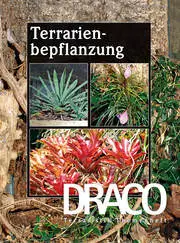
Draco 62 - Succulents as terrarium planting

Article no: draco62

CHF 32.00

Stock: 0

Ready for dispatch in 1-3 days, delivery time 7 working days

Delivery between Tuesday, 7 July and Wednesday, 8 July
Zahlungsarten
Product information "Draco 62 - Succulents as terrarium planting"

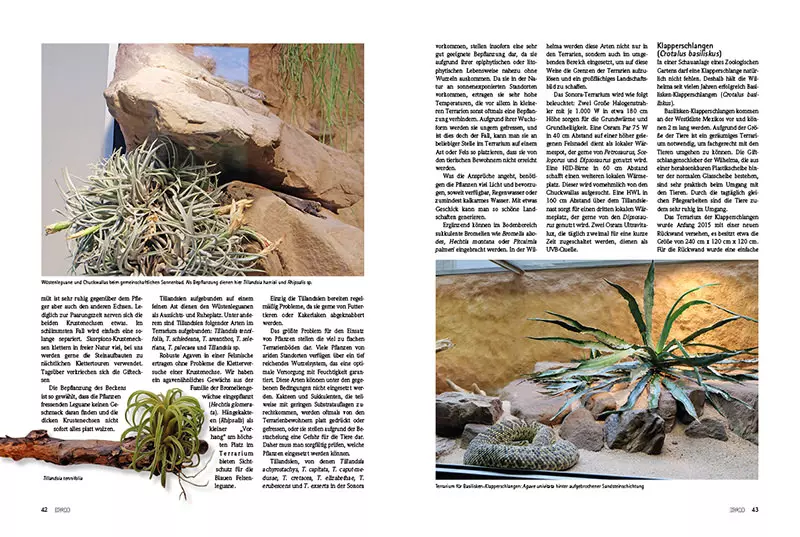
Draco 62 - Succulents as terrarium plants

Contents:

Editorial

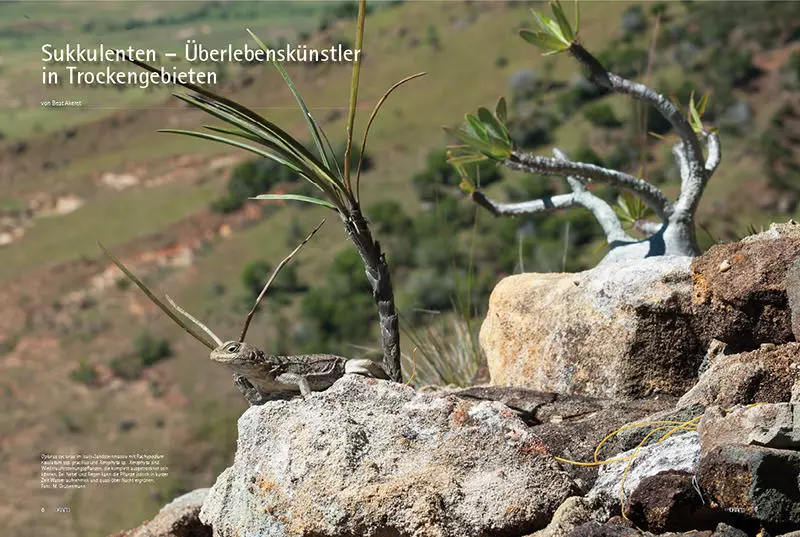
Succulents – survival artists in arid regions
Beat Akeret

Reptiles and succulents
Beat Akeret 

Succulents as terrarium plants
Beat Akeret

Succulents in the dry terrariums in the Wilhelma Zoological and Botanical Gardens, Stuttgart
Joscha Schulz & Björn Schäfer

Aloes, pachypodiums, euphorbias and orchids - dry habitats in the south-central highlands of Madagascar
Moritz Grubenmann

Pointed tongues from Central Gondwana – Sansevierias as terrarium plants
Beat Akeret 

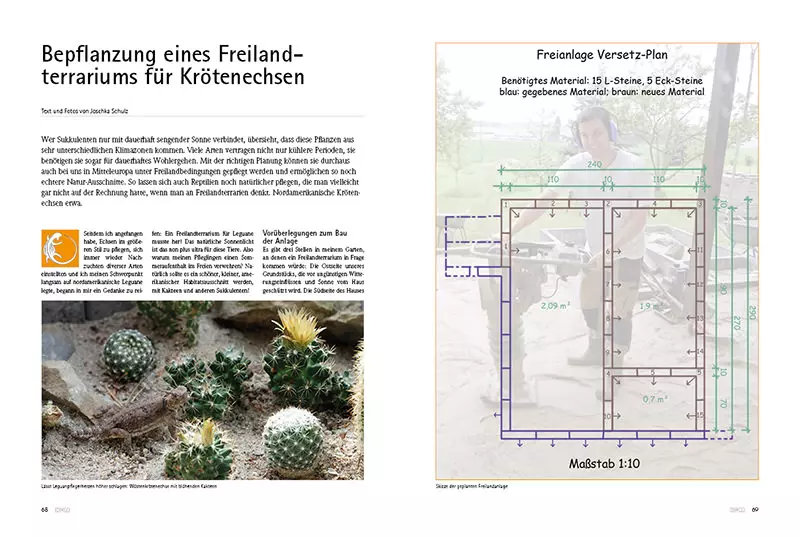
Planting an outdoor terrarium for toad lizards
Joschka Schulz 

Succulent plant sources and associations
Beat Akeret

Composition
Feeding recommendation
Technical details
Size information

0 of 0 reviews

Give us a rating!

Share your experience with the product with other customers.


Customers also bought

Draco 27 - Highland
Draco 27 - HighlandContents: 2 Editorial 4 Mountains and highlands - reptiles and amphibians in an extreme habitat Heiko Werning & Claudia Wolf 28 New Zealand - the discovery of new geckos at the end of the worldRonald Coleman 32 Giant toads and co. in the highlands of south-west ChinaKlaus Detlef Kühnel 36 Rwenzori - in search of amphibians in the mountains of the moonKatharina C. Wollenberg & Stefan Lötters 40 The keeping of highland chameleonsAndreas Böhle 45 chameleons in the Oster Usambara Mountains in northern TanzaniaWerner & Yvonne Lantermann 49 Spanish adders are also poisonous ...Axel Kwet 54 In search of mountain lizards in three continents Wolfgang Bischoff 74 Life, care and breeding of the alligator skink Mesaspis moreletii (Bocourt, 1871)Uwe Schlüter 81 Magazine

CHF 18.40

Draco 41 - Terrarium planting
Draco 41 - Terrarium plantingContents:EditorialTerrarium plantsBeat AkeretPlants in aquaterrariumsBeat SchmitterA touch of the Mediterranean - planting outdoor enclosures for Mediterranean tortoisesMichael WirthSucculents and other plants for the dry terrariumBeat AkeretClimbing plants and epiphytes - character plants in the forest terrariumBeat AkeretArtificial plants in the terrariumRoger AeberhardHerbs, grasses, houseplants, whatever is beautiful should grow in the tank - selected examples of planted terrariumsBeat Akeret

CHF 18.40

Reptilia 65 - Girdled lizards
Reptilia 65 - Girdled TailStar tortoiseIndigo snakeMonitor IslandContents: 2 EDITORIAL 3 READER LETTERS 4 MAGAZINE 12 DATES 14 WESTERN HERP PERSPECTIVESA country tripFrom B. Love 16 PHOTO REPORTAGEBelt-tailed lizards – the genus CordylusBy H. Schwier 24 KEEPING AND REPRODUCTIONDwarf Belted Tails: keeping and Breeding of Cordylus tropidosternum(Cope, 1869)From P. Fritz 32 KEEPING AND REPRODUCTIONCordylus mossambicus FitzSimons, 1958A persistent and interesting keeperFrom H.-P. Berghof 40 HERPETOFAUNAThe giant belted skink Cordylus giganteus – unique and mysterious at the same timeFrom H. Schwier 45 REPORTAGEThe radiated tortoise of Madagascar -an armoured beautyFrom J. Hammer 51 PORTRAIT AND POSTERPhilothamnus punctatusFrom M. Dobiey 56 KEEPING AND REPRODUCTIONNewts of the genus Paramesotriton- The Vietnamese and Laotian warty newtsFrom P. Bachhausen 64 KEEPING AND REPRODUCTIONDrymarchon couperi – the Eastern Indigo SnakeFrom N. Miele 72 TRAVELThe island of the monitor lizardsFrom A. Gumprecht 88 FAQ - FREQUENTLY ASKED QUESTIONSCorn snakesBy K. Kunz 92 REPORTAGESerpentário SanmaruFrom M. Junge 95 LIBRARY 104 BRUTKASTEN Chicken heart, be braveBy H. Werning

CHF 11.20

Draco 60 - The reptiles of Europe
Draco 60 - The reptiles of Europe Contents: EditorialReptiles in Europe – a current overview Axel Kwet & Benny TrappThe Spanish reptile fauna Axel Kwet & Benny Trapp The vipers of EuropeAxel Kwet & Benny TrappReptiles of the Greek Aegean IslandsAxel Kwet & Benny TrappIberian mountain lizards and Spanish wall lizards – two evolutionary-biological model cases Axel Kwet & Benny TrappList of the reptiles of EuropeAxel Kwet & Benny Trapp

CHF 32.00

Draco 46 - Paludaria and aqua terrariums
Draco 46 - Paludariums and aqua-terrariums Contents: Editorial Paludariums and aqua-terrariums – a brief introduction to the subjectBeat Akeret No "land under" in aqua-terrariums – land parts for aquatic turtlesAndreas S. Hennig Keeping and breeding moss frogs of the genus Theloderma – some comments from practiceMikhail F. Bagaturov Construction, set-up and technology of an aqua-terrariumBeat Akeret Fishing spiders in the aqua-terrarium – keeping, breeding and rearing spiders of the genus AncylometesReinhard Hübers & Roland Lautensack Optimum care conditions in an aqua-terrarium for day and dwarf geckosJens Westig Plants in paludariums and aqua-terrariumsBeat Akeret Dragons in the aqua-terrarium: keeping and breeding the Philippine sailfin lizard, Hydrosaurus pustulatusMichael Wirth & Florian Riedel 

CHF 18.40

Draco 04 - Iguanas
Draco 04 - Iguanas Contents: Page content 2 Editorial 4 Iguanas, by H. Werning 18 Sex differences in iguanas, by U. Schlüter 29 Islands - Hot spots of biodiversity as habitat of a unique iguana fauna, by M. Monzel 38 About the iguanas of Madagascar, by W. Schmidt and K. Liebel 44 Desert keel-tailed iguanas from Peru, by U. Schlüter 50 Keeping, breeding and care of Anolis cybotes, by M. Rogner 54 The desert iguana Dipsosaurus dorsalis: lifestyle, keeping and breeding, by H. Wölfel 62 Care of green iguanas, by G. Köhler 70 Psychogenic egg-laying difficulties in a green iguana (Iguana iguana rhinolopha), by J. Rauh 73 Iguana farming, by G. Köhler 79 Book box 93 Magazine

CHF 14.90

Suggested products

Handbook of food plants for tortoises and other reptiles
Handbook of forage plants 2nd revised editionMarion Minch is not only a successful breeder of diverse tortoises for many years, but also an excellent connoisseur of native wild herbs. She founded and runs samenkiste.de, which is well known to many tortoise keepers and nature lovers. Her name is inextricably linked with reptile care and species-appropriate nutrition for tortoises. Her handbook of food plants summarises the most important native food plants for herbivorous and omnivorous reptiles. She not only considers tortoises, but also iguanas, spiny-tailed dragons and even chameleons. From the basics of plant biology to native wild herbs to suitable food plants for hardy tropical reptile species, this comprehensive work provides the basis for species-appropriate keeping. In the expanded and supplemented 2nd edition, the plant section is divided according to flower colour. This makes it even easier to identify wild herbs. The work has also been supplemented with a wealth of additional information and many pictures.

CHF 46.50

Geckos
Geckos in the terrarium by Astrid FalkThe book offers a comprehensive introduction to geckos and their species-appropriate keeping in terrariums. It explains what you need to think about before buying a gecko and what preparations should be made. The book describes in detail how the terrarium is technically equipped and set up. The care of the animals, their special features and behaviour, their diet, reproduction and rearing of young animals are described, as well as diseases and husbandry problems with tried and tested suggestions for prevention and treatment. Individual gecko species that are particularly suitable for keeping and breeding in terrariums are portrayed in detail in the second part of the book.

CHF 28.50

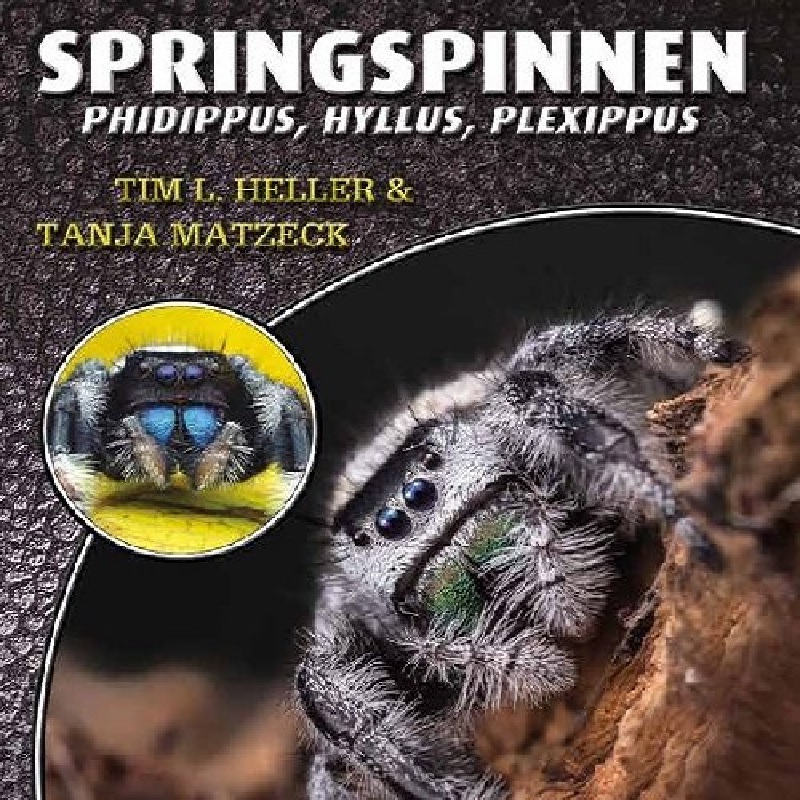
Jumping spiders Phidippus, Hyllus, Plexippus
Book Jumping Spiders - Phidippus, Hyllus & Plexippus A guide to keeping jumping spiders of the genera Phidippus, Hyllus & Plexippus. Who can resist the charm of jumping spiders? The childlike appearance of their expressive face simply leaves no one cold! In addition, their behavior is extremely exciting to observe, their colors are bright and their requirements for species-appropriate keeping are very easy to meet. No wonder these likeable jumpers are all the rage! This volume in the "Species by Species" series describes in detail what to look out for when buying and keeping them, introduces the most commonly kept species and color forms and provides plenty of tips on how to keep them successfully - so you can be sure they will breed well! Species by Species introduces you to the books in this series, which present the most popular terrarium animals. Each volume offers you detailed, practical care instructions and all the information you need to successfully breed your animals. All important questions from the required tank size to terrarium set-up, technical equipment, species-appropriate nutrition and disease prevention are answered with numerous tricks and tips. Experienced, long-standing breeders reveal how you can encourage the animals to reproduce and raise healthy young. All this in full color, generously illustrated and attractively designed - just about your terrarium animal - species by species

CHF 23.90

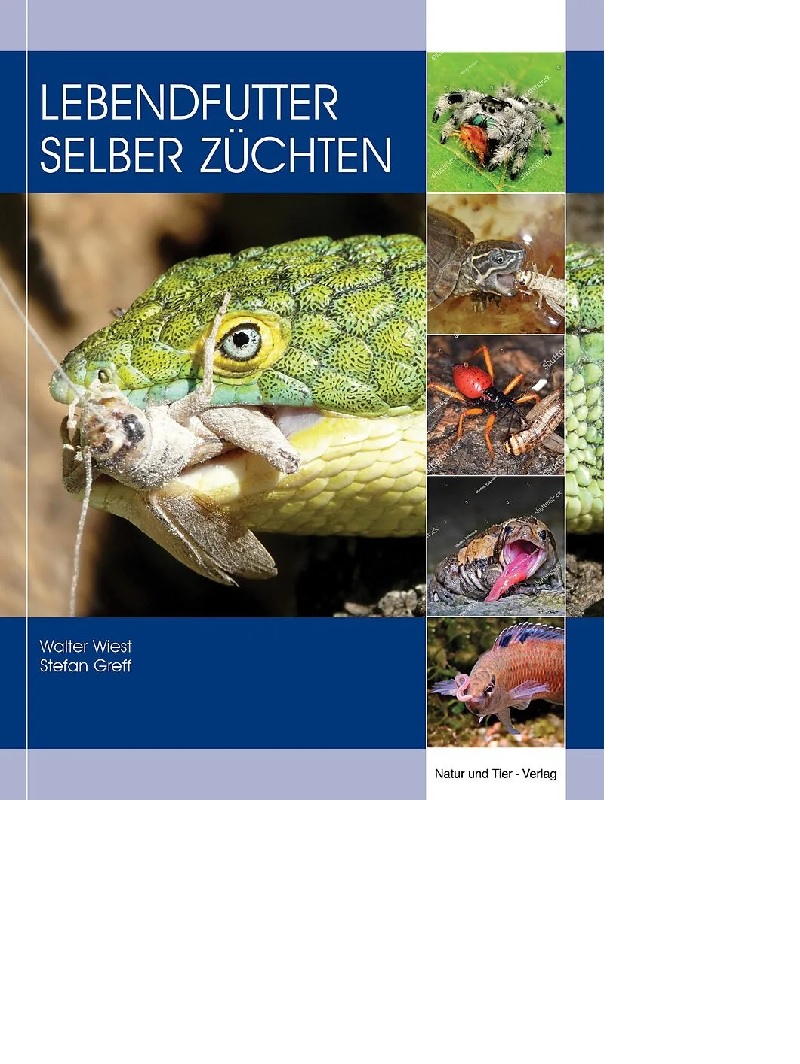
Book Breeding live food yourself
Book "Grow your own live food" - The perfect guide for pet owners Discover practical and detailed instructions on how you can easily breed food for your reptiles, birds, fish or other animals yourself in the book "Breeding live food yourself". With valuable tips on various food insects, their care and breeding, you can save money and ensure a species-appropriate diet for your pets. Contents of the book: Step-by-step instructions for breeding feeder insects Information on the best types of food for reptiles, birds and fish Care instructions and breeding conditions for various live food species Tips for sustainable and cost-effective food production Why breed your own live food? Get healthy, fresh food for your animals Save money and reduce dependence on pet shops Promote the health and well-being of your animals with species-appropriate food Whether you are a beginner or an experienced pet owner, this book provides you with everything you need to successfully breed live food yourself.

CHF 46.50

Marginata 69 - New Guinea tortoises
Marginata 69 - New Guinea tortoises – the genus ElseyaCover storyThe unrecognised beauties: New Guinea tortoises (Andreas S. Hennig)My experiences with Branderhorst's New Guinea tortoise, Elseya (Elseya) branderhorsti (Ouwens, 1914) (Andreas S. Hennig)Keeping and breeding of Rhodin's New Guinea tortoise, Elseya (Hanwarachelys) rhodini Thomson, Amepou, Anamiato & Georges, 2015 (Andreas S. Hennig)PortraitGeoemyda spengleri, Chinese serrated tortoise (Andreas S. Hennig)ReportageMacrochelys temminckii – Experiences and impressions with vulture tortoises part 2 (Reiner Praschag)KeepingAn alternative to year-round keeping of the Egyptian tortoise in the terrarium – my experiences with seasonal outdoor keeping of Testudo kleinmanni (Ricarda Schramm)EtymologySawbacks and living maps part 4: Graptemys gibbonsi, Pascagoula humpback tortoise (Holger Vetter)Classifieds & animal placement

CHF 16.50

NTV, bromeliads, orchids and ferns in the tropical terrarium
NTV - Bromeliads, orchids and ferns in tropical terrariums 128 pages 181 colour photos 1 graphic Format: 16.8 x 21.8 cm Author Benjamin & Wolfgang Schwarz Publisher NTV Contents: A tropical terrarium without lush plant splendour? Unthinkable! The plants not only ensure a balanced climate and high humidity, but also provide the animals with hiding places or even egg-laying sites. Bromeliads and orchids in particular, but also ferns, are also wonderful to look at and an ornament for any terrarium. How to care properly for these jewels among plants is shown by the experienced “tropical terrarium keepers” Wolfgang and Benjamin Schwarz in this guide. They convey from their own many years of practice what is particularly important in caring for these plants, give tips on lighting, temperature, humidity and of course also on species-appropriate watering and fertilising. The authors offer detailed advice on the construction, technology and sensible setup of a beautifully planted tank and clearly explain, step by step, how to tie and attach epiphytes or how to plant a cork oak trunk. A comprehensive species section, lavishly illustrated with colour photos, presents in detail those bromeliads, orchids and ferns suitable for care and addresses their particular requirements. The overview with all species particularly recommended for beginners also makes it easier for less experienced terrarium keepers to select suitable plants. And, as the icing on the cake, the construction of an artificial waterfall is described – vividly illustrated by a large photo series – an adornment for every tropical terrarium.Named Book of the Month by DATZ!Beautifully planted tropical terrariums – no problem with this book!Wolfgang and Benjamin Schwarz reveal the best tips and tricks from their many years of experience with the jewels among plants: everything you need to know about bromeliads, orchids, ferns and their care set up the tropical terrarium close to nature the right terrarium technology: how to invest your money wisely tying epiphytes consistently practical instructions all species suitable for beginners at a glance huge species section with wonderful colour photos Extra: building an artificial waterfall

CHF 35.90

NTV, amphibians at the garden pond
NTV, amphibians at the garden pond André de Saint-Paul, Ingo Brand & Wolfgang Schmidt 104 pages 96 photos Format: 16,8 x 21,8 With references to"Chemistry in the garden pond""Safety at the garden pond""Design" Content: You will not only get a beautifuland interesting small biotope to theown property, but can also be usedmake an important contribution to nature conservation! Everything you need to know in order for amphibians to settle in your pond The amphibian-friendly garden pond Large species part with splendid pictures With "amphibian calendar" for the garden pond Press commentaries: Following a taste of the time more and more garden pond friends lay themselves ponds, many of them become so-called natural ponds. Surely, only the fewest investors consider thereby, what they can cause. For these a book appeared, which can answer each question, which they could ask, exhaustively, if it refers to the topic: Amphibien at the garden pond . Who knows them all, toads, toads, frogs and newts? All animal species that before man had settled in the places of today's ponds had long been resident and indigenous and had been suppressed for the time being. What to do when they return suddenly and inconspicuously? Many gardeners are aware of the fact that this can happen in well-designed gardens and have been described in some articles (...). So what should we do to get to know these new citizens of the garden better and, if possible, to help them even more? Very simple: Buy and read the book discussed here!Rarely has a book summarized so much worth knowing about this topic so succinctly and comprehensibly.Some garden friends, who are not quite firm with the determination, will use the many clear photos beside the text, in order to determine its pond inhabitants correctly. The text leaves also no wish open, there are chapters about the animal species themselves and such, which have apparently secondary meaning, but for a longer existence of pond and animal are extremely important: "Nature as a model", "Legal regulations", "Settlement of amphibians", "Water supply", "Pond technology" and "Safety at the garden pond" are just a few examples. Everything is presented very clearly and comprehensibly for zoological laymen and is also exciting to read.Conclusion: A 5-star book!Walther Rohdich in The Aquarium 08/2002Recommended(...)Altogether (...) a recommendable book for garden owners who are interested in amphibians, as well as for all amphibian friends and those who want to become one.Petra Kölle in DATZ 9/2002(...)(This book) is intended to serve those who want to create a garden pond in their garden that is as close to nature as possible.The book first of all examines the question of whether the garden pond can be a Noah's ark for amphibians and what position amphibians occupy in the biotope garden pond. The next chapter gives a brief overview of amphibians: evolution, systematics, way of life, catching prey, breathing, voice, reproduction, from egg to lurch, migrations and enemies and diseases. This gives everyone the basic knowledge they need to better understand amphibians. (...)In the following kind descriptions all amphibian-types native with us are introduced except for two (...) in text and picture. Thereby, distribution, way of life and reproduction are discussed in detail. The garden ponds for amphibians are taken into account afterwards, whereby also the remaining garden is included in the discussion. The question "Fish and amphibians in a body of water - is that possible?", which is important for many people, is answered as well as questions about legal regulations, settlement in one's own garden and the construction and maintenance of a garden pond. (...)The last part of the book is about safety at the garden pond, care tips and an "amphibian calendar", which gives an overview of important events in the course of the year of the native species. At the end there is a glossary, a bibliography and an index.The book can be considered as quite successful and gives also the interested layman the possibility of making itself fast familiar with the topic. (...) Altogether a recommendable reading for "newcomers" or advanced readers who are interested in this topic.Peter Janzen, DGHT-AG Anuren, in elaphe 3/2002A feel-good garden for frogsA beautiful garden pond is not just a piece of quality of life. It can also make a contribution to nature and species conservation, according to André de Saint-Paul, Ingo Brand and Wolfgang Schmidt in the book "Amphibien am Gartenteich", published by Natur und Tier - Verlag. Location, pond type, water supply, planting and technology - nothing is left out. In addition the Artenteil equipped like the entire book with excellent color photos presents all domestic tail and frog through species with detailed information and refers also to their special needs.Review in Dresdner newest News of 30.05.2002(...)The book shows the right way. More and more garden owners want to create a piece of nature with frogs, toads and newts.One is also reasonably informed about the work involved in setting up and maintaining such a watercourse. The care of the small water is also important, and here the author gives many care tips.Also the amphibian calendar is valuable, which clearly tells each owner of a garden pond what is happening at which time of the year in his water and when he can find which kind of amphibian there.Get a beautiful and interesting small biotope on your own property. Well informed you can make an important contribution to nature conservation!

CHF 32.50

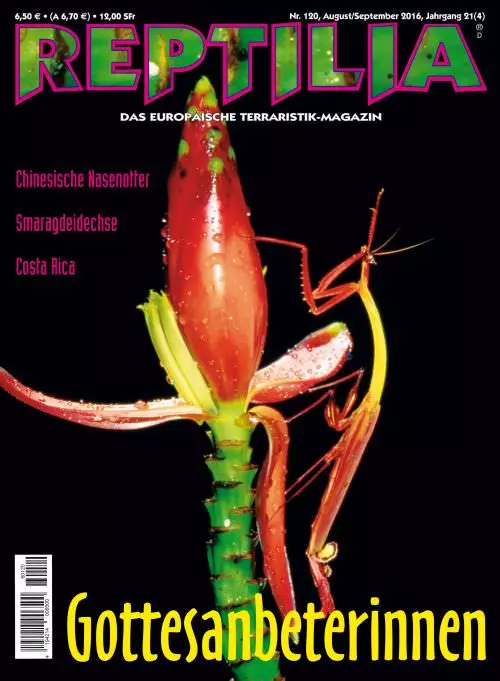
Reptilia 120 - Praying Mantises
Reptilia 120 - Praying Mantises Chinese viperEmerald lizardCosta Rica Contents: Cover story: Praying MantisesNobody can escape the fascination of praying mantises. These predatory insects with their alien appearance and martial mating habits have long secured a permanent place in terrariums. We offer an overview of mantids in breeding, the classics, and the latest trends. We also feature an unusual species from the Philippines and look to eastern Germany, where Mantis religiosa has spread. EditorialMAGAZINEDATES Photo storyThe fascination of praying mantisesK. Kunz Keeping and breedingPraying mantises. The basics of keeping in terrariumsC. J. Schwarz REPORTAGEPraying mantises on the advance in eastern GermanyN. von Lettow-Vorbeck BiologyPraying mantis, change your tune. On the challenge of identifying praying mantises using the Philippine species Creobroter meleagris as an exampleC. J. Schwarz ReportageThe Chinese viper (Deinagkistrodon acutus): a herpetological and cultural phenomenonDr. T. Eimermacher Keeping and breedingThe banded fire salamander (Salamandra salamandra terrestris).  Distribution, habits and breedingM. Rogner RreportageA display terrarium for fire salamandersR. Hoppe Animals of our homelandThe emerald lizardR. Leptien SERVICE WESTERN HERP PERSPECTIVESBut it’s a dry heatB. Love ALSO NEAR YOU TravelCosta Rica – Paradisiacal biodiversity between the Atlantic and the PacificN. Weinbeer PREVIEW INCUBATOR The breakH. Werning

CHF 12.00

Draco 18 - Geckos
Draco 18 - Geckos Contents: 2 Editorial 4 The geckos of the worldMirko Barts and Felix Hulbert 18 Diurnal dwarf geckos from Africa and Madagascar: the genus LygodactylusBeate Röll 28 The Madagascar big-headed geckos (Paroedura)Klaus Liebel, Michael Mayer and Wolfgang Schmidt 40 News from Madagascar: care, breeding and way of life of Uroplatus pietschmanni BÖHLE & SCHÖNECKEr, 2004Patrick Schönecker and Andreas Böhle 45 Narrow-fingered geckos, Stenodactylus sthenodactylus (LIECHTENSTEIN, 1823), in the terrariumKarsten Grießhammer 52 Dwarf geckos (Tropiocolotes PETERS, 1880) from North Africa - Habitats, behaviour, care and breedingUwe Schlüter 59 Agamura persica – The spider gecko from the Middle EastMichael Meyer 64 Experiences with the house gecko (Hemidactylus frenatus) Peter Maria Müller 68 The fringed-tailed house gecko (Cosymbotus platyurus): keeping and breeding in the terrarium and free-rangeIngo Kober 76A tiger in the terrarium – keeping and breeding Goniurosaurus araneus (GRISMER; VIETS & BOYLE, 1999)Andreas Dickhoff 82 Keeping and breeding the knob-headed gecko, Rhacodactylus auriculatus BAVAY, 1869 Stefanie Bach 90 Book box 95 Magazine

CHF 16.80

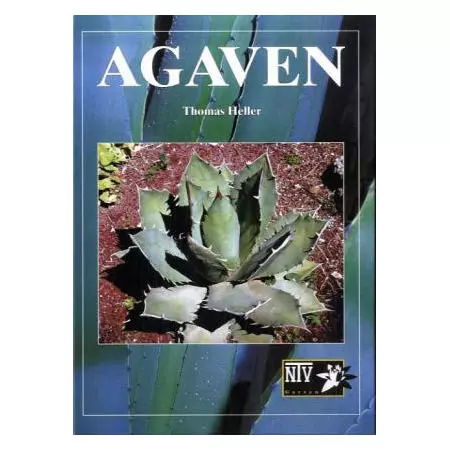
NTV, Agaves
NTV, Agaves - All about the magnificent and attractive show plants 168 pages 199 colour photos 2 cards Format: 17.5 x 23.2 cm, hardcover 2nd enlarged edition Author Thomas Heller  Contents: Agaves are magnificent, extremely attractive show plants with a high decorative value. Many people only know them from botanical gardens, where they are among the centrepieces of exhibitions. However, these plants can also be kept at home, and the different size classes of the countless species allow even plant lovers with little space to choose the right species for them. Agave expert Thomas Heller describes everything to do with the biology and culture of agaves in this standard reference work and does not omit any aspects of cultural history. Anyone who also wants to learn something about tequila & co. will also be well served here. The excellent photos, many of which are of original locations, also make the book a feast for the eyes. Botanical-geographical basics Economic importance and utilisation All information about successful cultivation: location and temperature, plant pots and substrate, watering and fertilising, diseases and pests, propagation Extensive species section with all relevant agave species Brilliant colour photos

CHF 35.90

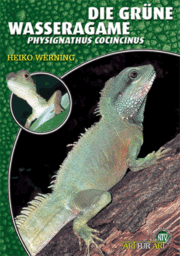
The green water dragon
All about the green water dragon by Heiko Werning 64 pages Format: 14.8 x 21 cm 43 colour photos Paperback Author Heiko Werning Contents: The green water dragon is without question a "classic" of terraristics. For decades it has been a permanent fixture both in the pet trade and in the terrariums of enthusiasts.REPTILIA editor Heiko Werning explains in this volume of the "Species by Species" series what is involved in the species-appropriate keeping and care of the green water dragon and, of course, also reveals how you can successfully breed your favourites and raise the adorable young animals. Systematics and body structure The fascinating biology: From the life of the green water dragon All information on species-appropriate keeping: from suitable terrariums to equipment and technology to feeding Successful breeding: Mating stimulation, incubation of the eggs and rearing the young Solutions to problems: How to avoid the most common mistakes in care and how to help sick animals Brilliant photos

CHF 18.50

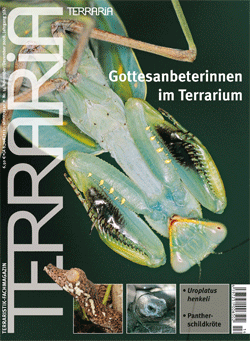
Terraria 14 - Praying Mantises in the Terraria
Terraria 14 - Praying Mantises in the Terrarium Uroplatus henkeliPanther tortoise Contents: 2 Editorial Kriton Kunz4 Magazine Gondwanaland – a future-orientated project at Leipzig Zoo / New findings on the taxonomy of pythons / snakes and culture at the Potsdam Natural History Museum / The Frankfurt Zoological Society and their activities on Galápagos12 TERRAglobal Snake dealer Joachim Bulian On the road in the Andes Maik Dobiey Cover story: Praying Mantises16 Praying Mantises: Fascinating terrarium inhabitants Timm Adam 28 A terrarium for praying mantises Timm Adam33 How to: Tips for species-appropriate care for praying mantises Timm Adam42 Breeding of Mantodea Timm Adam46 Lampropeltis triangulum andesianus – rare terrarium jewel with a dubious reputation Part 2: Reproduction Thorsten Schmidt54 Grey giants among themselves – about panther tortoises and elephants in Addo Elephant National Park, South Africa Part 3: Reproduction and lifestyle of the panther tortoise Michael Wirth63 Biology, keeping and breeding of Henkel's flat-tailed gecko, Uroplatus henkeli Christian Müttherthies71 Travel Herpetological impressions during iguana search on the French Antilles: Martinique Stefanie Bach & Patrick Schönecker82 New Species Greek wall lizards with a new name / Two new tree frogs from New Guinea85 Among Researchers In the valleys of the Andes: still unknown and already threatened Claudia Koch89 Test run Aquarium internal filter for terrarium keepers Kriton Kunz95 Eye-catcher Visiting Betty Heiko Werning99 Near You 103 Preview 104 Incubator The invasion of the stray mantises Heiko Werning

CHF 12.00