White assel (Trichorhina tomentosa)

Article no: PO-WAS

CHF 6.90

Stock: 0

Ready for dispatch in 1-3 days, delivery time 14 working days

Delivery between Tuesday, 14 July and Wednesday, 15 July
Zahlungsarten
Product information "White assel (Trichorhina tomentosa)"

White woodlice - Trichorhina tomentosa

These insects are not only used as feeder animals, but also as health police in tropical terrariums.

  • only 4mm
  • feeder animals
  • good for the substrate (humid terrariums)

White woodlice are a species of isopod that is only about 4 mm in size and is known from tropical forest soils. They can therefore tolerate neither dryness nor cold temperatures.
These insects are not only used as feeder animals but also as health police in tropical terrariums. The animals reproduce independently in warm, moist soil and in addition to dead feeder animals, they also consume plant residue or decaying wood.

Order by Sunday evening - delivery on Thursday

Orders received by Sunday evening will be shipped by A Mail on Wednesday or Thursday.
Please provide a recipient address where the parcel can be delivered.
We accept no responsibility for parcels that are delivered late or collected late.

Even with the greatest care, it can happen that feeder animals die due to temperature fluctuations or unpredictable events. We accept no liability for this. 

Composition
Feeding recommendation
Technical details
Size information

7 of 7 reviews

4.86 out of 5 stars


86%

14%

0%

0%

0%


Give us a rating!

Share your experience with the product with other customers.


31 October 2024 08:24

Will order again

I can only recommend

12 January 2021 18:04

Colonie peu nombreuse à l'arrivée, a bien

Colonie peu nombreuse à l'arrivée, a bien supporté le transport. I separated the colony into 2 and let them develop for a few more weeks, be sure that the population is sufficiently dense for a 90x60cm terrarium on the ground

27 June 2018 10:46

Very good...

Very good

22 April 2018 18:35

super soil police. Should...

super soil police. Should not be missing in any Tropenterra for the substrate.

7 November 2017 09:07

Lots of animals in the container.

Lots of animals in the container.

30 October 2017 19:11

have often ordered woodlice...

I have often ordered woodlice here and am very satisfied

20 July 2017 17:56

Very fast despatch, good quality...

Very fast dispatch, goods perfectly packaged and the animals in top condition. Happy to order again.

Customers also bought

Springtails, breeding batch, tin
Contents Food animals: 1/2 liter
Springtails - breeding batch (tin)Springtails are mainly fed to amphibians such as dentrobates etc., which require particularly small insect food. for amphibians or young reptiles very good for the substrate only a few millimetres in size Springtails are tiny urine insects that are kept in moist soil and are sometimes found in houseplants. They are mainly fed to amphibians such as dentrobates etc., which require particularly small insect food. Springtails are supplied in breeding batches, which can also be fed and propagated with ornamental fish flake food. The animals should be kept at room temperature up to 25 degrees C.Order by Sunday evening - delivery on ThursdayOrders received by Sunday evening will be dispatched by A Mail on Wednesday or Thursday.Please enter a recipient address where the parcel can be delivered.We accept no responsibility for parcels that are delivered late or collected late. Even with the greatest care, it can happen that feed animals die due to temperature fluctuations or unpredictable events. We accept no liability for this. 

CHF 8.90

Live forest moss 1 liter
Live forest moss for terrariumsstores humidityas a substrate for laying eggs (depending on species)natural decorative material1 liter contentOur live forest moss is the ideal addition to your terrarium. The moss creates a natural environment and provides humidity, which is vital for many reptiles, amphibians and insects. It is easy to maintain and offers the inhabitants of your terrarium both a natural hiding place and a soft surface. As the moss is alive, it contributes to air purification and creates a healthy microclimate. Bring nature directly into your terrarium with our living forest moss!

CHF 5.90

MossBase powder 40g
Shroomroom MossBase 40 g - for terrariums and paludariums Moldable base for moss-covered back walls or cavesShroomroom MossBase is a natural decoration and design element in powder form (40 g), developed for creative landscapes in terrariums and paludariums. Mixed with water, it creates a mass with which you can prepare dry surfaces in a targeted manner in order to realistically design decorative moss areas. Properties and advantages Natural decorative powder for creating moss surfaces in terrariums and paludariums Is mixed with water to form a malleable mass (typically 40 g powder with approx. 80 ml water) Unique consistency for preparing dry surfaces for moss growth Ideal as a base for the targeted placement of moss spores and plant seeds Perfect for creating moss-covered backgrounds or nature-like landscapesIf you want to create natural scenes in your terrarium or paludarium with moss areas, overgrown back walls or detailed transitions, Shroomroom MossBase is a well thought-out design aid. The product is supplied as a powder and is mixed with water to form a malleable mass. A typical mixture is 40 g powder to around 80 ml water, which creates a consistency that is easy to model. The mixed mixture is suitable for preparing dry surfaces so that mosses adhere better later and can be integrated decoratively. MossBase is particularly exciting in combination with Shroomroom MossMix: as a base, it helps you to fix moss, fern or spore material specifically to the desired substrate in order to achieve lasting, convincing, nature-like looks. Important for correct application: Shroomroom MossBase is a purely decorative design element. It is not a substrate for plant growth, a fertilizer or a growth promoter. You use the product exactly where it has its strengths: in detailed, near-natural terrarium and paludarium design. Zoo Roco tip Apply MossBase in thin layers and create soft transitions so that the surface looks natural later on. Preferably place moss areas in zones where your setup offers the right microclimate. For particularly realistic results, many terrarium builders work with a base of MossBase and then apply MossMix in precise areas instead of covering the entire surface.Customers searched for: MossBase, Shroomroom MossBase, moss back wall terrarium, moss surface modeling, paludarium moss wall, terrascaping moss, attach moss to terrarium, MossMix, moss-covered background

CHF 17.90

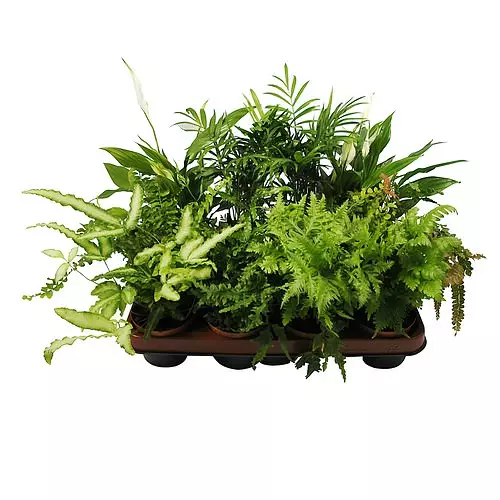
Ferns - wet terrarium
Ferns for wet terrarium assorted and mixted for wet terrairums A great variety for all wetterrarien! The plants are delivered by us sorted according to the stock. You will not receive the whole assortment shown, but as many pots as you order.

CHF 6.50

Coconut shred for terrariums
Coconut Fiber SubstrateCoconut Fiber Bedding for your TerrariumCoconut fiber are an optimal moisturizer and are perfect for a rainforest environment. The coconut bedding is also completely free of additional fertilizers. The bedding was also produced heat sterilized and is free of germs and fungi. The coconut fiber bedding will also expand slightly after filling and with 4.5 L bedding package, you will get about 20 L of bedding.100 % organic coconut fiberOptimal for rainforest terrariums

CHF 4.20

Earthworm (Lumbricus terrestris) 10 Pieces
Earthworm (Lumbricus terrestris) - 10 Pieces also for fishing animal food popular Check out until Sunday evening - delivered on Thursday Orders placed until Sunday evening with us will be shipped on Wednesday or Thursday by priority mail.We ask you to pay a recipient's address to which the package can also be delivered.We assume no responsibility for packages delivered too late or be picked up too late.

CHF 4.50

Suggested products

New
Insect buffet
Repto Insect Buffet for controlled insect feedingThe Repto Insect Buffet streamlines terrarium feeding, especially for chameleons. Insects remain centralized in one spot rather than dispersing throughout the terrarium – delivering a clean, organized feeding experience.Key benefitsMore control over feeding: Insects stay in one placeLess stress in the terrarium caused by insects crawling aroundEasier observation: your pet finds its prey more quicklySupports a clean feeding routine and better visibilityZoo Roco tip: Position the insect buffet so that your chameleon has a good ‘perch’ with a clear view of it. This will help it find the insects more quickly. After feeding, remove any leftover insects regularly to keep the amount of food under control.

CHF 9.50

Drosophila mite separator
Drosophila Mite Separator The Drosophila mite separator is a practical aid for the hygienic preparation of feeder insects. It reliably separates mites from Drosophila (food flies) before they are fed to reptiles, amphibians or other insectivores. This reduces the risk of mite transmission and supports clean feeding. Product features - at a glance - Effectively separates mites from Drosophila - Facilitates the hygienic preparation of feeding flies - Reduces the risk of mite transmission - Quick and easy to use - Suitable for daily feeding - Ideal for terrariums and breeding - Reusable and easy to clean The Drosophila mite separator was specially developed to separate mites from the Drosophila before feeding. Especially in terrariums and insect breeding, mites can multiply quickly and be unintentionally transferred to terrariums. (Food mites do not go to terrarium animals such as reptiles and amphibians) By using the mite separator, the food flies can be hygienically prepared before feeding. The Drosophila are separated, while mites remain in the container or are separated out. This contributes to cleaner feeding and the well-being of the animals. The mite separator is easy to use, quickly ready for use and is suitable for both hobby keepers and professional breeders. Zoo Roco tip Use the mite separator regularly, especially with freshly purchased or home-bred Drosophila. Clean the tool after use to prevent mites from accumulating again.

CHF 9.90

Repto tweezers stainless steel black
Repto Stainless Steel Tweezers  - Precise Tool for Terrarium Care and Decoration The Repto Stainless Steel Tweezers are an indispensable tool for all reptile keepers who value precision and comfort. With these high-quality tweezers, you can feed your animals safely and accurately, place decorations precisely and keep the terrarium clean and tidy. The rust-free stainless steel ensures a long service life and high resistance, even under humid conditions in the terrarium. Advantages at a glance: Precise handling: Ideal for targeted feeding of reptiles such as geckos, snakes or spiders, without direct contact with the food. Versatile use: Perfect for precise placement of decorative elementsEasy cleaning: The smooth stainless steel surface is easy to clean, so you can keep your terrarium hygienically clean at all times. Durable and robust: Made from rust-free stainless steel, the tweezers offer high resistance to moisture and other environmental conditions in the terrarium. Ergonomic handle: The non-slip handle ensures comfortable handling and enables precise control, even for longer applications. Versatile applications: Feeding: With the Repto Stainless Steel Tweezers, you can feed your reptiles safely and hygienically without having direct contact with the food. These tweezers are particularly useful for carnivorous reptiles that prefer live food such as insects. Placing decorations: Place plants or other decorative elements in your terrarium with the utmost precision. The tweezers help to optimally design the structure of your animals’ habitat Cleaning and care: Effortlessly remove leftover food, dirt or dead plants from your terrarium. The Repto Stainless Steel Tweezers enable thorough cleaning even in hard-to-reach corners.Zoo Roco Tips:Use the Repto Stainless Steel Tweezers for precise and hygienic feeding of your reptiles, especially for animals that are sensitive to human contact. The tweezers are also helpful when decorating your terrarium, allowing you to place plants safely and accurately. Be sure to clean the tweezers regularly to maintain hygiene in the terrarium.

From CHF 11.90

Giant mealworms (Tenebrio molitor)
Contents Food animals: approx. 50g tin
Giant mealworms - Tenebrio molitorThe mealworm (Tenebrio molitor) - mealworms are classic food for soft-feeding birds. For birds also available in small quantities for reptiles Giant mealworms are mealworms in which a special breeding method causes the larvae to pupate much later. As a result, the larvae become much larger and almost reach the size of Zophobas. Nutritional values, storage and all other parameters correspond to those of normal mealworms.We obtain the giant mealworms from a breeder of fishing bait. Substances that may affect the pupation of the animals may have been used in the breeding of the worms.The mealworm is actually the larva of the mealworm beetle. It hatches from an egg and grows to a size of approx. 25 mm after moulting several times. Finally, the beetle larva pupates, from which another beetle emerges. Mealworms are among the oldest commercially bred food animals. They are relatively easy to breed and are produced in large numbers. Mealworms are actually pests that are mainly known from grain mills, as the larvae prefer to feed on flour or its waste products. As it is not possible to use insecticides in mills, it is difficult to deal with an infestation.Mealworms are classic food for soft-feeding birds. Hundreds of tonnes of the beetle larvae are produced for this purpose throughout Europe every year. A bird's stomach is well prepared for this type of food. A mealworm consists mainly of a hard, chitinous shell and has few nutrients due to its rather simple diet. However, a reptile's stomach is poorly prepared for these conditions. If too many or only mealworms are fed to reptiles, deficiency symptoms or obesity can occur. It can also be recognised from the animals' faecal residues that mealworms are not digested properly. Feeding mealworms with vegetables or fruit before feeding them only has the effect of a certain vitaminisation, which could also be achieved by pollinating the beetle larvae with a vitamin preparation. The high fat content of mealworms is another reason why the larvae should only be given to reptiles as supplementary food.For many bird lovers, however, they are the staple food of their favourites and are mainly bred for this purpose. At temperatures below 10 degrees C. the animals become motionless but are not dead. This can be utilised for storage. At temperatures of 6-8 degrees C. the animals can be stored for several weeks without food.Order by Sunday evening - delivery on ThursdayOrders received by Sunday evening will be dispatched by A Mail on Wednesday or Thursday.Please enter a recipient address where the parcel can be delivered.We accept no responsibility for parcels that are delivered late or collected late.The live food animals in the shop are only available at this price on Wednesdays - the prices per tin are otherwise CHF 1.00 per tin higher, as we also feed and care for the food animals. Even with the greatest care, it can happen that feed animals die due to temperature fluctuations or unpredictable events. We accept no liability for this. 

CHF 3.90

Mealworms (Tenebrio molitor) mini
Contents Food animals: approx. 50g tin
Mealworms mini (Tenebrio molitor) The mealworm (Tenebrio molitor) is actually the beetle larva of the meal beetle. It hatches from an egg and, after moulting several times, grows to a size of approx. 25 mm. For birds in small quantities also for reptiles The mealworm is actually the beetle larva of the meal beetle. It hatches from an egg and, after moulting several times, grows to a size of approx. 25 mm. Finally, the beetle larva pupates, from which another beetle emerges. Mealworms are among the oldest commercially bred feeder animals. They are relatively easy to breed and are produced in large quantities. Mealworms are actually pests, mainly known from grain mills, as the larvae prefer to feed on flour or its by-products. As it is not possible to use insecticides in mills, it is difficult to control them if infested. Mealworms are classic food for soft-feeding birds. For this purpose, hundreds of tonnes of the beetle larvae are produced in Europe every year. A bird's stomach is well prepared for this type of food. A mealworm consists mainly of a hard, chitinous shell and, due to its rather simple diet, contains only a few nutrients. However, the stomach of a reptile is not well prepared for these conditions. If too many or only mealworms are fed to reptiles, deficiency symptoms or obesity may occur. It can also be seen from the faecal residues of the animals that mealworms are only insufficiently digested. Feeding the mealworms with vegetables or fruit before feeding them only results in a certain vitaminisation, which could also be achieved by dusting the beetle larvae with a vitamin preparation. The high fat content of the mealworms is another reason why the larvae should only be given to reptiles as supplementary food. For many bird enthusiasts, however, they are the basic food for their pets and are mainly bred for this purpose. At temperatures below 10 degrees C. the animals become motionless but are not dead. This can be used to advantage for storage. At temperatures of 6-8 degrees C. the animals can be stored for several weeks without food.Order by Sunday evening - delivery on Thursday Orders received by Sunday evening will be sent by A-Post on Wednesday or Thursday.Please provide a recipient address where the parcel can be delivered.We accept no responsibility for parcels that are delivered late or collected late. The live feeder animals in the shop are only available at this price on Wednesdays - otherwise the price per tin is Fr. 1.00 higher per tin, as we also feed and care for the feeder animals. Even with the greatest care, it may happen that feeder animals die due to temperature fluctuations or unpredictable events. We accept no liability for this.  

CHF 4.50

Zophobas - Zophobas morio
Variant: Tin - approx. 40g | Variant (1): Tin - approx. 40g
Zophobas as food animals / food insectsZophobas are very popular with larger lizards and make a great change to the reptile's daily routine. NO staple food a great change high nutrient content Zophobas are not suitable as a staple food, but should only be fed as a variety. The nutrient content of zophobas is higher than that of mealworms. Make sure that the Zophobas are not in the terrarium for long! A pupated Zophobas can harm a young, small or sick animal!   Feed the Zophobas a varied diet: peppers, lettuce, dandelion, apples, pears, melons, berries, courgettes, turnips and also fish food or wholemeal flakes are eaten. Remember that only a well-fed feeder animal will produce a high-quality meal.Order by Sunday evening - delivery on ThursdayOrders received by Sunday evening will be dispatched by A Mail on Wednesday or Thursday.Please enter a recipient address where the parcel can be delivered.We accept no responsibility for parcels that are delivered late or collected late.The live crickets in the shop are only available at this price on Wednesdays - the prices per tin are otherwise Fr. 1.00 per tin higher, as we also feed and care for the crickets.Even with the greatest care, it can happen that feed animals die due to temperature fluctuations or unpredictable events. We accept no liability for this. 

CHF 3.50

Mealworms (Tenebrio molitor)
Contents Food animals: approx. 50g tin
Mealworms - Tenebrio molitor The mealworm (Tenebrio molitor) is one of the oldest commercially bred feeder animals. They are relatively easy to breed. For birds in small quantities also for reptiles The mealworm is actually the beetle larva of the meal beetle. It hatches from an egg and grows to a size of approx. 25 mm after moulting several times. Eventually the beetle larva pupates, from which a beetle emerges again. Mealworms are among the oldest commercially bred feeder animals. They are relatively easy to breed and are produced in large quantities. Mealworms are actually pests which are mainly known from grain mills, as the larvae prefer to feed on flour or its waste products. As it is not possible to use insecticides in mills, an infestation is difficult to control. Mealworms are a classic food for soft-feeding birds. Hundreds of tons of these beetle larvae are produced throughout Europe every year for this purpose. A bird's stomach is well adapted to this type of food. A mealworm consists largely of a hard, chitinous shell and, due to its fairly simple diet, contains few nutrients. The stomach of a reptile, on the other hand, is not well adapted to these conditions. If too many or only mealworms are fed to reptiles, deficiency symptoms or obesity can occur. You can also see from the animals' faeces that mealworms are only poorly digested. Feeding mealworms with vegetables or fruit before feeding only has the effect of a certain vitaminization, which could also be achieved by dusting the beetle larvae with a vitamin preparation. The high fat content of mealworms is another reason why the larvae should only be given to reptiles as supplementary food. For many bird lovers, however, they represent the staple food of their favourites and this is mainly what they are bred for. At temperatures below 10 degrees C. the animals become motionless but are not dead. This can be utilised for storage. At temperatures of 6-8 degrees C. the animals can be stored for several weeks without food.Order by Sunday evening - delivery on ThursdayOrders received by Sunday evening will be sent by A-Post on Wednesday or Thursday.Please provide a recipient address where the parcel can be delivered.We accept no responsibility for parcels that are delivered late or collected late. The live feeder animals in the shop are only available at this price on Wednesdays - prices per tin are otherwise Fr. 1.00 per tin higher, as we also feed and care for the feeder animals.  Even with the greatest care, it can happen that feeder animals die due to temperature fluctuations or unpredictable events. We accept no liability for this.

CHF 3.90

Buffalo worms / grain mould beetle larvae
Contents Food animals: approx. 50g tin
Buffalo worms / cereal mould beetle larvae (Alphitobius diaperinus) Cereal mould beetle larvae, also buffalo worms called, are another type of beetle larvae that are fed both to terrarium animals and to soft-eating birds. for smaller reptiles and birds 1-1.2cm Cereal mould beetle larvae, also called buffalo worms, are another type of beetle larvae that are fed both to terrarium animals and to soft-eating birds. The buffalo worm only grows to about 10 to 12 mm long and is therefore mainly of interest for smaller animals. Cereal mould beetle larvae are also known as pests in Central Europe. However, they do not like cold temperatures and should also be stored at about 20 degrees C. As the animals are very active and therefore have a high metabolism, the worms should be fed regularly with flour and fruit during storage, otherwise the animals lose a lot of weight and also pupate quickly. Order by Sunday evening - delivery on ThursdayOrders received by Sunday evening will be dispatched on Wednesday or Thursday by A Mail.Please provide a recipient address where the package can be delivered.We accept no responsibility for packages delivered late or collected late. The live feeder animals in the shop are only available at this price on Wednesday - prices per tub are otherwise Fr. 1.00 per tub higher, as we also feed and care for the feeder animals.

CHF 4.90

Thermobia domestica (Ofenfischchen)
Ovenfish Ovenfish are primitive insects that grow to about 10 to 12 mm in length. They are often also referred to as silverfish. 10-12mm Variety for reptiles and amphibians Ovenfish are primitive insects that grow to about 10 to 12 mm in length. They are often also referred to as silverfish. The animals are known as pests in bakeries etc. and love a dry, warm climate. Breeding is a lengthy process, as the animals take about 3 months to reach adulthood. As the animals are not particularly productive, this species of insect cannot be bred commercially in larger quantities and therefore only plays a minor role as a feeder animal. However, some terrarium keepers feed ovenfish to smaller reptiles for variety. Order by Sunday evening - delivery on Thursday Orders received by Sunday evening will be shipped by A Mail on Wednesday or Thursday.Please provide a recipient address where the parcel can also be delivered.We accept no responsibility for parcels that are delivered late or collected late. Live feeder animals in the shop are only available at this price on Wednesdays - otherwise, the prices per tin are Fr. 1.00 higher per tin, as we also feed and care for the feeder animals.   Even with the utmost care, it can happen that feeder animals die due to temperature fluctuations or unforeseeable events. We cannot accept liability for this.  

CHF 5.50

Two-spotted crickets (Gryllus bimaculatus) subadult
Contents Food animals: approx. 35stk / Dose
Two-spotted cricket (Gryllus bimaculatus) subadult - Food insect Two-spotted crickets (Gryllus bimaculatus), also known as Mediterranean or banana crickets, are mainly found in the Mediterranean region. They can become somewhat larger than steppe crickets and, unlike the latter, are black in colour. for reptiles and amphibians larger than the steppe crickets subadult Two-spotted crickets, also known as Mediterranean or banana crickets, are mainly found in the Mediterranean region. They can become somewhat larger than steppe crickets and, unlike the latter, are black in colour. As this insect species has to overwinter, it is also ideally equipped for dispatch in winter and is also regarded as resistant to low temperatures. Otherwise, the species is comparable with the steppe crickets. Order by Sunday evening - delivery on ThursdayOrders received by Sunday evening will be dispatched by A Mail on Wednesday or Thursday.Please enter a recipient address where the parcel can be delivered.We accept no responsibility for parcels that are delivered late or collected late. Even with the greatest care, it can happen that feed animals die due to temperature fluctuations or unpredictable events. We accept no liability for this. The live food animals in the shop are only available at this price on Wednesdays - prices per tub are otherwise Fr. 1.00 per tub higher, as we also feed and care for the crickets.

CHF 3.50

Migratory locust (Locusta migratoria) small
Contents Food animals: approx. 15stk / Dose
Migratory locust - Locusta migratoria small The migratory locust (Locusta migratoria) is known from North Africa and differs from the desert locust mainly due to its smaller body size and less conspicuous colouring. popular food animal for reptiles and amphibians small The migratory locust is known from North Africa and differs from the desert locust mainly due to its smaller body size and less conspicuous colouring.However, it grows faster and is more productive than the desert locust, which is why it is more popular with breeders. Order by Sunday evening - delivery on ThursdayOrders received by Sunday evening will be dispatched by A Mail on Wednesday or Thursday.Please enter a recipient address where the parcel can be delivered.We accept no responsibility for parcels that are delivered late or collected late. The live feed animals in the shop are only available at this price on Wednesdays - the prices per tin are otherwise Fr. 1.00 per tin higher, as we also feed and care for the animals. Even with the greatest care, it can happen that feed animals die due to temperature fluctuations or unpredictable events. We accept no liability for this.  

CHF 4.50

Migratory locust (Locusta migratoria) large
Contents Food animals: approx. 10stk / Dose
Migratory locust - Locusta migratoria (large) The migratory locust (Locusta migratoria) is known from North Africa and differs from the desert locust mainly due to its smaller body size and less conspicuous colouring. popular food animal for reptiles and amphibians Large - Adult The migratory locust is known from North Africa and differs from the desert locust mainly due to its smaller body size and less conspicuous colouring.However, it grows faster and is more productive than the desert locust, which is why it is more popular with breeders. Order by Sunday evening - delivery on ThursdayOrders received by Sunday evening will be dispatched by A Mail on Wednesday or Thursday.Please enter a recipient address where the parcel can be delivered.We accept no responsibility for parcels that are delivered late or collected late. The live crickets in the shop are only available at this price on Wednesdays - the prices per tin are otherwise Fr. 1.00 per tin higher, as we also feed and care for the crickets. Even with the greatest care, it can happen that feed animals die due to temperature fluctuations or unpredictable events. We accept no liability for this.  

CHF 4.50

Customers also saw

Springtails, breeding batch, tin
Contents Food animals: 1/2 liter
Springtails - breeding batch (tin)Springtails are mainly fed to amphibians such as dentrobates etc., which require particularly small insect food. for amphibians or young reptiles very good for the substrate only a few millimetres in size Springtails are tiny urine insects that are kept in moist soil and are sometimes found in houseplants. They are mainly fed to amphibians such as dentrobates etc., which require particularly small insect food. Springtails are supplied in breeding batches, which can also be fed and propagated with ornamental fish flake food. The animals should be kept at room temperature up to 25 degrees C.Order by Sunday evening - delivery on ThursdayOrders received by Sunday evening will be dispatched by A Mail on Wednesday or Thursday.Please enter a recipient address where the parcel can be delivered.We accept no responsibility for parcels that are delivered late or collected late. Even with the greatest care, it can happen that feed animals die due to temperature fluctuations or unpredictable events. We accept no liability for this. 

CHF 8.90

Feeding mouse Springer - bag - 5 pieces
Mouse Springer 7-14g - POUCH BAG 5 piecesIndividually removable food animals that have been frozen after prior anesthesia in accordance with the applicable EU directives.7 - 14g weightfrozenindividually removable! The frozen food is only sent by overnight express. We accept no liability if the package cannot be delivered or the food does not arrive frozen.

CHF 8.90

Mealworms (Tenebrio molitor) mini
Contents Food animals: approx. 50g tin
Mealworms mini (Tenebrio molitor) The mealworm (Tenebrio molitor) is actually the beetle larva of the meal beetle. It hatches from an egg and, after moulting several times, grows to a size of approx. 25 mm. For birds in small quantities also for reptiles The mealworm is actually the beetle larva of the meal beetle. It hatches from an egg and, after moulting several times, grows to a size of approx. 25 mm. Finally, the beetle larva pupates, from which another beetle emerges. Mealworms are among the oldest commercially bred feeder animals. They are relatively easy to breed and are produced in large quantities. Mealworms are actually pests, mainly known from grain mills, as the larvae prefer to feed on flour or its by-products. As it is not possible to use insecticides in mills, it is difficult to control them if infested. Mealworms are classic food for soft-feeding birds. For this purpose, hundreds of tonnes of the beetle larvae are produced in Europe every year. A bird's stomach is well prepared for this type of food. A mealworm consists mainly of a hard, chitinous shell and, due to its rather simple diet, contains only a few nutrients. However, the stomach of a reptile is not well prepared for these conditions. If too many or only mealworms are fed to reptiles, deficiency symptoms or obesity may occur. It can also be seen from the faecal residues of the animals that mealworms are only insufficiently digested. Feeding the mealworms with vegetables or fruit before feeding them only results in a certain vitaminisation, which could also be achieved by dusting the beetle larvae with a vitamin preparation. The high fat content of the mealworms is another reason why the larvae should only be given to reptiles as supplementary food. For many bird enthusiasts, however, they are the basic food for their pets and are mainly bred for this purpose. At temperatures below 10 degrees C. the animals become motionless but are not dead. This can be used to advantage for storage. At temperatures of 6-8 degrees C. the animals can be stored for several weeks without food.Order by Sunday evening - delivery on Thursday Orders received by Sunday evening will be sent by A-Post on Wednesday or Thursday.Please provide a recipient address where the parcel can be delivered.We accept no responsibility for parcels that are delivered late or collected late. The live feeder animals in the shop are only available at this price on Wednesdays - otherwise the price per tin is Fr. 1.00 higher per tin, as we also feed and care for the feeder animals. Even with the greatest care, it may happen that feeder animals die due to temperature fluctuations or unpredictable events. We accept no liability for this.  

CHF 4.50

Tronchos Cork-Branches
Size: S
Cork branches tranchosTronchos are collected branches of the cork oak and make excellent climbing structures.Natural, stable decoration for larger reptiles and snakes.Long, branched tronchos, as grownThickness and branching naturalSuitable for amphibians, reptiles, invertebrates, rodents and birdsShapes vary - pictures are only examples!Available in two spans:S = 50 - 70 cmL = 70 - 90 cm

CHF 11.90

Bean Beatle (Acanthoscelides obtectus)
Edible bean beetle (Acanthoscelides obtectus) breeding batch for smaller reptiles and amphibians practical as they hatch over a longer period of time Edible bean beetles have only recently become available as food animals. At first glance, they resemble Drosophila, but they are actually beetles. Bean beetles are fed to the same animals that feed on Drosophila. A breeding batch of bean beetles can be used as a holiday supply, as the beetles hatch out over a longer period of time. Order by Sunday evening - delivery on Thursday Orders received by Sunday evening will be dispatched by A Mail on Wednesday or Thursday.Please enter a recipient address where the parcel can be delivered.We accept no responsibility for parcels that are delivered late or collected late.

CHF 9.50

Mealworms (Tenebrio molitor)
Contents Food animals: approx. 50g tin
Mealworms - Tenebrio molitor The mealworm (Tenebrio molitor) is one of the oldest commercially bred feeder animals. They are relatively easy to breed. For birds in small quantities also for reptiles The mealworm is actually the beetle larva of the meal beetle. It hatches from an egg and grows to a size of approx. 25 mm after moulting several times. Eventually the beetle larva pupates, from which a beetle emerges again. Mealworms are among the oldest commercially bred feeder animals. They are relatively easy to breed and are produced in large quantities. Mealworms are actually pests which are mainly known from grain mills, as the larvae prefer to feed on flour or its waste products. As it is not possible to use insecticides in mills, an infestation is difficult to control. Mealworms are a classic food for soft-feeding birds. Hundreds of tons of these beetle larvae are produced throughout Europe every year for this purpose. A bird's stomach is well adapted to this type of food. A mealworm consists largely of a hard, chitinous shell and, due to its fairly simple diet, contains few nutrients. The stomach of a reptile, on the other hand, is not well adapted to these conditions. If too many or only mealworms are fed to reptiles, deficiency symptoms or obesity can occur. You can also see from the animals' faeces that mealworms are only poorly digested. Feeding mealworms with vegetables or fruit before feeding only has the effect of a certain vitaminization, which could also be achieved by dusting the beetle larvae with a vitamin preparation. The high fat content of mealworms is another reason why the larvae should only be given to reptiles as supplementary food. For many bird lovers, however, they represent the staple food of their favourites and this is mainly what they are bred for. At temperatures below 10 degrees C. the animals become motionless but are not dead. This can be utilised for storage. At temperatures of 6-8 degrees C. the animals can be stored for several weeks without food.Order by Sunday evening - delivery on ThursdayOrders received by Sunday evening will be sent by A-Post on Wednesday or Thursday.Please provide a recipient address where the parcel can be delivered.We accept no responsibility for parcels that are delivered late or collected late. The live feeder animals in the shop are only available at this price on Wednesdays - prices per tin are otherwise Fr. 1.00 per tin higher, as we also feed and care for the feeder animals.  Even with the greatest care, it can happen that feeder animals die due to temperature fluctuations or unpredictable events. We accept no liability for this.

CHF 3.90

Dennerle Plant System V30 complete fertilizer
Dennerle Plant System V30 The ideal fertilizer for magnificent aquarium plants Dennerle Plant System V30 is the perfect fertilizer for large and heavily planted aquariums with optimum growth conditions. With its unique formulation, it provides all the important nutrients, minerals and trace elements that your aquarium plants need for healthy growth and vibrant colors. Product features: Ideal for large and heavily planted aquariums: Specially developed for aquariums with abundant plants, the Dennerle Plant System V30 ensures optimum nutrient supply, which promotes growth and lets the plants shine in magnificent color. Complete nutrient supply: The fertilizer contains all the important nutrients, minerals and trace elements that are essential for the healthy growth and vitality of aquarium plants. Magnificent plants and bright colors: Thanks to its balanced composition, V30 not only promotes growth, but also the intense coloration of plants. This gives you vibrant green plants with radiant colors that lend your aquarium a natural beauty. Immediate and long-term effect: The Dennerle Plant System V30 provides an immediate and long-lasting effect thanks to multiple stabilized nutrients. Your plants are continuously supplied with the nutrients they need over a longer period of time without you having to constantly top up. High coverage and concentration: The fertilizer contains highly concentrated active ingredients that ensure a particularly high coverage. A small amount is enough to cover a large area, making the fertilizer particularly efficient and economical.Zoo Roco tips for use: Ensure regular fertilization to constantly provide your plants with the nutrients they need and promote healthy growth. Monitor plant growth and adjust the dosage if necessary to avoid nutrient deficiencies. Ideally, combine the fertilizer with CO2 fertilization and take care to avoid over-fertilization to prevent algae growth.

From CHF 24.50