Product information "Bromeliads small - wet terrarium"
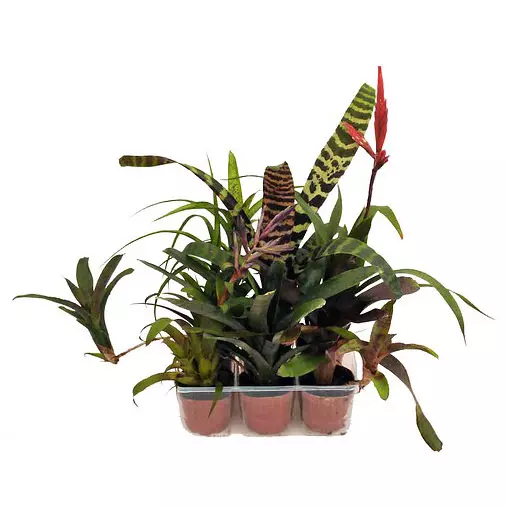
Bromeliads small - wet terrarium - a wonderful plant!

1 Bormeliads from the picture
for wet terrariums
assorted - mixed
small
The plants are delivered by us sorted according to the stock. You will not receive the whole assortment shown, but as many pots as you order.
Composition
Feeding recommendation
Technical details
Size information
8 of 8 reviews
4.38 out of 5 stars
Give us a rating!
Share your experience with the product with other customers.
Login
14 November 2024 12:21
Very nice bromeliads for a very fair price.
10 March 2021 15:56
Bien
Très belles broméliacées avec déjà de boutures mais malheureusement en pots sans reste de branché pour pouvoir les fixer facilement.
8 March 2021 10:25
I am satisfied with these, but it would be
I'm happy with them, but it would be great if you could get different ones every time you order again, or choose more precisely
18 December 2020 09:12
I am very satisfied, grow well. Price-performance ratio
I am very satisfied, they grow well. Price-performance ratio is ok.
1 August 2019 15:25
Better to pick them up or pack them safely!
Unfortunately, the plants were badly packed. When I opened the parcel, which was far too big, everything was thrown over the top. Two bromeliads had broken off. The plants appear to have already faded, but have offshoots that can be used. The plants would be of good quality.
21 November 2018 21:10
Vol and completely satisfied
12 May 2018 10:19
Size approx. 10 cm, one plant...
size ca 10 cm, one plant with cuttings, well packed
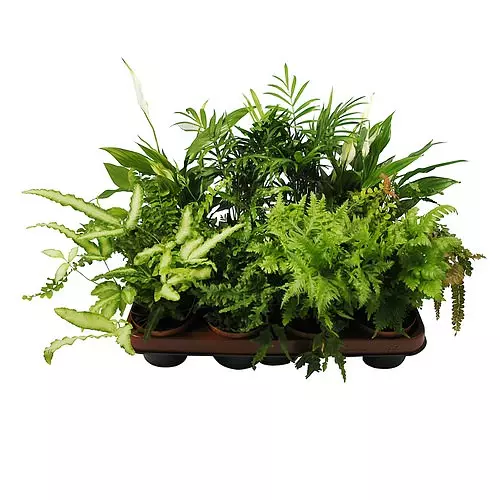
Ferns for humid terrariums
Ferns (various species; if you order several pots, we will make a selection of ferns for you if you order just one)
for humid terrariums
Ferns that are very well suited to humid tropical terrariums.
We dispatch the plants in assorted varieties depending on stock availability. You will not receive the full range shown in the picture, but the number of pots you order.
Ground cover plant for wet terrarium
Ground cover plant
assorted and mixted
For a colour copper in terrarium
The plants are delivered by us sorted according to the stock. You will not receive the whole assortment shown, but as many pots as you order.
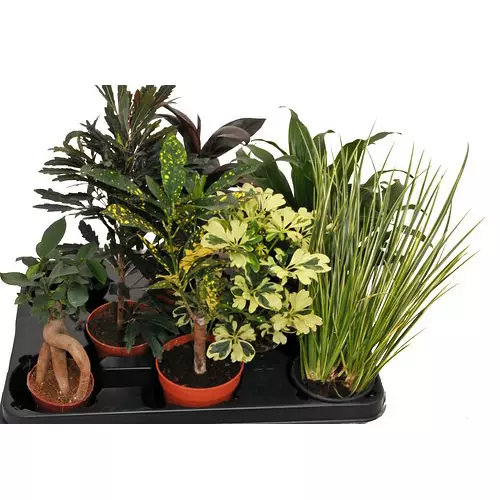
Tropical plant for the rainforest terrarium
assorted and mixted
for rainforest terrariums
For a great accent in your terrarium!
The plants are delivered by us sorted according to the stock. You will not receive the whole assortment shown, but as many pots as you order.
Live forest moss for terrariumsstores humidityas a substrate for laying eggs (depending on species)natural decorative material1 liter contentOur live forest moss is the ideal addition to your terrarium. The moss creates a natural environment and provides humidity, which is vital for many reptiles, amphibians and insects. It is easy to maintain and offers the inhabitants of your terrarium both a natural hiding place and a soft surface. As the moss is alive, it contributes to air purification and creates a healthy microclimate. Bring nature directly into your terrarium with our living forest moss!
Springtails - breeding batch (tin)Springtails are mainly fed to amphibians such as dentrobates etc., which require particularly small insect food.
for amphibians or young reptiles
very good for the substrate
only a few millimetres in size
Springtails are tiny urine insects that are kept in moist soil and are sometimes found in houseplants. They are mainly fed to amphibians such as dentrobates etc., which require particularly small insect food. Springtails are supplied in breeding batches, which can also be fed and propagated with ornamental fish flake food. The animals should be kept at room temperature up to 25 degrees C.Order by Sunday evening - delivery on ThursdayOrders received by Sunday evening will be dispatched by A Mail on Wednesday or Thursday.Please enter a recipient address where the parcel can be delivered.We accept no responsibility for parcels that are delivered late or collected late. Even with the greatest care, it can happen that feed animals die due to temperature fluctuations or unpredictable events. We accept no liability for this.
White woodlice - Trichorhina tomentosa
These insects are not only used as feeder animals, but also as health police in tropical terrariums.
only 4mm
feeder animals
good for the substrate (humid terrariums)
White woodlice are a species of isopod that is only about 4 mm in size and is known from tropical forest soils. They can therefore tolerate neither dryness nor cold temperatures.These insects are not only used as feeder animals but also as health police in tropical terrariums. The animals reproduce independently in warm, moist soil and in addition to dead feeder animals, they also consume plant residue or decaying wood.
Order by Sunday evening - delivery on Thursday
Orders received by Sunday evening will be shipped by A Mail on Wednesday or Thursday.Please provide a recipient address where the parcel can be delivered.We accept no responsibility for parcels that are delivered late or collected late.
Even with the greatest care, it can happen that feeder animals die due to temperature fluctuations or unpredictable events. We accept no liability for this.
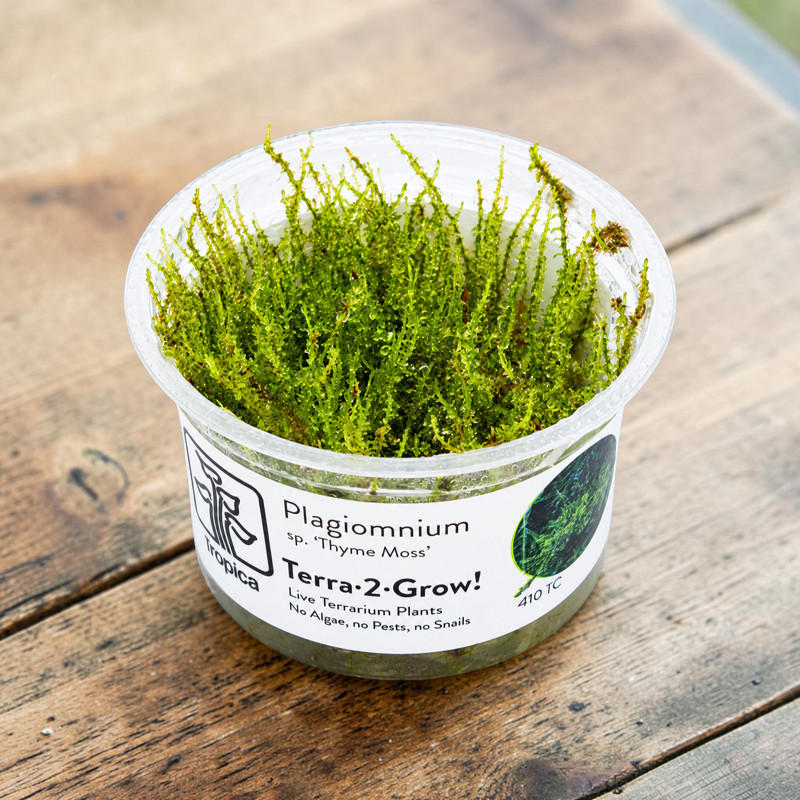
Tropica Terra-2-Grow Thyme Moss – Plagiomnium mossTropica Terra-2-Grow Plagiomnium sp. ‘Thyme Moss’ – light green terrarium moss with wavy leaves. Ideal for humid terrariums, paludariums and moss landscapes.Tropica ’s Terra-2-Grow Plagiomnium sp. ‘Thyme Moss’ is a particularly attractive moss for tropical terrariums, paludariums and naturalistic plant arrangements. With its comparatively large, light-green leaves and slightly translucent leaf structure, it stands out clearly from many other terrarium mosses.The delicate leaves have finely wavy edges and give the moss a soft, lively appearance. Thanks to its low, carpet-like growth habit, dense, natural-looking moss cushions develop over time, reminiscent of the floor of a damp forest.Thyme Moss looks particularly decorative amongst natural stones, on damp roots or as a green ground cover in a terrarium. It can be used to add greenery to small landscapes, to create transitions between different materials or to give individual areas a lush, woodland atmosphere.This moss resembles the North American species Plagiomnium cuspidatum. Its larger leaves provide a lovely contrast to finely structured mosses, ferns and compact tropical plants. This makes it particularly suitable for varied miniature landscapes and detailed terrarium designs.Plagiomnium sp. ‘Thyme Moss’ prefers high humidity and a shady to moderately bright location. Under suitable conditions, it grows at a moderate rate and develops flat, fresh-green moss carpets.With a growth height of approximately 2–5 cm or more, this moss is suitable for both small terrariums and larger planted landscapes. It can thrive particularly well in enclosed or semi-enclosed terrariums, provided there is sufficient moisture.Tropica ’s Terra-2-Grow plants are propagated under controlled laboratory conditions and supplied in sealed culture cups. This allows the plants to be neatly portioned and strategically incorporated into your terrarium design.Important: Thyme Moss is a terrarium moss and not a traditional aquatic plant. It is suitable for damp terrestrial areas but should not be kept completely submerged at all times.With its unusual leaf structure and natural growth habit, Tropica Plagiomnium sp. ‘Thyme Moss’ is a wonderful addition for anyone wishing to enhance their terrarium or paludarium with a special type of moss.Your benefits at a glanceTerra-2-Grow growing pots with Plagiomnium sp. ‘Thyme Moss’Fresh green, slightly translucent moss leavesDecorative leaf structure with wavy edgesLow, carpet-like growthIdeal for tropical terrariums and paludariumsSuitable for covering damp roots and stonesLow light requirements and moderate growth rateLaboratory-propagated culture for easy portioningInstructions for usePreparationOpen the Terra-2-Grow growing pot and carefully remove the moss. Remove any remaining growing medium by gently rinsing it with clean water.Then divide the moss into several small portions. This will allow you to distribute it evenly across different areas of the terrarium.PlantingPlace the moss portions on a damp, suitable terrarium substrate or on naturally damp stones and roots.Gently press the moss down so that it makes good contact with the substrate. On vertical or sloping surfaces, it can be secured with a suitable thread or another plant-friendly fastening if necessary.LightThyme Moss prefers a location with low to moderate light levels. Avoid direct, strong sunlight, as this can cause the moss to dry out or become damaged.HumidityA high and, as far as possible, consistent level of humidity is important for healthy growth. Closed or semi-closed terrariums often provide suitable conditions.WateringKeep the moss and its substrate evenly moist. Where possible, use soft, low-calcium water.Avoid both complete drying out and persistent waterlogging. Good air circulation helps to prevent mould growth.CareCarefully remove any dead plant parts as and when necessary. Once larger moss clumps have formed, these can be divided and planted elsewhere.Important notePlagiomnium sp. 'Thyme Moss' is intended for emersed cultivation. The moss should not be permanently submerged.Zoo Roco TipThyme Moss is particularly well-suited to creating natural-looking woodland landscapes in terrariums. With its comparatively large, fresh-green leaves, it creates a lovely sense of depth, reminiscent of small forest floors.Combine the moss with delicate ferns, selaginella and compact tropical plants. Its distinctive leaf structure also looks particularly attractive on weathered roots or amongst natural stones.When planting the moss, divide it into several small portions rather than using one large, continuous clump. This allows the individual clumps to develop more evenly and gradually grow together to form a natural moss surface.Take particular care to ensure sufficient moisture, especially during the first few weeks. Freshly planted moss is sensitive to drying out and needs time to adapt to the new site conditions.
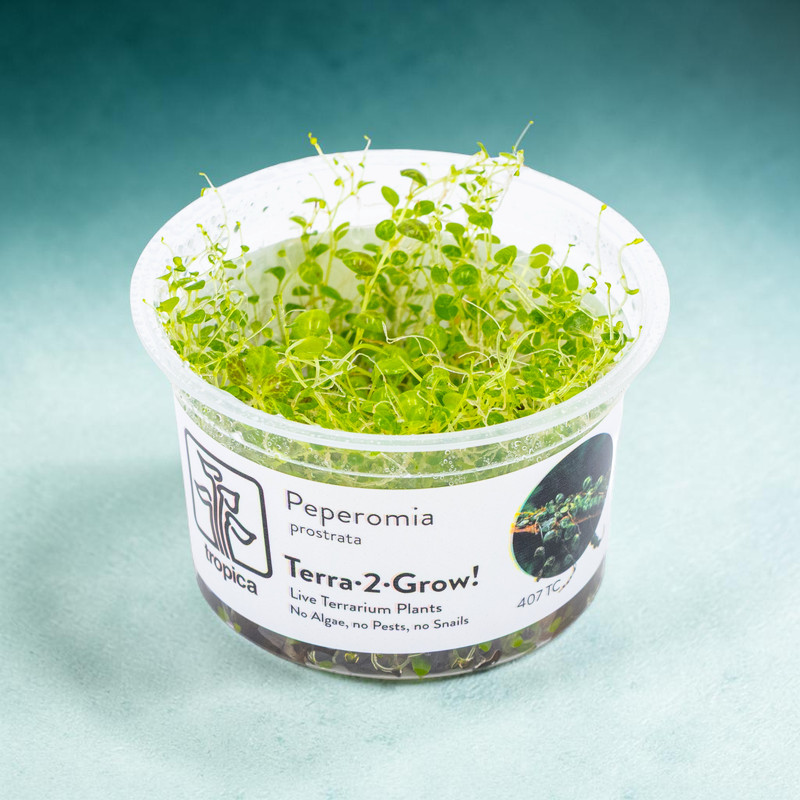
Tropica Terra-2-Grow Peperomia prostrata – terrarium plantTropica Terra-2-Grow Peperomia prostrata – an ornamental terrarium plant with small, turtle-shaped leaves. Ideal for tropical terrariums and paludariums.Tropica ’s Terra-2-Grow Peperomia prostrata is an exceptionally decorative plant for tropical terrariums, paludariums and creative plant arrangements. Its tiny, rounded leaves feature a fascinating green pattern reminiscent of small tortoise shells. This is why the plant is also known by the English name ‘String of Turtles’.The delicate, slightly fleshy leaves grow on thin, creeping or trailing shoots. With its delicate growth habit and distinctive leaf pattern, Peperomia prostrata brings a natural, richly detailed texture to any tropical plant landscape.The plant looks particularly attractive on raised planting beds, amongst roots or along natural stones. Its shoots can spread along the substrate or hang decoratively over edges and branches. This creates natural transitions between plants, wood and stones.Native to South America, Peperomia prostrata prefers warm temperatures, high humidity and bright, indirect light. Under suitable conditions, it develops its characteristic leaf patterns particularly beautifully. Direct, intense sunlight should be avoided.Growth is rather slow to moderate. This makes the plant ideal for smaller terrariums and detailed miniature landscapes, where fast-growing species might become too dominant.As a plant from the Tropica Terra-2-Grow series, Peperomia prostrata is designed for creating humid, tropical habitats. It is particularly suitable for planted terrariums, paludariums and Wabi-Kusa arrangements with a plant area that remains permanently above water.Important: Peperomia prostrata is not an aquatic plant. It must not be kept completely submerged at all times.With its uniquely patterned leaves and elegant, trailing habit, the Tropica Terra-2-Grow Peperomia prostrata is a beautiful addition to natural-looking terrarium landscapes.Your benefits at a glanceDecorative leaves with a pattern resembling a tortoise shellCreeping and trailing plant growthIdeal for tropical terrariums and paludariumsParticularly attractive on roots, stones and raised planting areasCompact growth habit for small, detailed plant arrangementsPrefers high humidity and indirect lightSlow to moderate growth for controlled landscapingInstructions for usePeperomia prostrata prefers a bright location without direct, intense sunlight. Uniform terrarium lighting with a balanced light spectrum is particularly suitable.Plant it in a loose, well-draining substrate that can retain moisture without remaining permanently wet. A mixture containing fine bark particles, coconut fibre or other suitable terrarium substrates provides ideal conditions.LightBright, indirect light promotes compact growth and attractive leaf markings. Avoid intense direct sunlight, as the delicate leaves can be damaged.TemperatureThe plant thrives particularly well at temperatures of around 18–26 °C. Avoid cold draughts and sharp temperature fluctuations.HumidityMedium to high humidity is beneficial. Peperomia prostrata finds particularly suitable conditions in tropical terrariums and paludariums. At the same time, ensure there is sufficient air circulation.WateringKeep the substrate slightly moist and allow the top layer to dry out a little between waterings. Persistent waterlogging must be avoided at all costs, as the delicate roots can rot.Care and pruningIf necessary, shoots that have grown too long can be carefully pruned back. Healthy shoot cuttings can be used for vegetative propagation.Important notePeperomia prostrata requires a location above the water’s surface. In paludariums, the root zone must not be permanently submerged.Zoo Roco TipPeperomia prostrata is a particularly beautiful plant for tropical miniature landscapes. Its small leaves create a natural sense of scale, even in compact terrariums.We recommend placing the plant slightly raised amongst roots or on a planted background. This allows the delicate shoots to trail elegantly downwards, showing off its characteristic trailing habit to its best advantage.Combining it with tropical mosses, dwarf ferns and Selaginella species creates a varied and natural-looking plant landscape.Take care not to keep Peperomia prostrata too wet. Although it thrives in high humidity, its roots cannot tolerate prolonged waterlogging. A well-aerated substrate and good air circulation are crucial for long-term healthy growth.
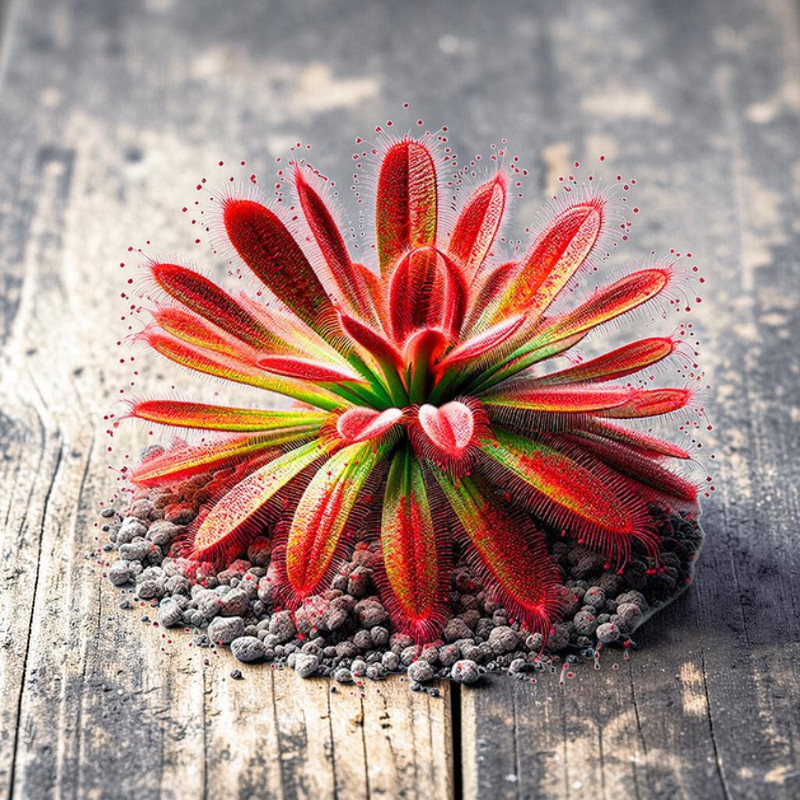
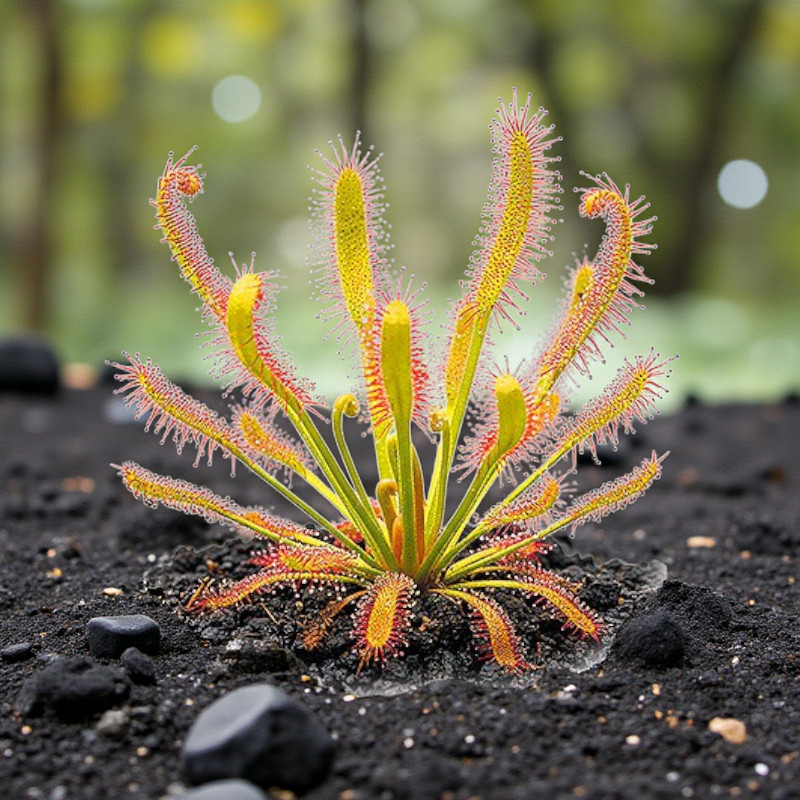
Drosera aliciae – an easy-to-care-for sundew for terrariums and windowsillsDrosera aliciae – an easy-to-care-for sundew with decorative trap leaves. Ideal for bright windowsills, terrariums and beginners to carnivorous plants.Drosera aliciae, also known as Alicia’s sundew, is an attractive carnivorous plant native to South Africa. It forms a compact, rosette-shaped growth habit with spoon-shaped leaves. The leaves are covered with fine, sticky tentacles that shimmer reddish in the light and can trap small insects. The plant then digests these prey items and extracts additional nutrients from them.This sundew species is particularly popular because it is relatively easy to care for and well suited to beginners in the keeping of carnivorous plants. With sufficient light, the leaves often turn a more intense red, whilst with less light they tend to remain green.Drosera aliciae is suitable for bright windowsills, open planters, display cases or humid terrarium areas. It is important to provide a bright spot, lime-free water and a substrate that remains consistently moist and low in nutrients. The plant should not be given standard potting compost or fertiliser, as carnivorous plants are adapted to nutrient-poor soils.Your benefits at a glanceAn attractive carnivorous plantCompact, rosette-shaped growthSuitable for a bright windowsill, terrarium or display cabinetProduces decorative, sticky trap leavesCan trap small insects such as fungus gnatsA relatively low-maintenance sundew speciesIdeal for beginners to carnivorous plantsInstructions for usePlace Drosera aliciae in a very bright spot, but not in hot, drying midday sun. The growing medium should remain constantly moist. Use only low-calcium water, such as rainwater, distilled water or osmosis water.The easiest way to care for the plant is by keeping it in a water bath: place the pot in a saucer with a little lime-free water. The amount of water can be adjusted depending on the location and time of year. The growing medium must not be allowed to dry out completely. Ordinary potting compost, fertiliser or hard tap water should be avoided.Zoo Roco TipDrosera aliciae is an excellent choice as a starter plant for those new to the world of carnivorous plants. It looks particularly decorative in a bright spot alongside other carnivorous plants. Take care not to actively feed the plant with meat or live prey – small insects are usually sufficient. The plant requires plenty of light to develop a beautiful red colour.
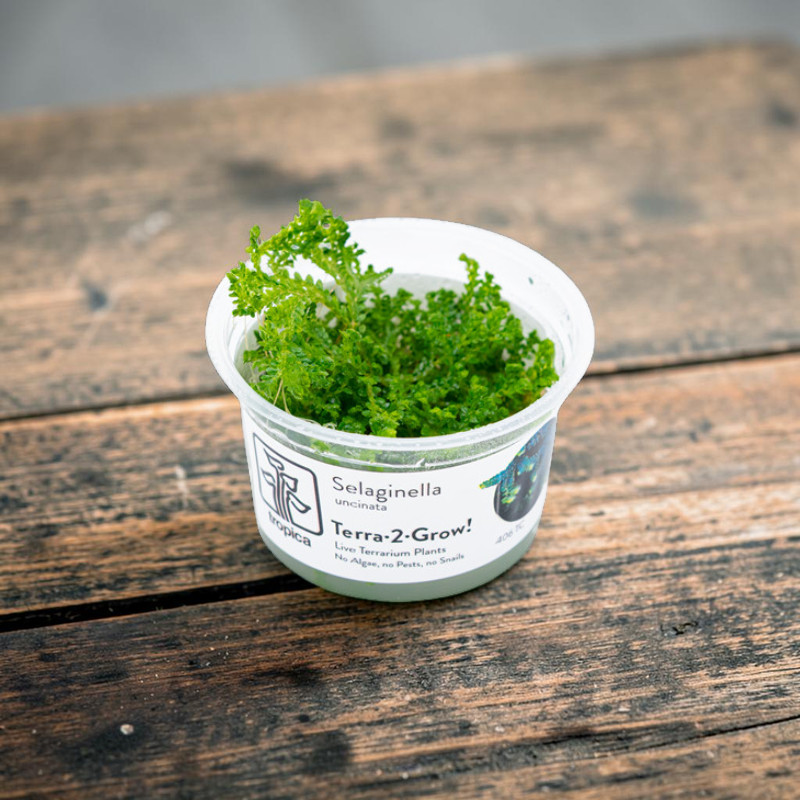
Selaginella uncinata Terra-2-Grow! TropicaSelaginella uncinata Terra-2-Grow! from Tropica is a creeping moss fern with blue-green shimmering foliage. Ideal for humid terrariums, paludariums and tropical plantings. Fast-growing, decorative and easy to maintain by pruning.Selaginella uncinata Terra-2-Grow! from Tropica is a decorative terrarium plant from the Terra series. The plant is a creeping moss fern with strikingly blue-green shimmering foliage. The fine leaves are densely arranged along the stems and, over time, form an attractive, spreading carpet of foliage. As a result, Selaginella uncinata adds a distinctive touch of colour and texture to humid terrariums, paludariums or tropical landscapes.Thanks to its creeping growth habit, Selaginella uncinata is particularly well suited to greening substrate areas, softening transitions to roots and stones, or adding depth to a terrarium. Once the plant has established itself well, it grows vigorously and can easily be kept in shape by regular pruning.Tropica ’s Terra series comprises plants that thrive in humid environments and are well suited to enclosed or semi-enclosed terrariums. Selaginella uncinata is listed as requiring low light and reaches a height of approximately 1 to 10+ cm.Your benefits at a glanceDecorative terrarium plant from TropicaWith blue-green shimmering foliageIdeal for humid terrariums and paludariumsSuitable for covering substrate areasVisually breaks up roots, stones and hardscape elementsForms a dense, natural carpet of vegetationFast-growing, creeping habitEasy to maintain by simply pruningSuitable for closed and semi-closed terrariumsLow light requirementsOrigin: AsiaInstructions for use Selaginella uncinata is particularly well suited to humid, tropical terrariums with high humidity. The plant can be placed on suitable, moist substrate surfaces and continues to grow as a creeping plant. It looks very attractive amongst roots, stones, mosses and other compact terrarium plants.Care instructionsKeep Selaginella uncinata evenly moist, but avoid waterlogging. The plant prefers a humid environment and indirect to fairly low light. If it is growing well, it can be pruned regularly to prevent it from overgrowing neighbouring plants.Selaginella uncinata is a plant for humid terrariums and paludariums. It is not intended as an aquarium plant that grows permanently and completely submerged.Zoo Roco TipPlace Selaginella uncinata in the foreground or amongst hardscape elements. The shimmering blue-green foliage looks particularly beautiful when combined with light-green mosses, dark roots or stones. It works well as a ground cover in enclosed terrariums.
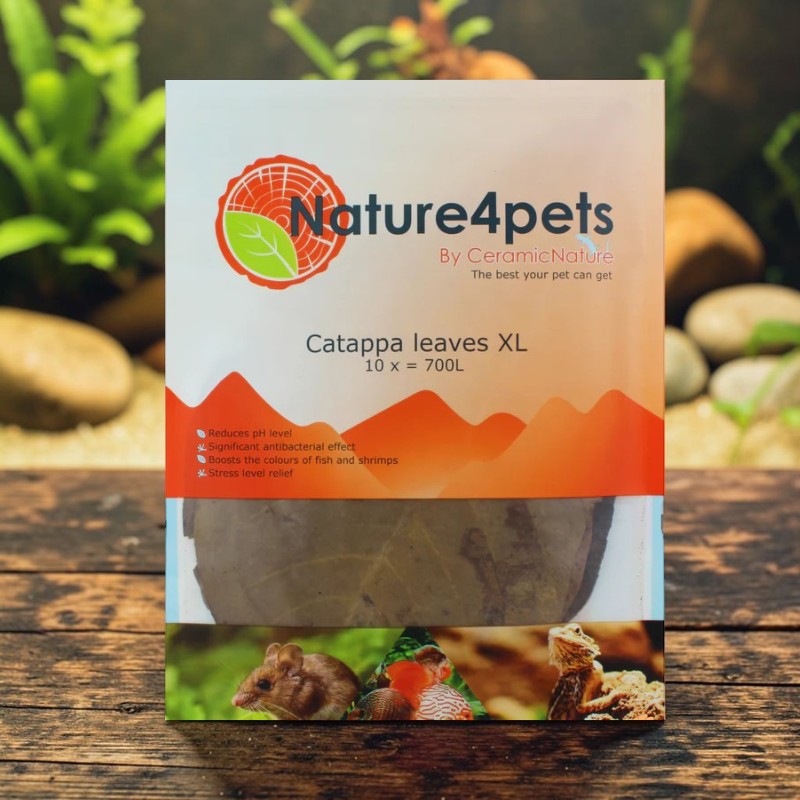
Catappa Leaves XL – natural sea almond tree leaves for aquariums and terrariumsCatappa Leaves XL are large, dried leaves of the sea almond tree and are particularly popular in aquariums with tropical fish, shrimp and blackwater species. In water, the leaves release natural tannins and humic substances slowly, which may cause the aquarium water to take on a slightly yellowish to brownish tint.This natural colouring diffuses the light and mimics the habitat of many tropical fish species.
As the leaves slowly decompose, they create valuable grazing areas for shrimp, catfish and other aquarium inhabitants. At the same time, the large leaves provide natural cover and places of refuge. Catappa leaves can also be used decoratively in terrariums and serve as hiding places for small animals or as ground decoration.
Catappa leaves are a popular natural product for natural-looking aquariums, blackwater setups and biotope tanks. When stored dry, they have a very long shelf life and are easy to use.Advantages at a glanceLarge Catappa leaves with a length of 21–40 cmRelease natural tannins and humic substancesSupport a natural blackwater appearanceCan promote the well-being of fishProvide grazing areas for shrimp and catfishAlso suitable as decoration and hiding place in the terrarium100 % natural product
UsageThe leaves can be placed directly into the aquarium. They soak up water and sink to the bottom after some time. There they release their natural substances over several weeks. After about two to three weeks, a new leaf can be added if needed. The old leaves can remain in the aquarium, as they are readily grazed on by shrimp and other animals.Product detailsSize: approx. 21–40 cmContents: 10 piecesMaterial: dried leaves of the sea almond tree, Terminalia catappaSuitable for: freshwater aquariums, blackwater tanks, shrimp aquariums and terrariumsZoo Roco Tip: Catappa Leaves XL can be ideally combined with alder cones, lotus pods, cholla wood or coconut shells. This creates a particularly natural-looking aquarium with many hiding places and valuable surfaces for grazing.
Gold Metal Plant Sprayer: Fine mist care for terrarium climateThis gold-coloured metal plant sprayer produces a particularly fine mist and is ideal for terrariums: it allows you to moisten terrarium plants, substrate and back walls in a controlled manner without soaking everything. Thanks to its one-handed operation, it’s quickly to hand – even for your daily spraying routine.It is also ideal for germinating seeds and for moistening soil and plant leaves – both indoors and outdoors.
Whether for terrariums, aviculture for sprouting seeds, or indoor plant care, this sprayer delivers an ideal fine mist.Product benefits:Supports a stable terrarium climate through targeted humidificationIdeal for terrarium plants, mosses and back walls (decorative moist look)Gentle on substrate and young plants: no “washing out” caused by hard dropsUseful for animals that lick water from leaves (depending on species and husbandry)Robust metal design for regular useTechnical dataDimensions (W × D × H): 8.7 × 8.7 × 14.8 cmContents: 0.28 LMaterial: copper, brassArea of use: Indoor & OutdoorZoo Roco tip: In terrarium keeping, the rule is: it is better to spray sparingly and regularly than to use a lot all at once. Lightly mist the back wall and plants and keep an eye on the hygrometer and any condensation. For many setups, it makes sense to spray in the morning so that the moisture can dry out properly during the day and no permanently wet spots develop.
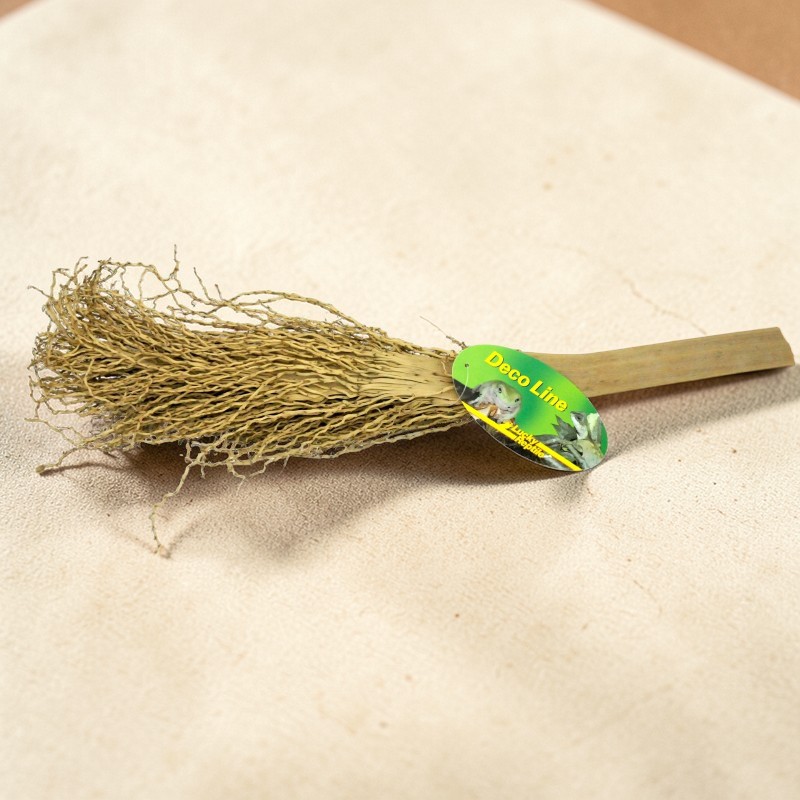
Lucky Reptile palm fronds / palm torch (approx. 30-40 cm)Natural decoration, climbing aid and hiding place all in one: Lucky Reptile palm fronds are a decorative enrichment for dry and tropical terrariums. Whether on the floor as a hiding place or slightly raised as a climbing and structural element - they blend in naturally, create retreats and are very well accepted by many terrarium animals.Product benefits at a glanceVersatile use: hiding place, structuring, climbing elementSuitable for dry & tropical terrariumsNatural look: decoratively enhances the terrariumAnimal-friendly: provides cover and promotes a safe environmentPractical size: approx. 30-40 cmIdeas for useAs floor decoration for more cover and resting places (e.g. for geckos, skinks, young animals)Clamped between roots/branches as an additional climbing routeIn more humid setups as a natural structural element for terrarium design
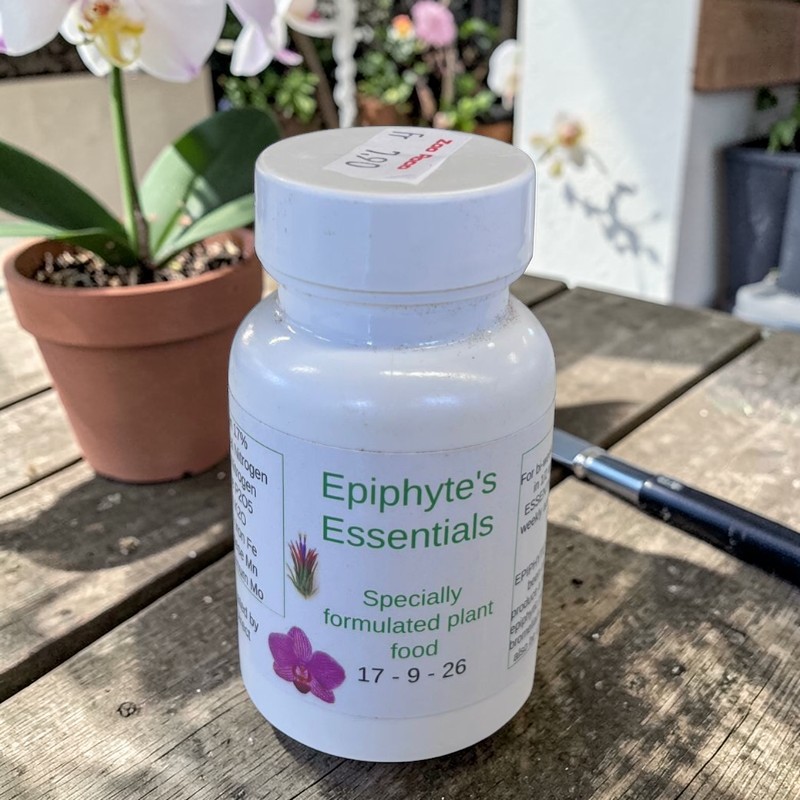
Epiphyte's Essentials - Epiphyte's Delight fertilizer Epiphyte's Delight was developed with a clear goal in mind: healthy, rapid growth for epiphytes - plants that grow without soil. This powder for mixing contains a fertilizer with a carefully balanced nitrogen content that reliably nourishes and visibly supports your plants.The source of nitrogen is particularly important for tillandsias, orchids and other epiphytes: many fertilizers contain a high proportion of urea. The problem is that epiphytes cannot use urea effectively because it first has to be converted into usable forms of nitrogen by soil bacteria - bacteria that simply do not exist without a substrate. Epiphyte's Delight has therefore been formulated to contain mainly nitrate nitrogen. This is immediately available and can be directly absorbed and used by the plants - ideal for daily care and strong development.Your advantages at a glanceSpecially developed for epiphytes (e.g. tillandsias, orchids)Predominantly nitrate-nitrogen - directly available, fast-actingPromotes healthy, rapid growth thanks to a balanced nutrient supplyAlso suitable for other plants - for a quick growth spurtMix powder with water and spray on plantsInstructions for useThis fertilizer is not only suitable for epiphytes, but can also be used for many other plants if a rapid growth response is desired.
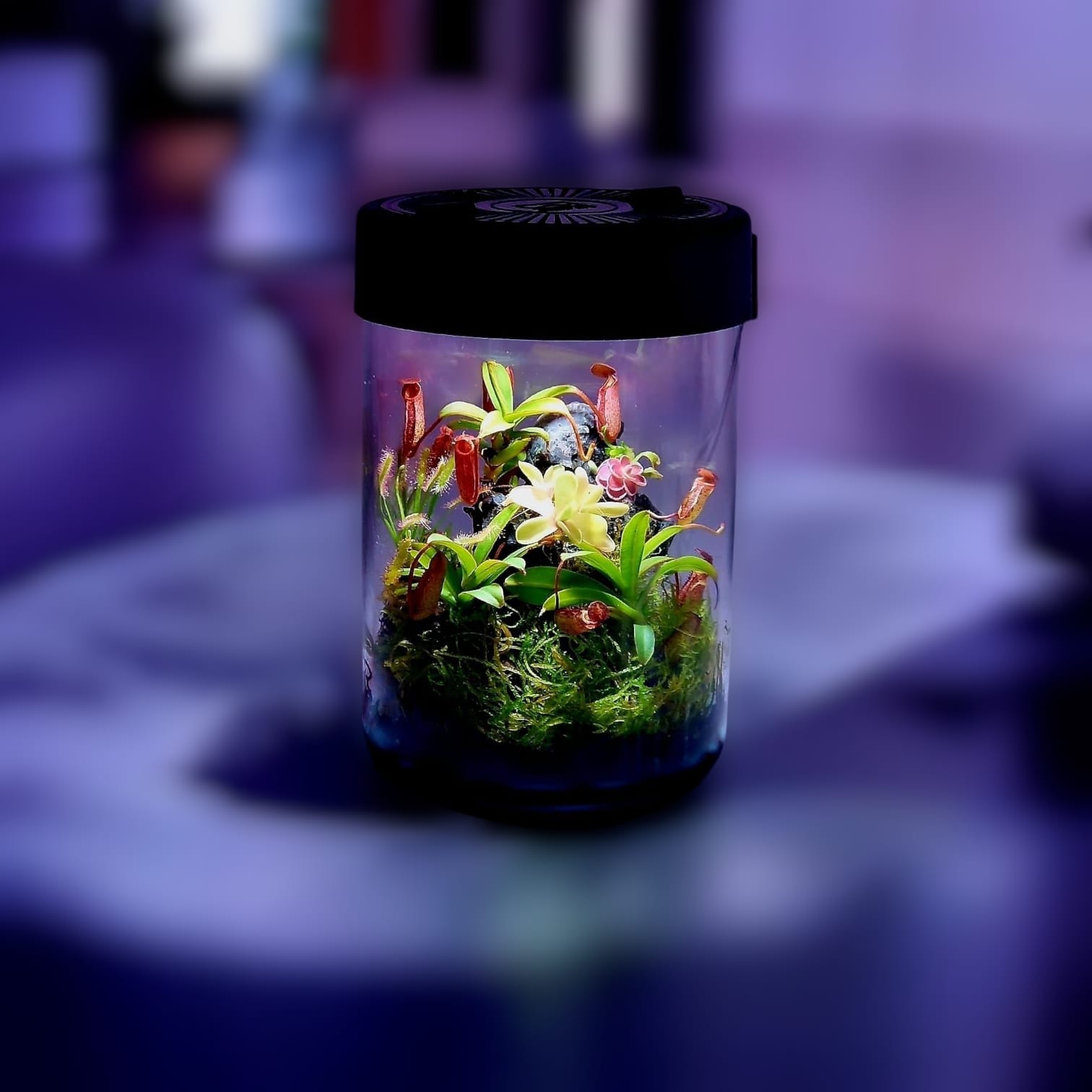
VivoVerde Micro Terrarium with carnivorous plantsThis micro terrarium is a modern, compact solution for anyone who wants to keep carnivorous plants easily at home - all year round. Thanks to the LED light in the lid and adjustable ventilation, you can create the right conditions even in an office, apartment or small space. Each terrarium is unique and is suitable for beginners and enthusiasts alike - also ideal as a gift.Product information:Micro terrarium incl. 5 carnivorous plants (composition may vary)
Glass container, 2 liter volume
Round cover with integrated LED plant lighting
Adjustable ventilation to regulate the humidity inside
Complete substrate for carnivores included
With special volcanic soil (for a structured, airy plant bed)
Ideal for small areas: Home, office, shelf or desk
Supports a stable microclimate through light and adjustable humidity
Perfect as a gift, as it is immediately ready for use and visually appealing
Suitable for beginners (compact, clearly arranged) and collectors (decorative, unique look)Scope of delivery:
Glass container, 2 liter volumeLighting: 3.8 W plant lamp, 5 V, switchable light intensity
Power supply: USB-A (recommended 1000 mA), charger not included
Features: lid with LED, movable ventilation, substrate for carnivoresThe VivoVerde Micro-Terrarium from Aqua-Art brings the fascinating world of carnivorous plants into a format that fits into everyday life. Whether at home, in the office or as an eye-catcher on the sideboard: the compact terrarium (2 liters) is made for small spaces and allows you to keep terrarium plants at home - regardless of the season. Particularly practical: each set is unique and therefore looks like a small, living decorative object.The micro terrarium is equipped with a glass container and a round cover with integrated LED lighting to provide your plants with good conditions. The energy-saving plant lamp (3.8 W, 5 V) offers a switchable light intensity and ensures that your carnivores get enough light even if the location is not directly next to a sunny window. For the power supply, use a safe USB-A power supply (1000 mA recommended, not included) or a USB-A port on the computer.
A crucial point with carnivorous plants is the right substrate. Therefore, the terrarium contains a complete substrate that is adapted to carnivores, including special volcanic soil. This plant bed supports an even moisture level and creates a structure in which the plants can gain a good foothold. The movable ventilation cover also allows you to regulate the humidity inside - depending on how humid you want your biotope to be. This promotes a climate that encourages healthy growth.
The set is suitable for enthusiasts who want a decorative mini-ecosystem, as well as for beginners who want to get started without a lot of set-up work. You will receive a complete system with five carnivorous plants that can be used immediately - also ideal as a gift for anyone looking for something special.Zoo Roco tip:To keep your plants beautiful for a long time, keep the humidity stable via ventilation and avoid strong temperature fluctuations directly next to heaters or in draughts. If possible, use low-mineral water (e.g. rainwater or osmosis water) for carnivores. VivoVerde Tropical Rain is recommended as a supplement for spraying (available separately) - practical if you want to specifically increase the humidity in the terrarium.
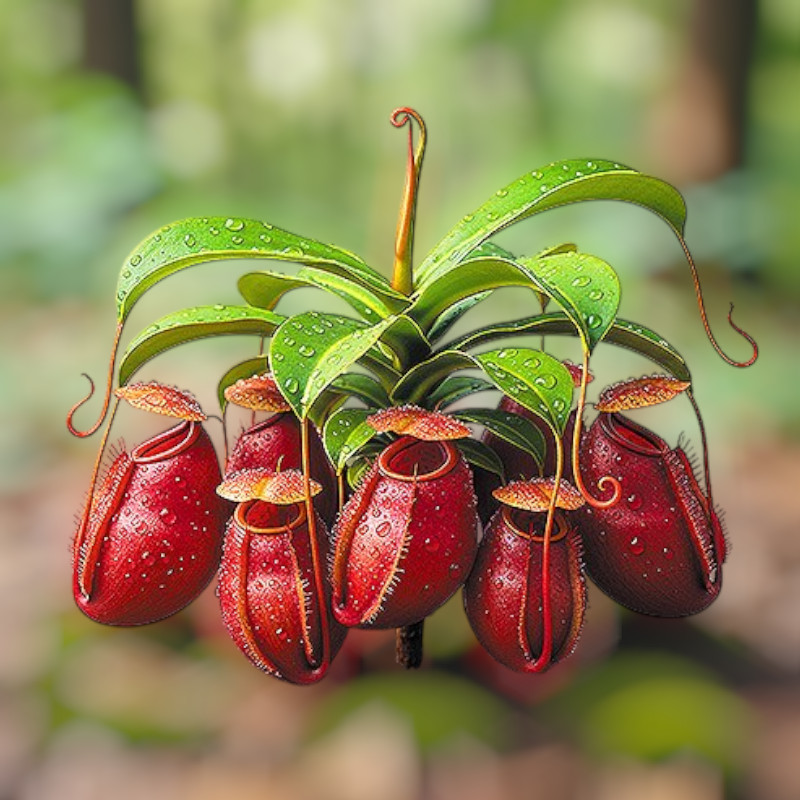
Aqua Art Nepenthes ampullaria 'Red'Compact, red ground pots for the humid terrariumNepenthes ampullaria 'Red' forms a particularly large number of amphora-shaped ground pots in attractive shades of red, giving it the appearance of a dense "carpet of pots". It is ideal for warm, very humid terrariums and paludariums with bright, indirect light.Characteristics and requirements:Origin (species): Southeast Asia; natural distribution from Thailand to western Malaysia and Maluku to New Guinea, among othersHabitat: humid lowland habitats, including (swamp) forestsTemperature: warm; often approx. 21-24 °C in the terrariumLight: bright to very bright, preferably indirect/diffuse (no prolonged blazing sun)Water: As low in minerals as possible (rain/osmosis water)Lowland Nepenthes with numerous potsPots typically urn/amphora-shaped, approx. 2-10 cm long in natureRequires high humidity (70-90%)Warm climate: as a lowland species, rather constantly warmVery decorative in humid setups because many pitchers are visible at the same timeExciting plant to observe: pitcher formation and coloration clearly react to light and climateNo fertilization necessary; nutrient-poor substrate is expressly desiredNepenthes ampullaria 'Red' is a tropical pitcher plant that looks particularly impressive in humid lowland biotopes. Instead of only forming individual pitchers on long tendrils, this species develops many pitchers in the lower area - often in dense groups directly at the base of the plant. It is precisely this "pitcher carpet" effect that makes it so popular in terrariums, paludariums or warm, humid plant showcases.In the wild, Nepenthes ampullaria is widespread in Southeast Asia and grows predominantly in humid, tropical lowland habitats, including swamp and rainforest areas. Accordingly, it appreciates conditions that are constantly warm and very humid. High humidity (often in the range of around 70-90% or more) and temperatures in the warm lowland spectrum of around 22-26°C are considered a good orientation.For Nepenthes, "lowland spectrum" simply means the climate profile of lowland species - i.e. conditions similar to those in tropical lowland and swamp areas. "Spectrum" does not mean a hard fixed value, but a range of temperatures/humidity in which these plants grow reliably and form pitchers.The plants like bright light, but not burning midday sun. Many cultivation instructions recommend very bright, but diffuse or indirect light over longer periods of time (e.g. under plant light or in a well-shaded greenhouse) so that leaves and pitchers remain healthy and the plant reliably "pitches" (produces pitchers)Water quality is particularly important for everyday care: if possible, use water that is low in minerals (rain or osmosis water). The substrate should be airy, acidic and low in nutrients - typical Nepenthes mixtures are often based on sphagnum and structural components so that the roots remain moist but do not suffocate.Zoo Roco tip:If Nepenthes ampullaria 'Red' makes few pitchers at first, this is usually a sign of too low humidity or too little light. First increase the humidity (e.g. in the terrarium/with good ventilation) and provide bright, indirect light. Water consistently with rain/osmosis water - depending on the region, tap water is often too rich in minerals for carnivores.
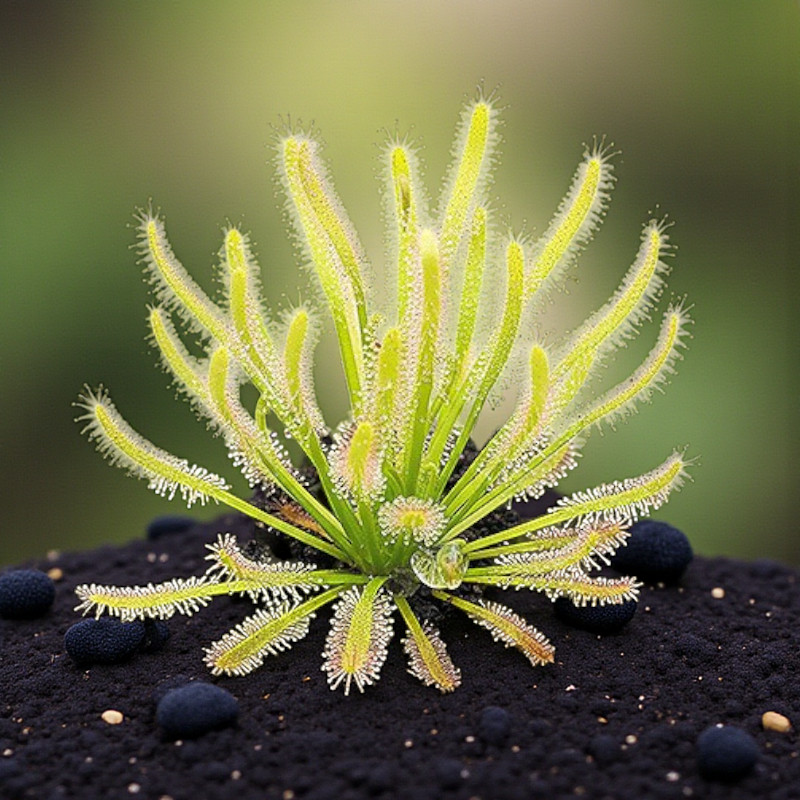
Aqua Art Drosera capensis 'Albino' - bright cape sundew as an in vitro plantDrosera capensis 'Albino' has a particularly bright appearance: instead of red tentacles, it has predominantly green catch leaves with clear, sticky drops and forms white flowers. As an in vitro plant, you can start it cleanly in a cup - ideal for very bright, moist biotopes in terrariums or plant shelves. Characteristics and requirements:Albino form: hardly/no red pigments, light-colored tentacles and sticky traps with glittering catching drops (sundew principle)Origin: South Africa, Cape region (Cape of Good Hope area)Size: depending on conditions, usually approx. 5-20 cm in heightLight: full sun or strong plant light 10-14 hrs/dayHumidity:optimal approx. 65-75 %Temperature: ideal approx. 22-32 °CStriking color contrast to red carnivoresSupports the natural reduction of small flying insects (e.g. fungus gnats/small mosquito species) with trapping leavesEasy to care for: focus on light + constant humidity, no fertilization necessaryNo dormant period necessaryDrosera capensis 'Albino' is the Cape sundew for anyone who loves carnivores but is looking for a particularly bright, elegant look. In contrast to many classic Cape sundew forms, 'Albino' shows hardly any red pigments: The plant appears predominantly green, the catching droplets shine clearly and the flowers appear white. This provides a nice contrast in terrariums, paludariums or on bright windowsills - especially next to reddish species or colored hardscape elements. The catching technique is typical of sundews: sticky drops sit on the tentacles to which small insects adhere. This is not only exciting to watch, but also fits perfectly into nutrient-poor biotopes because Drosera supplements its low nutrient requirements with prey. Fertilizing is not necessary - on the contrary, too many nutrients are usually the quickest route to problems for carnivores.Three points are crucial for successful cultivation: plenty of light, constant humidity and suitable substrate/water. Aqua Art recommends full sun or an equally strong plant light with around 10 to 14 hours of illumination per day. This keeps the plant vital and reliably forms catching droplets. The following applies to the climate: A humidity of approx. 65-75 % is ideal and the plant prefers to grow at 22-32 °C. This makes it particularly suitable for well-lit, humid terrariums or warm indoor rooms with stable conditions.Quality counts when watering: use water that is as low in salt and minerals as possible (e.g. rain or distilled water) and keep the substrate permanently moist. As an in vitro plant, you get a clean start in a practical cup - this is ideal if you value controlled conditions and want to keep your terrarium as free of "roommates" as possible.Zoo Roco tip:If your Drosera hardly shows any "dew", it is usually due to insufficient light or air that is too dry. First increase the light intensity (not just the hours) and ensure that the substrate is constantly moist. After opening the in-vitro cup: carefully rinse the gel, place in carnivorous substrate and gradually acclimatize to full sun or strong light for 1-2 weeks.
Aqua Art Drosera capensis - Sundew for terrarium & WabiKusaDrosera capensis (Cape Sundew) fascinates with long catch leaves that form glittering sticky drops to catch small insects. As an in vitro plant, it starts clean and compact - ideal for bright, humid setups such as paludariums, carnivorous terrariums or Wabi-Kusa.Product features:Cultivated in vitro (sterile in a pot)Carnivorous plant with sticky trapping leaves (sundew principle)Suitable for humid terrariums/paludariums and very bright locationsRobust and also suitable for beginnersImportant advantages:Exciting observation effect: trapping leaves shine and react to preySupports a near-natural microclimate in humid terrarium setupsNo fertilization necessary - the plant covers its needs by catching small insectsInformation:Origin (species): Cape region / South Africa; grows in nutrient-poor, permanently moist habitats (e.g. swamps, banks, streams)Size/growing height: approx. 5-20 cm (depending on conditions)Temperature requirements: approx. 10-35 °C; as frost-free as possible in winter (guideline: not below approx. 5 °C)Air humidity: at least approx. 50 % recommendedLight: bright to sunny (for strong coloration and good catching drops)Water/substrate: soft/low-lime (e.g. rainwater/osmosis water), acidic, nutrient-poor substrate; permanently moist to wet Drosera capensis, the Cape sundew, is a real classic among carnivorous plants - and for good reason: the long, narrow catch leaves are covered with many fine tentacles that form glistening adhesive droplets. These droplets attract small insects and hold on to them so that the plant can supplement its low nutrient requirements. At the same time, Drosera capensis is comparatively uncomplicated to care for and is therefore also attractive for beginners . The species originates from the Cape region of South Africa, where it grows in permanently moist, nutrient-poor areas such as swamps, on banks and along watercourses. You can easily replicate this principle at home: The decisive factors are plenty of light and a constantly moist to wet, acidic and nutrient-poor substrate. Soft, low-lime water (e.g. rainwater or osmosis water) is recommended for watering. Fertilizing is not necessary.In suitable conditions, Drosera capensis typically grows to a height of around 5 to 20 cm. It does particularly well in bright, humid terrariums, paludariums or similar humid setups where the catching droplets are formed stably. A humidity level of around 50 % is a good guideline, although the plant is particularly reliable in a constantly humid environment.Drosera capensis is pleasantly tolerant when it comes to temperature requirements: a range of approx. 10-35 °C is suitable for cultivation. In the cooler months of the year, it should be kept frost-free; as a guide, temperatures should not fall below approx. 5 °C in winter. This will keep the plant vital and allow it to sprout vigorously again in spring.Zoo Roco tip:For in vitro plants, it is worth acclimatizing them gently: rinse the gel carefully, place them in a carnivorous substrate and keep them in a very bright place for the first 7-14 days, but only gradually give them extreme midday sun. If the catching drops decrease, this is usually an indication of too little light or too dry air - first increase the light intensity and ensure that the substrate is constantly moist.
Ferns for humid terrariums
Ferns (various species; if you order several pots, we will make a selection of ferns for you if you order just one)
for humid terrariums
Ferns that are very well suited to humid tropical terrariums.
We dispatch the plants in assorted varieties depending on stock availability. You will not receive the full range shown in the picture, but the number of pots you order.
Ground cover plant for wet terrarium
Ground cover plant
assorted and mixted
For a colour copper in terrarium
The plants are delivered by us sorted according to the stock. You will not receive the whole assortment shown, but as many pots as you order.
Bromeliads large - wet terrarium - a wonderful plant!
1 Bormeliads from the picture
for wet terrariums
assorted - mixed
large
The plants are delivered by us sorted according to the stock. You will not receive the whole assortment shown, but as many pots as you order.
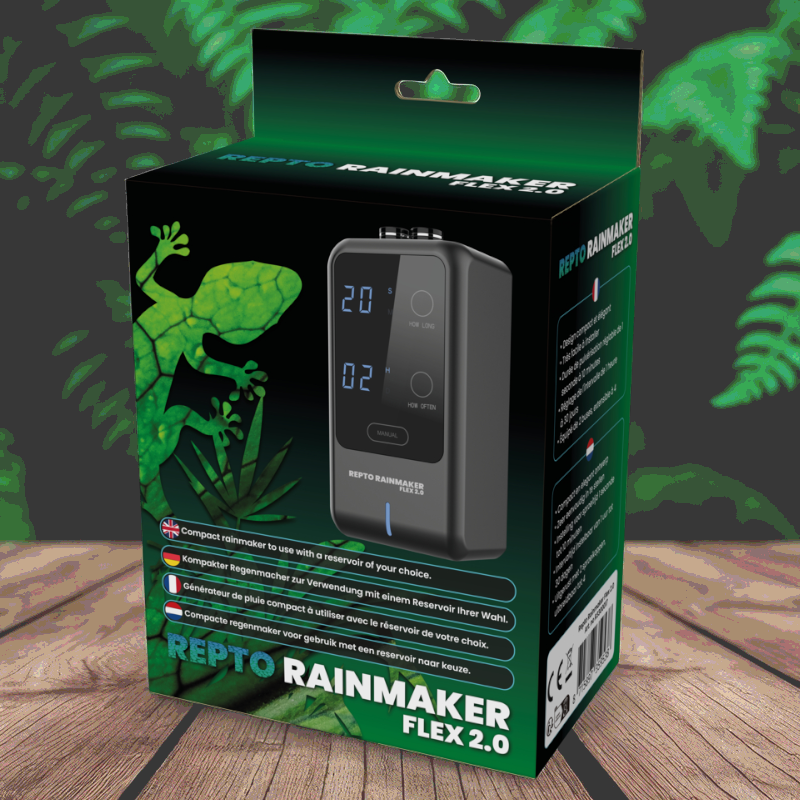
Rainmaker Flex 2.0 irrigation system from ReptoThe Repto Rainmaker Flex 2.0 is a flexible, automatic irrigation system for terrariums, paludariums or special rainforest terrariums. It simulates periods of rain, increases the humidity and creates a natural microclimate for plants and animals.
Advantages at a glance
Compact & modular design - external water reservoir (e.g. bottle or canister) for easy installation
Adjustable spray duration: from 1 second to 99 seconds or from 1 minute to 10 minutes
Adjustable interval: by the hour up to 23 hours or by the day up to 30 daysDelivery height - tested up to 2 meters with one nozzle, but can certainly go higher, as it still delivered full power at two meters
Supplied with 2 spray nozzles, but can be extended up to 4
Quiet operation
360° rotating nozzles with metal nozzles & flexible mounting (suction cup or grommet)
The Repto Rainmaker Flex 2.0 is specially designed for tropical terrariums, paludariums, rainforests or arboreal enclosures (e.g. tree frogs, Phelsuma, Anolis). Its compact design allows it to be connected to an external water reservoir, keeping the system space-saving.
The spray duration (1 sec. to 2 min.) and the interval (1 hour to 30 days) as well as a manual spray function can be set using three rotary controls. The device is supplied with two spray nozzles; for larger installations, up to four nozzles can be connected (via standard 4/6 mm hoses).
The nozzles can be rotated and have metal nozzles, allowing the water to be distributed evenly. They can be installed either with suction cups or through drilled holes/hose feedthroughs.
Operation is quiet enough to be non-intrusive - ideal for simulating periods of rain without loud noises. The Repto Rainmaker Flex 2.0 helps to create optimal humidity levels, promote animal drinking behavior and support plant growth in humid terrariums.
An important note: Preferably use decalcified water or osmosis water to avoid limescale formation and blockages. Regular cleaning extends the life of the nozzles.
Zoo Roco tip
For best results - especially with hard tap water - it is advisable to install a fine filter system or osmosis system upstream. For larger terrariums, it is worth investing in additional extension nozzles (up to 4 nozzles) to ensure even humidification. Install the nozzles so that they do not wet the plants and animals directly, but gently mist them.
Customers also searched for: Repto Rainmaker, automatic irrigation system terrarium, rain system rainforest terrarium, spray system terrarium Switzerland, fogging system terrarium, terrarium climate control, reptile climate technology, rain simulation terrarium
Tropical plant for the rainforest terrarium
assorted and mixted
for rainforest terrariums
For a great accent in your terrarium!
The plants are delivered by us sorted according to the stock. You will not receive the whole assortment shown, but as many pots as you order.
Shroomroom TropicalClay™ 3 kg
Natural clay for modeling in the terrarium
For structure-rich back walls, caves and stable floor zonesShroomroom TropicalClay™ (3 kg) allows you to design your terrarium individually and naturally. The moldable natural clay is ideal for creating back walls, terraces, caves, hiding places or stable floor edges. Perfect for animal lovers and connoisseurs who want to professionally combine function and appearance in their habitat.
Properties and advantages
Natural material for terrarium design
Very easy to shape for back walls, caves, edges and terraces
Supports a habitat rich in structure with more climbing and retreat options
Ideal for combining with cork, roots, stones and substrates
Helps to define zones (e.g. dry/wet, levels, visual barriers)
3 kg storage pack for small to medium-sized projects
A high-quality structured terrarium is more than just decoration: it creates safety, movement incentives and clear areas for your animals. Shroomroom TropicalClay™ is a natural clay that allows you to shape and functionally enhance the interior of your terrarium.Whether you want to model a natural-looking back wall, integrate hiding places or structure the floor to create stable terraces and edges - TropicalClay™ gives you control over the layout. Especially in near-natural or bioactive setups, you benefit from being able to design shapes, transitions and barriers to fit perfectly.
This is a clear advantage for demanding keepers: additional levels, caves and privacy screens can reduce stress, encourage exploratory behavior and bring the habitat closer to the natural needs of your fosterlings.Application:First, use the TropicalClay to model the back wall according to your ideas. Then use the MossBase to create the ideal substrate for the greenery and the MossMix of Asian mosses and fern spores to green up the terrarium.
Zoo Roco tip
Plan your hardscape first: position cork tubes, roots or stones and then model transitions and stabilization points with TropicalClay™. This creates robust structures with a natural look. Position retreats so that your animals can enjoy both privacy and different microclimates (warmer/cooler, drier/wetter).
Customers searched for: Terrarium clay, modeling clay terrarium, clay for back wall terrarium, terrarium back wall design, terrascaping, bioactive terrarium material, build caves terrarium, clay terrarium, natural clay terrarium
HabiStat Calcium Shot - extra calcium for reptiles & co.The HabiStat Calcium Shot is a practical supplement to daily feeding and provides your animal with an additional source of calcium - ideal for supporting bone structure, muscles and normal body function. An adequate supply of calcium is particularly important for terrarium animals, as it can actively contribute to the stability of the skeleton.Important: In order for calcium to be utilized by the body and absorbed from food, your animal needs either
sufficient exposure to suitable UVB light, or
vitamin D3 via the diet,
or a combination of both.
The Calcium Shot can therefore be sensibly integrated into a balanced husbandry and feeding concept - especially for species with an increased calcium requirement.Advantages at a glanceAdditional source of calcium as a supplement to the feedSupports a needs-based supply of mineralsIdeal in combination with UVB lighting and/or vitamin D3Practical for regular use in the terrarium
CHF 1.60
❅
❆
❅
❆
❅
❆
❅
❆
❅
❆
❅
❆
This website uses cookies to ensure the best experience possible. More information...