Utricularia graminifolia Invitro aquarium plant

Article no: ZJ-9325

CHF 7.90

Stock: 0

Ready for dispatch in 1-3 days, delivery time 14 working days

Delivery between Tuesday, 27 October and Wednesday, 28 October
Zahlungsarten
Product information "Utricularia graminifolia Invitro aquarium plant"

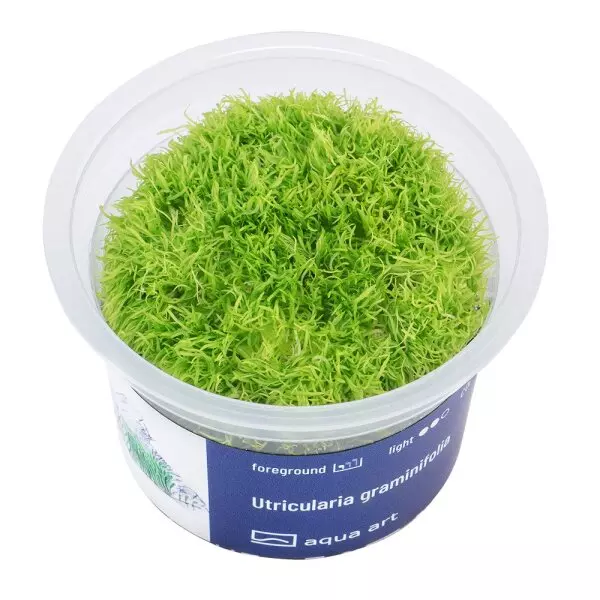
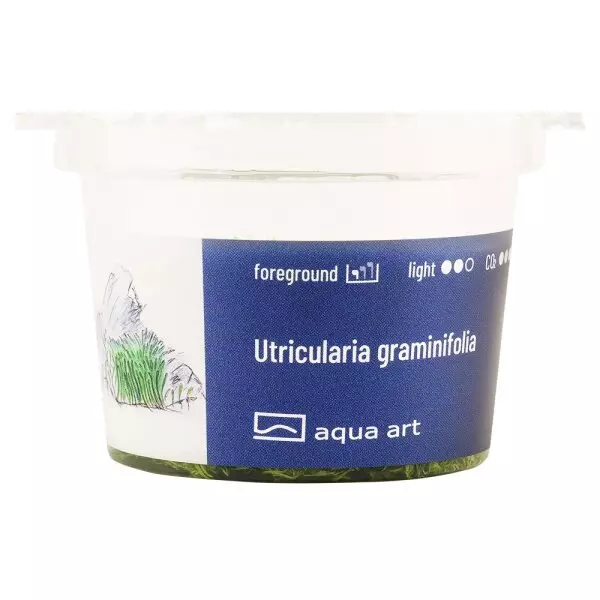
Invitro Utricularia graminifolia

Utricularia graminifolia is an attractive in-vitro aquarium plant that is particularly appreciated for its grass-like appearance and its ability to form dense carpets in the aquarium. This plant comes from the water hose family (Lentibulariaceae) and is known for its fine, grass-like leaves that create a natural and aesthetically pleasing underwater landscape.
  • Difficulty of cultivation: : difficult
  • Light requirement: medium
  • CO₂ requirement: medium
  • Height of the adult plant: up to 3-10 cm
  • Growth: medium to fast, depending on light
  • Temperature: 24 - 26°C
  • Placement in the aquarium: Foreground
  • Origin: Asia
  • 6 cm cup diameter
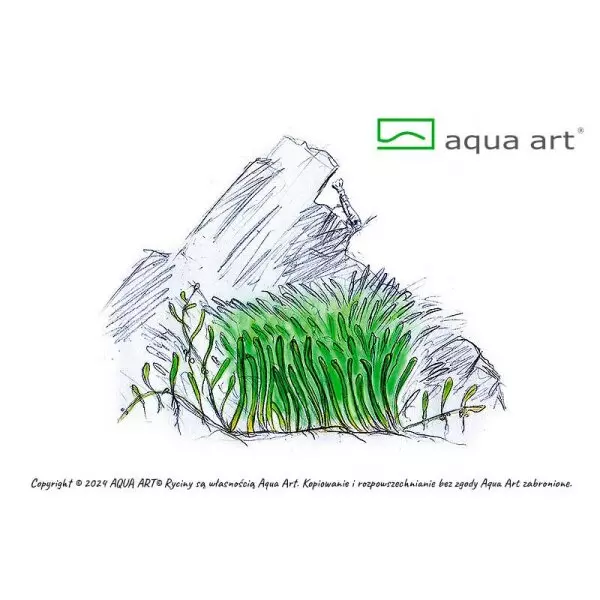
Utricularia graminifolia is ideal for foreground planting in aquaria. It forms dense, green carpets that create a natural look and can serve as hiding places for small fish and shrimps. This plant is suitable for both beginners and experienced aquarists and contributes to the biological diversity and aesthetic beauty of an aquarium.

Planting: The plant must be removed from the cup and thoroughly rinsed off the gel under rinse off the gel thoroughly under running water. This is best done by placing the plant in a container of lukewarm water. The Most of the gel will then fall off by itself. Divide the contents the contents of the cup into 1-2 cm clumps and then place these in the substrate into the substrate at a small distance.
Composition
Feeding recommendation
Technical details
Size information

0 of 0 reviews

Give us a rating!

Share your experience with the product with other customers.


Customers also bought

Hydrocotyle verticillata
🌿 Hydrocotyle verticillata InVitro Whorled pennywort for the foreground Hydrocotyle verticillata from Aqua Art is a unique foreground plant with umbrella-shaped leaves that are reminiscent of small water lilies or parasols. This special leaf shape makes it a real eye-catcher in natural aquariums and aquascapes - especially in shallow tanks or detailed layouts. The plant remains compact, grows creeping across the bottom and is ideal for creative foreground or midground designs. Supplied as an in vitro plant, it is free from pesticides, algae and snails, making it ideal for shrimp tanks and sensitive aquarium inhabitants.✅ Advantages at a glance: Eye-catching umbrella-shaped leaves - natural look with design character InVitro - shrimp-safe, pesticide-free & algae-free Compact growth - perfect for the foreground Grows creeping & forms small groups Ideal for shallow tanks & creative aquascapes Undemanding & easy to care for📋 Product details: Name: Hydrocotyle verticillata Type: Ground cover / foreground plant Growth height: approx. 2-7 cm Light requirement: low to medium CO₂ supply: not essential, but beneficialpH value: 5 to 7 Growth: slow to medium Propagation: by runners, cuttings, division Delivery form: In vitro cup (sterile cultivation) Manufacturer: Aqua Art💡 Zoo Roco tip: Hydrocotyle verticillata looks particularly harmonious in combination with fine mosses or light-colored substrates. It is also very suitable for aquascaping and shallow-planted nano aquariums andcan also be kept emersed in Wabi-Kusa.

CHF 6.50

Eriocaulon cinereum
Eriocaulon CinereumEriocaulon Cinereum is a very interesting and eye-catching plant species for the foreground of an aquarium. The plant is characterized by slow growth and the shape of the leaves resembles needles.Cultivation difficulty: moderately demanding Light requirement: high CO₂ requirement: high Height of the adult plant: up to 5 cm Growth: slow Temperature: 19-29 °C Placement in aquarium: in the foreground Origin: Asia 6 cm cup diameter Eriocaulon Cinereum is an undersized plant that does well in the foreground of an aquarium. This species is found on the Asian continent, especially in countries such as China and the Himalayan region. In China it is very common in its natural habitat, but in other countries it is hard to find. Recently, it has gained popularity due to its original and unique structure and characteristic flowers.The plant is characterized by very slow growth, as it takes about 6 months to form a rosette with a diameter of 10 cm. It reaches an average height of 5 cm. There must be a very fertile substrate, as the species has a very extensive root system. Through this, the plant absorbs most of the nutrients it needs for growth. It tolerates a wide range of water temperatures from 19 to 29 °C. It also grows in water with medium to high hardness,but prefers soft water. To ensure good growth, strong lighting and CO₂ dosage is essential, as well as micronutrient fertilization. Under these conditions, it will reward us with a beautiful rosette appearance with many young leaves.The propagation of this plant can be done in several ways. The easiest and most popular is the division of the rosette. This can be done as early as about a month after planting the plant in the aquarium. To get new cuttings, pull out a single plant and remove it from the water. Use a sharp tool to carefully cut the rosette into smaller pieces, and then use tweezers to place them in the substrate. After some time, the cut should be covered with new leaves, and the plant will take on a spherical shape.In aquariums, it likes to bloom, so its original inflorescences make an unusual decoration for any aquarium. Planting: The plant must be removed from the cup and thoroughly rinsed from the gel under running water. This is best done by placing the plant in a container of lukewarm water. Most of the gel will then fall off by itself.

CHF 6.50

Climacium japonicum Invitro
🌿 Climacium japonicum InVitroJapanese tree moss from Aqua Art Climacium japonicum, also known as tree moss, is an unusual, decorative moss from Asia and a real specialty in aquascaping. With its unique, tree-like growth form, it brings structure and depth to the aquarium and is ideal for creating hardscapes, roots or nano landscapes. The InVitro version from Aqua Art guarantees a pesticide-free, sterile product - ideal for sensitive animals such as shrimps. The moss grows slowly, remains compact and, with good care, develops a beautifully branched shape reminiscent of miniature trees.✅ Advantages at a glance: Rare tree moss with characteristic growth habit Sterile & pesticide-free - safe for shrimps and sensitive aquariums Ideal for tying onto stones and roots Grows slowly, remains compact & easy to care for Perfect for aquascaping, nano aquariums & detailed layouts Provides natural hiding places for juvenile fish & invertebrates📋 Product details: Name: Climacium japonicum Type: Moss / perennial plant Origin: Asia (Japan) Placement: Foreground, midground, on hardscape Light requirement: low to medium CO₂ supply: not required Growth: slow Growth height: approx. 3-8 cm Delivery form: In vitro cup (sterile cultivated) Manufacturer: Aqua Art💡 Zoo Roco tip: Climacium japonicum develops its typical tree shape particularly well on horizontal surfaces with a slight flow of water. For a natural look, we recommend combining it with sand or light-colored substrate in the foreground.

CHF 6.50

Bacopa myriophylloides Invitro
Invitro aquarium plant Bacopa myriophylloidesDelicate aquarium plant for the background Bacopa myriophylloides is an elegant stem plant with delicate, finely pinnate leaves - a real eye-catcher for the background of your aquarium. Its special structure brings lightness and movement to the layout and is ideal for aquascaping and natural aquariums. As a high-quality in vitro plant, it is free from algae, snails and pesticides, making it particularly safe for shrimps and sensitive tanks. With good lighting and CO₂ supply, Bacopa myriophylloides grows compactly and healthily - with a beautiful, delicate appearance. Advantages at a glance: ✅ Delicate stem plant with feathery leaves ✅ Ideal for the background & textured layouts ✅ InVitro - sterile, pesticide-free & shrimp-safe ✅ Healthy growth with light & CO₂ addition ✅ Perfect for aquascaping & natural aquariumsProduct details: Name: Bacopa myriophylloides Type: Stem plant Location in the aquarium: Background Growth height: approx. 30-50 cm Light requirement: Medium to high CO₂ supply: Recommended Delivery form: In vitro cup (grown sterile) Special feature: Very fine, decorative leaf structure

CHF 6.50

Ceratopteris thalictroides - Fine-leaved Sumatra fern
Ceratopteris thalictroides Fine-leaved horn fern - Sumatran fern max. growth height - 50 cm Country of origin North Australia, South America, Southeast Asia Suitability Discus aquarium, community aquarium Type Fern family Pteridaceae Genus Ceratopteris Propagation Adventive plants on the leaves Growth rate fast pH 5 - 9 Water hardness 10 - 30 °dh    Easy to care for. Beginner plant The Sumatran fern has much finer leaves than Ceratopteris cornuta. This species is found in many tropical countries. Here it usually grows in muddy shallow water, but can also be found in rice fields. This graceful fern requires sufficient space in the aquarium as it grows very quickly. It is easy to care for and problem-free under medium light levels. A proven beginner's plant for every newcomer to the aquarium hobby.

From CHF 7.90

Nepenthes ampullaria red - carnivorous plant
Aqua Art Nepenthes ampullaria 'Red'Compact, red ground pots for the humid terrariumNepenthes ampullaria 'Red' forms a particularly large number of amphora-shaped ground pots in attractive shades of red, giving it the appearance of a dense "carpet of pots". It is ideal for warm, very humid terrariums and paludariums with bright, indirect light.Characteristics and requirements:Origin (species): Southeast Asia; natural distribution from Thailand to western Malaysia and Maluku to New Guinea, among othersHabitat: humid lowland habitats, including (swamp) forestsTemperature: warm; often approx. 21-24 °C in the terrariumLight: bright to very bright, preferably indirect/diffuse (no prolonged blazing sun)Water: As low in minerals as possible (rain/osmosis water)Lowland Nepenthes with numerous potsPots typically urn/amphora-shaped, approx. 2-10 cm long in natureRequires high humidity (70-90%)Warm climate: as a lowland species, rather constantly warmVery decorative in humid setups because many pitchers are visible at the same timeExciting plant to observe: pitcher formation and coloration clearly react to light and climateNo fertilization necessary; nutrient-poor substrate is expressly desiredNepenthes ampullaria 'Red' is a tropical pitcher plant that looks particularly impressive in humid lowland biotopes. Instead of only forming individual pitchers on long tendrils, this species develops many pitchers in the lower area - often in dense groups directly at the base of the plant. It is precisely this "pitcher carpet" effect that makes it so popular in terrariums, paludariums or warm, humid plant showcases.In the wild, Nepenthes ampullaria is widespread in Southeast Asia and grows predominantly in humid, tropical lowland habitats, including swamp and rainforest areas. Accordingly, it appreciates conditions that are constantly warm and very humid. High humidity (often in the range of around 70-90% or more) and temperatures in the warm lowland spectrum of around 22-26°C are considered a good orientation.For Nepenthes, "lowland spectrum" simply means the climate profile of lowland species - i.e. conditions similar to those in tropical lowland and swamp areas. "Spectrum" does not mean a hard fixed value, but a range of temperatures/humidity in which these plants grow reliably and form pitchers.The plants like bright light, but not burning midday sun. Many cultivation instructions recommend very bright, but diffuse or indirect light over longer periods of time (e.g. under plant light or in a well-shaded greenhouse) so that leaves and pitchers remain healthy and the plant reliably "pitches" (produces pitchers)Water quality is particularly important for everyday care: if possible, use water that is low in minerals (rain or osmosis water). The substrate should be airy, acidic and low in nutrients - typical Nepenthes mixtures are often based on sphagnum and structural components so that the roots remain moist but do not suffocate.Zoo Roco tip:If Nepenthes ampullaria 'Red' makes few pitchers at first, this is usually a sign of too low humidity or too little light. First increase the humidity (e.g. in the terrarium/with good ventilation) and provide bright, indirect light. Water consistently with rain/osmosis water - depending on the region, tap water is often too rich in minerals for carnivores.

CHF 15.90

Suggested products

Ludwigia ovalis Invitro aquarium plant
Ludwigia ovalis invitro cup This plant, with a characteristic oval leaf oval leaf shape in orange-pink color, is easy to grow and an interesting addition to the aquarium. interesting addition to the aquarium. The leaves are slightly smaller than those of the popular Repens variety. Due to their rapid growth the clumps must be trimmed and thinned out regularly to prevent excessive growth. prevent excessive growth. The original shape of the leaf blade makes it an attractive addition to the plant composition in the aquarium. aquarium.To use this plant, remove it from the cup and rinse the gel. cup and rinse the gel thoroughly under running water. Then divide it into small clumps of 1-2 cm and plant them at short intervals. them at short intervals. As it grows, it will form a form a uniform group of adult plants.This plant comes from in vitro cultivation and is free from snails, parasites and algae. and algae. High-quality gel was used as a medium, so it will establish itself quickly establish itself in the aquarium. Light requirement: medium to intensive Optimum temperature: 10 to 28 °C Water values: soft to hard pH value: 4 to 7 CO2 and nutrients: recommended Propagation: cuttings

CHF 16.90

Ludwigia ovalis Invitro aquarium plant
Ludwigia ovalis invitro cup This plant, with a characteristic oval leaf oval leaf shape in orange-pink color, is easy to grow and an interesting addition to the aquarium. interesting addition to the aquarium. The leaves are slightly smaller than those of the popular Repens variety. Due to their rapid growth the clumps must be trimmed and thinned out regularly to prevent excessive growth. prevent excessive growth. The original shape of the leaf blade makes it an attractive addition to the plant composition in the aquarium. aquarium.To use this plant, remove it from the cup and rinse the gel. cup and rinse the gel thoroughly under running water. Then divide it into small clumps of 1-2 cm and plant them at short intervals. them at short intervals. As it grows, it will form a form a uniform group of adult plants.This plant comes from in vitro cultivation and is free from snails, parasites and algae. and algae. High-quality gel was used as a medium, so it will establish itself quickly establish itself in the aquarium. Light requirement: medium to intensive Optimum temperature: 10 to 28 °C Water values: soft to hard pH value: 4 to 7 CO2 and nutrients: recommended Propagation: cuttings

CHF 6.50

Limnophila hippuridoides
Limnophila hippuridoide-InVitro Limnophila hippuridoide is an elegant stem plant that provides height, structure and lively color nuances in the background of the aquarium. Its fine, densely arranged leaves give the layout a soft, natural look and add movement to the overall picture. Depending on the light conditions, the plant develops attractive plays of color ranging from fresh green to warm orange and red tones, creating exciting contrasts in the aquascape. It grows quickly and is ideal for creating dense groups of plants or concealing technical elements in the background. With moderate care requirements, this species is adaptable and rewards a good supply of nutrients with strong, healthy growth.Advantages at a glance: Attractive background plant with filigree structure Color variations from green to orange-red possible Fast growth for dense groups of plants Ideal for creating depth in aquascaping Cultivated in vitro - free from snails and algae Product details: Name: Limnophila hippuridoide Type: Background plant Growth height: up to 45 cm Light requirement: medium to high CO₂ supply: recommended Growth: fast Propagation: via side shoots or top cuttings Delivery form: InVitro cup (sterile cultivated) Manufacturer: Aqua Art

CHF 6.50

Cryptocoryne wendtii Mi Oya
Cryptocoryne wendtii 'Mi Oya' In Vitro Cryptocoryne wendtii 'Mi Oya' is an attractive and uncomplicated aquarium plant that brings natural elegance to the aquarium with its broad, gently wavy leaves in warm brown tones. Its special coloring creates exciting contrasts with green plants and adds depth to the layout. Thanks to its robust characteristics, it is ideal for beginners and experienced aquascapers alike. The plant grows evenly and forms dense groups that create a harmonious structure, especially in the middle or background. Thanks to its adaptability, it also copes well with moderate lighting and low CO₂ addition and remains permanently decorative. Advantages at a glance:Easy to care for and ideal for beginners Warm brown and olive tones for natural contrasts Compact, group-forming growth Suitable for center and background design Grown in vitro - free from snails and algae Product details: Name: Cryptocoryne wendtii 'Mi Oya' Type: Medium - background plant Growth height: approx. 15-30+cm Light requirement: low to medium CO₂ supply: not essential, but beneficialpH value: 5 to 8 Growth: slow to medium (~2-3 leaves/month) Propagation: by stolons, division Delivery form: In vitro cup (sterile cultivation) Manufacturer: Aqua Art

CHF 8.90

Ludwigia ovalis Invitro aquarium plant
Ludwigia ovalis invitro cup This plant, with a characteristic oval leaf oval leaf shape in orange-pink color, is easy to grow and an interesting addition to the aquarium. interesting addition to the aquarium. The leaves are slightly smaller than those of the popular Repens variety. Due to their rapid growth the clumps must be trimmed and thinned out regularly to prevent excessive growth. prevent excessive growth. The original shape of the leaf blade makes it an attractive addition to the plant composition in the aquarium. aquarium.To use this plant, remove it from the cup and rinse the gel. cup and rinse the gel thoroughly under running water. Then divide it into small clumps of 1-2 cm and plant them at short intervals. them at short intervals. As it grows, it will form a form a uniform group of adult plants.This plant comes from in vitro cultivation and is free from snails, parasites and algae. and algae. High-quality gel was used as a medium, so it will establish itself quickly establish itself in the aquarium. Light requirement: medium to intensive Optimum temperature: 10 to 28 °C Water values: soft to hard pH value: 4 to 7 CO2 and nutrients: recommended Propagation: cuttings

CHF 6.50

Hygrophila sp. Araguaia
🌿 Hygrophila sp. 'Araguaia' InVitro Reddish-brown accent plant with unique growth habit Hygrophila sp. 'Araguaia' from Aqua Art is a particularly attractive, compact stem plant with a reddish-bronze color and finely branched growth. It is ideal for the foreground to midground and provides structured contrasts and warm color accents in aquascapes. This plant is one of the slow-growing Hygrophila species and can be easily shaped and thickened by regular pruning. Supplied as an in-vitro plant, it is free from algae, snails and pesticides - ideal for shrimp tanks and sensitive aquariums.✅ Advantages at a glance: Compact Hygrophila with reddish-bronze leaves InVitro - sterile, snail-free & pesticide-free Ideal for the foreground or middle ground Slow-growing - easy to shape and grow bushy Good effect with strong lighting & CO₂ supply Very decorative in natural aquariums and layouts with contrasting colors📋 Product details: Name: Hygrophila sp. 'Araguaia' Type: Stem plant Placement: Foreground to midground Growth height: approx. 5-15 cm Light requirement: medium to high CO₂ supply: recommended Growth: slow Delivery form: In vitro cup (sterile cultivated) Manufacturer: Aqua Art💡 Zoo Roco tip: Combine Hygrophila 'Araguaia' with light green plants such as Micranthemum or Hydrocotyle sp. 'Japan' - to show off the darker coloring particularly well. For a dense carpet, regular pruning is recommended.Hygrophila 'Araguaia' provides subtle color accents and fine structure in the lower section of the aquarium - ideal for sophisticated layouts and harmonious plant design.

CHF 6.50

Climacium japonicum Invitro
🌿 Climacium japonicum InVitroJapanese tree moss from Aqua Art Climacium japonicum, also known as tree moss, is an unusual, decorative moss from Asia and a real specialty in aquascaping. With its unique, tree-like growth form, it brings structure and depth to the aquarium and is ideal for creating hardscapes, roots or nano landscapes. The InVitro version from Aqua Art guarantees a pesticide-free, sterile product - ideal for sensitive animals such as shrimps. The moss grows slowly, remains compact and, with good care, develops a beautifully branched shape reminiscent of miniature trees.✅ Advantages at a glance: Rare tree moss with characteristic growth habit Sterile & pesticide-free - safe for shrimps and sensitive aquariums Ideal for tying onto stones and roots Grows slowly, remains compact & easy to care for Perfect for aquascaping, nano aquariums & detailed layouts Provides natural hiding places for juvenile fish & invertebrates📋 Product details: Name: Climacium japonicum Type: Moss / perennial plant Origin: Asia (Japan) Placement: Foreground, midground, on hardscape Light requirement: low to medium CO₂ supply: not required Growth: slow Growth height: approx. 3-8 cm Delivery form: In vitro cup (sterile cultivated) Manufacturer: Aqua Art💡 Zoo Roco tip: Climacium japonicum develops its typical tree shape particularly well on horizontal surfaces with a slight flow of water. For a natural look, we recommend combining it with sand or light-colored substrate in the foreground.

CHF 6.50

Bucephalandra sp. Ulysses
🌿 Bucephalandra sp. 'Ulysses' InVitro Noble perennial plant with character Bucephalandra sp. 'Ulysses' from Aqua Art is an exclusive, slow-growing aquarium plant that impresses with its dark green to bluish shimmering leaves with slightly wavy edges. This variant is ideal for attaching to roots, stones or decorative elements - without planting in the substrate. Thanks to in vitro cultivation, it is free from snails, algae and pesticides - ideal for shrimp tanks, nano aquariums and natural aquariums. The plant is robust, easy to care for and decorative - even in low light and without a CO₂ supply.✅ Advantages at a glance: Staking plant with wavy, dark green leaves InVitro - sterile, pesticide-free and snail-free Slow-growing, very easy to care for Perfect for shrimp tanks, aquascapes and small aquariums No substrate required - ideal for roots or stones Eye-catching leaf structure with an elegant shimmer📋 Product details: Name: Bucephalandra sp. 'Ulysses' Type: Perennial plant Placement: Foreground to midground Growth height: approx. 5-10 cm Light requirement: low to medium CO₂ supply: not essential, but beneficial Growth: slow Delivery form: In vitro cup (sterile cultivated) Manufacturer: Aqua Art💡 Zoo Roco tip: Place Bucephalandra 'Ulysses' on dark hardscape such as lava rock or bogwood - this will show off the shimmering leaves particularly well. Plant glue or a fine nylon thread is suitable for attaching them.With its unique color effect, low requirements and high decorative quality, Bucephalandra 'Ulysses' is the perfect plant for modern aquarium layouts.

CHF 16.50

Taxiphyllum Spiky Invitro Moss
AquaArt Taxiphyllum Spiky Decorative aquarium moss from Aqua Art Taxiphyllum 'Spiky', also known as Spiky Moss, is a particularly attractive aquarium moss with strongly branched, three-dimensional shoots. It grows in dense, bushy clumps with a characteristic, slightly spiky structure - ideal for decorating roots, stones or back walls in natural aquariums. Aqua Art's in vitro cultivation guarantees a pesticide-free, sterile plant that is safe for shrimps and sensitive aquarium inhabitants. The moss is easy to care for, requires little light and grows reliably even without the addition of CO₂ - perfect for beginners and professionals in aquascaping. Advantages at a glance: Three-dimensional, bushy moss with decorative structure InVitro - free from algae, snails & harmful substances Grows on hardscape - ideal for tying on Shrimp-safe & suitable for all aquarium types Easy to care for & can also be cultivated in low light conditions Product details: Name: Taxiphyllum 'Spiky' (Spiky Moss) Type: Moss / perennial plant Position in aquarium: foreground, hardscape, back wall Growth height: 3-10 cm Light requirement: Low to medium CO₂ supply: Not necessary Delivery form: In vitro cup (sterile cultivated) Manufacturer: Aqua Art

CHF 6.50

Rotala rotundifolia Invitro
Invitro aquarium plant Rotala rotundifoliaColorful stem plant for the background Rotala rotundifolia is one of the most popular stem plants in the aquarium hobby - versatile, easy to care for and particularly attractive thanks to its delicate, round leaves. Depending on the light intensity and nutrient supply, it develops a vibrant green to bright red, adding lively color accents to any aquarium layout. The in vitro version is grown under sterile conditions and is therefore free from algae, snails and pesticides - ideal for sensitive aquariums, especially shrimp tanks. Fast-growing and adaptable, Rotala rotundifolia is ideal for the mid to background and harmonizes wonderfully with other fine stem plants in the natural aquarium. Advantages at a glance: ✅ Changes color depending on the light - from green to red ✅ Fast-growing & ideal for dense groups of plants ✅ InVitro - guaranteed free from harmful substances & snails ✅ Safe for shrimps & sensitive tanks ✅ Perfect for aquascaping & classic plant aquariumsProduct details: Name: Rotala rotundifolia Type: Stem plant Position in aquarium: Middle to background Growth height: approx. 30-50 cm Light requirement: Medium to high CO₂ supply: Recommended for more intense colorationTemperature: 22 - 28°C Delivery form: In vitro cup (grown sterile) Color effect: Green to reddish, depending on light & nutrients

CHF 6.50

Bucephalandra sp. Needle leaf
🌿 Bucephalandra sp. 'Needle Leaf' InVitro Delicate epiphyte plant from Aqua Art The Bucephalandra sp. 'Needle Leaf' from Aqua Art is a particularly elegant variant of the popular Borneo epiphytes. It is characterized by very narrow, needle-like leaves, which give it a delicate yet exotic appearance - ideal for nano aquariums, detailed areas in aquascaping or as a fine structural plant on roots and stones. Thanks to in vitro cultivation, you get a sterile, snail- and pesticide-free plant that is ideal for shrimp tanks and sensitive aquariums. Bucephalandra grows slowly, requires little light and no CO₂ - but is nevertheless color-stable and particularly decorative with stable water values.🌱 Advantages at a glance: ✅ Very narrow leaf shape - fine, needle-like structure ✅ InVitro - 100% free from snails, algae & pesticides ✅ Safe for shrimps & sensitive aquariums ✅ Perennial plant - ideal for roots, stones & decoration ✅ Easy to care for, slow-growing & permanently decorative📋 Product details: Name: Bucephalandra sp. 'Needle Leaf' Type: Perennial plant Position in the aquarium: Foreground to midground, on hardscape Growth height: approx. 3-6 cm Light requirement: Low to medium CO₂ supply: Not necessary, but beneficial Growth: Slow Delivery form: In vitro cup (grown sterile) Manufacturer: Aqua Art💡 Zoo Roco Tip: It is best to glue or tie Bucephalandra sp. 'Needle Leaf' to dark roots or lava rocks. This will accentuate the fine leaves particularly well - and the plant can establish itself optimally without being buried.

CHF 16.90

Eleocharis acicularis Mini
Invitro Eleocharis acicularis MiniPerfect ground cover for aquascaping Eleocharis acicularis 'Mini' from Aqua Art is a particularly fine-leaved, low-growing ground cover and is one of the most popular plants for the foreground in natural aquariums and aquascapes. With its grass-like structure and compact growth, it creates a natural lawn effect in the aquarium - without any noticeable care requirements. InVitro cultivation guarantees a pesticide-free, sterile plant, ideal for sensitive aquariums and shrimp tanks. The plant grows densely, spreads via runners and is easy to trim or replant. With sufficient light and CO₂, an even carpet of plants is created in a short time. Advantages at a glance: ✅ Compact, dense lawn effect for the foreground ✅ InVitro - free from algae, pesticides & snails ✅ Safe for shrimps & sensitive animals ✅ Grows flat & creeping - ideal for aquascaping ✅ Also suitable for nano aquariums Product details: Name: Eleocharis acicularis 'Mini' Type: Ground cover / foreground plant Growth height: 3-6 cm Light requirement: Medium to high CO₂ supply: Recommended for compact growth Delivery form: In vitro cup (grown sterile) Manufacturer: Aqua Art Special feature: Particularly short-growing, forms a dense carpet💡 Zoo Roco tip: For a particularly dense and uniform carpet of plants, it is recommended to divide the InVitro cup into small portions and place them a little apart. With good lighting, a supply of CO₂ and a nutrient-rich substrate (e.g. soil), Eleocharis acicularis 'Mini' will grow together quickly - creating a natural lawn look just like in a professional aquascape in just a few weeks.

CHF 6.50

Customers also saw

Micranthemum umbrosum
Micranthemum umbrosum Micranthemum Umbrosum is a light green stem plant with small round leaves. Depending on how it is pruned, it is suitable for both the foreground and background of the aquarium. Difficulty of cultivation: easy Light requirement: medium, to high CO₂ requirement: medium Height of the adult plant: 20 cm Growth: fast Temperature: 22-26 °C Placement in the aquarium: Second level Origin: North and Central America Cup diameter: 6 cm Micranthemum Umbrosum (Round-leaved meadowfoam) is a naturally occurring plant in North and Central America. It grows both in water and in marshy areas. It is prized by aquarists for its unique appearance. The plant forms long stems with paired, alternate, small, round, light green leaves. It has a fairly well developed root system. It needs regular pruning and is easy to shape into a desired form. It is propagated vegetatively by cutting off the shoot tips and planting them in the ground. It likes water with a hardness of 2-12°N, a pH of 5.5-7.7 and a temperature of 24-26°C. It is sensitive to trypaflavin and can be damaged by snails. It has fairly high light requirements. With insufficient light, it pulls upward, and distinct gaps can be seen between the leaves. With sufficient light, it forms dense clumps that are pleasing to the aquarist's eye.Micranthemum umbrosum is usually placed in the background of the aquarium, but it also looks good in the foreground when cut short. It does not require absolute CO₂ fertilization, but grows much faster in its presence. When growing this plant, pay special attention to the proper concentration of iron in the aquarium water.. Planting:The plant must be removed from the cup and thoroughly rinsed from the gel under running water. This is best done by placing the plant in a container of lukewarm water. Most of the gel will then fall off by itself. Divide the contents of the cup into 1-2 cm lumps and then set them at intervals of 1 to 2 cm.

CHF 6.50

Limnophila aromatica
Limnophila aromaticaLimnophila Aromatica (fragrant limnophilia) is a beautiful plant for the second or third level. It turns purple under intense light.Difficulty of cultivation: moderate Light requirement: medium CO₂ requirement: medium Adult plant height: up to 50 cm Growth: moderate Temperature: 22-28°C Placement in aquarium: second or third level Origin: Asia Cup diameter: 6 cm Limnophila Aromatica (fragrant Limnophila, rice paddy weed) is a plant that has earned a place in aquariums around the world due to its unique appearance and leaf color. It is native to Asia, where it usually grows in rice paddies or swamps near water. It does well after the end of the rainy season in a dry place in a still moist, sandy soil. At high temperatures, the plant flowers, forms fruit, and then dies. Traditionally used as a spice, especially in Vietnamese cuisine. Its flavor is reminiscent of cumin and lemon. Currently, the plant can also be found in America and Australia.Limnophilia Aromatica is a stalk plant that produces lance-shaped leaves with serrated edges. Their color depends on the intensity of light. If the plant has little access to light, its leaves are green. If the light is strong, the entire top of the plant is intense red and the leaves are purple on the underside. In aquariums, plant it in the second or third level, leaving a distance of 1.5 cm between cuttings. It grows quite fast, its optimal pH is 6-7. It tolerates temperatures between 15 and 30 °C, but it is better to avoid extreme temperatures and keep it between 22 and 28 °C. In aquariums it is propagated by cutting and planting young plants that form on the stems or from the tips. The plant does not require absolute CO₂ fertilization, but grows much faster with CO₂ addition. To achieve the desired intense red-purple color of the leaves, the plant must be strongly illuminated. In addition, attention must be paid to the correct water parameters in the aquarium, especially the optimal iron, nitrate and phosphate content, so that the plant can absorb the nutrients from the water column. Due to its strongly developed root system, the plant grows best in active media.Planting: The plant must be removed from the cup and thoroughly rinsed from the gel under running water. This is best done by placing the plant in a container of lukewarm water. Most of the gel will then fall off by itself. Divide the contents of the cup into 1-2 cm lumps and then set them at intervals of 1 to 2 cm.

CHF 6.50

BioArt Cylinder 285
BioArt Cylinder - Mini terrarium for moisture-loving plantsWith this mini terrarium, you can create small worlds to look at - like a living 3D picture at home.Best light quality: The powerful LED lighting (5V-7W, 344 lumens, 8300 Kelvin) provides the full daylight spectrum, supports the healthy growth of your plants and promotes the natural balance in the terrarium. Simple control: With the integrated timer (3, 9 or 12 hours) and the precise 10-stage dimming function, optimum lighting for your terrarium is guaranteed at all times. Longevity guaranteed: A quiet fan ensures efficient cooling of the LEDs, increasing their service life to an impressive 30,000 hours. Elegant design: High-quality clear glass combined with a minimalist and stylish appearance provides pleasant light and blends harmoniously into any interior. Optimal balance: The adjustable ventilation slits in the cover allow precise regulation of humidity - ideal for a healthy climate in the terrarium. Supplied without contents (plants, gravel and decoration) Technical details:Capacity: 4 liters Size: 215 mm x 216 mm x 323 mmLED lighting: 5V-7W, 344 lumen, 8300 Kelvin Color: blackTimer: 3/9/12 hours Dimming function: 10-stage Cooling: Quiet fan for an LED service life of up to 30,000 hours Power supply: USB plug and adapter included in the scope of delivery

CHF 75.00

Eriocaulon cinereum
Eriocaulon CinereumEriocaulon Cinereum is a very interesting and eye-catching plant species for the foreground of an aquarium. The plant is characterized by slow growth and the shape of the leaves resembles needles.Cultivation difficulty: moderately demanding Light requirement: high CO₂ requirement: high Height of the adult plant: up to 5 cm Growth: slow Temperature: 19-29 °C Placement in aquarium: in the foreground Origin: Asia 6 cm cup diameter Eriocaulon Cinereum is an undersized plant that does well in the foreground of an aquarium. This species is found on the Asian continent, especially in countries such as China and the Himalayan region. In China it is very common in its natural habitat, but in other countries it is hard to find. Recently, it has gained popularity due to its original and unique structure and characteristic flowers.The plant is characterized by very slow growth, as it takes about 6 months to form a rosette with a diameter of 10 cm. It reaches an average height of 5 cm. There must be a very fertile substrate, as the species has a very extensive root system. Through this, the plant absorbs most of the nutrients it needs for growth. It tolerates a wide range of water temperatures from 19 to 29 °C. It also grows in water with medium to high hardness,but prefers soft water. To ensure good growth, strong lighting and CO₂ dosage is essential, as well as micronutrient fertilization. Under these conditions, it will reward us with a beautiful rosette appearance with many young leaves.The propagation of this plant can be done in several ways. The easiest and most popular is the division of the rosette. This can be done as early as about a month after planting the plant in the aquarium. To get new cuttings, pull out a single plant and remove it from the water. Use a sharp tool to carefully cut the rosette into smaller pieces, and then use tweezers to place them in the substrate. After some time, the cut should be covered with new leaves, and the plant will take on a spherical shape.In aquariums, it likes to bloom, so its original inflorescences make an unusual decoration for any aquarium. Planting: The plant must be removed from the cup and thoroughly rinsed from the gel under running water. This is best done by placing the plant in a container of lukewarm water. Most of the gel will then fall off by itself.

CHF 6.50

Anubias barteri nana 'Petite
Anubias Barteri Nana 'Petite' Anubias Barteri Nana 'Petite' is a very small, uniformly filigree Anubias variety. Selection has resulted in a miniature form that is ideal for nano aquariums.Difficulty of cultivation: easy Light requirement: low CO₂ requirement: low Height of the adult plant: up to 5 cm Growth slow Temperature: 20-30 °C Placement in aquarium: In the foreground Origin: cultivation 6 cm cup diameter Anubias barteri is a succulent green plant of the rhizome family, naturally native to the swamps of Cameroon and Nigeria, growing in fast-flowing waters. It can grow both under and above water. "Petite" is a selected cultivar of Anubias barteri. This species does not occur in nature in such a miniature form. Consistent selection by Singapore botanists has resulted in a delicate, compact version of Anubias barteri for nano-aquariums. The variety is rarely seen in the trade and represents a kind of rarity. The plant has a rhizome that forms roots that strongly entwine the area in which it is planted. It is therefore ideal for planting on roots or rocks, such as volcanic lava.The very decorative, tiny, heart-shaped leaves are stiff and fleshy, shiny on the surface and have a velvety texture on the underside. At the same time, they are very hard and stiff, so herbivorous fish are not interested in them. The height of this miniature plant is less than 5 cm. Therefore, it is well suited for the foreground. However, it can also be used for eye-catching trees in the background. Under good conditions, it can produce a delicate white flower. Anubias Barteri Nana 'Petite' can handle a variety of temperatures. It can thrive in cooler tanks as well as in warm, tropical aquariums with discus fish, for example. It likes water with a pH of 5.5-8.0, up to 15 ° dH. it prefers weak, diffuse lighting, reaching more like 0.3 W/l. In case of prolonged and intense lighting, it may become overgrown with algae. Therefore, it is advisable to plant it in darker or even shaded areas of the tank. The plant does not like neglected aquariums, it prefers water that is changed regularly and does not leave dirt on its leaves. It grows slowly, but forms a very attractive shape, especially when it grows in a group to form a green, decorative clump. It is very comfortable in tanks with low water levels and looks great in nano aquariums. Therefore, it is a popular plant for many aquascapers. With it can create very interesting miniature compositions. It also does well in aquariums with cichlids and other herbivorous fish. It is often used in shrimp tanks and nano aquariums for fighting fish. It does not require special care, it is enough to remove older leaves, which stimulates the rhizome to form offshoots. If you want to get new cuttings, you can divide the rhizome into 2-3 cm long sections from time to time. To attach the Anubias to roots or stones, it is enough to use very thin string, thread or special glue for fixing aquarium plants. Planting: The plant must be removed from the cup and thoroughly rinsed from the gel under running water. This is best done by placing the plant in a container of lukewarm water. Most of the gel will then fall off by itself.

CHF 16.90

Glossostigma Elatinoides
Glossostigma elatinoides Glossostigma Elatinoides, is a foreground plant with strikingly strong green leaves. Under strong light conditions, it grows quickly and covers the ground densely.Difficulty of growing: demandingLight requirements: highCO₂ requirements: highHeight of mature plant: up to 3 cmGrowth rate: fastTemperature: 18-28°CPlacement in aquarium: ForegroundOrigin: Australia and New ZealandCup diameter: 6 cmGlossostigma Elatinoides is a showy green turf plant that is popular with aquascarpers to establish a lawn. It spreads by sprouting. An ideal plant for the foreground of an arrangement. Glossostigma Elatinoides (Australian Hymenoptera), called Glosia, is one of the smallest aquarium plants, reaching a height of 2-3 cm. It is therefore suitable for nano aquariums. It often forms a lawn in the foreground of the aquarium.It needs lots of light to reach an optimal condition. With little or no phosphorus, it tends to grow tall. It likes supplementation with macronutrient fertilizers. A good quality granular substrate and CO₂ fertilization are necessary for its growth. Glossostigma elatinoides is planted in the substratein clumps at small intervals of 1-2 cm. The best cultivation results are obtained in a fertile active substrate. It multiplies very easily by lateral regrowth. Under favorable conditions, it covers the aquarium with a beautiful, dense carpet. Over time, the rhizomes build on each other. Once a dense turf has formed, you will need to regularly prune it so that it does not detach from the substrate. It is best to use sharp scissors with curved blades for this purpose. Frequent pruning will help the plant compact and grow. As it grows, it will form a uniform group. Glossostigma Elatinoides can also grow in aquariums set up using the dry start method and the Wabi Kusa arrangement.Planting: The plant must be removed from the cup and thoroughly rinsed from the gel under running water. This is best done by placing the plant in a container of lukewarm water. Most of the gel will then fall off by itself. Divide the contents of the cup into 1-2 cm lumps and then place them at a small distance on the selected items.

CHF 6.50

Nepenthes macfarlanei - carnivorous plant
Carnivorous plant - Nepenthes macfarlaneisupplied in an in vitro cupdemandingPots up to 15cm tall - climbing plant up to 4 meters highBright spot without direct sunlightHumidity: 70-90%Temperature: 20-30 °C during the day and 15-20 °C at nightNepenthes macfarlanei, also known as Macfarlane's pitcher plant, is a tropical insectivorous plant that is native to the mountainous regions of Malaysia, particularly the Malay Peninsula. The plant is characterized by the fact that it produces trap-like pitchers that are used to catch and digest insects. The pitchers are green, often with red or purple spots, and can reach a length of up to 15 cm. The pitcher has a lid on top to prevent rain from entering the trap.Nepenthes macfarlanei is a demanding plant, especially in terms of humidity and water quality. It is ideal for growing in terrariums or special greenhouses for tropical plants.size: The slow-growing plant climbs over 4 meters high, forms leaves usually 8 cm apart and has a fairly thick trunk Light: Nepenthes macfarlanei prefers bright, diffuse light. It grows best in partial shade, where it is protected from direct sunlight, which can burn the leaves.Substrate: The best substrate for this plant is a mixture of sphagnum peat, perlite and pine bark in a ratio of 2:1:1. The substrate should be well-drained and slightly acidic (pH 4.5-5.5).Nepenthes macfarlanei needs to be watered regularly to keep the substrate constantly moist, but not wet. It is best to use distilled water or rainwater, as the plant is sensitive to the mineral salts tothe mineral salts contained in tap water. Feeding/ fertilizing: Pitcher plants generally do not require additional fertilization as they absorb nutrients from the insects they catch. At home, a very diluted plant fertilizer can occasionally be added to the watering water.Humidity: High humidity is crucial for the proper development of Nepenthes macfarlanei. The humidity should be between 70 % and 90 %. Regular spraying and the use of foggers is recommended.In the home, this plant thrives best in the bathroom if it is showered daily. Temperature: This plant thrives well in moderate to warm temperatures. The optimum range is 20-30 °C during the day and 15-20 °C at night. Large temperature fluctuations should be avoided. Propagation: The plant propagates by seed. In cultivation, this also works with cuttings.The combination of carnivorous plants with reptiles reptiles in a terrarium can create an aesthetically pleasing and ecologically interesting environment. Carnivorous plants such as Drosera, Nepenthes, Pinguicula and Sarracenia are not only exotic and beautiful, they also they also contribute to a balanced ecosystem by controlling the population of small insects. small insects.

CHF 16.90