
Handbook of forage plants 2nd revised editionMarion Minch is not only a successful breeder of diverse tortoises for many years, but also an excellent connoisseur of native wild herbs. She founded and runs samenkiste.de, which is well known to many tortoise keepers and nature lovers. Her name is inextricably linked with reptile care and species-appropriate nutrition for tortoises. Her handbook of food plants summarises the most important native food plants for herbivorous and omnivorous reptiles. She not only considers tortoises, but also iguanas, spiny-tailed dragons and even chameleons. From the basics of plant biology to native wild herbs to suitable food plants for hardy tropical reptile species, this comprehensive work provides the basis for species-appropriate keeping. In the expanded and supplemented 2nd edition, the plant section is divided according to flower colour. This makes it even easier to identify wild herbs. The work has also been supplemented with a wealth of additional information and many pictures.
The wood wool from Petfactory - usable in many places
Content approx. 5 liters
made of softwood
untreated
The wood wool can be used in different areas:
In terraristics as breeding material for the Drosophila
Rodents such as golden hamsters, dwarf hamsters, gerbils, colored mice or rats can use it as nesting material
Canaries, zebrafinches or agapornids also like to accept this as nesting material
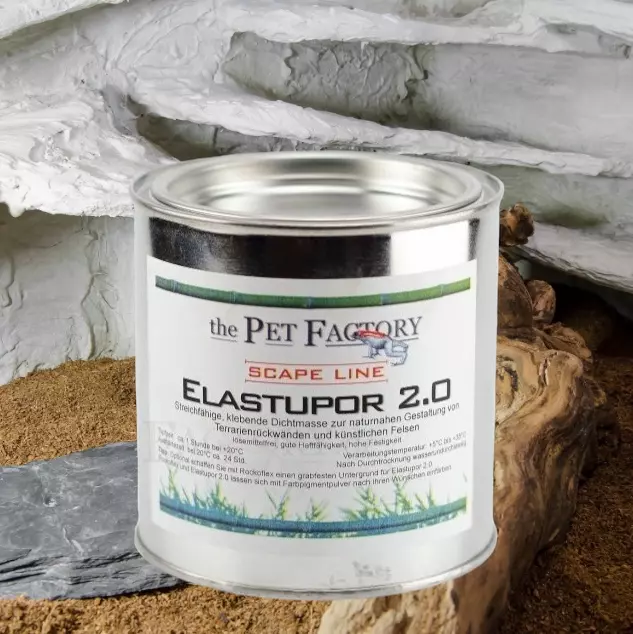
Petfactory Elastupor
Elastupor is a specially developed adhesive, ideal for creating
creating landscapes as well as back and side walls in terrariums.
This product is free from solvents and is characterized by its excellent
excellent adhesion properties. After curing, Elastopur is
Elastopur is completely safe for humans and animals. for bonding various materialsfor building back wallsfor sealing waterfalls (waterproof)mixed with soil or gravel to create backwallsThe basic color of Elastopur is grey and can be dyed with the colors of Reptyflex.Application:Always wear gloves when processingOne can is sufficient for approximately one square meterprocess within 45 minutes after mixing
Hardened after approx. 12 hours and completely dry after 12 daysOnly use animals after two weeksIn contrast to epoxy resin, Elastopur remains slightly elastic even after drying. This means that there are no cracks in the back walls in the event of impacts.
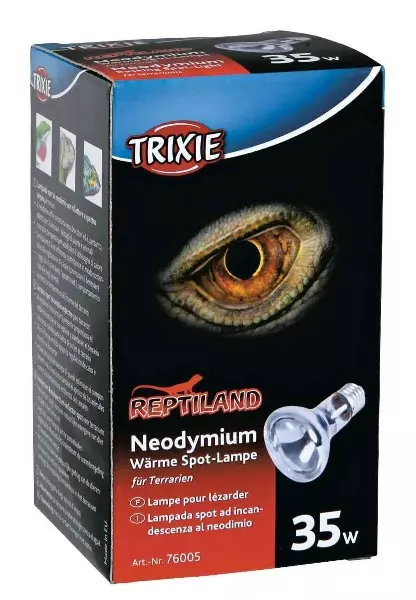
Broad spectrum reflector spot lampcontained neodymium realizes a more natural presentation of animals and plants in the terrariumcreates warm places for sunbathinginfrared radiation supports thermoregulation and digestionUV-A radiation stimulates natural behaviour and appetiteraises the ambient temperature in the terrariumavailable in 35W, 75W and 100W power ratings
The heat packs will start to warm when they get contact with oxygen. This makes them an excellent heat source during the transport of reptiles and other animals.
heat source
during the transport
special design
Attention! For proper function sufficient oxygen is necessary. Inside a closed styrofoam box heat packs will not work properly.The special design of the Lucky Reptile Heat Packs ensure a long warming period and steady temperatures.
Released waxworms (Galleria mellonella)
For reptiles, amphibians, birds or as fishing bait
The caterpillars are usually fed to reptiles, amphibians and birds. However, the waxworm is also becoming increasingly important as fishing bait.
As a treat
For reptiles, amphibians and birds
also as fishing bait
Waxworms were originally known to beekeepers as a pest in beehives. There the larvae of the moth feed on honey. In commercial breeding, the larvae are reared on a feed mash consisting mainly of wheat bran and honey. The caterpillars are usually fed to reptiles, amphibians and birds. However, the waxworm is also becoming increasingly important as fishing bait. The waxworms are offered in 2 different forms: As breeding stock or in released form. The breeding stock offers the advantage that younger waxworms can also be fed, which are significantly smaller than the adult animals. Due to the feed, the caterpillars must taste sweet, which makes the insects very popular with eaters. Waxworms in breeding stocks should, depending on how quickly the animals are to grow, be kept at around 20 to 30 degrees C. The released waxworms should be stored in the refrigerator at about 6-10 degrees C. In this state, the animals no longer take in food.We obtain these waxworms from a breeder for fishing bait. Substances may possibly have been used in the rearing of the worms that can affect the pupation of the animals.
Order by Sunday evening - delivery on Thursday
Orders received by Sunday evening will be dispatched by A Mail on Wednesday or Thursday.Please provide a recipient address where the parcel can be delivered.We accept no responsibility for parcels that are delivered late or collected late.
Even with the greatest care, it can happen that feed animals die due to temperature fluctuations or unpredictable events. We accept no liability for this.
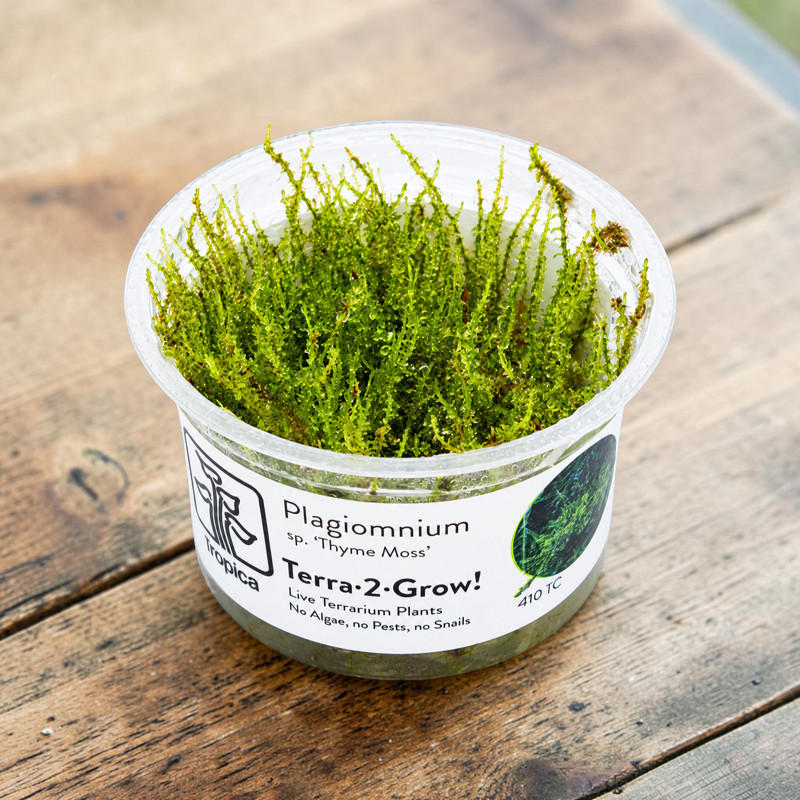
Tropica Terra-2-Grow Thyme Moss – Plagiomnium mossTropica Terra-2-Grow Plagiomnium sp. ‘Thyme Moss’ – light green terrarium moss with wavy leaves. Ideal for humid terrariums, paludariums and moss landscapes.Tropica ’s Terra-2-Grow Plagiomnium sp. ‘Thyme Moss’ is a particularly attractive moss for tropical terrariums, paludariums and naturalistic plant arrangements. With its comparatively large, light-green leaves and slightly translucent leaf structure, it stands out clearly from many other terrarium mosses.The delicate leaves have finely wavy edges and give the moss a soft, lively appearance. Thanks to its low, carpet-like growth habit, dense, natural-looking moss cushions develop over time, reminiscent of the floor of a damp forest.Thyme Moss looks particularly decorative amongst natural stones, on damp roots or as a green ground cover in a terrarium. It can be used to add greenery to small landscapes, to create transitions between different materials or to give individual areas a lush, woodland atmosphere.This moss resembles the North American species Plagiomnium cuspidatum. Its larger leaves provide a lovely contrast to finely structured mosses, ferns and compact tropical plants. This makes it particularly suitable for varied miniature landscapes and detailed terrarium designs.Plagiomnium sp. ‘Thyme Moss’ prefers high humidity and a shady to moderately bright location. Under suitable conditions, it grows at a moderate rate and develops flat, fresh-green moss carpets.With a growth height of approximately 2–5 cm or more, this moss is suitable for both small terrariums and larger planted landscapes. It can thrive particularly well in enclosed or semi-enclosed terrariums, provided there is sufficient moisture.Tropica ’s Terra-2-Grow plants are propagated under controlled laboratory conditions and supplied in sealed culture cups. This allows the plants to be neatly portioned and strategically incorporated into your terrarium design.Important: Thyme Moss is a terrarium moss and not a traditional aquatic plant. It is suitable for damp terrestrial areas but should not be kept completely submerged at all times.With its unusual leaf structure and natural growth habit, Tropica Plagiomnium sp. ‘Thyme Moss’ is a wonderful addition for anyone wishing to enhance their terrarium or paludarium with a special type of moss.Your benefits at a glanceTerra-2-Grow growing pots with Plagiomnium sp. ‘Thyme Moss’Fresh green, slightly translucent moss leavesDecorative leaf structure with wavy edgesLow, carpet-like growthIdeal for tropical terrariums and paludariumsSuitable for covering damp roots and stonesLow light requirements and moderate growth rateLaboratory-propagated culture for easy portioningInstructions for usePreparationOpen the Terra-2-Grow growing pot and carefully remove the moss. Remove any remaining growing medium by gently rinsing it with clean water.Then divide the moss into several small portions. This will allow you to distribute it evenly across different areas of the terrarium.PlantingPlace the moss portions on a damp, suitable terrarium substrate or on naturally damp stones and roots.Gently press the moss down so that it makes good contact with the substrate. On vertical or sloping surfaces, it can be secured with a suitable thread or another plant-friendly fastening if necessary.LightThyme Moss prefers a location with low to moderate light levels. Avoid direct, strong sunlight, as this can cause the moss to dry out or become damaged.HumidityA high and, as far as possible, consistent level of humidity is important for healthy growth. Closed or semi-closed terrariums often provide suitable conditions.WateringKeep the moss and its substrate evenly moist. Where possible, use soft, low-calcium water.Avoid both complete drying out and persistent waterlogging. Good air circulation helps to prevent mould growth.CareCarefully remove any dead plant parts as and when necessary. Once larger moss clumps have formed, these can be divided and planted elsewhere.Important notePlagiomnium sp. 'Thyme Moss' is intended for emersed cultivation. The moss should not be permanently submerged.Zoo Roco TipThyme Moss is particularly well-suited to creating natural-looking woodland landscapes in terrariums. With its comparatively large, fresh-green leaves, it creates a lovely sense of depth, reminiscent of small forest floors.Combine the moss with delicate ferns, selaginella and compact tropical plants. Its distinctive leaf structure also looks particularly attractive on weathered roots or amongst natural stones.When planting the moss, divide it into several small portions rather than using one large, continuous clump. This allows the individual clumps to develop more evenly and gradually grow together to form a natural moss surface.Take particular care to ensure sufficient moisture, especially during the first few weeks. Freshly planted moss is sensitive to drying out and needs time to adapt to the new site conditions.
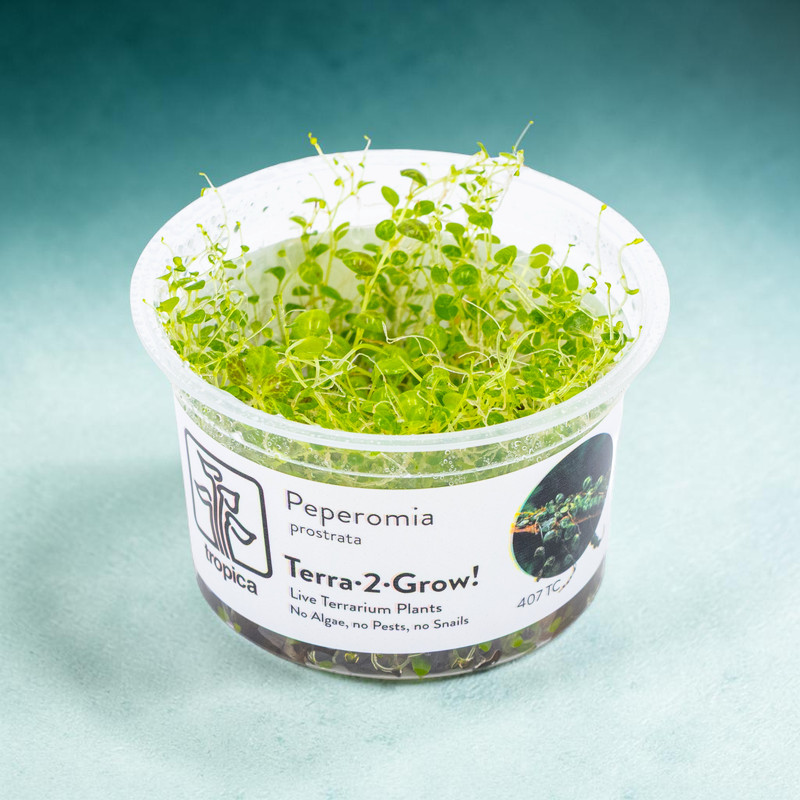
Tropica Terra-2-Grow Peperomia prostrata – terrarium plantTropica Terra-2-Grow Peperomia prostrata – an ornamental terrarium plant with small, turtle-shaped leaves. Ideal for tropical terrariums and paludariums.Tropica ’s Terra-2-Grow Peperomia prostrata is an exceptionally decorative plant for tropical terrariums, paludariums and creative plant arrangements. Its tiny, rounded leaves feature a fascinating green pattern reminiscent of small tortoise shells. This is why the plant is also known by the English name ‘String of Turtles’.The delicate, slightly fleshy leaves grow on thin, creeping or trailing shoots. With its delicate growth habit and distinctive leaf pattern, Peperomia prostrata brings a natural, richly detailed texture to any tropical plant landscape.The plant looks particularly attractive on raised planting beds, amongst roots or along natural stones. Its shoots can spread along the substrate or hang decoratively over edges and branches. This creates natural transitions between plants, wood and stones.Native to South America, Peperomia prostrata prefers warm temperatures, high humidity and bright, indirect light. Under suitable conditions, it develops its characteristic leaf patterns particularly beautifully. Direct, intense sunlight should be avoided.Growth is rather slow to moderate. This makes the plant ideal for smaller terrariums and detailed miniature landscapes, where fast-growing species might become too dominant.As a plant from the Tropica Terra-2-Grow series, Peperomia prostrata is designed for creating humid, tropical habitats. It is particularly suitable for planted terrariums, paludariums and Wabi-Kusa arrangements with a plant area that remains permanently above water.Important: Peperomia prostrata is not an aquatic plant. It must not be kept completely submerged at all times.With its uniquely patterned leaves and elegant, trailing habit, the Tropica Terra-2-Grow Peperomia prostrata is a beautiful addition to natural-looking terrarium landscapes.Your benefits at a glanceDecorative leaves with a pattern resembling a tortoise shellCreeping and trailing plant growthIdeal for tropical terrariums and paludariumsParticularly attractive on roots, stones and raised planting areasCompact growth habit for small, detailed plant arrangementsPrefers high humidity and indirect lightSlow to moderate growth for controlled landscapingInstructions for usePeperomia prostrata prefers a bright location without direct, intense sunlight. Uniform terrarium lighting with a balanced light spectrum is particularly suitable.Plant it in a loose, well-draining substrate that can retain moisture without remaining permanently wet. A mixture containing fine bark particles, coconut fibre or other suitable terrarium substrates provides ideal conditions.LightBright, indirect light promotes compact growth and attractive leaf markings. Avoid intense direct sunlight, as the delicate leaves can be damaged.TemperatureThe plant thrives particularly well at temperatures of around 18–26 °C. Avoid cold draughts and sharp temperature fluctuations.HumidityMedium to high humidity is beneficial. Peperomia prostrata finds particularly suitable conditions in tropical terrariums and paludariums. At the same time, ensure there is sufficient air circulation.WateringKeep the substrate slightly moist and allow the top layer to dry out a little between waterings. Persistent waterlogging must be avoided at all costs, as the delicate roots can rot.Care and pruningIf necessary, shoots that have grown too long can be carefully pruned back. Healthy shoot cuttings can be used for vegetative propagation.Important notePeperomia prostrata requires a location above the water’s surface. In paludariums, the root zone must not be permanently submerged.Zoo Roco TipPeperomia prostrata is a particularly beautiful plant for tropical miniature landscapes. Its small leaves create a natural sense of scale, even in compact terrariums.We recommend placing the plant slightly raised amongst roots or on a planted background. This allows the delicate shoots to trail elegantly downwards, showing off its characteristic trailing habit to its best advantage.Combining it with tropical mosses, dwarf ferns and Selaginella species creates a varied and natural-looking plant landscape.Take care not to keep Peperomia prostrata too wet. Although it thrives in high humidity, its roots cannot tolerate prolonged waterlogging. A well-aerated substrate and good air circulation are crucial for long-term healthy growth.
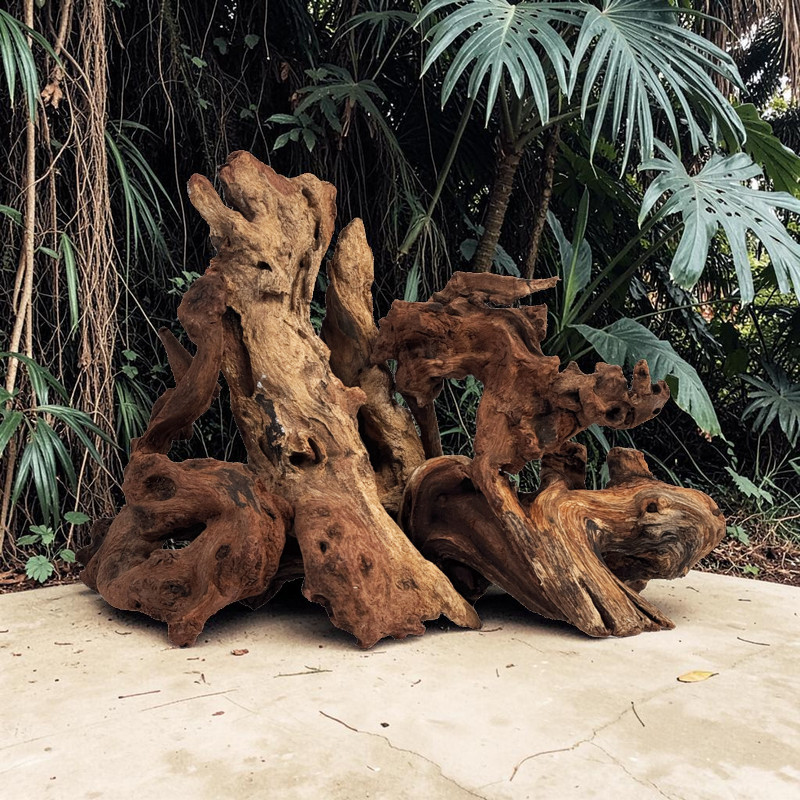
Worn Wood M – natural aquarium root for aquascapingWorn Wood M – natural aquarium root made from hardwood with a weathered texture. Ideal for aquascaping, shrimp aquariums and terrariums. Size approx. 20–30 cm.The Worn Wood root is an exceptional natural decoration for aquariums, aquascapes and terrariums. Its distinctive, weathered surface is reminiscent of wood that has been shaped over many years by water, sun and wind. This creates a particularly natural look that lends any underwater landscape a rustic and authentic character.With its warm brown to yellow-brown hues and smooth, slightly eroded surface, Worn Wood blends harmoniously into natural-looking aquarium designs. The gently curved shapes, natural indentations and unique wood textures make every root a one-of-a-kind decorative element.Unlike heavily branched root varieties, Worn Wood often has a more compact, sculptural shape. This makes the wood particularly well-suited as a central design element in the aquarium. Whether as a horizontal tree trunk, a weathered river root or a striking focal point amongst natural stones – the design possibilities are endless.The natural wood surface combines beautifully with epiphytic plants and mosses. Anubias, Bucephalandra, Java fern and various aquarium mosses in particular can be attached to the root. This creates harmonious aquascapes where plants and natural wood blend seamlessly together.Furthermore, the root provides shrimps, snails and small aquarium fish with additional structures to explore. Over time, biofilms and microorganisms can colonise the wood, which shrimps, for example, enjoy grazing on.The Worn Wood root is made of natural, dense hardwood. Due to the density of the material, many pieces sink of their own accord after a short soaking period. As this is a natural product, individual roots vary in shape, colour and structure.Measuring approx. 20–30 cm, Worn Wood M is particularly suitable for small to medium-sized aquariums or as part of larger aquascaping landscapes.Your benefits at a glanceSize M, approx. 20–30 cm in lengthMade from 100% natural, dense hardwoodCharacteristic, weathered surfaceWarm brown and yellow-brown tonesIdeal for aquascaping, aquariums and terrariumsSuitable for attaching mosses and epiphytesEvery root is a unique piece of natureInstructions for useRinse the Worn Wood root thoroughly with clean water before adding it to the tank to remove loose dirt particles and any possible residues. Do not use cleaning agents.We recommend soaking the root in a separate container for a few days before adding it to the tank. This allows the wood to become fully saturated with water and ensures that any water-soluble tannins are partially released.Then place the root in the desired position in the aquarium and ensure that it is stable. If the root still floats, it can be temporarily weighted down with suitable aquarium stones.For a natural look, mosses and epiphytes can be attached to the wood surface using suitable plant glue or thin thread.ImportantRinse thoroughly before addingPre-soak for several days if necessaryDo not use chemical cleaning agentsEnsure the wood is securely positioned in the aquariumThe water may take on a slight brownish tinge due to tanninsWhitish biofilms on fresh wood are usually temporaryZoo Roco TipWorn Wood is particularly well suited to natural-looking aquascapes where a calm and harmonious design is the priority. Combine the weathered root with fine sand, rounded river stones and compact aquatic plants to create the impression of a natural stream.Mosses and epiphytic plants such as Anubias, Bucephalandra or Java fern, which can be attached directly to the wood, look particularly decorative.Our tip for shrimp aquariums: After adding the root, allow sufficient time for natural biofilms to develop. Shrimps enjoy grazing on these surfaces and use the wooden structures as additional places to rest and hide.
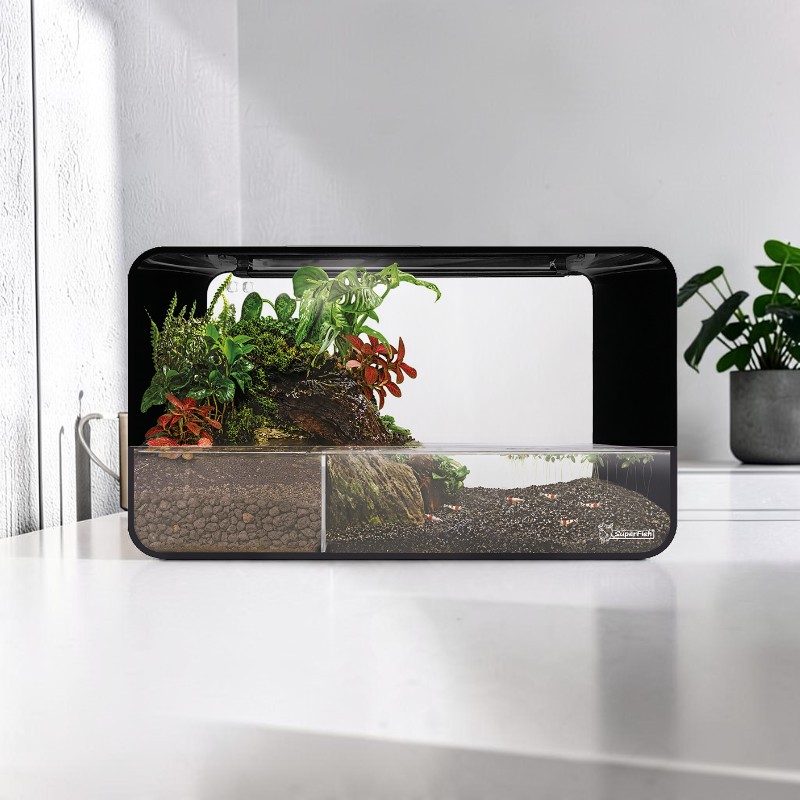
SuperFish Paludra 60 – Water and land in a planted landscapeWith the SuperFish Paludra 60, you can create a small natural landscape where water and land merge. Combine aquatic plants, emersed plants, roots and stones to create a tropical-inspired eye-catcher in your home.The paludarium measures 60 × 24 × 35.5 cm and has a water capacity of 10 litres. The included Eco LED 44–54 with 17 watts illuminates your planted landscape. An Aqua Power 200 pump ensures water circulation, whilst the integrated filter box with filter sponge mechanically removes suspended particles from the water.The scope of delivery also includes an EVA foam base. It evens out minor unevenness, supports the tank and helps to prevent stress on the glass.The water area can be used provided the water parameters are correct and the setup is suitable for shrimp. The combination of a planted land area and a water area offers you numerous possibilities for a personalised design.Your benefits at a glancePaludarium combining aquatic and terrestrial areasDimensions: 60 × 24 × 35.5 cmWater volume: 10 litresIncludes Eco LED 44–54 with 17 wattsIncludes Aqua Power 200 pumpHandy filter box with filter sponge for mechanical filtrationEVA foam underlay to even out minor unevennessSuitable for planted landscapes and a suitably set-up shrimp areaZoo Roco Tip: Use roots or stones to create a natural transition between water and land. When selecting plants, bear in mind which species can grow permanently underwater and which can grow with their leaves above the water’s surface.
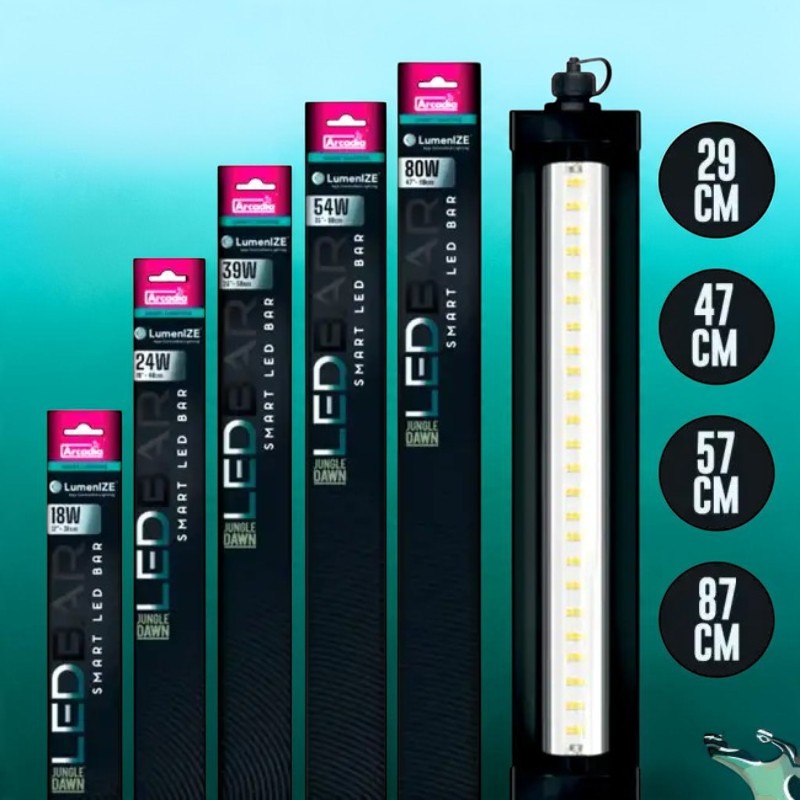
Arcadia LumenIZE JungleDawn LED – plant light with individually controllable daily cyclesThe Arcadia Reptile LumenIZE JungleDawn LED strip brings bright, visible light into your terrarium and provides your plants with energy for photosynthesis. The redesigned LED diodes offer increased light output and more photosynthetically active radiation, or PAR for short, beneath the light. This supports plant growth and creates a bright environment for your terrarium animals.Using the Arcadia Reptile LumenIZE app, you can continuously dim the lighting via Bluetooth and programme individual daily cycles. Let the light gradually get brighter in the morning and gently dim in the evening. Seasonal changes can also be taken into account by adjusting the lighting duration and brightness to suit the needs of your animals and plants.The LED strip is IP65-rated for protection against dust and water jets. Screw-fastened power and connection cables provide additional protection against penetrating moisture. This makes the light suitable for humid terrariums. However, it is not suitable for submersion.
Your settings are stored directly in the respective light. A replaceable backup battery keeps the internal clock and memory active in the event of a power cut. As soon as the power supply returns, the light continues the programmed daily cycle at the correct time. The battery serves to back up the clock and memory; it does not continue to operate the lighting in the event of a power cut.You can connect the JungleDawn LED strip to additional LumenIZE JungleDawn strips and LumenIZE ProT5 UV-B systems. This allows you to combine visible plant light with separately coordinated UV-B lighting.Important: The JungleDawn LED provides visible light and does not replace a UV-B lamp.
Your benefits at a glanceBright LED light to support plant growthRedesigned LED diodes for increased light output and PARContinuous dimming and programming via the LumenIZE appIndividual daily cycles with gentle transitionsLighting duration and brightness can be adjusted seasonallyIP65: dust-tight and protected against water jetsReplaceable backup battery safeguards the clock and programmingAccording to the manufacturer, up to 30 % energy savings through adjusted dimming cycles compared to undimmed operation – depending on the programmingAvailable variants:18 watts - 30 cm24 watts - 48 cm39 watts - 58 cm54 watts - 88 cm80 watts - 118 cm
Zoo Roco Tip:
Use gentle transitions in the morning and evening to create a consistent daily rhythm. In addition to brightly lit areas, also plan shaded retreat options. This allows your animals to choose between different light zones.
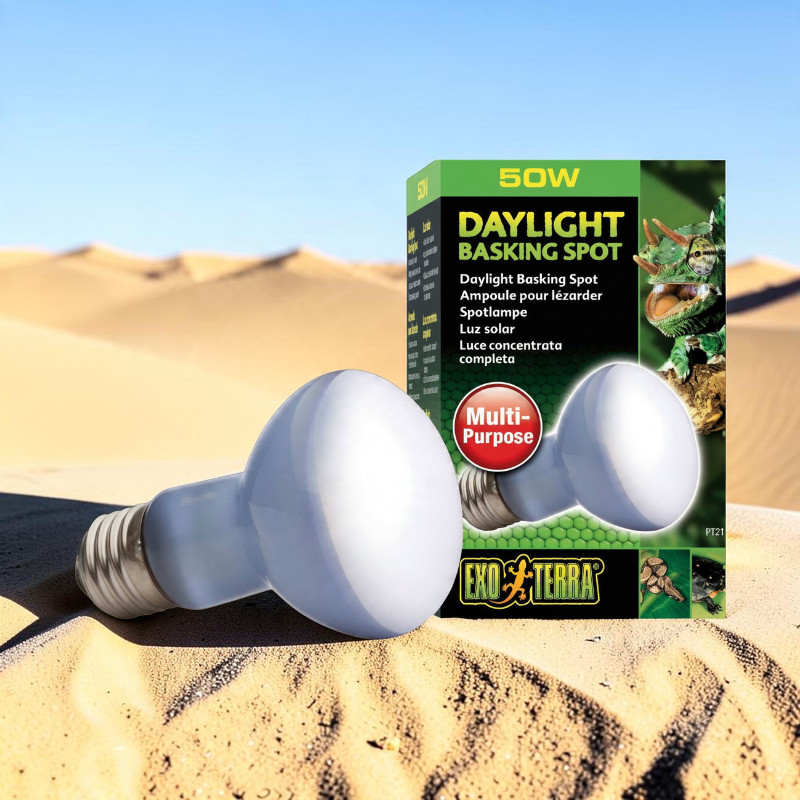
Exo Terra Daylight Basking Spot – Heat spot for terrariumsExo Terra Daylight Basking Spot – terrarium heat spot for creating localised basking areas and temperature zones for reptiles.The Exo Terra Daylight Basking Spot is a terrarium lamp designed for targeted lighting and heating of basking spots within the terrarium. The lamp combines visible daylight with appropriate heat radiation, thereby supporting natural day-night behaviour and the thermoregulation of reptiles. Exo Terra describes basking spots as lamps that combine visible light with appropriate infrared-A or NIR heat radiation.The focused cone of light and heat allows you to create a local basking spot within the terrarium. Reptiles can seek out this area specifically to regulate their body temperature. At the same time, this creates temperature zones, allowing the animals to choose between warmer and cooler areas.
Your benefits at a glanceContents: 1 Exo Terra Daylight BaskingSpot: Heat spot for creating local basking areasSupports the natural thermoregulation of reptilesCombines visible daylight with heat emissionPromotes natural day-night behaviourSuitable for compatible terrarium fittings with an E27 baseIdeal for creating temperature zones in the terrariumAvailable modelsR20/50WR20/75WR25/100WDirections for useOnly fit the Exo Terra Daylight Basking Spot into a suitable, heat-resistant terrarium fitting with a matching E27 base. The lamp should be positioned so that it creates a localised basking spot whilst also allowing your pet to seek out cooler areas within the terrarium.Check the temperature at the basking spot and in the cooler areas regularly using a suitable thermometer. The distance between the lamp and the animal must be set so as to prevent overheating or the risk of burns. If necessary, use a protective grille and ensure that the animals cannot come into direct contact with the lamp.The lamp must not be sprayed with water and is not suitable for areas that are constantly damp or wet. For reptiles requiring UV light, suitable UVB lighting is also necessary, as a basking spot does not replace UV lighting.Zoo Roco TipA good basking spot is crucial for many reptiles so that they can actively regulate their body temperature. Once you have set up the spot, be sure to measure the temperature directly at the basking spot and compare it with the requirements of your species. Depending on the species, the height of the terrarium and the room temperature, a different wattage may be appropriate.
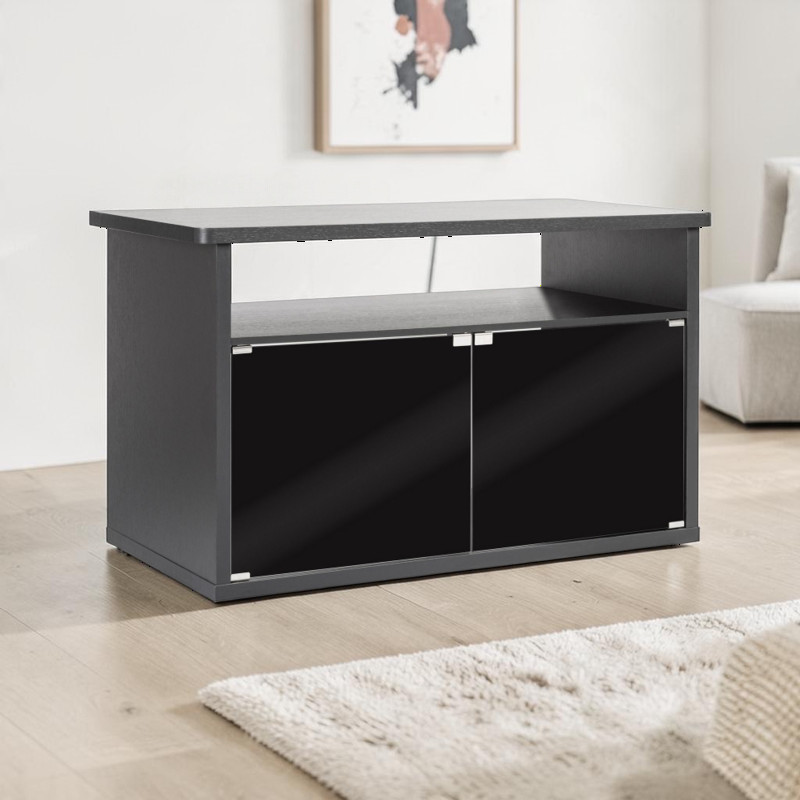
Exo Terra Vista 120 Base Unit – sturdy terrarium cabinetExo Terra Vista 120 Base Cabinet – sturdy black terrarium cabinet for Vista 120 and Vista 120XL terrariums. With storage space, 120 × 60 × 70.5 cm.The Exo Terra Vista 120 base cabinet is the perfect complement to the Exo Terra Vista 120 and Vista 120XL panoramic terrariums. It has been specially designed for terrariums with a base area of 120 × 60 cm and provides a sturdy, visually coordinated base for the safe display of your terrarium.Measuring 120 × 60 × 70.5 cm, the base unit fits perfectly under the Vista 120 terrariums and ensures a comfortable viewing height. The robust construction supports even load distribution and provides a secure footing even when the terrariums are fully set up.In addition to its sturdy and functional design, the base cabinet impresses with its modern, black appearance. The integrated storage space is ideal for keeping terrarium equipment, food, care accessories, misting systems or other accessories tidy and within easy reach. The cabinet is made from FSC-certified materials, making it a high-quality solution for a professional terrarium display.Your benefits at a glanceContents: 1 Exo Terra Vista 120 base unitSuitable for Exo Terra, Vista 120 and Vista 120XLTerrarium
dimensions: 120 × 60 × 70.5 cmA stable base for terrariums with a base area of 120 × 60 cmModern black terrarium cabinetWith practical storage space for equipment and accessoriesSupports a professional terrarium displayMade from FSC-certified materialsDirections for useAssemble the Exo Terra Vista 120 base cabinet on a level and stable surface in accordance with the enclosed instructions. Ensure that all connecting parts are correctly secured before placing the terrarium on the cabinet.Place the terrarium in the centre of the base cabinet to ensure the weight is distributed evenly. Store accessories, equipment or food in the integrated storage space so that everything is neatly stowed away and quickly to hand. The cabinet should only be used indoors and on a dry surface.Zoo Roco TipA matching base cabinet is particularly important for large terrariums, as it provides a stable and secure base. The Exo Terra Vista 120 base cabinet is designed to match the Vista 120 terrariums both visually and technically, whilst also providing practical storage space for equipment, live feed and care accessories. This ensures that the terrarium setup remains clean, tidy and professionally presented.
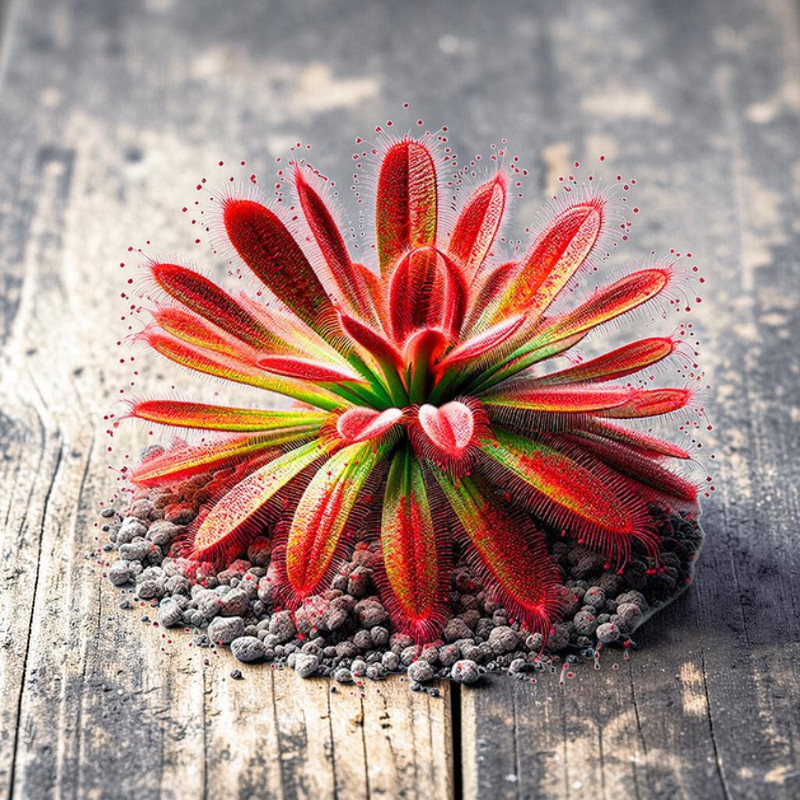
Drosera aliciae – an easy-to-care-for sundew for terrariums and windowsillsDrosera aliciae – an easy-to-care-for sundew with decorative trap leaves. Ideal for bright windowsills, terrariums and beginners to carnivorous plants.Drosera aliciae, also known as Alicia’s sundew, is an attractive carnivorous plant native to South Africa. It forms a compact, rosette-shaped growth habit with spoon-shaped leaves. The leaves are covered with fine, sticky tentacles that shimmer reddish in the light and can trap small insects. The plant then digests these prey items and extracts additional nutrients from them.This sundew species is particularly popular because it is relatively easy to care for and well suited to beginners in the keeping of carnivorous plants. With sufficient light, the leaves often turn a more intense red, whilst with less light they tend to remain green.Drosera aliciae is suitable for bright windowsills, open planters, display cases or humid terrarium areas. It is important to provide a bright spot, lime-free water and a substrate that remains consistently moist and low in nutrients. The plant should not be given standard potting compost or fertiliser, as carnivorous plants are adapted to nutrient-poor soils.Your benefits at a glanceAn attractive carnivorous plantCompact, rosette-shaped growthSuitable for a bright windowsill, terrarium or display cabinetProduces decorative, sticky trap leavesCan trap small insects such as fungus gnatsA relatively low-maintenance sundew speciesIdeal for beginners to carnivorous plantsInstructions for usePlace Drosera aliciae in a very bright spot, but not in hot, drying midday sun. The growing medium should remain constantly moist. Use only low-calcium water, such as rainwater, distilled water or osmosis water.The easiest way to care for the plant is by keeping it in a water bath: place the pot in a saucer with a little lime-free water. The amount of water can be adjusted depending on the location and time of year. The growing medium must not be allowed to dry out completely. Ordinary potting compost, fertiliser or hard tap water should be avoided.Zoo Roco TipDrosera aliciae is an excellent choice as a starter plant for those new to the world of carnivorous plants. It looks particularly decorative in a bright spot alongside other carnivorous plants. Take care not to actively feed the plant with meat or live prey – small insects are usually sufficient. The plant requires plenty of light to develop a beautiful red colour.
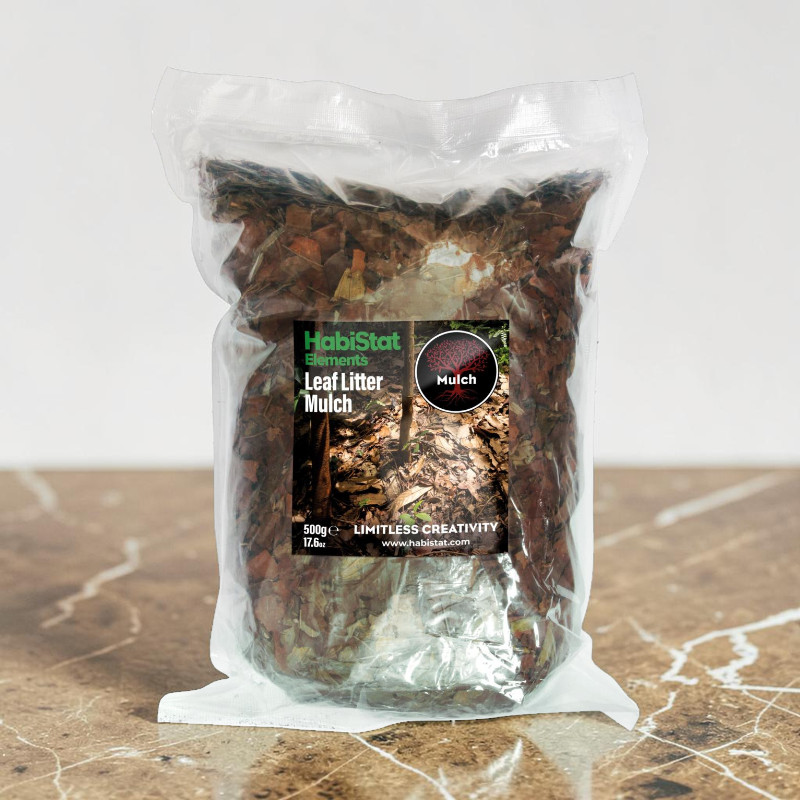
Habistat Leaf Litter Mulch 500 gHabistat Leaf Litter Mulch 500 g is a natural mulch made from shredded leaves for terrariums and bioactive setups. Ideal as a top layer over the substrate, to support the microclimate and as a hiding place and feeding area for cleaning crews. Habistat Leaf Litter Mulch 500 g is a natural terrarium mulch made from a carefully selected mixture of shredded leaves. It is ideal as a decorative and functional top layer over the substrate and makes the terrarium look more like a natural habitat. The mulch supports substrate health, the stability of the microclimate and the ecological balance within the terrarium.Leaf litter mulch is particularly suitable for bioactive terrariums. There, it provides food and hiding places for so-called ‘clean-up crews’ such as woodlice, beetles and millipedes. As these organisms break down the leaves, nutrients are returned to the soil, which helps to maintain a natural terrarium environment.The shredded leaves provide animals with additional structure, cover and enrichment. Many terrarium animals use layers of leaves for digging, hiding, exploring or foraging. HabiStat recommends using the mulch as a top layer over the substrate.Your benefits at a glanceNatural leaf litter mulch for terrariumsMade from shredded leavesIdeal for bioactive terrariumsSupports a natural ground systemHelps to maintain a valuable microclimate in the substrateProvides hiding places and structure for terrarium animalsSupports cleaning crews such as woodlice, beetles and millipedesCan encourage natural behaviours such as digging and foragingDecorative top layer over the substrateMakes the terrarium look more like a natural habitatVacuum-packedInstructions for useSpread the Habistat Leaf Litter Mulch as a loose top layer over the suitable terrarium substrate. In bioactive terrariums, the mulch can serve as a feeding and shelter area for cleaning crews. If required, it can be combined with additional leaf litter, mosses, pieces of bark or other natural decorations.Zoo Roco TipIn bioactive terrariums, a layer of leaf litter is almost indispensable: it protects the substrate, provides hiding places and supports woodlice and springtails in their work. The mulch looks particularly natural when combined with whole leaves, pieces of cork and roots.
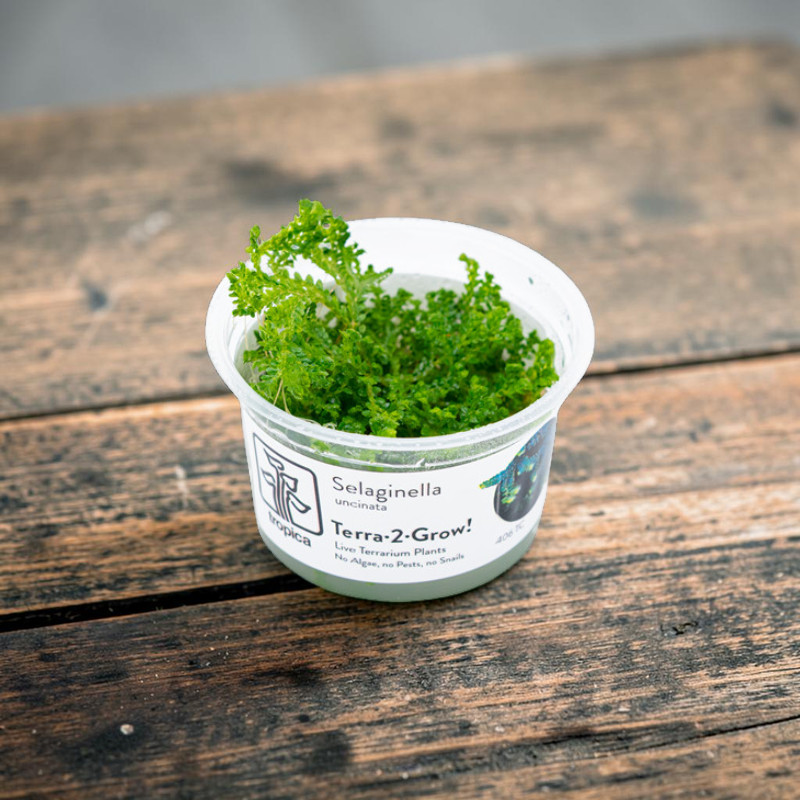
Selaginella uncinata Terra-2-Grow! TropicaSelaginella uncinata Terra-2-Grow! from Tropica is a creeping moss fern with blue-green shimmering foliage. Ideal for humid terrariums, paludariums and tropical plantings. Fast-growing, decorative and easy to maintain by pruning.Selaginella uncinata Terra-2-Grow! from Tropica is a decorative terrarium plant from the Terra series. The plant is a creeping moss fern with strikingly blue-green shimmering foliage. The fine leaves are densely arranged along the stems and, over time, form an attractive, spreading carpet of foliage. As a result, Selaginella uncinata adds a distinctive touch of colour and texture to humid terrariums, paludariums or tropical landscapes.Thanks to its creeping growth habit, Selaginella uncinata is particularly well suited to greening substrate areas, softening transitions to roots and stones, or adding depth to a terrarium. Once the plant has established itself well, it grows vigorously and can easily be kept in shape by regular pruning.Tropica ’s Terra series comprises plants that thrive in humid environments and are well suited to enclosed or semi-enclosed terrariums. Selaginella uncinata is listed as requiring low light and reaches a height of approximately 1 to 10+ cm.Your benefits at a glanceDecorative terrarium plant from TropicaWith blue-green shimmering foliageIdeal for humid terrariums and paludariumsSuitable for covering substrate areasVisually breaks up roots, stones and hardscape elementsForms a dense, natural carpet of vegetationFast-growing, creeping habitEasy to maintain by simply pruningSuitable for closed and semi-closed terrariumsLow light requirementsOrigin: AsiaInstructions for use Selaginella uncinata is particularly well suited to humid, tropical terrariums with high humidity. The plant can be placed on suitable, moist substrate surfaces and continues to grow as a creeping plant. It looks very attractive amongst roots, stones, mosses and other compact terrarium plants.Care instructionsKeep Selaginella uncinata evenly moist, but avoid waterlogging. The plant prefers a humid environment and indirect to fairly low light. If it is growing well, it can be pruned regularly to prevent it from overgrowing neighbouring plants.Selaginella uncinata is a plant for humid terrariums and paludariums. It is not intended as an aquarium plant that grows permanently and completely submerged.Zoo Roco TipPlace Selaginella uncinata in the foreground or amongst hardscape elements. The shimmering blue-green foliage looks particularly beautiful when combined with light-green mosses, dark roots or stones. It works well as a ground cover in enclosed terrariums.
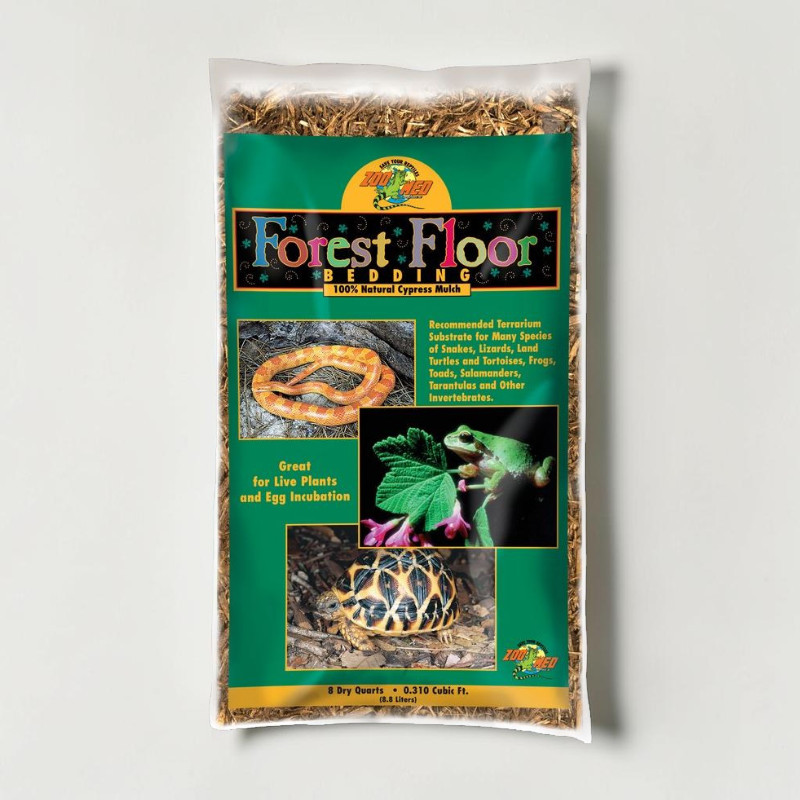
Zoo Med Forest Floor 8.8 l – Terrarium substrateZoo Med Forest Floor 8.8 l is a natural cypress mulch substrate for terrariums. It retains moisture, creates a natural forest floor appearance and is ideal for snakes, amphibians and tropical tortoise species.Zoo Med Forest Floor 8.8 litres is a natural substrate made from cypress mulch for terrariums. The substrate gives the terrarium a natural forest floor appearance and is particularly suitable for animals that require higher humidity. Forest Floor retains moisture, thereby helping to maintain humidity levels in the terrarium.
This substrate is ideal for snakes, amphibians and tropical tortoise species. Thanks to its natural structure, Forest Floor is well suited to naturally designed rainforest, woodland and humid terrariums.
With a volume of 8.8 litres, the substrate can be used, depending on the size of the terrarium, as a uniform layer or as part of a mixed setup.Your benefits at a glanceNatural substrate for terrariumsMade from cypress mulchCreates a natural forest floor lookRetains moisturePromotes higher humidity levels in the terrariumIdeal for snakes, amphibians and tropical tortoise speciesSuitable for woodland, rainforest and humid terrariumsNatural structure for a species-appropriate setupCan be used as the sole substrate or in combination with other materialsContents: 8.8 litresInstructions for useSpread the substrate evenly over the terrarium floor. Depending on the species and the desired humidity, Forest Floor can be lightly moistened. Check the moisture levels regularly and remove soiled areas promptly. In terrariums kept very humid, ensure there is good ventilation.
Soiled areas should be removed regularly and replaced with fresh substrate as required.The entire substrate should be completely replaced at appropriate intervals, depending on the number of animals, humidity and soiling. Ensure that the substrate does not remain permanently wet to prevent mould growth.Zoo Roco TipForest Floor is ideal for animals that prefer a more humid terrarium climate. For burrowing species, the substrate depth should be adjusted accordingly. Combined with moss, cork bark and roots, it creates a natural terrarium landscape with good hiding places.
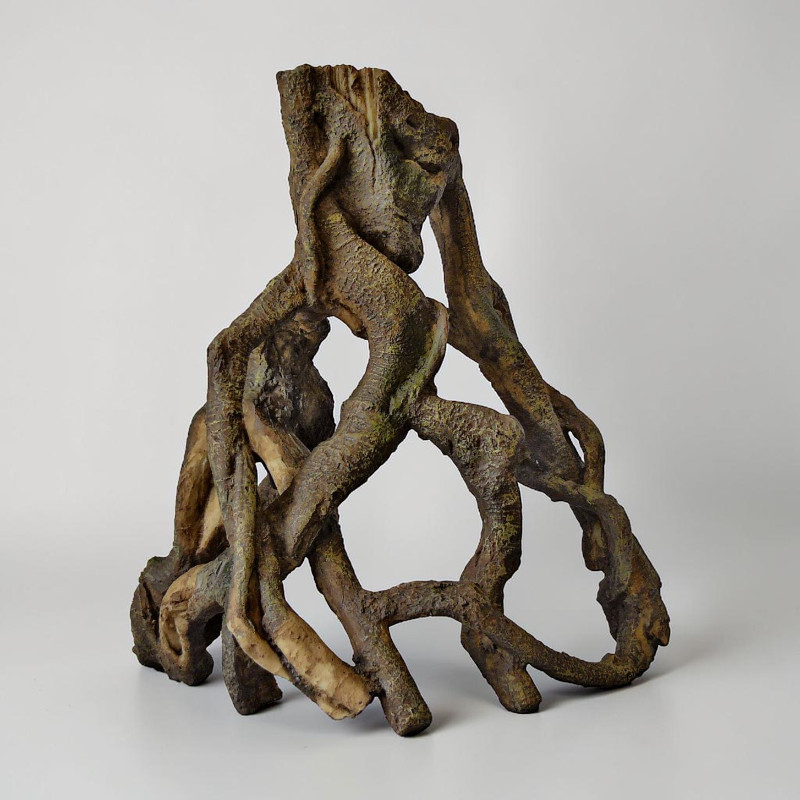
SF Mangrove Root L – Decoration for aquariums & terrariumsSF Mangrove Root L is a lifelike driftwood replica for aquariums and terrariums. This decoration creates a natural look and offers plenty of hiding places for aquarium and terrarium animals.The SF Mangrove Root L is a lifelike replica of natural driftwood and is suitable for use in aquariums and terrariums. The textured root-like appearance adds a natural touch to the setup and creates a beautiful underwater or terrarium landscape. This decoration provides hiding places for aquarium and terrarium animals.
Thanks to its large size, the Mangrove Root is ideal as a central focal point in an aquarium or terrarium. It can be combined with plants, stones, substrate or other decorative elements, helping to make the habitat visually more varied and structured.
As this is an artificial decoration, its shape remains permanently stable and, unlike real wood, does not need to be watered. Nevertheless, the root should be rinsed thoroughly with clean water before first use.Your benefits at a glanceLifelike replica of mangrove or driftwoodSuitable for aquariums and terrariumsCreates a natural underwater worldOffers plenty of hiding placesIdeal as an eye-catcher in the tankTextured surface with a natural root-like appearanceCan be combined with plants, stones and substrateRetains its shape and is easy to maintainNo need for lengthy pre-soaking, as with real woodSuitable for freshwater aquariums and terrariumsDimensions249 mm x 310 mm x 370 mmapprox. 1.8 kgInstructions for useRinse the decoration thoroughly with clean water before placing it in the tank. Do not use any cleaning agents. Position the root so that it stands securely and animals cannot become trapped. Ensure there is sufficient swimming space left in the aquarium.Care instructionsIf necessary, the decoration can be removed from the tank and cleaned with lukewarm water and a soft brush. Do not use soap, disinfectants or harsh cleaning agents, as residues can be harmful to animals.Zoo Roco TipThe SF Mangrove Root L looks particularly natural when combined with epiphytes, mosses or small stones. In terrariums, it can also be used as a structural element and hiding place, allowing animals to make use of various retreat areas.
Broad spectrum reflector spot lampcontained neodymium realizes a more natural presentation of animals and plants in the terrariumcreates warm places for sunbathinginfrared radiation supports thermoregulation and digestionUV-A radiation stimulates natural behaviour and appetiteraises the ambient temperature in the terrariumavailable in 35W, 75W and 100W power ratings
Wabi-Kusa lampA small black floor lamp that can be combined with any Wabi-Kusa glass bottle. Puristic trend design with great effect: Bioloark TF-03 is a Wabi-Kusa LED lamp with a delicate stand made of lightweight aluminum. Together, the two components create an elegant eye-catcher! Your Wabi-Kusa gem is wonderfully showcased thanks to the powerful LED light, while the black round platform creates exciting contrasts with the glass and green microverse. Without mains plug.Size 255 mm high and the diameter is 135 mmBeautiful and simple designHelps the plants to grow3 watts; 5V / 1,000 mA is required to operate the USB plug
Solar UVA/UVBOptimal ratio of UVA, UVB, light and heat radiation in one lampThe REPTI PLANET Solar UVA-UVB light bulb provides an ideal ratio of ultraviolet light (UVA, UVB radiation), visible light and infrared light (heat) in one lamp. It is a full spectrum light bulb that supports physiological processes such as activity, feeding and reproduction. Thanks to the production of vitamin D3, it supports the optimal absorption of calcium, ensuring the proper development and growth of terrarium animals.Simulates natural sunlightHelps prevent metabolic bone diseasesSupports natural metabolic processesCaution: When choosing a bulb, consider not only the type of bulb, but also the type of animal kept and the distance of the animal from the heat source.
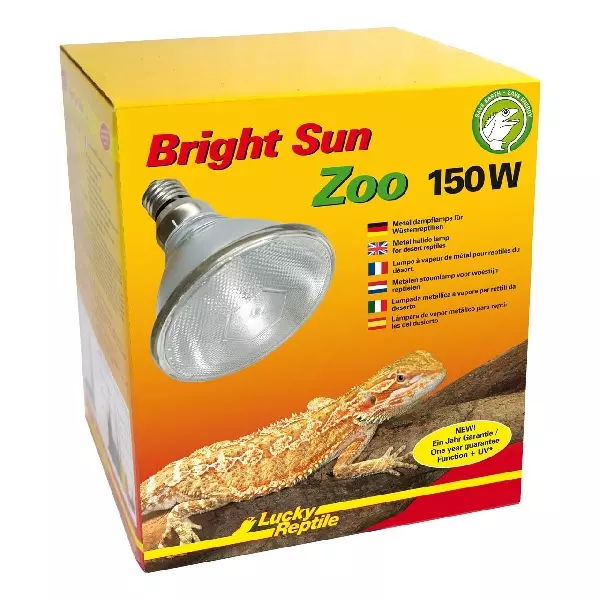
Lucky Reptile Bright Sun ZOO Desert 150WThis Bright Sun version was developed especially for large terrariums where UV and also heat radiation must be brought over a large distance to the animal. The lamp has a correspondingly strong focus, so that acceptable performance is still achieved even at distances of over 100 cm. By grouping several lamps to a single point, the operating range can be further improved and species-appropriate conditions can be created in typical zoo terrariums without having to suspend lamps in a way that is disturbing for the observer. As the technical possibilities are exhausted for this extreme application, the Bright Sun Zoo unfortunately does not achieve the usual UV service life of one year and should be replaced after 6 months at the latest. Due to the extreme performance, it is imperative that the application and distance recommendations are adhered to. Operation is possible with the well-known Bright Control ballasts and Thermo Socket luminaires.
New and innovative technology
Extremly powerful
High percentage of UVA
UVB in the correct wavelenght
The lamp on the market which is closet to the sun
Ballast necessary for operation!
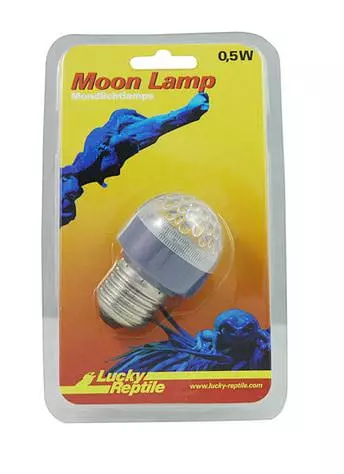
Lucky Reptile - Moon Lamp LED moonlight lamp
The moonlight lamp with minimal power consumption: Lucky Reptile Moon Lamp LED moonlight lamp - 0.5 watts provides atmospheric night-time lighting.
Efficient lamp for the terrarium
Miniature moon with LED
Creates the impression of moonlight in the jungle
With E27 socket
0.5W
Animals are not disturbed
produces very little heat
The Moon Lamp is practically a miniature moon for the terrarium. The power consumption is only approx. 0.5 watts. As the Moon Lamp works with efficient LEDs, it produces just the right amount of light to illuminate terrariums at night without disturbing the animals. Terrarium areas in the cone of light (e.g. a branch fork or part of the terrarium floor) are illuminated more strongly than the edges of the terrarium. This creates the impression of a moonlit clearing in the (terrarium) jungle. The Moon Lamp, which fits all E27 sockets, produces very little heat and therefore does not interfere with the night-time drop in terrarium temperature. However, as it emits much of its light in a cone, it is primarily suitable for taller terrariums. For small terrariums or for illuminating the entire terrarium at night with evenly distributed light intensity, we recommend the Lucky Reptile Night Sky LED Set.
Repto Radiator in two sizes Efficient terrarium heating without light emission
The Repto Radiator is the ideal solution for anyone who wants to heat their terrarium efficiently and without light. This high-quality heating plate for reptiles ensures that the ambient air is heated evenly - just like a classic radiator, only specially developed for use in terrariums.Available in two different sizes:16 watts with dimensions of 15.6x10.0x2.8 cm50 watts with a dimension of 25.6x16.0x2.8 cm
✅ The advantages at a glance:
Light-free heat radiation - perfect for day and night animals
Energy-efficient & quiet - for constant heat output
Compatible with thermostats - ideal in combination with on/off or dimmer thermostat for precise temperature control
Safe and reliable - suitable for use on mesh panels(no direct contact with animals or water)
Versatile - can be used as the main heater or as a supplement to spotlights
With its compact dimensions, the Repto Radiator can be flexibly installed in the terrarium. Whether for bearded dragons, geckos, snakes or other heat-loving reptiles - this terrarium heater without light creates a species-appropriate climate around the clock.