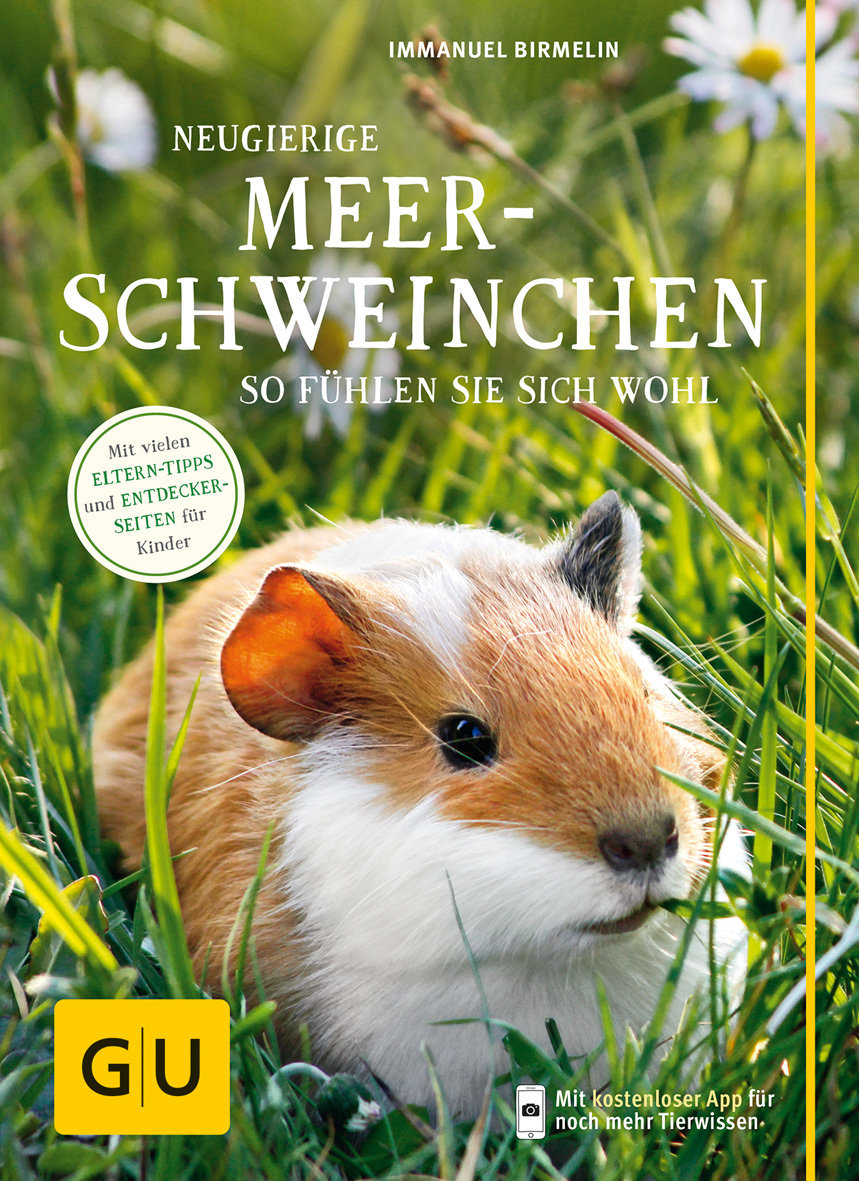
GU Curious guinea pigs - how they feel at home
This guide shows what guinea pigs need to feel comfortable in everyday family life - from the right equipment to meaningful activities. With tips for parents and discovery pages, knowledge is conveyed in a way that is easy to understand and suitable for everyday use.
Important features
Practical guinea pig guide from the GU small animals series
With quick start pages, infographics and discovery pages (observation tips/small experiments)
Contains tips for parents on how to handle children correctly with the animal
Extra: reference to the free GU Pet Plus app
Important advantages
Helps you to avoid husbandry mistakes so that guinea pigs show typical behavior and feel safe
Supports species-appropriate, family-friendly husbandry with clear step-by-step information
Promotes activity and observation - ideal if children are to be actively involvedGuinea pigs appear uncomplicated - but in order for them to remain really trusting and show their typical, lively behavior, they need suitable housing conditions. This is exactly where "Curious Guinea Pigs" from the GU Small Animals series comes in: The guide bundles knowledge about a fulfilling guinea pig life and makes it so easy to understand that it can be implemented immediately in everyday life.
The author, Dr. Immanuel Birmelin, a well-known behavioral researcher, shares his experiences from years of keeping and researching guinea pigs and explains what is important in practice. You will receive guidance on key topics such as equipment, care and activity - the very things that determine whether your animals feel safe and become active. The book is particularly family-friendly, with quick-start pages for a quick introduction and infographics that show important information at a glance. There are also discovery pages with observation tips and small ideas that encourage children (and adults) to understand guinea pigs better - instead of just "having" them. In addition, tips for parents help children to treat the animals correctly and respectfully.
Zoo-Roco tip
Guinea pigs are very much group animals: plan the housing from the outset so that your animals have social contact, opportunities to retreat and something to do. If you are unsure whether your enclosure, structure or feeding is suitable, make a note of your questions as you read - this way you can implement the tips in your home.
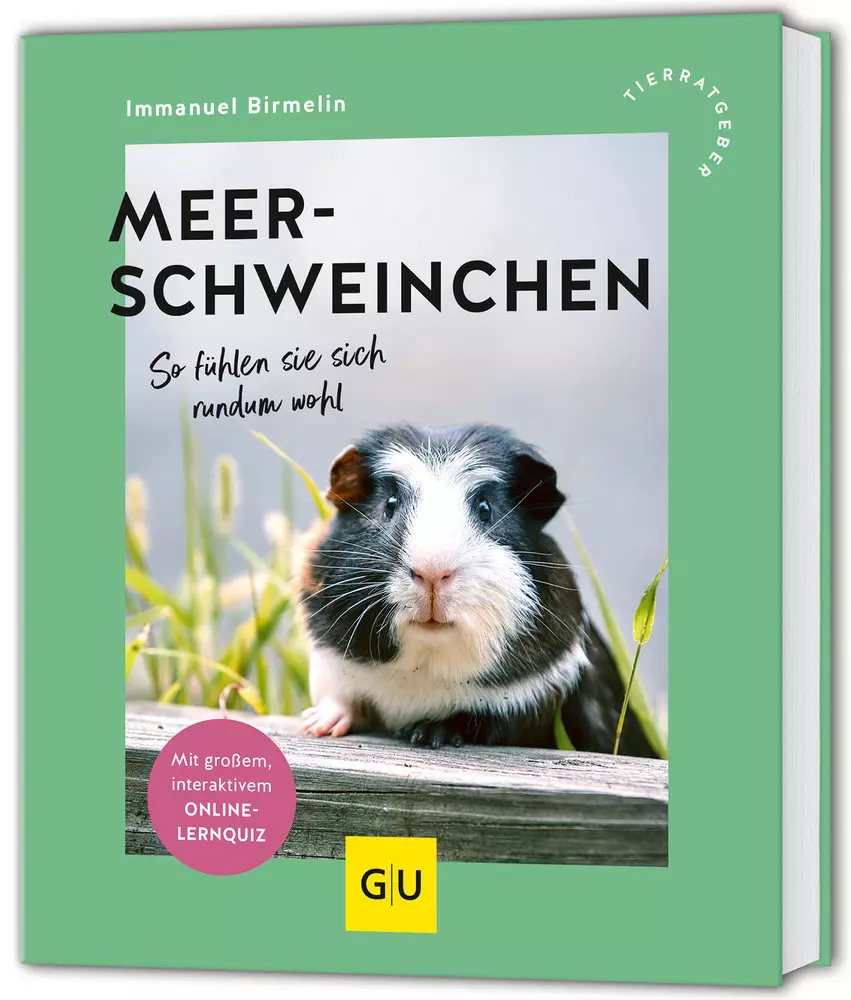
Guinea pigs - How to make them feel good all roundBlurbEverything beginners and real guinea pig fans need to know about keeping and the special needs of these lively rodents.needs of these lively rodents - so that animals and humans feel at home together under one roof.SummaryAll the basics and practical tips from the experts - for happy rodents
Guinea pigs are mainly cute, but boring? Not at all! These little South Americans like to go on voyages of discovery and are also really clever. They love company and prove to be real chatterboxes, squeaking and cooing to keep in constant contact with their conspecifics.
In the new, completely revised GU Animal Guide to Guinea Pigs, renowned behavioral scientist Dr. Immanuel Birmelin explains what these cute rodents need to feel completely at ease. Whether it's cage equipment, nutrition, care or health: you will learn everything you need to know about keeping guinea pigs in a species-appropriate way in a quick, clear and entertaining way. There are also numerous tips on how to keep the animals moving in an outdoor enclosure in the home, on the balcony or in the garden and provide plenty of variety in your guinea pigs' everyday lives.Sound expert knowledge:Renowned behaviorist Dr. Immanuel Birmelin explains everything you need to know about guinea pigs, their adorable quirks and how to keep and care for them appropriately.
Varied activities: With lots of tips for an exciting and healthy guinea pig life - indoors and outdoors.
Practical instructions: With easy-to-understand instructions and practical tips, the book helps you to better understand the needs of guinea pigs and provide them with a home in which they feel completely at ease.
Hamsters - How to make them feel good all roundBlurbEverything beginners and hamster fans need to know about keeping these small rodents and their special needs - so that animals and humans feel at home together under one roof Summary So your hamster feels completely at ease. Hamsters are real night owls: they only really come to life when it gets dark. Then they climb, burrow and of course "hamster" for all they're worth. In the new, completely revised GU hamster pet guide, you will learn what your hamster needs to feel completely at ease - how to acclimatize it step by step, what it likes and what keeps it healthy and how to satisfy its strong urge to move. You will find lots of ideas for exciting activities and find out how the hamster house and enclosure should look and be equipped to meet the needs of these small rodents. The guide is rounded off with tried and tested tips on selection and purchase, offspring, illnesses and veterinary emergencies. Behavioral scientist Peter Fritzsche also explains typical animal behavior. You can then test your hamster knowledge in the large online hamster quiz and be well prepared for the arrival of your new pet.Comprehensive hamster care: Find out how to keep your hamster happy and healthy from settling in to species-appropriate keeping.Creative activity ideas: Discover numerous ideas on how to encourage your nocturnal hamster's strong urge to move in a sensible and exciting way.Expert knowledge and practical tips: The guide offers practical tips on selection, care and emergencies as well as an online quiz to test and expand your hamster knowledge.
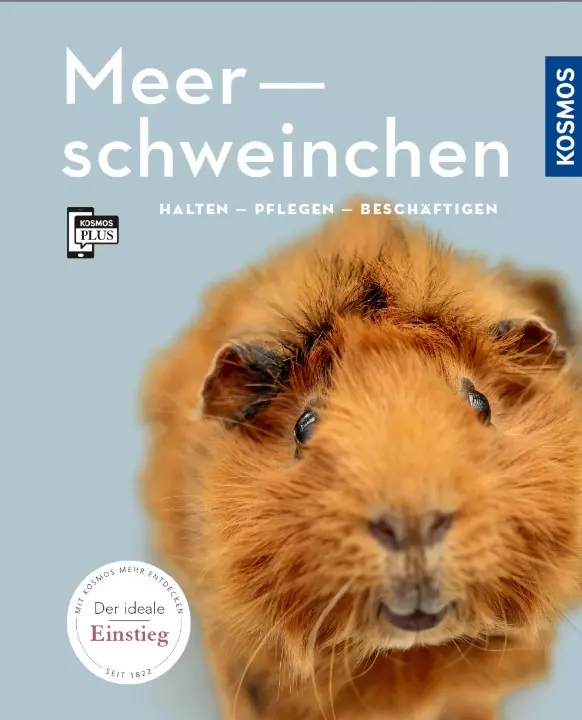
Guinea pigs keeping, caring for and keeping activefrom Beck AngelaBlurbA life in pairs or in a small group, a nice enclosure and daily free run make guinea pigs happy. Optimum husbandry, a healthy diet and an understanding of their nature provide security in their daily life together. A wealth of play ideas provides variety and strengthens the relationship between humans and animals.
Everything that is important for species-appropriate keeping: from the selection and housing of guinea pigs to feeding, care and activity. The plus to the book: the free KOSMOS PLUS app with additional information and films.
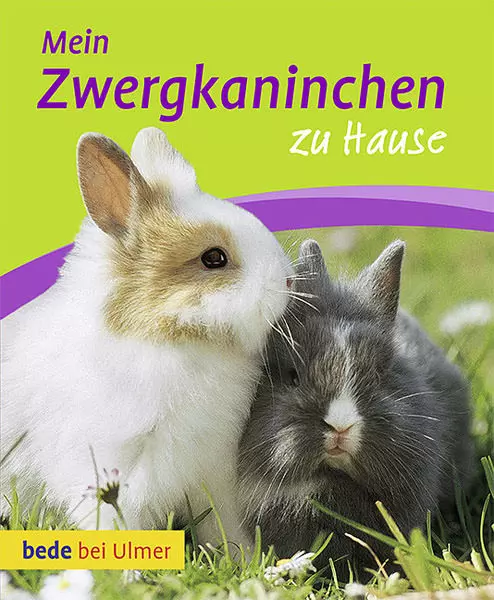
Dwarf rabbitkeeping, caring for and keeping active from Beck AngelaBlurbPlenty of space to hop around, dig and make hooks, a life in pairs or in a group - that's what makes dwarf rabbits happy. Optimum husbandry, a healthy diet and an understanding of their nature provide security in their daily life together. Many play ideas provide variety and strengthen the relationship between humans and animals.
Everything that is important for species-appropriate keeping: from the selection and housing of dwarf rabbits to feeding, care and activity. The plus to the book: the free KOSMOS PLUS app with additional information and films.
The Djungarian dwarf hamsterPhodopus sungorus from Zachrau AndreaBlurbThe Djungarian dwarf hamster is one of the smallest pets in the world and takes hearts by storm with its beady eyes, loyal gaze and soft fur. In this guide, you will learn all about the dwarf hamster's distribution and habitat, as well as everything you need to know about enclosure size, furnishings and food. Read everything you need to know to better understand the behaviour of these small rodents and how to prevent diseases.
Summary
The Djungarian dwarf hamster is one of the smallest pets in the world and takes hearts by storm with its beady eyes, loyal gaze and soft fur. In this guide by Andrea Zachrau, you will learn about the dwarf hamster's distribution and habitat as well as everything you need to know about enclosure size, furnishings and food. Read everything you need to know to better understand the behaviour of these small rodents and how to prevent diseases. Each volume offers you detailed, practical care instructions and you will find all the information you need to successfully breed your animals. All the important questions, from housing to furnishings, technical equipment, species-appropriate nutrition and disease prevention, are answered with numerous tricks and tips. Experienced, long-standing breeders reveal how you can encourage the animals to reproduce and raise the young in good health, all in full colour, generously illustrated and attractively designed - species by species.
Can my cat eat daisies? Is it safe if my Wellensitticham Ficus nibbles? Broken down by wild plants, house and garden plants, fodder plants, herbs, poisonous and medicinal plants are described with which pet animals may come into contact. With advice for individual species.
The Persian gerbil book Among the many gerbil species, Persian gerbils are something very special. Their graceful appearance and highly interesting behaviour make the "Persians", as they are affectionately called by many owners, fascinating pets. Due to their curiosity and open-mindedness towards humans, they are also real "heartbreakers" Unfortunately, there is hardly any literature on keeping and breeding these beady-eyed rodents. Author Anne Weber is editor-in-chief of the small mammal specialist magazine RODENTIA and summarises her many years of experience with the care and breeding of "Persians" here. Benefit from her practical tips and detailed husbandry descriptions so that you can enjoy your Persian gerbils right from the start! Contents:Biology,Acquisition,Husbandry,Food and water,Keeping healthy,Fun and games,Offspring
Rodentia 01 - Chinchillas
Guinea pigs in the gardenDegus and their relativesSee the most beautiful rats
Contents:
2 INTERN
3 EDITORIAL AND ADVISORY BOARD
5 INTERESTING FACTS
11 legal
12 Dates & TIPS
15 MY STORY: Refined guinea pig, by Marion Zeddies
16 PHOTOstory: Chinchillas, by Christian Brüggemann
23 KEEPING AND BREEDING: The keeping of chinchillas, by Anke Suchy
28 REISE: Amy and the chinchillas, by Dr Martina Raffel
34 KEEPING AND BREEDING: Chinchilla colour breeding, by Rebecca Schmidt
38 BIOLOGY: Chinchilla genetics, by Christian Brüggemann
39 POSTER: The Campbell dwarf hamster, by Christian Brüggemann
43 HEIMISCHE TIERWELT: The brown hare gives up the spoons, by Christian Brüggemann
46 REPORTAGE: Guinea pigs in the garden, by Iris Küster
51 KEEPING AND BREEDING: The breeding of Virginia opossums, by Dirk Fußbahn
54 REPORTAGE: See the most beautiful: Rat exhibitions in Germany, by Simone Grigat
58 KEEPING AND BREEDING: Together they are strong: spiny mice, by Frank Böhme & Peter Kneisel
61 KEEPING AND BREEDING: Degus and their relatives, by Sabine Gehrsitz
64 KEEPING AND BREEDING: Persian gerbil, by Michael Herting
66 ZOOLOGISCHE GÄRTEN: The Zoo of Small Mammals: Tierpark Berlin, by Christian Kern
70 SPRECHSTUNDE: Anaesthesia in small rodents and rabbits, by Andreas Küster
73 SCIENCE: What kind of house does the mouse want?, by Lars Lewejohann
76 MAUSKLICK
77 RAT & TAT
78 BOOK REVIEW
80 snickers' wild life: Wild Westphalia, by Christian Brüggemann
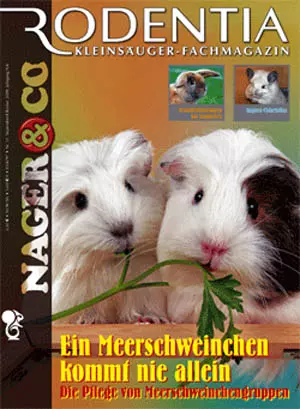
Rodentia 51 - A guinea pig never comes alone
The care of guinea pig groupsBehavioural disorders in rabbitsAngora chinchillas
Contents:2 Editorial3 Things to know8 tips and dates9 My StoryBack to life ..by Sonja Zwenger10Group structures in guinea pigsSocial organisation and behaviour in the colonyby Kathrin Aretz14Keeping guinea pigs in groupsThe basics of harmonious socialisationby Christine Wilde18Guinea pig socialisationIntegration of guinea pigs into a groupby Christine Wilde19The keeping of guinea pig groupsExperiences from the everyday life of a "male flat share"by Susanne Koller22A ferret moves inConsiderations before buyingby Susanne Wiegand25A tiny creature with stowaways on boardThe Kaninchenhilfe e.V. on the roadby Katharina Trhlik28A customised rat homeBuilding instructions for an enclosure suitable for ratsby Frauke Herbrich31The Mongolian gerbil (Meriones unguiculatus) in blackby Ralf Sistermann35Undesirable behaviourBehavioural problems in rabbitsby Regine Schineis38Chinchillas with long furThe Royal Persian Angora Chinchillaby Michaela Hraba-Jirasek40Living as desiredChoosing the right enclosure for gerbilsby Ralf Sistermann44When someone goes on a journeyZoo tips for small mammal loversby Ralf Sistermann47More exercise for degusIndoor free range - a Extraordinary housekeeping experimentby David Küpfer50Reading rat52Ovarian cysts in guinea pigsby Dr Bernhard Lazarz, MD54Consultation with Prof Dr Michael Fehr56Classifieds 57Service59Internet forums60Readers active62Preview 64Peppi on tourEpisode 18: Alfi's farewellby Kathrin Aretz
Rodentia 14 - The largest rodents in the world
Rats and non-ratsKusu hunting in New ZealandDispute about running wheelsAmmonia: Danger for guinea pigs & co.?
Contents:
2 INTERN
3 EXTERNAL
5 INTERESTING FACTS
11 NEW ON THE MARKET
12 DATES & TIPS
13 MY STORYAnd it is a femaleFrom Ina Tittel
14 PHOTOSTORYThe largest rodents in the worldFrom Christian Ehrlich
19 REPORTThe capybara – Biology and domestication of Hydrochaeris hydrochaerisBy Markus Trepte
24 NATIVE ANIMAL WORLDBeavers – heavyweights of the northFrom Ulrich Bauer
26 TRAVELSoft toys in the realm of the condor – A journey to the mountain viscachas in ChileFrom Heiko Werning
31 POSTERThe Rex dwarf rabbitFrom Christian Ehrlich
35 KEEPING AND BREEDINGAmmonia – a danger for guinea pigs & co.?From Sigrid Tooson
38 FOODFeeding as in nature – A concept for the nutrition of gerbilsBy Rald Sistermann
42 KEEPING AND BREEDINGDalmatian and grey markings – The exciting breeding of markings in pedigree guinea pigsBy Gabriele Prust
45 NATIVE ANIMAL WORLDOf rats and non-rats – everything that is called a rat in this countryFrom Katja Scheunemann
48 SCIENCEConsiderations on the use of running wheels in laboratory and pet keepingBy Geord Leithold
51 ECOLOGYInvasion of the marsupials – The fox cusu in New Zealand From Christian Neumann
56 CLASSIFIED ADS
58 HEALTHPrevention is better – preventive health care for ferretsFrom Iris Küster
60 CONSULTATION HOURHead tilt in rabbits From Anja Ewringmann
62 REGIONAL GUIDE
64 FRITZYS WORLD
The stubborn mooseFrom Christian Ehrlich
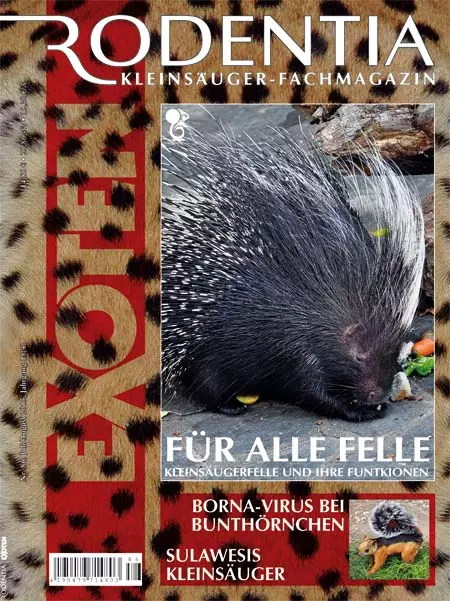
Rodentia 86 - For all skinsBorna virus in coloured squirrelsSulawesi's small mammalsContents:For all fur. Small mammal fur and its functionsFor all mammals, body hair plays a decisive role with regard to the degree of adaptation to their respective habitat. Consequently, there are also species of small mammals with a wide variety of coats: From arctic fox fur, the fur with the best insulating properties in the mammalian kingdom, to the waterproof otter fur, to the fine hair of the naked mole rat and the "weapons" of the porcupine, a huge range of adaptations can be observed. The cover story of RODENTIA Exotic Mammals will focus on the particularities of caring for exotic small mammals due to their hairiness.InternalMagazineDates & tipsPhoto storyA hairy affair. A scientific look at hairinessDipl.-Biol. Sandra Honigsreportage Small mammals without the cuddle factor. From spines and bare skinRalf SistermannBiologyStructures, colours, drawingsDipl.-Biol. Sandra HonigsBiologyBeard and mane - more appearance than reality?Klaus RudloffKeeping and breeding African white-bellied hedgehogs. The breeding of prickly beautiesCelina ZabelKeeping and breedingColourful hustle and bustle - The colour forms of the Sugar GliderRalf SistermannPortrait The Spotted Striped Grass Mouse(Lemniscomys striatus)Stefan KrähReportageExotic small mammals and reptiles united in Munich. Tiel 1Dr Markus Baur, Isabel Grefen & Rudolf HoffmannSubscription & ServiceAttitude Sleep, eat, sleep and ... sleep. First experiences with keeping Queensland koalas at Dresden ZooAnne WeberCommentShooting at squirrels with cannons? About the killing of coloured squirrels in connection with zoonoses in Saxony-AnhaltRalf SistermannBookwormExpedition RodentiaOn the way to deer boar, bear cuscus and goblin lemur. Remarks on the small mammals of SulawesiKlaus RudloffInternet forums for small mammal keepersPreviewAnimal & HonestA question of the (money) bagChristian Ehrlich
CHF 28.50
❅
❆
❅
❆
❅
❆
❅
❆
❅
❆
❅
❆
This website uses cookies to provide the best possible experience. More information ...