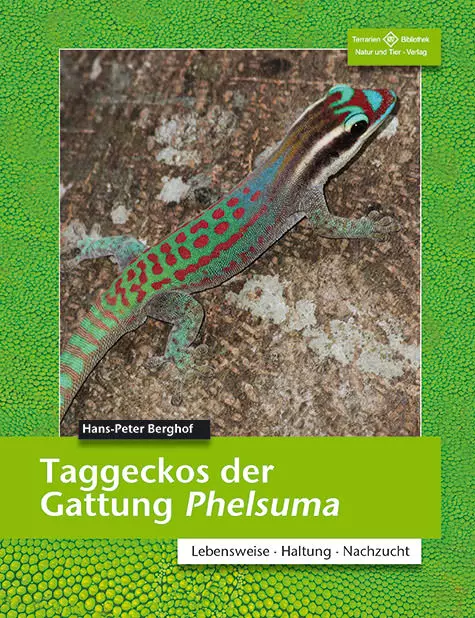
NTV Taggeckos of the genus Phelsuma

Article no: BZ-15948874

CHF 42.90

Stock: 2

Available, delivery time: 1-3 days

Delivery between Tuesday, 21 April and Wednesday, 22 April
Zahlungsarten
Product information "NTV Taggeckos of the genus Phelsuma"

NTV day geckos of the genus Phelsuma - the absolute favourites of terrarium keepers.

Hans-Peter Berghof
  • 192 pages
  • many illustrations
  • Format: 16.8 x 21.8 cm

3rd revised and extended edition

Contents:

The day geckos of the genus Phelsuma with their bright colours and interesting behaviour are among the absolute favourites of terrarium keepers.
Hans-Peter Berghof has been successfully breeding these lizards for a long time and shares his accumulated knowledge about keeping and breeding these beautiful geckos here.
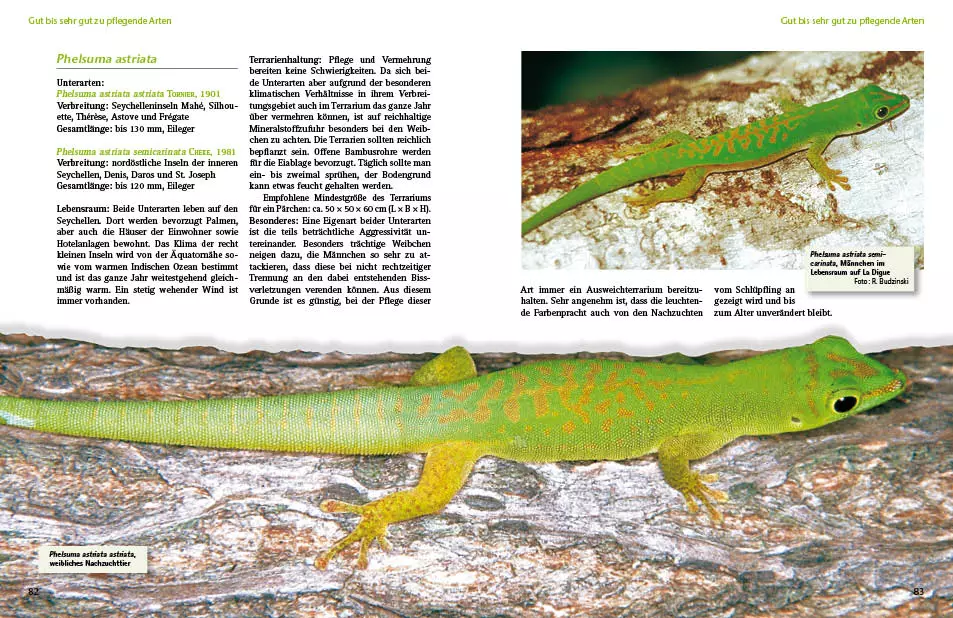
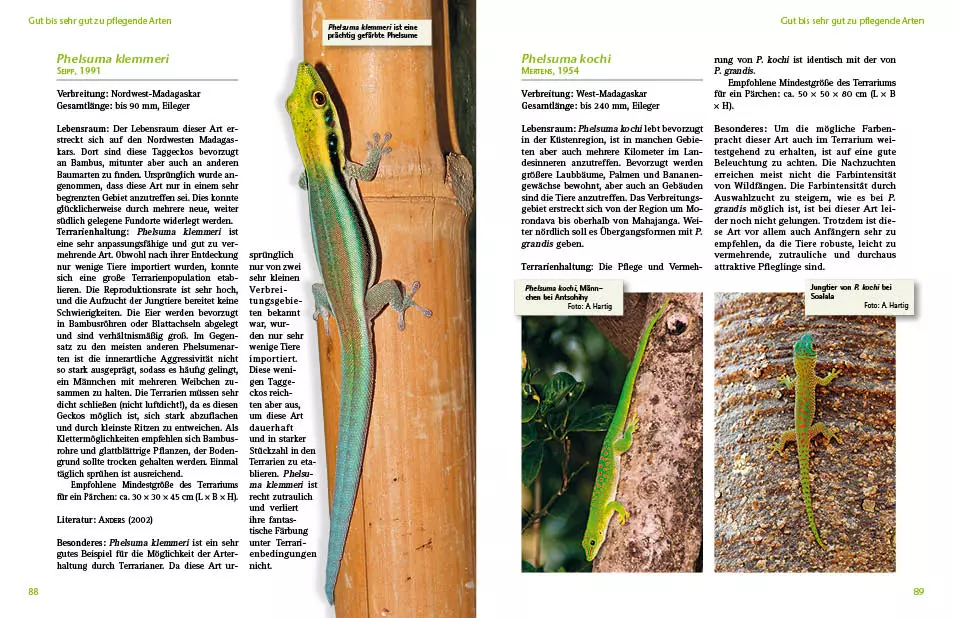
The special section presents all species in detail with their care requirements in words and pictures and indicates which animals are easier and which are more difficult to keep.
The ideal supplement to the standard work by Hallmann et. al. from 1997, supplemented by all species discovered since then and newly published literature.

Forewords
Introductory words for the first edition
Introductory words for the revised 3rd edition
Thanks
Biology
What is a Phelsuma?
Physique
Distribution
Habitats and way of life
Notes on the age of Phelsuma
Colouration
Sexual dichromatism and dimorphism
Differing colouration of the juveniles

Protection status
Threatened in habitat
Threatened by trade and keeping in terrariums
International and national species protection
Which official requirements must I observe when keeping and breeding Phelsuma?

Procurement and handling
Wild-caught or captive bred?
Before purchase
Dealing with the Internet
Where to buy?
Sex differences in Phelsuma
How do I recognise healthy animals?
Transport
Quarantine
Capturing and handling
Photographing Phelsuma

Terrarium technology
Types of terrarium and container sizes
Which terrarium for which species?
Ventilation
Lighting
UV light
Humidity
Temperatures

Furnishing
Substrate
Climbing opportunities
Rear and side wall design
Planting

Care
Acclimatisation
Feeding with animal food
Feeding with plant food
Yoghurt and other dairy products
Artificial food mixtures
Minerals and vitamins
Watering and humidity
Temperatures
Winter dormancy
Stocking density and socialisation
Indoor keeping
Outdoor keeping

Diseases and other problems
Rickets
Bent tail
Injuries
Moulting and moulting difficulties
Laying problems
Mites

Reproduction
Mating
Egg laying
Incubation
Raising the juveniles

Species section
List of all known Phelsuma
All species at a glance

Species that are good to very good to keep
Phelsuma abbotti
Phelsuma astriata
Phelsuma dubia
Phelsuma dorsivittata
Phelsuma grandis
Phelsuma klemmeri
Phelsuma kochi
Phelsuma laticauda
Phelsuma lineata
Phelsuma madagascariensis
Phelsuma nigristriata
Phelsuma ornata
Phelsuma ravenala
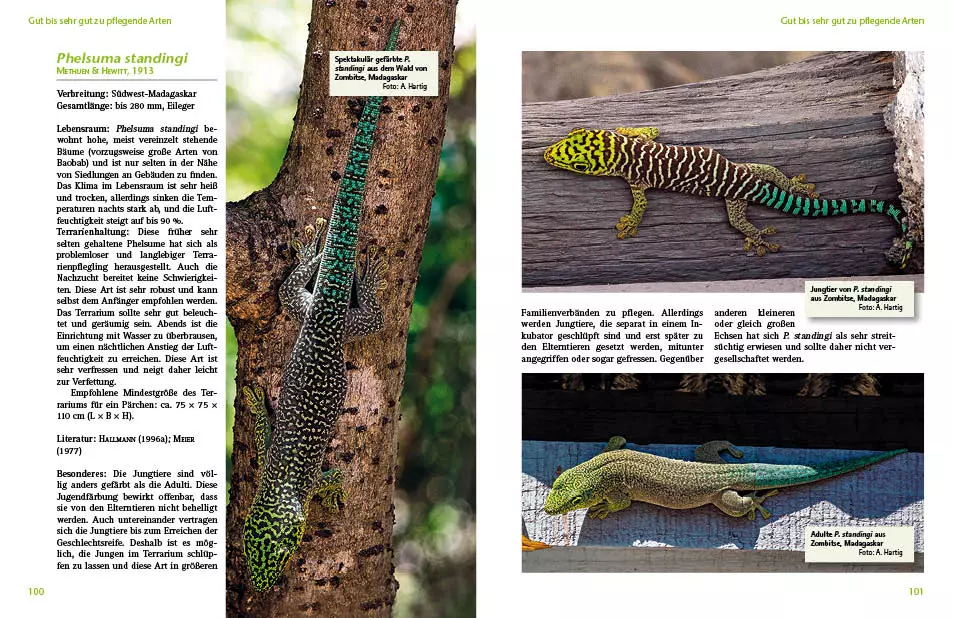
Phelsuma standingi
Phelsuma sundbergi

Species that are easy to keep but rarely bred
Phelsuma comorensis
Phelsuma guttata
Phelsuma hielscheri
Phelsuma hoeschi
Phelsuma mutabilis
Phelsuma pusilla
Phelsuma quadriocellata
Phelsuma robertmertensi
Phelsuma parva
Phelsuma pasteuri
Phelsuma seippi
Phelsuma v-nigra

Rare or more difficult to keep species
Phelsuma andamanense
Phelsuma barbouri
Phelsuma borbonica
Phelsuma breviceps
Phelsuma cepediana
Phelsuma flavigularis
Phelsuma guimbeaui
Phelsuma inexpectata
Phelsuma modesta
Phelsuma serraticauda

Very rare or hitherto not kept species
Phelsuma antanosy
Phelsuma berghofi
Phelsuma borai
Phelsuma gouldi
Phelsuma guentheri
Phelsuma kely
Phelsuma malamakibo
Phelsuma masohoala
Phelsuma ocellata
Phelsuma parkeri
Phelsuma pronki
Phelsuma roesleri
Phelsuma rosagularis
Phelsuma vanheygeni

Species considered extinct or lost
Phelsuma edwardnewtoni
Phelsuma gigas

Forms not yet described or not clearly classified
Phelsuma cf. parva
Phelsuma
cf. dorsovittata
Phelsuma lineata
cf. elanthana
Phelsuma madagascariensis
cf. madagascariensis (small island form from Nosy Boraha)

Appendix
Glossary
Further literature on the genus Phelsuma

Composition
Feeding recommendation
Technical details
Size information

0 of 0 reviews

Give us a rating!

Share your experience with the product with other customers.


Suggested products

Geckos
Geckos in the terrarium by Astrid FalkThe book offers a comprehensive introduction to geckos and their species-appropriate keeping in terrariums. It explains what you need to think about before buying a gecko and what preparations should be made. The book describes in detail how the terrarium is technically equipped and set up. The care of the animals, their special features and behaviour, their diet, reproduction and rearing of young animals are described, as well as diseases and husbandry problems with tried and tested suggestions for prevention and treatment. Individual gecko species that are particularly suitable for keeping and breeding in terrariums are portrayed in detail in the second part of the book.

CHF 28.50

Handbook of food plants for tortoises and other reptiles
Handbook of forage plants 2nd revised editionMarion Minch is not only a successful breeder of diverse tortoises for many years, but also an excellent connoisseur of native wild herbs. She founded and runs samenkiste.de, which is well known to many tortoise keepers and nature lovers. Her name is inextricably linked with reptile care and species-appropriate nutrition for tortoises. Her handbook of food plants summarises the most important native food plants for herbivorous and omnivorous reptiles. She not only considers tortoises, but also iguanas, spiny-tailed dragons and even chameleons. From the basics of plant biology to native wild herbs to suitable food plants for hardy tropical reptile species, this comprehensive work provides the basis for species-appropriate keeping. In the expanded and supplemented 2nd edition, the plant section is divided according to flower colour. This makes it even easier to identify wild herbs. The work has also been supplemented with a wealth of additional information and many pictures.

CHF 46.50

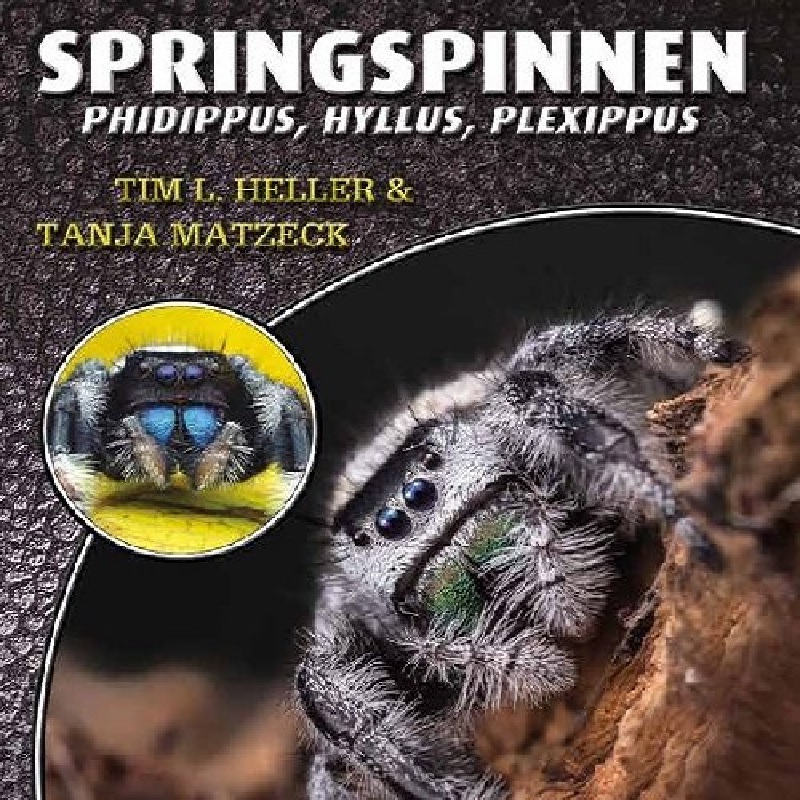
Jumping spiders Phidippus, Hyllus, Plexippus
Book Jumping Spiders - Phidippus, Hyllus & Plexippus A guide to keeping jumping spiders of the genera Phidippus, Hyllus & Plexippus. Who can resist the charm of jumping spiders? The childlike appearance of their expressive face simply leaves no one cold! In addition, their behavior is extremely exciting to observe, their colors are bright and their requirements for species-appropriate keeping are very easy to meet. No wonder these likeable jumpers are all the rage! This volume in the "Species by Species" series describes in detail what to look out for when buying and keeping them, introduces the most commonly kept species and color forms and provides plenty of tips on how to keep them successfully - so you can be sure they will breed well! Species by Species introduces you to the books in this series, which present the most popular terrarium animals. Each volume offers you detailed, practical care instructions and all the information you need to successfully breed your animals. All important questions from the required tank size to terrarium set-up, technical equipment, species-appropriate nutrition and disease prevention are answered with numerous tricks and tips. Experienced, long-standing breeders reveal how you can encourage the animals to reproduce and raise healthy young. All this in full color, generously illustrated and attractively designed - just about your terrarium animal - species by species

CHF 23.90

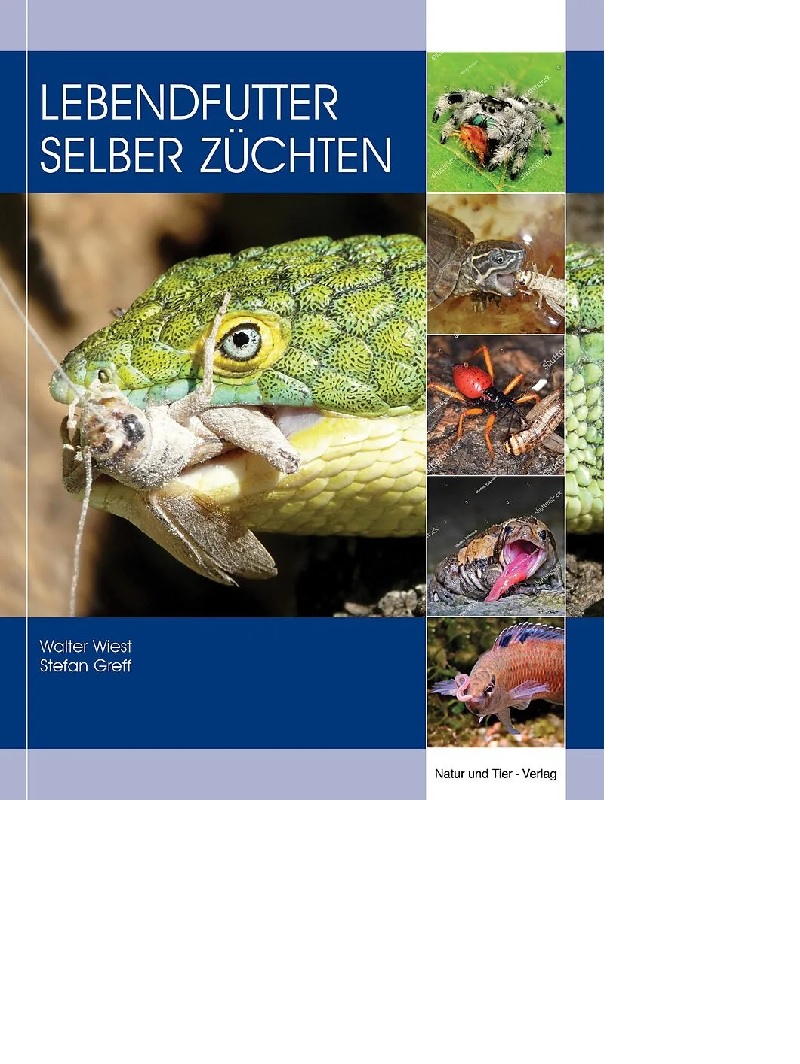
Book Breeding live food yourself
Book "Grow your own live food" - The perfect guide for pet owners Discover practical and detailed instructions on how you can easily breed food for your reptiles, birds, fish or other animals yourself in the book "Breeding live food yourself". With valuable tips on various food insects, their care and breeding, you can save money and ensure a species-appropriate diet for your pets. Contents of the book: Step-by-step instructions for breeding feeder insects Information on the best types of food for reptiles, birds and fish Care instructions and breeding conditions for various live food species Tips for sustainable and cost-effective food production Why breed your own live food? Get healthy, fresh food for your animals Save money and reduce dependence on pet shops Promote the health and well-being of your animals with species-appropriate food Whether you are a beginner or an experienced pet owner, this book provides you with everything you need to successfully breed live food yourself.

CHF 46.50

Marginata 69 - New Guinea tortoises
Marginata 69 - New Guinea tortoises – the genus ElseyaCover storyThe unrecognised beauties: New Guinea tortoises (Andreas S. Hennig)My experiences with Branderhorst's New Guinea tortoise, Elseya (Elseya) branderhorsti (Ouwens, 1914) (Andreas S. Hennig)Keeping and breeding of Rhodin's New Guinea tortoise, Elseya (Hanwarachelys) rhodini Thomson, Amepou, Anamiato & Georges, 2015 (Andreas S. Hennig)PortraitGeoemyda spengleri, Chinese serrated tortoise (Andreas S. Hennig)ReportageMacrochelys temminckii – Experiences and impressions with vulture tortoises part 2 (Reiner Praschag)KeepingAn alternative to year-round keeping of the Egyptian tortoise in the terrarium – my experiences with seasonal outdoor keeping of Testudo kleinmanni (Ricarda Schramm)EtymologySawbacks and living maps part 4: Graptemys gibbonsi, Pascagoula humpback tortoise (Holger Vetter)Classifieds & animal placement

CHF 16.50

Reptilia 59 - Rose chafer
Reptilia 59 - Rose chafer South American tortoisesBuilding a desert terrariumReptile of the year: Forest lizard Contents: 4 EDITORIAL 6 MAGAZINE 17 DATES 20 PHOTO REPORTAGERose chaferBy M. Tomás Rafáles 28 KEEPING AND REPRODUCTIONCare and breeding of the rose chaferAmaurodes passeriniiBy M. Tomás Rafáles 33 REPORTAGEEuropean rose beetles (family Cetoniidae)By M. Yliana 39 TRAVELThin air – An excursion into the highlands ofIran and TurkeyBy B. Trapp 51 PORTRAIT AND POSTERPsammodynastes pulverulentusBy M. Gaulke 55 HERPETOFAUNAOn the "Reptile of the Year 2006" – The Eurasianforest or mountain lizard (Zootoca vivipara),the world's most successful terrestrial reptileBy W. Böhme & D. Rödder 62 PRACTICEUse of a conservatory as a terrariumlocation for a desert terrariumPart 1: Planning and building the terrariumBy T. Ackermann 71 HERPETOFAUNA The North African-Arab cat snakeTelescopus dhara (Forsskål, 1775)By U. Schlüter 77 REPORTAGEObservations on the occurrence ofGeochelone (Chelonoides) in southern BoliviaBy J. Knaack 87 CLASSIFIED ADS 92 RAT & TAT 96 WESTERN HERP PERSPECTIVESThe new "Good Guys"By B. Love 104 INCUBATORMaggot dispenserBy H. Werning

CHF 11.20

Terraria 15 - Whorlet-tailed Iguanas - Genus Cyclura
Terraria 15 - Whorlet-tailed Iguanas - Genus Cyclura BushmasterSearching for poison dart frogs in Peru Contents: The imposing rhinoceros iguanas and their relatives of the genus Cycluraare among the most impressive reptiles of all – and among the rarest. TERRARIA editor-in-chief Heiko Werning introduces this group of iguanas and their struggle for survival in detail. Probablythe most successful European breeder of these animals, Jürgen Schmidt, reports exclusively in TERRARIA about the first successful private breeding of the extremely rare Isla-Mona Iguana (Cyclura cychlura figginsi), while Matthias Götz from the Jersey Wildlife Preservation Trust contributes a report on conservation projects for the famous Blue Iguana from the Cayman Islands and its relative C. nubila caimanensis. 2 Editorial Heiko Werning4 Magazine The dyskinetic syndrome in tarantulas using the example of three sick animals/animal husbandry and "Hartz IV"/Urgent measures according to § 16 a of the Animal Welfare Act and obligation to bear costs/ Exciting breeding import: Theloderma stellatum/For the first time Protobothrops cornutus in Germany/New on the market/11 TERRAnetz12 TERRAglobal Through the coastal desert Maik DOBIEYTITLE TOPIC: Rhinoceros Iguanas14 Whorlet-tailed iguanas of the genus Cyclura, the threatened giants of the Caribbean Heiko WERNING24 The Exuma Whorlet-tailed Iguana, Cyclura cychlura figginsi: Biology, husbandry and first breeding Jürgen SCHMIDT34 One of the rarest lizards in the world: the Anegada Whorlet-tailed Iguana Heiko WERNING42 The Whorlet-tailed Iguanas of the Cayman Islands – Conservation and research on Cyclura lewisi and Cyclura nubila caymanensis Michael GOETZ 50 The wonder gecko from China’s ancient Silk Road Rolf LEPTIEN54 Bushmaster – the genus Lachesis DAUDIN, 1803 Maximilian DEHLING & Matthias DEHLING59 Husbandry and breeding of the Giant Cleft-tailed Scorpion, Hadogenes troglodytes Alexander STÜRTZ66 TRAVEL In the rainforests of San Martin, Peru – a short trip to Tarapoto Maik DOBIEY74 New Species Brachylophus bulabula – “Hello Hello”, a new Fiji iguana/New wall gecko from Cuba/Two new naked-finger geckos from Vietnam87 AMONG RESEARCHERS “Ice Age” in Austria – Where did Austrian reptiles survive the last ice age? Silke SCHWEIGER81 TEST RUN External filters for terrarium enthusiasts Kriton KUNZ86 EYE-CATCHER The wild living room of Sascha Esser Axel KWET91 NEAR YOU94 PREVIEW96 HATCH BOX Exotic attack! The background … Kriton KUNZ

CHF 12.00

Draco 06 - Local amphibians
Draco 06 - Native amphibians Contents: Page content 2 Editorial 4 The native amphibians - an overview, by Dr B. Thiesmeyer 22 A king without a kingdom, by E. Meier & T. Mutz 30 The moor frog Rana arvalis NILSSON, 1842, by H. Laufer & A. Pieh 38 The green toad Bufo viridis LAURENTI, 1768, by A. Pieh & N. Braitmayer 45 Midwife toads (genus Alytes, discoglossidae): Biology, care and breeding, by H.-J. Schekeler 53 Great crested newts: Little water dragons in our ponds and pools, by A. Kupfer 58 Long time in the forest: Long live the salamander!, by Dr B. Thiesmeyer 69 First photos of the birth of the Alpine salamander (Salamandra atra atra) 78 Book box 89 Magazine

CHF 16.80

Reptilia 84 - Near-natural terrariums
Reptilia 84 - Near-natural Terrariums Northern pine snakeRack keepingNorway Contents: Creating near-natural terrariums – is that even possible? Does it make sense? And what should the so often described “small section of nature” in the literature look like? Or does the future of terraristics lie in rack keeping? In our cover story we discuss controversially and present practical options for designing terrariums. Editorial MAGAZINE REPTILIA in dialogue: John Berry, breeder of "Desighner Morphs" Dubious caiman, dubious quote – more about the WAZ's working methods Tobias Fritz   MAGAZINE World's first captive-bred Batagur tortoise Axel Kwet   MAGAZINE Obituary: Prof. Dr Dr h.c. mult. Paul Müller Chritian Neumann   DATES   PHOTOSTORY A piece of nature in the living room Heiko Werning   TERRARIUM PRACTICE Natural terrarium or pet cage? Dieter Schmidt   TERRARIUM PRACTICE Advantages of rack keeping F. Longhitano   TERRARIUM PRACTICE Designing hiding places using latex binders C. Frömberg   TERRARIUM PRACTICE Construction of a near-natural display terrarium for a Yemen chameleon S. Braun   TERRARIUM PRACTICE A greenhouse for green iguanas and panther chameleons A. Birtel   PORTRAIT Lychas mucronatus (Fabricius, 1798). Chinese swimming scorpion Kriton Kunz   TRAVEL New Jersey – With “Fieldherpers” and “Pineys” in search of the Northern pine snake (Pituophis melanoleucus melanoleucus) Bernd Skubowius   KEEPING AND REPRODUCTION Fringed-fingered lizards (Acanthodactylus) in the wild and in the terrarium Part 5b: The Acanthodactylus-scutellatus group Uwe Schlüter   HERPETOFAUNA Reptiles and amphibians at Lake Undeland in southern Norway – ecological and pedagogical aspects Werner Lantermann & Yvonne Lantermann   TERRARIUM DISPLAYS 100 years aquarium at Leipzig Zoo Heiko Werning   ANIMALS OF OUR HOME The smooth snake Rolf Leptien   WESTERN HERP PERSPECTIVES Photographing amphibians and reptiles – with style Bill Love   SUBSCRIPTION & SERVICE ALSO NEAR YOU PREVIEW BRUTKASTEN  Patagonian breakdown. Part 2 Heiko Werning

CHF 12.00

Marginata 06 - Four-toed turtles
Marginata 06 - Four-toed tortoises Food plants 1Pallas's tortoiseJapanese soft-shelled turtle farm Contents: 2 EDITORIAL 3 MAGAZINE 7 READERS' LETTERS 8 DATES 10 PHOTO REPORTAGEThe four-toed tortoise Agrionemys horsfieldiiHans - Dieter Philippen 16 BREEDING IN HUMAN CAREKeeping and breeding of Agrionemys horsfieldii kazachstanica CHKHIKVADZE, 1988) in the indoor terrariumNatasa Velenská 22 FIELD RESEARCHExperiences in the turtle steppe of UzbekistanPetr Velensky 28 FIELD RESEARCHResearch into ecology and conservation status of Agrionemys horsfieldii in ChinaShi Haitao and Xe She-ke 31 PORTRAITBrazilian snake-necked tortoiseHydromedusa maximiliani (MIKAN, 1820)Hans - Dieter Philippen 35 REPORTAGEFood plants for tortoisesPart 1Susanne Vogel 42 SHORT REPORTLegendary giant soft-shelled turtle Rafetus leloii sightedJörg Adler 45 REPORTAGEA visit to a commercial soft-shelled turtle farm in JapanPetr Petras 48 FIELD RESEARCHTestudo greaca pallasi CHKHIKVADZE & BAKRADZE, 2002, a little-known tortoise from DagestanAlexander Pieh and Markus Auer 52 REPORTAGEObservations on the feeding behaviour of Podocnemis unifilisHans - Dieter Philippen 54 BREEDING IN HUMAN CAREEuropean first breeding of the spiny tortoise (Heosemys spinosa) Durrelll Wildlife Conservation Trust 60 RAT & TAT 60 BOOK TIP 61 CLASSIFIEDS 62 REGIONAL GUIDE 64 AGATHA MARGINATA

CHF 14.70

Reptilia 07 - Climbing snakes
Reptilia 07 - Climbing snakesTurtle conservation in NepalStump crocodiles in the CongoRed-footed tarantulaContents:Page 2 - EditorialPage 4 - Letters to the editorPage 5 - MagazinePage 16 - Photo reportagePage 22 - Keeping and breeding: The Persian Climbing Snake Elaphe persica, by K.-D. SchulzePage 25 - Report: Endangerment and protection of the Aesculapian snake in Germany, by M. WaitzmannPage 29 - Keeping and breeding: Elaphe guttata, by J. BergadáPage 33 - Travel report: Stump crocodiles in the Congo, by A. Brieger, F. W. Huchzermeyer and J. RileyPage 39 - Portrait and poster: Corucia zebrata, by M. Aresté and J. L. FarriolsPage 43 - Report: A species conservation programme for tortoises in Nepal, by K. Ernst, K. B. Shah and H. SchleichPage 49 - Keeping and breeding: Dendrobates galactonotus, by R. and B. PieperPage 53 - Keeping and breeding: Avicularia avicularia, by J. M. Marínez NadalPage 57 - Herpetology and Culture: Traditional Chinese Medicine, Part 2: Turtles as fire extinguishers, by G. PetersPage 62 - Western Herp Perspectives, by B. LovePage 64 - Prize puzzlePage 69 - Reptilia on the road: Arizona Sonora Desert Museum Tucson, by H. WerningPage 74 - Advice and actionPage 77 - LibraryPage 80 - Incubator: Glossary by H. Werning

CHF 9.80

Marginata 21 - Greek tortoises
Marginata No. 21 Greek Tortoises Box turtles Part 2In search of sea turtlesSpanish pond turtle Contents: EDITORIALREADER LETTERSMAGAZINEDATES REPORTAGEThe Greek tortoise (Testudo boettgeri ssp.) – well-known and still fascinatingHans - Dieter Philippen REPORTAGEThe Greek tortoise (Testudo boettgeri spp.) from the Iron Gate in RomaniaLutz Geissler BREEDING IN HUMAN CAREBasics of rearing juveniles of the Greek tortoise (Testudo boettgeri ssp.)Thorsten Geier REPORTAGEAbout Greek tortoises in GreeceMichael Wirth, Peter Fritz & Johann Maier PORTRAITLarge-headed mud turtle (Claudius angustatus)Hans-Dieter Philippen REPORTAGENotes on the ecology of Terrapene ornata ornata in the Great Plains region - Part 2Michael Wirth & Hans Peter Mattern REPORTAGEThreats to, protection and use of sea turtles. Part 1: The relationship of humans to sea turtles through the agesGerald & Christa Benyr REPORTAGEThe Threat to the Spanish Pond Turtle (Mauremys leprosa)José C. Báez & Davinia Torreblanca REPORTAGESuccessful year 2008 at the International Centre for Tortoise Conservation (IZS) at Allwetterzoo MünsterElmar Meier, Martina Raffel & Hans-Dieter Philippen BOOK TIPCLASSIFIED ADSSUBSCRIPTION & SERVICEREGIONAL GUIDE

CHF 16.50