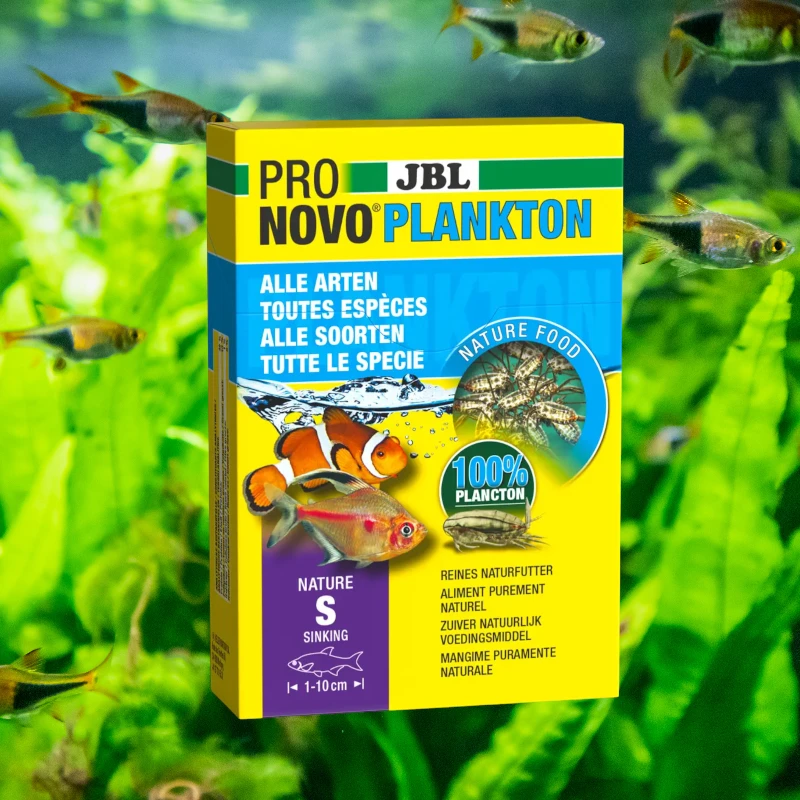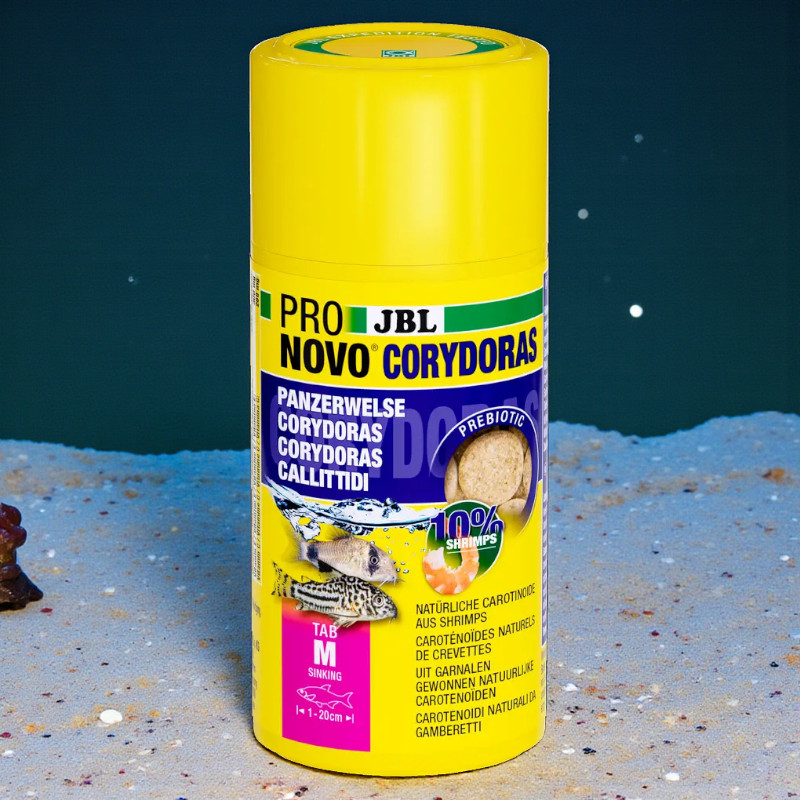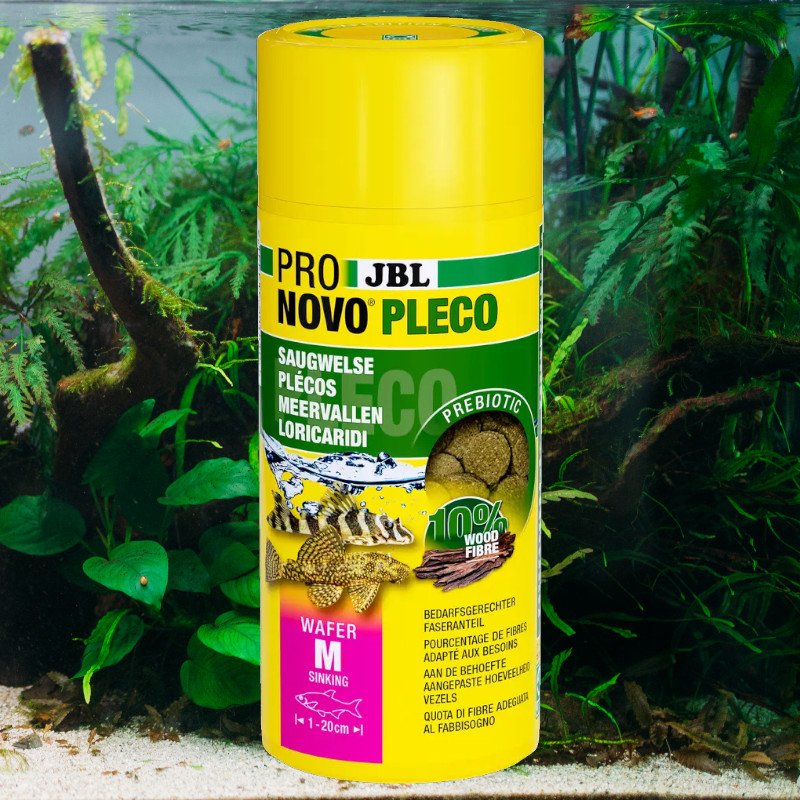
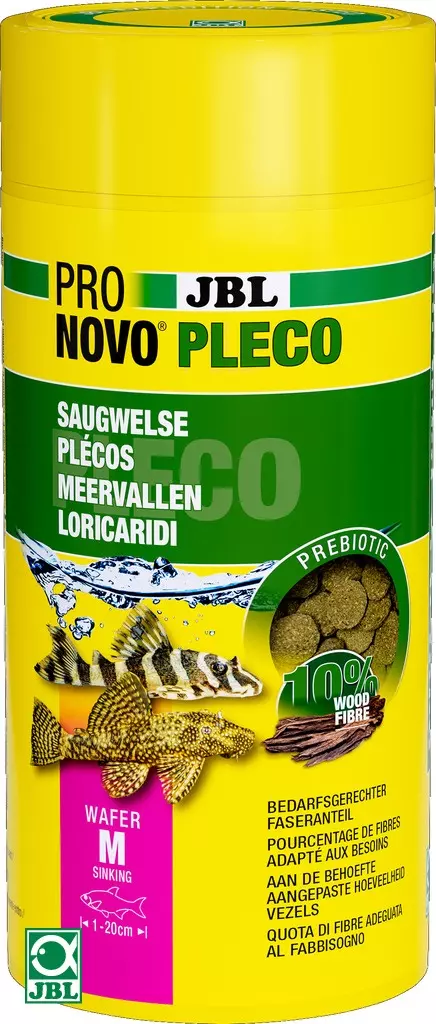
JBL PRONOVO PLECO WAFER M

  • Special staple food for loricariid catfish & bottom fish
  • Stable wafers (size M) for long grazing
  • High plant & fibre content for healthy digestion
  • Sinking & dimensionally stable – hardly any water pollution
Article no: HA-J3133100

CHF 5.90

Stock: 5

Available, delivery time: 1-3 days

Delivery between Tuesday, 21 April and Wednesday, 22 April
Litre
Zahlungsarten
Product information "JBL PRONOVO PLECO WAFER M"

JBL ProNovo Pleco Wafer M

Wafers in size M for all herbivorous and algae-eating suckermouth catfish from 1 to 20 cm in size in community aquaria.

  • Large food wafers for all suckermouth catfish that feed on plants and algae, such as many Hypostomus species. The wood content covers the requirements of catfish species that need to grate wood
  • Application: Allow to sink to the bottom of the aquarium. For crepuscular and nocturnal species, only feed after the lights have been switched off
  • Natural raw materials without artificial additives for a natural diet and healthy aquarium fish. Tested on JBL research expeditions in the tropics
  • Very high acceptance even with picky species thanks to high-quality raw materials such as spinach, salmon, spirulina and shrimps
  • Scope of delivery: Original sealed, air and light-tight, recyclable can with dosing aid inside the lid (for 250, 1000 ml)

The group of suckermouth catfish is quite diverse in terms of diet: the majority of species feed herbivorously on plants and algae. Many of these species are also wood-eaters. However, there are also species such as the zebra or cactus catfish that do not eat plants, but microorganisms, insects and even dead fish. JBL PRONOVO TABs are the right choice for these species. The JBL PRONOVO PLECO, which is available in two sizes, was developed for all other suckermouth catfish. By the way, experts can recognize what the catfish eats by its teeth.

Some species of suckermouth catfish do not come out when the light is still on. If you then feed them food tablets, they will disintegrate and are more likely to be eaten by the other fish, if they like "green food tablets". It is advisable to feed JBL PRONOVO PLECO AFTER switching off the light. The wafers (chips, which are thinner than food tablets) do not dissolve so quickly and are still in a consistency that the catfish have to grate vigorously (important for the teeth - no joke!) when the catfish are active.

How can you proceed if you keep different bottom dwellers in an aquarium?

Fish also have a sense of taste and will refuse food if they don't like it. In addition, we do NOT keep any bottom dwellers for which it would be problematic if they ate a food tablet that was actually intended for another species (e.g. loaches). You can therefore feed both types of tablet (e.g. JBL PRONOVO PLECO for herbivorous suckermouth catfish and JBL PRONOVO TAB for carnivorous or omnivorous catfish) at the same time. It is even positive for the fish, as they are offered more variety and yet every group of fish gets their species-appropriate diet.


Composition
Composition: wheat germ, spinach, soya flour, wood fibre, salmon meal, green meal, spirulina, shrimp meal, wheat flour, rice flour, yeast extract, beet pulp
Analytical constituents: Protein (29.0 %), fat content (7.0 %), crude fibre (11.0 %), crude ash (8.0 %)
Feeding recommendation
Feeding recommendation: Feed once or twice a day as much as is eaten in a few minutes.
Technical details
Size information

2 of 2 reviews

5 out of 5 stars


100%

0%

0%

0%

0%


Give us a rating!

Share your experience with the product with other customers.


16 August 2025 18:44

everything ok

the fish love it

28 July 2025 21:12

keep it up

the fish love it

Customers also bought

Alternanthera reineckii 'Purple' (Purple parrot leaf)
Alternanthera reineckii 'Purple'Purple' is the largest variety of Alternanthera Reineckii. The red colored leaves make it a great plant for accenting.Difficulty of cultivation: difficultLight requirements: highCO₂ requirements: highHeight of mature plants: 20-50 cmGrowth: mediumTemperature: 20-28°CPlacement in aquarium: middle ground or backgroundOrigin: South America6 cm cup diameterAlternanthera Reineckii 'Purple' is a demanding plant for advanced aquarists. It should receive a fertile substrate, strong lighting, an additional supply of carbon dioxide and a full feeding in the form of liquid fertilizer. However, even under favorable conditions, its growth is very slow. Alternanthera Reineckii 'Purple' is a secondary or tertiary plant. The top of the leaf blades are reddish brown, while the undersides range from purple to violet to dark red. The mature plant can grow up to 50 cm tall, but usually reaches no more than 20-30 cm in height. It spreads laterally by lateral stolons. To obtain cuttings, 7 cm long cut stems are inserted into the ground It presents best in the second or third level. In nature, it is a swamp plant that occurs in South America. The best growth results are obtained when it is planted in an active substrate. The growth rate depends on the carbon dioxide concentration in the aquarium water. It prefers soft to hard water with a pH of 6 to 8. It depends on the availability of macronutrients in the water column and is sensitive to macronutrient deficiencies resulting in the loss of leaves in the lower part of the stem. Plant it in closely spaced clumps. As it grows, it will form a compact group of adult plants. Prune the plant regularly with sharp scissors. Frequent pruning helps the plant compact and grow. To maintain the dark red color of the foliage, the plant must be well exposed to light. In optimal light, it grows densely and the internodes are short, making it look much more attractive. It makes an interesting contrast to the many green plants in the aquarium. In open aquariums it grows easily to the water surface.Planting: The plant must be removed from the cup and thoroughly rinsed from the gel under running water. This is best done by placing the plant in a container of lukewarm water. Most of the gel will then fall off by itself. Divide the contents of the cup into 3-4 cm lumps and then place them in the substrate..

CHF 6.50

Nesea sp. Gold
Nesea sp. GoldNesea sp. "Gold" is a stem plant, with intense yellow to orange colors that is rare in aquarium plants. Growing difficulty: : medium, demandingLight requirement: mediumCO₂ requirement: mediumAdult plant height: 40-50 cmGrowth: mediumTemperature: 22-28°CPlacement in aquarium: third levelOrigin: AfricaCup diameter 6 cmNesea Crassicaulis Gold (Nesea sp. Gold) from Africa, a quite rare and very decorative plant with medium requirements and moderate growth rate.With sufficient light, it takes on colors ranging from bright yellow to intense orange. Nesea sp. Gold is not very demanding in terms of growing conditions. The yellow coloration of the leaves can be achieved even with moderately intense light. The stronger the lighting, the more the color shifts towards an orange tone. The plant can reach a height of up to 50 cm and is thus intended for the third level. However, it has a fairly moderate growth, so it does not require frequent pruning and with good care can be used as a foreground plant. Nesea sp. Gold needs CO₂ in gaseous form, but the carbon dioxide requirement is not too high and medium due to the growth rate is not too fast. It requires nutrient-rich water for optimal appearance. However, attention should be paid to potassium levels, as excess can cause deformation of the growth cones.It grows best at temperatures between 22 and 28 degrees Celsius. Since it prefers high temperatures, it is suitable for tanks with a population of extremely heat-loving fish. The undoubted advantage of this plant is the combination of a very unusual leaf color and low requirements. Nesea sp. Gold provides a good contrast with both green and red foliage plants, and the effect is relatively easy to achieve. It does not require a large amount of CO2. It likes soft and slightly acidic water, but can grow in other parameters as well. It needs good light, a nutrient-rich substrate, CO2 and adequate fertilization to achieve intense coloration. If you want to keep Nesea sp. Gold as a background plant, you should prune it regularly. This will not only keep it at the right height, but will also make it thicker and give it a striking appearance. After pruning, the plant will rejuvenate and the cut tops can be planted in the ground.Planting: Before planting, simply rinse the plants from the gel. Unlike plants kept in rockwool, partial drainage is not required..

CHF 8.90

JBL PRONOVO CORYDORAS TAB M 100ml
JBL ProNovo Corydoras Tab M Aquarium staple food tablets in size M for all armored catfish species from 1 to 20 cm in size in community aquariums.Ideal staple food for all armored catfish species (Corydoras, Aspidoras, Brochis, Scleromystax, Dianema, Hoplosternum etc.).Application: Allow to sink to the bottom of the aquarium. For crepuscular species, only feed after the lights have been switched off.Natural raw materials without artificial additives for a natural diet and healthy armored catfish. Tested on JBL research expeditions in the tropicsVery high acceptance even with picky species thanks to high-quality raw materials such as salmon, krill, shrimp and spirulinaScope of delivery: Original sealed, airtight and lightproof, recyclable can with dosing aid inside the lidArmored catfish are bottom-dwelling fish species from South America that use their barbels to search for food on or in the bottom. The substrate must therefore not be coarse and never sharp-edged. They like to live in groups (except C. acutus) and are peaceful.Armored catfish are omnivores that consume detritus (crushed organic matter) on or in the substrate. This means that their food spectrum covers almost everything that can be found in natural waters. In the JBL PRONOVO CORYDORAS this is taken into account in the composition with plant and animal components.How can you proceed if you keep different bottom dwellers in ONE aquarium?Fish also have a sense of taste and will refuse food if they don't like it. In addition, we do NOT keep any bottom dwellers that would find it problematic to eat a food tablet that is actually intended for another species (e.g. loaches). You can therefore feed both types of tablet (e.g. JBL PRONOVO CORYDORAS for armored catfish and JBL PRONOVO BOTIA for loaches) at the same time. It is even good for the fish, as it gives them more variety.What is the difference between tablets and wafers?From a manufacturing point of view, food tablets (e.g. JBL PRONOVO TAB, JBL PRONOVO CORYDORAS) are mechanically compressed from fine flake or granulated food. Wafers, on the other hand, are cut thinly from a slurry and an "endless sausage" pressed out of the extruder and then dried. The diameter of the "sausage" then gives the diameter of the wafer. With JBL PRONOVO PLECO, this results in two sizes: M and XL.In production, wafers can be made harder than food tablets, so that they are still available to the suckermouth catfish as "hard" food for scraping even after some waiting time (until it gets dark).

CHF 8.50

Suggested products

JBL PRONOVO BOTIA TAB M
Litre : 100ml
JBL ProNovo Botia Tab MStaple food for all loach-like fish in the aquarium Ideal staple food for all loach-like fish (Botia species, sucking loaches, fin suckers, spiny eyes)Application: Either allow to sink to the bottom of the aquarium or attach to the aquarium glass with light pressure from the insideNatural raw materials without artificial additives for a natural diet and healthy aquarium fish. Tested on JBL research expeditions in the tropicsVery high acceptance even with picky species thanks to high-quality raw materials such as salmon, spirulina and shrimpsScope of delivery: Original sealed, air and light-tight, recyclable can with dosing aid inside the lid (for 100, 250, 1000 ml)All loach species come from Asia and are bottom-oriented fish. They therefore feed mainly from the bottom. Many species, e.g. the splendid loach, mouse loach, net loach and green loach are good snail eaters!How do bottom dwellers in community aquariums get their food?You've probably seen it before: Someone throws a food tablet into the aquarium for their bottom-dwelling loaches, but the fish in the other water zones grab the food tablet and the loaches go away empty-handed! The other variant: The loaches should get some of the food from the other fish. In this case, however, there is usually enough food for the loaches and the algae! The loaches, for example, do not reach the food that ends up in the decoration. This can spoil and quickly lead to algae problems.This works better: first feed the fish in the upper water layers and then, when they are in a feeding frenzy, throw in one or two food tablets for the loaches.How can you proceed if you keep different bottom dwellers in one aquarium?You can easily feed 2 types of tablets (e.g. JBL PRONOVO CORYDORAS for armored catfish and JBL PRONOVO BOTIA for loaches) at the same time. It is even positive for the fish, as they are offered more variety and yet each group of fish gets their species-appropriate diet.What is the difference between tablets and wafers?Food tablets (e.g. JBL PRONOVO TAB, JBL PRONOVO BOTIA) are mechanically compressed from fine flake food. Wafers, on the other hand, are thinly sliced and dried from a slurry and an "endless sausage" pressed out of the extruder.

CHF 8.50

JBL PRONOVO TAB M
Litre : 250ml
JBL ProNovo Tab MSinking staple food for all omnivorous bottom dwellers in the aquarium. Ideal for all bottom-dwelling fish species and all others if the tablet is attached to the glassApplication: Either allow to sink to the bottom of the aquarium or attach to the aquarium glass with light pressure from the insideNatural raw materials without artificial additives for a natural diet and healthy aquarium fish. Tested on JBL research expeditions in the tropicsVery high acceptance even with picky fish species thanks to high-quality raw materials such as shrimps, salmon and tubifexScope of delivery: Original sealed, airtight and lightproof, recyclable can with dosing aid inside the lid (for 100, 250, 1000 ml)Bottom-dwelling fish tend to look for their food at the bottom, so sinking food tablets are ideal for them. Sinking granulated food for the other fish will also reach the bottom, but only if they have been fed too much! It therefore makes sense to feed the free-swimming and bottom-dwelling fish species separately.The biological species concept for ornamental fish:The nutritional requirements of bottom dwellers are also different:Almost all bottom-dwelling fish species eat JBL PRONOVO TAB. But even the free-swimming fish species quickly learn by smell that the tablet consists of food. Very large fish eat it whole, smaller fish bite it off. As soon as the tablet is attached to the glass, all the fish love to eat it and it is great fun to watch them do so.There are many species of suckermouth catfish that feed mainly on plants (e.g. antenna catfish, Ancistrus dolichopterus). JBL PRONOVO PLECO was developed for these species. But there are also species among the suckermouth catfish, such as the zebra catfish (Hypancistrus zebra = L 46) or the cactus catfish (Pseudacanthicus cf. leopardus = L 114), which do not live a predatory life, but do not eat plants but animal food.Armored catfish have a very extensive food spectrum. The JBL PRONOVO CORYDORAS (Corydoras = scientific name of the armored catfish species) therefore contains the appropriate raw materials, such as shrimps and spirulina. Corydoras need a varied diet for a healthy diet. The shrimps are representative of all the small animal organisms and also carrion, which the armored catfish feel on the ground with their barbels.Loaches also tend to be omnivores that like to eat snails, but sometimes also aquarium plants. JBL PRONOVO BOTIA was designed for their diet.

Variants from CHF 8.50
CHF 16.90

Axolotl wafers
sera Axolotl Wafers - staple food for axolotl from 12 cmsera Axolotl Wafers are a specially developed staple food for axolotls and other amphibian lurkers. The fast-sinking, dimensionally stable chips impress with their soft, juicy consistency, which enables slow feeding without clouding the water - ideal for natural feeding directly on the substrate or for targeted feeding with tweezers.The food contains high-quality animal proteins, omega fatty acids, valuable vitamins and prebiotically active mannan oligosaccharides, which support the immune system and promote healthy growth and strong development.Thanks to the gentle processing, the food is free from colorants and preservatives and at the same time ensures a low water load through reduced excretion.Product benefits at a glance:Staple food for axolotls from 12 cm - species-appropriate & rich in nutrientsFast-sinking, dimensionally stable wafers - ideal for bottom-dwelling amphibiansSoft consistency - for natural food intake without stressWith proteins, omega fatty acids, vitamins & prebioticsSupports growth, immune system & optimal developmentIdeal for tweezer feeding - no disintegration in the water No colorants or preservatives - for a clean aquarium

From CHF 3.90

%
Catfish Tabs XXL
sera Catfish Tabs XXLThe ideal food for larger catfish: sera Catfish Tabs XXL are large bottom tablets that can be used both on the bottom and as adhesive tablets on the aquarium glass. This staple food has been specially developed for larger catfish such as plecos and other bottom-dwelling fish. Attaching the tabs to the glass provides fascinating insights into the behavior of your ornamental fish. With a spirulina content of 21 %, the tabs provide your fish with valuable minerals and vital substances, promote digestion, color development and general well-being. The stable formula ensures that the fish can eat slowly without affecting the water quality.Content: 1 liter

CHF 23.90 CHF 43.90 (45.56% saved)

Tip
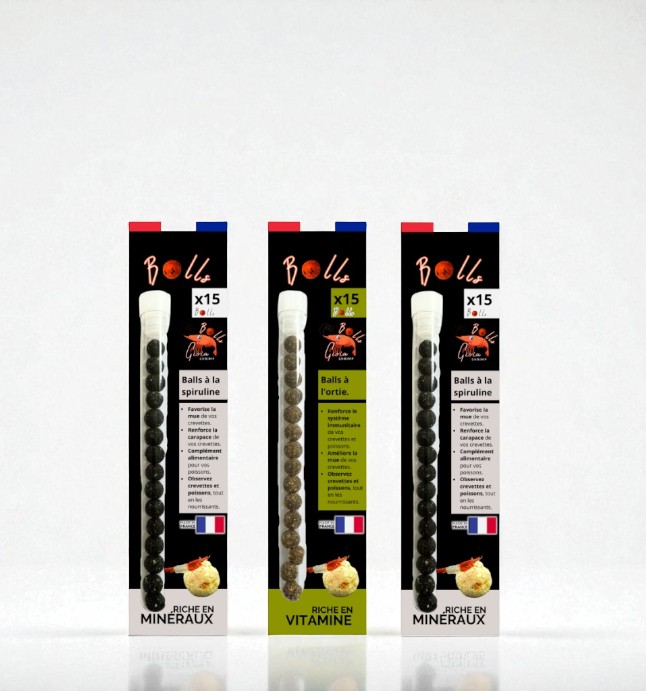
Gioia Balls for shrimps and catfish
Food balls from GioiaDelicious food balls from Gioia for dwarf shrimps and catfish. Sealed airtight in a test tube, you will receive 15 of these approx. 1 cm round food balls. Available in three flavors:Nettle = rich in vitaminsArtemia and mosquito larvae = rich in proteinsSpirulina = rich in mineralsWith these three varieties you can feed your shrimps and catfish a varied diet!One scoop is enough for approx. 50 shrimps

CHF 7.90

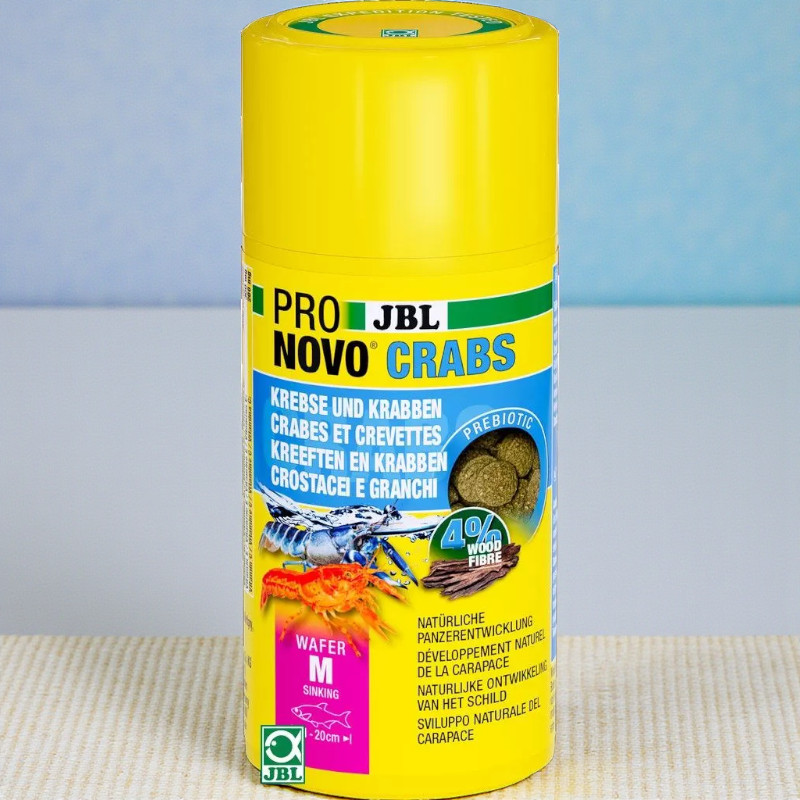
JBL PRONOVO CRABS WAFER M
Litre : 100ml
JBL ProNovo Crabs Wafer M Wafers for all scissor-bearing crabs, shrimps and prawns from 1 to 20 cm in size in community aquaria.Complete nutrition with fish and shrimp meat for beautiful colors and healthy growth in crabsHigh-quality, natural carotene (astaxanthin) from spirulina algae ensures beautiful coloration in e.g. Cherax and Procambarus speciesIdeally balanced ratio of animal and plant proteins for healthy growth and problem-free moultingPrebiotic & sinking crustacean food: Special dietary fibres in the food provide the beneficial intestinal bacteria with food for healthy digestionScope of delivery: Original sealed, airtight and lightproof, recyclable tin with dosing aid in the lidIn biological terms, the term "crustaceans" is actually a generic term that includes shrimps, crabs and crayfish. However, aquarists have come to distinguish between crabs (with claws) and shrimps. We also linguistically classify crabs (with rather round shells) as crayfish. Among the crabs and hermit crabs, there are also land-living species that only visit the water to reproduce. When it comes to food, we can group all claw-bearing species together, as their feeding habits are very similar. JBL PRONOVO CRABS therefore contains shrimps and fish, but also plant-based ingredients such as spinach and spirulina. Wood fibers are also included as dietary fiber.When feeding several crayfish in an aquarium, it can be useful to feed the wafers to the crayfish one after the other. The fastest and strongest will get the first wafer and then the others can be given "their" wafers. Crabs find food extremely quickly and reliably using their sense of smell. It is therefore not necessary to throw a large quantity of wafers into an aquarium. Targeted individual feeding always makes more sense. A plastic tube can be very helpful to bring a wafer to a specific spot.JBL PRONOVO food is prebioticScientists agree that (pre-)prebiotic food promotes digestion and therefore health. In the case of crayfish there is another important aspect: Better digestion results in less excretion and therefore less pollution of the water, resulting in fewer algae problems and cleaner water.A head start through researchThe results of JBL research expeditions, together with the knowledge of the JBL research and development team, have led to optimal, balanced food mixtures made from high-quality ingredients.

CHF 6.20

TetraWafer Mix
Variant: 100ml | Variant (1): 100ml
TetraWafer Mix as fish food Main feed mix for all bottom fish and crabs. Green wafers with valuable spirulina algae especially for plant-eating ground fish Brown wafers ideal for carnivorous ground fish The aquarium water is not clouded by the solid consistency Dimensionally stable wafers correspond to the natural feeding behavior

CHF 8.90

Tetra Tips Adhesive Food Tablets
Variant: 165 pcs | Variant (1): 165 pcs
Tetra Tips Adhesive Food Tablets TetraTips adhesive food tablets made from a balanced mixture of high-quality special flakes and valuable freeze-dried raw materials - stick to the glass. contains high-quality freeze-dried natural food (such as freshwater shrimps, brine shrimps, water fleas and mosquito larvae) the tablets can be pressed against the aquarium glass so that the ornamental fish can be easily observed during feeding the ornamental fish can use their biting tools for sucking and nibbling contains all essential nutrients, vitamins and trace elements Size: 75 pcs. 165 pcs. 300 pcs.

Variants from CHF 11.90
CHF 21.90

Sera Vipachips
Variant: 100ml | Variant (1): 100ml
Sera Vipachips - Fish food Sera Vipachips is a balanced complete food for all fish that feed on the bottom of the aquarium or by scraping algae.  This new food speciality is ideal for all bottom dwelling fish that do not live on a purely vegetarian diet. For example, sera vipachips are suitable for armoured catfish, loaches and some L-catfish, such as the spectacular and coveted "L 46". Sera vipachips become supple very quickly in the water, but retain their shape for a long time. The food does not disintegrate and retains its excellent, irresistible flavour for the fish for a long time. As Sera Vipachips do not cause turbidity and do not pollute the water, this food is also ideal for slow or nocturnal fish where the food has to remain in the aquarium for longer.

CHF 7.20

Catfish chips
Content in liters: 1000ml
Viele der eindrucksvollen und beliebten Harnischwelse (L-Welse) raspeln ihr Futter vom Untergrund ab. Dabei nehmen sie auch zur Verdauung wichtige Holzbestandstandteile auf. Speziell für diese prächtigen Aquarienfische gibt es nun sera Wels-Chips mit Weidenrinden- und Erlenholz-Anteilen. Diese neuartige, schmackhafte Futterspezialität ist in der Struktur sehr fest und zerfällt auch nach längerer Zeit im Wasser ncht. So können sich die Fische wie in der Natur lange mit ihrem Futter beschäftigen. Durch das unwiderstehliche Aroma werden auch scheue und versteckt lebende Welse ins Blickfeld gelockt. 

Variants from CHF 6.50
CHF 26.90

TetraMin Pro Crisps
Variant: 250ml | Variant (1): 250ml
TetraMin Pro Crisps as fish food Staple food for all ornamental fish. Thanks to the low-temperature gentle process, TetraMin Pro Crisps have a high nutritional value With clear water formula The patented BioActive formula* for a strong immune system For less water pollution and therefore less algae

CHF 12.95

Tetra Selection
Litre : 100ml
Tetra Selection as fish food 4 staple foods with different sinking and swimming behaviour. 4 separate compartments allow selective feeding. The perfect solution for community aquariums.

CHF 9.80

Customers also saw

JBL PRONOVO PLECO WAFER M
JBL ProNovo Pleco Wafer MWafers in size M for all herbivorous and algae-eating suckermouth catfish from 1 to 20 cm in size in community aquaria.Large food wafers for all suckermouth catfish that feed on plants and algae, such as many Hypostomus species. The wood content covers the requirements of catfish species that need to grate woodApplication: Allow to sink to the bottom of the aquarium. For crepuscular and nocturnal species, only feed after the lights have been switched offNatural raw materials without artificial additives for a natural diet and healthy aquarium fish. Tested on JBL research expeditions in the tropicsVery high acceptance even with picky species thanks to high-quality raw materials such as spinach, salmon, spirulina and shrimpsScope of delivery: Original sealed, air and light-tight, recyclable can with dosing aid inside the lid (for 250, 1000 ml)The group of suckermouth catfish is quite diverse in terms of diet: the majority of species feed herbivorously on plants and algae. Many of these species are also wood-eaters. However, there are also species such as the zebra or cactus catfish that do not eat plants, but microorganisms, insects and even dead fish. JBL PRONOVO TABs are the right choice for these species. The JBL PRONOVO PLECO, which is available in two sizes, was developed for all other suckermouth catfish. By the way, experts can recognize what the catfish eats by its teeth.Some species of suckermouth catfish do not come out when the light is still on. If you then feed them food tablets, they will disintegrate and are more likely to be eaten by the other fish, if they like "green food tablets". It is advisable to feed JBL PRONOVO PLECO AFTER switching off the light. The wafers (chips, which are thinner than food tablets) do not dissolve so quickly and are still in a consistency that the catfish have to grate vigorously (important for the teeth - no joke!) when the catfish are active.How can you proceed if you keep different bottom dwellers in an aquarium?Fish also have a sense of taste and will refuse food if they don't like it. In addition, we do NOT keep any bottom dwellers for which it would be problematic if they ate a food tablet that was actually intended for another species (e.g. loaches). You can therefore feed both types of tablet (e.g. JBL PRONOVO PLECO for herbivorous suckermouth catfish and JBL PRONOVO TAB for carnivorous or omnivorous catfish) at the same time. It is even positive for the fish, as they are offered more variety and yet every group of fish gets their species-appropriate diet.

From CHF 5.90

Gerbil
Gerbil Gerbils are very sociable animals. In their original home, the Mongolian steppe, they live in large family groups. Mongolian gerbils live in dry steppe areas, where it can get very cold in winter (down to -40 °C) and very warm in summer (up to +50 °C), in underground burrows with several tunnels and chambers. They are active during the day and at night, and have one of their resting phases at the time of the greatest midday heat. Resting and waking periods alternate several times a day. Keeping: Gerbils should never be kept alone. They need fellow gerbils to feel comfortable. Gerbils kept individually often sit listlessly in the corner and remain shy. Only when in pairs or groups do they feel secure, are terribly curious and trusting.It is best to keep two or more animals of the same sex. A male and female pair gets on very well, but then numerous offspring can be expected.The main activity of gerbils is digging! Therefore, the best cage is a large aquarium with a mesh cover. As gerbils should be given plenty of bedding for digging, a mesh cage is not particularly suitable. The cage equipment includes: Bedding at least 30cm deep so the gerbils can fulfil their digging needs Hay Various shelter options made of wood or cork, branches for climbing Sand bath Food bowl and drinking bottle The furnishings should not be made of plastic, as gerbils will gnaw everything. Legal regulations: Enclosure at least 100x50cm for 2 animals Bedding / digging layer 25cm Hay and straw Hiding places for all animals Nesting material Sand bath Gnawing objects such as softwood or fresh branches Group housing Food: To stay healthy, gerbils - like other living creatures - depend on a varied diet.The balanced basic diet is ensured by the ready-made food offered in pet shops.Fresh foods such as fruit, carrots or dandelion can also be given to gerbils from time to time. The cage should be checked daily for spoiled fresh food so that the gerbils do not eat mouldy food. To wear down their teeth, gerbils always need some hard bread. Hay serves not only as nesting material, but is also partly eaten.Fresh water should always be available to gerbils. The commercially available small animal drinkers are recommended, as an open water bowl is quickly filled with bedding. Gerbils do not drink much, but it is not true that they can do completely without fluids. Regular costs (per month/for 2 animals): Food: approx. Fr.15.-- Bedding and hay: approx. Fr. 20.-- Veterinarian: The more species-appropriate and clean the keeping, the less often a visit to the vet threatens. Nevertheless, you must always expect that an animal can become ill at any time and will then incur additional costs. Before you decide on gerbils, you should definitely have read a relevant specialist book. For any animal keeping applies: Children (including adolescents) must be guided, supervised and controlled by their parents. Children should know that animals are not toys!For questions and problems, our trained team at Zoo Roco is available to you. They can provide you with expert advice in all matters.