Product information "GU, Rabbits outside enclosure"
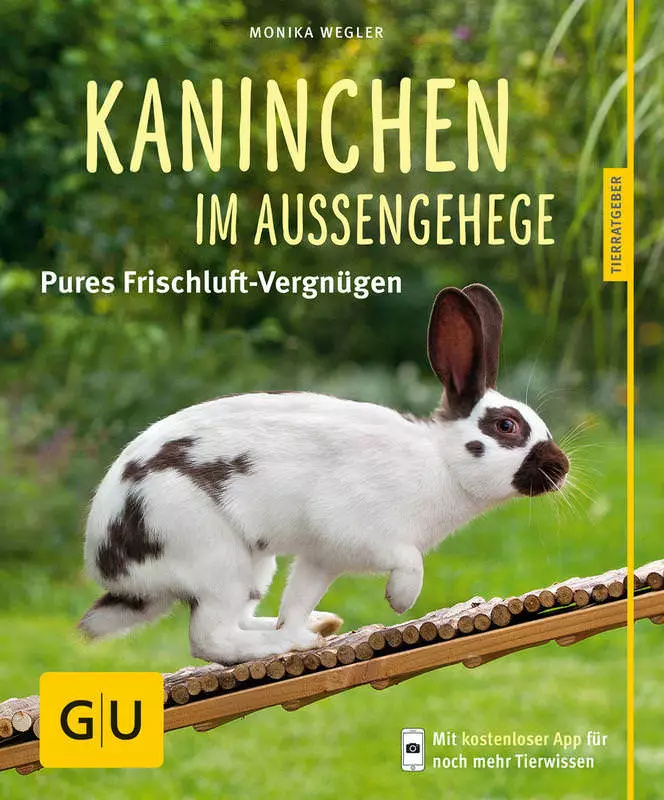
GU – Rabbits in Outdoor Enclosures
Everything beginners need to know to keep their rabbits in an outdoor enclosure all year round.
64 pages
with pictures
Everything about keeping rabbits outside all year round
with helpful tips
Author Monika Wegler
Publisher GU
Experience nature with all your senses! You can do this for your rabbits if you keep them in a garden or balcony enclosure all year round. The GU animal guide Rabbits in outdoor enclosures not only shows wonderful examples of species-appropriate outdoor homes, it also offers an all-round feel-good guarantee for these lively and alert animals. This includes a healthy diet, careful care, comprehensive health care and - most importantly - the company of their own kind. The author and photographer Monika Wegler gives valuable tips on how to keep your rabbits occupied in a varied way. You will also receive practical advice in the event of problems with your rabbit's behaviour. The behaviour interpreter explains typical rabbit behaviour. And with SOS - what to do? help is guaranteed in an emergency. The GU Heimtier Plus app is available as an extra. This makes the pet guide interactive and provides further interesting additional information and pictures.
Composition
Feeding recommendation
Technical details
Size information
0 of 0 reviews
Give us a rating!
Share your experience with the product with other customers.
Login
No reviews found. Go ahead and share your findings with others.
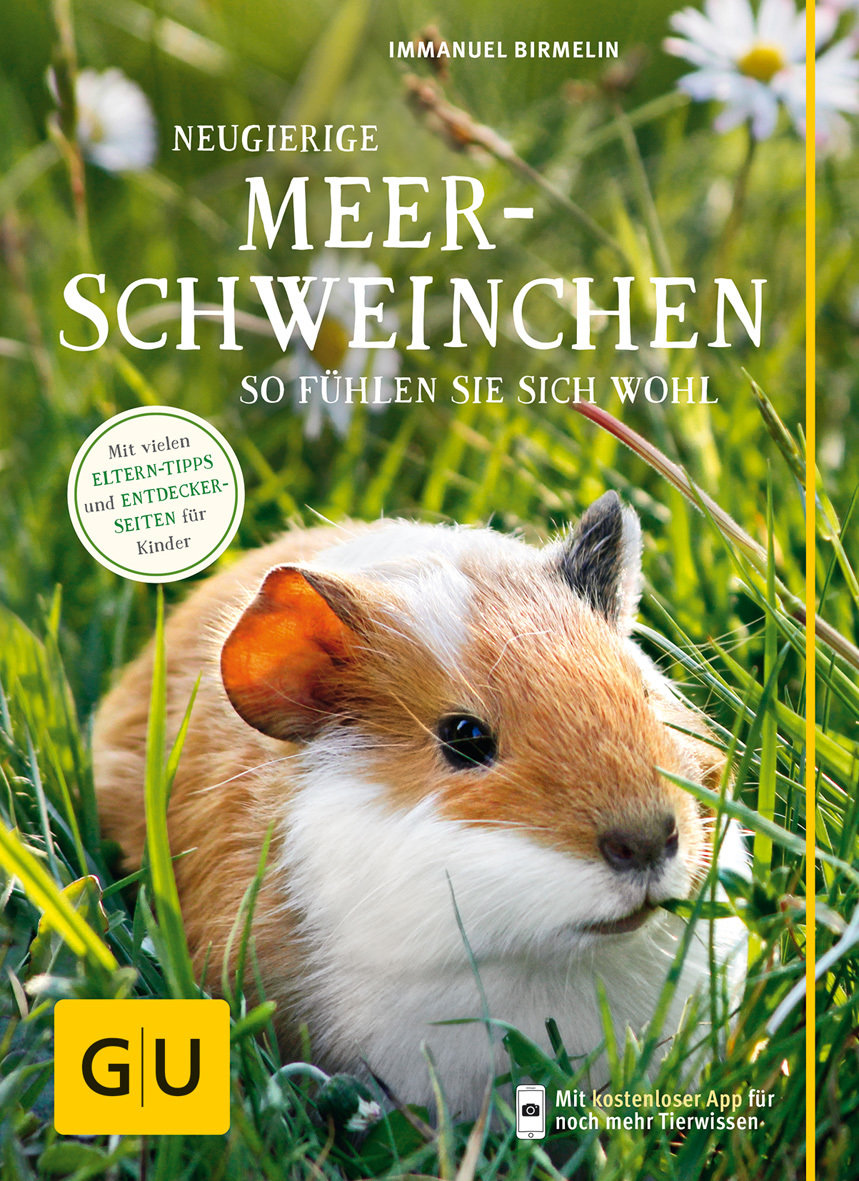
GU Curious guinea pigs - how they feel at home
This guide shows what guinea pigs need to feel comfortable in everyday family life - from the right equipment to meaningful activities. With tips for parents and discovery pages, knowledge is conveyed in a way that is easy to understand and suitable for everyday use.
Important features
Practical guinea pig guide from the GU small animals series
With quick start pages, infographics and discovery pages (observation tips/small experiments)
Contains tips for parents on how to handle children correctly with the animal
Extra: reference to the free GU Pet Plus app
Important advantages
Helps you to avoid husbandry mistakes so that guinea pigs show typical behavior and feel safe
Supports species-appropriate, family-friendly husbandry with clear step-by-step information
Promotes activity and observation - ideal if children are to be actively involvedGuinea pigs appear uncomplicated - but in order for them to remain really trusting and show their typical, lively behavior, they need suitable housing conditions. This is exactly where "Curious Guinea Pigs" from the GU Small Animals series comes in: The guide bundles knowledge about a fulfilling guinea pig life and makes it so easy to understand that it can be implemented immediately in everyday life.
The author, Dr. Immanuel Birmelin, a well-known behavioral researcher, shares his experiences from years of keeping and researching guinea pigs and explains what is important in practice. You will receive guidance on key topics such as equipment, care and activity - the very things that determine whether your animals feel safe and become active. The book is particularly family-friendly, with quick-start pages for a quick introduction and infographics that show important information at a glance. There are also discovery pages with observation tips and small ideas that encourage children (and adults) to understand guinea pigs better - instead of just "having" them. In addition, tips for parents help children to treat the animals correctly and respectfully.
Zoo-Roco tip
Guinea pigs are very much group animals: plan the housing from the outset so that your animals have social contact, opportunities to retreat and something to do. If you are unsure whether your enclosure, structure or feeding is suitable, make a note of your questions as you read - this way you can implement the tips in your home.
Guinea pigs - How to make them feel good all roundBlurbEverything beginners and real guinea pig fans need to know about keeping and the special needs of these lively rodents.needs of these lively rodents - so that animals and humans feel at home together under one roof.SummaryAll the basics and practical tips from the experts - for happy rodents
Guinea pigs are mainly cute, but boring? Not at all! These little South Americans like to go on voyages of discovery and are also really clever. They love company and prove to be real chatterboxes, squeaking and cooing to keep in constant contact with their conspecifics.
In the new, completely revised GU Animal Guide to Guinea Pigs, renowned behavioral scientist Dr. Immanuel Birmelin explains what these cute rodents need to feel completely at ease. Whether it's cage equipment, nutrition, care or health: you will learn everything you need to know about keeping guinea pigs in a species-appropriate way in a quick, clear and entertaining way. There are also numerous tips on how to keep the animals moving in an outdoor enclosure in the home, on the balcony or in the garden and provide plenty of variety in your guinea pigs' everyday lives.Sound expert knowledge:Renowned behaviorist Dr. Immanuel Birmelin explains everything you need to know about guinea pigs, their adorable quirks and how to keep and care for them appropriately.
Varied activities: With lots of tips for an exciting and healthy guinea pig life - indoors and outdoors.
Practical instructions: With easy-to-understand instructions and practical tips, the book helps you to better understand the needs of guinea pigs and provide them with a home in which they feel completely at ease.
Hamsters - How to make them feel good all roundBlurbEverything beginners and hamster fans need to know about keeping these small rodents and their special needs - so that animals and humans feel at home together under one roof Summary So your hamster feels completely at ease. Hamsters are real night owls: they only really come to life when it gets dark. Then they climb, burrow and of course "hamster" for all they're worth. In the new, completely revised GU hamster pet guide, you will learn what your hamster needs to feel completely at ease - how to acclimatize it step by step, what it likes and what keeps it healthy and how to satisfy its strong urge to move. You will find lots of ideas for exciting activities and find out how the hamster house and enclosure should look and be equipped to meet the needs of these small rodents. The guide is rounded off with tried and tested tips on selection and purchase, offspring, illnesses and veterinary emergencies. Behavioral scientist Peter Fritzsche also explains typical animal behavior. You can then test your hamster knowledge in the large online hamster quiz and be well prepared for the arrival of your new pet.Comprehensive hamster care: Find out how to keep your hamster happy and healthy from settling in to species-appropriate keeping.Creative activity ideas: Discover numerous ideas on how to encourage your nocturnal hamster's strong urge to move in a sensible and exciting way.Expert knowledge and practical tips: The guide offers practical tips on selection, care and emergencies as well as an online quiz to test and expand your hamster knowledge.
The Djungarian dwarf hamsterPhodopus sungorus from Zachrau AndreaBlurbThe Djungarian dwarf hamster is one of the smallest pets in the world and takes hearts by storm with its beady eyes, loyal gaze and soft fur. In this guide, you will learn all about the dwarf hamster's distribution and habitat, as well as everything you need to know about enclosure size, furnishings and food. Read everything you need to know to better understand the behaviour of these small rodents and how to prevent diseases.
Summary
The Djungarian dwarf hamster is one of the smallest pets in the world and takes hearts by storm with its beady eyes, loyal gaze and soft fur. In this guide by Andrea Zachrau, you will learn about the dwarf hamster's distribution and habitat as well as everything you need to know about enclosure size, furnishings and food. Read everything you need to know to better understand the behaviour of these small rodents and how to prevent diseases. Each volume offers you detailed, practical care instructions and you will find all the information you need to successfully breed your animals. All the important questions, from housing to furnishings, technical equipment, species-appropriate nutrition and disease prevention, are answered with numerous tricks and tips. Experienced, long-standing breeders reveal how you can encourage the animals to reproduce and raise the young in good health, all in full colour, generously illustrated and attractively designed - species by species.
Guinea pigs keeping, caring for and keeping activefrom Beck AngelaBlurbA life in pairs or in a small group, a nice enclosure and daily free run make guinea pigs happy. Optimum husbandry, a healthy diet and an understanding of their nature provide security in their daily life together. A wealth of play ideas provides variety and strengthens the relationship between humans and animals.
Everything that is important for species-appropriate keeping: from the selection and housing of guinea pigs to feeding, care and activity. The plus to the book: the free KOSMOS PLUS app with additional information and films.
Dwarf rabbitkeeping, caring for and keeping active from Beck AngelaBlurbPlenty of space to hop around, dig and make hooks, a life in pairs or in a group - that's what makes dwarf rabbits happy. Optimum husbandry, a healthy diet and an understanding of their nature provide security in their daily life together. Many play ideas provide variety and strengthen the relationship between humans and animals.
Everything that is important for species-appropriate keeping: from the selection and housing of dwarf rabbits to feeding, care and activity. The plus to the book: the free KOSMOS PLUS app with additional information and films.
Can my cat eat daisies? Is it safe if my Wellensitticham Ficus nibbles? Broken down by wild plants, house and garden plants, fodder plants, herbs, poisonous and medicinal plants are described with which pet animals may come into contact. With advice for individual species.
The Persian gerbil book Among the many gerbil species, Persian gerbils are something very special. Their graceful appearance and highly interesting behaviour make the "Persians", as they are affectionately called by many owners, fascinating pets. Due to their curiosity and open-mindedness towards humans, they are also real "heartbreakers" Unfortunately, there is hardly any literature on keeping and breeding these beady-eyed rodents. Author Anne Weber is editor-in-chief of the small mammal specialist magazine RODENTIA and summarises her many years of experience with the care and breeding of "Persians" here. Benefit from her practical tips and detailed husbandry descriptions so that you can enjoy your Persian gerbils right from the start! Contents:Biology,Acquisition,Husbandry,Food and water,Keeping healthy,Fun and games,Offspring
Rodentia 01 - Chinchillas
Guinea pigs in the gardenDegus and their relativesSee the most beautiful rats
Contents:
2 INTERN
3 EDITORIAL AND ADVISORY BOARD
5 INTERESTING FACTS
11 legal
12 Dates & TIPS
15 MY STORY: Refined guinea pig, by Marion Zeddies
16 PHOTOstory: Chinchillas, by Christian Brüggemann
23 KEEPING AND BREEDING: The keeping of chinchillas, by Anke Suchy
28 REISE: Amy and the chinchillas, by Dr Martina Raffel
34 KEEPING AND BREEDING: Chinchilla colour breeding, by Rebecca Schmidt
38 BIOLOGY: Chinchilla genetics, by Christian Brüggemann
39 POSTER: The Campbell dwarf hamster, by Christian Brüggemann
43 HEIMISCHE TIERWELT: The brown hare gives up the spoons, by Christian Brüggemann
46 REPORTAGE: Guinea pigs in the garden, by Iris Küster
51 KEEPING AND BREEDING: The breeding of Virginia opossums, by Dirk Fußbahn
54 REPORTAGE: See the most beautiful: Rat exhibitions in Germany, by Simone Grigat
58 KEEPING AND BREEDING: Together they are strong: spiny mice, by Frank Böhme & Peter Kneisel
61 KEEPING AND BREEDING: Degus and their relatives, by Sabine Gehrsitz
64 KEEPING AND BREEDING: Persian gerbil, by Michael Herting
66 ZOOLOGISCHE GÄRTEN: The Zoo of Small Mammals: Tierpark Berlin, by Christian Kern
70 SPRECHSTUNDE: Anaesthesia in small rodents and rabbits, by Andreas Küster
73 SCIENCE: What kind of house does the mouse want?, by Lars Lewejohann
76 MAUSKLICK
77 RAT & TAT
78 BOOK REVIEW
80 snickers' wild life: Wild Westphalia, by Christian Brüggemann
Rodentia 67 - I wish for a guinea pigHoliday care for rabbits & co.Fitness for coloured ratsDegu outdoor keepingContents:Cover story: "I wish for a hamster!"Small mammals for children? Rabbits and rodents are often purchased as "play and cuddly toys" for children under false assumptions. This has serious consequences for the animals, as they are often not housed and cared for appropriately and may even be sent to an animal shelter at some point. But there is another way! Depending on the age and sense of responsibility of the children, caring for small mammals can be a real enrichment for both sides. In this way, children and young people can learn to think and act responsibly when dealing with small mammals. Domesticated and exotic small mammals are kept and cared for in an animal-friendly way in school zoos, for example. Rabbits and rodents are also used in other social institutions as therapy animals for disabled or socially disadvantaged children. More on this in the next issue of RODENTIA - Nager & Co.EditorialWorth knowingTips and datesMy Story Hammy. Nomen es OmenKatharina LangTitle Of small animals and small people. Small mammals for childrenRalf Sistermann Title Learning with animals. Educational concept of the Herford school zooKathrin AretzTitle"Animal-assisted interventions" in a daycare centre. The free encounter and how trust can developRamona WagnersBiology Faeces in rabbits and other lagomorphs. Part 2David M. KüpferBehaviourNo more boredom in the rat's home. Play and activity ideas for coloured rats Stefanie Hotze Animal portraitThe Alpine marmot (Marmota marmota) Kathrin AretzAttitude The pensioner flat share in the garden. Outdoor keeping of older degus David Küpfer AttitudeHoliday care for rabbits and rodents. Animal-friendly accommodation during the holidays Kathrin AretzBiologyMale or female. Gender recognition in guinea pigs Sabrina HerrmannAnimal welfare Help for the little ones. "Rodent protection" and "Notmeerschweinchen.de e. V." Laura Kroker ServicesNutritionNutrition for young rabbits. Healthy nutrition for growing rabbits Viola SchillingerBookwormMedicineDental diseases in chinchillasDr Barbara Glöckner, veterinary surgeonConsultation with Prof Dr Michael FehrActive readerClassifieds/Internet forumsPreview Last but not least: Paula at full throttleEpisode 6: The escapeKathrin Aretz
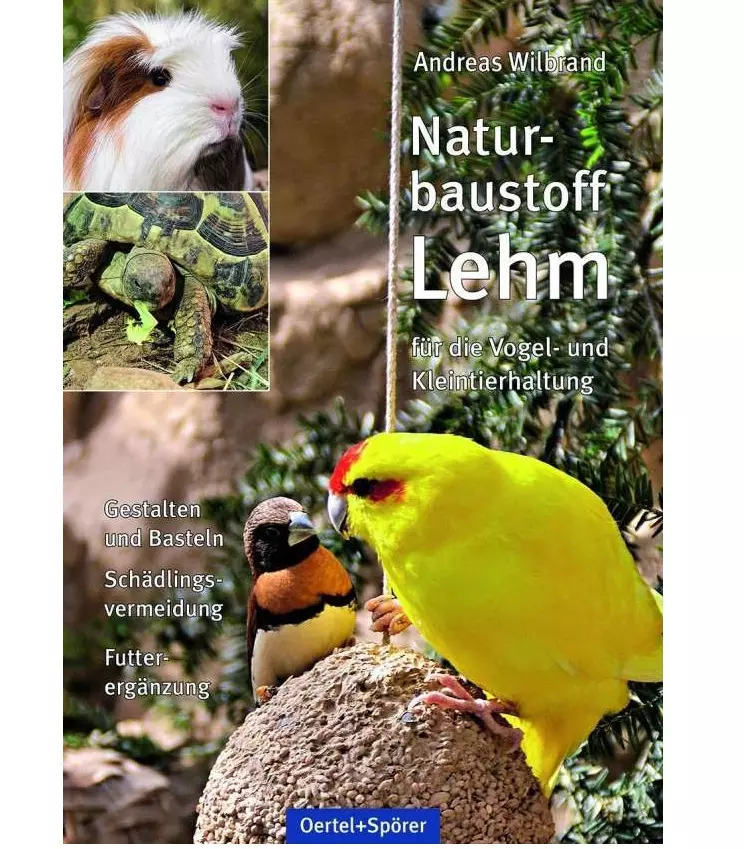
Natural building material clay for keeping birds and small animals
The first clay DIY book for animal lovers - a practical guide with simple instructions, new ideas and health tips!
Designing and crafting
Pest prevention
Feed supplement
Clay is the oldest and most universal building material in the world. The animal world has been demonstrating for millions of years how it can be used to build safe dwellings. And humans also utilised this building material a long time ago and even created huge and artistic buildings from it.
Clay can also be used perfectly for our pets. Building projects for animal housing of all kinds, landscaping in terrariums, soil construction for aquariums, pest control in aviaries, pigeon coops and stables - this book will show you how to do all this and what you need for it.Clay is not only a building material that can almost always be reused, but also contributes to the health of humans and animals. Clay binds toxins, displaces pests and is suitable as a fertiliser. For this reason, the health maintenance of our protégés through clay is also described in detail
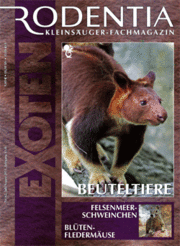
Rodentia 62 - Marsupials
Rock guinea pigFlower bats
Contents:
Cover story: Marsupials
They are among the most original and peculiar mammals and are known to almost everyone: Marsupials, which populate the Australian continent in numerous species. For most people, the kangaroo symbolises this subclass of mammals. However, there are many more species, not all of which have a distinct pouch. And marsupials are also found outside Australia: possums have conquered the American continent and can even be found in North America. However, all species have one thing in common: marsupial offspring are born at a very early stage of development and grow up outside their mother's body. Dear readers, you can find out more about the unique and multifaceted world of marsupials in the cover story of the next issue of RODENTIA Exotics.
In our latitudes, bats feed on insects, which they catch at night using echolocation. Among the leaf-nosed bats native to South and Central America, however, there are a wide variety of food specialists: numerous species prefer fruit, others hunt small vertebrates and frogs. The small subfamily of flower-nosed bats, on the other hand, specialises in nectar and pollen from particular flowering plants and pollinates the so-called bat flowers while feeding. In the next issue of RODENTIA exotics, our author Ralph Simon will report on the very special way of life of these flying mammals and the unique adaptations of bat flowers.
Expedition RODENTIA: Eight years ago, RODENTIA author Björn Jordan came across an interesting project on the internet: on a farm in north-eastern Brazil, rock guinea pigs (Kerodon rupestris) are being scientifically observed as part of a reintroduction project. As rock guinea pigs were also part of his own collection of animals, this marked the beginning of an intensive exchange aimed at learning more about the animals’ living conditions. In March of this year, Björn Jordan finally fulfilled a dream and visited the ‘Mokos’ in their natural habitat. He describes his impressions of this very special journey in the next issue of RODENTIA Exoten.
InternalMagazineDates & tipsPhoto storyInto the bagRalf SistermannBiology and keeping"Down under" in the garden. Bennett's wallabies as pets in GermanyJens SadewasserKeeping and breedingRarities with charm. Keeping and breeding of KowarisRalf SistermannBiology"Itjaritjari" and "Kakarratul". Bizarre riddles from the realm of marsupialsAnne WeberBiology and keepingAmerican marsupials. Biology, keeping and breedingChristian NeumannBiologySymbol of the marsupials. Kangaroo and wallabyJens SadewasserKeeping and breedingThe mask of Zorro. Keeping desert dormiceRalf SistermannPortraitThe Albino Coati (Nasua nasua) Ralf SistermannBehaviourBite or smash? Imitation and tradition in wild zebra mongooses (Mungos mungo) Dr. Corsin A. Müller & Dr. Michael A. CantReportageBeaver country. On the way to the beavers in EmslandDr. Andreas SchüringBiologyFlower bats. Hummingbirds of the night Dr. Ralph SimonAttitude Under the ground. From the construction of an outdoor enclosure for prairie dogsRalf SistermannHealthEye diseases in hedgehogsProf. Dr. Michael FehrExpedition RODENTIAVisiting the land of the rock guinea pigs. A journey to the north-east of BrazilBjörn JordanHealthWhen Skunk and Co. are ill. With exotic animals to the vetRalf SistermannBookwormClassifiedsSubscription & ServiceInternet forums for small mammal keepersPreviewAnimal & HonestLemmings, lemmings everywhereChristian Ehrlich
CHF 18.50
❅
❆
❅
❆
❅
❆
❅
❆
❅
❆
❅
❆
This website uses cookies to ensure the best experience possible. More information...