
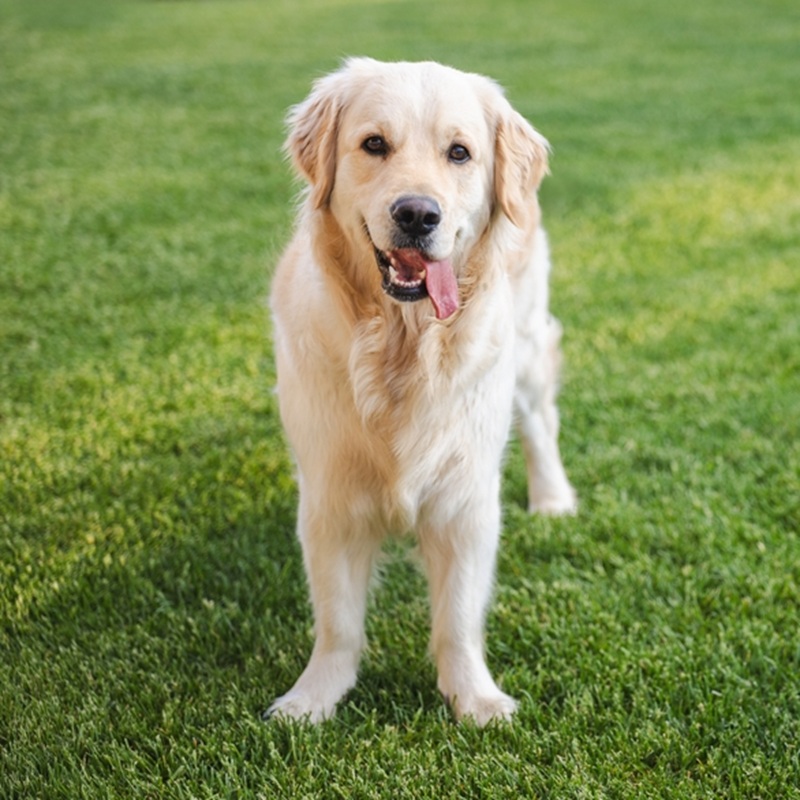


Golden Retriever
FCI standard number: 111
Country of origin: Great Britain
Classification: FCI Group 8 (retrievers, sniffer dogs, water dogs)
Height at withers bitch: 51-56 cm
Height at withers male: 56-61 cm
Weight bitch: approx. 30-36 kg
Weight male: approx. 34-40 kg
Coat colour: every shade from gold to cream
Coat texture: smooth or wavy, with good feathering; dense, water-repellent undercoat
Neck circumference: approx. 45-53 cm (guide value - measure individually!)
Product information "Golden Retriever"
The Golden Retriever
History of the Scottish Terrier
The Golden Retriever was bred in Great Britain as a reliable retriever (especially for hunting with a shotgun, also from the water) - hence its love of water, its "soft mouth" and its close co-operation with humans.
Appearance
Body shape: medium to large, strong and harmoniously built; symmetrical, ‘robust’ with a friendly expression.
Coat: medium length, with feathering (especially on legs, tail and chest) and a dense undercoat – making it weather-resistant, but also requiring more grooming.
Nature/character
Typical characteristics are: friendly, trusting, intelligent, docile and with a natural willingness to work ("will to please").
Many Golden Retrievers need a lot of activity (head + body) - otherwise they look for "jobs" for themselves (e.g. stealing, carrying, digging).
Grooming
Coat care: regular brushing (much more frequently when changing coat), as undercoat and feathering tend to become matted.
Ears & paws: Check ears (drooping ears + bathing = risk of inflammation), check paws/"feathers" after walks in the forest.
Health
With Golden Retrievers, particular attention should be paid to serious breeding (health examinations, transparency, suitable matings). Frequently discussed issues in the breed include hips/elbows, eyes, ears and a certain tendency to be overweight (especially with too many snacks + too little exercise). (General note; specific risks depend heavily on line/breeding/keeping).
Education
Usually easy to train because they are co-operative and people-oriented.
Important: early impulse control, "don't eat anything from the floor", calm behaviour when left alone, leash training.
Positive, clear rules + meaningful tasks are ideal: Retrieving, dummy work, mantrailing, obedience, rescue dog work - suits the breed very well.
What are the special features of this breed?
Retriever gene: Many like to carry things around, love search and retrieve tasks.
People-orientated: Closeness and co-operation are often more important than "being alone in the garden".
Water-loving + fur: Many like to bathe - drying their fur/checking their ears is part of this.
"Friendly to everything": Can be great, but is rather unsuitable depending on the goal (guard dog).
Suitable for first-time dog owners?
Often yes - but only if you have the time and desire for training and exercise.
Although a Golden is usually co-operative, it is not a sure-fire winner: young dogs can be wild, boisterous and very "food-motivated". If you consistently train them in a friendly manner and keep them busy every day, you will usually get a very pleasant companion.
Family dog or not?
Very often an excellent family dog because it is generally friendly, patient and social.
Important for families:
Children & dog must be supervised (resting areas, rules, no constant behaviour of the dog).
A Golden that is kept busy is usually relaxed - one that is underchallenged can become annoying.
Composition
Feeding recommendation
Technical details
Size information
Login
Suggested products

American Bulldog
The American BulldogHistory of the American BulldogHistorically used as a farm and working dog in the USA (e.g. as a "utility dog" around the farm/livestock).AppearanceBody shape: strong, muscular, athletic; in the UKC "Standard/Scott type" (more athletic) and "Bully/Johnson type" (bulkier) are described.Coat: short, easy to groom - but skin/"wrinkles" may need care.Nature/characterLoyal, courageous, often watchful/protective, at the same time friendly and family-oriented if well socialized. Early socialization is particularly important.GroomingCoat: little effort (short coat, occasional brushing).
Skin/folds: keep clean and dry (otherwise some dogs risk skin irritations/infections).HealthFrequently mentioned points (not every dog has this, but "keep an eye on it"):
Hip and elbow dysplasia.
Allergies / skin issues (incl. recurring skin/ear problems).
Rarer: ichthyosis (scaly, itchy skin; genetic).EducationNeeds consistent, fair leadership, clear rules and regular exercise. Learn well through positive reinforcement and benefit greatly from early socialization.What special features does this breed haveLots of strength + athleticism: can be "clownish", but is physically strong - training/leash management is worthwhile.
Protective/guarding nature: without socialization/training, insecurity can turn into problem behaviour.
Variety of types (bulky vs. athletic type).Suitable for first-time dog owners?Rather only to a limited extent. Many sources emphasize: training, experience and time are important because of strength, energy and protective behavior. With good guidance (dog school/trainer) it can work - "on the side" rather not.Family dog or not?Can be a good family dog if socialized early, trained consistently and given sufficient exercise/activity. It is described that well-trained and socialized dogs often get along with children and other pets.

English Pointer
The English PointerHistory of the English PointerThe pointer is a classic British pointing dog. According to the FCI, it originated in Great Britain; the Royal Kennel Club describes it as a traditional hunting dog, which was particularly prized in the 18th and 19th centuries for its stylish field work.AppearanceThe English Pointer is an athletic, elegant and at the same time powerful dog. The standard describes it as symmetrical, well-built and full of flowing lines - strong but not heavy. Typical features are the dry head, the slightly concave muzzle ("dish-face") and the athletic overall appearance.Body shape:
Athletic, deep-chested, dry-muscled and built for endurance. He is bred for long-distance searches in the field and accordingly shows a lot of gallop, resilience and reach.Coat:
The coat is easy to care for, short and functional. It protects well in everyday life, but does not require extensive grooming. Due to the short coat, the skin, ears and paws must nevertheless be checked regularly after long tours through the terrain.Nature/characterThe Pointer is considered friendly, balanced and dignified. In everyday life he is often gentle and people-oriented, but outdoors he is very passionate, fast and highly motivated to hunt. The PDSA describes him as mild in temperament, but with a high energy requirement; the VDH calls him a muscular athlete with strength and elegance.GroomingGrooming is simple; brushing once a week is usually sufficient. More important are exercise, nose work and sufficient free running opportunities in a safe environment. The Royal Kennel Club recommends more than 2 hours of exercise per day for the breed.HealthThe English Pointer is generally considered to be a fairly robust breed, but some issues are mentioned: Hip dysplasia, gastric torsion/GDV, progressive retinal atrophy, hypothyroidism, entropion, cataracts and in some cases Wobbler syndrome. The Pointer Club also refers to health surveys and breeding health plans for the breed.TrainingHe needs calm, fair and very consistent training. Recall, impulse control and good management of hunting behavior are particularly important. The Pointer is sensitive and learns well, but usually responds better to clear positive guidance than to harshness.What are the special features of this breed?Its most distinctive feature is its classic pointing work: the pointer searches over a wide area, picks up scent and "points", i.e. freezes in a typical posture in the direction of game. The Royal Kennel Club therefore calls it a prime example of a dog that is perfectly suited to its original task. In addition, he has an enormous willingness to run, a fine nose and a lot of style when moving.Suitable for first-time dog owners?Rather only to a limited extent. His nature is often friendly and not unnecessarily sharp, but his need for exercise and his hunting instinct are demanding. For beginners without experience with hunting-motivated, very active dogs, it is usually not an easy choice. For sporty, willing to learn people with good training and suitable exercise, it can work.Family dog or not?Yes, basically yes - in the right family. PDSA describes Pointers as mild and suitable for families with good socialization; the Royal Kennel Club classifies them as good companions. However, it is crucial that the family is really active and does not underchallenge the dog. They are usually less suitable for a quiet, less active everyday life.
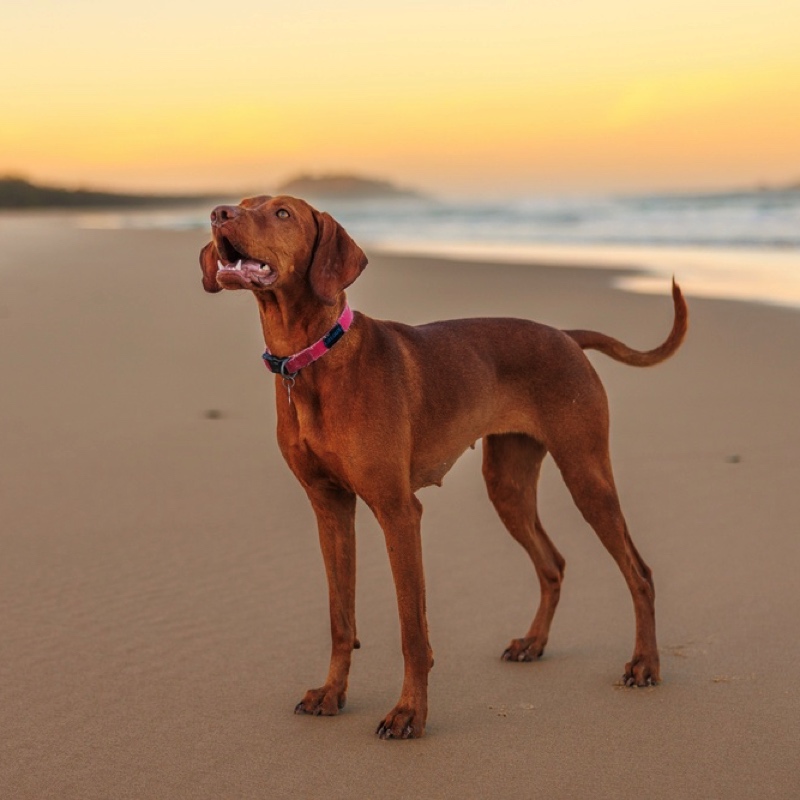
Vizsla
Magyar VizslaHistory of the Magyar VizslaThe Magyar Vizsla is an old Hungarian hunting dog whose roots go back a long way. It was bred as a versatile pointing dog for field, forest and water and was intended to work closely with humans. Its development was systematically continued in Hungary until today's elegant, powerful shorthaired Vizsla was established as an independent type.AppearanceBody shape: The Magyar Vizsla is a medium-sized, elegant hunting dog with a noble expression. Its build is rather light, dry and lean, yet powerful and capable. The body is slightly longer than tall, and overall it appears harmonious, athletic and enduring.Coat: The coat is short, dense and close to the body. It should be robust and functional, without feathering or longer sections as in long-haired hunting dogs. Typical is the uniform semmel yellow color, which makes the dog very distinctive.Nature/characterThe Magyar Vizsla is considered to be lively, friendly, balanced and very people-oriented. One of its most important characteristics is its pronounced willingness to make contact with people. They are usually sensitive, easy to train and eager to work. It does not tolerate harsh treatment well and should not be aggressive or shy.GroomingGrooming is generally uncomplicated. The short coat only needs regular brushing to remove loose hair and dirt. Ears, claws, teeth and paws should also be checked. Due to its activity and use in the field, it makes sense to check the dog for minor injuries, ticks or dirt after walks or hunting. HealthThe Magyar Vizsla is generally considered to be a robust and efficient breed. Nevertheless, attention should be paid to responsible breeding. As with many medium-sized to large hunting dogs, hip problems, eye problems or other hereditary diseases can play a role, depending on the line. Good weight management, appropriate exercise and careful rearing during growth are also important. TrainingTraining is often successful because the Magyar Vizsla works very closely with its owner and usually wants to please. He needs friendly, clear and consistent leadership without harshness. Early socialization, recall training and a sensible combination of exercise, nose work and mental activity are particularly important. An underchallenged Vizsla can quickly become restless or unbalanced. What are the special features of this breed?A special feature of this breed is its close bond with humans. The Magyar Vizsla is usually not a dog that just runs alongside, but actively seeks contact and cooperation. Added to this are its versatility as a hunting dog, its love of water and its eye-catching, uniform, semi-melange color. He combines elegance, sensitivity and a love of work in a very typical way.Suitable for first-time dog owners?Conditionally. A committed and well-informed first-time dog owner can get on well with a Magyar Vizsla if there is enough time, exercise and activity. However, the breed is not always easy because it is very sensitive, needs a lot of closeness and wants to be kept busy both physically and mentally. If you are looking for an uncomplicated dog with little activity, this breed is usually not the ideal choice. Family dog or not?Yes, in principle the Magyar Vizsla can be a very good family dog. They are usually friendly, affectionate and very attached to their humans. However, it is best suited to active families or households that have plenty of time for exercise, occupation and joint activities. Without sufficient exercise, this sensitive and hard-working dog often becomes unbalanced in everyday life.
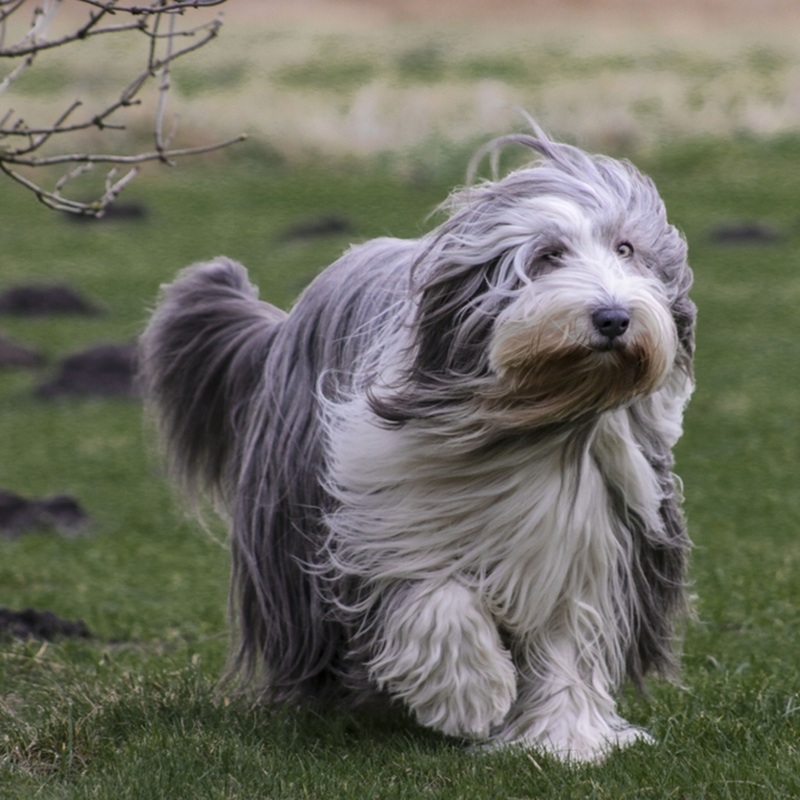
Bearded Collie
Bearded Collie profileHistory of the Bearded CollieThe Bearded Collie is a Scottish herding dog that was bred for driving and herding sheep and cattle. The FCI standard mentions that the modern type was strongly influenced by the breeding work of G. Olive Willison from around 1940.AppearanceBody shape: medium size, strong and agile, slightly longer rather than tall, with plenty of stamina for long distance work.
Coat: luxuriant, long and weatherproof, with typical "beard" and lots of hair on head and legs.Nature and characterYou will usually meet a cheerful, active and people-oriented dog that likes to "think along" and seeks a lot of closeness to its family. At the same time, he needs clear guidance and tasks so that his energy does not spill over into restlessness or herding activities in everyday life.GroomingThe coat requires regular grooming: brushing and combing several times a week helps to prevent felting (especially on the ears, armpits, "pants" and belly). Many owners also plan occasional grooming at the groomer, especially if the coat is worn very long.HealthIssues to keep an eye on include hip dysplasia and thyroid problems (hypothyroidism); eye diseases are also common, which is why health checks are advisable when breeding.TrainingThe Bearded Collie needs friendly consistency, clear rules and reward-based training. Early socialization, reliable everyday rituals and sufficient mental exercise (e.g. nose work, trick training, herding dog sports) are important so that the dog can also learn to be calm.What special features does this breed haveThe Bearded Collie is a real workhorse: he is very eager to move, learns quickly and prefers to stay "in a team" with you. At the same time, the lush coat is a trademark, but also the biggest grooming factor in everyday life.Suitable for first-time dog owners?Rather limited: If you are sporty, like to exercise and reliably schedule grooming, it may be a good fit. If you are looking for a "low-maintenance" dog or a quiet runner, it will be difficult. This dog wants to work.Family dog or not?In many cases, yes: with active families, the Bearded Collie is often very friendly and playful. However, you should make time for activity and grooming so that the dog remains balanced in everyday family life and calm at home.
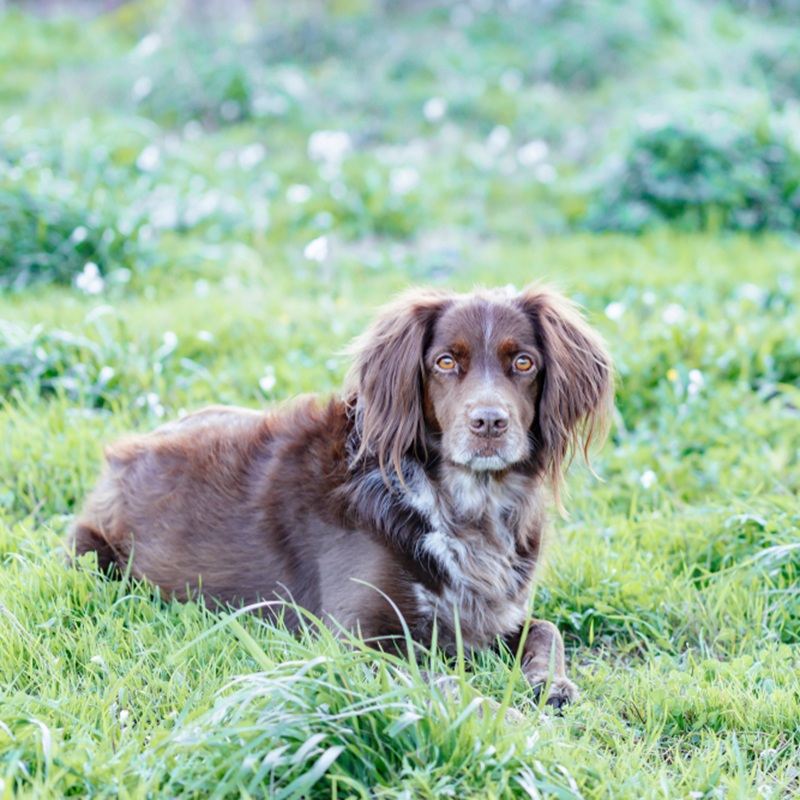
Large Münsterländer
The Great Munsterlander
History of the Scottish Terrier
According to the FCI, the historical development of the Grosser Münsterländer can be traced back to the white-coloured bird and pickling dog of the Middle Ages, via the rummaging and guard dog to the pointing dog of the 19th century. After the German Longhair Club excluded the black colour from breeding in 1909, the targeted pure breeding of the black and white longhair type began in 1919, from which the Grosse Münsterländer emerged. Scheduled breeding began in 1922.
Appearance
Body shape: The Großer Münsterländer is strong, muscular and yet sleekly built. It appears intelligent and noble, with a clean outline and well-balanced proportions. Body length and height at the withers should be as equal as possible.
Coat: The coat is long, dense and close-fitting. It is significantly longer and densely feathered, particularly on the forelegs and hind legs, the tail and the ears. On the head, the hair is short and close-fitting.
Nature/character
The most important characteristics include docility, docility and reliable hunting ability, especially after the shot. The character is lively, but not nervous. The VDH also describes him as lovable, eager to work and a pleasant family member if sufficiently exercised.
Grooming
The long coat needs regular brushing to prevent matting and to keep it clean. The feathering on the legs, tail and ears in particular should be groomed. As the breed likes to work in fields, woods and water, it is also important to check paws, ears and coat after outings. Overall, the breed is considered easy to care for if the coat is groomed consistently.
Health
The Grosser Münsterländer is generally regarded as a robust and hardy breed. Nevertheless, breeding organisations pay attention to genetic health, in particular HD and ED. Ears should also be checked regularly, as long-haired dogs with drooping ears are more likely to suffer from inflammation.
Education
Training should be consistent, fair and meaningful. The Grosser Münsterländer is intelligent, willing to learn and eager to work, but needs tasks that suit his abilities. Because he is a strong hunting dog, pure exercise is usually not enough; he also needs mental exercise and clear leadership.
What are the special features of this breed?
Its versatility as a hunting dog is special. According to the standard, it should be usable for work in the field, in the forest and in the water before and after the shot. Added to this are his close bond with humans, his great willingness to work and his love of water. He is therefore not a pure companion dog, but a dog with a clear task and working dog disposition.
Suitable for first-time dog owners?
Rather only to a limited extent. Although he is docile and docile, he is also a real hunting dog with a lot of energy, willingness to work and a need for meaningful exercise. It is more suitable for beginners if they are very active, well prepared and can really keep the dog busy.
Family dog or not?
Yes, basically yes, but not for every family. With sufficient exercise, he can be a friendly, patient and pleasant family dog. However, without suitable activity, his strong working and hunting instincts can quickly become a problem. He is therefore best suited to active families who do a lot with him and do not underchallenge him.
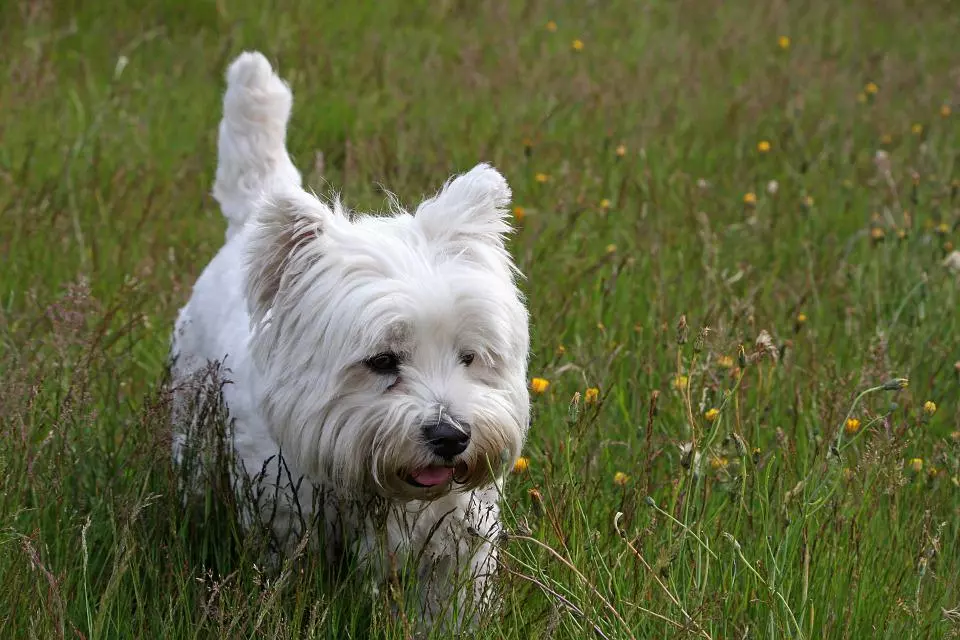
West Highland White Terrier
West Highland White Terrier - WestieHistoryThe West Highland White Terrier originates from Scotland or the western Highlands of Great Britain. It was bred as a small, robust hunting terrier for hunting burrows and predatory animals. The present name and recognised pure breeding developed at the beginning of the 20th century.AppearanceThe Westie is small, compact, strongly built and, despite its manageable size, appears very self-confident. Typical are the erect small ears, dark eyes, the straight back line and the dense white coat.
Body shape: Compact, strong, with a deep chest, straight back and well-muscled hindquarters.
Coat: Weather-resistant, hard, straight white coat with dense, soft undercoat.Nature/CharacterThe West Highland White Terrier is considered active, courageous, alert and self-confident. The FCI describes him as a small, lively, robust dog with clear self-esteem and alert expression. In everyday life, he is often perceived as friendly, affectionate and spirited, but remains a real terrier with a character of his own.GroomingThe coat requires regular grooming to keep it clean, loose and functional. Brushing alone is often not enough; with Westies, regular trimming of the harsh top coat is common to maintain the coat structure. There is also ear, claw and dental care. The white coat shows dirt more quickly than dark coats.HealthThe FCI standard does not specify a complete list of diseases, but requires functionally and clinically healthy breeding animals. In practice, reputable breeding, good skin and coat care and general precaution for small terriers are important. For a popular breed, you should pay attention to responsible breeding and veterinary supervision.Training The Westie is intelligent and able to learn, but not a blindly obedient dog. He needs friendly consistency, clear rules and early socialisation. Due to his terrier heritage, hunting instinct, stubbornness and rapid reactivity may play a role. Activity, varied walks and small mental tasks are good for him.What are the special characteristics of this breed?The combination of small format and big terrier character, the striking white, harsh coat and his robust, alert manner are remarkable. The Westie is often much more independent, courageous and pithy than his cute appearance would suggest. He is adaptable, but not just a decorative lapdog.Suitable for first-time dog owners?Yes, in certain cases. For committed beginners, a Westie can be quite suitable because he is handy, suitable for everyday life and people-oriented. However, you should like typical terrier behaviour and be prepared for consistent training. Anyone looking for a very easily controlled, always compliant dog may be surprised by a Westie. Family dog or not?Yes, mostly. The West Highland White Terrier can be a cheerful, affectionate and lively family dog if he is raised fairly and kept sufficiently occupied. Because of his robust nature and adaptability he often fits well into active households. It is important that children treat the dog with respect and that the dog is not underestimated just because of his cute appearance.
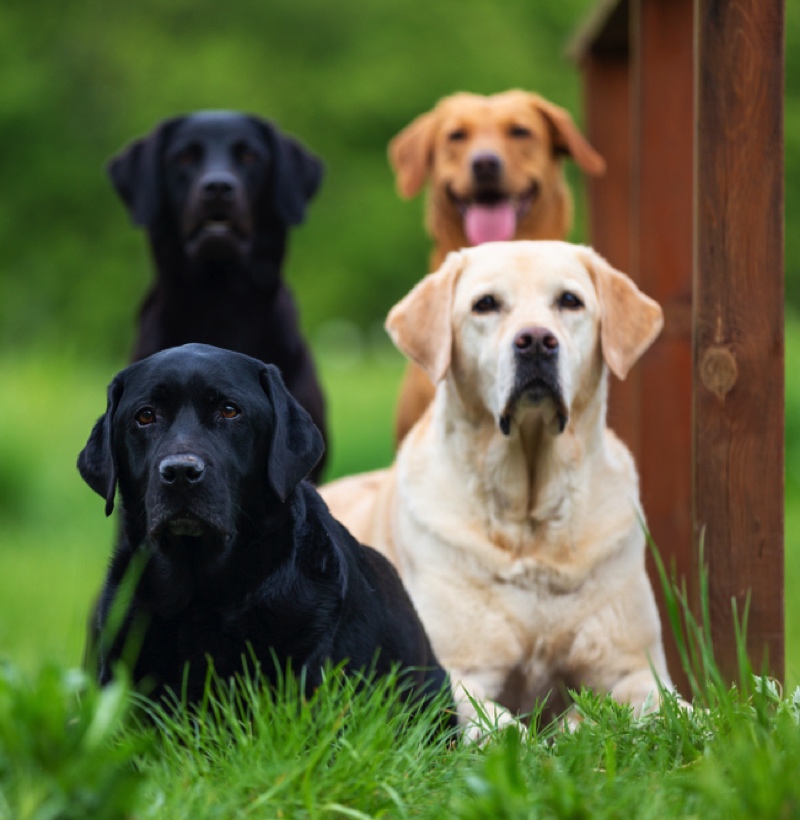
Labrador Retriever
The Labrador RetrieverHistoryThe Labrador Retriever originates from Great Britain, but its early ancestors came from the island of Newfoundland. There, similar dogs were used by fishermen and later as reliable retrieving dogs. In Great Britain, the breed was systematically developed further and finally consolidated as an independent retriever breed. To this day, the Labrador is one of the best-known hunting, family and working dogs in the world. AppearanceBody shape: The Labrador Retriever is strong, compact and harmoniously built. It has a broad skull, a deep chest and strong, well-muscled hindquarters. Another typical feature is the so-called otter tail, which is very thick at the base and gradually becomes thinner towards the tip. Overall, it appears athletic, robust and agile without appearing clumsy. Coat: The coat is short, dense and weatherproof. It should be hard to the touch and have a dense undercoat so that the dog remains efficient even in wet and cold conditions. The recognised colours are black, yellow and liver or chocolate brown. Nature/CharacterThe Labrador Retriever is considered friendly, even-tempered, people-orientated and eager to work. They are particularly known for their strong willingness to co-operate with people. Many Labradors are attentive, eager to learn and resilient without appearing sharp or suspicious. It is this mixture of good-naturedness, activity and willingness to co-operate that makes the breed so popular. GroomingGrooming is generally uncomplicated. Regular brushing helps to remove loose hair and keep the coat clean. Labradors often shed much more during the shedding season, so more frequent brushing is advisable. In addition, ears, claws, teeth and paws should be checked regularly. Due to their love of water and activity, it is also worth checking their skin and ears after trips into the water or off-road. HealthThe Labrador Retriever is generally regarded as a robust and capable breed. Nevertheless, attention should be paid to responsible breeding. As with many medium-sized to large dogs, hip dysplasia, elbow dysplasia, eye problems and a tendency to be overweight can play a role. Labradors in particular often eat with a big appetite, which is why exercise and weight management are particularly important.TrainingThe Labrador Retriever is usually easy to train because it enjoys working with its owner. He learns quickly and usually responds well to friendly, clear and consistent leadership. Early socialisation, impulse control and a sensible combination of exercise, nose work and mental work are important. Despite his friendly nature, he should not be underestimated, as an underchallenged Labrador can become very tempestuous and imaginative. What special features does this breed have?What is special about this breed is the combination of a love of work, friendliness and high suitability for everyday life. The Labrador Retriever is not only a popular family dog, but also a versatile hunting, assistance, therapy and rescue dog. Its great love of retrieving, love of water and strong bond with people are typical. It is precisely this so-called Will to Please that makes it particularly easy to handle in many areas. Suitable for first-time dog owners?Yes, in principle the Labrador Retriever is often very suitable for first-time dog owners. It is usually friendly, co-operative and easy to train. However, its urge to move, its strength and its tendency to be overweight should not be underestimated. Those who are prepared to invest time in training, activity and consistent everyday rules will often find it to be a very pleasant beginner's dog. Family dog or not?Yes, the Labrador Retriever is basically a very good family dog. It is usually friendly, affectionate and resilient and enjoys living closely with its people. It is particularly well suited to families or households who enjoy joint exercise, activity and clear leadership. Its friendly nature makes it very popular, but it still needs training and suitable exercise.

Alaskan Malmute
The Alaskan MalmuteHistory of the MalmuteOriginally an Arctic draught dog for heavy loads; the FCI standard describes it as one of the oldest Arctic sled dog breeds.AppearanceBody shape: strong, heavy-boned, very muscular - designed for pulling power and endurance.Coat: weatherproof, very dense double coat (lots of undercoat).Temperament/characterPeople-oriented and friendly, not a "one-man dog" according to the standard, loyal and dignified.
At the same time often independent/ wilful and can be dominant towards other dogs.GroomingLots of coat, lots of hair: regular brushing, much more frequently in shedding phases (undercoat!).
Do not shear/shave (double coat fulfills protective functions; instead brush out/loosen undercoat).HealthFrequently monitored (depending on the line/individual):
Hip and elbow dysplasia
Hereditary polyneuropathy (AMPN) - there is a genetic test (UC Davis).
Other frequently mentioned topics: e.g. eye problems (cataract), thyroid gland (hypothyroidism).EducationNeeds early, consistent and calm training, preferably reward-based - and very good socialization.
Safe management is important: Malamutes love pulling, running, digging, "roaming" → escape-proof garden/leash/drag line.What special features does this breed haveUrge to pull and work (pulling sports, hiking with weight, canicross/skijoring-like activities - adapted to training).
Strong body + independence: a dog that "can do something" physically - and this is noticeable in everyday life.
High coat expenditure incl. heavy shedding.Suitable for first-time dog owners?Rather not ideal. Reason: a lot of strength, independence, sometimes dog dominance and high management/training requirements.
(It works - but usually better with the support of a dog school/trainer and breed-appropriate exercise).Family dog or not?Can fit into a family because it is often friendly and loyal to people.
But: because of its size/strength and sometimes difficult behavior towards other dogs, it is more of a family dog for active, structured households (children should be dog-experienced/respectful, supervision of small children).

English Pointer
The English PointerHistory of the English PointerThe pointer is a classic British pointing dog. According to the FCI, it originated in Great Britain; the Royal Kennel Club describes it as a traditional hunting dog, which was particularly prized in the 18th and 19th centuries for its stylish field work.AppearanceThe English Pointer is an athletic, elegant and at the same time powerful dog. The standard describes it as symmetrical, well-built and full of flowing lines - strong but not heavy. Typical features are the dry head, the slightly concave muzzle ("dish-face") and the athletic overall appearance.Body shape:
Athletic, deep-chested, dry-muscled and built for endurance. He is bred for long-distance searches in the field and accordingly shows a lot of gallop, resilience and reach.Coat:
The coat is easy to care for, short and functional. It protects well in everyday life, but does not require extensive grooming. Due to the short coat, the skin, ears and paws must nevertheless be checked regularly after long tours through the terrain.Nature/characterThe Pointer is considered friendly, balanced and dignified. In everyday life he is often gentle and people-oriented, but outdoors he is very passionate, fast and highly motivated to hunt. The PDSA describes him as mild in temperament, but with a high energy requirement; the VDH calls him a muscular athlete with strength and elegance.GroomingGrooming is simple; brushing once a week is usually sufficient. More important are exercise, nose work and sufficient free running opportunities in a safe environment. The Royal Kennel Club recommends more than 2 hours of exercise per day for the breed.HealthThe English Pointer is generally considered to be a fairly robust breed, but some issues are mentioned: Hip dysplasia, gastric torsion/GDV, progressive retinal atrophy, hypothyroidism, entropion, cataracts and in some cases Wobbler syndrome. The Pointer Club also refers to health surveys and breeding health plans for the breed.TrainingHe needs calm, fair and very consistent training. Recall, impulse control and good management of hunting behavior are particularly important. The Pointer is sensitive and learns well, but usually responds better to clear positive guidance than to harshness.What are the special features of this breed?Its most distinctive feature is its classic pointing work: the pointer searches over a wide area, picks up scent and "points", i.e. freezes in a typical posture in the direction of game. The Royal Kennel Club therefore calls it a prime example of a dog that is perfectly suited to its original task. In addition, he has an enormous willingness to run, a fine nose and a lot of style when moving.Suitable for first-time dog owners?Rather only to a limited extent. His nature is often friendly and not unnecessarily sharp, but his need for exercise and his hunting instinct are demanding. For beginners without experience with hunting-motivated, very active dogs, it is usually not an easy choice. For sporty, willing to learn people with good training and suitable exercise, it can work.Family dog or not?Yes, basically yes - in the right family. PDSA describes Pointers as mild and suitable for families with good socialization; the Royal Kennel Club classifies them as good companions. However, it is crucial that the family is really active and does not underchallenge the dog. They are usually less suitable for a quiet, less active everyday life.
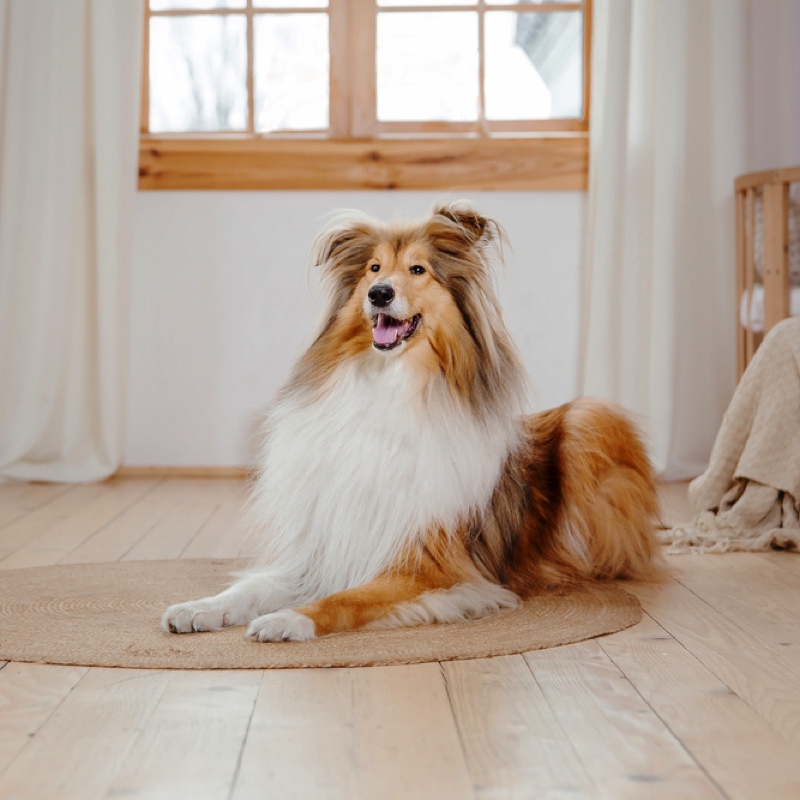
Collie
The Collie
HistoryThe Long-haired Collie, also known as the Long-haired Scottish Sheepdog, originates from Great Britain and was used as a shepherd and farm dog for a long time. According to the FCI, the Long-haired and Short-haired Collie developed from the same origin, presumably also under the influence of dogs brought to Scotland by the Romans. The Long-haired Collie is considered a refined form of the original working dog of the Scottish shepherds and later became very popular as a companion and family dog.AppearanceBody shape: The Long-haired Collie is harmonious, elegant and powerfully built without appearing clumsy or coarse. His expression is of particular importance and is created by the balanced head shape, the eyes, the ears and the overall dignified appearance. The body should appear capable of working and show flowing, effortless movements.Coat: The coat is one of the most striking characteristics of the breed. It is very dense and consists of a hard, straight outer coat and a soft undercoat. Typical are the lush mane, the ruff and the well-coated tail. The recognised colours are sable and white, tricolour and blue merle, each with the typical Collie markings.Nature/CharacterThe Long-haired Collie is considered friendly, cheerful, sensitive and people-orientated. According to the standard, it should never be nervous or aggressive. Many representatives of the breed are attentive, eager to learn and very closely bonded to their family. This mixture of gentleness, intelligence and alertness makes the Long-haired Collie a very pleasant companion and family dog.GroomingGrooming is necessary on a regular basis, but is usually easy to do. The dense coat should be brushed thoroughly to remove loose hair and prevent matting. The VDH points out that brushing too often is not advisable as too much undercoat is lost. However, daily brushing is advisable during the shedding period. In addition, ears, claws, teeth and paws should be checked regularly.HealthThe Long-haired Collie is generally considered a robust breed, but care should be taken to ensure responsible breeding. Among other things, eye issues and genetic characteristics play a role in the breed, and attention should also be paid to general health care, good weight management and a reputable breeding base. EducationTraining is often successful because the Long-haired Collie is intelligent, sensitive and people-orientated. As a rule, they respond particularly well to friendly, clear and consistent leadership. Harsh methods do not suit this sensitive breed. Early socialisation, loving consistency and mental activity help to make a confident dog that is suitable for everyday life. What are the special features of this breed?What is special about this breed is the combination of elegance, gentleness and a working past. The Long-haired Collie often appears very noble and refined, but at the same time has the roots of a true shepherd dog. Its friendly expression, splendid coat and close bond with people are typical. Many dogs of this breed are sensitive and react strongly to the mood of their environment.Suitable for first-time dog owners?Yes, the Long-haired Collie is often well suited to first-time dog owners. They are usually friendly, eager to learn and co-operative. However, it is important that you take his sensitivity seriously, train him lovingly and consistently and do not underestimate the amount of grooming required for his coat. He usually gets on very well in a calm, reliable home. Family dog or not?Yes, the Long-haired Collie is generally a very good family dog. He likes to live closely with his people, is considered friendly and adaptable and usually feels very comfortable in a harmonious family environment. They are particularly well suited to households that offer them closeness, exercise and friendly, clear leadership.
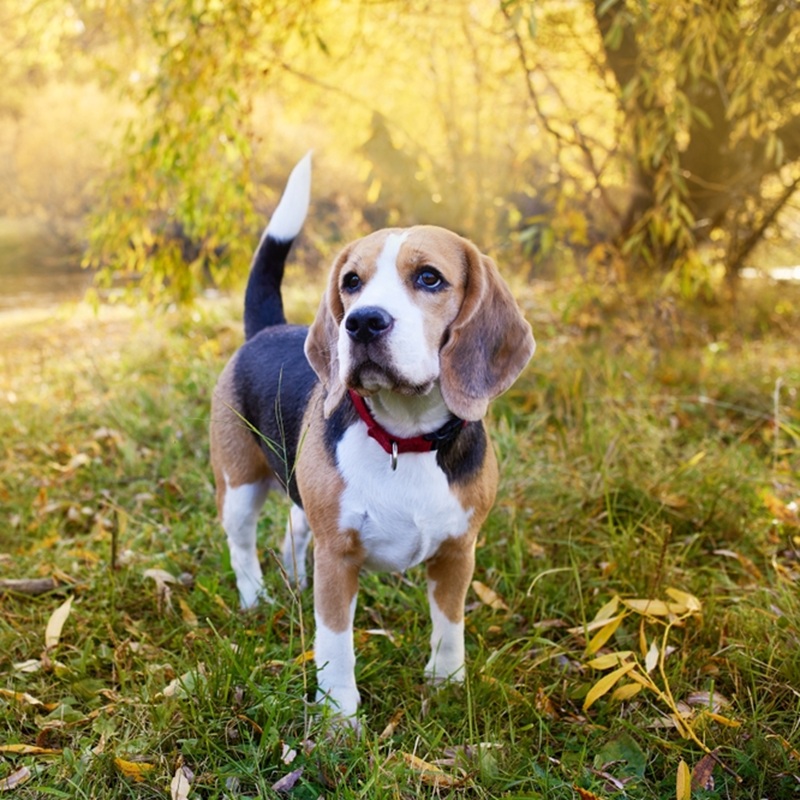
Beagle
Beagle profileHistory of the BeagleThe FCI standard describes the Beagle as a running dog from Great Britain, which traditionally hunts in packs and mainly follows the hare hunt over its nose.AppearanceBody shape:
You get a strong, compact running dog that looks athletic without appearing coarse.
Coat:
Short-haired, dense and practical in everyday life, as it sheds dirt and weather well.
Temperament and characterThe Beagle is considered cheerful, attentive, intelligent and friendly, with no signs of aggression or fearfulness, although the nose often leads the way in everyday life.GroomingThey usually require little grooming (regular brushing is sufficient), but their ears, claws and teeth should be checked consistently, as the drooping ears can require care.
Health
Frequently mentioned conditions include hypothyroidism, allergies, epilepsy and back problems such as IVDD; ear problems are also an issue that you should keep an eye on.TrainingThe best way to achieve your goal with Beagles is through calm consistency, clear rules and reward training. Realistically, management often helps with recall (drag line, secured free-running zones) because smells can be a strong motivator.What special features does this breed haveThe Beagle is a pronounced "nose dog" and likes to work persistently on tracks. At the same time, it can have a clear "voice", which is important in noisy living situations.Suitable for first-time dog owners?Yes, often yes, if you have patience, consistency and a desire for nose work and do not expect the recall to be a matter of course.Family dog or not?In many cases, yes: Beagles are usually friendly and social, fit in well with active families, but need clear rules and enough activity to keep them relaxed in everyday life.
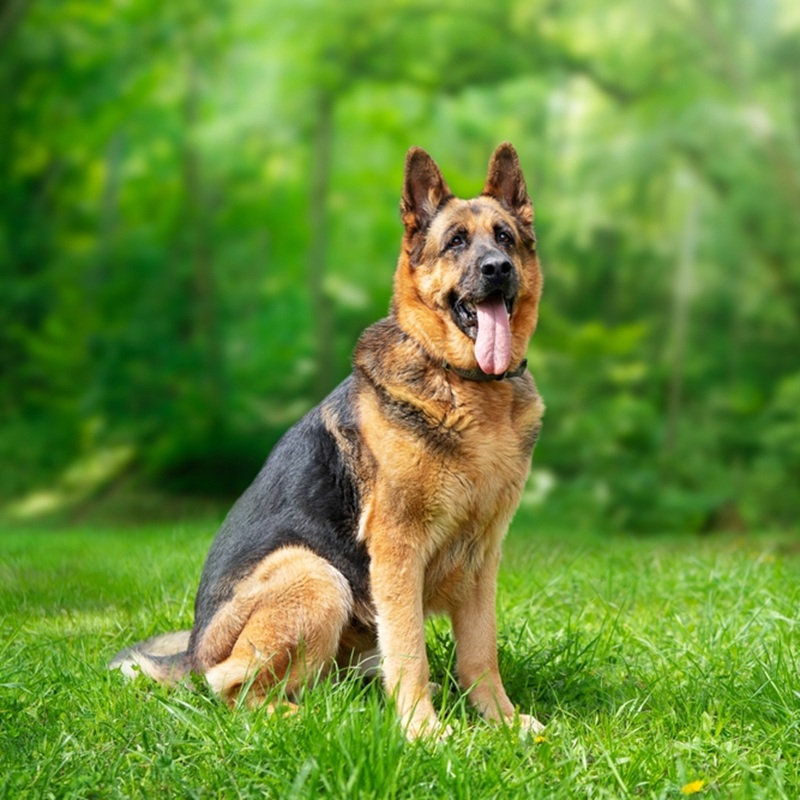
German Shepherd Dog
German Shepherd DogHistory of the Scottish TerrierScheduled breeding began in 1899 after the founding of the German Shepherd Dog Association. The breed was developed from Central German and Southern German herding dog breeds with the aim of creating a powerful working dog.AppearanceBuild: medium-sized, slightly elongated, sturdy, well-muscled and generally solidly built. Typical features include the wedge-shaped head, erect ears and the ground-covering, springy gait when trotting.Coat:
The coat is functional, weatherproof and has an undercoat. It provides good protection against cold and wet conditions, but sheds significantly, particularly during the moulting season. The long-haired variety usually requires slightly more grooming than the short-haired variety.Nature/characterAccording to the standard, the German Shepherd Dog should be balanced, steady of nerve, self-confident, attentive and easy to handle. Properly bred and well socialised, it is loyal, willing to learn and very closely bonded to its owner. At the same time, it is not a dog that just runs "on the side" - it needs tasks, structure and mental exercise.GroomingThe coat should be brushed regularly, much more frequently when shedding. Claw, ear and dental care are also important. Even more important than grooming, however, is daily mental and physical exercise for German Shepherds. Sport, nose work, obedience, tracking or other tasks are often very suitable.HealthLike many larger breeds, the German Shepherd Dog can be susceptible to hip dysplasia (HD) and elbow dysplasia (ED); the breed is also tested for degenerative myelopathy (DM). When selecting a puppy, serious breeding, proof of the health of the parents and a moderate, non-stressful upbringing are particularly important.EducationThe German Shepherd Dog is very capable of learning, but is also sensitive to leadership errors. It needs calm, clear, fair and consistent training without harshness. Early socialisation, environmental training, impulse control and reliable everyday rules are crucial. With good guidance, he is often extremely trainable.What are the special features of this breed?The German Shepherd is a classic working and utility dog. Its great strength is its combination of intelligence, willingness to bond, eagerness to learn and willingness to work. This is exactly what makes him so versatile - but also demanding. He usually needs more than just walks: he wants to think, work and be kept busy in a meaningful way. Without suitable exercise, he can quickly develop undesirable behaviour.Suitable for first-time dog owners?Only conditionally. For committed beginners with a lot of time, willingness to learn, dog school and a clear everyday concept, it can work. For people who are looking for an uncomplicated "follower", the German Shepherd is usually not the best choice. They are less forgiving of training mistakes than many less complicated family breeds.Family dog or not?Yes, but not automatically. In the right family, he can be a very loyal, watchful and child-loving dog. The prerequisites are good breeding, early socialisation, clear leadership and sufficient activity. On the other hand, he often becomes difficult in a low-stimulus, underchallenged or inconsistent environment. It is best suited to active people who really enjoy training and working with the dog.