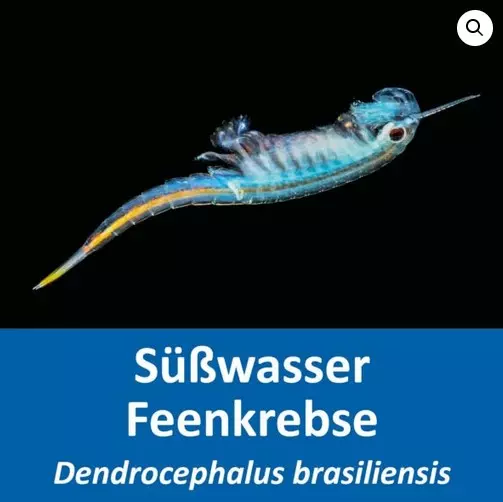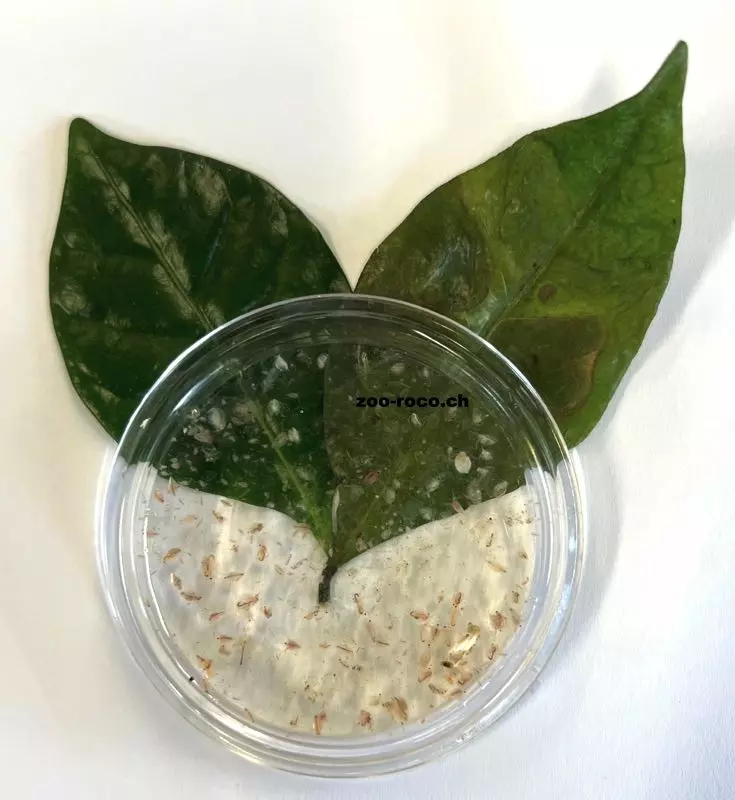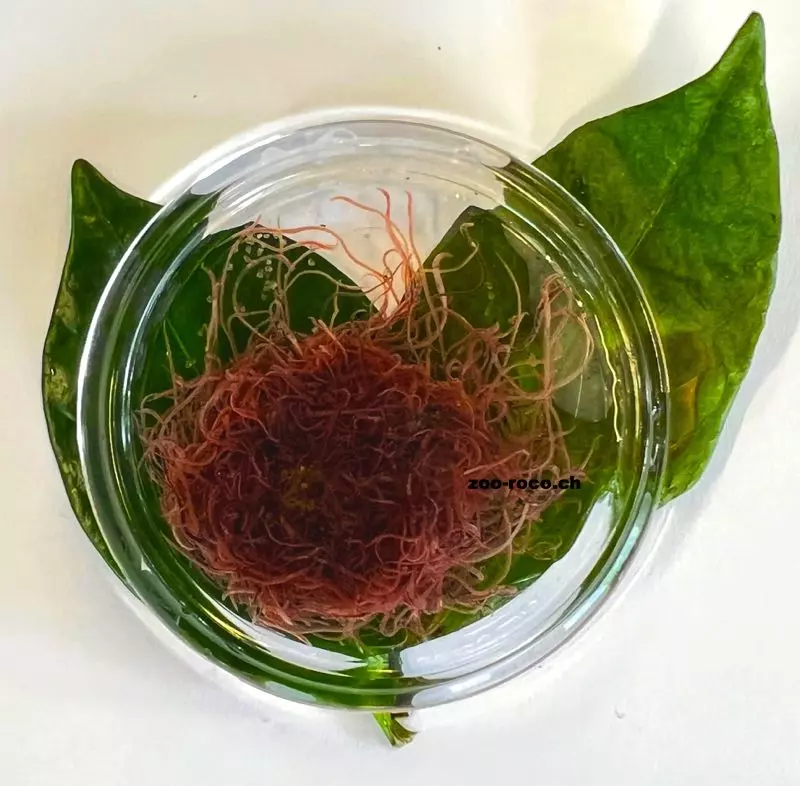
The mini crayfish are on the loose! Freshwater fairy crayfish are the survival artists of our time
Facts: Siam fairy crayfish Streptocephalus siamensis are primeval crayfish with a fascinating swimming style. These animals are rather bluish with an orange tail fan. In the aquarium they remain appealingly small at 2 cm, but can certainly become larger and more vividly coloured with plenty of sun and temperatures around 30 °C. Size: max. 2.5 cm Temperature: 22 - 28 °C Life expectancy: max. 3 months Food: primeval crab food
Tip: A preparation with fairy crab cysts should be used several times after drying, as nauplii do not always hatch immediately from all cysts.
Composition
Feeding recommendation
Technical details
Size information
0 of 0 reviews
Give us a rating!
Share your experience with the product with other customers.
Login
No reviews found. Go ahead and share your findings with others.
The Mini crabs are going! The freshwater fairy shrimp (Dendrocephalus brasiliensis)
The freshwater fairy shrimp Dendrocephalus brasiliensis is from Brasil and breed as life food for ornamental fish.from Thailandis is very well suited for aquarium at temperatures around 24 - 28 °C. Keeping is optimal in a small aquarium with soft water.
They grow fast and they can have a size of 1 cm after 2 weeks. Then the female start to lay eggs.
Facts: Fairy shrimp among to the anostraca, have a fascinating floating manner and are even a nutritious feed for fish.
Max. size: 30 mm
Life expectancy: max. 3 - 4 months
Cysts per female: max. 5000
Temperature: 22 - 30 °C (optimal 24 - 28 °C)
pH Wert: 6,0 - 9,0 (optimal 6,5 - 7,5)
Expected fairy shrimp amount: at least 100 or 1.000 per bag
Aquarium starting with 2 liters
Tip: An approach with fairy shrimp cysts should be used multiple times by respective drying because at the first time not all nauplii slip out.
The Mini crabs are going! Fairy shrimps (Branchinella thailandensis)
The freshwater fairy shrimp Branchinella thailandensis from Thailandis is very well suited for aquarium at temperatures around 23 - 25 °C. Keeping is optimal in a small aquarium with soft water. The small larvae slit out from eggs (cysts) within one or three days and life with good care about 6 to 12 weeks.
Facts: Fairy shrimp among to the anostraca, have a fascinating floating manner and are even a nutritious feed for fish.
Max. size: 35 mm
Life expectancy: max. 3 months
Cysts per female: max. 5000
Temperature: 20 - 28 °C (optimal 23 - 25 °C)
pH value: 6,0 - 9,0 (optimal 6,5 - 7,5)
Expected fairy shrimp amount: at least 100 or 1.000 per bag
Aquarium starting with 2 liters
Tip: An approach with fairy shrimp cysts should be used multiple times by respective drying because at the first time not all nauplii slip out.
Essigaelchen - live food for small ornamental fish
Vinegar lakes are suitable for any type of fry.But especially fish with small mouths such as small guppies, characins or danios, this is an optimal starter food.
Suitable for the smallest fryFast growth and vital fish – due to high nutrient contentFast reproduction of the vinegar liceswim freely and live long in the aquariumvery easy maintenance, as breeding stock can stand for several months
The batch contains:
200 ml sealable PET culture bottleVery many acetic lattices in about 150 ml of culture liquid (enough to quickly make 1 liter of mixtures yourself)Cultivation instructionsHow do I grow and feed the vinegar lice?
Mix the fruit vinegar/apple cider vinegar with water in a 1:1 ratioa piece of sugar cube and a little dry yeast serve as food (already included in the breeding mixture).
Lid may only rest on the opening, because the acetic lice need oxygen.For feeding, carefully add the culture liquid with the
Essigälchen up to about 3 cm below the edge in a
Schnapps bottle/Erlenmeyer flask with a thin neck. Insert cable ties and
filter floss so that the floss is just covered by the liquid.
is covered. Fill with normal water and wait 1 day.Aspirate the vinegar dish with the pipette over the absorbent cotton and feed directly.Put liquid from the liquor bottle back into the breeding bottle.
Gratiola viscidula
Gratiola Viscidula is a rare species, almost a rarity. It is suitable as a foreground or middle ground plant. Properly cared for, it can form a compact and dense carpet of grass.Difficulty of growing: easyLight requirements: mediumCO₂ requirements: lowOutgrown plant height: 10-20 cm, usually smaller in aquariumGrowth: slowTemperature: 18-27°CPlacement in aquarium: secondary and foregroundOrigin: North AmericaCup diameter: 6 cmGratiola Viscidula is a plant that was introduced into the aquarium hobby relatively recently. The species is native to North America, particularly the east coast of the United States. In the wild it is found from Florida north to Ohio and west to Missouri. It is one of seventeen North American Gratiola species and a member of the Plantaginaceae - goby family. It is related to the European Gratiola officinalis.
In its natural habitat, Gratiola viscidula is a perennial marsh plant. It inhabits moist, sunny or semi-shaded sites. It is found on the banks of streams, in ditches, ponds and marshes. In nature, it blooms from June to October.This species is not commonly found in the aquarium trade, making it a rarity.It is a compact stem plant that forms dense rows or bright green lawns. It is suitable for both front ground and background. It has small, narrow leaves that appear spiny and look a little like conifers. The individual stems of the plant are thick, stiff and 1.5-2 cm wide. Because it grows in a temperate climate zone, it can be grown emersed in water bodies, ponds or pools outdoors. It tolerates a pH of 5.5-7.5.
The plant is traditionally planted in the substrate. Gratiola Viscidula does not require CO₂ addition and likes regular water changes and fertilization.Planting: The plant must be removed from the cup and thoroughly rinsed from the gel under running water. This is best done by placing the plant in a container of lukewarm water. Most of the gel will then fall off by itself. Divide the contents of the cup into 1-2 cm lumps and then place them at a small distance on the selected items.
Ammania sp. "Bonsai
Ammania sp. "Bonsai" is a light green stem plant for the middle ground of your aquarium.Difficulty of growing: mediumLight requirements: mediumCO₂ requirements: mediumGrown plant height: up to 20 cmGrowth rate: SlowTemperature: 22-28°CPlacement in aquarium: second levelOrigin: cultivated varietyCup diameter: 6 cmAmmania sp. "Bonsai" is a lush green, decorative stem plant for the second level of the aquarium. It is also called Rotala Bonsai. It is a distinctive miniature variety that cannot be confused with any other. It is quite rare in aquariums. It is a cultivar or breeding variety, which means that it does not occur in nature. Ammania sp. 'Bonsai' has straight, sparsely branched, thick stems and round leaves.It is generally a small plant, but it grows very nicely, sometimes even without pruning. The plant looks best when planted in a group. So place at least 5-7 cuttings next to each other to achieve the desired visual effect. It has an ideal size for shrimp tanks and nanoaquariums.Ammania does not require special fertilization, but it is good to provide it with a rich substrate containing micro and macro elements. The plant has no great water requirements and grows in both soft and hard water with a pH of 6 to 7.5, but a fertile substrate, CO₂ fertilization and liquid fertilizers are recommended for full coloration. It requires regular administration of macro and micro nutrients, especially iron. It does not have high requirements for light, but in intense light the tips turn red.Planting: The plant must be removed from the cup and thoroughly rinsed from the gel under running water. This is best done by placing the plant in a container of lukewarm water. Most of the gel will then fall off by itself. Divide the contents of the cup into 1-2 cm lumps and then place them at a small distance on the selected items.
Live water fleas - Daphnia pulex
Can also be used for swimming ponds or biotopes to control floating algae.
Live food is the most natural way of feeding ornamental fish. No other food is as complete.
With all essential vitamins, minerals and nutrientsStimulates the hunting instinctpromotes vitality
Optimum storage temperature: 5-15°C
Shelf life approx. 7 days
Even with the greatest care, food animals may die due to temperature fluctuations or incalculable events. We accept no liability for this.
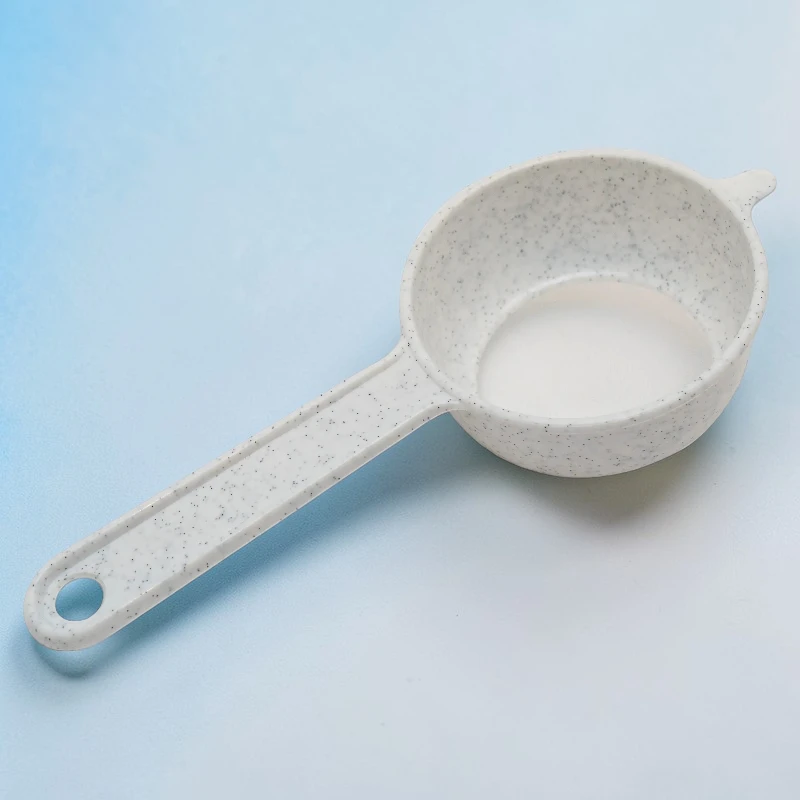
StreamBiz DAS sieve - extra-fine food sieve for Pure Nature & frozen foodExtra-fine plastic strainer for easy, clean feeding of StreamBiz Pure Nature products. Also ideal for rinsing and portioning fine frozen or live food - universally applicable whenever a very fine sieve is required. Product information:
Extra fine mesh for precise straining and rinsingPerfect for StreamBiz Pure Nature productsCan be used universally (fine straining work in everyday aquaristics)Made of robust plastic, easy to cleanWith eyelet for hanging (practical storage) The StreamBiz DAS sieve is a practical, extra-fine plastic sieve for aquariums. It helps you to portion StreamBiz Pure Nature products cleanly and reliably drain off excess liquid as required. It is also ideal for briefly rinsing or sieving fine frozen or live food before feeding. Thanks to the particularly fine mesh and handy format, the strainer is an uncomplicated accessory for everyday use. The eyelet makes it easy to hang in or on the aquarium cabinet. FAQ
What is "DAS Sieb" particularly suitable for?
For the administration of StreamBiz Pure Nature products and wherever a very fine sieve is required. Can the sieve also be used for frozen food?Yes, it is very suitable for straining and rinsing fine food How big is the sieve?Approx. 16 cm long and 6.5 cm in diameter.Is there a hanging loop?Yes, an eyelet for hanging is provided. How is the sieve cleaned?
Simply rinse with clear water; if necessary, clean with a soft brush (without detergent).
Feeding snails The live feeding snails in the 90 ml bag are a high-quality, natural food source for snail-eating aquarium inhabitants such as puffer fish, predatory snails, loaches, axolotl and water turtles.
They promote natural hunting behavior and contribute to a species-appropriate diet.Product details:
90 ml bag with live feeding snails
small: mixed bubble snails and post horn snails (up to 5mm)large: Post horn snails from 5mm in size
Shelf life: Up to 14 days if stored in a cool place
Application: Food for puffer fish, predatory snails, loaches, axolotl, turtles and other snail-eating animals
Special features: Promotes the natural hunting instinct and supports dental careAdvantages at a glance:
Natural food source: >Live food from our own aquaculture
Health-promoting:Rich in vitamins, minerals and nutrients
Promotes natural behavior:Stimulates the hunting instinct and supports dental care
Versatile use:Suitable for various snail-eating aquarium inhabitants
Easy to use: Can be added directly to the aquariumNote:
The snails are not suitable for human consumption. Please consider the specific needs of your aquarium inhabitants and feed accordingly.
StreamBiz Artemia nauplii, liquid 100ml
Artemia nauplii and decapsulated cysts in a purely plant-based nutrientsolution with vitamins.This nature food solution consists of freshly hatched Artemia without egg capsules in a purely plant-based nutrient solution. The Artemia solution is mainly used for newly hatched fish, as the nutrient content is particularly high. The ideal food for small fish that feed exclusively on live food.
The ideal replacement for live and frozen food.
Enriched with vitamins and trace elements
without preservatives
Suitable for saltwater aquariums
Content: 100ml
StreamBiz red mosquito larvae paste 120g
A complete food for tropical fish.
Feed paste with red mosquito larvae. The easily digestible and extremely economical feed pastes ensure good health and vibrant colors of the fish.The feed paste can be attached anywhere in the aquarium. Also suitable for feeding specialists.The advantage over live food is that no contamination can occur as the food is sterile. It is therefore an ideal replacement for live and frozen food.
Content: 120g
Phytoplankton live food for aquariums
Phytoplankton forms the basis of the marine food chain and is of vital importance to the ocean ecosystem. These unicellular algae are responsible for the direct or indirect nutrition of a wide variety of creatures, ranging from microscopic animal zooplankton to whales weighing tons.45ml → for aquariums up to 100 liters80ml → for aquariums up to 180 liters300ml → for aquariums up to 600 liters1000ml → for aquariums up to 2000 liters
Phytoplankton can have various positive effects in saltwater aquariums:Direct supply of various filter feeders such as tube worms, mussels,
gorgonians,
sponges or sea squirtsIndirect supply through the reproduction and enrichment of zooplankton, which in turn serves as food for larger aquarium inhabitants.Competition for food for unwanted algae such as cyanobacteria and other unwanted algae, resulting in a more balanced and healthier aquarium.Phytoplankton for the marine aquarium is carefully manufactured and provides a high quality food source to promote the health and well-being of the aquarium. It is an essential supplement for any aquarist looking to create a balanced and vibrant ecosystem in their marine aquarium.
Artemia ready mix 195gWith this ready mix from Microbe-Lift, you can be sure of a hatch rate of up to 95%.The Microbe-Lift Artemia ready mix contains Artemia eggs and salt for easy cultivation of Artemia crustaceans. Live food promotes the vitality and healthy development of young animals. The colorfulness of the fish is maintained and liveliness is promoted. Artemia nauplii are also ideal as rearing food for young fish and for feeding corals.
The hatching time is approx. 24-48 hours. Practical dosing spoon included.Instructions: Add 3 spoons (approx. 16 g) of the ready-to-use Artemia mix to 500 ml of water. The use of a separate container is recommended. The waiting time is 24-48 hours. The hatched Artemia/nauplii can then be fed to fish, corals and lower animals as live food.
Easy food kit from SuperfishTool set for feeding flake, frozen or live fooddrifting feed ring for flake food feed basket for frozen food and live food funnel with sieve effectYou can thaw the frozen food directly in the sieve and the water flows into the measuring cup. Or you sieve the live food with it.You can then feed the frozen or live food also in the sieve that you hang in the feed ring.The feed ring alone you can also use, so that the fed flake food remains in place and does not float on the entire water surface.
The Mini crabs are going! The freshwater fairy shrimp (Dendrocephalus brasiliensis)
The freshwater fairy shrimp Dendrocephalus brasiliensis is from Brasil and breed as life food for ornamental fish.from Thailandis is very well suited for aquarium at temperatures around 24 - 28 °C. Keeping is optimal in a small aquarium with soft water.
They grow fast and they can have a size of 1 cm after 2 weeks. Then the female start to lay eggs.
Facts: Fairy shrimp among to the anostraca, have a fascinating floating manner and are even a nutritious feed for fish.
Max. size: 30 mm
Life expectancy: max. 3 - 4 months
Cysts per female: max. 5000
Temperature: 22 - 30 °C (optimal 24 - 28 °C)
pH Wert: 6,0 - 9,0 (optimal 6,5 - 7,5)
Expected fairy shrimp amount: at least 100 or 1.000 per bag
Aquarium starting with 2 liters
Tip: An approach with fairy shrimp cysts should be used multiple times by respective drying because at the first time not all nauplii slip out.
Amazon red mosquito larvae, liquid 100ml
Red mosquito larvae in pure vegetable nutrient solution, vitamins
Natural nutrients of the highest quality.
Enriched with vitamins and trace elements
without preservatives
suitable for seawater aquariums
Content: 100ml
Enchyte live fish food
rich in trace elements, vitamins and
unsaturated fatty acidsis produced under ecologically sustainable
conditionsStorage between 2 and 8°Cmaximum 4
weeksmax. Feed 2-3 times a week so that the fish do not become fatty
As live food, enchytrae enrich the diet of your fish with essential fatty acids and proteins that are not found in plant-based organisms. They are particularly important for the breeding of many catfish species and are often preferred after periods of starvation in order to promote offspring. This nutrient-rich live food comes in convenient 45ml and 90ml pouches and should not be fed more than two to three times a week to avoid excessive fat accumulation in your fish.Live food is a natural diet for your ornamental fish and helps to increase their vitality and resistance. Feeding live food also gives you as the keeper the opportunity to closely observe the behavior of your fish.
Live shiny worms - Lumbriculus variegatus
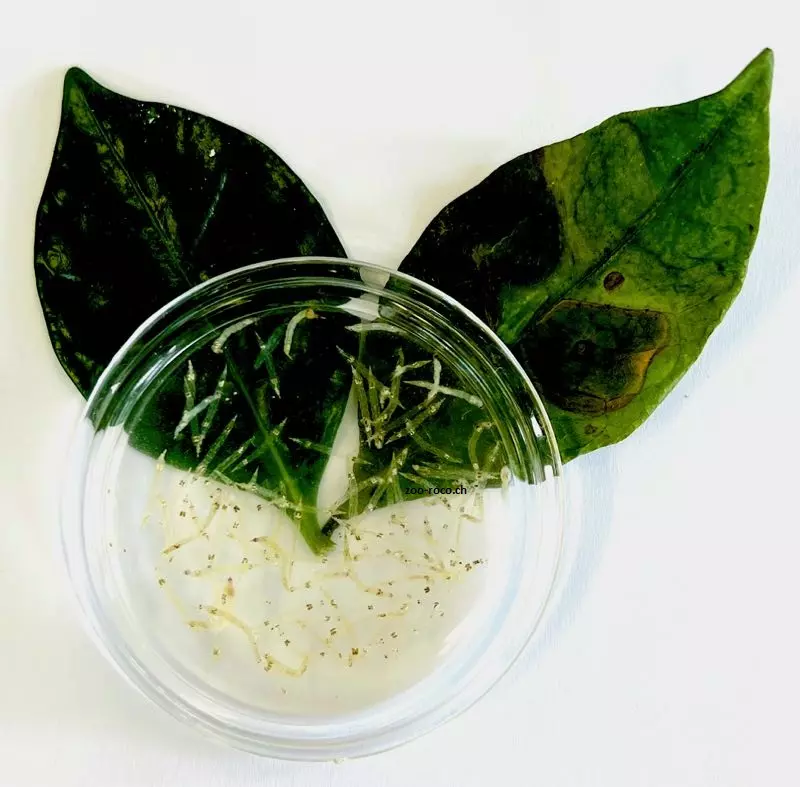
Shiny worms look very similar to small earthworms and are ideal for live feeding in aquaria.
Shiny worms, also known as Lumbriculus variegatus, belong to the group of the few-worms. With a length of 4-10 cm, they are ideal for medium-sized to large fish. Shrimps, such as Amano shrimps or tiger shrimps, also occasionally appreciate a shiny worm as food.These worms not only resemble earthworms externally, but are also closely related to them. Due to their dark color, they are also known as blackworms or are occasionally found in pots of aquatic plants, for example from Dennerle (which is why they are sometimes called Dennerle worms). Shiny worms are rich in proteins and fats, but do not contain much fiber.Storage temperature: 5-15 °C
Shelf life approx. 21 days
Live food is the most natural way of feeding ornamental fish. No other food is as complete.
With all essential vitamins, minerals and nutrients
Stimulates the hunting instinct
Promotes vitalityEven with the greatest care, food animals may die due to temperature fluctuations or unpredictable events. We accept no liability for this.
Live food - White mosquito larvae
White mosquito larvae live food is the most recommended ornamental fish food for breeding stimulation due to its high protein content and specific unsaturated fatty acid content.
Optimum storage temperature: 2-8 °CShelf life 1-6 weeks
Live food is the most natural way of feeding ornamental fish. No other food is as complete.
With all essential vitamins, minerals and nutrients
Stimulates the hunting instinct
Promotes vitality
Instructions for feeding live food:It is important to wash live food before feeding to remove potential harmful substances, bacteria and contaminated water and to protect the health of the ornamental fish. Here is a guide to washing live food:Place the live food in a strainer or colander and rinse thoroughly. This is best done with aquarium water or non-carbonated mineral water.Now pour the live food into a clean container and cover it with a little aquarium water. Leave the food to stand for 5-10 minutes.Now pour off the waterThe food can now be given to the fish. Even with the greatest care, it can happen that food animals die due to temperature fluctuations or incalculable events during transportation. We accept no liability for this.
Live food mud tube worms (Tubifex tubifex)
Live food mud tube worms (Tubifex tubifex) is a protein-rich food for all ornamental fish
This live food is highly valued by catfish and is eaten with pleasure. However, it should be fed in moderation so that "uneaten" Tubifex do not become embedded in the aquarium floor.
Optimum storage temperature: 5-8 °C
Shelf life up to 2 weeks Live food is the most natural way of feeding ornamental fish. No other food is as complete.
With all essential vitamins, minerals and nutrients
Stimulates the hunting instinct
promotes vitality.Even with the greatest care, it can happen that food animals die due to temperature fluctuations or unpredictable events. We accept no liability for this.
The Mini crabs are going! The freshwater fairy shrimp (Dendrocephalus brasiliensis)
The freshwater fairy shrimp Dendrocephalus brasiliensis is from Brasil and breed as life food for ornamental fish.from Thailandis is very well suited for aquarium at temperatures around 24 - 28 °C. Keeping is optimal in a small aquarium with soft water.
They grow fast and they can have a size of 1 cm after 2 weeks. Then the female start to lay eggs.
Facts: Fairy shrimp among to the anostraca, have a fascinating floating manner and are even a nutritious feed for fish.
Max. size: 30 mm
Life expectancy: max. 3 - 4 months
Cysts per female: max. 5000
Temperature: 22 - 30 °C (optimal 24 - 28 °C)
pH Wert: 6,0 - 9,0 (optimal 6,5 - 7,5)
Expected fairy shrimp amount: at least 100 or 1.000 per bag
Aquarium starting with 2 liters
Tip: An approach with fairy shrimp cysts should be used multiple times by respective drying because at the first time not all nauplii slip out.
CHF 9.90
❅
❆
❅
❆
❅
❆
❅
❆
❅
❆
❅
❆
This website uses cookies to ensure the best experience possible. More information...