Product information "Cryptocoryne wendtii C 421 - Medium, brown cryptocoryne"
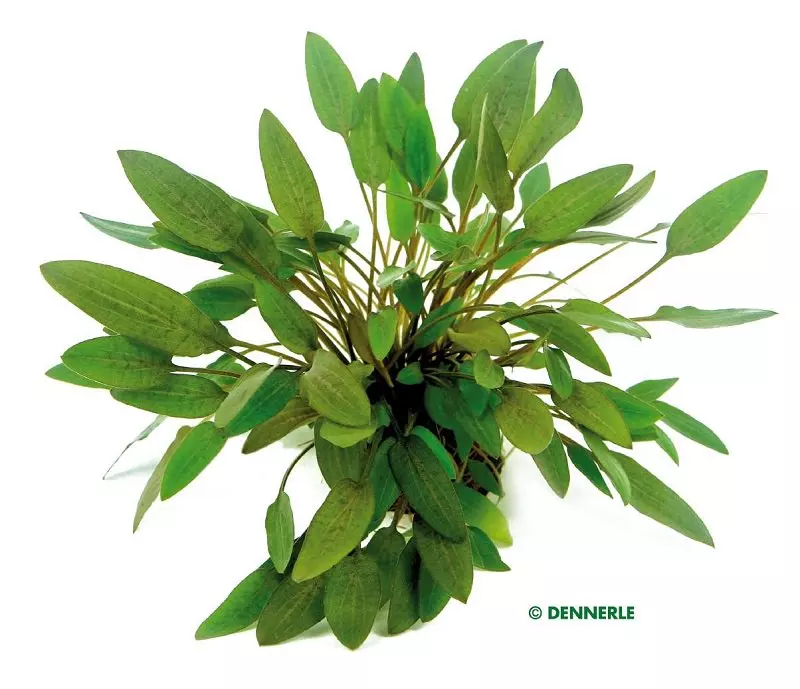
Cryptocoryne wendtii C 421 -Medium sized, brown calyx
max. growth height
10 - 15 cm
Country of origin
Sri Lanka
Suitability
NanoCube
Type
Rosette plant
family
Araceae
Genus
Cryptocoryne
Propagation
Stolons
Growth rate
slow
pH
5 - 8
Water hardness
0 - 20 °dh
Notes
Easy to care for and grows well.
Another variety of the C. wendtii group is our C421, a medium-sized, brown water calyx that grows very well and is easy to care for. Its above-water leaves are rust-brown, in the submerged stage the leaves are chocolate brown. Planting tip: Water calyxes remain particularly small and compact when grown in a clay pot. This is pressed directly into the substrate. The small volume in the root area keeps the plants smaller - creating a bonsai effect.
Aquarium:
Community aquarium, Landscape/Aquascaping, Nano aquarium
Genus:
Cryptocoryne
Growth:
slowly
Origin:
Asia
Properties:
Rosette plants
Stand:
In the foreground
Composition
Feeding recommendation
Technical details
Size information
0 of 0 reviews
Give us a rating!
Share your experience with the product with other customers.
Login
No reviews found. Go ahead and share your findings with others.
Echinodorus grisebachii Bleherae
Amazonas - Sword Plant
max. growth height
60 - 80 cm
Country of origin
Brazil
Suitability
Perch aquarium, discus aquariumCommunity aquarium
Type
Rosette plant
family
Alismataceae
Genus
Echinodorus
Propagation
Adventive plants on the flower stalk
Growth rate
fast
pH
5 - 9
Water hardness
10 - 20 °dh
Notes
The large Amazonas sword plant is perhaps the most popular plant in the aquarium hobby. Its leaves are 3–6 cm wider than those of the ‘amazonicus’ variety, and the height of up to 60 cm makes this species appear even more dominant. Mature clumps, some with more than 50 leaves, are a striking feature. However, the substrate must be at least 10 cm deep for the root system to develop properly. Combined with Helanthium species (dwarf Echinodorus), beautiful South American underwater landscapes can be created.
Duckweed / Duckweed PortionDuckweed (Lemna minor L)
Floating plant
suitable for the aquarium
also suitable for garden ponds and biotopes
Duckweed – a natural floating plant for aquariums, ponds and feed productionDuckweed, also known as water lettuce, is a hardy, fast-growing floating plant suitable for freshwater aquariums, ponds and small rearing tanks. The small, green plants float freely on the water’s surface, reproduce very rapidly under favourable conditions and offer numerous benefits: They remove excess nutrients from the water, provide shade, improve the natural balance and are readily eaten by shrimp, snails, goldfish, ducks and other animals.Breeding and propagationCultivating duckweed is very simple. The plants are placed directly on the water’s surface and require no planting, no substrate and no CO₂ system. With sufficient light, calm water and enough nutrients, they reproduce by division. Under good conditions, the population can increase significantly within a few days.
A small container, a nano-aquarium or a plastic tub is sufficient for targeted cultivation. We recommend at least 5 to 10 litres of water, for a more stable and productive culture 20 litres or more. The water should be as still as possible, as duckweed does not tolerate strong currents, splashing water or leaves that are permanently submerged.Optimal conditionsDuckweed is highly adaptable and grows reliably in many freshwater environments. An ideal water temperature of around 18 to 28 °C. Temperatures of approximately 10 to 30 °C are generally tolerated, though growth slows significantly in cooler conditions. The water should be nutrient-rich, for example through the presence of fish, prawns, snails or very sparing use of liquid fertiliser.
A pH value in the slightly acidic to slightly alkaline range is suitable; approximately 5.5 to 8.0 is not a problem for most cultures. Water hardness usually plays only a minor role. Above all, sufficient light and a calm water surface are important. A lighting duration of around 8 to 12 hours a day promotes vigorous, green growth.Care instructionsSince duckweed grows very quickly, the population should be thinned out regularly. A completely closed plant canopy can block too much light from reaching other aquarium plants and restrict gas exchange at the water’s surface. You should therefore remove some of the plants using a fine-mesh net or spoon if necessary.
To maintain a healthy culture, it is advisable to carry out partial water changes regularly and to remove dead or yellowing plants. In aquariums with strong surface movement, a filter outlet directly at the water’s surface or very nutrient-poor water, growth may be slower.Benefits at a glanceDuckweed is easy to care for, fast-growing and versatile.They help break down nutrients, provide shelter for young fish, naturally shade the aquarium and are ideal as a supplementary food for many aquatic animals.This makes them ideal for aquarists, pond owners and anyone wishing to create a simple, natural plant culture.The delivery consists of a starter batch of live duckweed for further propagation.Please note: Duckweed can spread very rapidly and should not be released into natural water bodies.
Nymphaea red - Red tiger lotus as a forcing tuber
max. growth height
- 50 cm
Country of origin
Africa
Suitability
Discus aquarium, community aquarium
Type
family
Nymphaeaceae
genus
Nymphaea
Propagation
Seeds, daughter plants from the tuber
Growth rate
fast
pH
5 - 8
Water hardness
0 - 20 °dh
Notes
The Tiger Lotus is widespread in tropical Africa and colonizes a wide variety of waters there - temporary ponds and lakes on the one hand, but also flowing waters on the other. It has a tuber as a storage organ with strong floating leaves. The most beautiful thing about this plant, however, are the submerged juvenile leaves, which do not reach the surface of the water. Of the two color forms, the red tiger lotus is the most popular among aquarists; however, its green color form is rarely found in the trade. Tiger lotus are quite undemanding, older and larger leaves are always removed at the base of the tuber.
Echinodorus Jungle Star No. 2 / Sword Plant Little Bear
max. growth height
- 25 cm
Country of origin
Cultivated form
Suitability
Perch aquarium, community aquarium
Type
Rosette plant
Family
Alismataceae
Genus
Echinodorus
Propagation
Adventive plants on the flower stalk
Growth rate
medium
pH
5 - 8
Water hardness
0 - 20 °dh
Notes
The 'Little Bear' variety has been on the market since 1995 and is still one of the most popular red-leaved varieties. In the aquarium, the plant forms a compact rosette with a rust-red to deep dark red colour. Older plants reach a height of up to 25 cm. As with many Echinodorus varieties, emersed and submerged leaves differ enormously. The 'Little Bear' is bright green in the greenhouse and produces its first red submerged leaves after just a few days in the aquarium. Always a fascinating spectacle!
Hygrophila corymbosa / Cherry Leaf - Giant Waterleaf
max. growth height
- 50 cm
Country of origin
Southeast Asia
Suitability
Discus aquarium
Type
Stem plant
Family
Acanthaceae
Genus
Hygrophila
Propagation
Tip cutting
Growth rate
fast
pH
5 - 8
Water hardness
0 - 30 °dh
Notes
Beginner plant
Hygrophila corymbosa is a widespread stem plant in Southeast Asia. There are some varieties that differ in leaf shape. Generally, the emergent leaves are considerably darker in colour than in the submerged stage. The giant waterleaf is a good beginner‘s plant for the background. Its rapid growth absorbs excess nutrients and thus deprives algae of their food source. As soon as the shoots reach the water surface, they should be cut back by half. A tiered arrangement of the stems is recommended.
Hygrophila pinnatifida - aquarium plant from India
max. growth height
- 40 cm
Country of origin
India
Suitability
Aquascaping, community aquarium, NanoCube
Type
Stem plant
Family
Acanthaceae
Genus
Hygrophila
Propagation
Side shoots
Growth rate
medium
pH
5 - 8
Water hardness
5 - 12 °dh
Notes
Can also grow on stones or roots, which is rather untypical for a stem plant.
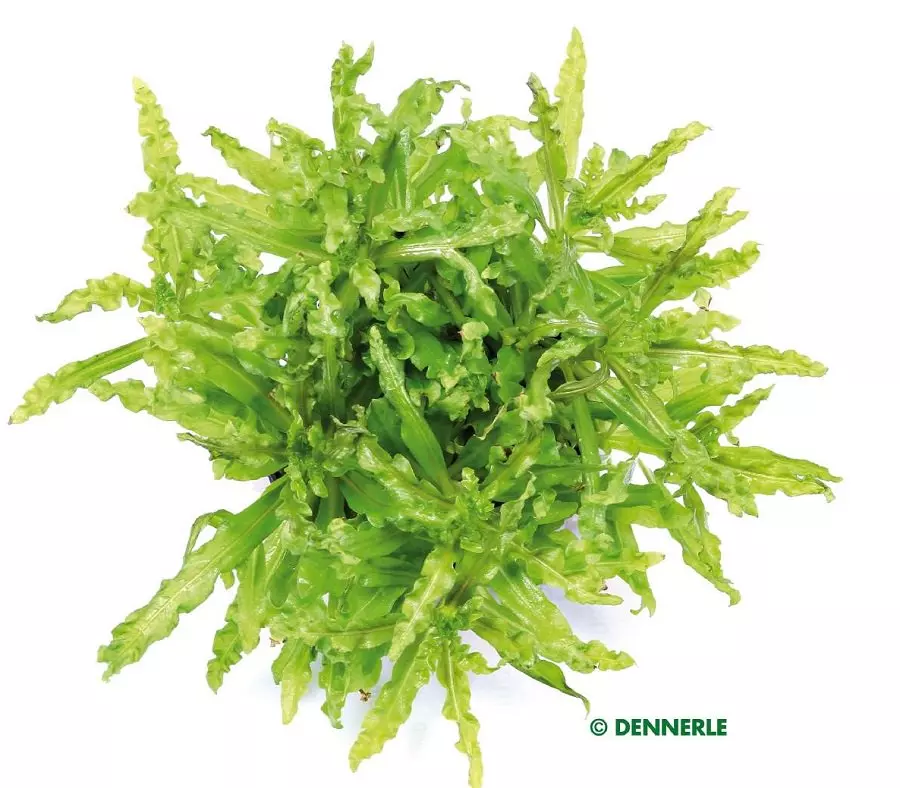
A new species from India with an unusual character. It has only been on the market for a few years and is increasingly being planted in fascinating landscapes. On the one hand, its leaves are very attractive, ranging from rusty brown to olive green, on the other hand, the leaf shape is beautifully pinnately divided. In combination with simply shaped plants, the expression of this ornamental leaf shape is intensified. Another special feature is the ability to grow on stones and roots – completely atypical for a stem plant.
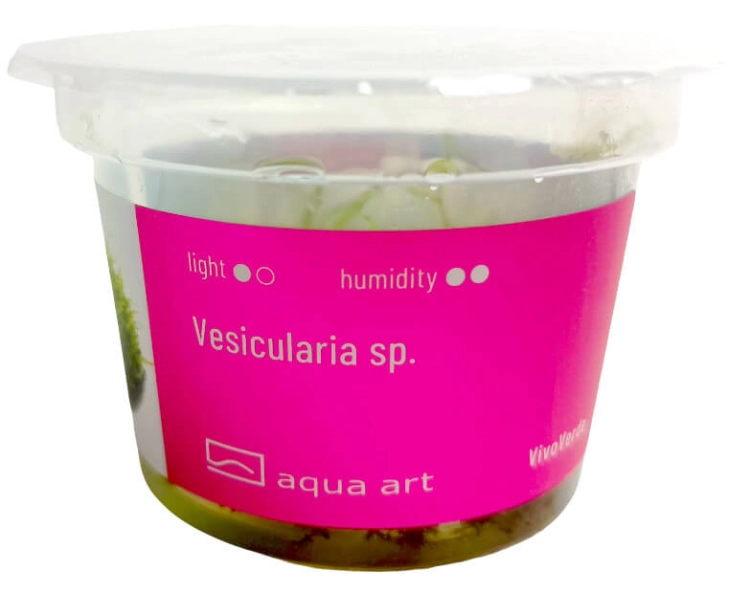
Vesicularia sp. – In vitro plant, 6 cm potVesicularia sp. are mosses that form large, dense mats and grow over decorations, stones and roots. They reproduce by division of the plant. They are easy to care for and are recommended for humid terrariums and aquariums. Supplied as an in vitro plant.
Key featuresDifficulty level: easyLight requirement: low to mediumCO₂ requirement: lowFinal height: up to 10 cmGrowth rate: low to mediumTemperature: 18–28 °CPlacement in the aquarium: on decorationsOrigin: South-East AsiaCup size: 6 cm diameter
Mosses are unique yet low-maintenance plants. Compared to traditional aquarium plants, they differ significantly in appearance. They have no true roots, and their stems and leaves are greatly reduced. They grow in the form of green mats that attach to various surfaces in the aquarium.
Vesicularia spreads by creeping over decorative elements and the substrate. With regular trimming and appropriate shaping, it quickly forms a dense, green carpet. The moss should be attached to a decorative element, for example with cotton thread, thin fishing line or special plant glue.This plant has virtually no special requirements regarding water parameters. It grows well under almost all conditions; water hardness, pH value and lighting can be largely arbitrary. CO₂ supplementation is not required either. Propagation is by dividing the plant into smaller pieces. Pruning and shaping are well tolerated and promote attractive, dense growth.In vitro cultures are free from:BacteriaFungiAlgaeannoying snails
Ludwigia ovalis invitro cup
This plant, with a characteristic oval leaf
oval leaf shape in orange-pink color, is easy to grow and an interesting addition to the aquarium.
interesting addition to the aquarium. The leaves are slightly smaller
than those of the popular Repens variety. Due to their rapid growth
the clumps must be trimmed and thinned out regularly to prevent excessive growth.
prevent excessive growth. The original shape of the leaf blade
makes it an attractive addition to the plant composition in the aquarium.
aquarium.To use this plant, remove it from the cup and rinse the gel.
cup and rinse the gel thoroughly under running water.
Then divide it into small clumps of 1-2 cm and plant them at short intervals.
them at short intervals. As it grows, it will form a
form a uniform group of adult plants.This plant
comes from in vitro cultivation and is free from snails, parasites and algae.
and algae. High-quality gel was used as a medium, so it will establish itself
quickly establish itself in the aquarium.
Light requirement: medium to intensive
Optimum temperature: 10 to 28 °C
Water values: soft to hard
pH value: 4 to 7
CO2 and nutrients: recommended
Propagation: cuttings
🌱 Eleocharis parvula 'Mini' - Fine grass carpet for the foreground
Ultra-compact ground cover for detailed aquascapes
Eleocharis parvula 'Mini' from Aqua Art is a particularly low-growing variant of the well-known turf grass plant. It is ideal for nano aquariums and natural aquariums where a fine, even grass lawn is desired in the foreground. Due to its low height, the view of other design elements such as stones or wood is retained - ideal for modern Iwagumi layouts.
As an in vitro plant, it is free from algae, pesticides and snails, making it ideal for sensitive aquarium inhabitants such as shrimps.
✅ Advantages at a glance
Particularly compact & low growth
Ideal for nano aquariums and foreground layouts
Forms a dense, light green carpet of grass
InVitro - sterile & shrimp-safe
Easy to care for with CO₂ and light supply
Perfect for Iwagumi and natural aquariums
📋 Product details
Name: Eleocharis parvula 'Mini'
Type: Ground cover / foreground plant
Growth height: approx. 2-5 cm
Light requirement: medium to high
CO₂ supply: recommended
Growth: medium
Propagation: via runners
Delivery form: In vitro cup (sterile)
Manufacturer: Aqua Art
💡 Zoo Roco tip
Divide the in-vitro cup into small portions and place them in nutrient-rich soil at regular intervals - this way Eleocharis 'Mini' grows together to form a dense, natural-looking carpet. Ideal in combination with light-colored substrates or high-contrast hardscapes.
With Eleocharis parvula 'Mini' from Aqua Art, you can design the foreground of your aquarium precisely, naturally and richly detailed - perfect for creative aquascaping concepts.Customers also searched for: ground cover aquarium, foreground plant, InVitro plant, Aqua Art, grass carpet aquarium, aquascaping foreground, nano aquarium plants, CO₂ plants aquarium, fine aquarium plant
🌱 Eleocharis parvula - Fine ground cover for the natural aquarium
Natural lawn effect in the foreground
The dwarf needle sedge / Eleocharis parvula from Aqua Art is a popular foreground plant for natural aquariums and aquascapes. The fine, grass-like stems grow dense and low and form a dense, light green carpet of grass under optimal conditions. The plant is ideal for detailed layouts and looks particularly harmonious in open tanks with clear lines.
Thanks to its undemanding nature, it is also suitable for beginners. With a supply of CO₂ and good lighting, it grows quickly and ensures a neat appearance in the tank.
✅ Advantages at a glance
Forms a dense carpet of grass in the foreground
Fine stems for a natural look
Grows compact and low
Ideal for nano aquariums & aquascapes
Very easy to care for with CO₂ and light
Shrimp-safe & pesticide-free (in vitro)
📋 Product details
Name: Eleocharis parvula
Type: Ground cover / foreground plant
Origin: Europe/North America
Growth height: approx. 3-10 cm
Light requirement: medium to high
CO₂ supply: recommended
Growth: medium
Propagation: via runners
Delivery form: In vitro cup (sterile cultivation)
Manufacturer: Aqua Art
💡 Zoo Roco tip
Eleocharis parvula can be perfectly combined with stones or root wood to create natural-looking bank zones. Cut the plant into smaller clumps when planting so that the carpet can close evenly.
Eleocharis parvula from Aqua Art is a finely structured, low-maintenance ground cover plant that transforms the aquarium into a near-natural underwater landscape.
🌿 Hydrocotyle verticillata InVitro Whorled pennywort for the foreground
Hydrocotyle verticillata from Aqua Art is a unique foreground plant with umbrella-shaped leaves that are reminiscent of small water lilies or parasols. This special leaf shape makes it a real eye-catcher in natural aquariums and aquascapes - especially in shallow tanks or detailed layouts.
The plant remains compact, grows creeping across the bottom and is ideal for creative foreground or midground designs. Supplied as an in vitro plant, it is free from pesticides, algae and snails, making it ideal for shrimp tanks and sensitive aquarium inhabitants.✅ Advantages at a glance:
Eye-catching umbrella-shaped leaves - natural look with design character
InVitro - shrimp-safe, pesticide-free & algae-free
Compact growth - perfect for the foreground
Grows creeping & forms small groups
Ideal for shallow tanks & creative aquascapes
Undemanding & easy to care for📋 Product details:
Name: Hydrocotyle verticillata
Type: Ground cover / foreground plant
Growth height: approx. 2-7 cm
Light requirement: low to medium
CO₂ supply: not essential, but beneficialpH value: 5 to 7
Growth: slow to medium
Propagation: by runners, cuttings, division
Delivery form: In vitro cup (sterile cultivation)
Manufacturer: Aqua Art💡 Zoo Roco tip:
Hydrocotyle verticillata looks particularly harmonious in combination with fine mosses or light-colored substrates. It is also very suitable for aquascaping and shallow-planted nano aquariums andcan also be kept emersed in Wabi-Kusa.
Eleocharis pusilla InVitroDelicate ground cover for nano and natural aquariums
Eleocharis pusilla from Aqua Art is a delicate, grass-like ground cover that looks particularly elegant in nano aquariums and delicate aquascapes. It grows significantly lower and finer than Eleocharis acicularis and forms dense, short grassy areas with a natural appearance.
Thanks to in vitro cultivation, Eleocharis pusilla is free from pesticides, algae and snails, making it ideal for shrimp tanks and sensitive aquariums. The plant grows compactly, requires little care and spreads evenly through runners.✅ Advantages at a glance:
Very fine ground cover with short, dense growth
InVitro - sterile, shrimp-safe & pesticide-free
Ideal for nano aquariums & detailed layouts
Spreads through runners to form a carpet of grass
Easy to care for - requires only medium light conditions
Perfect for the foreground in aquascaping📋 Product details:
Name: Eleocharis pusilla
Type: Ground cover / foreground plant
Growth height: approx. 3-5 cm
Growth habit: grass-like, creeping
Light requirement: medium to high
CO₂ supply: recommended, but not essential
Growth: slow to medium
Propagation: by stolons
Delivery form: In vitro cup (sterile cultivation)
Manufacturer: Aqua Art💡 Zoo Roco tip:
Divide the InVitro cup into small portions and place them in nutrient-rich soil with some space between them. This will create a dense, natural carpet of grass in just a few weeks. Ideal in combination with stones or root wood!Eleocharis pusilla is the perfect choice for detail-loving aquarium designers who value naturalness, delicacy and structure - even in small tanks.
🌿 Climacium japonicum InVitroJapanese tree moss from Aqua Art
Climacium japonicum, also known as tree moss, is an unusual, decorative moss from Asia and a real specialty in aquascaping. With its unique, tree-like growth form, it brings structure and depth to the aquarium and is ideal for creating hardscapes, roots or nano landscapes.
The InVitro version from Aqua Art guarantees a pesticide-free, sterile product - ideal for sensitive animals such as shrimps. The moss grows slowly, remains compact and, with good care, develops a beautifully branched shape reminiscent of miniature trees.✅ Advantages at a glance:
Rare tree moss with characteristic growth habit
Sterile & pesticide-free - safe for shrimps and sensitive aquariums
Ideal for tying onto stones and roots
Grows slowly, remains compact & easy to care for
Perfect for aquascaping, nano aquariums & detailed layouts
Provides natural hiding places for juvenile fish & invertebrates📋 Product details:
Name: Climacium japonicum
Type: Moss / perennial plant
Origin: Asia (Japan)
Placement: Foreground, midground, on hardscape
Light requirement: low to medium
CO₂ supply: not required
Growth: slow
Growth height: approx. 3-8 cm
Delivery form: In vitro cup (sterile cultivated)
Manufacturer: Aqua Art💡 Zoo Roco tip:
Climacium japonicum develops its typical tree shape particularly well on horizontal surfaces with a slight flow of water. For a natural look, we recommend combining it with sand or light-colored substrate in the foreground.
AquaArt Taxiphyllum Spiky Decorative aquarium moss from Aqua Art
Taxiphyllum 'Spiky', also known as Spiky Moss, is a particularly attractive aquarium moss with strongly branched, three-dimensional shoots. It grows in dense, bushy clumps with a characteristic, slightly spiky structure - ideal for decorating roots, stones or back walls in natural aquariums.
Aqua Art's in vitro cultivation guarantees a pesticide-free, sterile plant that is safe for shrimps and sensitive aquarium inhabitants. The moss is easy to care for, requires little light and grows reliably even without the addition of CO₂ - perfect for beginners and professionals in aquascaping.
Advantages at a glance:
Three-dimensional, bushy moss with decorative structure
InVitro - free from algae, snails & harmful substances
Grows on hardscape - ideal for tying on
Shrimp-safe & suitable for all aquarium types
Easy to care for & can also be cultivated in low light conditions
Product details:
Name: Taxiphyllum 'Spiky' (Spiky Moss)
Type: Moss / perennial plant
Position in aquarium: foreground, hardscape, back wall
Growth height: 3-10 cm
Light requirement: Low to medium
CO₂ supply: Not necessary
Delivery form: In vitro cup (sterile cultivated)
Manufacturer: Aqua Art
🌿 Bucephalandra sp. 'Needle Leaf' InVitro Delicate epiphyte plant from Aqua Art
The Bucephalandra sp. 'Needle Leaf' from Aqua Art is a particularly elegant variant of the popular Borneo epiphytes. It is characterized by very narrow, needle-like leaves, which give it a delicate yet exotic appearance - ideal for nano aquariums, detailed areas in aquascaping or as a fine structural plant on roots and stones.
Thanks to in vitro cultivation, you get a sterile, snail- and pesticide-free plant that is ideal for shrimp tanks and sensitive aquariums. Bucephalandra grows slowly, requires little light and no CO₂ - but is nevertheless color-stable and particularly decorative with stable water values.🌱 Advantages at a glance:
✅ Very narrow leaf shape - fine, needle-like structure
✅ InVitro - 100% free from snails, algae & pesticides
✅ Safe for shrimps & sensitive aquariums
✅ Perennial plant - ideal for roots, stones & decoration
✅ Easy to care for, slow-growing & permanently decorative📋 Product details:
Name: Bucephalandra sp. 'Needle Leaf'
Type: Perennial plant
Position in the aquarium: Foreground to midground, on hardscape
Growth height: approx. 3-6 cm
Light requirement: Low to medium
CO₂ supply: Not necessary, but beneficial
Growth: Slow
Delivery form: In vitro cup (grown sterile)
Manufacturer: Aqua Art💡 Zoo Roco Tip:
It is best to glue or tie Bucephalandra sp. 'Needle Leaf' to dark roots or lava rocks. This will accentuate the fine leaves particularly well - and the plant can establish itself optimally without being buried.
Invitro Eleocharis acicularis MiniPerfect ground cover for aquascaping
Eleocharis acicularis 'Mini' from Aqua Art is a particularly fine-leaved, low-growing ground cover and is one of the most popular plants for the foreground in natural aquariums and aquascapes. With its grass-like structure and compact growth, it creates a natural lawn effect in the aquarium - without any noticeable care requirements.
InVitro cultivation guarantees a pesticide-free, sterile plant, ideal for sensitive aquariums and shrimp tanks. The plant grows densely, spreads via runners and is easy to trim or replant. With sufficient light and CO₂, an even carpet of plants is created in a short time.
Advantages at a glance:
✅ Compact, dense lawn effect for the foreground
✅ InVitro - free from algae, pesticides & snails
✅ Safe for shrimps & sensitive animals
✅ Grows flat & creeping - ideal for aquascaping
✅ Also suitable for nano aquariums
Product details:
Name: Eleocharis acicularis 'Mini'
Type: Ground cover / foreground plant
Growth height: 3-6 cm
Light requirement: Medium to high
CO₂ supply: Recommended for compact growth
Delivery form: In vitro cup (grown sterile)
Manufacturer: Aqua Art
Special feature: Particularly short-growing, forms a dense carpet💡 Zoo Roco tip:
For a particularly dense and uniform carpet of plants, it is recommended to divide the InVitro cup into small portions and place them a little apart. With good lighting, a supply of CO₂ and a nutrient-rich substrate (e.g. soil), Eleocharis acicularis 'Mini' will grow together quickly - creating a natural lawn look just like in a professional aquascape in just a few weeks.
Invitro aquarium plant Bucephalandra sp. KedagangElegant epiphyte with a metallic shimmer
Bucephalandra sp. 'Kedagang' is a particularly attractive epiphyte from Borneo that impresses with its narrow, wavy leaves with a slightly metallic sheen. The in vitro version is a sterile, pesticide-free plant, ideal for sensitive shrimp tanks, nano aquariums and aquascaping projects.
This Bucephalandra grows slowly, is extremely easy to care for and can be easily attached to roots, stones or hardscape. It requires little light and no CO₂ - but develops particularly well with stable water values and a gentle current.
Advantages at a glance:
✅ Elegant aquarium plant with shimmering metallic leaves
✅ Grown in vitro - 100% snail & pesticide-free
✅ Perfect for tying onto roots & stones
✅ Shrimp-friendly & undemanding
✅ Ideal for aquascaping & nano aquariumsProduct details:
Name: Bucephalandra sp. 'Kedagang'
Type: Perennial plant
Position in the aquarium: Foreground to midground, on hardscape
Growth height: approx. 5-10 cm
Light requirement: Low to medium
CO₂ supply: Not required, but beneficial
Delivery form: In vitro cup (grown sterile)
Special feature: Dark green, narrow leaves with a metallic effectCustomers also searched for: Bucephalandra Kedagang InVitro, buy Bucephalandra, aquarium mounted plant, Bucephalandra for shrimp tanks, aquascaping plant Kedagang, easy-care Bucephalandra, InVitro Bucephalandra, aquarium mounted plant, Bucephalandra Borneo
Invitro Anubias sp. Pangolino aquarium plantAnubias sp. 'Pangolino' is one of the smallest Anubias species in the world and is an exclusive choice for aquascapers with a love of detail and lovers of rare aquarium plants. The in-vitro cultivated form provides you with a guaranteed snail and pesticide-free plant, perfect for sensitive shrimp tanks and nano aquariums.
With its extremely compact growth and tiny, bright green leaves, Pangolino is ideal for attaching to roots, rocks or as an accent in the foreground. Undemanding and easy to care for - grows even in low light and without the addition of CO₂.
Advantages at a glance:
✅ Extremely small-growing Anubias - ideal for nano-scapes
Cultivated in vitro - sterile & pesticide-free
✅ Shrimp-friendly & robust
✅ No planting necessary - grows on hardscape
✅ Easy to care for & slow-growingProduct details:
Name: Anubias sp. 'Pangolino'
Type: Perennial plant
Position in aquarium: Foreground, on hardscape
Growth height: 1-3 cm
Light requirement: Low to medium
CO₂ supply: Not required
Delivery form: In vitro cup (grown sterile)
Special feature: One of the smallest Anubias species in the worldThe plant must be removed from the cup and thoroughly
rinsed thoroughly from the gel under running water. This is best done
best done by placing the plant in a container with lukewarm water.
lukewarm water. Most of the gel will then fall off by itself. Divide
the contents of the cup into 1-2 cm clumps and place these a short distance apart in the
then place them a short distance apart in the substrate or on the selected
objects.
Lobelia cardinalis
Lobelia Cardinalis is a green plant, recommended for the second level of the aquarium and for the paludarium. It looks great in a group and likes to grow above the water surface.Difficulty of growing: easyLight requirements: mediumCO₂ requirements: lowAdult plant height: up to 30 cmGrowth: mediumTemperature: 15-28°CPlacement in aquarium: second levelOrigin: North AmericaShell diameter 6 cmLobelia Cardinalis or Cardinal's Strophica is a plant native to North America. In the wild, it is found in wetlands and along riverbanks. It is distributed from the Gulf of Mexico through the eastern states of the United States to southern Canada.
It grows in the ground and has a well-developed root system. The feathery stems can develop auxiliary roots in leafless areas. Its distinctive ornamental feature is the light green, oval leaves with a prominent pale central vein. It is very comfortable in a paludarium, where it forms a 0.5 m high flower head with red flowers.
Lobelia can be cultivated in aquariums and paludariums. It thrives beautifully in muddy soil as well as underwater.It tolerates temperatures from 15 to 28 °C and can also be kept in a pond. It thrives best at 20-23°C. It does well in soft to medium hard water with a pH between 6.5 and 7.2.Without adequate light the leaves turn yellow, but in bright light the undersides of the leaves turn purple-red. It is not particularly demanding, but regular water changes, fertilizer and CO₂ support its growth and allow it to grow 5 cm per month. Uncut, it grows above the water surface by forming overwater leaves, and may also flower.In the aquarium, lobelia should be planted in a group in the background, but it also works well as a foreground plant. It is used in lobelia avenues or to form showy thickets.
Pruning is necessary to maintain a beautiful habit; use scissors to remove older leaves. You can also cut back the entire plant and use the cut tips as cuttings. A young plant can also be grown from an old leaf. Cuttings rooted in a paludarium can be transplanted to an aquarium. In an aquarium, stem pruning forces the plant to form side shoots.
Planting: The plant must be removed from the cup and thoroughly rinsed from the gel under running water. This is best done by placing the plant in a container of lukewarm water. Most of the gel will then fall off by itself. Divide the contents of the cup into 3-4 cm lumps and then place them in the substrate..
Invitro Anubias sp. Pangolino aquarium plantAnubias sp. 'Pangolino' is one of the smallest Anubias species in the world and is an exclusive choice for aquascapers with a love of detail and lovers of rare aquarium plants. The in-vitro cultivated form provides you with a guaranteed snail and pesticide-free plant, perfect for sensitive shrimp tanks and nano aquariums.
With its extremely compact growth and tiny, bright green leaves, Pangolino is ideal for attaching to roots, rocks or as an accent in the foreground. Undemanding and easy to care for - grows even in low light and without the addition of CO₂.
Advantages at a glance:
✅ Extremely small-growing Anubias - ideal for nano-scapes
Cultivated in vitro - sterile & pesticide-free
✅ Shrimp-friendly & robust
✅ No planting necessary - grows on hardscape
✅ Easy to care for & slow-growingProduct details:
Name: Anubias sp. 'Pangolino'
Type: Perennial plant
Position in aquarium: Foreground, on hardscape
Growth height: 1-3 cm
Light requirement: Low to medium
CO₂ supply: Not required
Delivery form: In vitro cup (grown sterile)
Special feature: One of the smallest Anubias species in the worldThe plant must be removed from the cup and thoroughly
rinsed thoroughly from the gel under running water. This is best done
best done by placing the plant in a container with lukewarm water.
lukewarm water. Most of the gel will then fall off by itself. Divide
the contents of the cup into 1-2 cm clumps and place these a short distance apart in the
then place them a short distance apart in the substrate or on the selected
objects.
CHF 16.50
❅
❆
❅
❆
❅
❆
❅
❆
❅
❆
❅
❆
This website uses cookies to ensure the best experience possible. More information...