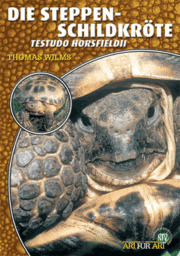

Schildkröten sind die Sympathieträger unter den Reptilien. Urtümliches Äusseres gepaart mit liebenswertem Wesen und sprichwörtlicher Gemütlichkeit machen sie bei allen Altersgruppen beliebt. Die Steppenschildkröte bildet da keine Ausnahme, ganz im Gegenteil: Ihr „handliches“ Format und die einfach zu erfüllenden Haltungsanforderungen machen sie zu einem äusserst geeigneten Terrarientier. Thomas Wilms, DRACO-Redakteur und Leiter des „Reptiliums“, schildert aus seiner langjährigen erfolgreichen Haltungspraxis sämtliche Aspekte rund um Haltung und Pflege dieser attraktiven Schildkröten. Ausserdem lesen Sie, wie Sie Ihre Tiere zur Paarung stimulieren, die Eier ausbrüten und die niedlichen Jungen aufziehen können.
Systematik und Körperbau
Die faszinierende Biologie: Aus dem Leben der Steppenschildkröte
Alle Informationen zur artgerechten Haltung: Vom geeigneten Terrarium über Einrichtung und Technik bis hin zur Fütterung
Erfolgreich nachzüchten: Paarungsstimulation, Inkubation der Eier und Aufzucht der Jungtiere
Problemlösungen: Wie man die häufigsten Fehler bei der Pflege vermeidet, und wie man kranken Tieren helfen kann
Brillante Fotos
Composition
Feeding recommendation
Technical details
Size information
0 of 0 reviews
Give us a rating!
Share your experience with the product with other customers.
Login
No reviews found. Go ahead and share your findings with others.
Handbook of forage plants 2nd revised editionMarion Minch is not only a successful breeder of diverse tortoises for many years, but also an excellent connoisseur of native wild herbs. She founded and runs samenkiste.de, which is well known to many tortoise keepers and nature lovers. Her name is inextricably linked with reptile care and species-appropriate nutrition for tortoises. Her handbook of food plants summarises the most important native food plants for herbivorous and omnivorous reptiles. She not only considers tortoises, but also iguanas, spiny-tailed dragons and even chameleons. From the basics of plant biology to native wild herbs to suitable food plants for hardy tropical reptile species, this comprehensive work provides the basis for species-appropriate keeping. In the expanded and supplemented 2nd edition, the plant section is divided according to flower colour. This makes it even easier to identify wild herbs. The work has also been supplemented with a wealth of additional information and many pictures.
Geckos in the terrarium by Astrid FalkThe book offers a comprehensive introduction to geckos and their species-appropriate keeping in terrariums. It explains what you need to think about before buying a gecko and what preparations should be made. The book describes in detail how the terrarium is technically equipped and set up. The care of the animals, their special features and behaviour, their diet, reproduction and rearing of young animals are described, as well as diseases and husbandry problems with tried and tested suggestions for prevention and treatment. Individual gecko species that are particularly suitable for keeping and breeding in terrariums are portrayed in detail in the second part of the book.
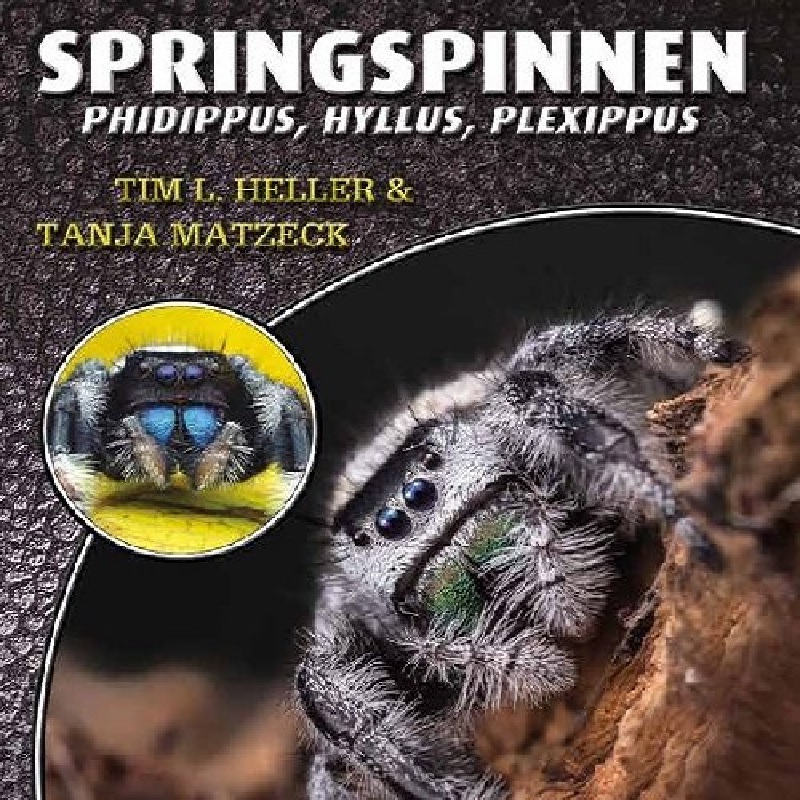
Book Jumping Spiders -
Phidippus, Hyllus & Plexippus
A guide to keeping jumping spiders of the genera Phidippus, Hyllus & Plexippus. Who can resist the charm of jumping spiders? The childlike appearance of their expressive face simply leaves no one cold! In addition, their behavior is extremely exciting to observe, their colors are bright and their requirements for species-appropriate keeping are very easy to meet. No wonder these likeable jumpers are all the rage!
This volume in the "Species by Species" series describes in detail what to look out for when buying and keeping them, introduces the most commonly kept species and color forms and provides plenty of tips on how to keep them successfully - so you can be sure they will breed well!
Species by Species introduces you to the books in this series, which present the most popular terrarium animals. Each volume offers you detailed, practical care instructions and all the information you need to successfully breed your animals.
All important questions from the required tank size to terrarium set-up, technical equipment, species-appropriate nutrition and disease prevention are answered with numerous tricks and tips.
Experienced, long-standing breeders reveal how you can encourage the animals to reproduce and raise healthy young.
All this in full color, generously illustrated and attractively designed - just about your terrarium animal - species by species
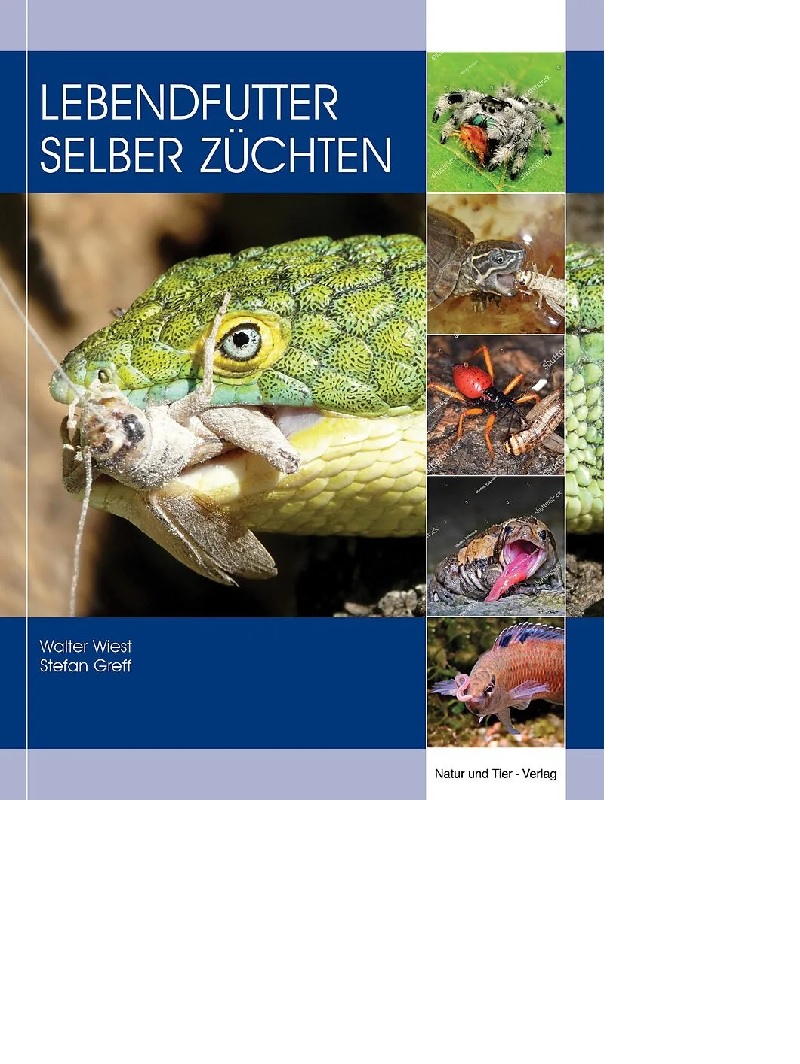
Book "Grow your own live food" - The perfect guide for pet owners
Discover practical and detailed instructions on how you can easily breed food for your reptiles, birds, fish or other animals yourself in the book "Breeding live food yourself". With valuable tips on various food insects, their care and breeding, you can save money and ensure a species-appropriate diet for your pets.
Contents of the book:
Step-by-step instructions for breeding feeder insects
Information on the best types of food for reptiles, birds and fish
Care instructions and breeding conditions for various live food species
Tips for sustainable and cost-effective food production
Why breed your own live food?
Get healthy, fresh food for your animals
Save money and reduce dependence on pet shops
Promote the health and well-being of your animals with species-appropriate food
Whether you are a beginner or an experienced pet owner, this book provides you with everything you need to successfully breed live food yourself.
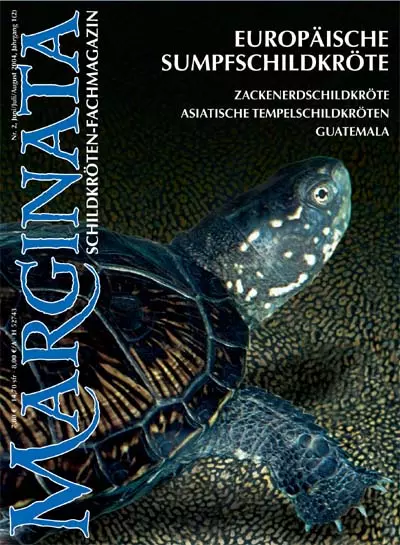
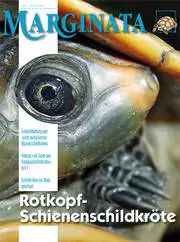
Marginata 69 - New Guinea tortoises – the genus ElseyaCover storyThe unrecognised beauties: New Guinea tortoises (Andreas S. Hennig)My experiences with Branderhorst's New Guinea tortoise, Elseya (Elseya) branderhorsti (Ouwens, 1914) (Andreas S. Hennig)Keeping and breeding of Rhodin's New Guinea tortoise, Elseya (Hanwarachelys) rhodini Thomson, Amepou, Anamiato & Georges, 2015 (Andreas S. Hennig)PortraitGeoemyda spengleri, Chinese serrated tortoise (Andreas S. Hennig)ReportageMacrochelys temminckii – Experiences and impressions with vulture tortoises part 2 (Reiner Praschag)KeepingAn alternative to year-round keeping of the Egyptian tortoise in the terrarium – my experiences with seasonal outdoor keeping of Testudo kleinmanni (Ricarda Schramm)EtymologySawbacks and living maps part 4: Graptemys gibbonsi, Pascagoula humpback tortoise (Holger Vetter)Classifieds & animal placement
Terraria 11 - Tokeh & Co.
As a backpacker in AustraliaMantella
Contents:
2 Editorial Heiko WERNING
TOPIC4 The geckos of the genus Gekko – an overviewWolfgang GROSSMANN14 The Gekko-petricolus group (G. petricolus, G. grossmanni, G. ulikovskii & G. badenii) – Summary of the current state of knowledge, with some personal observations on Gekko ulikovskiiPeter POGADA24 From Tokeh Wolfgang GROSSMANN
SCIENCE31 New speciesList of reptiles newly described in 2007 42 The garden boa, Corallus hortulanus, in the terrariumThorsten SCHMIDT54 Snapping turtles– dangerous, fauna-distorting or interesting pets?Dieter SCHMIDT65 Observations of Madagascan mantella frogs of the genus Mantella in the wildPhilip - Sebastian GEHRING
TRAVEL73 Backpacking in down under – for the sake of reptilesDavid PROETZEL
TERRARIUM PRACTICE84 Test run Artificial aquatic plants / Internal filter / Digital second timer86 Prelude Wandering spiders of the genus CupienniusKriton KUNZ90 Eye-catcherA rooftop oasis for reptilesAxel KWET94 Also near you 97 TERRAnetzRattlesnake pages 98 TERRAglobal Of cobras and Siamese fighting fishJoachim BULIANHerpetologists will find what they are looking for: Curiosities at the witches' market in La PazMartin JANSEN104 TERRAwinn
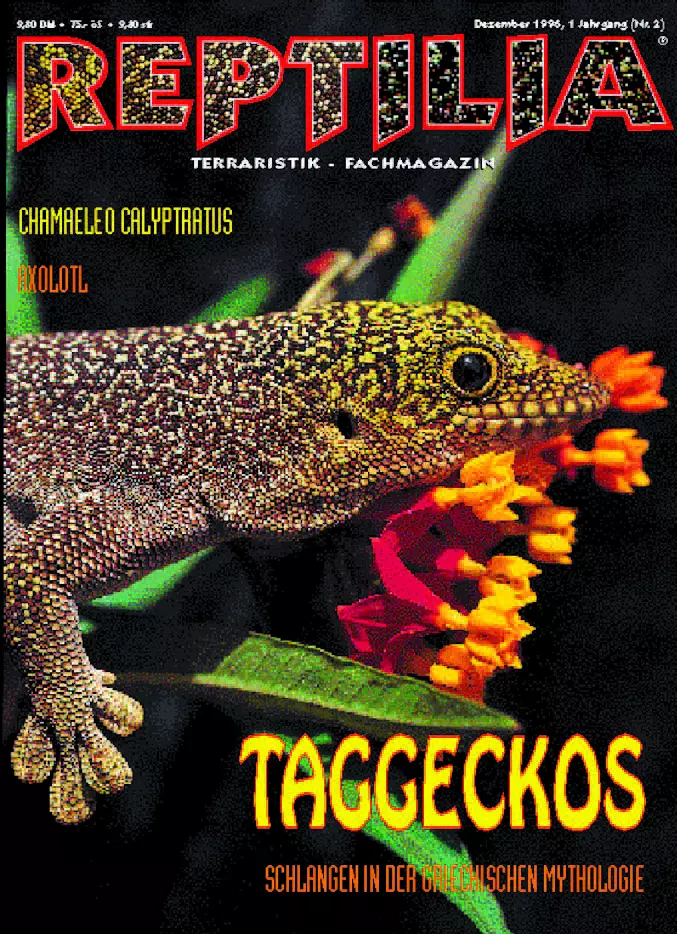
Reptilia 31 rainforest terrariums
Giant millipedesCrocodile-tailed crested lizardsBamboo otters
Contents:
2 EDITORIAL
3 READER LETTERS
5 MAGAZINE
12 DATES
18 WESTERN HERP PERSPECTIVES: Reptile Television, By B. Love
20 PHOTOREPORTAGE: Rainforest terrariums, By M. Schmidt
28 REPORTAGE: Rain for the rainforest – Mist and irrigation in the rainforest terrarium, By P. Nowark
32 REPORTAGE: Materials for back wall design in rainforest terrariums, By T. Doussier
37 REPORTAGE: Plants in the rainforest terrarium, By B. & W. Schwarz
43 TRAVEL: The herpetofauna of south-west Morocco, By U. Schlüter
51 PORTRAIT AND POSTER: Natrix natrix, By H. P. Eckstein & B. Trapp
55 KEEPING AND BREEDING: On the lifestyle, keeping, care and reproduction of the crocodile-tailed humpback lizard Shinisaurus crocodilurus, By M. Rogner
62 HERPETOFAUNA: Information on the lifestyle and husbandry of the bamboo otter Trimeresurus kanburiensis, By J. Bulian
67 REPORTAGE: Saving the giant tortoises on Galápagos, By H. W. Köhler
74 KEEPING AND BREEDING: Tropical giant millipedes, By F. Gast
77 HERPETOCULTURE: Devilish, divine snake. Aspects of snake symbolism from a psychological perspective Part 2: Psychological foundations, the snake as a symbol of the unconscious, ambivalence of the snake symbol, By K. Kunz
87 CLASSIFIED ADS
91 ADVICE AND ACTION
93 LIBRARY
104 GLOSSE: An autumn morning dream, By L. Hogeback
Terraria No. 28 - Fire salamander
Langnasen-StrauchnatterHonduras
Inhalt:
Die wundervollen Feuersalamander zählen zu den schönsten Amphibien überhaupt und – nicht erst seit Lurchis Abenteuern – auch zu den bekanntesten. Grund genug, den sympathischen Gesellen ein Titelthema zu widmen. Die Übersicht über die europäischen Unterarten – mit prächtigen Bildern von Benny Trapp – gerät zu einem wahren Farbenrausch in Gelb und Schwarz. Umso erfreulicher für Terrarianer ist, dass Feuersalamander einfach und ohne technischen Aufwand zu halten und nachzuziehen sind – wie Thomas und Yvonne Klesius zu berichten wissen. Und umso erstaunlicher für Herpetologen ist, dass manches im Leben dieser vermeintlich gut bekannten Art doch noch unerforscht ist – wie Wolfgang Sauer an seinen über viele Jahre im Aquarium lebenden „Feuer-Wasser-Salamandern“ herausfand, den ersten sicher nachgewiesenen neotenen Salamanderlarven.
EditorialMagazinSeltenes Phänomen: Erfolgreiche zweite Reifehäutung eines Männchens von Brachypelma schroederiSuzette Sprengel
30 Tage im Reptiliencenter Alice SpringsSandra Fallend
Alarmierender Rückgang von SchlangenpopulationenKriton Kunz
Auch Echsen in höchster GefahrKriton Kunz
Nachschlag - Rhinoclemys funerea/Kinosternon scorpioidesTERRAglobalDer Garten – ein Freilandterrarium Joachim Bulian
TitelthemaDer Europäische Feuersalamander (Salamandra salamandra) und seine UnterartenAxel Kwet
„Feuer-Wasser-Salamander“ – meine neotenen Salamanderlarven Wolfgang Sauer
Biologie, Haltung und Nachzucht des Portugiesischen Feuersalamanders, Salamandra salamandra gallaicaThomas Klesius und Yvonne Klesius
Grüne Schönheit mit langer Nase – Haltung und Nachzucht der Langnasen-Strauchnatter (Philodryas baroni)Christian Ehrlich
Das Schildkrötenjahr Freilandbiologie und Haltung europäischer Landschildkröten über den Jahreslauf Teil 1: März bis April – FrühlingserwachenMichael Wirth
Reise„Exo Terra“-Expedition 2010 nach HondurasRoland Zobel
Neue ArtenListe der im Jahr 2010 neu beschriebenen AmphibienAxel Kwet
BlickfangDie Schildkrötenanlage von Irmhild und Klaus GlückertMichael Wirth
In Ihrer NäheAbo & ServiceVorschau
BrutkastenBis aufs BlutHeiko Werning
Terraria 12 - In search of reptiles in Madagascar
Jackson's three-horned chameleonRattlesnake
Contents:
2 Editorial
Heiko WERNING
TOPIC
4 The infamous coastal road from Tolanaro to Vangaindrano - or how I found Phelsuma berghofi
Hans-Peter BERGHOF
14 The herpetofauna of a coastal forest near Cap Est, north-east Madagascar
Sebastian WOLF
23 Herpetological travel impressions from the Montagne des Francais massif in northern Madagascar
Steven ARTH & Sandra BAUS
SCIENCE
30 Herpetorama
Origin of the Turtles / Vampire Hunter
32 New species
Luperosaurus / Tsingymantis antitra
34 Among researchers
Sulawesi's herpetofauna: Underestimated diversity in a turbulent environment
André KOCH
39 When species evolve - the evolution of the rattlesnake (Crotalus durissus) in northern South America
Christian NEUMANN
50 Grey giants among themselves - of panther tortoises and elephants in Addo Elephant National Park, South Africa
Part 1: The panther tortoise and the Addo Elephant National Park
Michael WIRTH
58 Breeding Chamaeleo (Trioceros) jacksonii merumontanus at moderate temperatures
Thomas PAECH
64 Biology, husbandry and breeding of the small spotted bark scorpion, Isometrus maculatus (DeGeer, 1778)
Alexander TIETZ
TERRARIUM PRACTICE
74 Test run
Coating compound for rainforest terrariums
75 Prelude
Keeping and breeding the New Caledonian Crowned Gecko (Rhacodactylus ciliatus), an uncomplicated gecko
Verena HOTZ
81 Eye-catcher
In the house of the iguanas - a visit to Jürgen Schmidt
Heiko WERNING
86 Also in your neighbourhood
89 TERRAnet
Snake page
90 TERRAglobal
The coastal deserts and the first field trip
Maik DOBIEY
The Cape Cobras of the Kalahari
Karl-Heinz SWITAK
96 TERRAwinn
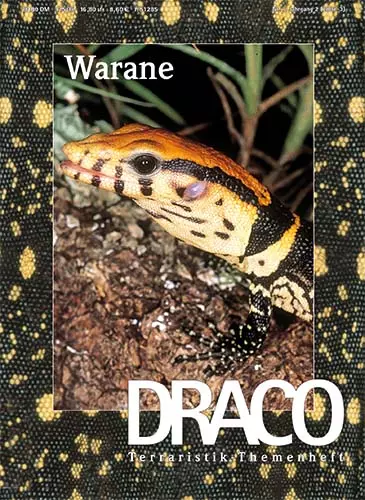
Draco 08 - Tropical tortoises
Contents:
2 Editorial
4 Tropical tortoises, by Matthias Mähn & Thomas Wilms
26 Construction of greenhouses for tropical tortoises, by Stefan Kundert
34 On the care and breeding of the East African leopard tortoise Geochelone pardalis babcocki (LOVERIDGE, 1935), by Matthias Mähn
50 On the care and breeding of the brown tortoise, Manouria emys emys (SCHLEGEL & MÜLLER, 1844), by Matthias Mähn
56 Keeping and breeding the smooth-edged box turtle (Kinixys belliana GREY, 1831), by Sylvia & Volker Büddefeld
61 Keeping and breeding Indotestudo elongata (BLYTH, 1853), by Gabriela Eberling
72 Successful husbandry and breeding of the Carbonara tortoise (Geochelone carbonaria) from northern South America, by Christoph Fritz
78 Between merciless aridity and tropical humidity: Habitats of the charcoal tortoise in South America, by Thomas & Sabine Vinke
92 Magazine
Reptilia 83 - ArgentinaAmphibian of the year: the pond newtUsambara bush viperPoison dart frog Ameerega trivittata - the orange variety Contents:Argentina is still an insider tip among travellers. The Pampa state is one of the most diverse countries in the world and is home to an extremely rich herpetofauna. In this huge South American country, you can marvel at sub-Antarctic glaciers, climb mountains almost reaching the 7,000 metre mark, hike through steaming rainforests, marvel at perhaps the most spectacular waterfalls in the world, traverse gigantic swamps or sweat in some of the hottest spots on the planet. And eat more fantastic beef than anywhere else. REPTILIA has asked leading Latin American experts on the country's reptiles and amphibians to introduce us to this "blank spot" on the map, which is not only home to some terraristic or well-known highlights such as the southern boa, black caiman, yellow anaconda or Argentine tortoise, but also to a large number of species that are largely unknown to us but are extremely interesting and fascinating - from the high-mountain iguana to the black toad.Table of contentsEDITORIALMAGAZINESeveral amphibian and reptile species newly included in the Washington Convention on International Trade in Endangered Species of Wild Fauna and Flora (CITIS)Alexander Gutsche Conservation status WA II for the entire genus AgalychnisTobias Eisenberg The earthquake in Chile in 2010Johara Bourke Information conference "Dangerous animals - keeping, trade and risks"Florian GieseDATESWESTERN HERP PERSPECTIVES"Florgia Herping"from B. LovePHOTOSTORYThe reptiles of Argentinaby S. WinchellHERPETOFAUNAThe Southern Boa or Argentine Boa, Boa constrictor occidentalisby T. & S. VinkeTERRARIUM PRACTICEThe Southern Boa (Boa constrictor occidentalis) and the mandatory marking requirementby H. & E. StöcklHERPETOFAUNAThe Red Teju, Tupinambis rufescensby T. & S. VinkeKEEPING AND REPRODUCTIONFringed-finger lizards (Acanthodactylus) in the wild and in the terrariumPart 5a: The Acanthodactylus scutellatus groupby U. SchlüterPORTRAIT and posterEpidalea calamita (Bufo calamita) (Laurenti, 1768). Natterjack toadvon J. M. Dehling & D. M. DehlingTRAVELThe orange variant of the poison dart frog Ameerega trivittata from the Nassau Mountains in Surinameby H. DivossenKEEPING AND REPRODUCTIONCare and breeding of the Usambara bush viper Atheris ceratophoraby Georg JachanKEEPING AND REPRODUCTIONThe Macrothele genus in the terrarium. Description, care and breedingvon R. HübersHERPETOFAUNAThe common newt (Lissotriton vulgaris) – Amphibian of the Year 2010by A. Kwet, A. Nöllert & J. HillLIBRARYBook review: Whistling frogs in Peru, Duellman & Lehr (2009): Terrestrial-breeding frogs (Strabomanidae) in PeruAndreas SchlüterBook review: Henkel & Schmidt (2009): Leopard GeckosMartin DieckmannSUBSCRIPTION & SERVICEALSO NEAR YOUPREVIEW
NTV - Pointed-headed snakes are one of the most popular snakes among snake lovers.
64 pages
Paperback
14.8 x 21 cm
numerous colour photos
Andreas Gumprecht
Contents:
Beautiful colouring, elegance and strength are combined in one of the most attractive snakes of all, the pointed-headed snake. No wonder it has long been one of the most sought-after snakes among snake lovers. The fact that it does not make any unrealistic demands in terms of keeping does the rest. Snake expert Andreas Gumprecht has been propagating this species for years and has also tracked it down in its natural habitats. In this volume of the "Species by Species" series, he therefore provides first-hand information on all the important aspects of the proper care of the pointed-headed snake. And as an additional delicacy, he also deals with the related Jansen's climbing snake. Tips and tricks on mating stimulation, incubating the eggs and rearing the young make this book an indispensable guidebook for anyone interested in the pointed-headed snake and/or Jansen's climbing snake.
Systematics and body structure
The fascinating biology: From the life of the pointed-headed snake and Jansen's climbing snake
All information on species-appropriate keeping: from suitable terrariums to equipment and technology to feeding
Successful breeding: Mating stimulation, incubation of the eggs and rearing the young
Solutions to problems: How to avoid the most common mistakes in care and how to help sick animals
Brilliant photos
CHF 21.90
❅
❆
❅
❆
❅
❆
❅
❆
❅
❆
❅
❆
This website uses cookies to ensure the best experience possible. More information...