
Repto Fruit Snacks - Fruity treats for reptiles, birds & insectsRepto Fruit Snacks are the ideal supplement for all animals that feed on nectar and fruit in the wild. Whether reptiles, birds or insects - these fruity snacks are enthusiastically accepted and offer a tasty change to the daily menu.Available as a practical mix pack, the snacks provide variety and natural feeding stimuli. For easy feeding, the cups can be combined with the optional snack holder and placed flexibly in the terrarium or bird cage - even in an elevated position.
Product benefits: Ideal for: Nectar and fruit eaters such as reptiles, birds & insects Mix pack: with 4 delicious varieties Feeding: Can be placed individually or with a practical holder Application: Perfect for terrariums, bird aviaries & insect habitats
Trixie natural wood willow bridge
Trixie natural wood willow bridge for small animals, birds and tortoises
untreated natural wood
Suitable for all small animals, birds and tortoises
Flexible
Shelter
Sizes: 22x10cm, 28x17cm, 51x30cm and 65x40cm
The willow bridge can be safely gnawed on by small animals as it is made from untreated natural wood. By offering natural wood and nibbling wood, the small animals' teeth are worn down naturally and do not have to be cut back. The willow bridge is suitable for all small animals, for all birds and also for tortoises as a shelter.
Handbook of forage plants 2nd revised editionMarion Minch is not only a successful breeder of diverse tortoises for many years, but also an excellent connoisseur of native wild herbs. She founded and runs samenkiste.de, which is well known to many tortoise keepers and nature lovers. Her name is inextricably linked with reptile care and species-appropriate nutrition for tortoises. Her handbook of food plants summarises the most important native food plants for herbivorous and omnivorous reptiles. She not only considers tortoises, but also iguanas, spiny-tailed dragons and even chameleons. From the basics of plant biology to native wild herbs to suitable food plants for hardy tropical reptile species, this comprehensive work provides the basis for species-appropriate keeping. In the expanded and supplemented 2nd edition, the plant section is divided according to flower colour. This makes it even easier to identify wild herbs. The work has also been supplemented with a wealth of additional information and many pictures.
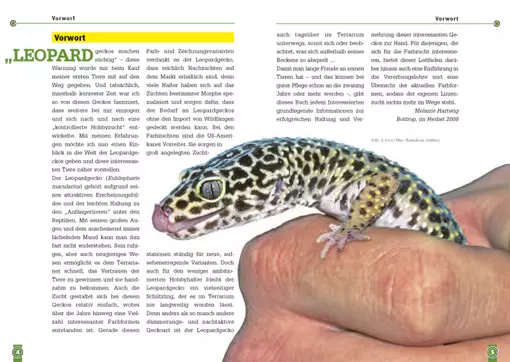
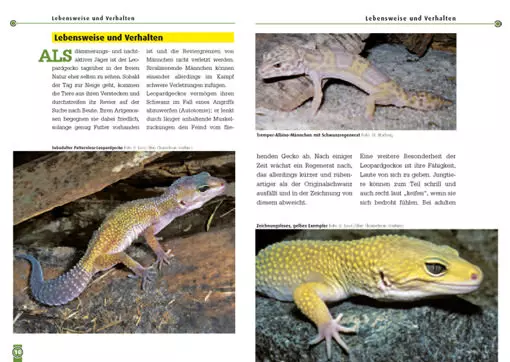
Geckos in the terrarium by Astrid FalkThe book offers a comprehensive introduction to geckos and their species-appropriate keeping in terrariums. It explains what you need to think about before buying a gecko and what preparations should be made. The book describes in detail how the terrarium is technically equipped and set up. The care of the animals, their special features and behaviour, their diet, reproduction and rearing of young animals are described, as well as diseases and husbandry problems with tried and tested suggestions for prevention and treatment. Individual gecko species that are particularly suitable for keeping and breeding in terrariums are portrayed in detail in the second part of the book.
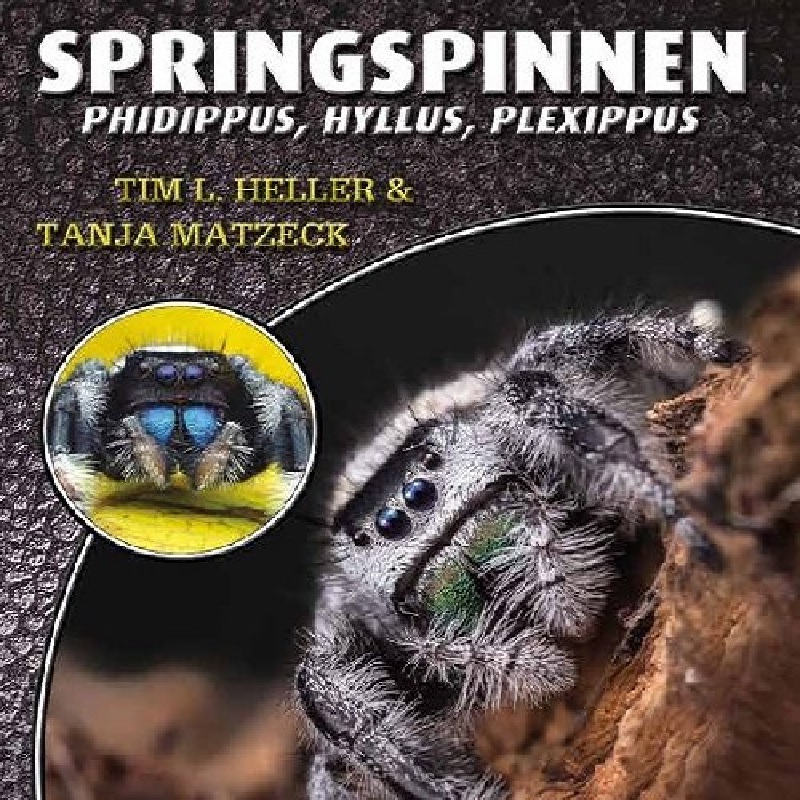
Book Jumping Spiders -
Phidippus, Hyllus & Plexippus
A guide to keeping jumping spiders of the genera Phidippus, Hyllus & Plexippus. Who can resist the charm of jumping spiders? The childlike appearance of their expressive face simply leaves no one cold! In addition, their behavior is extremely exciting to observe, their colors are bright and their requirements for species-appropriate keeping are very easy to meet. No wonder these likeable jumpers are all the rage!
This volume in the "Species by Species" series describes in detail what to look out for when buying and keeping them, introduces the most commonly kept species and color forms and provides plenty of tips on how to keep them successfully - so you can be sure they will breed well!
Species by Species introduces you to the books in this series, which present the most popular terrarium animals. Each volume offers you detailed, practical care instructions and all the information you need to successfully breed your animals.
All important questions from the required tank size to terrarium set-up, technical equipment, species-appropriate nutrition and disease prevention are answered with numerous tricks and tips.
Experienced, long-standing breeders reveal how you can encourage the animals to reproduce and raise healthy young.
All this in full color, generously illustrated and attractively designed - just about your terrarium animal - species by species
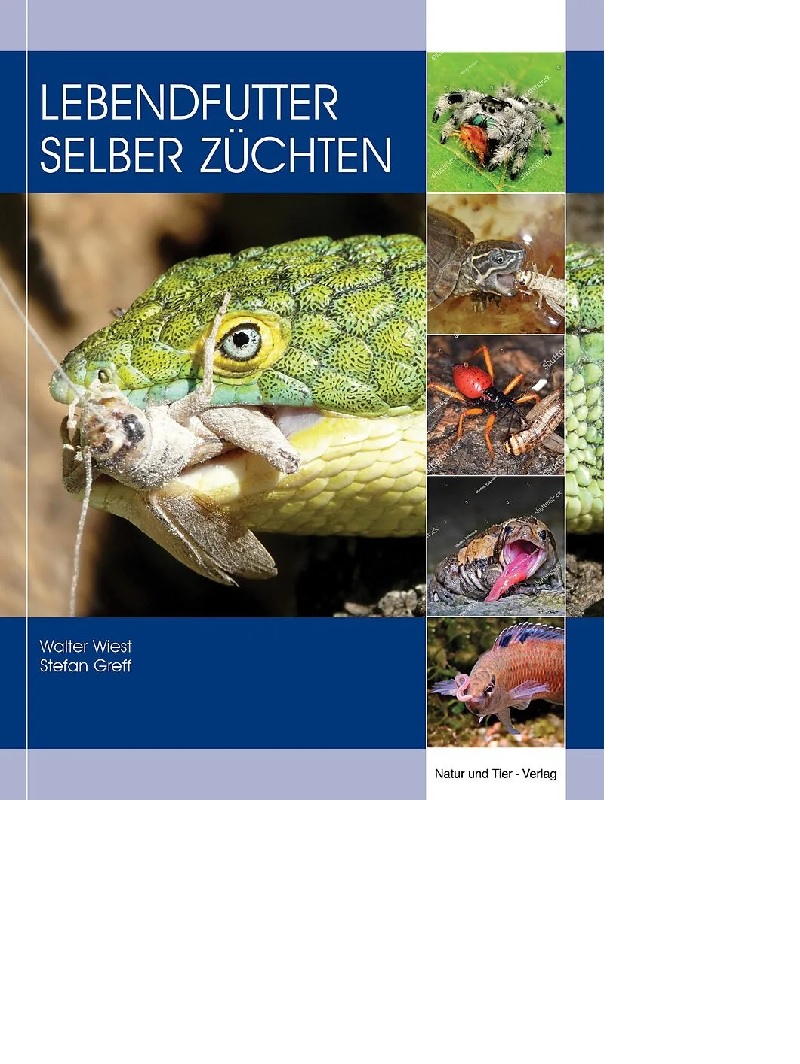
Book "Grow your own live food" - The perfect guide for pet owners
Discover practical and detailed instructions on how you can easily breed food for your reptiles, birds, fish or other animals yourself in the book "Breeding live food yourself". With valuable tips on various food insects, their care and breeding, you can save money and ensure a species-appropriate diet for your pets.
Contents of the book:
Step-by-step instructions for breeding feeder insects
Information on the best types of food for reptiles, birds and fish
Care instructions and breeding conditions for various live food species
Tips for sustainable and cost-effective food production
Why breed your own live food?
Get healthy, fresh food for your animals
Save money and reduce dependence on pet shops
Promote the health and well-being of your animals with species-appropriate food
Whether you are a beginner or an experienced pet owner, this book provides you with everything you need to successfully breed live food yourself.
Marginata 69 - New Guinea tortoises – the genus ElseyaCover storyThe unrecognised beauties: New Guinea tortoises (Andreas S. Hennig)My experiences with Branderhorst's New Guinea tortoise, Elseya (Elseya) branderhorsti (Ouwens, 1914) (Andreas S. Hennig)Keeping and breeding of Rhodin's New Guinea tortoise, Elseya (Hanwarachelys) rhodini Thomson, Amepou, Anamiato & Georges, 2015 (Andreas S. Hennig)PortraitGeoemyda spengleri, Chinese serrated tortoise (Andreas S. Hennig)ReportageMacrochelys temminckii – Experiences and impressions with vulture tortoises part 2 (Reiner Praschag)KeepingAn alternative to year-round keeping of the Egyptian tortoise in the terrarium – my experiences with seasonal outdoor keeping of Testudo kleinmanni (Ricarda Schramm)EtymologySawbacks and living maps part 4: Graptemys gibbonsi, Pascagoula humpback tortoise (Holger Vetter)Classifieds & animal placement
NTV - False map and Mississippi humpback turtles
64 pages
Format: 14.8 x 21 cm
Paperback
numerous colour photos
Author Elmar Meier
Content:
Systematics and body structure
The fascinating biology: From the life of the false map and Mississippi humpback turtle
All information on species-appropriate keeping: From suitable terrarium to equipment and technology to feeding
Successful breeding: Mating stimulation, incubation of the eggs and rearing of hatchlings
Solutions to problems: How to avoid the most common mistakes in care, and how to help sick animals
Brilliant photos
Marginata 27 - Charcoal-burning tortoise
Iranian tortoises: Part 2Sea turtles from SipadanDry resting of pond turtles
Contents:
EditorialMagazineDates
REPORTAGEThe Charcoal-burning tortoise (Chelonoidis carbonaria)Hans - Dieter Philippen
REPORTAGECharcoal-burning tortoises (Chelonoidis carbonaria ssp.) observed in the wild in the Lesser AntillesPeter Fehringer
BREEDINGAlmost 40 years of keeping and breeding tortoises using the charcoal-burning tortoise as an example Victor Mislin
REPORTAGECharcoal-burning tortoises on the island of Barbuda – an unusual experience during a short stayPeter Fehringer
REPORTAGEAlbino charcoal-burning tortoises – a common mutationHans – Dieter Philippen
POSTERThe Western Malayan pond turtleHans - Dieter Philippen
REPORTAGESipadan – the island of sea turtlesPetra Jungnickel & Jens Jungnickel
REPORTAGEObservations of freshwater turtles in Iran Part 2: Mauremys caspicaMarkus Auer & Mario Herz
REPORTAGEAestivation of European pond turtles in SpainJochen Meyer
BREEDINGComments on the breeding of Pyxidea m. mouhotii and P. m. obsti as well as observations on plastron colouration of the juveniles Herbert Becker
REPORTAGEAdder eats European pond turtle Michael Wirth
Book tipClassifiedsSubscription & ServiceRegional guide
Terraria 18 - Building Large Terrariums
In the rainforests of MadagascarGiant salamander
Contents:
2 Editorial Mike ZAWADZKI4 Magazine Remarkable import: Grave frogs of the genus Calluella/DGHT once again a member of the BNA – Opening of a new BNA- training centre in Hambrücken/ 24th Terraristikbörse Karlsruhe in new hall/Legal/Reference/Vegetarian cravings of a garter snake?/Marketplace12 TERRAglobal All beginnings are difficult Maik DOBIEY The forgotten "insufficient data" species Mirco SOLÉ Cover story: Building Large Terrariums16 17 square metres of rainforest Wolfgang DAHM26 When they grow larger – the relocation of the caimans Matthias SCHMIDT35 A terrarium wall for tropical tortoises (Testudinidae) Erica HAMERS & Hans – Dieter PHILIPPEN40 Construction of a large wooden terrarium for diamond pythons Sascha ESSER43 The Kárpathos water frog (Rana cerigensis or Pelophylax cerigensis): Taxonomic change and acute endangerment Hans-Jürgen LUEF50 Giant salamanders of the genus Andrias – a Japanese-Chinese relationship Lutz DIRKSEN58 To the knowledge of an unknown: Cricosaura typica, the Cuban night lizard Ansel FONG G. & Irelis BIGNOTTE-GIRÓ64 Journey Silky sifakas and flat-tailed geckos – the Marojejy National Park Peter KRAUSE & Sebastian WOLF77 New species The smallest frog of the South American Andes Axel KWET A “feather-tailed gecko” from the south-western Angola Mirko BARTS New tree frogs in Europe Axel KWET80 Among researchers The diversity of amphibian species in a lowland rainforest in Borneo Alexander KELLER83 A visit to the Museo da Historia Natural de Asunción, Paraguay Uwe SCHLÜTER88 Near you91 Subscription & Service94 Preview96 Incubator The lizard wall Mike ZAWADZKI
Reptilia 89 - Cobras
BaumvogelspinnenPyxis arachnoidesYucatán
Inhalt:
Kaum ein anderes Reptil erfüllt den Menschen seit alters so sehr mit gleichermaßen Faszination und Furcht wie die Kobras. Während in Mühlheim das entfleuchte Jungtier einer solchen Giftnatter gleich dafür sorgt, dass ein ganzes Haus entkernt wird, leben die Menschen kompletter Erdteile dauernd in direkter Nachbarschaft zu diesen Schlangen. Wir nähern uns diesen besonderen Reptilien mit zoologischem Interesse und werfen einen Blick auf ihre Lebensweise. Und berichten natürlich auch über ihre verantwortungsvolle Terrarienhaltung. EditorialMAGAZINTERMINEWESTERN HERP PERSPECTIVES„Okeetee“B. LoveFOTOSTORYKobrasS. WinchellHERPETOFAUNADie Gebänderte Wasserkobra, Boulengerina annulataM. DaintyKULTURKobras in der hinduistischen KulturR. AvadhaniHALTUNG UND NACHZUCHTDie Schwarzweiße Kobra, Naja melanoleuca. Teil 1Von L. YeomasReiseReise in den Nordosten Yucatáns. Parks und Sehenswürdigkeiten der Reviera MajaS. Esser & W. DahmPORTRÄT und PosterRanitomeya uakariiM. DobieyHALTUNG UND NACHZUCHTErfahrungen mit Haltung und Nachzucht des Vietnam-GoldgeckosP. PogodaherpetofaunaAfrikanische Baumvogelspinnen im PorträtK. MannsReportageUnterwegs auf dem Ahr-RotweinwanderwegH. KreyerhoffherpetofaunaDie Spinnenschildkröte Pyxis arachnoidesJ. Soler & A. Martínez SilvestreTiere unserer heimatDie ÄskulapnatterR. LeptienBibliothekABO & SERVICEAUCH IN IHRER NÄHEVORSCHAUBRUTKASTEN In den Sand gesetztH. Werning
Draco 20 - Crocodiles
Contents:
2 Editorial
4 The agamas of the worldMirko Barts & Thomas Wilms
24 On keeping Philippine sailfin lizards (Hydrosaurus pustulatus)Jiři Gábriš
34 On aggressive encounters among free-living butterfly agamas (genus Leiolepisy CUVIER), with a form of locomotion previously unknown in vertebrates/Wolfgang Böhme
40 In profile: the Vietnamese butterfly lizard (Leiolepis guttata CUVIER, 1829)Uwe Schlüter
42 On keeping and breeding two taxa from the Uromastyx-acanthinura complex: Uromastyx geyri MÜLLER, 1922 and Uromastyx dispar flavifasciata MERTENS, 1962 (Reptilia: Agamidae: Leiolepidinae: UromastyxThomas Wilms, Dieter Ruf & Beate Löhr
56 Agama impalearis (BOETTGER, 1874) – the Atlas agama, well-known and rare in the terrariumHans D. Müller
64Notes on keeping and breeding the lyre-headed lizard, Lyocephalus scutatus (LINNAEUS, 1758) Uwe Bartelt
70The agamas of southern AfricaMirko Barts
80 Experiences with the blue-throated angulate-headed lizard (Gonocephalus bellii) in the terrariumIngo Kober
87 Book box
94 Magazine
Reptilia 116 - Aquatic turtles - Perfect pets
Tarantula Oligoxystre diamantinensisChristmas in the African bushIntroduction to keeping venomous snakesContents: Cover story: Aquatic turtles – perfect petsAquatic turtles have enjoyed great popularity for decades. For a long time, however, small baby turtles were offered in pet shops for little money and ended up mainly with keepers who were not terrarium keepers and simply had no idea about these animals. The consequences are well known: overgrown red-eared sliders and other aquatic turtles that were abandoned or ended up in rescue centres. As a result, aquatic turtle keeping has fallen into disrepute. However, aquatic turtles are wonderful pets if you look after them properly and acquire the necessary expertise. We offer an overview of the species currently being kept and provide you with the tools you need to enjoy these charming turtles for a long time.
EditorialMAGAZINEDATES
WESTERN HERP PERSPECTIVESHerp photography goes crazyB. Love
Photo storyFrequently kept aquatic turtle species – an overviewA. S. Hennig
PracticeYellow stripes again and again …Information on the identification of commonly kept aquatic turtle speciesA. S. Hennig
Keeping and breedingLarge salad with insect garnish. Nutritional advice for commonly kept ornamental, decorative and humpback turtlesA. S. Hennig
Keeping and breedingFrom a five-mark piece to a soup plate. The successful rearing of aquatic turtlesA. S. Hennig
Keeping and breedingNow also poisonous creatures! My introduction to keeping venomous snakesM. Hallmen
Keeping and breedingOligoxystre diamantinensis. A gem in the middle of nowhere among the IschnocolinaeB. Rast & I. Wendt
ServicesLIBRARYALSO NEAR YOU
JourneyChristmas in the bush. Reptiles and more on Makutsi (South Africa)I. Kober
PREVIEW
BRUTKASTENLike a fish in waterH. Werning
Marginata 12 - Giant tortoises
Food plants 7Flat-backed tortoisesEuropean Studbook Foundation
Contents:
2 EDITORIAL
3 READER LETTERS
4 MAGAZINE
6 REPORT The giant tortoises of the Galapagos and Seychelles Islands and of the Mascarene Archipelago Roger Bour
16 BREEDING IN HUMAN CARE 15 years of experience in breeding the Galapagos giant tortoise at Zurich Zoo, Switzerland Samuel C. Furrur
24 REPORTAGE Keeping and care of Aldabra giant tortoises (Dipsochelys dussumieri) at Prague Zoo Petr Velensky & Natasha Velenska
31 PORTRAIT The yellow-spotted tortoise Hans - Dieter Philippen
35 DATES
36 SHORT REPORTAGE Limitation of outdoor enclosures for tortoises Rolf Hecht
41 REPORTAGE Food plants for tortoises (Part VII) Susanne Vogel
46 REPORTAGE Hope for the conservation of the flat-backed tortoise (Pyxis planicauda Grandidier, 1867) in its natural habitat? Roland Hilgartner & Mamisolo Raoilison Hilgartner
50 REPORTAGE European Studbook Foundation Hans - Dieter Philippen
56 OBITUARY In memoriam John L. Behler Hans - Dieter Philippen
59 SHORT REPORTAGE Hatching of an eyeless juvenile of Eurotestudo h. hermanni Heinz Frühauf
60 BOOK TIP
61 CLASSIFIEDS
62 REGIONAL GUIDE
CHF 14.70
❅
❆
❅
❆
❅
❆
❅
❆
❅
❆
❅
❆
This website uses cookies to ensure the best experience possible. More information...