Reptilia 110 - Bearded dragons

Article no: reptilia110

CHF 12.00

Stock: 0

Ready for dispatch in 1-3 days, delivery time 7 working days

Delivery between Monday, 17 August and Tuesday, 18 August
Zahlungsarten
Product information "Reptilia 110 - Bearded dragons"

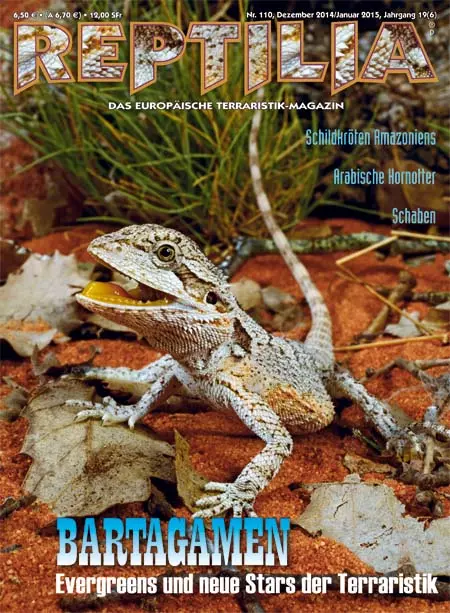
Reptilia 110 - Bearded dragons

Amazonian turtles
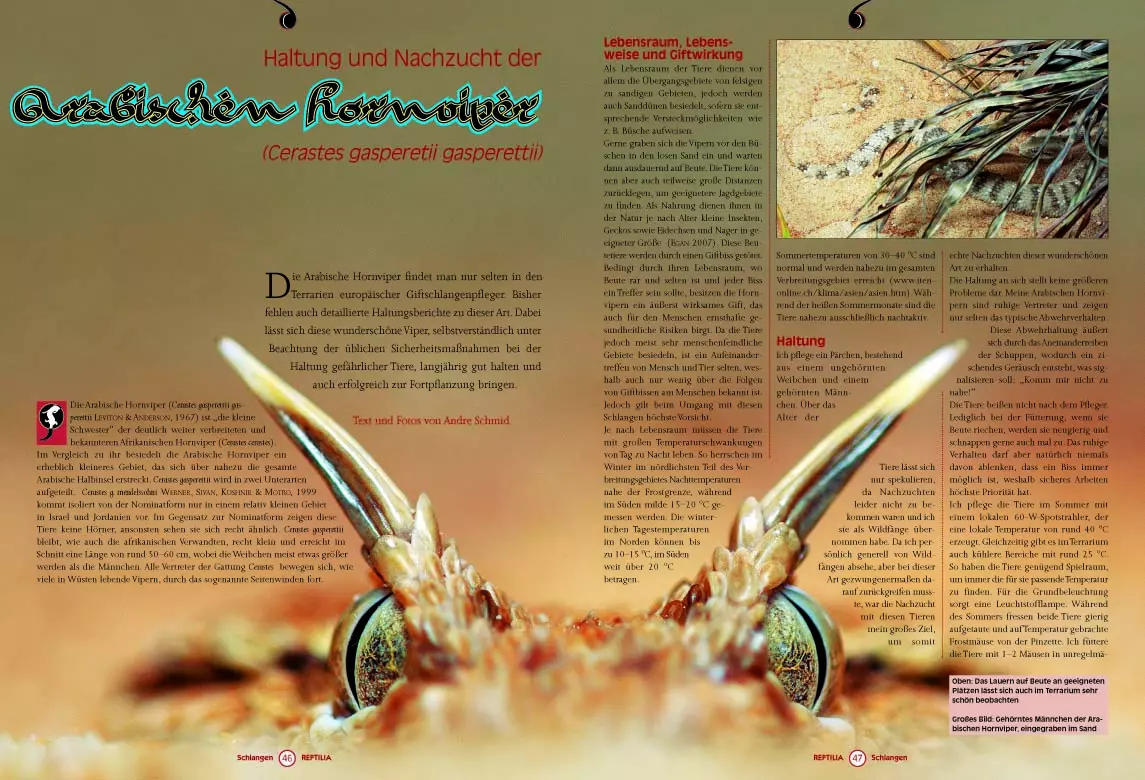
Arabian horned viper
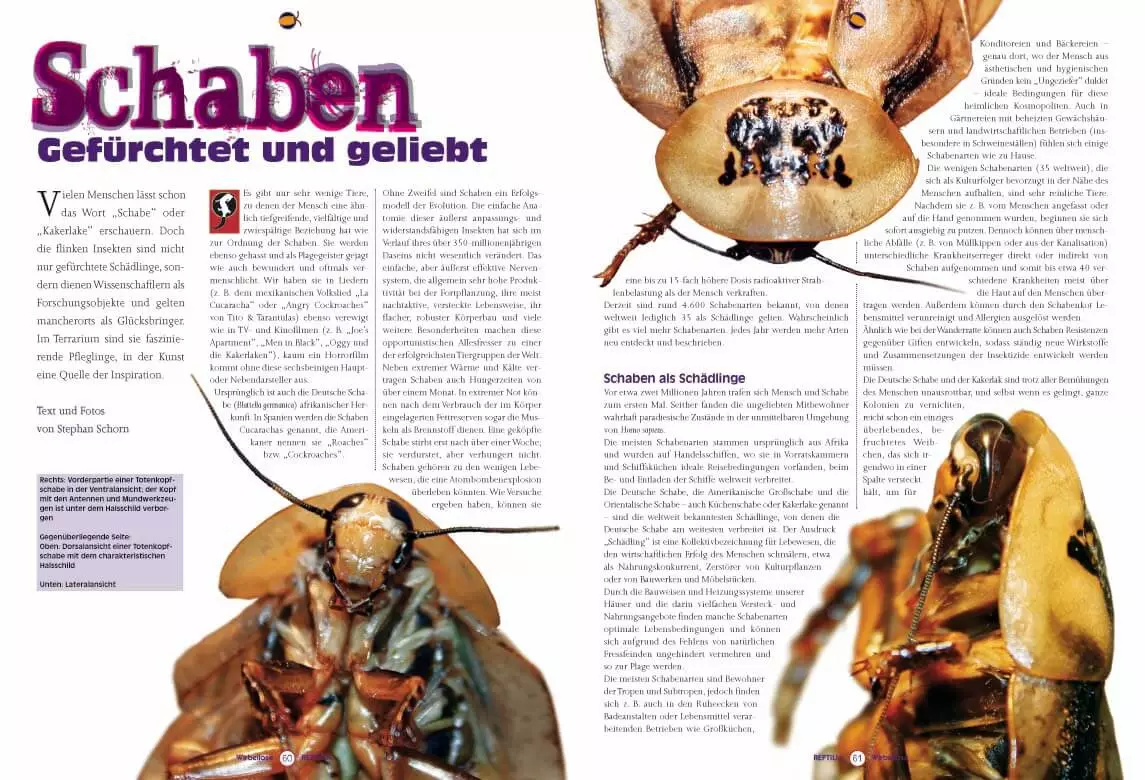
Cockroaches
 
Contents:

Cover story: Bearded dragons – evergreens and new stars of the terrarium hobby

Bearded dragons are still the most popular lizards for keeping in terrariums and can be recommended to beginners without hesitation. We provide the necessary tools and an initial overview of keeping these likeable creatures. But even “old hands” will get their money’s worth: we present new findings on life expectancy and introduce a “new” species of bearded dragon, Pogona minor, which is now making a strong push onto the market.

Editorial
Magazine
DATES

WESTERN HERP PERSPECTIVES
The business with fear
B. Love

Photo story
Still ideal terrarium animals even for beginners: bearded dragons
M. Rogner

Gallery
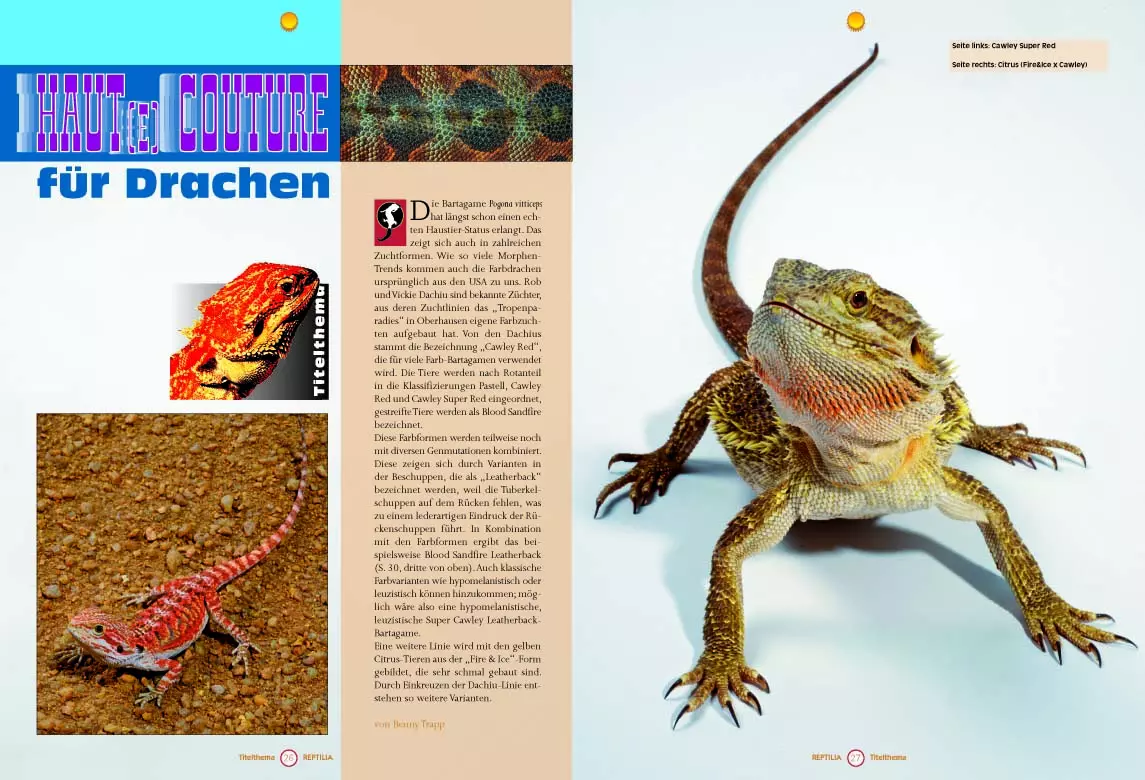
Skin(e) couture for dragons
B. Trapp

Keeping and breeding
On the potential life expectancy of bearded dragons (Pogona vitticeps)
P. M. Müller 

Keeping and breeding
A new dragon conquers the world: Pogona minor in the terrarium
H. Werning

Keeping and breeding
Keeping and breeding the Arabian horned viper (Cerastes gasperetii gasperetii)
A. Schmid

Herpetofauna
Encounters with turtles in the Venezuelan state of Amazonas. Part 1: Aquatic turtles
M. Heart

Reportage
Cockroaches. Feared and loved
S. Schorn

Service
Library
ALSO NEAR YOU

Journey
Of snakes, toads and crocodiles in the tropical “Top End” of Australia. A travel and study report
M. Mayer

PREVIEW

BRUTKASTEN
Cats in the cooking pot!
H. Werning

Composition
Feeding recommendation
Technical details
Size information

0 of 0 reviews

Give us a rating!

Share your experience with the product with other customers.


Suggested products

Handbook of food plants for tortoises and other reptiles
Handbook of forage plants 2nd revised editionMarion Minch is not only a successful breeder of diverse tortoises for many years, but also an excellent connoisseur of native wild herbs. She founded and runs samenkiste.de, which is well known to many tortoise keepers and nature lovers. Her name is inextricably linked with reptile care and species-appropriate nutrition for tortoises. Her handbook of food plants summarises the most important native food plants for herbivorous and omnivorous reptiles. She not only considers tortoises, but also iguanas, spiny-tailed dragons and even chameleons. From the basics of plant biology to native wild herbs to suitable food plants for hardy tropical reptile species, this comprehensive work provides the basis for species-appropriate keeping. In the expanded and supplemented 2nd edition, the plant section is divided according to flower colour. This makes it even easier to identify wild herbs. The work has also been supplemented with a wealth of additional information and many pictures.

CHF 46.50

Geckos
Geckos in the terrarium by Astrid FalkThe book offers a comprehensive introduction to geckos and their species-appropriate keeping in terrariums. It explains what you need to think about before buying a gecko and what preparations should be made. The book describes in detail how the terrarium is technically equipped and set up. The care of the animals, their special features and behaviour, their diet, reproduction and rearing of young animals are described, as well as diseases and husbandry problems with tried and tested suggestions for prevention and treatment. Individual gecko species that are particularly suitable for keeping and breeding in terrariums are portrayed in detail in the second part of the book.

CHF 28.50

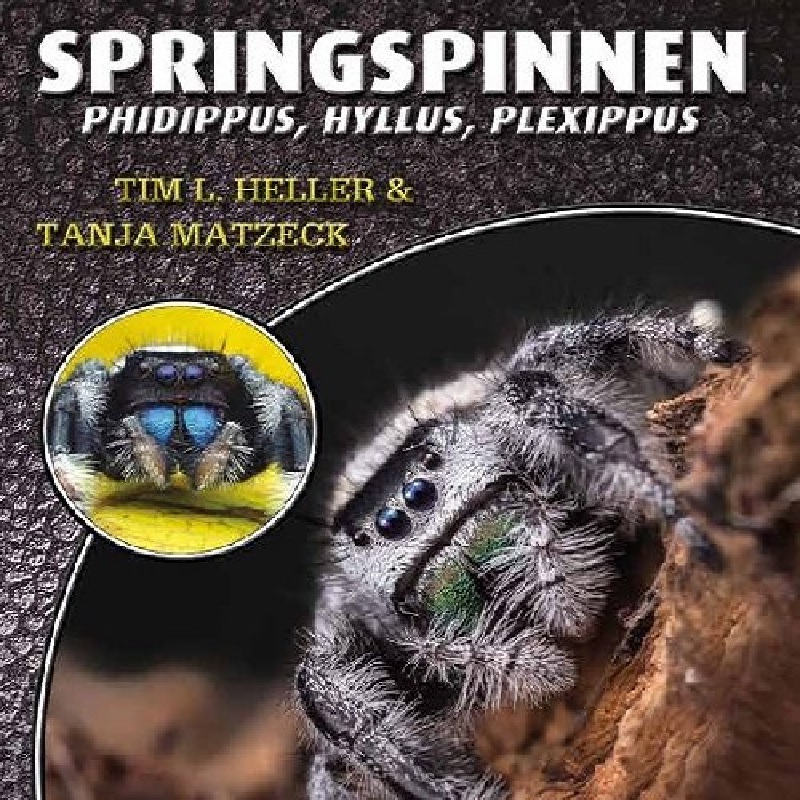
Jumping spiders Phidippus, Hyllus, Plexippus
Book Jumping Spiders - Phidippus, Hyllus & Plexippus A guide to keeping jumping spiders of the genera Phidippus, Hyllus & Plexippus. Who can resist the charm of jumping spiders? The childlike appearance of their expressive face simply leaves no one cold! In addition, their behavior is extremely exciting to observe, their colors are bright and their requirements for species-appropriate keeping are very easy to meet. No wonder these likeable jumpers are all the rage! This volume in the "Species by Species" series describes in detail what to look out for when buying and keeping them, introduces the most commonly kept species and color forms and provides plenty of tips on how to keep them successfully - so you can be sure they will breed well! Species by Species introduces you to the books in this series, which present the most popular terrarium animals. Each volume offers you detailed, practical care instructions and all the information you need to successfully breed your animals. All important questions from the required tank size to terrarium set-up, technical equipment, species-appropriate nutrition and disease prevention are answered with numerous tricks and tips. Experienced, long-standing breeders reveal how you can encourage the animals to reproduce and raise healthy young. All this in full color, generously illustrated and attractively designed - just about your terrarium animal - species by species

CHF 23.90

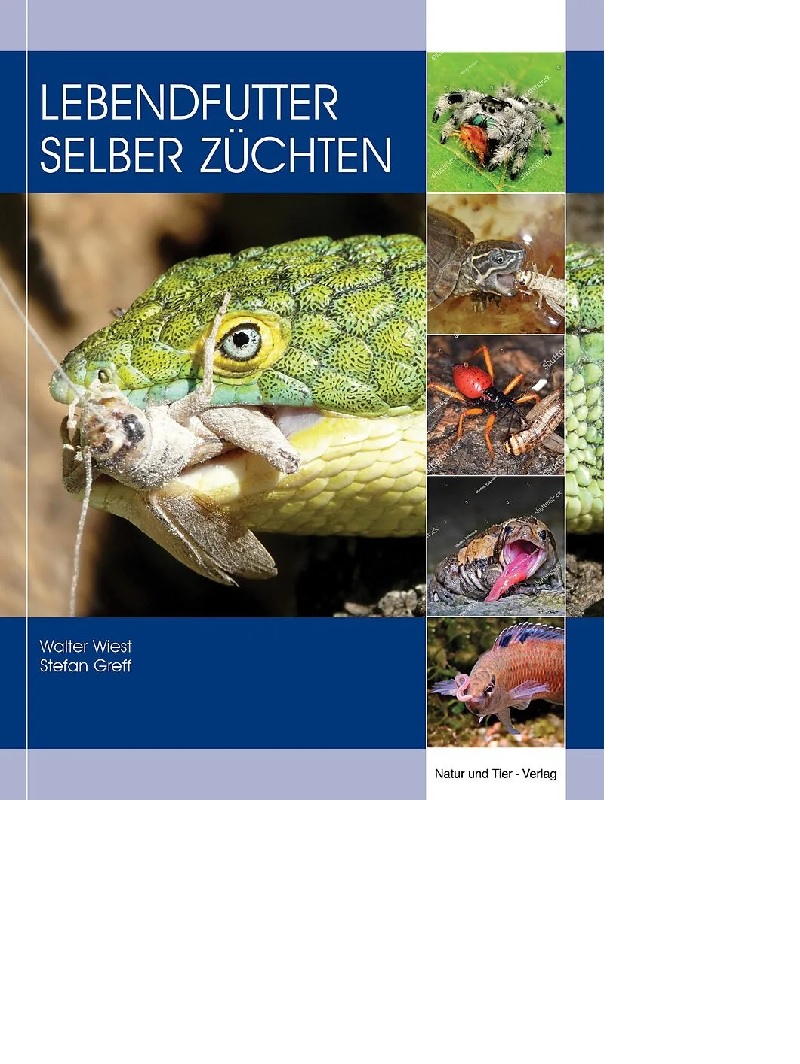
Book Breeding live food yourself
Book "Grow your own live food" - The perfect guide for pet owners Discover practical and detailed instructions on how you can easily breed food for your reptiles, birds, fish or other animals yourself in the book "Breeding live food yourself". With valuable tips on various food insects, their care and breeding, you can save money and ensure a species-appropriate diet for your pets. Contents of the book: Step-by-step instructions for breeding feeder insects Information on the best types of food for reptiles, birds and fish Care instructions and breeding conditions for various live food species Tips for sustainable and cost-effective food production Why breed your own live food? Get healthy, fresh food for your animals Save money and reduce dependence on pet shops Promote the health and well-being of your animals with species-appropriate food Whether you are a beginner or an experienced pet owner, this book provides you with everything you need to successfully breed live food yourself.

CHF 46.50

Marginata 69 - New Guinea tortoises
Marginata 69 - New Guinea tortoises – the genus ElseyaCover storyThe unrecognised beauties: New Guinea tortoises (Andreas S. Hennig)My experiences with Branderhorst's New Guinea tortoise, Elseya (Elseya) branderhorsti (Ouwens, 1914) (Andreas S. Hennig)Keeping and breeding of Rhodin's New Guinea tortoise, Elseya (Hanwarachelys) rhodini Thomson, Amepou, Anamiato & Georges, 2015 (Andreas S. Hennig)PortraitGeoemyda spengleri, Chinese serrated tortoise (Andreas S. Hennig)ReportageMacrochelys temminckii – Experiences and impressions with vulture tortoises part 2 (Reiner Praschag)KeepingAn alternative to year-round keeping of the Egyptian tortoise in the terrarium – my experiences with seasonal outdoor keeping of Testudo kleinmanni (Ricarda Schramm)EtymologySawbacks and living maps part 4: Graptemys gibbonsi, Pascagoula humpback tortoise (Holger Vetter)Classifieds & animal placement

CHF 16.50

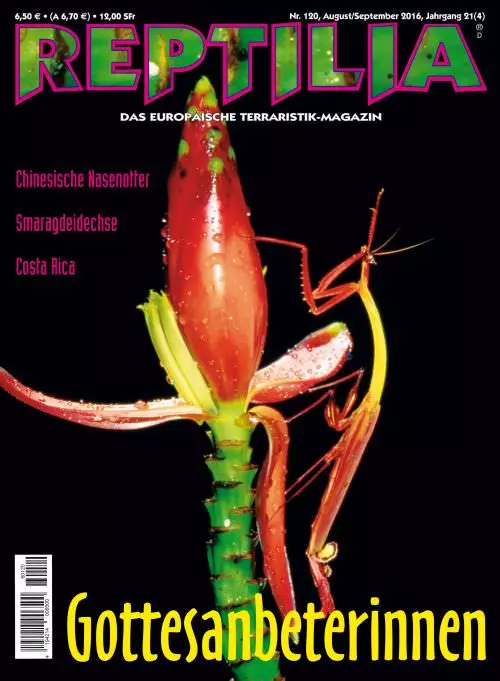
Reptilia 120 - Praying Mantises
Reptilia 120 - Praying Mantises Chinese viperEmerald lizardCosta Rica Contents: Cover story: Praying MantisesNobody can escape the fascination of praying mantises. These predatory insects with their alien appearance and martial mating habits have long secured a permanent place in terrariums. We offer an overview of mantids in breeding, the classics, and the latest trends. We also feature an unusual species from the Philippines and look to eastern Germany, where Mantis religiosa has spread. EditorialMAGAZINEDATES Photo storyThe fascination of praying mantisesK. Kunz Keeping and breedingPraying mantises. The basics of keeping in terrariumsC. J. Schwarz REPORTAGEPraying mantises on the advance in eastern GermanyN. von Lettow-Vorbeck BiologyPraying mantis, change your tune. On the challenge of identifying praying mantises using the Philippine species Creobroter meleagris as an exampleC. J. Schwarz ReportageThe Chinese viper (Deinagkistrodon acutus): a herpetological and cultural phenomenonDr. T. Eimermacher Keeping and breedingThe banded fire salamander (Salamandra salamandra terrestris).  Distribution, habits and breedingM. Rogner RreportageA display terrarium for fire salamandersR. Hoppe Animals of our homelandThe emerald lizardR. Leptien SERVICE WESTERN HERP PERSPECTIVESBut it’s a dry heatB. Love ALSO NEAR YOU TravelCosta Rica – Paradisiacal biodiversity between the Atlantic and the PacificN. Weinbeer PREVIEW INCUBATOR The breakH. Werning

CHF 12.00

Reptilia 118 - Morelia
Reptilia 118 - MoreliaMadagascarHumpback turtlesProfessional reptile breeding Contents:Cover story: Morelia - tree python, diamond python & Co.Everyone knows the green tree python. The animals are admired for their colouring and their favourite position, curling up over a branch, almost symbolises our idea of a tree-dwelling snake. This species has been successfully kept and bred in terrariums for a long time. However, the other pythons of the Morelia genus are also very popular. We offer an overview of these exceptionally beautiful giant snakes, describe new ways of setting up a terrarium for Morelia viridis in a naturalistic way and look at the keeping and breeding of a species that is still little known, the python with a scaly scales, Morelia carinata.EditorialMAGAZINEDATESWESTERN HERP PERSPECTIVESThe fate of books part 2B. LovePhoto storyPython beauties from the other side of the world: Morelia, the tree and diamond pythonsM. MenseKeeping and breedingKeeping a green tree python in a naturally designed large terrariumR. StallingerKeeping and breedingMorelia carinata – The Python with a Difference!O. JugReportageRare exhibition animal: Morelia bredli at Frankfurt ZooD. RösselKeeping and breedingHumpback turtles – The genus GraptemysM. RognerKeeping and breedingProfessional breeding of terrarium animals for the pet tradeSimone P. ReportageUnder the spell of the big telescopic eyes: jumping spiders on the lookoutU. & J. SchimmelpfennigAnimals of our homelandThe sand lizardR. LeptienSERVICELIBRARYALSO NEAR YOUJourneySearching for reptiles in MadagascarC. SchneiderPREVIEWBRUTKASTEN Why do pigeons of all things have to be the symbol of peace?H. Werning

CHF 12.00

Reptilia 24 - Stick insects
Reptilia 24 - Stick insects Incubation of turtle eggsTerrarium photographyArch-snakes Contents: Page 2 - EditorialPage 3 - Letters to the editorPage 6 - MagazinePage 13 - DatesPage 16 - Western Herp Perspectives: Tribute to the Frog, by B. LovePage 18 - Photo report: Stick and ghost grasshoppers, by O. ZomproPage 24 - Keeping and breeding: Ghost insects of the family Heteropterygidae in the terrariumPage 30 - Report: Food animal and terrarium ornament at the same time: The Indian stick insect (Carausius morosus), by F. GastPage 34 - Journey: On a big game hunt for the sticks - Insights into the joys and dangers of a collecting trip, by I. FritzschePage 40 - Herpetology and culture: On the utilisation of some amphibian and reptile species in Peru, by T. EisenbergPage 47 - Portrait and poster: Anolis roquet, by M. SchmidtPage 51 - Herpetofauna: Observations on the ecology and terrarium keeping of the arch-snake Chalcides chalcides mertensi, Klausewitz 1954, by H. EsterbauerPage 55 - Keeping and breeding: Incubation of turtle eggs, by M. MähnPage 63 - Terrarium studies: Herpetological photography – ABC of reptile and amphibian photography for beginners and advanced, by U. StrathemannPage 70 - Herpetofauna: Asaccus – The leaf-fingered geckos of the Oman mountains, by R. LeptienPage 79 - Reptilia on the road: Zoological Garden of the City of Wuppertal, by A. HauschildPage 82 - Advice and actionPage 89 - LibraryPage 96 - Gloss: Forget fighting dogs! A friend for life, by K. Kunz

CHF 9.80

The green water dragon
All about the green water dragon by Heiko Werning 64 pages Format: 14.8 x 21 cm 43 colour photos Paperback Author Heiko Werning Contents: The green water dragon is without question a "classic" of terraristics. For decades it has been a permanent fixture both in the pet trade and in the terrariums of enthusiasts.REPTILIA editor Heiko Werning explains in this volume of the "Species by Species" series what is involved in the species-appropriate keeping and care of the green water dragon and, of course, also reveals how you can successfully breed your favourites and raise the adorable young animals. Systematics and body structure The fascinating biology: From the life of the green water dragon All information on species-appropriate keeping: from suitable terrariums to equipment and technology to feeding Successful breeding: Mating stimulation, incubation of the eggs and rearing the young Solutions to problems: How to avoid the most common mistakes in care and how to help sick animals Brilliant photos

CHF 18.50

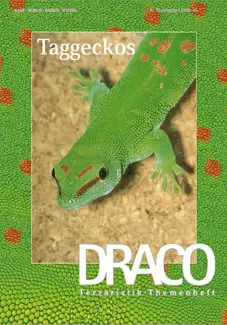
Draco 11 - Day geckos
Draco 11 - Day geckos Contents: 2 Editorial 4 day geckos of the genus PhelsumaJens Krüger 20 A terrarium for PhelumenHartmut Lipp 27 On the diet of day geckos of the genus Phelsuma Gerhard Hallmann 30 Group keeping and socialisation of PhelsumaHartmut Lipp 38 Phelsuma berghofi Krüger, 1996Biology, care and reproductionHand Peter Berghof 43 Experiences in the care and breeding of Phelsuma hielscheri Rösler, Obst & Seipp, 2001 from Isalo National Park Hans Peter Berhof & Roland Gebhard 47 On the keeping and breeding of Phelsuma inexpectata Mertens, 1966Oliver Pürkel 51 Taxonomy, care and breeding of the subspecies of Phelsuma lineata Hartmut Lipp 58 Selective colour breeding in Phelsuma madagascariensis grandis Rudolf Gerhardt 61 It doesn’t always have to be green – the less colourful representatives of the genus Phelsuma Hand Peter Berghof 68 Phelsums on Mauritius – A situation study Holger Schneider 77 To Madagascar – For the sake of day geckos Klaus Liebel & Wolfgang Schmidt 85 Book box 91 Magazine

CHF 16.80

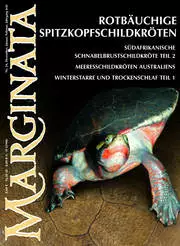
Marginata 24 - Pointed Red-bellied Pond Turtle
Marginata 24 - Red-bellied Pointed Pond Turtle South African Beaked Tortoise Part 2Sea turtles of AustraliaHibernation and dry hibernation Part 1 Contents: EditorialLetters to the editorMagazineDates REPORTAGEThe red-bellied pointed pond turtle, Emydura subglobosa (Krefft, 1876) – long known and yet virtually unknownHans - Dieter Philippen & John Cann BREEDINGLong-term breeding experiences with the red-bellied pointed pond turtle (Emydura subglobosa) – compilation of personal and published data spanning over 40 yearsHans - Dieter Philippen & Martin Leonard Voss POSTERThe Black-bellied Box Turtle, Pelusios niger (Dumeril & Bibron, 1835)Hans - Dieter Philippen REPORTAGEThe African Beaked Tortoise (Chersina angulata). Part 2: Behavioural observationsMichael Wirth REPORTAGEThreats, protection and use of sea turtles. Part 4: Green Turtle (Chelonia mydas) and Loggerhead Turtle (Caretta caretta) in Northwest Australia Gerald & Christa Benyr REPORTAGEPhysiology of rest phases in reptiles, especially tortoises – Part 1: Hibernation – a literature overviewMarkus Baur & Tobias Friz Book tipClassifiedsSubscription & ServiceRegional guide

CHF 16.50

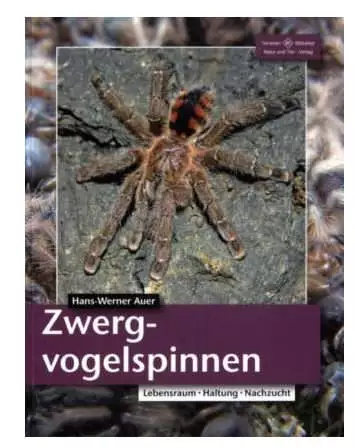
NTV - Dwarf bird spiders
NTV - Dwarf tarantulas all about keeping and caring for these amazing tiny creatures. 160 pages 179 photos Paperback Publication date 24.06.2011 1st edition Author Hans-Werner Auer Anyone interested in dwarf tarantulas, i.e. very small species, has hit the jackpot: These tiny creatures include some of the most exciting, spectacular and colourful species of all!What's more, spider lovers can keep and observe a large number of different tree and ground dwellers in a very small space. And this hobby never gets boring anyway, as new, wonderful species are constantly being discovered and introduced to terraristics.

CHF 35.40