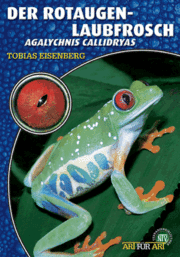
NTV - The red-eyed treefrog

Article no: BZ-1328832

CHF 18.50

Stock: 0

Ready for dispatch in 1-3 days, delivery time 14 working days

Delivery between Tuesday, 5 May and Wednesday, 6 May
Zahlungsarten
Product information "NTV - The red-eyed treefrog"

All about the red-eyed tree frog by Tobias Eisenberg

  • 62 pages
  • Format: 14.8 x 21 cm
  • 52 colour photos, maps, tables
  • 2nd edition
  • Author Tobias Eisenberg
  • Publisher NTV

Contents:

The red-eyed tree frogs are undoubtedly among the most beautiful and interesting frog species of all. Hardly any other amphibian is so well known to laypeople from posters and postcards thanks to its attractive and downright photogenic appearance.
The experienced terrarium keeper and vet specialising in amphibians and reptiles, Tobias Eisenberg, provides you in this guide with all the information about the lifestyle and terrarium keeping of the red-eyed tree frog and explains in an easy-to-understand way how to breed the animals successfully and rear the offspring.

  • Systematics and body structure
  • The fascinating biology: From the life of the red-eyed tree frog
  • All information about species-appropriate keeping: from suitable terrarium to furnishing and technology to feeding
  • Successful breeding: mating stimulation, rearing of tadpoles and juveniles
  • Problem solutions: How to avoid the most common mistakes in care and how to help sick animals
  • Brilliant photos
Composition
Feeding recommendation
Technical details
Size information

0 of 0 reviews

Give us a rating!

Share your experience with the product with other customers.


Suggested products

Handbook of food plants for tortoises and other reptiles
Handbook of forage plants 2nd revised editionMarion Minch is not only a successful breeder of diverse tortoises for many years, but also an excellent connoisseur of native wild herbs. She founded and runs samenkiste.de, which is well known to many tortoise keepers and nature lovers. Her name is inextricably linked with reptile care and species-appropriate nutrition for tortoises. Her handbook of food plants summarises the most important native food plants for herbivorous and omnivorous reptiles. She not only considers tortoises, but also iguanas, spiny-tailed dragons and even chameleons. From the basics of plant biology to native wild herbs to suitable food plants for hardy tropical reptile species, this comprehensive work provides the basis for species-appropriate keeping. In the expanded and supplemented 2nd edition, the plant section is divided according to flower colour. This makes it even easier to identify wild herbs. The work has also been supplemented with a wealth of additional information and many pictures.

CHF 46.50

Geckos
Geckos in the terrarium by Astrid FalkThe book offers a comprehensive introduction to geckos and their species-appropriate keeping in terrariums. It explains what you need to think about before buying a gecko and what preparations should be made. The book describes in detail how the terrarium is technically equipped and set up. The care of the animals, their special features and behaviour, their diet, reproduction and rearing of young animals are described, as well as diseases and husbandry problems with tried and tested suggestions for prevention and treatment. Individual gecko species that are particularly suitable for keeping and breeding in terrariums are portrayed in detail in the second part of the book.

CHF 28.50

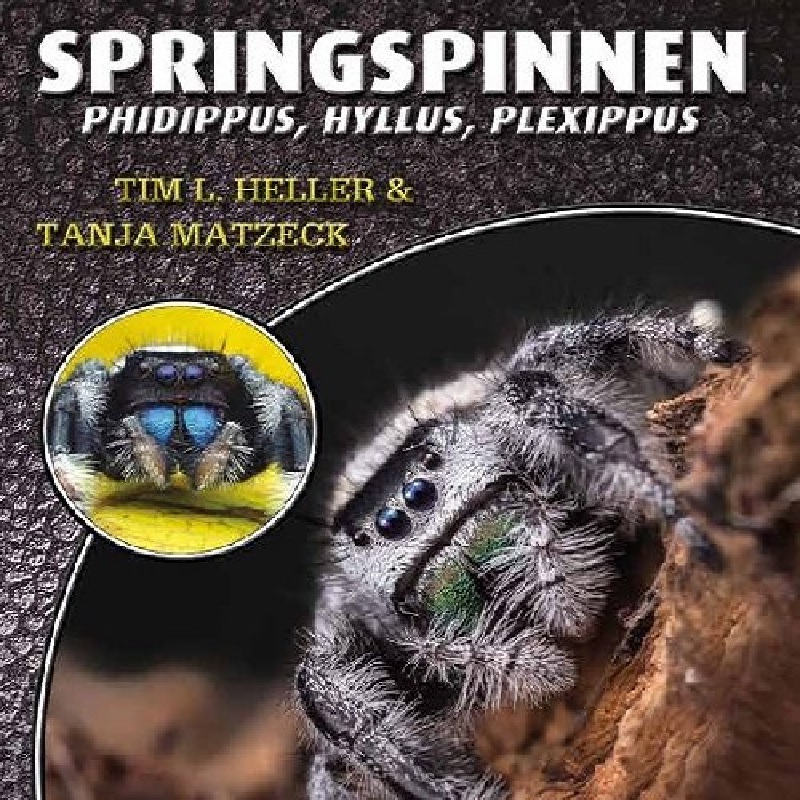
Jumping spiders Phidippus, Hyllus, Plexippus
Book Jumping Spiders - Phidippus, Hyllus & Plexippus A guide to keeping jumping spiders of the genera Phidippus, Hyllus & Plexippus. Who can resist the charm of jumping spiders? The childlike appearance of their expressive face simply leaves no one cold! In addition, their behavior is extremely exciting to observe, their colors are bright and their requirements for species-appropriate keeping are very easy to meet. No wonder these likeable jumpers are all the rage! This volume in the "Species by Species" series describes in detail what to look out for when buying and keeping them, introduces the most commonly kept species and color forms and provides plenty of tips on how to keep them successfully - so you can be sure they will breed well! Species by Species introduces you to the books in this series, which present the most popular terrarium animals. Each volume offers you detailed, practical care instructions and all the information you need to successfully breed your animals. All important questions from the required tank size to terrarium set-up, technical equipment, species-appropriate nutrition and disease prevention are answered with numerous tricks and tips. Experienced, long-standing breeders reveal how you can encourage the animals to reproduce and raise healthy young. All this in full color, generously illustrated and attractively designed - just about your terrarium animal - species by species

CHF 23.90

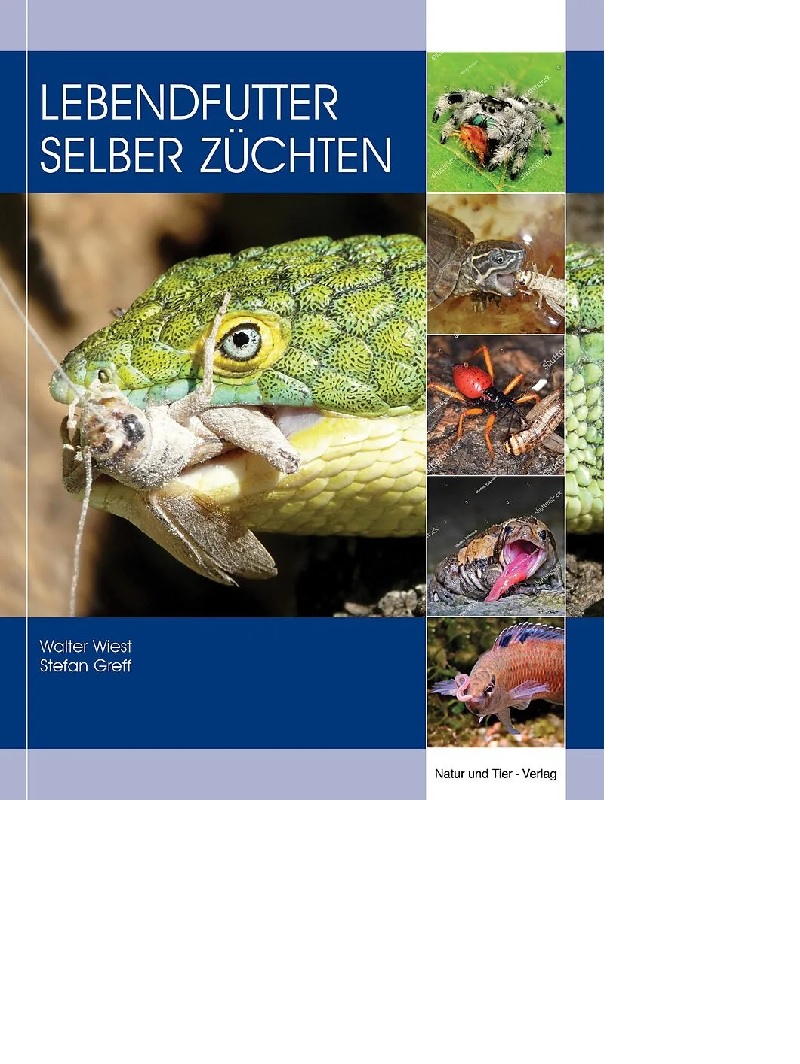
Book Breeding live food yourself
Book "Grow your own live food" - The perfect guide for pet owners Discover practical and detailed instructions on how you can easily breed food for your reptiles, birds, fish or other animals yourself in the book "Breeding live food yourself". With valuable tips on various food insects, their care and breeding, you can save money and ensure a species-appropriate diet for your pets. Contents of the book: Step-by-step instructions for breeding feeder insects Information on the best types of food for reptiles, birds and fish Care instructions and breeding conditions for various live food species Tips for sustainable and cost-effective food production Why breed your own live food? Get healthy, fresh food for your animals Save money and reduce dependence on pet shops Promote the health and well-being of your animals with species-appropriate food Whether you are a beginner or an experienced pet owner, this book provides you with everything you need to successfully breed live food yourself.

CHF 46.50

Marginata 69 - New Guinea tortoises
Marginata 69 - New Guinea tortoises – the genus ElseyaCover storyThe unrecognised beauties: New Guinea tortoises (Andreas S. Hennig)My experiences with Branderhorst's New Guinea tortoise, Elseya (Elseya) branderhorsti (Ouwens, 1914) (Andreas S. Hennig)Keeping and breeding of Rhodin's New Guinea tortoise, Elseya (Hanwarachelys) rhodini Thomson, Amepou, Anamiato & Georges, 2015 (Andreas S. Hennig)PortraitGeoemyda spengleri, Chinese serrated tortoise (Andreas S. Hennig)ReportageMacrochelys temminckii – Experiences and impressions with vulture tortoises part 2 (Reiner Praschag)KeepingAn alternative to year-round keeping of the Egyptian tortoise in the terrarium – my experiences with seasonal outdoor keeping of Testudo kleinmanni (Ricarda Schramm)EtymologySawbacks and living maps part 4: Graptemys gibbonsi, Pascagoula humpback tortoise (Holger Vetter)Classifieds & animal placement

CHF 16.50

Reptilia 120 - Praying Mantises
Reptilia 120 - Praying Mantises Chinese viperEmerald lizardCosta Rica Contents: Cover story: Praying MantisesNobody can escape the fascination of praying mantises. These predatory insects with their alien appearance and martial mating habits have long secured a permanent place in terrariums. We offer an overview of mantids in breeding, the classics, and the latest trends. We also feature an unusual species from the Philippines and look to eastern Germany, where Mantis religiosa has spread. EditorialMAGAZINEDATES Photo storyThe fascination of praying mantisesK. Kunz Keeping and breedingPraying mantises. The basics of keeping in terrariumsC. J. Schwarz REPORTAGEPraying mantises on the advance in eastern GermanyN. von Lettow-Vorbeck BiologyPraying mantis, change your tune. On the challenge of identifying praying mantises using the Philippine species Creobroter meleagris as an exampleC. J. Schwarz ReportageThe Chinese viper (Deinagkistrodon acutus): a herpetological and cultural phenomenonDr. T. Eimermacher Keeping and breedingThe banded fire salamander (Salamandra salamandra terrestris).  Distribution, habits and breedingM. Rogner RreportageA display terrarium for fire salamandersR. Hoppe Animals of our homelandThe emerald lizardR. Leptien SERVICE WESTERN HERP PERSPECTIVESBut it’s a dry heatB. Love ALSO NEAR YOU TravelCosta Rica – Paradisiacal biodiversity between the Atlantic and the PacificN. Weinbeer PREVIEW INCUBATOR The breakH. Werning

CHF 12.00

Draco 20 - Crocodiles
Draco 20 - Crocodiles Contents: 2 Editorial 4 The agamas of the worldMirko Barts & Thomas Wilms 24 On keeping Philippine sailfin lizards (Hydrosaurus pustulatus)Jiři Gábriš 34 On aggressive encounters among free-living butterfly agamas (genus Leiolepisy CUVIER), with a form of locomotion previously unknown in vertebrates/Wolfgang Böhme 40 In profile: the Vietnamese butterfly lizard (Leiolepis guttata CUVIER, 1829)Uwe Schlüter 42 On keeping and breeding two taxa from the Uromastyx-acanthinura complex: Uromastyx geyri MÜLLER, 1922 and Uromastyx dispar flavifasciata MERTENS, 1962 (Reptilia: Agamidae: Leiolepidinae: UromastyxThomas Wilms, Dieter Ruf & Beate Löhr 56 Agama impalearis (BOETTGER, 1874) – the Atlas agama, well-known and rare in the terrariumHans D. Müller 64Notes on keeping and breeding the lyre-headed lizard, Lyocephalus scutatus (LINNAEUS, 1758) Uwe Bartelt 70The agamas of southern AfricaMirko Barts 80 Experiences with the blue-throated angulate-headed lizard (Gonocephalus bellii) in the terrariumIngo Kober 87 Book box 94 Magazine

CHF 16.80

Reptilia 77 - Moss frogs - the genus Theloderma
Reptilia 77 - Moss frogs - the genus Theloderma Travelling antsStar tortoiseAnolis roquet summus Contents: The fantastic masters of camouflage of the Asian frog genus Theloderma (moss or lichen frogs) are highly sought-after, extremely attractive terrarium inhabitants. Several species are endangered and urgently require conservation breeding projects – another reason to strive for their propagation. And the fact that their representatives also display many interesting behaviours, such as waving with the hind legs or “toe-twitching” in the context of catching prey, makes working with them even more exciting.REPTILIA editor Kriton KUNZ, who maintains one of the world’s most species-rich Theloderma collections, along with the Russian Theloderma experts Sergei RYABOV and Ivan ARININ, present these remarkable frogs in detail in the feature topic of this REPTILIA. Table of contents: EDITORIAL MAGAZINEBreakthrough in REPTILIA’s nose frog project: opening of a research and breeding station in Conceptión/Chile in collaboration with Leipzig Zoovby H. Werning DATES WESTERN HERP PERSPECTIVESThe hidden value of reptile excursions vby B. Love PHOTOSTORYMarvellous masters of camouflage. The moss frogs of the genus Thelodermaby K. Kunz KEEPING AND BREEDINGKeeping and breeding of Theloderma gordoni in the terrarium vby I. Arinin KEEPING AND BREEDING Experience with the first breeding of paddle frogs of the species Theloderma horridum in the Exotic Terrarium of the City of Tula vby A. A. Evsyunin TRAVEL EPiece of paradise. The Pouso Alegre in the Brazilian Pantanal from the perspective of a reptile friend. Part 2by M. Hallmen PORTRAIT and posterKinabalu bamboo viper. Parias malcolmiby J. M. Dehling KEEPING AND BREEDING The banded hook-nosed snake of the genus Lystrophis. Keeping and breeding a little beauty by A. Hutwalker REPORT First confiscated, then bred: Star tortoises (Geochelone elegans) at Allwetterzoo Münster vby J. Scholdei REPORTTravelling ants. Predatory nomads of the tropics vby D. J. C. Kronauer KEEPING AND BREEDINGBeauty has a name: Anolis roquet summus (Lazell, 1972) vby H. Herfurth LIBRARY ALSO IN YOUR AREA SUBSCRIPTION & SERVICE PREVIEW INCUBATOR In wild Wedding. An Eastern in two parts for three young men of “southern appearance”, a reptile researcher and a cockroach – Part 2 vby H. Werning

CHF 12.00

The green water dragon
All about the green water dragon by Heiko Werning 64 pages Format: 14.8 x 21 cm 43 colour photos Paperback Author Heiko Werning Contents: The green water dragon is without question a "classic" of terraristics. For decades it has been a permanent fixture both in the pet trade and in the terrariums of enthusiasts.REPTILIA editor Heiko Werning explains in this volume of the "Species by Species" series what is involved in the species-appropriate keeping and care of the green water dragon and, of course, also reveals how you can successfully breed your favourites and raise the adorable young animals. Systematics and body structure The fascinating biology: From the life of the green water dragon All information on species-appropriate keeping: from suitable terrariums to equipment and technology to feeding Successful breeding: Mating stimulation, incubation of the eggs and rearing the young Solutions to problems: How to avoid the most common mistakes in care and how to help sick animals Brilliant photos

CHF 18.50

Reptilia 67 - Tiger Salamander, Axolotl & Co.
Reptilia 67 - Tiger Salamander, Axolotl & Co.Steve Irwin's legacyHusbandry problems with the green tree pythonBroad-shelled turtles in SardiniaContents: 2EDITORIAL 3MAGAZINE 11TERMINE 14WESTERN HERP PERSPECTIVESRevive the old passionFrom B. Love 6 PHOTO REPORTAGEAmbystomatidae Gray, 1850 ?transverse-toothed newtsBy T. Blanck 22HERPETOFAUNAThe cross-toothed newts, family Ambystomatidae Gray, 1850An overview of the speciesBy T. Blanck 36 KEEPING AND REPRODUCTIONKeeping and breeding the banded tiger salamander Ambystoma mavortiumBy T. Blanck & M. Braun 41HERPETOCULTUREThe axolotl in religion, magic and mythBy F. Cupul 45LETTERS11 years ReptiliaVisiting Bill LoveBy H. Werning 51PORTRAIT AND POSTERZamenis longissimusFrom A. Kwet 56 KEEPING AND REPRODUCTIONFringed-fingered lizards (Acanthodactylus) in the wild and in the terrariumPart 2: Basics of terrarium keeping and reproductive biologyBy U. Schlüter 67HERPETOFAUNATestudo marginata - A view of SardiniaBy E. Cimatti 77KEEPING AND REPRODUCTIONThe most common husbandry problems with the green tree python (Morelia viridis)By G. Maxwell 82TERRARIUM SHOW PLANTSCrickey! - A visit to Australia ZooBy K. Grießhammer 90FAQ - FREQUENTLY ASKED QUESTIONSGarter snakesBy M. Hallmen 94LIBRARY 104BROOD BOX The Silence of the Nose Frogs, Part 2 By H. Werning

CHF 11.20

Reptilia 95 - Chameleon & Co. The genus Furcifer
  Krokodil-AnlageAsiatische FalltürspinnenHaltung von Schmuckschildkröten Inhalt: Das Pantherchamäleon, Furcifer pardalis, gehört zu den beliebtesten Echsen überhaupt. Diese extrem farbenprächtigen, imposanten Chamäleons aus Madagaskar werden inzwischen in verschiedenen Lokalformen erfolgreich und dauerhaft in unseren Terrarien nachgezüchtet. Die Gattung Furcifer hält aber noch viele weitere hochinteressante Arten bereit – freuen Sie sich auf ein in jeder Hinsicht buntes Titelthema mit viel Praxisbezug! EDITORIALMAGAZINTERMINEIN 5 JAHREN UM DIE WELTBrüllaffen, Klappschildkröten und VulkaneA. PachmannWESTERN HERP PERSPECTIVESAuf Reptiliensuche in AustralienB. LoveFOTOSTORYChamäleons der Gattung FurciferP. NecasHERPETOFAUNAAbenteuer Komorenchamäleon – auf der Suche nach Furcifer cephalolepisR. LeptienPORTÄTIm Porträt: das Teppichchamäleon, Furcifer lateralis P. NecasIm Porträt: das Pantherchamäleon, Furcifer pardalisP. NecasZUCHTDie Entstehung einer neuen Designermorphe der Kornnatter (Pantherophis guttatus)A. SchmidHALTUNG UND VERMEHRUNGPhilippinenkrokodile (Crocodylus mindorensis) im Aquarium des Kölner Zoos. Teil 2: Bau einer Schauanlage für eine der am stärksten bedrohten Krokodilarten der Welt T. Ziegler, R. Sommerlad, W. Brass, K. van der Straeten, D. Karbe & A. RauhausHERPETOFAUNAAuf dem Weg ins All. Die Welt der Buchstaben-Schmuck-schildkröte, Trachemys scripta. Teil 5: Haltung und Vermehrung von Buchstaben-SchmuckschildkrötenA. S. HennigWIRBELLOSEAußergewöhnliche Falltürspinnen aus Asien: die Gattung Cyclocosmia F. Schneider, B. F. Striffler & I. WendtABO & SERVICETerrarienschauanlagen international Der „Rimba Reptile Park“ auf Bali M. HallmenTiere unserer Heimat Die ErdkröteR. LeptienBibliothekTipps & TricksTestlaufAUCH IN IHRER NÄHEREISEZwischen Anolis und Cycluren: Unterwegs auf Puerto RicoH. WerningVORSCHAUBRUTKASTENIguana chilena, Teil 2 H. Werning  

CHF 12.00

NTV - Dwarf bird spiders
NTV - Dwarf tarantulas all about keeping and caring for these amazing tiny creatures. 160 pages 179 photos Paperback Publication date 24.06.2011 1st edition Author Hans-Werner Auer Anyone interested in dwarf tarantulas, i.e. very small species, has hit the jackpot: These tiny creatures include some of the most exciting, spectacular and colourful species of all!What's more, spider lovers can keep and observe a large number of different tree and ground dwellers in a very small space. And this hobby never gets boring anyway, as new, wonderful species are constantly being discovered and introduced to terraristics.

CHF 35.40

Customers also saw

Iso Tarrium Basic Kit
Kit Iso Terrarium BasicThe Lucky Reptile IsoTarrium Basic is a great terrarium for keeping reptiles. It is made of plastic and offers many practical features to make keeping reptiles easier. The IsoTarrium is better insulated than other terrariums, saving energy and providing the best climate conditions. It can be easily retrofitted and has high-quality panes of special tempered glass for added safety. Due to the practical ventilation holes (created differently for each design), the terrarium has optimal ventilation for your terrarium animals.The terrarium is supplied as a kit, with simple instructions to assemble yourself. If you are looking for a high quality, functional and stable terrarium, the Lucky Reptile IsoTarrium Basic is the perfect choice. Plastic thickness 1cmtempered special glassrobustwaterproofsuper lightweightstackableAvailable in the following sizes. (L x W x H) :S = 80 × 80 × 50 cm M = 100 × 50 × 60 cm (bulky goods surcharge CHF 26.-)L =120 × 50 × 50 cm (bulky goods surcharge CHF 26.-). XL = 120 × 60 × 80 cm (bulky goods surcharge CHF 26.-)

From CHF 279.00

Terra Endura Terrarium
Repto Terra Endura - high-quality terrarium The Repto Terra Endura is a modern, versatile terrarium with an attractive design. Ideal for reptiles, amphibians or invertebrates, it impresses with its robust materials, optimized ventilation and simple assembly.Supplied in 2 packages. The price is for both packages!Features & advantages Material: PVC plastic with wood decor edge, resistant to moisture and more durable than wood due to temperature Front ventilation: Discreet ventilation at the front for even air exchangeSliding glassdoors with lock Mesh panel at the top: For easy installation of lighting and heaters Assembly: Tool-free assembly possible, quick and uncomplicated Design: Modern PVC wood decor in gray - elegant and neutral, suitable for living spaces Lightweight: easy to transport even after installation Variants: 100×60×100 cm, 115×60×60 cmThe Repto Terra Endura combines functionality and design in a well thought-out enclosure for reptiles and amphibians. The PVC housing offers greater moisture resistance and better heat storage than wood - an important feature for a terrarium. The ventilation technology with front ventilation and mesh panel on the top allows controlled air circulation and easy access for lighting and heating systems. Thanks to its light weight, the Endura terrarium can also be moved relatively easily after assembly. It can be assembled without tools, which is particularly practical when setting up a new terrarium or moving house, The modern body in wood decor (gray tones) makes the terrarium a discreet but stylish eye-catcher - ideal for residents who appreciate both aesthetics and function.Zoo Roco tip Use at least one side with structure or climbing branches in the Repto Terra Endura to provide the animal with additional climbing opportunities. Use the mesh panel at the top to flexibly attach lighting and heating elements. A feeding flap (if available) also facilitates daily access without having to open the terrarium completely.

From CHF 479.00