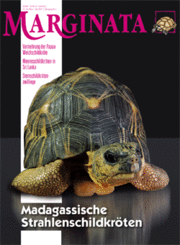
Marginata No. 29 - Madagascan ray turtle

Article no: marginata29

CHF 16.50

Stock: 0

This article is currently not available

Product information "Marginata No. 29 - Madagascan ray turtle"

Marginata No. 29 - Madagascan ray turtle

Schildkrötenforschung in den Tropen
Sternschildkrötenzwillinge
Gallaguar-Schildkrötenschutz in Indonesien

Inhalt:

Editorial
Magazin
Termine

REPORTAGE
Madagaskars Südwesten – Heimat einer gestreiften Exotin
Jutta Hammer

REPORTAGE
Village des Tortues. Auffangstation für gewilderte Schildkröten
Jutta Hammer

HALTUNG UND ZUCHT
Haltung und Nachzucht der Madagassischen Strahlenschildkröte. Teil 1
Michael Wirth & Peter Fritz

POSTER
Sulawesi-Sumpfschildkröte Leucocephalon yuwonoi
Hans-Dieter Philippen

REPORTAGE
Zur Situation von Meeresschildkröten in Sri Lanka
Sascha Pawlowski

REPORTAGE
Erfolgreiches Jahr 2010 im Internationalen Zentrum für Schildkrötenschutz (IZS) im Allwetterzoo Münster
Elmar Meier, Martina Raffel & Hans-Dieter Philippen

REPORTAGE
Die Papua-Weichschildkröte (Carettochelys insculpta) und ihre Nachzucht in „Down Under“
Egon Heiss

REPORTAGE
Conrad Gesner und die Schildkröten
Kriton Kunz

REPORTAGE
Ein nicht alltäglicher Doppelschlupf von Zwillingen bei der Sternschildkröte (Geo­chelone elegans) im Allwetterzoo Münster
Jochen Scholdei

Buchtipp
Kleinanzeigen
Abo & Service
Regionalführer

Composition
Feeding recommendation
Technical details
Size information

0 of 0 reviews

Give us a rating!

Share your experience with the product with other customers.


Suggested products

Handbook of food plants for tortoises and other reptiles
Handbook of forage plants 2nd revised editionMarion Minch is not only a successful breeder of diverse tortoises for many years, but also an excellent connoisseur of native wild herbs. She founded and runs samenkiste.de, which is well known to many tortoise keepers and nature lovers. Her name is inextricably linked with reptile care and species-appropriate nutrition for tortoises. Her handbook of food plants summarises the most important native food plants for herbivorous and omnivorous reptiles. She not only considers tortoises, but also iguanas, spiny-tailed dragons and even chameleons. From the basics of plant biology to native wild herbs to suitable food plants for hardy tropical reptile species, this comprehensive work provides the basis for species-appropriate keeping. In the expanded and supplemented 2nd edition, the plant section is divided according to flower colour. This makes it even easier to identify wild herbs. The work has also been supplemented with a wealth of additional information and many pictures.

CHF 46.50

Geckos
Geckos in the terrarium by Astrid FalkThe book offers a comprehensive introduction to geckos and their species-appropriate keeping in terrariums. It explains what you need to think about before buying a gecko and what preparations should be made. The book describes in detail how the terrarium is technically equipped and set up. The care of the animals, their special features and behaviour, their diet, reproduction and rearing of young animals are described, as well as diseases and husbandry problems with tried and tested suggestions for prevention and treatment. Individual gecko species that are particularly suitable for keeping and breeding in terrariums are portrayed in detail in the second part of the book.

CHF 28.50

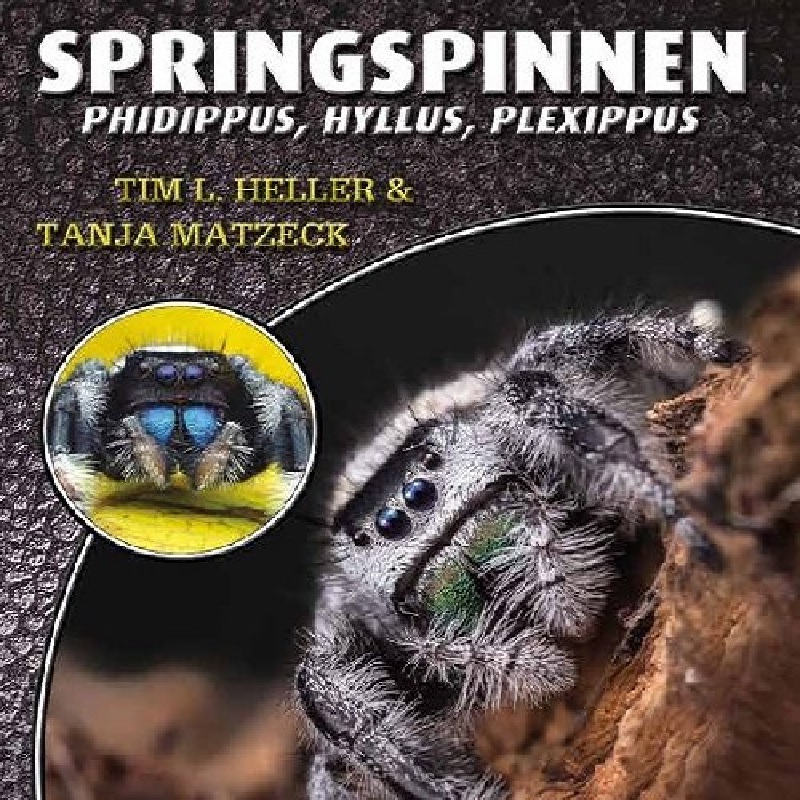
Jumping spiders Phidippus, Hyllus, Plexippus
Book Jumping Spiders - Phidippus, Hyllus & Plexippus A guide to keeping jumping spiders of the genera Phidippus, Hyllus & Plexippus. Who can resist the charm of jumping spiders? The childlike appearance of their expressive face simply leaves no one cold! In addition, their behavior is extremely exciting to observe, their colors are bright and their requirements for species-appropriate keeping are very easy to meet. No wonder these likeable jumpers are all the rage! This volume in the "Species by Species" series describes in detail what to look out for when buying and keeping them, introduces the most commonly kept species and color forms and provides plenty of tips on how to keep them successfully - so you can be sure they will breed well! Species by Species introduces you to the books in this series, which present the most popular terrarium animals. Each volume offers you detailed, practical care instructions and all the information you need to successfully breed your animals. All important questions from the required tank size to terrarium set-up, technical equipment, species-appropriate nutrition and disease prevention are answered with numerous tricks and tips. Experienced, long-standing breeders reveal how you can encourage the animals to reproduce and raise healthy young. All this in full color, generously illustrated and attractively designed - just about your terrarium animal - species by species

CHF 23.90

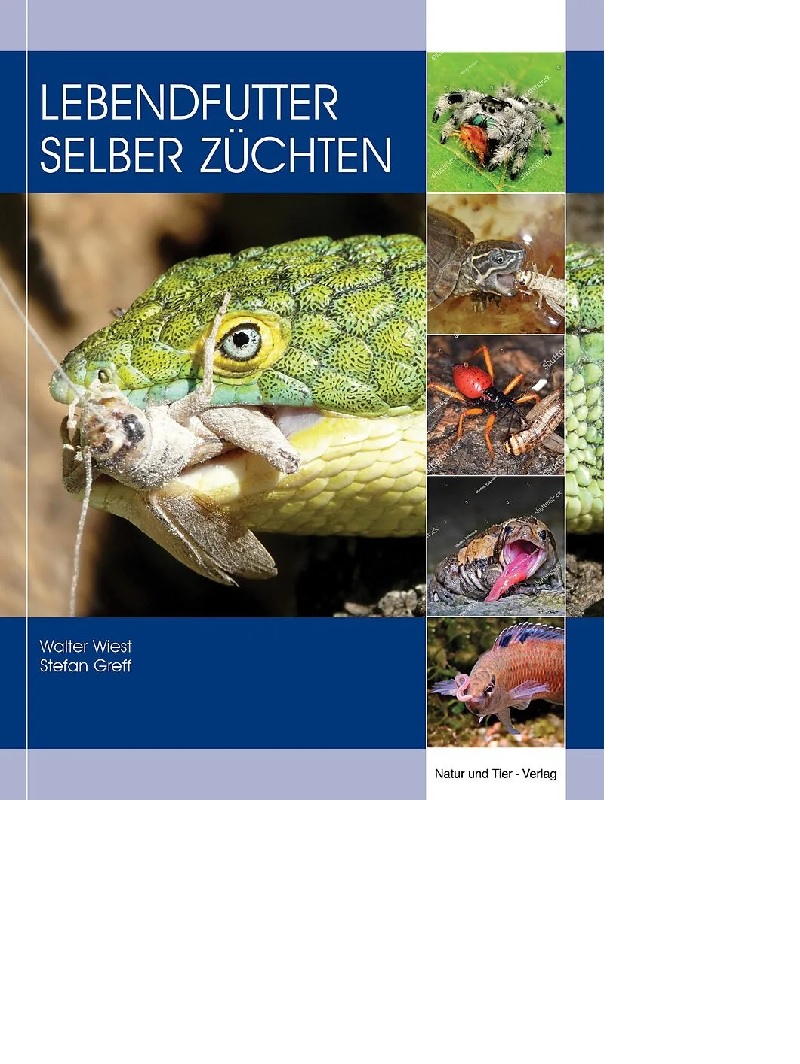
Book Breeding live food yourself
Book "Grow your own live food" - The perfect guide for pet owners Discover practical and detailed instructions on how you can easily breed food for your reptiles, birds, fish or other animals yourself in the book "Breeding live food yourself". With valuable tips on various food insects, their care and breeding, you can save money and ensure a species-appropriate diet for your pets. Contents of the book: Step-by-step instructions for breeding feeder insects Information on the best types of food for reptiles, birds and fish Care instructions and breeding conditions for various live food species Tips for sustainable and cost-effective food production Why breed your own live food? Get healthy, fresh food for your animals Save money and reduce dependence on pet shops Promote the health and well-being of your animals with species-appropriate food Whether you are a beginner or an experienced pet owner, this book provides you with everything you need to successfully breed live food yourself.

CHF 46.50

Marginata 69 - New Guinea tortoises
Marginata 69 - New Guinea tortoises – the genus ElseyaCover storyThe unrecognised beauties: New Guinea tortoises (Andreas S. Hennig)My experiences with Branderhorst's New Guinea tortoise, Elseya (Elseya) branderhorsti (Ouwens, 1914) (Andreas S. Hennig)Keeping and breeding of Rhodin's New Guinea tortoise, Elseya (Hanwarachelys) rhodini Thomson, Amepou, Anamiato & Georges, 2015 (Andreas S. Hennig)PortraitGeoemyda spengleri, Chinese serrated tortoise (Andreas S. Hennig)ReportageMacrochelys temminckii – Experiences and impressions with vulture tortoises part 2 (Reiner Praschag)KeepingAn alternative to year-round keeping of the Egyptian tortoise in the terrarium – my experiences with seasonal outdoor keeping of Testudo kleinmanni (Ricarda Schramm)EtymologySawbacks and living maps part 4: Graptemys gibbonsi, Pascagoula humpback tortoise (Holger Vetter)Classifieds & animal placement

CHF 16.50

Reptilia 57 - Leopard geckos
Reptilia 57 - Leopard geckos 2 - Editorial4 - Magazine15 - Dates18 - Western Herp Perspectives: In the trap, by B. Love20 - Photo report: The leopard gecko (Eublepharis macularius), by D.Duscha30 - Herpetofauna: Behaviour and biology of the leopard gecko (Eublepharis macularius) in Pakistan, by M. Sharif Khan36 - Keeping and reproduction: Colour and pattern variations of the leopard gecko (Eublepharis macularius), by R. Kreutz42 - Journey: In the Magic Kingdom of the Quetzal - Dream journeys through the land of "Eternal Spring", by K. Kunz51 - Portrait and poster: Trimeresurus flavomaculatus, by M. Gaulke56 - Hepertomedicine: Herpesvirus infections in tortoises - disease, diagnosis and prophylaxis options, by S. Fischer & M. Homuth65 - Care and reproduction: Monkeys with orange legs - Care and reproduction of the Chaco macifrog Phyllomedusa hypochondrialis azurea, by E. Biggi72 - Keeping and reproduction: On keeping the ventral viper Maticora bivirgata flaviceps (Cantor, 1839) in the terrarium, by G. Vogel & P. Freed78 - Terrarium technology: Building instructions for a polystyrene terrarium according to Marco Beck, by M. Schicker86 - Classifieds93 - Advice and action95 - Library104 - Incubator: My flat-sharing community, part 2: The Grand Coalition has promised to solve the problems in the country, but once again nobody is showing up, by H. Werning

CHF 11.20

The Australian giant ghost insect
NTV The Australian Giant Stick Insect Everything about keeping and caring for Australian giant stick insects. 64 pages Format: 14.8 x 21 cm 57 colour photos Author Stefan Schorn Publisher NTV Contents: Foreword Classification Physique Size, mass and age Sexual differences and colouration Distribution and habitat Defence Legal basis and acquisition Moulting Preparation Diseases and parasites Nutrition The terrarium Furnishings Terrarium climate Socialisation Handling the animals Breeding Acknowledgements Further information References and further reading

CHF 19.90

Reptilia 105 - Successful breeding of Phelsumen
Reptilia 105 - Breeding Phelsumene successfullySouth AfricaChicken eaterNutrition-related diseases in tortoisesContents:The magnificent day geckos of the genus Phelsuma are among the classics in terraristics. They are particularly popular due to their attractive colouration and very good durability. However, this well-known group always has new surprises in store. We provide an overview of the Phelsuma successfully bred in our terrariums and offer something for beginners as well as advanced breeders in our breeding reports.EditorialMAGAZINEDATESWESTERN HERP PERSPECTIVESReptile laws in the so-called United StatesLovePHOTOREPORTAGEKeeping phelsums in the terrarium. A success story?P. BerghofKeeping and reproductionThe Madagascar Day Gecko, Phelsuma grandis: Distribution, Care and BreedingM. RognerKeeping and reproductionPhelsuma madagascariensis madagascariensis (Gray, 1831) – An old acquaintance offers surprisesH.-P. BerghofKeeping and reproductionCare and breeding of Phelsuma pronki Seipp, 1994 and Phelsuma vanheygeni Lerner, 2004H.-P. BerghofREPORTAGEThe Phelsuma interest group. An association of more than 200 day gecko specialistsP. KrauseKeeping and breedingChicken eaters - adorable beastsC. KässerHealthNutrition-related diseases in tortoises M. BaurArachnofaunaA portrait of African ground-dwelling tarantulasK. MannsLibraryServicesALSO NEAR YOUJourneySouth Africa. In search of reptiles along the Garden RouteP. SchoeneckerPREVIEWBRUTKASTEN Where love fallsH. Werning

CHF 12.00

Reptilia 101 - Outdoor terrariums
Reptilia 101 - Outdoor terrariums Planting of poison dart frog terrariumsSouth American tarantulasTravelling through the USA in a motorhome Contents: Many terrarium animals flourish in natural sunlight and fresh air. Keeping them outdoors, even if only for a few weeks in summer, is good for almost all of our reptiles. However, many species can also live outside all year round.REPTILIA presents the most beautiful outdoor enclosures, documents the construction of two different terrariums as examples and deals with keeping lizards in the garden. EDITORIALMAGAZINEDATES PHOTOREPORTAGELet's get out! The fascination of outdoor terrariumsMartin Hallmen HOLDINGOutdoor keeping of pearl lizardsIngo Kober TERRARIUM PRACTICEUp close to the little adders - building a raised terrarium in the garden and first experiencesH. Kreyerhoff TERRARIUM PRACTICEFear of loss - the protection of outdoor enclosures for tortoisesMichael Wirth KEEPING AND BREEDINGUnusual South American tarantulas of the genus EphebopusKarin Manns TERRARIUM PRACTICEJewels in stainless steel Building a terrarium for poison dart frogs Part 2: PlantingMichael Schulte Animals of our homelandThe yellow-bellied toadRolf Leptien LIBRARYTIPS AND TRICKS WESTERN HERP PERSPECTIVESBoa fantasiesBill Love ServiceALSO NEAR YOU JourneyBest of Southwest. Travelling with the family in search of reptiles. A small travel guide through the south-west of the USAHeiko Werning PREVIEW BRUTKASTENProblem discussionJörg Hofmann

CHF 12.00

Draco 05 - Giant Snakes
Draco 05 - Giant snakesContents: Page content 2 Editorial 4 On the systematics and biology of giant snakes (Boidae), by Dr L. Dirksen & M. Auliya 20 Quo vadis, keeping boids in human hands, by Dr H. D. Lehmann 26 record specimens and man-eaters, by Dr L. Dirksen 32 Notes on the green tree python Morelia viridis(SCHLEGEL 1872) - population-related variants, care and breeding, by A. Kirschner & H. Abend 40 Quo vadis, Boa regia, by A. Kirschner 43 The King Python (SHAW 1802), by A. Kirschner 48 Destination: Down under - The giant snakes of Australia, by V. Franz 56 KLeine Riesenschlangen - Care and breeding of sand boas in the terrarium, by H. Seufer 68 Experiences with rarely kept Corallus species Corallus annulatus annulatus, Corallus hortulanus hortulanus and Corallus hortulanus ruschenbergeria, by S. Wirz 78 Book box 93 Magazine

CHF 16.80

Draco 21 - Lizards
Draco 21 - Lizards Contents: 2 Editorial 4 The true lizards of the family Lacertidae – an overviewWolfgang Bischoff 28 Lizards in the terrariumMichael Kroninger & Mike Zawadski 38 The lizards of GreeceBenny Trapp 43 On the ecology and terrarium husbandry of the Eastern Giant Green Lizard, Lacerta media israelica PETERS, 1964Hans Esterbauer 48 The Canary Island lizard Gallotia galloti (OUDART, 1839)Ingo Kober 60 Es Vedrá – a mystical island and its lizardsMike Zawadski & Michael Kroninger 68The greens from the KaiserstuhlWalther Rohdich 72 Omanosaura – the Arabian collared lizardsRolf Leptien 76Observations on an Aschaffenburg wall lizard populationMartin Felke 82 The Mongolian Desert Runner, Eremias argus PETERS, 1869Uwe Schlüter 87 Book box 94 Magazine

CHF 16.80

Terraria 23 - The green tree phyton
Terraria 23 - The Green Tree Python Construction of an irrigation systemGuadeloupe Contents: Hardly any other snake enjoys as much reverent enthusiasm as Morelia viridis, the Green Tree Python. Even die-hard snake haters can hardly escape the aesthetic fascination radiated by the beautifully green-coloured, elegantly “coiled” pythons on a branch. And then there are the brightly red, yellow or green coloured juveniles! This snake is correspondingly popular in terraristics, and although it is still not an easy species to keep, it has made an impressive triumphant advance in our terrariums in recent years. A good two decades ago, breeding itself was considered a sensation, but today a wide variety of targeted colour breeds are already circulating. The cover story of the upcoming TERRARIA reports on the latest developments in this giant snake – you can look forward to previously unpublished information as well as magnificent photos! Editorial Magazine El Niño to blame for snake bites?/Male toad on wrong routes/Legal matters/Snake conference/Marketplace TERRAglobal Camping in the Páramo Maik Dobiey Cover StoryThe Green Tree Python – Terrarium Set-up and Technology by Michèl Kroneis Outdoor enclosures for Morelia viridis by Joachim Bulian “And the further rearing went smoothly …”. Some notes on the rearing of the Green Tree Python (Morelia viridis) by Joachim Bulian A simple irrigation system for “small” money by Peter Maria Müller Between rubbish and mines: the Dalmatian tortoise Testudo hermanni hercegovinensis. Part 2 by Michael Wirth Butterflies in the house by Hans-Günther Kaiser Travel Herpetological impressions searching for iguanas in the French Antilles: Guadeloupe by Stefanie Schönecker & Patrick Schönecker New species New from New Guinea: two species and genera of narrow-mouthed frogs by Axel Kwet Two new species of agamas in the genera Pseudocalotes and Bronchocela by Jakob Hallermann Among researchers Biodiversity and species decline in Bolivia by Steffen Reichle Eye-catcher In the desert paradise – tortoises and iguanas among columnar cacti. A visit to Robert Blome in Arizona  by Heiko Werning Near you Subscription & Service Preview Incubator 80 mosquitoes for one frog. Part 1 by Heiko Werning

CHF 12.00