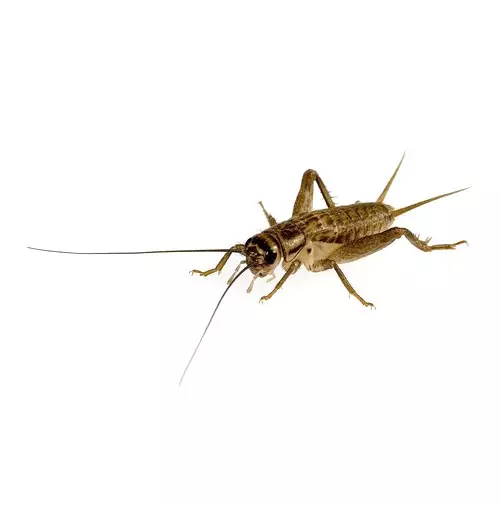
Cricket (Acheta domesticus) medium

Article no: FT-201

CHF 3.50

Stock: 0

Ready for dispatch in 1-3 days, delivery time 14 working days

Delivery between Tuesday, 5 May and Wednesday, 6 May
Contents Food animals
Zahlungsarten
Product information "Cricket (Acheta domesticus) medium"

Cricket (Acheta domesticus) medium / subadult

Cricket (Acheta domesticus) is the standard food insect that no reptile lover should be without.

  • Food animal for reptiles, amphibians and birds
  • average size
  • medium

The cricket is the standard food insect that no reptile lover should be without. Its average size, simple behaviour and relatively high resistance make it extremely popular.

It is accepted by almost every reptile that also feeds on straight-winged insects. As crickets are also found in Central Europe, they are also easy to transport in the cold season without any significant losses. Bird lovers also mainly use crickets to raise their brood of birds.

Order by Sunday evening - delivery on Thursday

Orders received by Sunday evening will be dispatched by A Mail on Wednesday or Thursday.
Please enter a recipient address where the parcel can be delivered.

We accept no responsibility for parcels that are delivered late or collected late.
When it is cold, many insects go into torpor - but the animals recover after a few hours. If it is very cold, we recommend that you order the heat cushion as an extra, as this provides some protection against losses during the winter months.

The live crickets in the shop are only available at this price on Wednesdays - the prices per tin are otherwise Fr. 1.00 per tin higher, as we also feed and care for the crickets.

Even with the greatest care, it can happen that feed animals die due to temperature fluctuations or unpredictable events. We accept no liability for this.


Composition
Feeding recommendation
Technical details
Size information

5 of 5 reviews

4.6 out of 5 stars


80%

0%

20%

0%

0%


Give us a rating!

Share your experience with the product with other customers.


9 February 2025 14:22

Good quality very well packaged with heat pad.

Good quantity and all arrived alive.

21 March 2019 15:22

They grew up very quickly and my

They grew up very quickly and my geckos no longer ate them.

25 March 2018 19:04

fast delivery, without the b...

fast delivery, without the insects dying.

13 November 2017 20:25

Absolutely satisfied. Heimch...

Absolutely satisfied. Top quality cricket received. Does what it promises. We can only recommend it.

11 July 2017 09:23

Highly recommended

Top quality. Fast delivery, simply uncomplicated, will not be the first and last time. :D

Customers also bought

Cricket (Acheta domesticus) micro
Contents Food animals: approx. 120stk / Dose
Cricket (Acheta domesticus) micro - food insect / food animal Cricket (Acheta domesticus) is the standard food insect that no reptile lover should be without. Food animal for reptiles, amphibians and birds average size micro The cricket is the standard food insect that no reptile lover should be without. Its average size, simple behaviour and relatively high resistance make it extremely popular.It is accepted by almost every reptile that also feeds on straight-winged insects. As crickets are also found in Central Europe, they are also easy to transport in the cold season without any significant losses. Bird lovers also mainly use crickets to raise their brood of birds. Order by Sunday evening - delivery on Thursday Orders received by Sunday evening will be dispatched by A Mail on Wednesday or Thursday.Please enter a recipient address to which the parcel can be delivered.We accept no responsibility for parcels that are delivered late or collected late.When it is cold, many insects go into torpor - but the animals recover after a few hours. If it is very cold, we recommend that you order the heat cushion as an extra, as this provides some protection against losses during the winter months. The live crickets in the shop are only available at this price on Wednesdays - the prices per tin are otherwise Fr. 1.00 per tin higher, as we also feed and care for the crickets. Even with the greatest care, it can happen that feed animals die due to temperature fluctuations or unpredictable events. We accept no liability for this.  

CHF 3.50

JBL Clean T - Glass cleaner
JBL Clean T as Glass cleaner for terrarium panes Clean terrarium panes powerful and non-toxic glass cleaner with pump spray head Powerful cleaning Wet the glass pane with glass cleaner, dry it with soft lint-free cloth, if required, repeat the procedure Dissolves most stubborn lime-scale from the inside and outsite of the pane, cleans with the power of nature. Safe for fish and plants Clean terrarium panesThe JBL Clean T dissolves even the most stubborn lime-scale on the terrarium pane. The powerful cleaner is non-hazardous to terrarium animals and dissolves lime scales on terrarium panes with no further agents required. Effortless cleaningSpray on pane and wipe it dry with a soft lint-free cloth. Repeat, if required. In case of lime deposits allow several minutes to soak in before wiping off the deposits. For lime scales above the water level inside the aquarium (e.g. in the drinking and bathing areas) spray directly onto the cloth and wipe away the deposits.

CHF 8.90

released wax caterpillars (Galleria mellonella)
Contents Food animals: approx. 15g
Released waxworms (Galleria mellonella) For reptiles, amphibians, birds or as fishing bait The caterpillars are usually fed to reptiles, amphibians and birds. However, the waxworm is also becoming increasingly important as fishing bait. As a treat For reptiles, amphibians and birds also as fishing bait Waxworms were originally known to beekeepers as a pest in beehives. There the larvae of the moth feed on honey. In commercial breeding, the larvae are reared on a feed mash consisting mainly of wheat bran and honey. The caterpillars are usually fed to reptiles, amphibians and birds. However, the waxworm is also becoming increasingly important as fishing bait. The waxworms are offered in 2 different forms: As breeding stock or in released form. The breeding stock offers the advantage that younger waxworms can also be fed, which are significantly smaller than the adult animals. Due to the feed, the caterpillars must taste sweet, which makes the insects very popular with eaters. Waxworms in breeding stocks should, depending on how quickly the animals are to grow, be kept at around 20 to 30 degrees C. The released waxworms should be stored in the refrigerator at about 6-10 degrees C. In this state, the animals no longer take in food.We obtain these waxworms from a breeder for fishing bait. Substances may possibly have been used in the rearing of the worms that can affect the pupation of the animals. Order by Sunday evening - delivery on Thursday Orders received by Sunday evening will be dispatched by A Mail on Wednesday or Thursday.Please provide a recipient address where the parcel can be delivered.We accept no responsibility for parcels that are delivered late or collected late. Even with the greatest care, it can happen that feed animals die due to temperature fluctuations or unpredictable events. We accept no liability for this.  

CHF 6.90

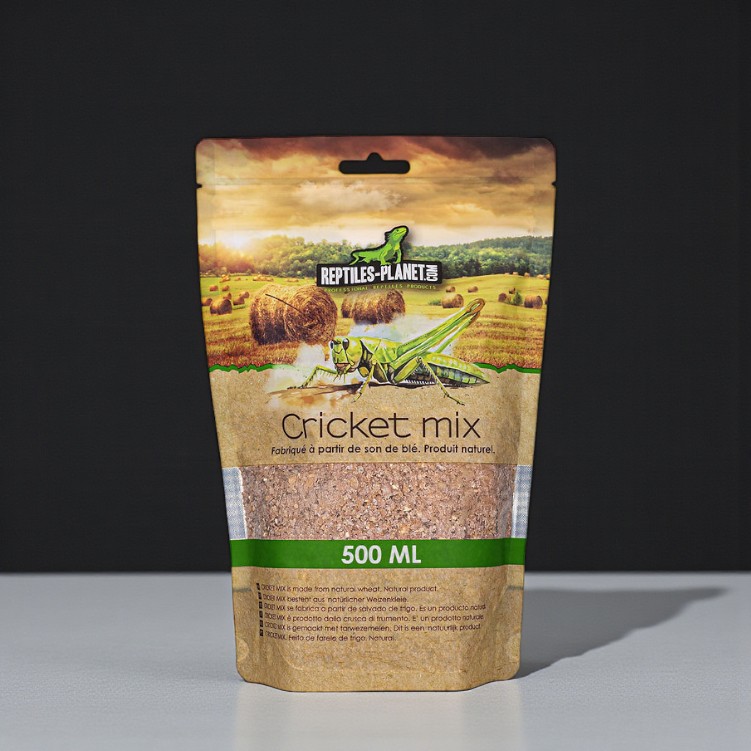
Cricket Mix
Reptiles Planet - Cricket Mix Cricket Mix consists of wheat bran and increases the nutritional value of your feeder insects by providing them with additional vitamins and minerals. The use of natural water is recommended for hydration. Good care will keep your insects vital for longer without losing nutrients for reptiles, amphibians and other animals. 100 % natural.

CHF 11.90

Cricket (Acheta domesticus) small
Contents Food animals: approx. 80stk / Dose
Cricket (Acheta domesticus)cricket (Acheta domesticus) is the standard food insect that no reptile lover should be without. Food animal for reptiles, amphibians and birds average size small The cricket is the standard food insect that no reptile lover should be without. Its average size, simple behaviour and relatively high resistance make it extremely popular.It is accepted by almost every reptile that also feeds on straight-winged insects. As crickets are also found in Central Europe, they are also easy to transport in the cold season without any significant losses. Bird lovers also mainly use crickets to raise their brood of birds.Order by Sunday evening - delivery on ThursdayOrders received by Sunday evening will be dispatched by A Mail on Wednesday or Thursday.Please enter a recipient address where the parcel can be delivered.We accept no responsibility for parcels that are delivered late or collected late.When it is cold, many insects go into torpor - but the animals recover after a few hours. If it is very cold, we recommend that you order the heat cushion as an extra, as this provides some protection against losses during the winter months.The live crickets in the shop are only available at this price on Wednesdays - the prices per tin are otherwise Fr. 1.00 per tin higher, as we also feed and care for the crickets.Even with the greatest care, it can happen that feed animals die due to temperature fluctuations or unpredictable events. We accept no liability for this.

CHF 3.50

Two-spotted crickets (Gryllus bimaculatus) small
Contents Food animals: approx. 70stk / Dose
Two-spotted crickets (Gryllus bimaculatus) Two-spotted crickets (Gryllus bimaculatus), also known as Mediterranean or banana crickets, are found mainly in the Mediterranean region. They can grow slightly larger than steppe crickets and, unlike them, are black in colour. for reptiles and amphibians larger than the steppe crickets small Two-spotted crickets, also known as Mediterranean or banana crickets, are found mainly in the Mediterranean region. They can grow slightly larger than steppe crickets and, unlike them, are black in colour. As this insect species must overwinter, it is ideally equipped for shipping in winter and is also considered resistant to cold temperatures. Otherwise, the species is comparable with the steppe crickets. Order by Sunday evening - delivery on ThursdayOrders received by Sunday evening will be dispatched by A Mail on Wednesday or Thursday.Please leave a recipient address where the parcel can also be delivered.We accept no responsibility for parcels that are delivered late or collected late. The live feeder animals in the shop are only available at this price on Wednesday - the prices per tin are otherwise Fr. 1.00 more per tin, as we also feed and care for the feed animals.

CHF 3.50

Suggested products

Drosophila mite separator
Drosophila Mite Separator The Drosophila mite separator is a practical aid for the hygienic preparation of feeder insects. It reliably separates mites from Drosophila (food flies) before they are fed to reptiles, amphibians or other insectivores. This reduces the risk of mite transmission and supports clean feeding. Product features - at a glance - Effectively separates mites from Drosophila - Facilitates the hygienic preparation of feeding flies - Reduces the risk of mite transmission - Quick and easy to use - Suitable for daily feeding - Ideal for terrariums and breeding - Reusable and easy to clean The Drosophila mite separator was specially developed to separate mites from the Drosophila before feeding. Especially in terrariums and insect breeding, mites can multiply quickly and be unintentionally transferred to terrariums. (Food mites do not go to terrarium animals such as reptiles and amphibians) By using the mite separator, the food flies can be hygienically prepared before feeding. The Drosophila are separated, while mites remain in the container or are separated out. This contributes to cleaner feeding and the well-being of the animals. The mite separator is easy to use, quickly ready for use and is suitable for both hobby keepers and professional breeders. Zoo Roco tip Use the mite separator regularly, especially with freshly purchased or home-bred Drosophila. Clean the tool after use to prevent mites from accumulating again.

CHF 9.90

Repto tweezers stainless steel black
Repto Stainless Steel Tweezers  - Precise Tool for Terrarium Care and Decoration The Repto Stainless Steel Tweezers are an indispensable tool for all reptile keepers who value precision and comfort. With these high-quality tweezers, you can feed your animals safely and accurately, place decorations precisely and keep the terrarium clean and tidy. The rust-free stainless steel ensures a long service life and high resistance, even under humid conditions in the terrarium. Advantages at a glance: Precise handling: Ideal for targeted feeding of reptiles such as geckos, snakes or spiders, without direct contact with the food. Versatile use: Perfect for precise placement of decorative elementsEasy cleaning: The smooth stainless steel surface is easy to clean, so you can keep your terrarium hygienically clean at all times. Durable and robust: Made from rust-free stainless steel, the tweezers offer high resistance to moisture and other environmental conditions in the terrarium. Ergonomic handle: The non-slip handle ensures comfortable handling and enables precise control, even for longer applications. Versatile applications: Feeding: With the Repto Stainless Steel Tweezers, you can feed your reptiles safely and hygienically without having direct contact with the food. These tweezers are particularly useful for carnivorous reptiles that prefer live food such as insects. Placing decorations: Place plants or other decorative elements in your terrarium with the utmost precision. The tweezers help to optimally design the structure of your animals’ habitat Cleaning and care: Effortlessly remove leftover food, dirt or dead plants from your terrarium. The Repto Stainless Steel Tweezers enable thorough cleaning even in hard-to-reach corners.Zoo Roco Tips:Use the Repto Stainless Steel Tweezers for precise and hygienic feeding of your reptiles, especially for animals that are sensitive to human contact. The tweezers are also helpful when decorating your terrarium, allowing you to place plants safely and accurately. Be sure to clean the tweezers regularly to maintain hygiene in the terrarium.

From CHF 11.90

Mealworms (Tenebrio molitor) mini
Contents Food animals: approx. 50g tin
Mealworms mini (Tenebrio molitor) The mealworm (Tenebrio molitor) is actually the beetle larva of the meal beetle. It hatches from an egg and, after moulting several times, grows to a size of approx. 25 mm. For birds in small quantities also for reptiles The mealworm is actually the beetle larva of the meal beetle. It hatches from an egg and, after moulting several times, grows to a size of approx. 25 mm. Finally, the beetle larva pupates, from which another beetle emerges. Mealworms are among the oldest commercially bred feeder animals. They are relatively easy to breed and are produced in large quantities. Mealworms are actually pests, mainly known from grain mills, as the larvae prefer to feed on flour or its by-products. As it is not possible to use insecticides in mills, it is difficult to control them if infested. Mealworms are classic food for soft-feeding birds. For this purpose, hundreds of tonnes of the beetle larvae are produced in Europe every year. A bird's stomach is well prepared for this type of food. A mealworm consists mainly of a hard, chitinous shell and, due to its rather simple diet, contains only a few nutrients. However, the stomach of a reptile is not well prepared for these conditions. If too many or only mealworms are fed to reptiles, deficiency symptoms or obesity may occur. It can also be seen from the faecal residues of the animals that mealworms are only insufficiently digested. Feeding the mealworms with vegetables or fruit before feeding them only results in a certain vitaminisation, which could also be achieved by dusting the beetle larvae with a vitamin preparation. The high fat content of the mealworms is another reason why the larvae should only be given to reptiles as supplementary food. For many bird enthusiasts, however, they are the basic food for their pets and are mainly bred for this purpose. At temperatures below 10 degrees C. the animals become motionless but are not dead. This can be used to advantage for storage. At temperatures of 6-8 degrees C. the animals can be stored for several weeks without food.Order by Sunday evening - delivery on Thursday Orders received by Sunday evening will be sent by A-Post on Wednesday or Thursday.Please provide a recipient address where the parcel can be delivered.We accept no responsibility for parcels that are delivered late or collected late. The live feeder animals in the shop are only available at this price on Wednesdays - otherwise the price per tin is Fr. 1.00 higher per tin, as we also feed and care for the feeder animals. Even with the greatest care, it may happen that feeder animals die due to temperature fluctuations or unpredictable events. We accept no liability for this.  

CHF 4.50

Zophobas - Zophobas morio
Variant: Tin - approx. 40g | Variant (1): Tin - approx. 40g
Zophobas as food animals / food insectsZophobas are very popular with larger lizards and make a great change to the reptile's daily routine. NO staple food a great change high nutrient content Zophobas are not suitable as a staple food, but should only be fed as a variety. The nutrient content of zophobas is higher than that of mealworms. Make sure that the Zophobas are not in the terrarium for long! A pupated Zophobas can harm a young, small or sick animal!   Feed the Zophobas a varied diet: peppers, lettuce, dandelion, apples, pears, melons, berries, courgettes, turnips and also fish food or wholemeal flakes are eaten. Remember that only a well-fed feeder animal will produce a high-quality meal.Order by Sunday evening - delivery on ThursdayOrders received by Sunday evening will be dispatched by A Mail on Wednesday or Thursday.Please enter a recipient address where the parcel can be delivered.We accept no responsibility for parcels that are delivered late or collected late.The live crickets in the shop are only available at this price on Wednesdays - the prices per tin are otherwise Fr. 1.00 per tin higher, as we also feed and care for the crickets.Even with the greatest care, it can happen that feed animals die due to temperature fluctuations or unpredictable events. We accept no liability for this. 

CHF 3.50

Buffalo worms / grain mould beetle larvae
Contents Food animals: approx. 50g tin
Buffalo worms / cereal mould beetle larvae (Alphitobius diaperinus) Cereal mould beetle larvae, also buffalo worms called, are another type of beetle larvae that are fed both to terrarium animals and to soft-eating birds. for smaller reptiles and birds 1-1.2cm Cereal mould beetle larvae, also called buffalo worms, are another type of beetle larvae that are fed both to terrarium animals and to soft-eating birds. The buffalo worm only grows to about 10 to 12 mm long and is therefore mainly of interest for smaller animals. Cereal mould beetle larvae are also known as pests in Central Europe. However, they do not like cold temperatures and should also be stored at about 20 degrees C. As the animals are very active and therefore have a high metabolism, the worms should be fed regularly with flour and fruit during storage, otherwise the animals lose a lot of weight and also pupate quickly. Order by Sunday evening - delivery on ThursdayOrders received by Sunday evening will be dispatched on Wednesday or Thursday by A Mail.Please provide a recipient address where the package can be delivered.We accept no responsibility for packages delivered late or collected late. The live feeder animals in the shop are only available at this price on Wednesday - prices per tub are otherwise Fr. 1.00 per tub higher, as we also feed and care for the feeder animals.

CHF 4.90

Mealworms (Tenebrio molitor)
Contents Food animals: approx. 50g tin
Mealworms - Tenebrio molitor The mealworm (Tenebrio molitor) is one of the oldest commercially bred feeder animals. They are relatively easy to breed. For birds in small quantities also for reptiles The mealworm is actually the beetle larva of the meal beetle. It hatches from an egg and grows to a size of approx. 25 mm after moulting several times. Eventually the beetle larva pupates, from which a beetle emerges again. Mealworms are among the oldest commercially bred feeder animals. They are relatively easy to breed and are produced in large quantities. Mealworms are actually pests which are mainly known from grain mills, as the larvae prefer to feed on flour or its waste products. As it is not possible to use insecticides in mills, an infestation is difficult to control. Mealworms are a classic food for soft-feeding birds. Hundreds of tons of these beetle larvae are produced throughout Europe every year for this purpose. A bird's stomach is well adapted to this type of food. A mealworm consists largely of a hard, chitinous shell and, due to its fairly simple diet, contains few nutrients. The stomach of a reptile, on the other hand, is not well adapted to these conditions. If too many or only mealworms are fed to reptiles, deficiency symptoms or obesity can occur. You can also see from the animals' faeces that mealworms are only poorly digested. Feeding mealworms with vegetables or fruit before feeding only has the effect of a certain vitaminization, which could also be achieved by dusting the beetle larvae with a vitamin preparation. The high fat content of mealworms is another reason why the larvae should only be given to reptiles as supplementary food. For many bird lovers, however, they represent the staple food of their favourites and this is mainly what they are bred for. At temperatures below 10 degrees C. the animals become motionless but are not dead. This can be utilised for storage. At temperatures of 6-8 degrees C. the animals can be stored for several weeks without food.Order by Sunday evening - delivery on ThursdayOrders received by Sunday evening will be sent by A-Post on Wednesday or Thursday.Please provide a recipient address where the parcel can be delivered.We accept no responsibility for parcels that are delivered late or collected late. The live feeder animals in the shop are only available at this price on Wednesdays - prices per tin are otherwise Fr. 1.00 per tin higher, as we also feed and care for the feeder animals.  Even with the greatest care, it can happen that feeder animals die due to temperature fluctuations or unpredictable events. We accept no liability for this.

CHF 3.90

Giant mealworms (Tenebrio molitor)
Contents Food animals: approx. 50g tin
Giant mealworms - Tenebrio molitorThe mealworm (Tenebrio molitor) - mealworms are classic food for soft-feeding birds. For birds also available in small quantities for reptiles Giant mealworms are mealworms in which a special breeding method causes the larvae to pupate much later. As a result, the larvae become much larger and almost reach the size of Zophobas. Nutritional values, storage and all other parameters correspond to those of normal mealworms.We obtain the giant mealworms from a breeder of fishing bait. Substances that may affect the pupation of the animals may have been used in the breeding of the worms.The mealworm is actually the larva of the mealworm beetle. It hatches from an egg and grows to a size of approx. 25 mm after moulting several times. Finally, the beetle larva pupates, from which another beetle emerges. Mealworms are among the oldest commercially bred food animals. They are relatively easy to breed and are produced in large numbers. Mealworms are actually pests that are mainly known from grain mills, as the larvae prefer to feed on flour or its waste products. As it is not possible to use insecticides in mills, it is difficult to deal with an infestation.Mealworms are classic food for soft-feeding birds. Hundreds of tonnes of the beetle larvae are produced for this purpose throughout Europe every year. A bird's stomach is well prepared for this type of food. A mealworm consists mainly of a hard, chitinous shell and has few nutrients due to its rather simple diet. However, a reptile's stomach is poorly prepared for these conditions. If too many or only mealworms are fed to reptiles, deficiency symptoms or obesity can occur. It can also be recognised from the animals' faecal residues that mealworms are not digested properly. Feeding mealworms with vegetables or fruit before feeding them only has the effect of a certain vitaminisation, which could also be achieved by pollinating the beetle larvae with a vitamin preparation. The high fat content of mealworms is another reason why the larvae should only be given to reptiles as supplementary food.For many bird lovers, however, they are the staple food of their favourites and are mainly bred for this purpose. At temperatures below 10 degrees C. the animals become motionless but are not dead. This can be utilised for storage. At temperatures of 6-8 degrees C. the animals can be stored for several weeks without food.Order by Sunday evening - delivery on ThursdayOrders received by Sunday evening will be dispatched by A Mail on Wednesday or Thursday.Please enter a recipient address where the parcel can be delivered.We accept no responsibility for parcels that are delivered late or collected late.The live food animals in the shop are only available at this price on Wednesdays - the prices per tin are otherwise CHF 1.00 per tin higher, as we also feed and care for the food animals. Even with the greatest care, it can happen that feed animals die due to temperature fluctuations or unpredictable events. We accept no liability for this. 

CHF 3.90

Rose beetle larvae (Pachnoda butana), box, 8-10 pieces
Rose chafer larvae (Pachnoda butana) - tin of 8-10 pieces Rose chafer larvae originate from tropical to subtropical areas of Africa. They reach an impressive size of up to 40 mm. As a treat for reptiles or tarantulas Protein bomb Rose chafer larvae originate from tropical to subtropical areas of Africa. They are comparable to the native grubs of various beetle species. Rose chafer larvae reach an impressive size of up to 40 mm and are almost as thick as a finger. They can bite hard with their biting tools. However, the animals are otherwise very soft, as the body is only covered by a thick skin and is not protected by a chitin armour, as is the case with Zophobas, for example. Rose chafer larvae should be stored at room temperature and can be fed with fruit or vegetables. Order by Sunday evening - delivery on ThursdayOrders received by Sunday evening will be dispatched by A Mail on Wednesday or Thursday.Please enter a recipient address where the parcel can be delivered.We accept no responsibility for parcels that are delivered late or collected late.

CHF 9.90

Cricket (Acheta domesticus) subadult
Contents Food animals: approx. 50 pcs / can
Cricket (Acheta domesticus) subadult - food insectCricket (Acheta domesticus) is the standard food insect that no reptile lover should be without. Food animal for reptiles, amphibians and birds average size subadult The cricket is the standard food insect that no reptile lover should be without. Its average size, simple behaviour and relatively high resistance make it extremely popular.It is accepted by almost every reptile that also feeds on straight-winged insects. As crickets are also found in Central Europe, they are also easy to transport in the cold season without any significant losses. Bird lovers also mainly use crickets to raise their brood of birds.Order by Sunday evening - delivery on ThursdayOrders received by Sunday evening will be dispatched by A Mail on Wednesday or Thursday.Please enter a recipient address to which the parcel can be delivered.We accept no responsibility for parcels that are delivered late or collected late.When it is cold, many insects go into torpor - but the animals recover after a few hours. If it is very cold, we recommend that you order the heat cushion as an extra, as this provides some protection against losses during the winter months.The live crickets in the shop are only available at this price on Wednesdays - the prices per tin are otherwise Fr. 1.00 per tin higher, as we also feed and care for the crickets.Even with the greatest care, it can happen that feed animals die due to temperature fluctuations or unpredictable events. We accept no liability for this.

CHF 3.50

Desert locust (Schistozerca gregaria) small
Contents Food animals: approx. 15stk / Dose
Desert locust (Schistozerca gregaria) small The desert locust (Schistozerca gregaria) is one of the largest commercially bred food animals. Females reach a total length with wings of over 75 mm in some cases. popular food animal for reptiles and amphibians larger than the migratory locust small The desert locust is one of the largest commercially bred food animals. Females reach a total length with wings of over 75 mm in some cases. Males usually remain somewhat smaller. This means that desert locusts are up to 30% larger than, for example, the migratory locust (Locusta migratoria). The animals are pink-grey in colour after moulting. Over the next 6-10 days, the colouring changes, especially in the males, to a strong yellow. However, the animals have the most beautiful colouring and patterning during the juvenile and subadult stage. Here, the animals are also coloured lemon yellow with a black pattern. It is precisely this colouring that arouses the prey drive in many reptile species, which makes the desert locust particularly popular with many terrarium keepers.Unfortunately, the desert locust is not as productive as the migratory locust and rearing the animals takes up to 2/3 longer. On the other hand, it can be bred almost all year round, as it is not too demanding on special types of food.As a feeder insect, the desert locust is also particularly suitable because it usually survives shipping even in extreme heat and cold without damage and can also survive for up to 2 weeks after shipping without additional food.Desert locusts are generally accepted by all lizards. Experience has shown that they are particularly popular with large lizards such as bearded dragons, water dragons, basilisks, monitors, frilled lizards etc. They are particularly popular with many chameleon species, as these are particularly attracted to the yellow colouring of juvenile and subadult animals. Order by Sunday evening - delivery on ThursdayOrders received by Sunday evening will be dispatched on Wednesday or Thursday by A Mail.Please provide a recipient address where the parcel can be delivered.We accept no responsibility for parcels that are delivered late or collected late. The live feeder animals in the shop are only available at this price on Wednesdays - otherwise the prices per tin are Fr. 1.00 per tin higher, as we also feed and care for the feeder animals.   Even with the greatest care, it can happen that feeder animals die due to fluctuations in temperature or unpredictable events. We accept no liability for this.  

CHF 4.50

Small wax caterpillars (Achroea grisella)
The small waxworm (Achroea grisella) is very similar in appearance and behaviour to the large waxworm (Galleria melonella), but remains significantly smaller when fully grown. As a treat for reptiles Caterpillar and moth can be fed The small waxworm (Achroea grisella) is very similar in appearance and behaviour to the large waxworm (Galleria melonella), but remains significantly smaller when fully grown, about half the size. It is also offered in breeding stock, which means that the animals are in the food substrate. A special feature is that it is not only the caterpillars that are used as food but also the moths that are gladly fed, which hatch in the can over a longer period after reaching adulthood. Order by Sunday evening - delivery on Thursday Orders received by Sunday evening will be dispatched by A Mail on Wednesday or Thursday.Please enter a recipient address where the parcel can be delivered.We accept no responsibility for parcels that are delivered late or collected late. Even with the greatest care, it can happen that feed animals die due to temperature fluctuations or unpredictable events. We accept no liability for this.

CHF 7.50

House flies (Musca domestica)
Contents Food animals: 1/2 liter
House flies - Musca domestica House flies (Musca domestica) are comparable to European house flies, but house flies cannot fly properly, instead they can only hop a few centimetres. unable to fly for reptiles and amphibians House flies are comparable to European house flies, but specimens with crippled wings have also been selectively bred, so that house flies also cannot fly properly but can generally only hop a few centimetres.However, this genetic defect is not dominant. This means that if the flies are mixed with flight-capable animals, the offspring are predominantly able to fly again. In this case, the flight-capable animals must be sorted out before further breeding can take place. House flies are offered either in breeding batches or in the form of washed-out pupae. Order by Sunday evening - delivery on Thursday Orders received by Sunday evening will be dispatched by A Mail on Wednesday or Thursday.Please provide a recipient address where the parcel can also be delivered.We accept no responsibility for parcels delivered late or collected late. Even with the greatest care, it can happen that feeder animals die due to temperature fluctuations or unpredictable events. We accept no liability for this.  

CHF 5.90

Customers also saw

Bean Beatle (Acanthoscelides obtectus)
Edible bean beetle (Acanthoscelides obtectus) breeding batch for smaller reptiles and amphibians practical as they hatch over a longer period of time Edible bean beetles have only recently become available as food animals. At first glance, they resemble Drosophila, but they are actually beetles. Bean beetles are fed to the same animals that feed on Drosophila. A breeding batch of bean beetles can be used as a holiday supply, as the beetles hatch out over a longer period of time. Order by Sunday evening - delivery on Thursday Orders received by Sunday evening will be dispatched by A Mail on Wednesday or Thursday.Please enter a recipient address where the parcel can be delivered.We accept no responsibility for parcels that are delivered late or collected late.

CHF 9.50

Cricket (Acheta domesticus) micro
Contents Food animals: approx. 120stk / Dose
Cricket (Acheta domesticus) micro - food insect / food animal Cricket (Acheta domesticus) is the standard food insect that no reptile lover should be without. Food animal for reptiles, amphibians and birds average size micro The cricket is the standard food insect that no reptile lover should be without. Its average size, simple behaviour and relatively high resistance make it extremely popular.It is accepted by almost every reptile that also feeds on straight-winged insects. As crickets are also found in Central Europe, they are also easy to transport in the cold season without any significant losses. Bird lovers also mainly use crickets to raise their brood of birds. Order by Sunday evening - delivery on Thursday Orders received by Sunday evening will be dispatched by A Mail on Wednesday or Thursday.Please enter a recipient address to which the parcel can be delivered.We accept no responsibility for parcels that are delivered late or collected late.When it is cold, many insects go into torpor - but the animals recover after a few hours. If it is very cold, we recommend that you order the heat cushion as an extra, as this provides some protection against losses during the winter months. The live crickets in the shop are only available at this price on Wednesdays - the prices per tin are otherwise Fr. 1.00 per tin higher, as we also feed and care for the crickets. Even with the greatest care, it can happen that feed animals die due to temperature fluctuations or unpredictable events. We accept no liability for this.  

CHF 3.50

Medium prehistoric crab complete set
Medium Triops and fairy crabs complete set with approx. 100 prehistoric crab eggs and accessoriesTriops & fairy crabs complete set - The perfect introduction to the world of prehistoric crabs.With the medium Triops and Fairy Cra bs complete set , you can easily immerse yourself in the fascinating world of prehistoric crabs. This set combines different species of Triops and fairy crabs and thus offers an exciting nature experience for children, beginners and aquarium fans.Diverse egg mix - surprise includedThe set contains a high-quality triops and fairy shrimp egg mix (approx. 100 eggs in sand). The species included may include Triops longicaudatus, T. cancriformis and Brazilian or Thai fairy shrimps. Which species hatch remains a surprise and makes rearing particularly exciting.Complete rearing set - everything you need for a successful startThe set includes:Rearing tank approx. 23 × 15 × 17 cm with red coverTriops & fairy crab egg mix (approx. 100 eggs in sand)Detailed step-by-step instructionsPrehistoric crayfish foodQuartz sandthermometerPipettePrehistoric crayfish showerStirring rodlanding netSo that you have everything you need for the successful rearing of your prehistoric crayfish.Easy to care for & ideal for small aquariumsTriops and fairy shrimps are robust, easy to keep prehistoric crayfish and are ideal for beginners. A small aquarium with a volume of 2 liters or more is sufficient to observe their entire life cycle.Triops grow up to 7 cm in sizeFairy shrimps reach approx. 2.5 cmAt temperatures between 20-26 °C and soft water, the tiny nauplii hatch and reach an age of around 2-3 months with good care.Breeding cycle - New generations again and againTriops lay their eggs in the substrate, while fairy shrimps simply drop them to the bottom. Once the animals have completed their life cycle, the sand can be dried and used again - creating the next generation of prehistoric crayfish. Tip: A batch can be used several times, as all the eggs never hatch at the same time.Important notes The hatching rate depends on temperature, water values and light.The mixture is random - colors can be brown, green, blue or red.The animals require light and a temperature of 21-26 °C to hatch. Suitable lighting and heaters are available separately. Colors, materials and manufacturers of the accessories may differ from the photo.The ideal giftThe medium Triops & Fairy Crabs complete set is a popular gift for birthdays, Christmas or just in between - perfect for anyone who wants to experience nature up close.

CHF 39.90

Mealworms (Tenebrio molitor)
Contents Food animals: approx. 50g tin
Mealworms - Tenebrio molitor The mealworm (Tenebrio molitor) is one of the oldest commercially bred feeder animals. They are relatively easy to breed. For birds in small quantities also for reptiles The mealworm is actually the beetle larva of the meal beetle. It hatches from an egg and grows to a size of approx. 25 mm after moulting several times. Eventually the beetle larva pupates, from which a beetle emerges again. Mealworms are among the oldest commercially bred feeder animals. They are relatively easy to breed and are produced in large quantities. Mealworms are actually pests which are mainly known from grain mills, as the larvae prefer to feed on flour or its waste products. As it is not possible to use insecticides in mills, an infestation is difficult to control. Mealworms are a classic food for soft-feeding birds. Hundreds of tons of these beetle larvae are produced throughout Europe every year for this purpose. A bird's stomach is well adapted to this type of food. A mealworm consists largely of a hard, chitinous shell and, due to its fairly simple diet, contains few nutrients. The stomach of a reptile, on the other hand, is not well adapted to these conditions. If too many or only mealworms are fed to reptiles, deficiency symptoms or obesity can occur. You can also see from the animals' faeces that mealworms are only poorly digested. Feeding mealworms with vegetables or fruit before feeding only has the effect of a certain vitaminization, which could also be achieved by dusting the beetle larvae with a vitamin preparation. The high fat content of mealworms is another reason why the larvae should only be given to reptiles as supplementary food. For many bird lovers, however, they represent the staple food of their favourites and this is mainly what they are bred for. At temperatures below 10 degrees C. the animals become motionless but are not dead. This can be utilised for storage. At temperatures of 6-8 degrees C. the animals can be stored for several weeks without food.Order by Sunday evening - delivery on ThursdayOrders received by Sunday evening will be sent by A-Post on Wednesday or Thursday.Please provide a recipient address where the parcel can be delivered.We accept no responsibility for parcels that are delivered late or collected late. The live feeder animals in the shop are only available at this price on Wednesdays - prices per tin are otherwise Fr. 1.00 per tin higher, as we also feed and care for the feeder animals.  Even with the greatest care, it can happen that feeder animals die due to temperature fluctuations or unpredictable events. We accept no liability for this.

CHF 3.90

Cricket (Acheta domesticus) large / adult
Contents Food animals: approx. 40 pcs / can
Cricket (Acheta domesticus) large (adult)The cricket is the standard food insect that no reptile lover should be without. Food animal for reptiles, amphibians and birds average size large - adult The cricket is the standard food insect that no reptile lover should be without. Its average size, simple behaviour and relatively high resistance make it extremely popular.It is accepted by almost every reptile that also feeds on straight-winged insects. As crickets are also found in Central Europe, they are also easy to transport in the cold season without any significant losses. Bird lovers also mainly use crickets to raise their brood of birds.Order by Sunday evening - delivery on ThursdayOrders received by Sunday evening will be dispatched by A Mail on Wednesday or Thursday.Please enter a recipient address where the parcel can be delivered.We accept no responsibility for parcels that are delivered late or collected late.When it is cold, many insects go into torpor - but the animals recover after a few hours. If it is very cold, we recommend that you order the heat cushion as an extra, as this provides some protection against losses during the winter months.The live crickets in the shop are only available at this price on Wednesdays - the prices per tin are otherwise Fr. 1.00 per tin higher, as we also feed and care for the crickets.Even with the greatest care, it can happen that feed animals die due to temperature fluctuations or unpredictable events. We accept no liability for this.

CHF 3.50

Cricket (Acheta domesticus) medium

Contents Food animals: approx. 50 pcs / can
Cricket (Acheta domesticus) medium / subadult Cricket (Acheta domesticus) is the standard food insect that no reptile lover should be without. Food animal for reptiles, amphibians and birds average size medium The cricket is the standard food insect that no reptile lover should be without. Its average size, simple behaviour and relatively high resistance make it extremely popular.It is accepted by almost every reptile that also feeds on straight-winged insects. As crickets are also found in Central Europe, they are also easy to transport in the cold season without any significant losses. Bird lovers also mainly use crickets to raise their brood of birds. Order by Sunday evening - delivery on ThursdayOrders received by Sunday evening will be dispatched by A Mail on Wednesday or Thursday.Please enter a recipient address where the parcel can be delivered.We accept no responsibility for parcels that are delivered late or collected late.When it is cold, many insects go into torpor - but the animals recover after a few hours. If it is very cold, we recommend that you order the heat cushion as an extra, as this provides some protection against losses during the winter months. The live crickets in the shop are only available at this price on Wednesdays - the prices per tin are otherwise Fr. 1.00 per tin higher, as we also feed and care for the crickets. Even with the greatest care, it can happen that feed animals die due to temperature fluctuations or unpredictable events. We accept no liability for this.  

CHF 3.50

Amazonas Quartz sand
Colors (2): brown | Weight (3): 5 kg
Amazonas Quartz sand for aquariums Amazonas-free quartz sand for your aquarium as a substrate, available in three different colours with a grain size of 0–1 mm. Rinse several times with lukewarm water before use.

CHF 10.00