Vallisneria spiralis (Glattblättrige Sumpfschraube)
max. Wuchshöhe
- 100 cm
Herkunftsland
Tropischer Kosmopolit
Eignung
Barschaquarium, Diskusaquarium, Gesellschaftsaquarium
Typ
Rosettenpflanze
Familie
Hydrocharitaceae
Gattung
Vallisneria
Vermehrung
Ausläufer
Wuchsgeschwindigkeit
schnell
pH
6 - 9
Wasserhärte
10 - 30 °dh
Hinweise
Vallisneria spiralis gehört auch zu den Klassikern in der Aquaristik. Die anspruchslose Wasserpflanze bildet bandförmige Blätter zwischen 0,8 und 1,5 cm Breite. Manchmal werden Blattlängen bis zu 1 m erreicht. Die Pflege und Kultur ist einfach und bestens zur Gestaltung einer grünen, lebenden Rückwand geeignet. Ausläufertriebe, die in den vorderen Bereich wachsen, sollte man rechtzeitig entfernen. Der Artname „spiralis“ bezieht sich nicht auf die Blätter, sondern auf die spiralig gedrehten Blütenstängel. Sie ist auch eine ideale Pflanze für Barschaquarien.
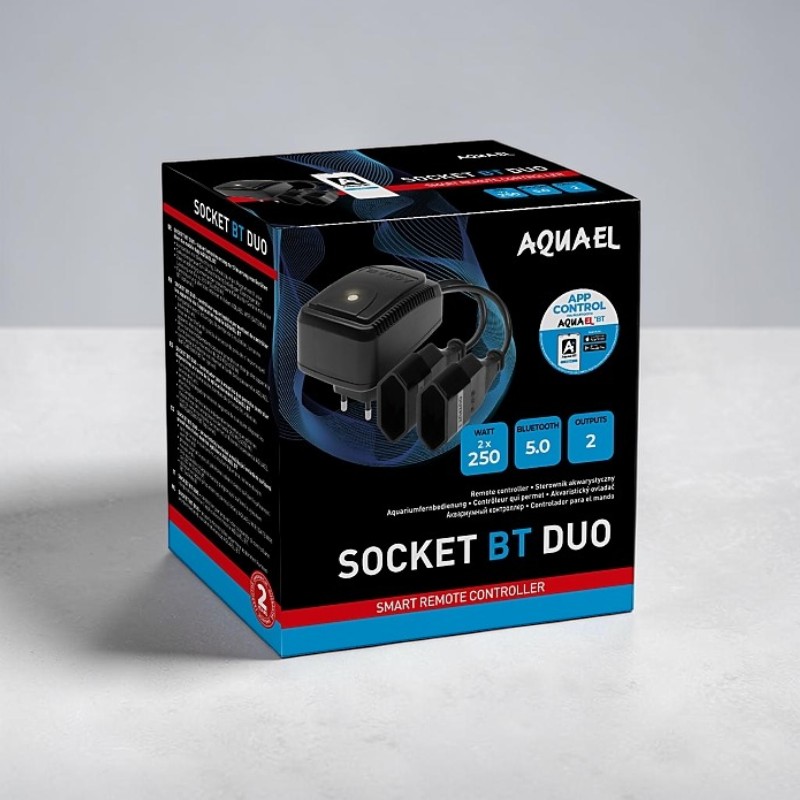
Socket Link Duo
SOCKET DUO is a modern, electronic two-channel
two-channel aquarium timer that is controlled by the mobile application Aquael
AQU@RIUM mobile application. Works with lighting, circulation pump,
solenoid valve, sterilizer, heating cable, infusion pumps, etc. Enables
the precise on/off switching of any electrical device up to 250
W with a "type C" plug (flat).
SOCKET DUO is ideal for DAY&NIGHT lighting control and
enables automatic switching from day to night mode. The
mobile application that controls it enables simple remote
remote-controlled switching of these operations according to the current
user preferences.
Plush mouse from TrixieWith the cuddly plush mouse your cat will definitely have a lot of fun. The fur ball awakens the game and hunting instinct in every house tiger.Cat toyPlush (Polyester)Assorted colorsSize 9cm
Back Zoo Nature Foraging Pine Cone - Natural foraging fun for birdsProvide your pet birds or rodents with species-appropriate activity with the Back Zoo Nature Foraging Pine Cone - the natural play and snack fun for budgies, rabbits and rodents.The pine cone encourages instinctive foraging behavior and provides hours of entertainment. Simply put your favorite treats in the cone - and the adventure of foraging begins, just like in the wild!
With the practical stainless steel screw thread, the Foraging Pine Cone can be securely and easily attached to any cage.Advantages at a glance:✅ Promotes natural foraging behavior✅ Activity toy made from real pine cones✅ Ideal for rabbits, guinea pigs, hamsters & birds such as budgies✅ Easy to attach - thanks to stainless steel screw ✅ Each cone is unique - natural & individual Suitable for: Budgies, rabbits, guinea pigs, hamsters and other small rodentsSize: approx. 15-20 cmMaterial: Real pine cone, stainless steel screw fasteningNote: As this is a natural product, the size and shape of the pine cone may vary slightly. Each Foraging Pine Cone is hand-picked and unique.
Invitro Anubias sp. Pangolino aquarium plantAnubias sp. 'Pangolino' is one of the smallest Anubias species in the world and is an exclusive choice for aquascapers with a love of detail and lovers of rare aquarium plants. The in-vitro cultivated form provides you with a guaranteed snail and pesticide-free plant, perfect for sensitive shrimp tanks and nano aquariums.
With its extremely compact growth and tiny, bright green leaves, Pangolino is ideal for attaching to roots, rocks or as an accent in the foreground. Undemanding and easy to care for - grows even in low light and without the addition of CO₂.
Advantages at a glance:
✅ Extremely small-growing Anubias - ideal for nano-scapes
Cultivated in vitro - sterile & pesticide-free
✅ Shrimp-friendly & robust
✅ No planting necessary - grows on hardscape
✅ Easy to care for & slow-growingProduct details:
Name: Anubias sp. 'Pangolino'
Type: Perennial plant
Position in aquarium: Foreground, on hardscape
Growth height: 1-3 cm
Light requirement: Low to medium
CO₂ supply: Not required
Delivery form: In vitro cup (grown sterile)
Special feature: One of the smallest Anubias species in the worldThe plant must be removed from the cup and thoroughly
rinsed thoroughly from the gel under running water. This is best done
best done by placing the plant in a container with lukewarm water.
lukewarm water. Most of the gel will then fall off by itself. Divide
the contents of the cup into 1-2 cm clumps and place these a short distance apart in the
then place them a short distance apart in the substrate or on the selected
objects.
Anubias Barteri Nana 'Petite'
Anubias Barteri Nana 'Petite' is a very small, uniformly filigree Anubias variety. Selection has resulted in a miniature form that is ideal for nano aquariums.Difficulty of cultivation: easy Light requirement: low CO₂ requirement: low Height of the adult plant: up to 5 cm Growth slow Temperature: 20-30 °C Placement in aquarium: In the foreground Origin: cultivation 6 cm cup diameter Anubias barteri is a succulent green plant of the rhizome family, naturally native to the swamps of Cameroon and Nigeria, growing in fast-flowing waters. It can grow both under and above water. "Petite" is a selected cultivar of Anubias barteri. This species does not occur in nature in such a miniature form. Consistent selection by Singapore botanists has resulted in a delicate, compact version of Anubias barteri for nano-aquariums. The variety is rarely seen in the trade and represents a kind of rarity. The plant has a rhizome that forms roots that strongly entwine the area in which it is planted. It is therefore ideal for planting on roots or rocks, such as volcanic lava.The very decorative, tiny, heart-shaped leaves are stiff and fleshy, shiny on the surface and have a velvety texture on the underside. At the same time, they are very hard and stiff, so herbivorous fish are not interested in them. The height of this miniature plant is less than 5 cm. Therefore, it is well suited for the foreground. However, it can also be used for eye-catching trees in the background. Under good conditions, it can produce a delicate white flower. Anubias Barteri Nana 'Petite' can handle a variety of temperatures. It can thrive in cooler tanks as well as in warm, tropical aquariums with discus fish, for example. It likes water with a pH of 5.5-8.0, up to 15 ° dH. it prefers weak, diffuse lighting, reaching more like 0.3 W/l. In case of prolonged and intense lighting, it may become overgrown with algae. Therefore, it is advisable to plant it in darker or even shaded areas of the tank. The plant does not like neglected aquariums, it prefers water that is changed regularly and does not leave dirt on its leaves. It grows slowly, but forms a very attractive shape, especially when it grows in a group to form a green, decorative clump. It is very comfortable in tanks with low water levels and looks great in nano aquariums. Therefore, it is a popular plant for many aquascapers. With it can create very interesting miniature compositions. It also does well in aquariums with cichlids and other herbivorous fish. It is often used in shrimp tanks and nano aquariums for fighting fish. It does not require special care, it is enough to remove older leaves, which stimulates the rhizome to form offshoots. If you want to get new cuttings, you can divide the rhizome into 2-3 cm long sections from time to time. To attach the Anubias to roots or stones, it is enough to use very thin string, thread or special glue for fixing aquarium plants.
Planting: The plant must be removed from the cup and thoroughly rinsed from the gel under running water. This is best done by placing the plant in a container of lukewarm water. Most of the gel will then fall off by itself.
Anubias barteri var. nana 'Bonsai' - Kleinstes ZwergspeerblattDennerle A21.3
max. Wuchshöhe
- 5 cm
Herkunftsland
Zuchtform
Eignung
Aquascaping, Barschaquarium, Gesellschaftsaquarium, NanoCube
Typ
Aufsitzerpflanze
Familie
Araceae
Gattung
Anubias
Vermehrung
Seitensprosse am Rhizom
Wuchsgeschwindigkeit
langsam
pH
5 - 9
Wasserhärte
0 - 30 °dh
Hinweise
Auf einen Stein oder eine Wurzel aufbinden.
Kleiner geht es wirklich nicht mehr! Sie ist wohl die kleinste Anubias der Welt und eine echte Bereicherung für jede Unterwasserlandschaft. In der Kultur und Pflege ist sie gleichermaßen robust wie die Stammform, benötigt aber ein wenig mehr Licht, um schöne, kompakte Polster zu bilden. Die Zwergform kann man schon in einem 10 L Nano Cube verwenden. Sehr natürlich wirken die Pflanzen aufgebunden auf filigranen Wurzeln. Das rote Moorholz ist dafür am besten geeignet. Aber auch auf dekorativen Steinen macht die Bonsai-Anubias eine gute Figur.
Anubias barteri nana
Dwarf spear leaf, multi-stemmed - XXL - Mother plant
Dennerle A21
max. growth height
5 - 10 cm
Country of origin
West Africa
Suitability
Aquascaping, perch aquarium, community aquarium, NanoCubes
Type
Perennial plant
family
Araceae
Genus
Anubias
Propagation
Division of the rhizome
Growth rate
slow
pH
5 - 9
Water hardness
0 - 30 °dh
Hints
Tie to a stone or root. Easy to care for and undemanding.
The dwarf spear leaf, as it is known by its German trade name, is one of the most popular aquarium plants of all. It is an excellent foreground plant that requires very little care. When planting, attention must be paid to the rhizome. This thickened shoot must not be covered with substrate. The small Anubias grows best when tied up on stones and roots (see Mbuna trees on page 78). The dwarf spear leaves are very often used for cichlids from Lake Malawi and Lake Tanganyika. Here they look particularly decorative between the stone structures.
Anubias nana auf Stein (Zwergspeerblatt auf Lavastein)
Das Zwergspeerblatt gehört zu den beliebtesten Aquarienpflanzen. Dies ist eine hervorragende Vordergrundpflanze mit sehr geringen Ansprüchen. Das Rhizom, ein verdickter Spross, darf nicht mit Bodengrund überdeckt werden. Am besten bindet man die Anubas barteri nana auf einen Stein oder eine Wurzel auf. So wächst die Pflanze am besten. Sie eignet sich nicht nur für Gesellschaftsaquarien oder Nano Cubes, sondern auch hervorragend für Cichliden vom Malawi- oder Tanganjikasee zu verwenden. Zwischen diesen Steinaufbauten sehen die kleinen Anubias barteri nana wunderschön aus und sehr dekorativ.
max. Wuchshöhe
5-10 cm / Vordergrund
Herkunftsland
Westafrika
Eignung
Gesellschaftsaquarium, NanoCube und Barschaquaiurm (Cichliden)
Typ
Aufsitzerpflanze
Familie
Araceae
Gattung
Anibias
Vermehrung
Teilung des Rhizom
Wuchsgeschwindigkeit
langsam
pH
5-9
Wasserhärte
sehr weich bis sehr hart
Hinweise
Auf einen Stein oder eine Wurzel aufbinden
Anubias barteri (Breitblättriges Speerblatt)
max. Wuchshöhe
- 40 cm
Herkunftsland
Westafrika
Eignung
Barschaquarium, Gesellschaftsaquarium
Typ
Aufsitzerpflanze
Familie
Araceae
Gattung
Anubias
Vermehrung
Teilung des Rhizom
Wuchsgeschwindigkeit
langsam
pH
5 - 9
Wasserhärte
0 - 30 °dh
Hinweise
Auf einen Stein oder eine Wurzel aufbinden.
Anubias-Arten sind sehr langsam wachsende Sumpflanzen für den schattigen Bereich. Eine zu starke Beleuchtung vertragen sie auf Dauer nicht. Anubias barteri ist eine sehr variable Art mit abweichenden mehr oder weniger großen Blättern. Mit ihren dunkelgrünen, etwas festen Blättern wird sie häufig für Cichliden-Aquarien verwendet. In der Natur wachsen Anubias-Arten in schattigen bis halbschattigen Bereichen von schnell fließenden Gewässern, Teils im Spritzwasserbereich von Steinen und Wurzeln als auch halbuntergetaucht.
Mbuna - Mopaniwurzel mit Standfuss und Anubias nana
max. Wuchshöhe
5-10cm
Herkunftsland
Westafrika
Eignung
Gesellschaftsaquarium
Typ
Aufsitzerpflanze
Familie
Araceae
Gattung
Anubias
Vermehrung
Teilung des Rhizom
Wuchsgeschwindigkeit
langsam
pH
5-9
Wasserhärte
sehr weich bis sehr hart
Hinweise
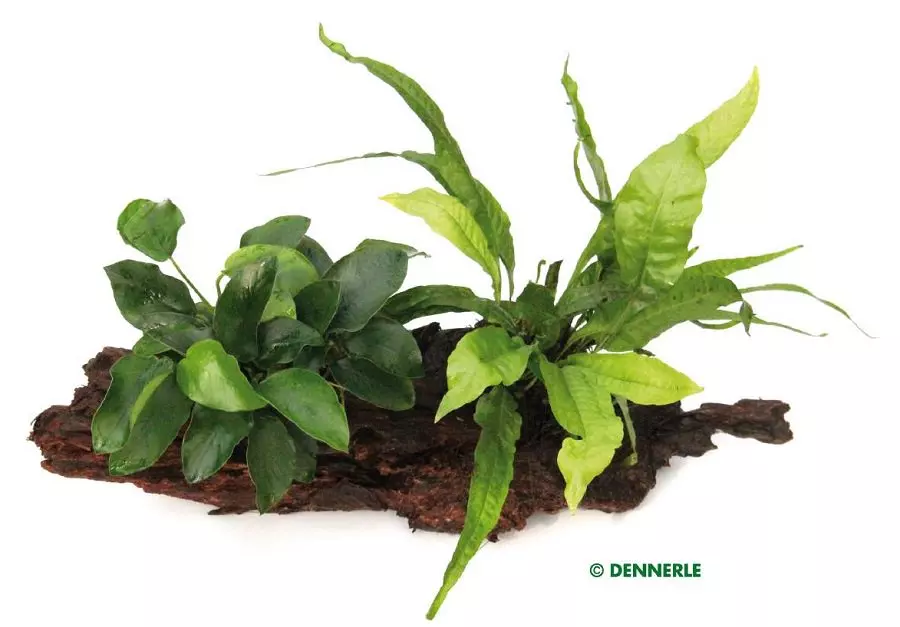
Microsorium pteropus (auf Wurzel mit Sauger)
max. Wuchshöhe
bis 40cm
Herkunftsland
Südostasien
Eignung
GesellschaftsaquariumBarschaquarium
Typ
Aufsitzerpflanze
Familie
Scrophulariaceae
Gattung
Microsorium
Vermehrung
Tochterpflanzen aus Blättern und Wurzeln
Wuchsgeschwindigkeit
langsam
pH
5-8
Wasserhärte
sehr weich bis hart
Hinweise
Anubias barteri nana - Zwergspeerblatt mehrtriebig
Dennerle A21
max. Wuchshöhe
5 - 10 cm
Herkunftsland
Westafrika
Eignung
Aquascaping, Barschaquarium, Gesellschaftsaquarium, NanoCube
Typ
Aufsitzerpflanze
Familie
Araceae
Gattung
Anubias
Vermehrung
Teilung des Rhizom
Wuchsgeschwindigkeit
langsam
pH
5 - 9
Wasserhärte
0 - 30 °dh
Hinweise
Auf einen Stein oder eine Wurzel aufbinden.
Das Zwergspeerblatt, so der deutsche Handelsname, gehört zu den beliebtesten Aquarienpflanzen überhaupt. Es ist eine ausgezeichnete Vordergrundpflanze bei geringstem Pflegeanspruch. Beim Einpflanzen muss auf das Rhizom geachtet werden. Dieser verdickte Spross darf nicht mit Bodengrund bedeckt sein. Optimal wächst die kleine Anubias aufgebunden auf Steinen und Wurzeln (siehe Mbuna-Bäume auf Seite 78). Sehr oft werden die Zwergspeerblätter bei Cichliden aus dem Malawi- und Tanganjikasee verwendet. Hier sehen sie besonders dekorativ zwischen den Steinaufbauten aus.
Anubias nana auf Wurzel (Zwergspeerblatt auf Wurzel)
Das Zwergspeerblatt gehört zu den beliebtesten Aquarienpflanzen. Dies ist eine hervorragende Vordergrundpflanze mit sehr geringen Ansprüchen. Das Rhizom, ein verdickter Spross, darf nicht mit Bodengrund überdeckt werden. Am besten bindet man die Anubas barteri nana auf einen Stein oder eine Wurzel auf. So wächst die Pflanze am besten. Sie eignet sich nicht nur für Gesellschaftsaquarien oder Nano Cubes, sondern auch hervorragend für Cichliden vom Malawi- oder Tanganjikasee zu verwenden. Zwischen diesen Steinaufbauten sehen die kleinen Anubias barteri nana wunderschön aus und sehr dekorativ.
max. Wuchshöhe
5-10 cm
Herkunftsland
Westafrika
Eignung
Gesellschaftsaquarium, NanoCube und Barschaquarium (Cichliden)
Typ
Aufsitzerpflanze
Familie
Araceae
Gattung
Anubias
Vermehrung
Teilung des Rhizom
Wuchsgeschwindigkeit
langsam
pH
5-9
Wasserhärte
sehr weich bis sehr hart
Hinweise
Auf einen Stein oder eine Wurzel aufbinden.
Combination root Anubias and Microsorum - aquarium plant from West Africa
max. growth height
5-10cm
Country of origin
West Africa
Suitability
community aquarium, perch aquarium
Type
perching plant
family
Araceae
genus
Anubias
Propagation
Division of the rhizome
Growth rate
slow
pH
5-9
Water hardness
very soft to very hard
Notes
max. growth height
up to 40cm
Country of origin
Southeast Asia
Suitability
community aquarium, perch aquarium
Type
perching plant
family
Scrophulariaceae
Genus
Microsorum
Propagation
Daughter plants from leaves and roots
Growth rate
slow
pH
5-8
Water hardness
very soft to hard
Hints
JBL PhosEx rapid for the removal of phosphate in freshwater aquariums
Removes the algae nutrient phosphate (PO₄) in just a few hours.
The phosphates are bound and can thus be removed from the water by the filter.
No harmful side effects.
Prevents algae formation
Clarifies cloudy water
Only suitable for fresh water
How it works... A liquid iron compound reliably and permanently binds phosphate dissolved in the water. The effect is visible through a brownish clouding of the water, which disappears after 2-24 hours.
Salvinia auriculataSalvinia Auriculata (Brazilian salvinia) is a floating plant native to South America. It grows moderately quickly so that its population can be controlled. Easy to grow. Absorbs nitrogen to combat algae. Propagates by spreading.Difficulty of cultivation: easy to mediumLight requirement: medium to highCO₂ requirement: lowHeight of the adult plant: 0.5 cmGrowth: moderate to fastTemperature: 22 - 24°CPlacement in the aquarium: SurfaceOrigin: South and Central AmericaCup diameter 6 cmSalvinia Auriculata (Brazilian Salvinia) is a floating ornamental plant. It is native to the calm, still waters of South and Central America. It can be found from Paraguay to Cuba. It owes its popularity above all to its original appearance. Its small oval leaves with a diameter of 10 mm cm are arranged opposite each other on an elongated leaf stalk. These leaves are covered with fine hairs that trap air bubbles, allowing them to float. Depending on the light intensity, they are wavy or flat. Salvinia forms a third type of underwater leaves on which the spores are deposited.Like all floating plants, Salvinia is recommended for shady waters . Its great appetite for nitrogen and phosphorus compounds makes this plant a good ally in the fight against algae.
Salvinia has low light and nutrient requirements. It grows well in both moderate and strong light. As a floating plant, it does not require a substrate but draws all the necessary nutrients directly from the water. During the vegetation period, it reproduces by spreading, whereby the growth rate is moderate. This makes it easy to control its growth and remove excess plants. It grows to a length of 3-6 cm and likes warm, humid air, so it is advisable to use a glass or cover when growing it.It should be placed in such a way that no condensation falls on the plants. It adapts very quickly to the new parameters. However, it should be borne in mind that it will die if there is too little light. It thrives best in soft to medium-hard water at 22-24°C.
The in vitro culture of plants is carried out in tissue culture laboratories. Thanks to the sterile production conditions, the cuttings are free from snails, algae or pathogens.Planting:The plant must be removed from the cup and thoroughly rinsed of the gel under running water. This is best done by placing the plant in a container of lukewarm water. Most of the gel will then fall off by itself. Place the plant on the surface of the water.
Bioloark gift box with four glasses
This set of 4 different bubble cups brings a piece of nature into any living room or office. Decorated as a Wabi-Kusa or Moss landscape, but also with succulents, the glasses can be decorated with lots of love:A white baseTransparent side panels for holding the lightingone slim, black LED light (LED LK-600)four different Bioloark bubble cups with glass lidsDimensions: 62x15x27cmThe light consumption is 10Watt/hourThe light is equipped with a USB connection, the matching plug is not included.Delivery without contents of the bubble
Microsorium pteropus (auf Wurzel mit Sauger)
max. Wuchshöhe
bis 40cm
Herkunftsland
Südostasien
Eignung
GesellschaftsaquariumBarschaquarium
Typ
Aufsitzerpflanze
Familie
Scrophulariaceae
Gattung
Microsorium
Vermehrung
Tochterpflanzen aus Blättern und Wurzeln
Wuchsgeschwindigkeit
langsam
pH
5-8
Wasserhärte
sehr weich bis hart
Hinweise
Sera Herbs & Loops food for turtlesDive into the world of natural nutrition with sera Herbs'n'Loops Nature, the treat without colorants and preservatives, specially developed for tortoises and other herbivorous reptiles. Natural food with lots of herbs for tortoisesContents 1000mlThis special blend of dried herbs (50%) and carefully crafted Loops provides a tasty and balanced meal that matches the natural dietary habits of your animals. The herbs are not only rich in trace elements, but also contain valuable phytochemicals that support a healthy diet.
The combination with the delicious loops completes the taste experience and ensures that your reptiles are provided with an abundance of nutrients, vitamins and minerals. Each serving is designed to meet the specific needs of your animals and promote their vitality.
Regular intake of this attractive snack not only supports the immune system but also the healthy development of your reptiles. Make feeding times a feast for the senses and treat your animals to a tasty support for a vital and happy life with sera Herbs'n'Loops Nature..
CHF 13.90
❅
❆
❅
❆
❅
❆
❅
❆
❅
❆
❅
❆
This website uses cookies to ensure the best experience possible. More information...