Handbook of forage plants 2nd revised editionMarion Minch is not only a successful breeder of diverse tortoises for many years, but also an excellent connoisseur of native wild herbs. She founded and runs samenkiste.de, which is well known to many tortoise keepers and nature lovers. Her name is inextricably linked with reptile care and species-appropriate nutrition for tortoises. Her handbook of food plants summarises the most important native food plants for herbivorous and omnivorous reptiles. She not only considers tortoises, but also iguanas, spiny-tailed dragons and even chameleons. From the basics of plant biology to native wild herbs to suitable food plants for hardy tropical reptile species, this comprehensive work provides the basis for species-appropriate keeping. In the expanded and supplemented 2nd edition, the plant section is divided according to flower colour. This makes it even easier to identify wild herbs. The work has also been supplemented with a wealth of additional information and many pictures.
Geckos in the terrarium by Astrid FalkThe book offers a comprehensive introduction to geckos and their species-appropriate keeping in terrariums. It explains what you need to think about before buying a gecko and what preparations should be made. The book describes in detail how the terrarium is technically equipped and set up. The care of the animals, their special features and behaviour, their diet, reproduction and rearing of young animals are described, as well as diseases and husbandry problems with tried and tested suggestions for prevention and treatment. Individual gecko species that are particularly suitable for keeping and breeding in terrariums are portrayed in detail in the second part of the book.
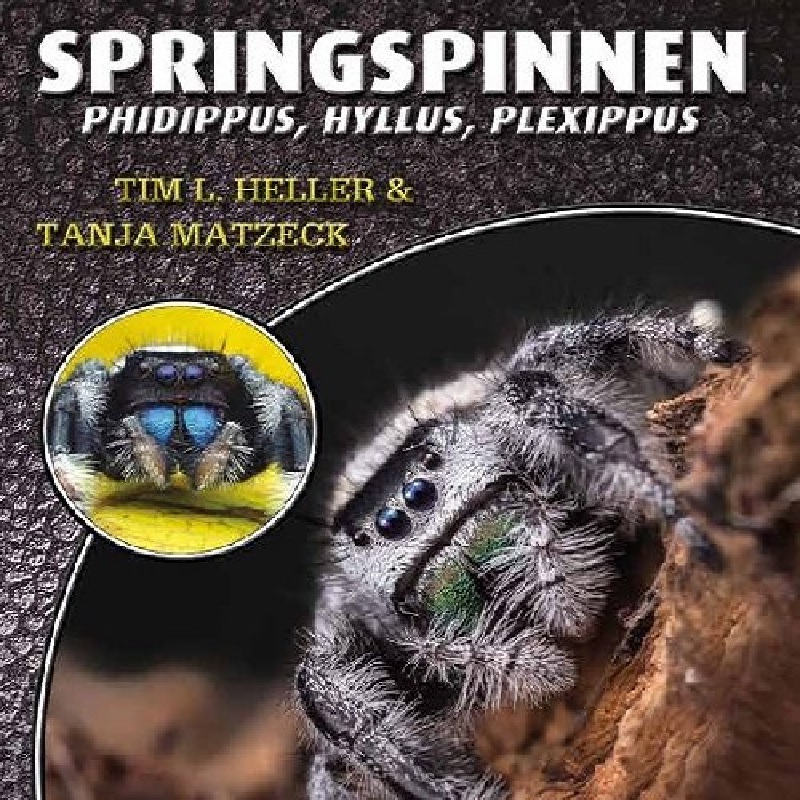
Book Jumping Spiders -
Phidippus, Hyllus & Plexippus
A guide to keeping jumping spiders of the genera Phidippus, Hyllus & Plexippus. Who can resist the charm of jumping spiders? The childlike appearance of their expressive face simply leaves no one cold! In addition, their behavior is extremely exciting to observe, their colors are bright and their requirements for species-appropriate keeping are very easy to meet. No wonder these likeable jumpers are all the rage!
This volume in the "Species by Species" series describes in detail what to look out for when buying and keeping them, introduces the most commonly kept species and color forms and provides plenty of tips on how to keep them successfully - so you can be sure they will breed well!
Species by Species introduces you to the books in this series, which present the most popular terrarium animals. Each volume offers you detailed, practical care instructions and all the information you need to successfully breed your animals.
All important questions from the required tank size to terrarium set-up, technical equipment, species-appropriate nutrition and disease prevention are answered with numerous tricks and tips.
Experienced, long-standing breeders reveal how you can encourage the animals to reproduce and raise healthy young.
All this in full color, generously illustrated and attractively designed - just about your terrarium animal - species by species
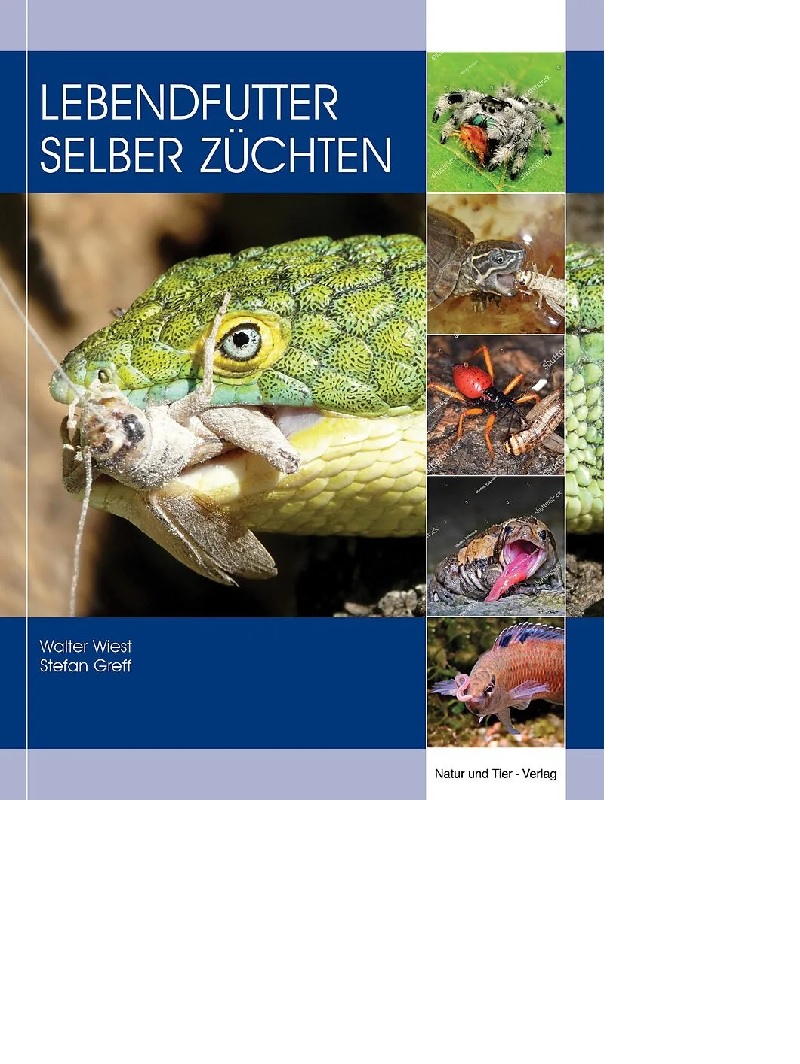
Book "Grow your own live food" - The perfect guide for pet owners
Discover practical and detailed instructions on how you can easily breed food for your reptiles, birds, fish or other animals yourself in the book "Breeding live food yourself". With valuable tips on various food insects, their care and breeding, you can save money and ensure a species-appropriate diet for your pets.
Contents of the book:
Step-by-step instructions for breeding feeder insects
Information on the best types of food for reptiles, birds and fish
Care instructions and breeding conditions for various live food species
Tips for sustainable and cost-effective food production
Why breed your own live food?
Get healthy, fresh food for your animals
Save money and reduce dependence on pet shops
Promote the health and well-being of your animals with species-appropriate food
Whether you are a beginner or an experienced pet owner, this book provides you with everything you need to successfully breed live food yourself.
Marginata 69 - New Guinea tortoises – the genus ElseyaCover storyThe unrecognised beauties: New Guinea tortoises (Andreas S. Hennig)My experiences with Branderhorst's New Guinea tortoise, Elseya (Elseya) branderhorsti (Ouwens, 1914) (Andreas S. Hennig)Keeping and breeding of Rhodin's New Guinea tortoise, Elseya (Hanwarachelys) rhodini Thomson, Amepou, Anamiato & Georges, 2015 (Andreas S. Hennig)PortraitGeoemyda spengleri, Chinese serrated tortoise (Andreas S. Hennig)ReportageMacrochelys temminckii – Experiences and impressions with vulture tortoises part 2 (Reiner Praschag)KeepingAn alternative to year-round keeping of the Egyptian tortoise in the terrarium – my experiences with seasonal outdoor keeping of Testudo kleinmanni (Ricarda Schramm)EtymologySawbacks and living maps part 4: Graptemys gibbonsi, Pascagoula humpback tortoise (Holger Vetter)Classifieds & animal placement
Bugs No. 01 - Goliath beetles colourful giants
Preparation of invertebratesMesobuthus gibbosusPoecilotheria metallicaTable of contents
EditorialTeam introductionFacetsFlown inDates
Cover storyGoliath beetles – not just giants!Frank Rossow
Top class! Keeping and breeding Goliathus goliatusFrank Rossow & Jens Rudnik
Colour galore! Mecynorhina, brightly coloured rose beetles with big nosesFrank Rossow & Jens Rudnik
FledgedOn the hunt for invertebrates in the LevantIngo Fritzsche
In the crosshairsAtlas moth Attacus atlasDaniel Dittmar
PracticeA gem in the terrarium Poecilotheria metallicaPatrick Meyer
PracticeColourful splendour and predator hunger, breeding the "tiger cricket"Uwe Dost
ReportageFungi as deadly enemies of arthropods – but worth their weight in goldIngo Fritzsche
Reportage On the trail of the field scorpion. Mesobuthus gibbosus in nature and in the terrarium. Part 1: Exciting behaviourBenny Trapp
Reportage“Cracking difficult species!” A visit to Jutta RendaKriton Kunz
Potter bee Weathering of food plantsBruno Kneubühler
Kids Corner Feeder animals under the microscopeIngo Fritzsche
Showcase Specimens homemade – an introductionPatrick Urban
Book scorpionService & ImprintPreview
MetamorphosesStart into lifeKriton Kunz
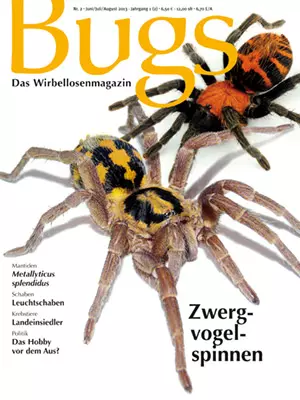
Bugs No. 02 - Dwarf tarantulas
Metallyticus splendidusLand hermitsIs the hobby on the brink of closure?Table of contents
Editorial
Team introduction
Facets
Dates
Flown in
Cover storyGreat pleasure in small animals
Colourful dwarfs
“This girl is on fire!”
FledgedIn search of stag beetles in southern India
In the crosshairsMetallic praying mantis
ReportageOn the trail of the field scorpion, part 2
PracticeLuminous cockroaches in the terrarium
PracticeBreeding a new ghost stick insect from Sumatra
CultureInsects as medicine
PracticeA life between land and sea
Potter beeSafe handling of centipedes
Kids CornerNesting aid for wild bees
ShowcasePreserved for eternity – know-how!
Book scorpion
Also in your area
Service & Imprint
Preview
Metamorphoses
Football!
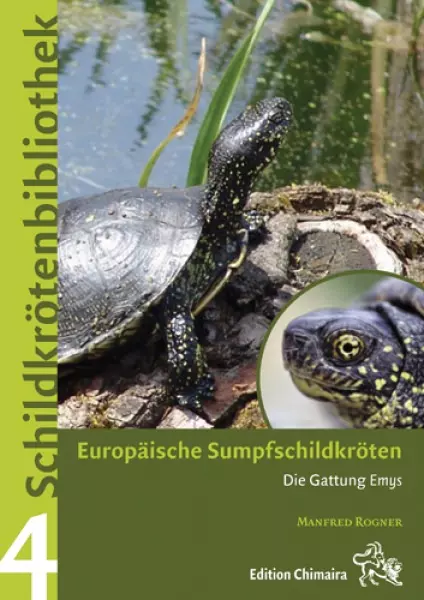
European Pond Turtle - Emys orbicularis Turtle Library 4
This book covers everything from tried-and-tested advice on successful breeding to a scientific overview of current populations in the countries where they are found.
The book includes a short article on the following countries and regions:
North Africa (Morocco, Algeria, Tunisia); the Iberian Peninsula (including the Balearic Islands); France (including Corsica); the Benelux countries; Switzerland; Germany; Italy (including Sicily and Sardinia); Denmark; Austria; Czech Republic; Slovenia, Poland; Hungary; Slovakia; Albania; Greece; Romania; Lithuania; Latvia; Bulgaria; Ukraine; Belarus; Turkey; Russia and the Caucasus region.
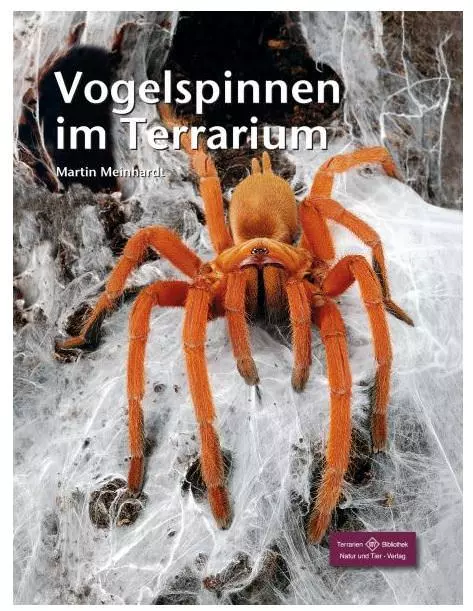
Alles über Vogelspinnen im Terrarium von Martin Meinhardt
136 Seiten
123 Farbfotos, mit Karte und 4 grafischen Darstellungen
Format: 16,8 x 21,8 cm
3. Auflage
Taschenbuch
Autor Martin Meinhardt
Verlag NTV
Inhalt:
Vogelspinnen sind traumhafte Terrarientiere! Ihr attraktives Äusseres und das spannende Verhalten lassen sie in der Gunst der Spinnenfreunde ganz oben stehen. Der langjährige und versierte Züchter Martin Meinhardt erläutert in dieser überarbeiteten und um viele Artporträts erweiterten Auflage seines Praxis-Ratgebers alles, was Sie für die artgerechte Pflege und die erfolgreiche Nachzucht der Tiere wissen müssen.
Systematik – die Verwandtschaft der Vogelspinnen
Körperbau – so funktioniert eine Vogelspinne
Gift und Brennhaare – warum Vogelspinnen trotzdem nicht gefährlich sind
Verhalten – Beuteerwerb, Balz und Fortpflanzung
Artgerechte Pflege – Einrichten und Klimatisieren geeigneter Terrarien; Vogelspinnen richtig füttern
Erfolgreich nachzüchten – Geschlechtsunterschiede, Verpaarung, Aufzucht der Jungtiere
Detaillierte Artporträts – ausführliche Informationen zu besonders geeigneten Arten
Faszinierende Farbfotos
Bede at Ulmer - Handbook of Turtle Diseases
From the contents:
Body structure and function of the organs
Nervous system and sensory functions
Selected behaviours
Growth and age
Direct husbandry and feeding damage
Diseases of the head, eyes, ears, respiratory organs, digestive organs
Poisoning
Incubation defects and hatchling diseases
The cave-dwelling rat snake
Andreas Gumprecht
64 Seiten
14,8 x 21 cm
zahlreiche Farbfotos
Inhalt:
Der Name ist Programm: Die Schönnatter zählt mit Sicherheit nicht nur zu den attraktivsten Schlangen, sondern zu den beeindruckendsten Reptilien überhaupt. Überdies kommt sie in verschiedenen Unterarten vor, die jeweils ihre ganz eigene Charakteristik aufweisen. Und ihr umgängliches, ruhiges und wenig anspruchsvolles Wesen macht besonders einige dieser Unterarten zu geradezu idealen Terrarienpfleglingen. Andreas Gumprecht ist Experte für asiatische Schlangen, pflegt und züchtet Schönnattern seit Jahren und hat sie in ihrem natürlichen Lebensraum studiert. In diesem Ratgeber gibt er Ihnen leicht verständlich das nötige Wissen an die Hand, das Sie brauchen, um Schönnattern artgerecht halten zu können. Und natürlich erfahren Sie auch, wie man diese faszinierenden Nattern zur Nachzucht bringt, ihre Eier ausbrütet und die Jungtiere großzieht.
Systematik und Körperbau
Die faszinierende Biologie: Aus dem Leben der Schönnatter
Alle Informationen zur artgerechten Haltung: Vom geeigneten Terrarium über Einrichtung und Technik bis hin zur Fütterung
Erfolgreich nachzüchten: Paarungsstimulation, Inkubation der Eier und Aufzucht der Jungtiere
Problemlösungen: Wie man die häufigsten Fehler bei der Pflege vermeidet, und wie man kranken Tieren helfen kann
Brillante Fotos
Marginata 44 Magazine
Observing European tortoises in the wild
Yellow-banded box turtleTortoise rescue centreMauremys hybrids
Contents:
Cover story: Observing European tortoises in the wild
EditorialMagazine
ReportageObserving European tortoises in the wildBenny Trapp
ReportageOn a turtle tour at the foot of OlympusBenny Trapp
BiologyIn search of tortoises in BulgariaThorsten Geier
PhotographyPhotographing tortoises in the wildBenny Trapp
PortraitGopherus agassizii (Cooper, 1863), Mojave Desert tortoiseHeiko Werning
Keeping and breedingThe Yellow-banded Box Turtle (Cuora flavomarginata). Part 1: Biology and careUlrich Hennen
Species protectionTortoise catastrophe in the PhilippinesEditorial team, with material from ZGAP and Katala Foundation Inc.
ReportgeCan love be a sin? A side note on hybrids from Mauremys leprosa and Mauremys reevesiiSebastian Nickl
Subscription & ServiceRegional guide
CHF 16.50
❅
❆
❅
❆
❅
❆
❅
❆
❅
❆
❅
❆
This website uses cookies to ensure the best experience possible. More information...