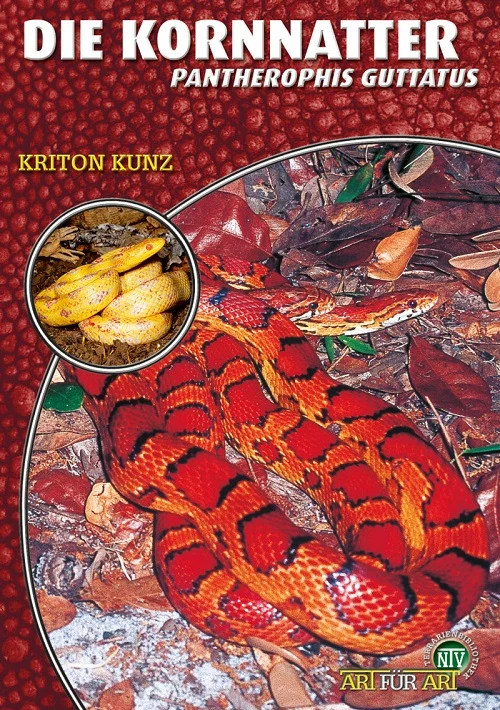

The corn snake

Article no: BZ-AB10984

CHF 21.90

Stock: 1

Available, delivery time: 1-3 days

Delivery between Thursday, 1 October and Friday, 2 October
Zahlungsarten
Product information "The corn snake"

All about corn snakes from Kriton Kunz

  • 64 Seiten
  • 14,8 x 21 cm
  • zahlreiche Farbfotos
  • Autor Kriton Kunz

Inhalt:

Vielleicht der Klassiker der Terraristik schlechthin ist die Kornnatter. Sie vereint in sich alle Eigenschaften, die eine Schlange zu einem geeigneten und auch dem Einsteiger empfehlenswerten Pflegling machen: Wunderschöne Färbung, attraktive Farbvarianten, ruhiges, umgängliches Wesen und leichte Haltbarkeit.
Damit Sie Ihre Kornnattern vom ersten Tag an richtig und artgerecht pflegen können, vermittelt Ihnen Kriton Kunz, REPTILIA-Redakteur und erfahrener Schlangenhalter, in diesem Band der Reihe „Art für Art“ ausführlich und leicht verständlich alles, was Sie für die erfolgreiche Haltung dieser faszinierenden Art wissen müssen. Selbstverständlich erfahren Sie auch, wie Sie Ihre Tiere zur Vermehrung bringen, die Eier ausbrüten und die Jungtiere aufziehen können.

  • Systematik und Körperbau
  • Die faszinierende Biologie: Aus dem Leben der Kornnatter
  • Alle Informationen zur artgerechten Haltung: Vom geeigneten Terrarium über Einrichtung und Technik bis hin zur Fütterung
  • Erfolgreich nachzüchten: Paarungsstimulation, Inkubation der Eier und Aufzucht der Jungtiere
  • Problemlösungen: Wie man die häufigsten Fehler bei der Pflege vermeidet, und wie man kranken Tieren helfen kann
  • Brillante Fotos
Composition
Feeding recommendation
Technical details
Size information

0 of 0 reviews

Give us a rating!

Share your experience with the product with other customers.


Suggested products

Handbook of food plants for tortoises and other reptiles
Handbook of forage plants 2nd revised editionMarion Minch is not only a successful breeder of diverse tortoises for many years, but also an excellent connoisseur of native wild herbs. She founded and runs samenkiste.de, which is well known to many tortoise keepers and nature lovers. Her name is inextricably linked with reptile care and species-appropriate nutrition for tortoises. Her handbook of food plants summarises the most important native food plants for herbivorous and omnivorous reptiles. She not only considers tortoises, but also iguanas, spiny-tailed dragons and even chameleons. From the basics of plant biology to native wild herbs to suitable food plants for hardy tropical reptile species, this comprehensive work provides the basis for species-appropriate keeping. In the expanded and supplemented 2nd edition, the plant section is divided according to flower colour. This makes it even easier to identify wild herbs. The work has also been supplemented with a wealth of additional information and many pictures.

CHF 46.50

Geckos
Geckos in the terrarium by Astrid FalkThe book offers a comprehensive introduction to geckos and their species-appropriate keeping in terrariums. It explains what you need to think about before buying a gecko and what preparations should be made. The book describes in detail how the terrarium is technically equipped and set up. The care of the animals, their special features and behaviour, their diet, reproduction and rearing of young animals are described, as well as diseases and husbandry problems with tried and tested suggestions for prevention and treatment. Individual gecko species that are particularly suitable for keeping and breeding in terrariums are portrayed in detail in the second part of the book.

CHF 28.50

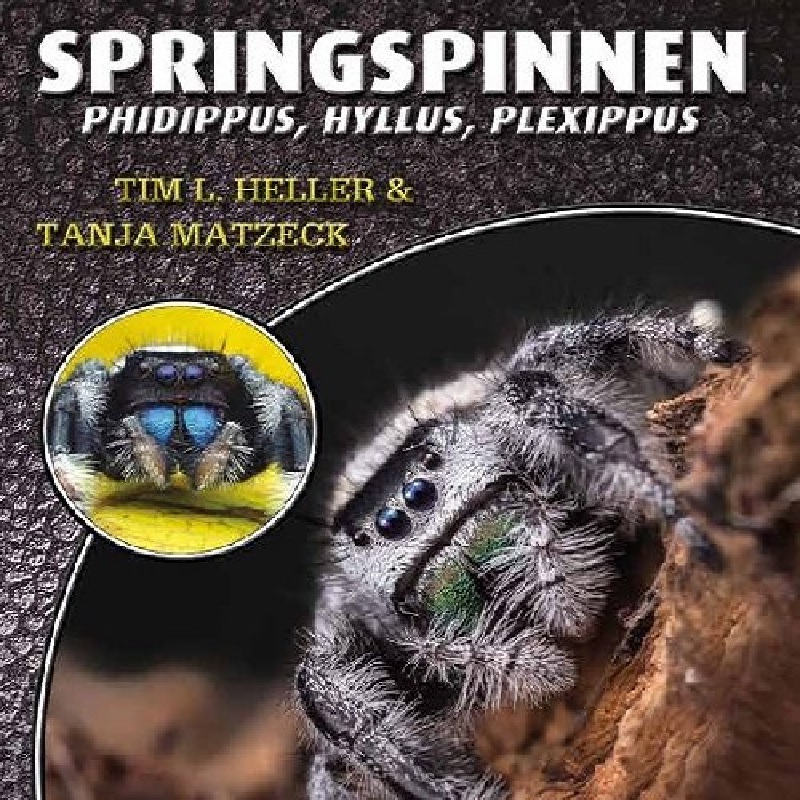
Jumping spiders Phidippus, Hyllus, Plexippus
Book Jumping Spiders - Phidippus, Hyllus & Plexippus A guide to keeping jumping spiders of the genera Phidippus, Hyllus & Plexippus. Who can resist the charm of jumping spiders? The childlike appearance of their expressive face simply leaves no one cold! In addition, their behavior is extremely exciting to observe, their colors are bright and their requirements for species-appropriate keeping are very easy to meet. No wonder these likeable jumpers are all the rage! This volume in the "Species by Species" series describes in detail what to look out for when buying and keeping them, introduces the most commonly kept species and color forms and provides plenty of tips on how to keep them successfully - so you can be sure they will breed well! Species by Species introduces you to the books in this series, which present the most popular terrarium animals. Each volume offers you detailed, practical care instructions and all the information you need to successfully breed your animals. All important questions from the required tank size to terrarium set-up, technical equipment, species-appropriate nutrition and disease prevention are answered with numerous tricks and tips. Experienced, long-standing breeders reveal how you can encourage the animals to reproduce and raise healthy young. All this in full color, generously illustrated and attractively designed - just about your terrarium animal - species by species

CHF 23.90

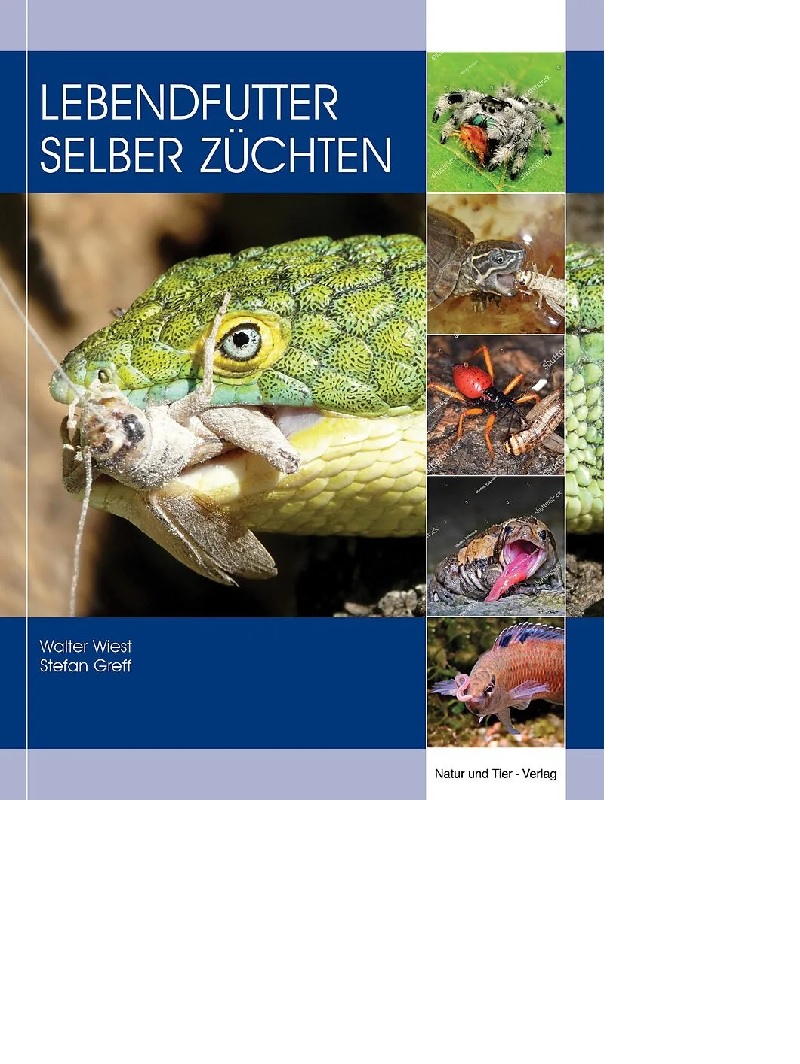
Book Breeding live food yourself
Book "Grow your own live food" - The perfect guide for pet owners Discover practical and detailed instructions on how you can easily breed food for your reptiles, birds, fish or other animals yourself in the book "Breeding live food yourself". With valuable tips on various food insects, their care and breeding, you can save money and ensure a species-appropriate diet for your pets. Contents of the book: Step-by-step instructions for breeding feeder insects Information on the best types of food for reptiles, birds and fish Care instructions and breeding conditions for various live food species Tips for sustainable and cost-effective food production Why breed your own live food? Get healthy, fresh food for your animals Save money and reduce dependence on pet shops Promote the health and well-being of your animals with species-appropriate food Whether you are a beginner or an experienced pet owner, this book provides you with everything you need to successfully breed live food yourself.

CHF 46.50

Marginata 69 - New Guinea tortoises
Marginata 69 - New Guinea tortoises – the genus ElseyaCover storyThe unrecognised beauties: New Guinea tortoises (Andreas S. Hennig)My experiences with Branderhorst's New Guinea tortoise, Elseya (Elseya) branderhorsti (Ouwens, 1914) (Andreas S. Hennig)Keeping and breeding of Rhodin's New Guinea tortoise, Elseya (Hanwarachelys) rhodini Thomson, Amepou, Anamiato & Georges, 2015 (Andreas S. Hennig)PortraitGeoemyda spengleri, Chinese serrated tortoise (Andreas S. Hennig)ReportageMacrochelys temminckii – Experiences and impressions with vulture tortoises part 2 (Reiner Praschag)KeepingAn alternative to year-round keeping of the Egyptian tortoise in the terrarium – my experiences with seasonal outdoor keeping of Testudo kleinmanni (Ricarda Schramm)EtymologySawbacks and living maps part 4: Graptemys gibbonsi, Pascagoula humpback tortoise (Holger Vetter)Classifieds & animal placement

CHF 16.50

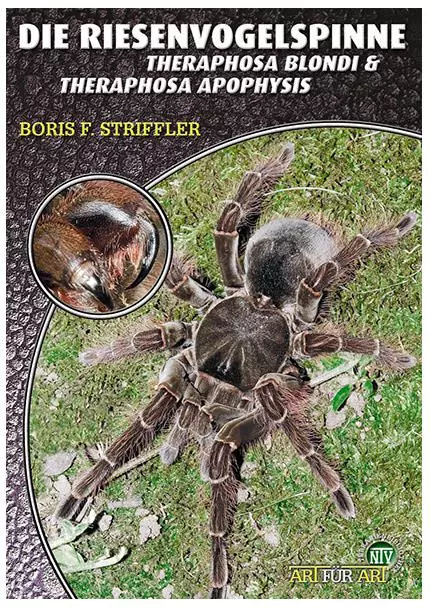
Giant tarant spiders
The book about the giant tarantulas Theraphosa blondi and Theraphosa apophysis 64 pages many colour photos Theraphosa blondi and Theraphosa apophysis Author Boris F. Striffler Publisher NTV In this book, the author explains everything about the two giant tarantulas. It describes how to keep and care for these large eight-legged creatures, as well as the terrarium and how to handle these animals. The following is described: Systematics and body structure The fascinating biology: From the life of giant tarantulas All information on species-appropriate keeping: from suitable terrariums to equipment and technology to feeding Successful breeding: Mating stimulation, various methods for egg laying and rearing the young Solutions to problems: How to avoid the most common mistakes in care and how to help sick animals

CHF 21.90

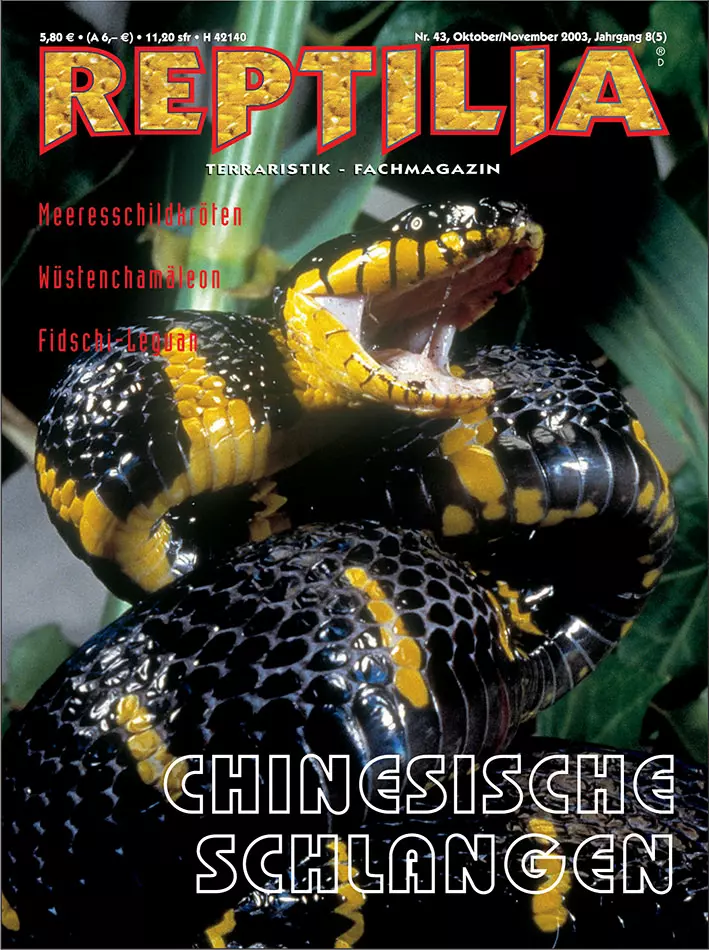
Reptilia 44 - Chinese snakes
Reptilia 44 - Chinese snakesSea turtlesDesert chameleonFiji IguanaContents: 2 EDITORIAL 4 READER LETTERS 5 MAGAZINE 16 DATES 18 WESTERN HERP PERSPECTIVESReform backlog also for species protection lawsby B. Love 20 PHOTO REPORTAGE The diverse world of Chinese snakesby S. Winchell 30 HERPETOFAUNAThe venomous snakes of southern China by N. Orlov, N. Ananjeva, S. Ryabov & Ding-qi Rao 37 HERPETOFAUNANotes on the Chinese climbing snakes of the genus Elaphe (sensu lato) FITZINGER, 1833 by A. Gumprecht 42 TRAVELNamibia - In search of the desert chameleon by R. Leptien 47 HERPETOFAUNAMorphology and colouration of the Caribbean green iguana (Iguana delicatissima) by M. Schardt 51 PORTRAIT AND POSTERPodarcis peloponnesiacaby B. Trapp 56 KEEPING AND BREEDINGCare and Breeding of the Banded Fiji Iguana (Brachylophus fasciatus BRONGNIART, 1800)by J. Schmidt 64 KEEPING AND BREEDINGOn the mating behaviour of tropical clawed frogs Silurana sp. – Part 1by K. Kunz 72 REPORTAGETurtle Island Part 2: The Barbados Sea Turtle Projectby M. Kuhn & D. Schmidt 78 HERPETOFAUNAParthenogenesis in the Dark Tiger Python (Python molurus bivittatus)by M. Kuhn & D. Schmidt 86 SMALL ADVERTS 90 RAT & TAT 94 LIBRARY 104 GLOSSESAll the happiness on earth - Part 1: Ascentby H. Werning

CHF 11.20

Feed animal breeding
Forage animal breeding - live food for vivarium animals 187 pages 63 black and white photos Drawings black and white hardback 4th edition up-to-date and comprehensive with many instructions Authors Ursula Friederich and Werner Volland Ulmer Always fresh: prey for lizards, birds and co. Most vivarium animals, birds and some small mammals cannot survive without live food, at least in certain phases of their lives. This book is a basic guide for anyone who wants to breed a wide variety of food animals on a small or large scale. It describes the various food animals in detail, including species that have rarely been used to date, offers tried and tested instructions and answers all questions relating to setting up your own food animal farm.

CHF 35.90

Ulmer, Turtles
Ulmer, Turtles – Living Earth History 154 pages 119 colour photos 13 drawings hardback Author Manfred Rogner This book offers a comprehensive overview of the extremely diverse and ancient order of turtles. You will find more about Evolutionary history, systematics, biology and distribution Terrariums and their equipment, care, nutrition, reproduction and breeding, Diseases and their treatment, over 90 species portraits from the families Alligator, big-headed, New World swamp, land, Old World swamp, New Guinea soft-shelled, real soft-shelled, Tobasco, cross-breasted, mud, snake-neck and American snake-neck turtles.

CHF 29.90

Marginata 20 - North American Box Turtles
Marginata 20 - North American Box TurtlesTurtles of Nova Scotia Part 2Emys orbicularis twinsThe world's largest broad-shelled turtleContents:2 Editorial3 letters to the editor4 Magazine8 dates10 REPORTAGE The box turtles of the genus Terrapene Hans - Dieter Philippen16 BREEDING IN HUMAN CARE The Mexican representatives of the Carolina- Group from the genus Terrapene Markus Baur & Irmtraud Jasser-Häger26 REPORTAGE Notes on the ecology of Terrapene ornata ornata in the area of Great Plains Michael Wirth & Hans-Peter Mattern31 PORTRAIT Aldabra giant tortoise, Dipsochelys dussumieri (Gray, 1831) Michael Wirth35 REPORTAGE Influence of calcium concentrations in the Food on the digestibility of calcium, Magnesium and phosphorus in Testudo hermanni Annette Liesegang, Jean Michael Hatt & Marcel Wanner42 REPORT Twin births in the European box turtle European pond turtle (Emys orbicularis) Hans - Dieter Philippen44 REPORTAGE "Ötzi", or: The turtle that emerged from the Cold came .. A remarkable incubation experience Jutta Jähne & Hans - Dieter Philippen46 REPORT A journey to the turtles of Nova Scotia (Nova Scotia), Canada Part 2: Forests, streams, forest stream turtles Herbert Becker, Andreas Gräf & Urs Landweer57 REPORTAGE "Il Gigante" - the largest living broad-shelled turtle tortoise (Testudo marginata) Hans - Dieter Philippen60 Book tip 61 Classifieds62 Regional guide

CHF 16.50

Bugs No. 03 - Tropical land snails
Bugs - No. 03 - Tropical land snails UruguayScolopendra hardwickeiEntomological forensics Contents:EditorialFacetsDatesFlown in Cover storySnails on the advance Archachatina - the gentle giants Survival in exile FledgedAmong spiders and scorpions in Uruguay In the crosshairsScolopendra hardwickei ReportageStriped newcomer - the wasp spider CSI "Fly" - Forensics Exemplary arthropods - bionics, part 1 PracticeMedicinal leeches as pets Hybridisation of two phasmid species Potter beeReplacement cocoons for bugs Kids CornerMake yourself a praying mantis! ShowcaseLocating and capturing grasshoppers Book scorpionAlso in your neighbourhoodService & ImprintPreview MetamorphosesPlay of colours 

CHF 12.00

Terraria 19 - Diseases of tarantulas
Terraria 19 - Diseases of Tarantulas Northern Pine SnakeExpedition Tanzania Contents: While reptiles and amphibians have long been professionally treated by specialised veterinarians,unfortunately, there is still much to be done for invertebrate terrarium guests. However, our knowledge of these animals is gradually increasing. In this TERRARIA, expert Frank Schneider impressively summarises the current state of knowledge about diseases and parasites of tarantulas and offers approaches for treatment options.2Editorial   4Magazine Snake mites in reptiles: predatory mites as a biological control method/ Remarks on Pipa snethlegeae in French Guiana/Another wall lizard population threatened by a construction project/ "Benefiz-Terraristika" a great success/Vivarium Karlsruhe – "Climate and Habitats"/Phoresy in pseudo- scorpions in Baltic amber/ Legal 16TERRAglobal I, the Crocodile Hunter Joachim Bulian The snake with the mighty "Embrace" Fabio Cupul 20Diseases and parasites of tarantulas Frank Schneider 41On the keeping and breeding of the turnip-tailed viper gecko (Hemidactylus imbricatus or Teratolepis fasciata) in the terrarium Martin Dieckmann 50The Canary Island Mediterranean tree frog (Hyla meridionalis): Distribution, keeping and reproduction Manfred Rogner 54The Northern Pine Snake (Pituophis melanoleucus melanoleucus) In nature and terrarium. Part 1 Bernd Skubowius 61Travel "Exo Terra" Expedition Tanzania 2008 Part 1: In the realm of the turquoise blue dwarf day gecko (Lygodactylus williamsi) Roland Zobel 72New species New from Table Mountain: two dwarf tegus and a "miniature dragon" toadlet Axel Kwet 75Among researchers Amphibians and reptiles above the clouds – the decoding of species diversity in a forgotten world Philippe Kok 81Test run Heating mats Kriton Kunz 84 Near you 86Showcase In the Swiss cellar – A visit to Beat Akeret Heiko Werning 91 Subscription & Service 94Preview 96Incubator The "Rock Helga" – A Morocco adventure in two parts. Part 1 Mike Zawadzki

CHF 12.00

Customers also saw

Corn snake
Corn snake Probably the most popular snake kept in captivity with an exceptionally high number of breedings, which increase the colour spectrum. Area of origin: Widespread throughout the whole of the southern and eastern USA and in north-eastern Mexico. A few isolated populations are also found outside this area.The corn snake normally lives in woodland areas, overgrown plantations, roadsides and on rocky slopes or old masonry, but can also be found in farmland and cornfields. An excellent climber, but predominantly a ground dweller. The corn snake is diurnal in spring, but active only at dusk in summer. Description: The body is slender with a small distinct head. The colouration of these slender snakes varies greatly, from rust-brown through orange-red to quite brick-red, but usually between orange and grey with clearly marked brown to red spots on the flanks. The pupil is round. It usually has an oblique eye stripe up to the corners of the mouth and on the underside a slate-blue chequerboard pattern on a cream-coloured background. The scales are black keeled. It grows to 60 - 180 cm long. Care: The corn snake is a very popular animal in the terrarium as it is not only persistent but, with good care, easy to breed.Young corn snakes can be raised in a small tank . As the young snakes also grow large, it is advisable to buy a large terrarium straight away. As adults, corn snakes need a medium-sized terrarium of at least 120 cm length, 60 cm depth and 120 cm height (minimum size for 1 pair). However, the container must not have any gaps or leaks, as corn snakes are born escape artists!The substrate is made up of a mixture of sand and peat. The floor should be warmed by a heating mat.  The decoration of the terrarium should consist of hiding places made of stones, pieces of bark or decorative cork, as well as branches and twigs for climbing. A water container is sufficient. Occasional direct sunlight. The day temperature should be between 22 and 28 degrees C, the night temperature can drop to 18 degrees C. If offspring are desired, a period of hibernation at temperatures of 5 - 12 degrees C should be carried out.The terrarium should be sprayed moderately with lukewarm water 2-3 times a week, somewhat more frequently before shedding.If well kept, they reach sexual maturity at 2-3 years and can easily live 12-15 years. Food: The corn snake eats strangled small mammals such as mice and young rats, birds, lizards and frogs. Breeding: If offspring are desired, hibernation (6-8 weeks) is required for corn snakes.After mating in spring (gestation period 40-60 days), 3 - 25 eggs glued together in a clutch are laid from May to July. The best thing to do is to fill a large container with peat as a place to lay eggs. After 8 - 10 weeks, young snakes 20 - 24 cm long hatch. After the first shedding, naked mice are accepted. The young can therefore be raised very easily.Before you decide on  corn snakes  you should definitely have read the relevant literature.For questions and problems our trained team at Zoo Roco is at your disposal. They can provide you with expert advice on all matters.
 
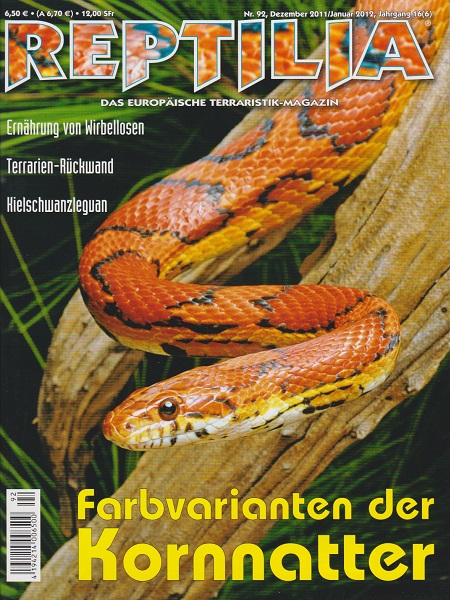
Reptilia 92 - Color variations of the corn snake
Reptilia 92 - Color variations of the corn snake Ernährung von WirbellosenTerrarien - RückwandKielschwanzleguan Inhalt: InhaltImmer neue, immer spektakulärere Farb- und Zeichnungsformen der Kornnatter drängen ins Hobby. Wie bei kaum einer anderen Art haben die Züchter bei dieser Schlange ihre Kunst auf die Spitze getrieben aus dem Klassiker der Terraristik wurde so auch ein topmodernes Terrarientier. REPTILIA-Kolumnist Bill Love und seine Frau Kathy, selbst langjährig erfahrene Züchter, bieten Ihnen in mehreren prächtig bebilderten Artikeln einen Überblick über die Entwicklung der Farbzuchten und die aktuell erhältlichen Varianten, über das für die gezielte Zucht notwendige Know-how, und last but not least berichten sie aus ihrer persönlichen Erfahrung über eine ganz spezielle Morphe, die sie als Erste überhaupt erzielten. EDITORIAL MAGAZIN TERMINEWESTERN HERP PERSPECTIVES Regelungs-Rage Von B. LoveFOTOSTORY Den Guppys auf der Spur 50 Jahre Zucht der Kornnatter, Pantherophis guttatusVon K. & B. Love Haltung und Nachzucht Kornnattern vermehren Ein Rezept für JedermannVon K. & B. Love HALTUNG UND NACHZUCHT Okeetee Rising Mein Vierteljahrhundert in der Welt der KornnatternVon K. LoveReiseÜberleben im Sand Eine Exkursion in die peruanische WüsteVon G. Chavez & A. P. Mendoza PORTRÄT und PosterTriturus carnifexVon B. TrappHerpetofauna Auf dem Weg ins All Die Welt der Buchstaben-Schmuckschildkröte, Trachemys scriptaTeil 2Von A. S. HennigHaltung und VermehrungHaltung und Vermehrung des Halsband-Kielschwanzleguans, Tropidurus torquatusVon J. LuttermannTERRARIENPRAXISSelbstbau der perkeften Terrarienrückwand – ein missglückter VersuchVon L. Pfetzing & J. EgererERNÄHRUNGHochwertige Ernährung wirbelloser Futtertiere und Terrarienbewohner – Teil 2Von R. Lautensack & R. HübersTiere unserer HeimatEin schützenswertes Reptil – die KreuzotterVon R. LeptienBibliothekBRUTKASTENMit den Fleisch der FeindeGastgeschichte von U. Hannemann  

CHF 12.00