Handbook of forage plants 2nd revised editionMarion Minch is not only a successful breeder of diverse tortoises for many years, but also an excellent connoisseur of native wild herbs. She founded and runs samenkiste.de, which is well known to many tortoise keepers and nature lovers. Her name is inextricably linked with reptile care and species-appropriate nutrition for tortoises. Her handbook of food plants summarises the most important native food plants for herbivorous and omnivorous reptiles. She not only considers tortoises, but also iguanas, spiny-tailed dragons and even chameleons. From the basics of plant biology to native wild herbs to suitable food plants for hardy tropical reptile species, this comprehensive work provides the basis for species-appropriate keeping. In the expanded and supplemented 2nd edition, the plant section is divided according to flower colour. This makes it even easier to identify wild herbs. The work has also been supplemented with a wealth of additional information and many pictures.
Geckos in the terrarium by Astrid FalkThe book offers a comprehensive introduction to geckos and their species-appropriate keeping in terrariums. It explains what you need to think about before buying a gecko and what preparations should be made. The book describes in detail how the terrarium is technically equipped and set up. The care of the animals, their special features and behaviour, their diet, reproduction and rearing of young animals are described, as well as diseases and husbandry problems with tried and tested suggestions for prevention and treatment. Individual gecko species that are particularly suitable for keeping and breeding in terrariums are portrayed in detail in the second part of the book.
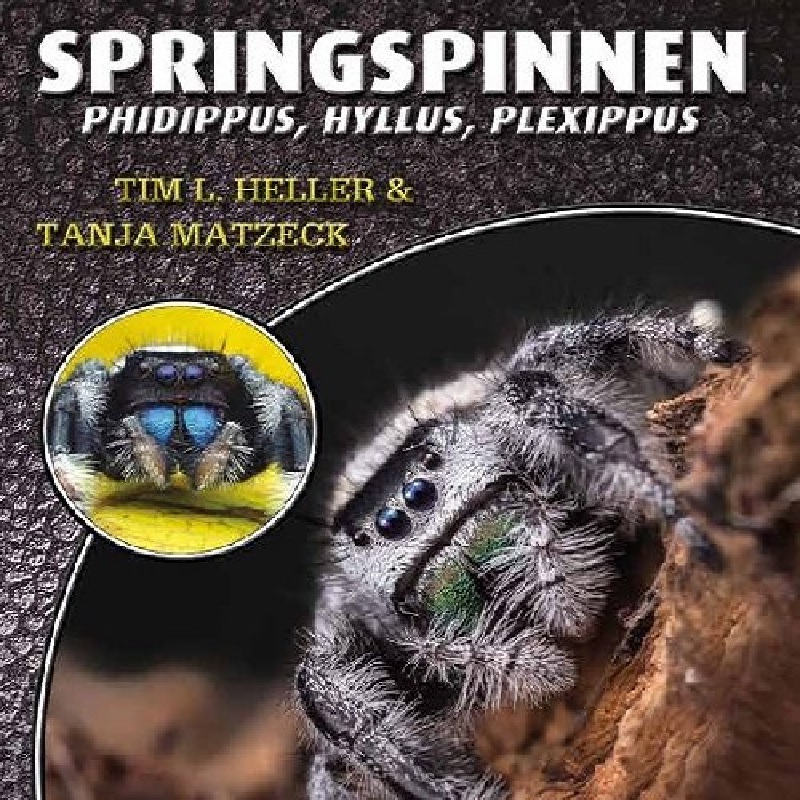
Book Jumping Spiders -
Phidippus, Hyllus & Plexippus
A guide to keeping jumping spiders of the genera Phidippus, Hyllus & Plexippus. Who can resist the charm of jumping spiders? The childlike appearance of their expressive face simply leaves no one cold! In addition, their behavior is extremely exciting to observe, their colors are bright and their requirements for species-appropriate keeping are very easy to meet. No wonder these likeable jumpers are all the rage!
This volume in the "Species by Species" series describes in detail what to look out for when buying and keeping them, introduces the most commonly kept species and color forms and provides plenty of tips on how to keep them successfully - so you can be sure they will breed well!
Species by Species introduces you to the books in this series, which present the most popular terrarium animals. Each volume offers you detailed, practical care instructions and all the information you need to successfully breed your animals.
All important questions from the required tank size to terrarium set-up, technical equipment, species-appropriate nutrition and disease prevention are answered with numerous tricks and tips.
Experienced, long-standing breeders reveal how you can encourage the animals to reproduce and raise healthy young.
All this in full color, generously illustrated and attractively designed - just about your terrarium animal - species by species
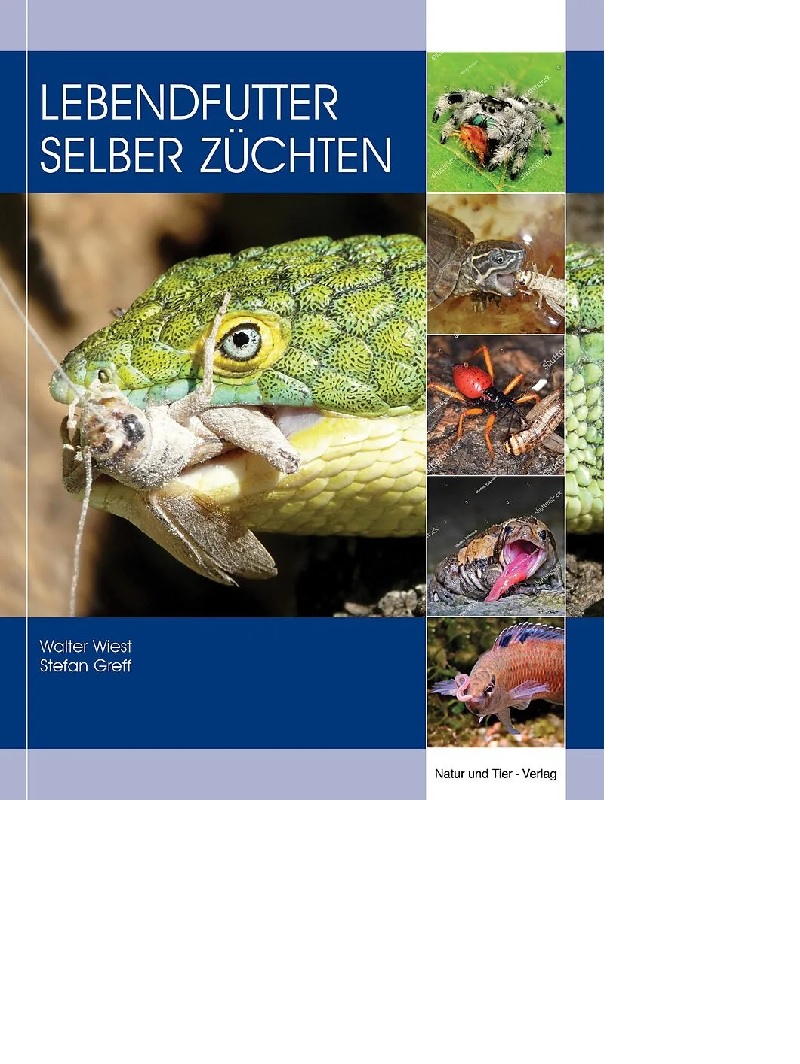
Book "Grow your own live food" - The perfect guide for pet owners
Discover practical and detailed instructions on how you can easily breed food for your reptiles, birds, fish or other animals yourself in the book "Breeding live food yourself". With valuable tips on various food insects, their care and breeding, you can save money and ensure a species-appropriate diet for your pets.
Contents of the book:
Step-by-step instructions for breeding feeder insects
Information on the best types of food for reptiles, birds and fish
Care instructions and breeding conditions for various live food species
Tips for sustainable and cost-effective food production
Why breed your own live food?
Get healthy, fresh food for your animals
Save money and reduce dependence on pet shops
Promote the health and well-being of your animals with species-appropriate food
Whether you are a beginner or an experienced pet owner, this book provides you with everything you need to successfully breed live food yourself.
Marginata 69 - New Guinea tortoises – the genus ElseyaCover storyThe unrecognised beauties: New Guinea tortoises (Andreas S. Hennig)My experiences with Branderhorst's New Guinea tortoise, Elseya (Elseya) branderhorsti (Ouwens, 1914) (Andreas S. Hennig)Keeping and breeding of Rhodin's New Guinea tortoise, Elseya (Hanwarachelys) rhodini Thomson, Amepou, Anamiato & Georges, 2015 (Andreas S. Hennig)PortraitGeoemyda spengleri, Chinese serrated tortoise (Andreas S. Hennig)ReportageMacrochelys temminckii – Experiences and impressions with vulture tortoises part 2 (Reiner Praschag)KeepingAn alternative to year-round keeping of the Egyptian tortoise in the terrarium – my experiences with seasonal outdoor keeping of Testudo kleinmanni (Ricarda Schramm)EtymologySawbacks and living maps part 4: Graptemys gibbonsi, Pascagoula humpback tortoise (Holger Vetter)Classifieds & animal placement
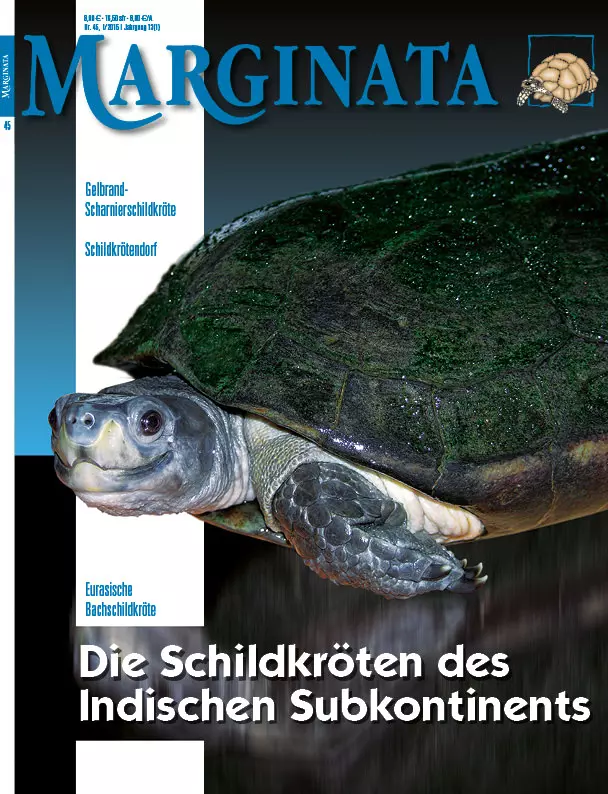
Marginata 45 - The Turtles of the Indian Subcontinent
Yellow-margined Box TurtleTurtle villageEurasian pond turtle
Contents:
EditorialMagazineTOPICThe turtles of the Indian subcontinentSebastian NicklTOPICTurtles in IndiaBernd WolffTOPICA journey to the turtles of Sri LankaHerbert and Regina BeckerTOPICKeeping and breeding the black-bellied terrapin (Melanochelys trijuga thermalis) in the terrariumSebastian NicklPORTRAITMauremys rivulata Valenciennes, 1833. Eurasian pond turtleBenny TrappREPORTAGEThe turtle village in the Mauren massif Martin DieckmannKEEPING AND BREEDINGThe Yellow-margined Box Turtle (Cuora flavomarginata) Part 2: Breeding in the terrarium and endangerment in the wildUlrich HennenSubscription & ServiceRegional guide
Reptilia 124 - North American venomous snakes
Contents:Cover story: North American venomous snakesRattlesnakes fascinate every reptile lover! But North America is also home to other interesting venomous snakes, from the coral viper to the water moccasin snake. We offer an overview of the North American venomous snake fauna and then take an in-depth look at the rattlesnakes of the USA and the “cottonmouth” in the wild and in the terrarium. Spectacular new pictures by our photographer Bill Love included.
Editorial
Farewell words
Something of mine remains here
L. Hogeback
MAGAZINE
DATES
WESTERN HERP PERSPECTIVES
The return to Australia
B. Love
PHOTOSTORY
The rattlesnakes of the USA in nature and terrarium
L. Spinner
KEEPING AND BREEDING
On the lookout: Water moccasin snakes in the wild and in the terrarium
L. Spinner
TERRARIUM PLANTS
The beach almond. Versatile use for small reptiles
B. Röll
ALSO NEAR YOU
KEEPING AND BREEDING
Jewels in the garden. The Western Green Lizard (Lacerta bilineata) in an outdoor terrarium
C. Malberg & A. Schäberle
SERVICE
Journey
Terribilis trip to Colombia. Excursion to a country in upheaval
B. Encke, Frogs & Friends
PREVIEW
INCUBATOR
Three bright colours
H. Werning
Marginata 03 - Endangered tortoises
Three-striped roofed turtleCoahuila box turtle
Contents:
2 EDITORIAL
3 READER LETTERS
4 MAGAZINE
7 DATES
9 PHOTO REPORTAGEEndangered tortoisesHans - Dieter Philippen
13 REPORTAGEIn search of mates for "Lonesome George" – Results of the Pinta Expedition 2003Peter C. H. Pritchard
21 REPORTAGESouth Africa – attempt to conserve one third of the world's known tortoisesMargaretha D. Hofmeyr and Brian T. Henen
31 PORTRAITMadagascan beaked tortoiseAstrochelys yniphora (VAILLANT, 1885)Hans - Dieter Philippen
36 REPORTAGEThe Seychelles giant tortoisesA contribution to nature conservation and species preservationJustin Gerlach
44 REPORTAGEThe species conservation project for the three-striped roofed turtle (Kachuga trivittata) at Mandalay ZooGerald Kuchling and U Twint Lwin
52 REPORTAGEKeeping and breeding the Coahuila box turtle Terrapene coahuila SCHMIDT & OWENS, 1944)Part 1 Markus Baur & Irmtraud Jasser-Häger
60 BOOK TIP
61 CLASSIFIEDS
62 REGIONAL GUIDE
64 AGATHA MARGINATA
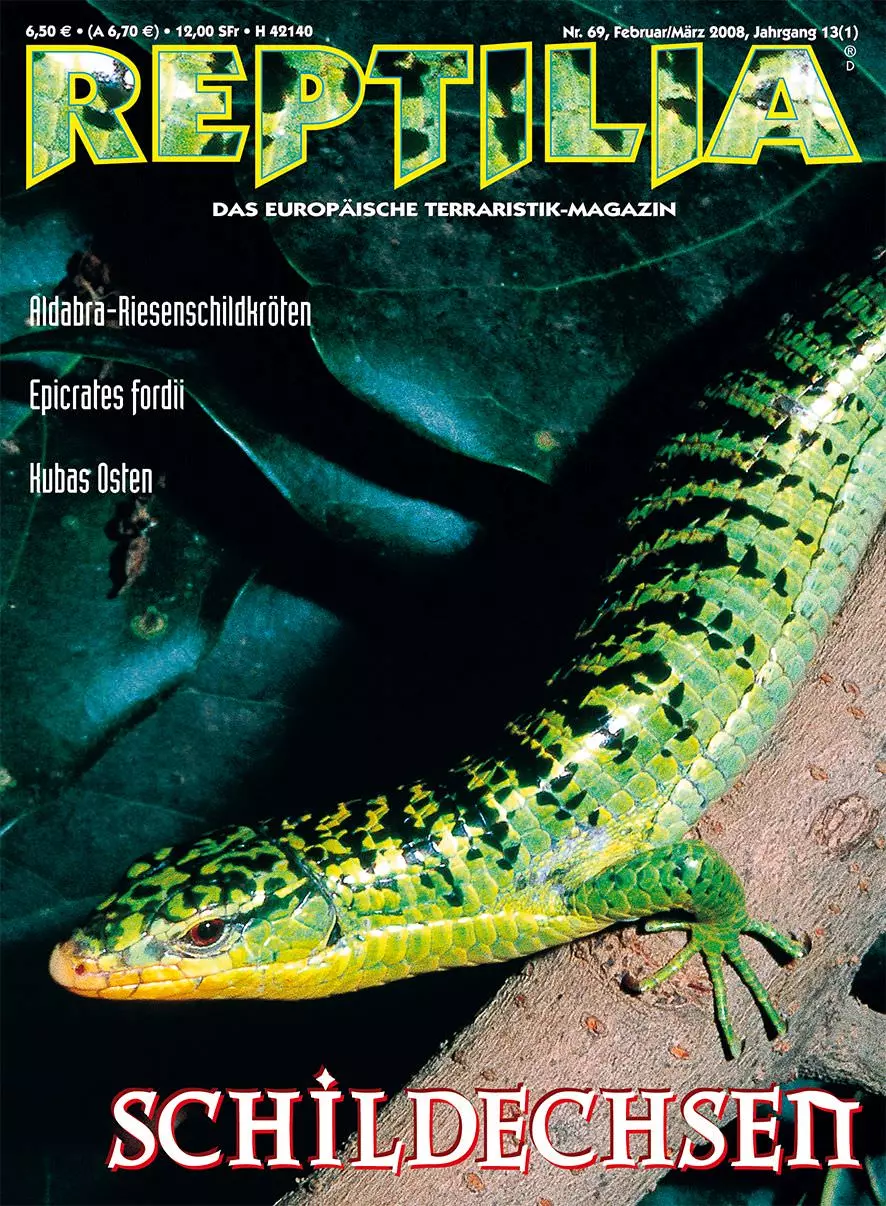
Reptilia 69 - Shield lizards
Aldabra giant tortoisesEpicrates fordiiEastern Cuba
Contents:
2 EDITORIAL
3 MAGAZINE
13 DATES
16 WESTERN HERP PERSPECTIVESTurtles in troubleBy B. Love
18 PHOTO REPORTAGEShield lizardsGenera and species at a glance By M. Barts
26 HERPETOFAUNARing-tailed shield lizardsThe genus ZonosaurusBy M. Rogner
32 KEEPING AND BREEDINGA short report on the Sudan-shield lizard (Gerrhosaurus major)By S. Dassow
37 KEEPING AND BREEDINGThe rock shield lizard(Gerrhosaurus vallidus)By F. Schmidt
44 TRAVEL Herpetological between Columbus' landing point and the CaribbeanCuba's middle eastBy B. Krüger
51 PORTRAIT AND POSTERRhinella ictericaBy A. Kwet
56 KEEPING AND BREEDINGThe Aldabra giant tortoiseDipsochelys dussumieriBy B. Devaux - SOPTOM
64 KEEPING AND BREEDINGEpicrates fordii – a giant snake in miniatureBy S. Einolf
67 REPORTAGEThe "asthma beetle" and its use in folk medicineBy K. Kunz
76 TERRARIUM EXHIBITSThe Avilon Montalban Zoological Park, PhilippinesBy M. Gaulke
85 REPORTAGEThe Good, the Bad and the UglyVisiting Thomas Wilms in Saudi Arabia -a guest article about living and researchingin a beautiful countryBy P. Wagner
89 FAQ - FREQUENTLY ASKED QUESTIONSRed-eyed tree frogsBy T. Eisenberg
94 LIBRARY
104 INCUBATORFlorida Diaries (Part 2)By H. Werning
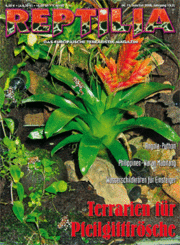
Reptilia 71 - Terrariums for poison dart frogsAngola pythonPhilippine monitor lizard MabitangAquatic turtles for beginnersContents:
2 EDITORIAL
3 READER LETTERS
6 MAGAZINE
14 DATES
16 WESTERN HERP PERSPECTIVESNew equipment for "herping"From B. Love
18 PHOTO REPORTAGEPoison dart frog terrariums - Treasure chests for the Juwel of the rainforestBy H. Werning
26 PRACTICEA terrarium for poison dart frogs in 25 stepsBy H. Werning
36 REPORTAGEFrogs, frogs, frogsAt home with the poison dart frog breeders Renate and Bernd PieperBy M. Schmidt & H. Werning
42 TRAVELRanario Cahuita Costa RicaBy M. Haberkern
51 PORTRAIT AND POSTERTestudo hermanni hermanniBy M. Wirth
56 HERPETOFAUNANorth Carolina's Blue Ridge Mountains - The Salamander Capital of the WorldBy H.-J. Luef
63 KEEPING AND REPRODUCTIONPython anchietaeKeeping and breeding the Angolan pythonBy M. Borer
67 HERPETOFAUNAThe Mabitang (Varanus mabitang), a fruit-eating large monitor lizard from the PhilippinesBy M. Gaulke & A. D. Demegillo
75 HERPETOFAUNASkinks in the Usambara Mountains in north-east TanzaniaBy W. & Y. Lantermann
78 REPORTAGEMake two out of one - converting an outdoor terrarium for snakesPart 2: A unique experience among snakesBy M. Hallmen
87 FAQ - FREQUENTLY ASKED QUESTIONSAquatic turtlesBy A. S. Hennig
92 LIBRARY
104 BRUTKASTENZoo Director - Part 2By H. Werning
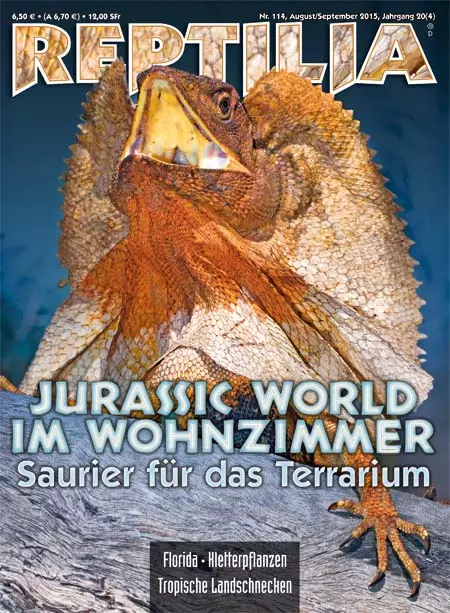
Reptilia 114 - Jurassic World in the living room, dinosaurs for the terrarium
Florida climbing plantsTropical land snailsContents:Cover story: Jurassic World in the living room – dinosaurs for the terrarium“Jurassic World” is this summer’s blockbuster. Hardly anyone can escape the fascination of dinosaurs. And our modern-day prehistoric creatures quickly catch the eye. Many lizards actually look like real dinosaurs in miniature. They enchant with their prehistoric charm and make many people want to keep such a miniature dinosaur at home. And the best thing is: with many species, this is very possible! We present the best “dinosaurs” for the terrarium. And, of course, we take a closer look at “Jurassic World” and talk to a palaeontologist about the chances of us actually being able to see real dinosaurs one day – and whether they would even look like they do in the cinema.
EditorialMagazineDates
Western Herp PerspectivesThe end of the golden age for terrariumsB. LovePhoto story
The return of the prehistoric lizardsH. Werning
Keeping and breedingJurassic World in the living room. Mini dinosaurs for the terrariumH. Werning
Film reviewJurassic World – The park is openH. Werning
InterviewJurassic World – Questions about the filmA. Kwet in conversation with R. Schoch
Keeping and breedingThe Green Water Dragon (Physignathus cocincinus) in the terrariumM. Rogner
PlantsArum plants in the terrarium Part 2: Climbing araceaeB. Akeret
Keeping and breedingThe local variants of Rhacodactylus leachianus in terrarium keeping Part 2: The island formsS. Cemelli & F. Fast
ReportageSlowing down through the rainforestM. Gaulke
Animals of our homelandThe pond frogR. Leptien
LibraryAlso in your neighbourhoodService
JourneyA round trip through Sri LankaV. Harport
Preview
Incubator The holiday jobA. “Spider” Krenzke
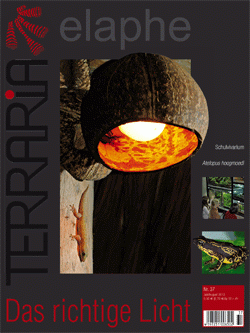
Terraria 37 - The right lightSchool vivariumAtelopus hoogmoediContents:Cover story: The right lightHardly any other topic in terraristics is as important and at the same time as intensively discussed as the right terrarium lighting. What do you need to look out for to ensure that your pets get the best possible replacement for sunlight in their terrarium? What do you think of new lighting technologies such as LEDs? And: How do reptiles actually perceive light? The cover story of the next issue attempts to provide some answers. TerritorialHerpetoramaTOPICThe fluorescent tube - a classic newly illuminatedSteven ArthThe use of UV measuring devices in terraristicsSarina WunderlichColour temperature and colour rendering index: Useful parameters in terraristicsSarina WunderlichPANORAMATerraglobal: Close to death, part 2Joachim BulianSince when do agamas eat peanuts - and crocodile bread?Alfred SchleicherThe school vivarium at the Edith-Stein-Schule in Erfurt - much more than just animals at schoolRica Kepter & Achim KempterRESEARCHNew species: The frog and the prince - splendid tree frogs from EcuadorAxel KwetAmong researchers: Inhabitants of the elfin forest: Herpetofauna at Picu La Picucha in the Sierra de Angalta National Park, HondurasAlexander GutscheNews from Indochina: The amphibians and reptiles of the Cat Thien National Park in South VietnamPeter GeisslerSalamandraTERRARISTICSClassic: The DreicksnatterExperiences in rearing spiny-edged soft-shelled turtles (Apalone spinifera)Sebastian NicklFirst successful breeding of the short-toed toad Atelopus hoohmoedi at the Aquazoo/Löbbecke Museum in DüsseldorfSandra Honigs, Marc Messing & Beate PelzerSome additional information on the article about the mysterious death of hatchlings of the green tree pythonJoachim BulianNATURE AND SPECIES CONSERVATIONField notes: Toad under iceStefan MeyerLate reproduction of the fire-bellied toad in SaxonyWolf-Rüdiger Grosse & Andreas NöllertTwo examples of accidental anthropogenic displacement of lizards due to their flight behaviourAndreas ArnoldMissing: Pinta giant tortoise (Chelonoides abingdonii)Also in your neighbourhoodSubscription & ServiceGALERIAKomodo’s Centenarian DragonsPreviewBRUTKASTENCrocodile alarm at the swimming lake: human tragedy narrowly avertedJakob Hein
CHF 12.00
❅
❆
❅
❆
❅
❆
❅
❆
❅
❆
❅
❆
This website uses cookies to ensure the best experience possible. More information...