Draco 59 - Spectacular invertebrates

Article no: draco59

CHF 32.00

Stock: 0

Ready for dispatch in 1-3 days, delivery time 7 working days

Delivery between Tuesday, 7 July and Wednesday, 8 July
Zahlungsarten
Product information "Draco 59 - Spectacular invertebrates"

Draco 59 - Spectacular Invertebrates

Contents:

Editorial

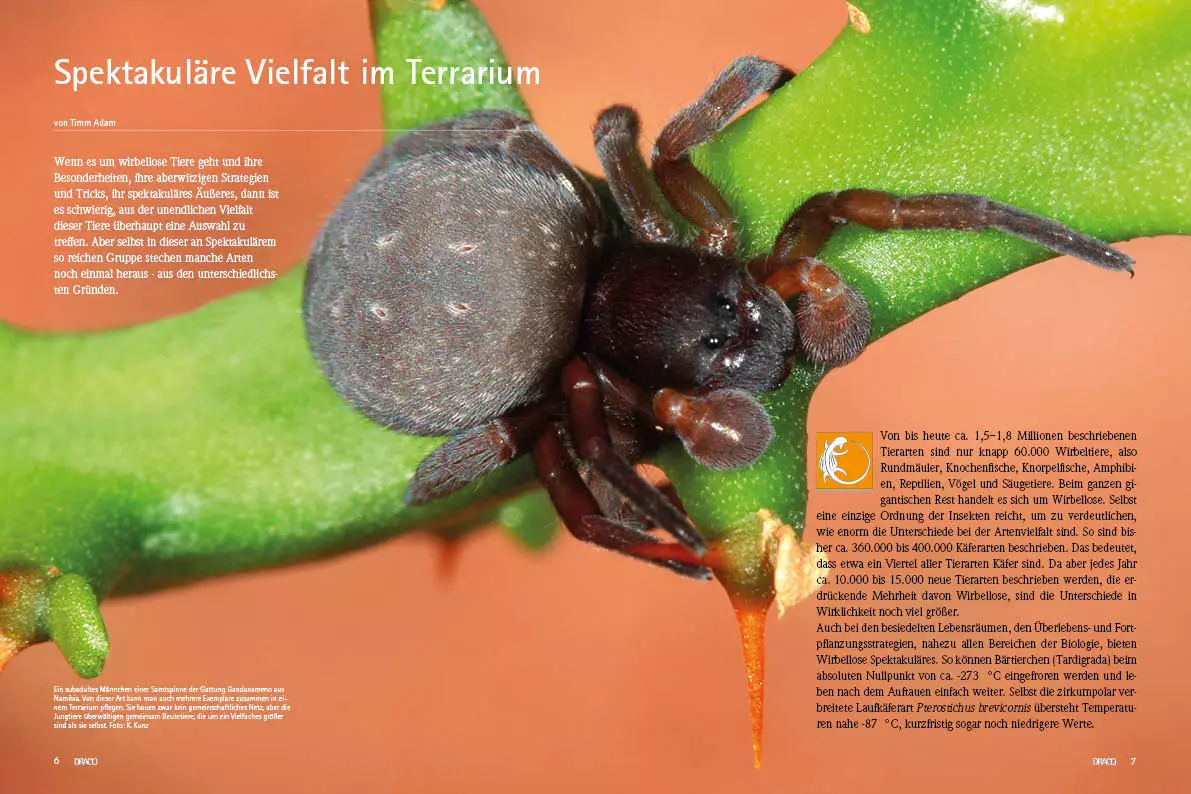
Spectacular diversity in the terrarium
Timm Adam

Great jumpers – jumping insects in the terrarium
Timm Adam

Giant water bugs (Belostomatidae) and water scorpions (Nepidae) in the aquaterrarium
Timm Adam & Hermann Elsasser

Spectacular arachnids: whip spiders and whip scorpions
Michael Seiter

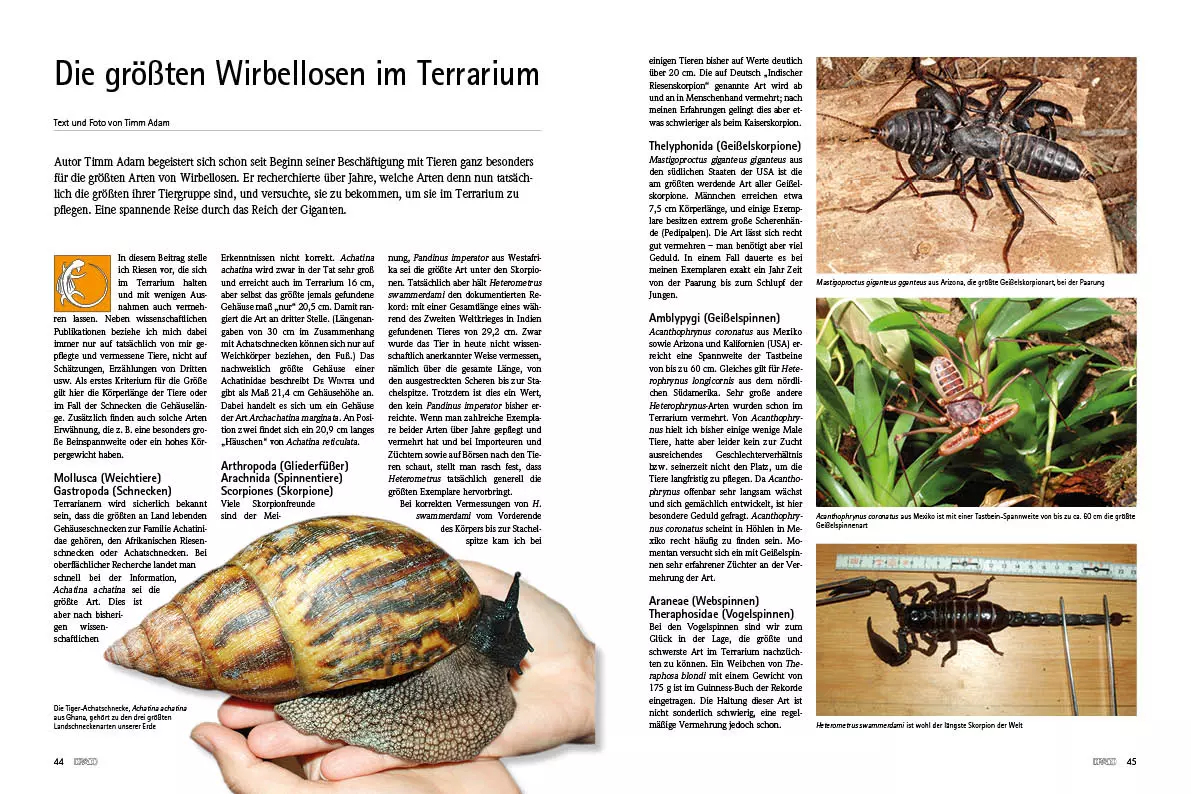
The largest invertebrates in the terrarium
Timm Adam

Enigmatic creatures: hooded spiders
Frederic Schramm, Michael Seiter & Johannes Nigl

Symphony in blue – The large diplurid Linothele megatheloides in Colombia
Jorge Cañas-Orozco
 
Giant beetles: armoured insect giants
Tom Schouteet & Mark van Bergen  

The extraordinary arthropods of the family Liphistiidae
Ingo Wendt & Frank Schneider

Composition
Feeding recommendation
Technical details
Size information

0 of 0 reviews

Give us a rating!

Share your experience with the product with other customers.


Suggested products

Handbook of food plants for tortoises and other reptiles
Handbook of forage plants 2nd revised editionMarion Minch is not only a successful breeder of diverse tortoises for many years, but also an excellent connoisseur of native wild herbs. She founded and runs samenkiste.de, which is well known to many tortoise keepers and nature lovers. Her name is inextricably linked with reptile care and species-appropriate nutrition for tortoises. Her handbook of food plants summarises the most important native food plants for herbivorous and omnivorous reptiles. She not only considers tortoises, but also iguanas, spiny-tailed dragons and even chameleons. From the basics of plant biology to native wild herbs to suitable food plants for hardy tropical reptile species, this comprehensive work provides the basis for species-appropriate keeping. In the expanded and supplemented 2nd edition, the plant section is divided according to flower colour. This makes it even easier to identify wild herbs. The work has also been supplemented with a wealth of additional information and many pictures.

CHF 46.50

Geckos
Geckos in the terrarium by Astrid FalkThe book offers a comprehensive introduction to geckos and their species-appropriate keeping in terrariums. It explains what you need to think about before buying a gecko and what preparations should be made. The book describes in detail how the terrarium is technically equipped and set up. The care of the animals, their special features and behaviour, their diet, reproduction and rearing of young animals are described, as well as diseases and husbandry problems with tried and tested suggestions for prevention and treatment. Individual gecko species that are particularly suitable for keeping and breeding in terrariums are portrayed in detail in the second part of the book.

CHF 28.50

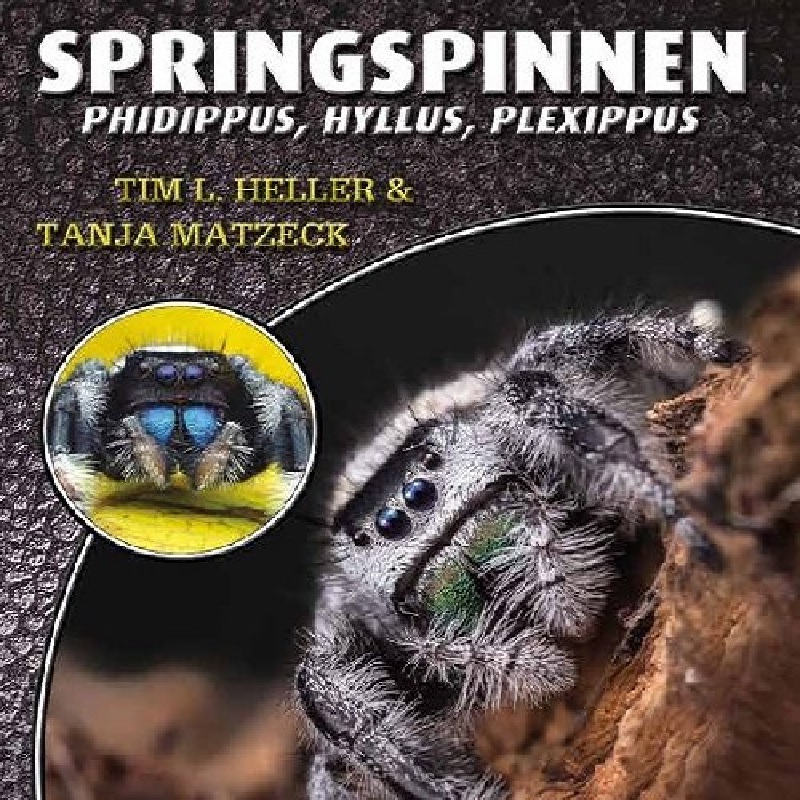
Jumping spiders Phidippus, Hyllus, Plexippus
Book Jumping Spiders - Phidippus, Hyllus & Plexippus A guide to keeping jumping spiders of the genera Phidippus, Hyllus & Plexippus. Who can resist the charm of jumping spiders? The childlike appearance of their expressive face simply leaves no one cold! In addition, their behavior is extremely exciting to observe, their colors are bright and their requirements for species-appropriate keeping are very easy to meet. No wonder these likeable jumpers are all the rage! This volume in the "Species by Species" series describes in detail what to look out for when buying and keeping them, introduces the most commonly kept species and color forms and provides plenty of tips on how to keep them successfully - so you can be sure they will breed well! Species by Species introduces you to the books in this series, which present the most popular terrarium animals. Each volume offers you detailed, practical care instructions and all the information you need to successfully breed your animals. All important questions from the required tank size to terrarium set-up, technical equipment, species-appropriate nutrition and disease prevention are answered with numerous tricks and tips. Experienced, long-standing breeders reveal how you can encourage the animals to reproduce and raise healthy young. All this in full color, generously illustrated and attractively designed - just about your terrarium animal - species by species

CHF 23.90

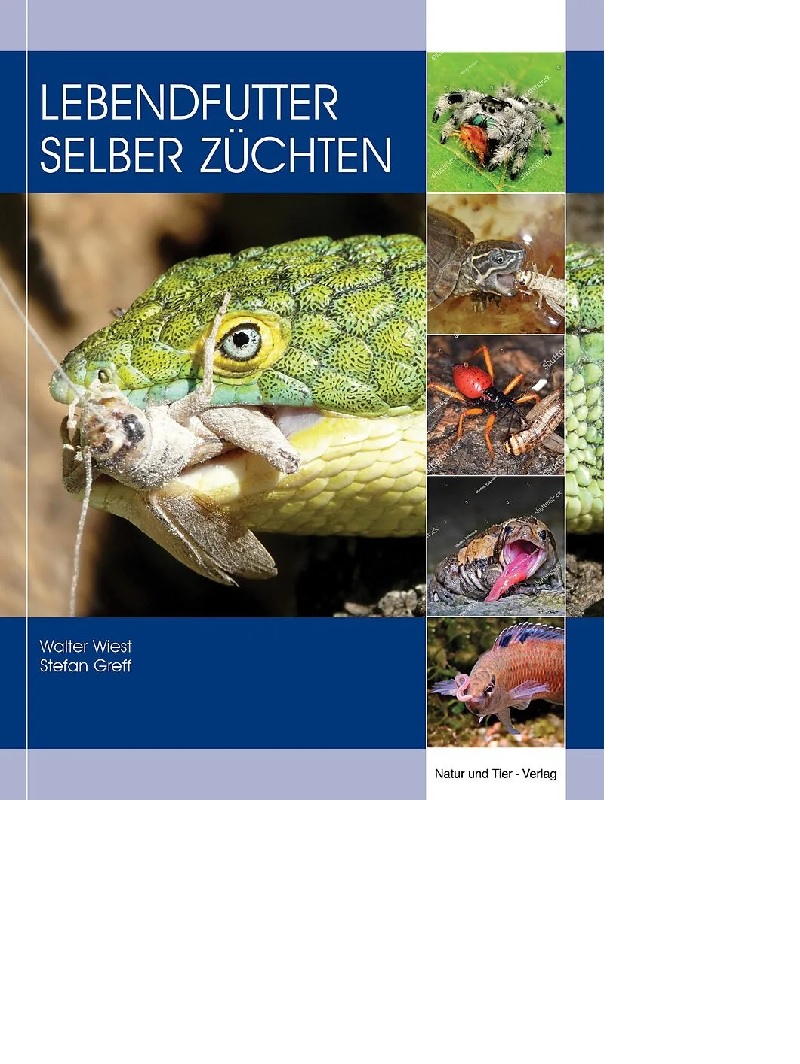
Book Breeding live food yourself
Book "Grow your own live food" - The perfect guide for pet owners Discover practical and detailed instructions on how you can easily breed food for your reptiles, birds, fish or other animals yourself in the book "Breeding live food yourself". With valuable tips on various food insects, their care and breeding, you can save money and ensure a species-appropriate diet for your pets. Contents of the book: Step-by-step instructions for breeding feeder insects Information on the best types of food for reptiles, birds and fish Care instructions and breeding conditions for various live food species Tips for sustainable and cost-effective food production Why breed your own live food? Get healthy, fresh food for your animals Save money and reduce dependence on pet shops Promote the health and well-being of your animals with species-appropriate food Whether you are a beginner or an experienced pet owner, this book provides you with everything you need to successfully breed live food yourself.

CHF 46.50

Marginata 69 - New Guinea tortoises
Marginata 69 - New Guinea tortoises – the genus ElseyaCover storyThe unrecognised beauties: New Guinea tortoises (Andreas S. Hennig)My experiences with Branderhorst's New Guinea tortoise, Elseya (Elseya) branderhorsti (Ouwens, 1914) (Andreas S. Hennig)Keeping and breeding of Rhodin's New Guinea tortoise, Elseya (Hanwarachelys) rhodini Thomson, Amepou, Anamiato & Georges, 2015 (Andreas S. Hennig)PortraitGeoemyda spengleri, Chinese serrated tortoise (Andreas S. Hennig)ReportageMacrochelys temminckii – Experiences and impressions with vulture tortoises part 2 (Reiner Praschag)KeepingAn alternative to year-round keeping of the Egyptian tortoise in the terrarium – my experiences with seasonal outdoor keeping of Testudo kleinmanni (Ricarda Schramm)EtymologySawbacks and living maps part 4: Graptemys gibbonsi, Pascagoula humpback tortoise (Holger Vetter)Classifieds & animal placement

CHF 16.50

Draco 58 - Chameleons
Draco 58 - Chameleons EditorialChameleons in the terrariumManfred RognerThe physiological colour change in chameleonsTobias MachtsChameleons in Burundi and first data on biology from terrarium keepingNicolá Lutzmann, Benoit Nzigidahera, Max Dehling,Eberhard Fischer, Onesphore Masabo, David Hellendrung,Uli Wagner, Walter Herwig, Armin Hummel,Ralph Lademann, Dominik & Natascha RochnaIn search of the Togo chameleonRolf Leptien Where the European chameleon lives up to its nameHans-Jürgen Luef In search of Malta's chameleonsRolf Leptien Now a terrarium classic: the Yemen chameleon, Chamaeleo calyptratusManfred Rogner

CHF 32.00

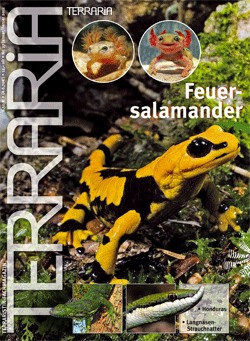
Terraria No. 28 - Fire salamander
Terraria No. 28 - Fire salamander Langnasen-StrauchnatterHonduras Inhalt: Die wundervollen Feuersalamander zählen zu den schönsten Amphibien überhaupt und – nicht erst seit Lurchis Abenteuern – auch zu den bekanntesten. Grund genug, den sympathischen Gesellen ein Titelthema zu widmen. Die Übersicht über die europäischen Unterarten – mit prächtigen Bildern von Benny Trapp – gerät zu einem wahren Farbenrausch in Gelb und Schwarz. Umso erfreulicher für Terrarianer ist, dass Feuersalamander einfach und ohne technischen Aufwand zu halten und nachzuziehen sind – wie Thomas und Yvonne Klesius zu berichten wissen. Und umso erstaunlicher für Herpetologen ist, dass manches im Leben dieser vermeintlich gut bekannten Art doch noch unerforscht ist – wie Wolfgang Sauer an seinen über viele Jahre im Aquarium lebenden „Feuer-Wasser-Salamandern“ herausfand, den ersten sicher nachgewiesenen neotenen Salamanderlarven. EditorialMagazinSeltenes Phänomen: Erfolgreiche zweite Reifehäutung eines Männchens von Brachypelma schroederiSuzette Sprengel 30 Tage im Reptiliencenter Alice SpringsSandra Fallend Alarmierender Rückgang von SchlangenpopulationenKriton Kunz Auch Echsen in höchster GefahrKriton Kunz Nachschlag - Rhinoclemys funerea/Kinosternon scorpioidesTERRAglobalDer Garten – ein Freilandterrarium Joachim Bulian TitelthemaDer Europäische Feuersalamander (Salamandra salamandra) und seine UnterartenAxel Kwet „Feuer-Wasser-Salamander“ – meine neotenen Salamanderlarven Wolfgang Sauer Biologie, Haltung und Nachzucht des Portugiesischen Feuersalamanders, Salamandra salamandra gallaicaThomas Klesius und Yvonne Klesius Grüne Schönheit mit langer Nase – Haltung und Nachzucht der Langnasen-Strauchnatter (Philodryas baroni)Christian Ehrlich Das Schildkrötenjahr Freilandbiologie und Haltung europäischer Landschildkröten über den Jahreslauf Teil 1: März bis April – FrühlingserwachenMichael Wirth Reise„Exo Terra“-Expedition 2010 nach HondurasRoland Zobel Neue ArtenListe der im Jahr 2010 neu beschriebenen AmphibienAxel Kwet BlickfangDie Schildkrötenanlage von Irmhild und Klaus GlückertMichael Wirth In Ihrer NäheAbo & ServiceVorschau BrutkastenBis aufs BlutHeiko Werning    

CHF 12.00

Reptilia 43 - Australian monitor lizards
Reptilia 43 - Australian monitor lizards Dendrobates claudiaeBrown snakesKruger Park Contents: 2 EDITORIAL 4 READER LETTERS 6 MAGAZINE 12 DATES 16 WESTERN HERP PERSPECTIVESImprove your reptile photos – it's easyby B. Love 18 PHOTO REPORTAGE Australian monitor lizardsby D. F. Bennet 26 HERPETOFAUNAThe Varanus-gouldii-complex by D. F. Bennet 29 HERPETOFAUNAThe monitor lizards of the Australian desert by E. R. Pianka 36 KEEPING AND BREEDINGKeeping and continuous breeding of King’s rock monitor, Varanus kingorum STORR, 1980), including the first breeding of an albino juvenile. by B. Eidenmüllser 41 KEEPING AND BREEDINGVaranus glauerti – the “Scaly Jewel” by F. Izaber 41 KEEPING AND BREEDINGStoreria dekayi – the Northern brown snake by M. Held 47 TRAVELIn Kruger National Park – not because of the big onesby W. Rohdich 51 PORTRAIT AND POSTERBungarus f. flavicepsby A. Gumprecht 56 REPORTAGETurtle Island Part 1: Personal experiences with the sea turtles of Barbadosby M. Hallmen 62 REPORTAGEExperiences and difficulties in caring for and “breeding” the common agama (Agama agamaby J. Rauh and T. Gaubies 68 REPORTAGEMale or female? ROPS e. V. – First results of the research work of the years 1999–2003by B. Röll and F. W. Henkel 29 HERPETOFAUNADendrobates claudiae & Phyllobates lugubris – two poison dart frogs from Panama in the same outfit by T. Ostrowski 76 HERPETOLOGY AND CULTUREDead animals in Tunisia – On the souvenir trade in North Africaby K. Kunz 85 CLASSIFIED ADS 90 RAT & TAT 93 LIBRARY 104 GLOSSBiblical plague on the ICEby H. Werning

CHF 11.20

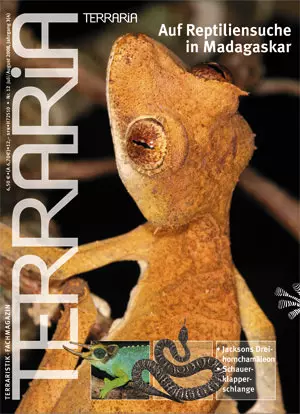
Terraria 12 - On Reptile Search in Madagascar
Terraria 12 - In search of reptiles in Madagascar Jackson's three-horned chameleonRattlesnake Contents: 2 Editorial Heiko WERNING TOPIC 4 The infamous coastal road from Tolanaro to Vangaindrano - or how I found Phelsuma berghofi Hans-Peter BERGHOF 14 The herpetofauna of a coastal forest near Cap Est, north-east Madagascar Sebastian WOLF 23 Herpetological travel impressions from the Montagne des Francais massif in northern Madagascar Steven ARTH & Sandra BAUS SCIENCE 30 Herpetorama Origin of the Turtles / Vampire Hunter 32 New species Luperosaurus / Tsingymantis antitra 34 Among researchers Sulawesi's herpetofauna: Underestimated diversity in a turbulent environment André KOCH 39 When species evolve - the evolution of the rattlesnake (Crotalus durissus) in northern South America Christian NEUMANN 50 Grey giants among themselves - of panther tortoises and elephants in Addo Elephant National Park, South Africa Part 1: The panther tortoise and the Addo Elephant National Park Michael WIRTH 58 Breeding Chamaeleo (Trioceros) jacksonii merumontanus at moderate temperatures Thomas PAECH 64 Biology, husbandry and breeding of the small spotted bark scorpion, Isometrus maculatus (DeGeer, 1778) Alexander TIETZ TERRARIUM PRACTICE 74 Test run Coating compound for rainforest terrariums 75 Prelude Keeping and breeding the New Caledonian Crowned Gecko (Rhacodactylus ciliatus), an uncomplicated gecko Verena HOTZ 81 Eye-catcher In the house of the iguanas - a visit to Jürgen Schmidt Heiko WERNING 86 Also in your neighbourhood 89 TERRAnet Snake page 90 TERRAglobal The coastal deserts and the first field trip Maik DOBIEY The Cape Cobras of the Kalahari Karl-Heinz SWITAK 96 TERRAwinn

CHF 12.00

Marginata No. 34 - Hinge-back Tortoises, the turtles with the crease in the tank
  Im Biotop der Großkopf-Schienenschildkröte?Zucht von Kinosternon bauriiHaltung und Zucht von Astrochelys radiata Teil 6 Inhalt: Editorial Magazin Termine FOTOSTORY Die Gattung Kinixys. Schildkröten mit „Knick“ im Panzer Hans-Dieter Philippen NACHZUCHT Gemischte Erfahrungen bei Haltung und Nachzucht der Madagassischen oder Dormergues Glattrand Gelenkschildkröte Viktor Mislin & Hans-Dieter Philippen NACHZUCHT Haltung und Nachzucht der Stutz-Gelenkschildkröte (Kinixys homeana) bis zur F2-Generation John Zoran PORTRÄT Weissingers Breitrandschildkröte, Testudo marginata weissingeri Hans-Dieter Philippen HALTUNG UND NACHZUCHT Haltung und Nachzucht der Madagassischen Strahlenschildkröte. Teil 6 Michael Wirth & Peter Fritz REPTORTAGE Im Biotop der Großkopf-Schienenschildkröte (Peltocephalus dumerilianus) Mario Herz ZUCHT Haltung, Pflege und Nachzucht der Dreistreifen-Klappschildkröte, Kinosternon baurii Nicolas Pellegrin Buchtipp Kleinanzeigen Abo & Service Regionalführer    

CHF 16.50

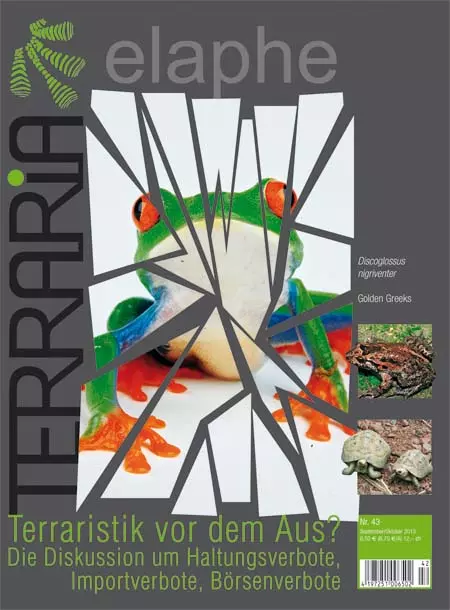
Terraria 43 - Terraristics on the brink of extinction?
Terraria 43 - Terraristics on the brink of extinction?Spectacular frog rediscovery"Golden Greeks"Contents:Animal welfare organisations and animal rights activists have been polemicising against terrarium keeping for some time and calling for a general ban on keeping exotic animals. In the election campaign for the Bundestag elections on 22 September, the SPD, Greens and Left Party have now also positioned themselves with demands for a ban on wild-caught imports and stock markets, and further regulation of hobby keeping is being called for. We provide an overview of the arguments and discuss the pros and cons of individual measures and their impact on the terrarium hobby of the future. Contents:Territorial Herpetorama Cover story Can the terrarium hobby still be saved? Axel Kwet Questions to politicians about the future of the terrarium hobbyElection test stones for the 2013 general election Axel Kwet Wild catches in the terrarium hobby? Philipp Wagners Panorama Terraglobal. If the researcher is not looking for frogs, the frogs are looking for the researcher Mirco Solé ResearchNew species. A new beautiful lizard from Indochina Peter Geissler Xenagama wilmsi, a new species of agamid lizard from Somalia Philipp Wagners Among researchersOn the trail of reptiles and amphibians in Costa Rica's cocoa plantations Thorsten Tittel Paulo Emilio Vanzolini. A passionate herpetologist Lutz Dirksen Salamandra Terraristics Graptemys oculifera: Biology, care and breeding of the ornate box turtle. Part 2: Care, hibernation, breeding, rearing Ewald Roddewig Golden Greek - what is it? Helmut Kantz Nature and species conservation Field notes Black wall lizards at the Kaiserstuhl Martin Dieckmann Discovery of a leucistic natterjack toad in Wuppertal Benny Trapp Resurrection in the Holy Land. The incredible story of the black-bellied skipper (Latonia nigriventer) Frank Glaw & Miguel Vences Amphibian observations in the garden pond Stephan Böhm Missing Herminier’s Smooth-headed Iguana (Leiocephalus herminieri) Also in your neighbourhood Subscription & Service Gallery 100 years of Madagascar research. Oscar Boettger and the travels of Alfred Voeltzkow Axel Kwet Preview Incubator Educational challenges Rolf Leptien

CHF 12.00

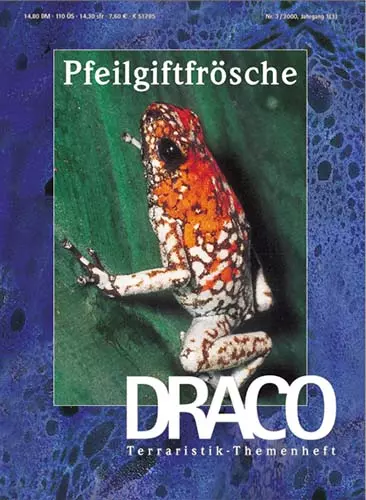
Draco 03 - Poison Arrow Frogs
Draco 03 - Poison dart frogs Contents: 2 Editorial 4 Poison dart frogs - An introduction to biology, systematics and distribution, by S. Lötters 16 Brood care in poison dart frogs, by A. Quiguango-Ubillus 24 Reproductive behaviour in poison dart frogs, by K.-H. Jungfer 29 The poison dart frogs of Bolivia and their distribution, by S. Lötters and S. Reichle 32 Poison dart frogs in the terrarium, by M. Schmidt 50 Building an artificial waterfall from polystyrene, by D. Löhmann 58 The Web-climbing Tree Frog - A small jewel from the rainforest, by H. Divossen 62 Keeping and breeding Dendrobates histrionicus, by E. Schoop 70 Colourful encounters in the Choco, by J. Stelder 73 Infectious diseases - a constant threat to dendrobatid keeping? by M. Mutschmann 83 Book box 89 Magazine

CHF 14.90