Handbook of forage plants 2nd revised editionMarion Minch is not only a successful breeder of diverse tortoises for many years, but also an excellent connoisseur of native wild herbs. She founded and runs samenkiste.de, which is well known to many tortoise keepers and nature lovers. Her name is inextricably linked with reptile care and species-appropriate nutrition for tortoises. Her handbook of food plants summarises the most important native food plants for herbivorous and omnivorous reptiles. She not only considers tortoises, but also iguanas, spiny-tailed dragons and even chameleons. From the basics of plant biology to native wild herbs to suitable food plants for hardy tropical reptile species, this comprehensive work provides the basis for species-appropriate keeping. In the expanded and supplemented 2nd edition, the plant section is divided according to flower colour. This makes it even easier to identify wild herbs. The work has also been supplemented with a wealth of additional information and many pictures.
Geckos in the terrarium by Astrid FalkThe book offers a comprehensive introduction to geckos and their species-appropriate keeping in terrariums. It explains what you need to think about before buying a gecko and what preparations should be made. The book describes in detail how the terrarium is technically equipped and set up. The care of the animals, their special features and behaviour, their diet, reproduction and rearing of young animals are described, as well as diseases and husbandry problems with tried and tested suggestions for prevention and treatment. Individual gecko species that are particularly suitable for keeping and breeding in terrariums are portrayed in detail in the second part of the book.
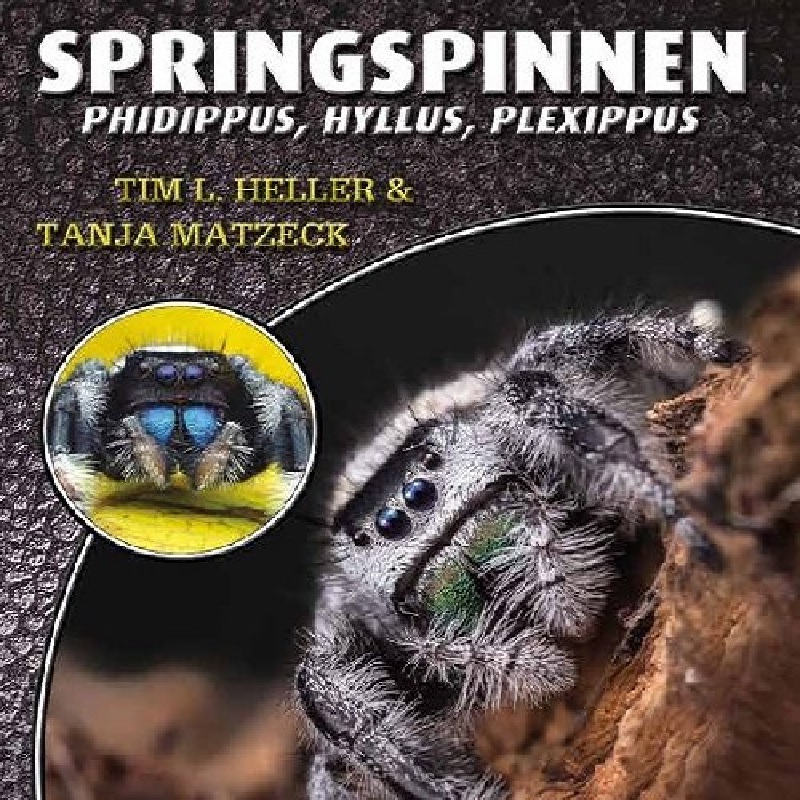
Book Jumping Spiders -
Phidippus, Hyllus & Plexippus
A guide to keeping jumping spiders of the genera Phidippus, Hyllus & Plexippus. Who can resist the charm of jumping spiders? The childlike appearance of their expressive face simply leaves no one cold! In addition, their behavior is extremely exciting to observe, their colors are bright and their requirements for species-appropriate keeping are very easy to meet. No wonder these likeable jumpers are all the rage!
This volume in the "Species by Species" series describes in detail what to look out for when buying and keeping them, introduces the most commonly kept species and color forms and provides plenty of tips on how to keep them successfully - so you can be sure they will breed well!
Species by Species introduces you to the books in this series, which present the most popular terrarium animals. Each volume offers you detailed, practical care instructions and all the information you need to successfully breed your animals.
All important questions from the required tank size to terrarium set-up, technical equipment, species-appropriate nutrition and disease prevention are answered with numerous tricks and tips.
Experienced, long-standing breeders reveal how you can encourage the animals to reproduce and raise healthy young.
All this in full color, generously illustrated and attractively designed - just about your terrarium animal - species by species
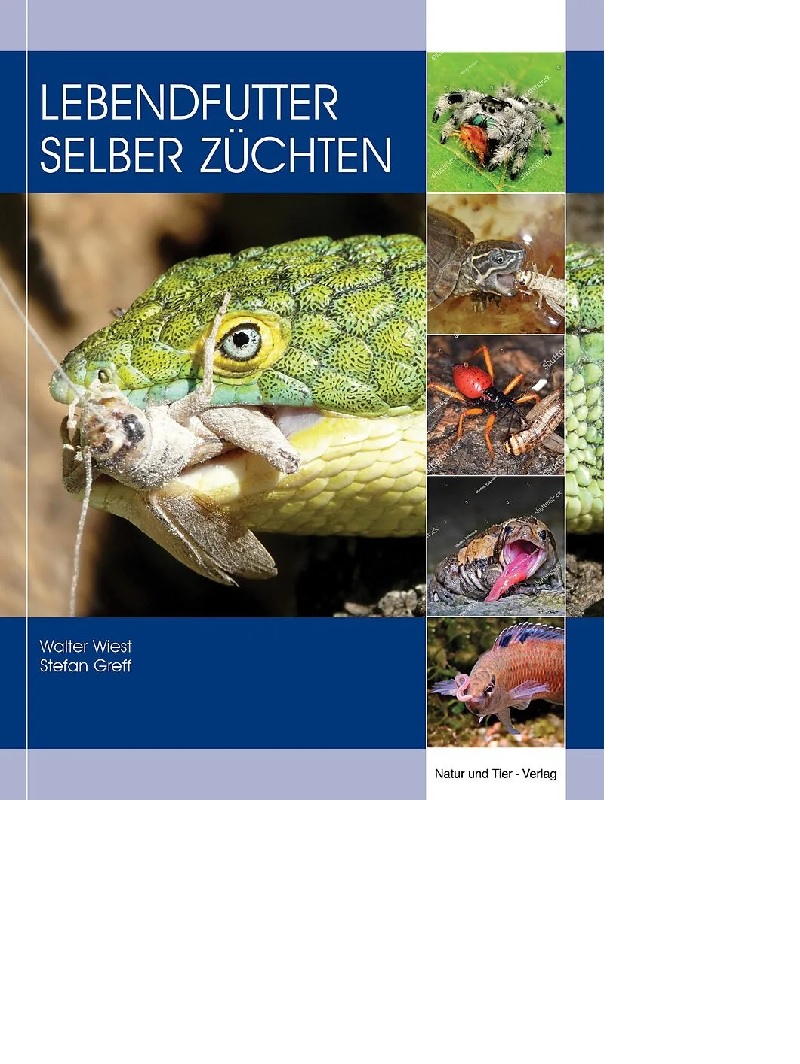
Book "Grow your own live food" - The perfect guide for pet owners
Discover practical and detailed instructions on how you can easily breed food for your reptiles, birds, fish or other animals yourself in the book "Breeding live food yourself". With valuable tips on various food insects, their care and breeding, you can save money and ensure a species-appropriate diet for your pets.
Contents of the book:
Step-by-step instructions for breeding feeder insects
Information on the best types of food for reptiles, birds and fish
Care instructions and breeding conditions for various live food species
Tips for sustainable and cost-effective food production
Why breed your own live food?
Get healthy, fresh food for your animals
Save money and reduce dependence on pet shops
Promote the health and well-being of your animals with species-appropriate food
Whether you are a beginner or an experienced pet owner, this book provides you with everything you need to successfully breed live food yourself.
Marginata 69 - New Guinea tortoises – the genus ElseyaCover storyThe unrecognised beauties: New Guinea tortoises (Andreas S. Hennig)My experiences with Branderhorst's New Guinea tortoise, Elseya (Elseya) branderhorsti (Ouwens, 1914) (Andreas S. Hennig)Keeping and breeding of Rhodin's New Guinea tortoise, Elseya (Hanwarachelys) rhodini Thomson, Amepou, Anamiato & Georges, 2015 (Andreas S. Hennig)PortraitGeoemyda spengleri, Chinese serrated tortoise (Andreas S. Hennig)ReportageMacrochelys temminckii – Experiences and impressions with vulture tortoises part 2 (Reiner Praschag)KeepingAn alternative to year-round keeping of the Egyptian tortoise in the terrarium – my experiences with seasonal outdoor keeping of Testudo kleinmanni (Ricarda Schramm)EtymologySawbacks and living maps part 4: Graptemys gibbonsi, Pascagoula humpback tortoise (Holger Vetter)Classifieds & animal placement
Reptilia 58 - Crustacean lizards
Bush crocodileAgate snailsPlains snake
Contents:
2 EDITORIAL
4 MAGAZINE
8 DATES
12 REPORTAGEExperience with keeping and breedingof dinos in the terrariumBy D. Schmidtwith a review by H. Werning
16 WESTERN HERP PERSPECTIVESThe Madagascan turtle crisisBy B. Love
18 PHOTO REPORTAGECrustacean lizards – the genus HelodermaBy T. Wilms
26 KEEPING AND BREEDINGThe successful and continuouskeeping and breeding of the scorpion-crustacean lizard Heloderma horridumexasperatumBy M. Reisinger
36 HERPETOFAUNAThe Guatemalan scorpion crustacean lizard, Heloderma horridum charlesbogertiCampbell & Vannini, 1998By L. S. Meléndez Garcia
39 SPECIES CONSERVATIONPoisonous giants facing extinction?REPTILIA project for the protection of theGuatemalan scorpion crustacean lizardBy K. Kunz
44 REPORTAGEHunting anacondas with sonar and guillotineBy L. Dirksen
51 PORTRAIT AND POSTERBufo brongersmaiBy U. Schlüter
55 KEEPING AND BREEDINGThe bush crocodile – secret beauty in theterrariumBy M. Evers
63 KEEPING AND BREEDINGKeeping and breeding of the ChineseDione snake (Elaphe dione)By M. Diekmann & A. Weyers
72 KEEPING AND BREEDING Agate snails in the terrariumBy K. Wandtke
81 REPTILIA ON THE ROAD30 years Reptile Zoo HappBy D. Schmidt
88 CLASSIFIED ADS
93 RAT & TAT
94 LIBRARY
104 INCUBATORProtocol of a failed attempt at acautious approach, at first sight based on mutualsympathy and intersexualattraction, during a jubilantcelebrationBy H. Werning
Reptilia 91 - Mexican tortoises
Crocodile-tailed crested lizardMeasurement and control technologyPacific triangle snake
Contents:Mexico is a dream country for all those interested in turtles, as this country is home to more different species of land, water, swamp and sea turtles than almost any other, and many of them are highly sought after in the terrarium hobby!In his splendidly illustrated photo story, Javier Valverde offers you an overview of the exciting and fascinating tortoise fauna of Mexico.Enric Pàmies and Armando Garza report in detail on the way of life, keeping and breeding of the Texas gopher tortoise (Gopherus berlandieri), Nicolas Pellegrin introduces you to the care and reproduction of the cross-breasted tortoise Staurotypus salvinii and reports on the way of life of this species in the wild.
SPECIALNow also in Thuringia and Hamburg: "And daily greets the dangerous animal" Axel Kwet
DATES
WESTERN HERP PERSPECTIVESRattlesnake paradiseBill Love
PHOTOSTORYThe turtles of MexicoJ. Valverde
Keeping and breedingGopherus berlandieri – Terrarium care and breeding of the Texas gopher tortoiseE. Pàmies & A. Garza
CultureMyths, legends and facts about Mexican tortoisesF. Cupul
Keeping and breedingCare and breeding of the Salvini’s box turtle, Staurotypus salvinii N. Pellegrin
JourneyA visit to the crocodile-tailed lizardM. Zollweg
PORTRAIT AND POSTERTrioceros johnstoni J. M. Dehling
KEEPING AND BREEDINGKeeping and breeding the Pacific triangle snake, Lampropeltis triangulum oligozona T. Schmidt
HERPETOFAUNARainy season at the all-weather zoo. Keeping and breeding of settler agamasK. Theobald & J. Scholdei
NUTRITIONHigh-quality nutrition for invertebrates and terrarium inhabitants – Part 1 R. Lautensack & R. Hübers
TERRARIUM PRACTICEMeasuring method for monitoring the terrarium climateM. Uhlhaas & P. Pohlscheid
REPTORTAGEWith student interns at the Iguana Station on Utila Island, Honduras Part 2: Valuable experiences and ongoing problemsM. Hallmen
LIBRARYSUBSCRIPTION & SERVICEALSO NEAR YOUPREVIEW
BRUTKASTENRattlesnakes and Mexicans Part 2 H. Werning
Terraria 20 - Diverse poison dart frogs
Pacific boasComb spiders of the genus Phoneutria
Contents:
Poison dart frogs are the most popular amphibians in terraristics, and they have been successfully kept and bred for decades. So you should know everything there is to know about the "jewels of the rainforest" by now? Far from it! These magnificent frogs always have tangible surprises and novelties in store for us, even with seemingly well-known species. In a spectacularly illustrated report, Frank Steinmann looks at the countless local forms of the golden tree frog, Dendrobates auratus, and reveals why many of the names circulating in terraristics for the colour forms are misleading. Ivonne Meuche has been researching strawberry frogs in Costa Rica for years and reports on the most interesting results that have not yet been scientifically published. And we also show photos of a beautiful, newly discovered and as yet undescribed dendrobatid, the Golden Supatá poison dart frog, which André Schreiber observed in Colombia.EditorialMagazine
Snake systematics special: New systematics of South American
Pit vipers
Species status again for the Dark Tiger Python, subspecies status for the Sulawesi Dwarf Tiger Python
Make five out of one – The new systematics of the chain snake complex
Autumn TERRARISTIKA in Hamm
Legal: Again: Right of retention of the animal
The aga toad – or how to benefit from an aggressively invasive species
On the distribution of Hemidactylus mabouia in Paraguay
Test run addendum
TERRAglobalThe frilled lizard: A miniature dinosaurKarl-Heinz SWITAKBack in the fieldMaik DOBIEYTITLE THEME: Diverse poison dart frogs"Further notes" on Dendrobates auratus – the variability of the golden tree frog in PanamaFrank STEINMANNIn the area of Ranitomeya dorisswansonaeAndré SCHREIBEROophaga pumilio – The strawberry frog in the spotlight of researchIvonne MEUCHE"Rana dorada de Supatá" – the Golden Supatá poison dart frog from ColombiaAndré SCHREIBERPacific boas in the terrarium – Candoia carinata and Candoia paulsoniRenè MEIERKORDThe Northern Pine Snake (Pituophis melanoleucus melanoleucus) in the wild and terrarium. Part 2Bernd SKUBOWIUSThe genus Phoneutria – keeping and breedingReinhard HÜBERS and Dirk REIMANNTRAVEL"Exo Terra" Expedition Tanzania 2008 Part 2: A new chameleon speciesRoland ZOBELNEW SPECIESNew monitor species discovered in IndonesiaAndré KOCHTwo new day geckos from MadagascarAxel KWETBrazilian angel frogAxel KWETAMONG RESEARCHERSHerpetological research in Central AmericaAndreas HERTZ and Sebastian LOTZKATEYE-CATCHERIf you love your lizards, you carry them on your hands. Exceptional successes with toad lizardsKriton KUNZNear youSubscription & ServicePreviewIncubatorThe "Rock Helga" – A Morocco adventure in two parts (Part 2)Mike ZAWADZKI
Reptilia 70 - Mambas
Outdoor terrariumFalse water cobraWarty newts
Contents:
2 EDITORIAL
4 MAGAZINE
13 DATES
16 WESTERN HERP PERSPECTIVESDoctor Frankenstein's work continuesBy B. Love
18 PHOTO REPORTAGEMambasBy J. Valverde
26 HERPETOFAUNAObservations on the behaviour of the greencoloured mambas (Dendroaspis viridis,D. angusticeps and D. jamesoni kaimosae) in the terrariumBy R. Aeberhard
31 KEEPING AND BREEDINGDendroaspis jamesoni kaimosae –Keeping and first experiences with the breeding of Jameson's MambaBy R. Aeberhard
38 TRAVELNorth Carolina's southern coastal plain –A paradise for reptile enthusiastsBy H. Luef
51 PORTRAIT AND POSTERMauremys rivulataBy B. Trapp
55 KEEPING AND BREEDINGBreeding of the Vietnamese and theLaos warty newtBy P. Bachhausen & G. Espallargas
65 KEEPING AND BREEDINGHydrodynastes gigas – from rearing tobreeding the false water cobraBy R. Meierkord
70 HERPETOFAUNAFringed-finger lizards (Acanthodactylus) in the wild and in the terrariumPart 3: The Acanthodactylus cantoris groupBy U. Schlüter
76 REPORTAGEFrom one make two – Conversion of an outdoor terrarium for snakesPart 1: The technical side of the conversionBy M. Hallmen
85 FAQ – FREQUENTLY ASKED QUESTIONSDead leaf mantisesBy K. Kunz
91 LIBRARY
104 INCUBATOR Zoo director – Part 1By H. Werning
Draco 56 - Terrarium equipmentContents:EditorialTerrarium designPatrick SchöneckerSeven steps to a self-built back wallDiana & Oliver FinkA piece of North American desert in your living room: building and designing a terrarium for collared iguanasJana BuchwaldA near-natural terrarium for the carpet pythonDaniel Renner Redesign of a terrarium for Lampropeltis alternaMalte Hornig Buyable and good: cork backgrounds and other furnishings from specialised retailers and their use in terrariumsDiana & Oliver FinkConstruction of a polystyrene terrarium system for the animal-friendly keeping, breeding and rearing of lizardsHans Esterbauer Lizards and succulents in the winter garden terrariumBeat Akeret
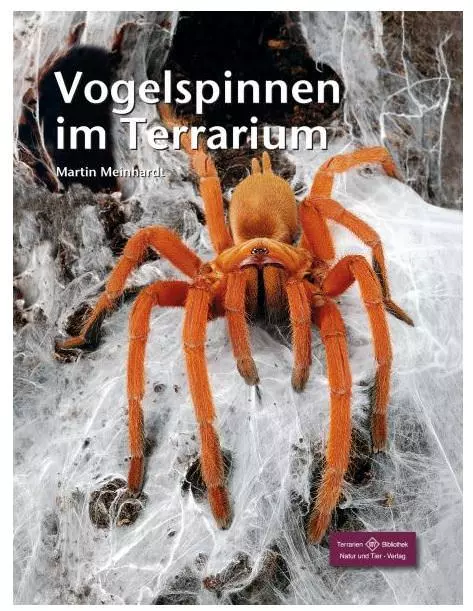
Alles über Vogelspinnen im Terrarium von Martin Meinhardt
136 Seiten
123 Farbfotos, mit Karte und 4 grafischen Darstellungen
Format: 16,8 x 21,8 cm
3. Auflage
Taschenbuch
Autor Martin Meinhardt
Verlag NTV
Inhalt:
Vogelspinnen sind traumhafte Terrarientiere! Ihr attraktives Äusseres und das spannende Verhalten lassen sie in der Gunst der Spinnenfreunde ganz oben stehen. Der langjährige und versierte Züchter Martin Meinhardt erläutert in dieser überarbeiteten und um viele Artporträts erweiterten Auflage seines Praxis-Ratgebers alles, was Sie für die artgerechte Pflege und die erfolgreiche Nachzucht der Tiere wissen müssen.
Systematik – die Verwandtschaft der Vogelspinnen
Körperbau – so funktioniert eine Vogelspinne
Gift und Brennhaare – warum Vogelspinnen trotzdem nicht gefährlich sind
Verhalten – Beuteerwerb, Balz und Fortpflanzung
Artgerechte Pflege – Einrichten und Klimatisieren geeigneter Terrarien; Vogelspinnen richtig füttern
Erfolgreich nachzüchten – Geschlechtsunterschiede, Verpaarung, Aufzucht der Jungtiere
Detaillierte Artporträts – ausführliche Informationen zu besonders geeigneten Arten
Faszinierende Farbfotos
NTV - Plants in the Terrarium
408 pages
over 1205 illustrations
Format: 17.5 x 23.2 cm
Hardcover
Author Beat Akeret
Contents:
If you want to fulfil your desire to bring a piece of nature into your home with a terrarium, you cannot do without plants to create a natural habitat for your pets. Plants not only increase the visual value of a terrarium, they also improve the climate and provide the animals with cover and hiding places. Some amphibians and reptiles are also very closely tied to certain plants. Planting in the terrarium therefore fulfils a whole range of functions and is an important part of the furnishings.This book offers everything you need to know about caring for terrarium plants, designing near-natural terrariums and selecting suitable plant species! With 400 pages and over 1000 illustrations, this is probably the most comprehensive German standard work on the subject of terrarium planting!