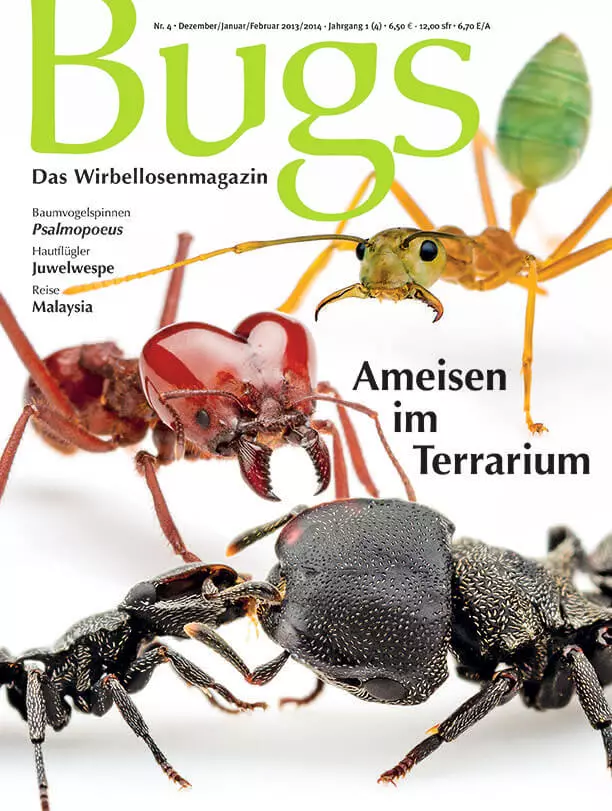
Bugs No. 04 - Ants in the terrarium

Article no: bugs04

CHF 12.00

Stock: 0

Ready for dispatch in 1-3 days, delivery time 7 working days

Delivery between Tuesday, 28 April and Wednesday, 29 April
Zahlungsarten
Product information "Bugs No. 04 - Ants in the terrarium"

Bugs No. 04 - Ants in the terrarium

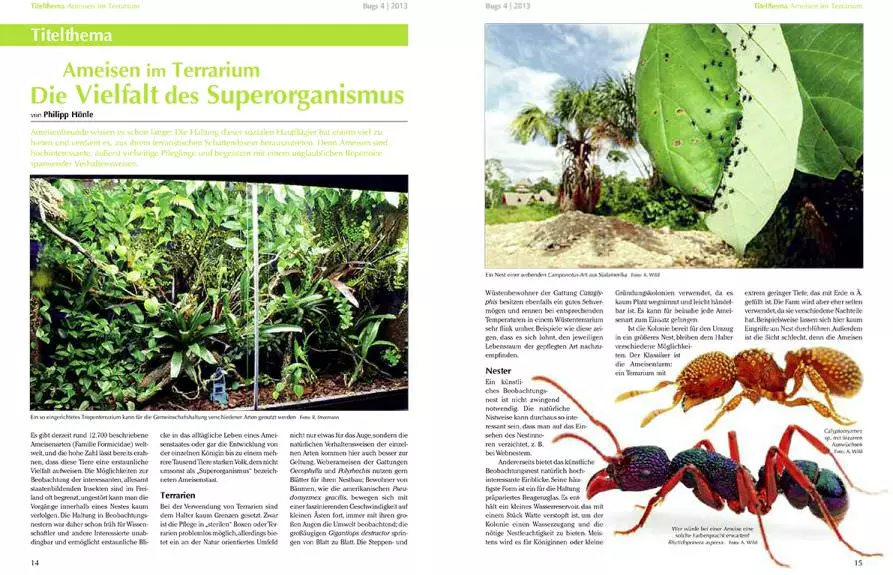
The cover story of Bugs No. 4 is about tiny creatures that achieve great things: ants are the gardeners of nature, pruning grasses, bushes and trees, guarding entire shrubs and ensuring targeted "pest extermination". But they also act as cattle breeders, keeping small colonies of aphids in order to obtain their sweet droppings. Caring for these fascinating animals is highly interesting and there is always something to observe! Reason enough to take you, dear readers, on a journey into the realm of ants and show you how you can keep these colony-forming insects safely and in a species-appropriate way.

Table of contents

Editorial
Facets
Dates
Flown in

Cover story
The diversity of the superorganism

Myrmecia vindex – archaic Australians

Snap-jaw ants of the genus Myrmoteras

Fledged
Invertebrates in Malaysia

In the crosshairs
The rainbow stag beetle

Keeping & Breeding
Little rubies – two Centrobolus species

Reportage
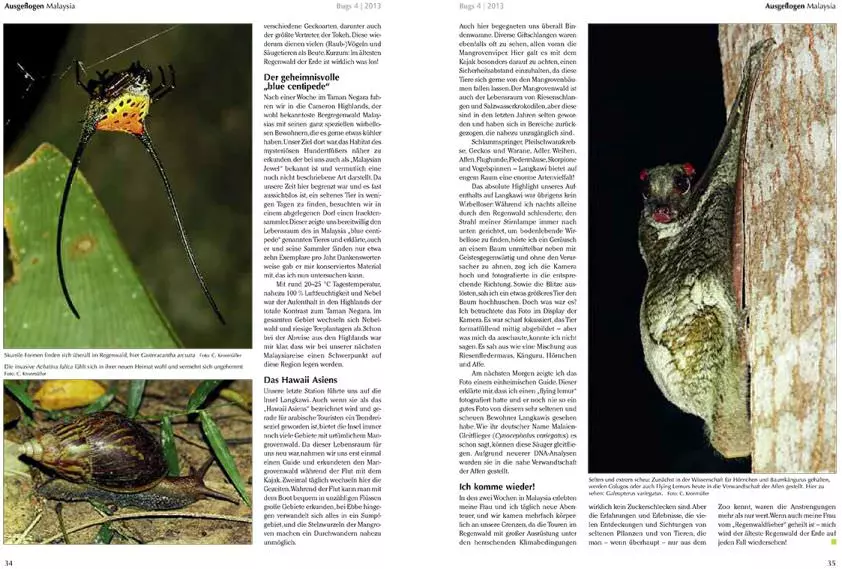
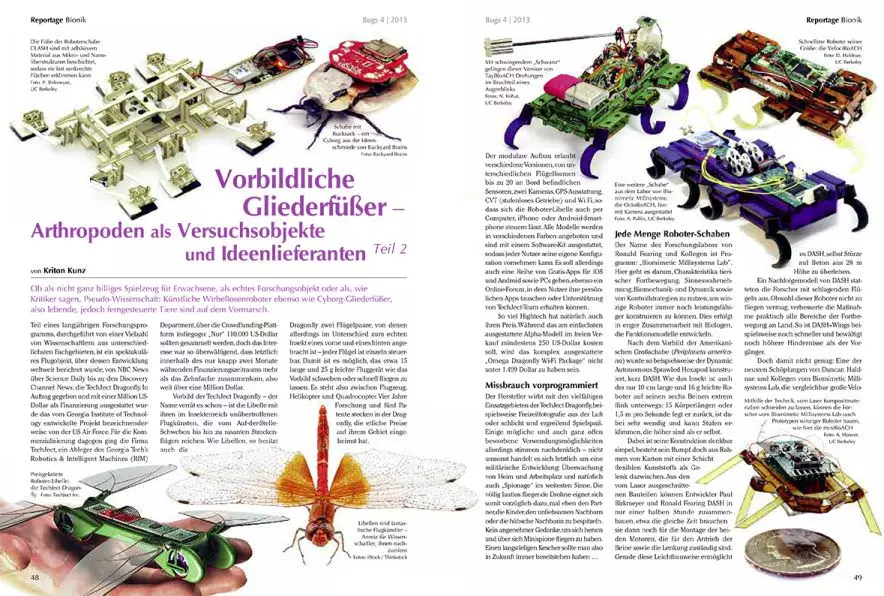
Exemplary arthropods - Bionics, Part 2

Keeping & Breeding
The Jewel Wasp

Keeping & Breeding
Horse-headed grasshoppers

Keeping & Breeding
The genus Psalmopoeus

Potter bee
Homemade lime source for snails

Book scorpion
Also in your neighbourhood

Kids Corner
A small miracle

Showcase
The master of the Mantodea

Service & Imprint
Preview

Metamorphoses
Autumn

Composition
Feeding recommendation
Technical details
Size information

0 of 0 reviews

Give us a rating!

Share your experience with the product with other customers.


Suggested products

Handbook of food plants for tortoises and other reptiles
Handbook of forage plants 2nd revised editionMarion Minch is not only a successful breeder of diverse tortoises for many years, but also an excellent connoisseur of native wild herbs. She founded and runs samenkiste.de, which is well known to many tortoise keepers and nature lovers. Her name is inextricably linked with reptile care and species-appropriate nutrition for tortoises. Her handbook of food plants summarises the most important native food plants for herbivorous and omnivorous reptiles. She not only considers tortoises, but also iguanas, spiny-tailed dragons and even chameleons. From the basics of plant biology to native wild herbs to suitable food plants for hardy tropical reptile species, this comprehensive work provides the basis for species-appropriate keeping. In the expanded and supplemented 2nd edition, the plant section is divided according to flower colour. This makes it even easier to identify wild herbs. The work has also been supplemented with a wealth of additional information and many pictures.

CHF 46.50

Geckos
Geckos in the terrarium by Astrid FalkThe book offers a comprehensive introduction to geckos and their species-appropriate keeping in terrariums. It explains what you need to think about before buying a gecko and what preparations should be made. The book describes in detail how the terrarium is technically equipped and set up. The care of the animals, their special features and behaviour, their diet, reproduction and rearing of young animals are described, as well as diseases and husbandry problems with tried and tested suggestions for prevention and treatment. Individual gecko species that are particularly suitable for keeping and breeding in terrariums are portrayed in detail in the second part of the book.

CHF 28.50

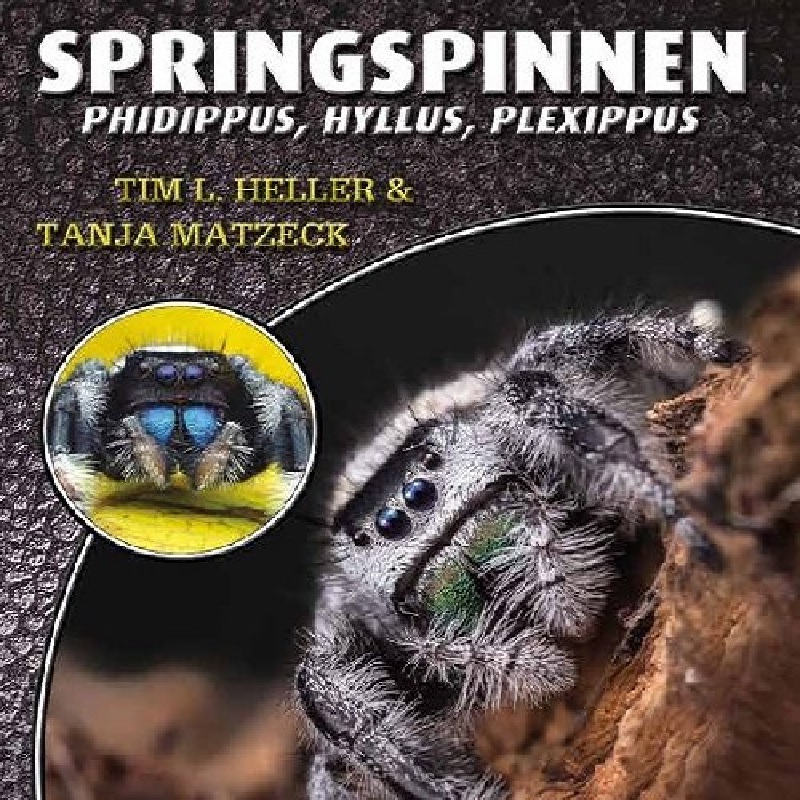
Jumping spiders Phidippus, Hyllus, Plexippus
Book Jumping Spiders - Phidippus, Hyllus & Plexippus A guide to keeping jumping spiders of the genera Phidippus, Hyllus & Plexippus. Who can resist the charm of jumping spiders? The childlike appearance of their expressive face simply leaves no one cold! In addition, their behavior is extremely exciting to observe, their colors are bright and their requirements for species-appropriate keeping are very easy to meet. No wonder these likeable jumpers are all the rage! This volume in the "Species by Species" series describes in detail what to look out for when buying and keeping them, introduces the most commonly kept species and color forms and provides plenty of tips on how to keep them successfully - so you can be sure they will breed well! Species by Species introduces you to the books in this series, which present the most popular terrarium animals. Each volume offers you detailed, practical care instructions and all the information you need to successfully breed your animals. All important questions from the required tank size to terrarium set-up, technical equipment, species-appropriate nutrition and disease prevention are answered with numerous tricks and tips. Experienced, long-standing breeders reveal how you can encourage the animals to reproduce and raise healthy young. All this in full color, generously illustrated and attractively designed - just about your terrarium animal - species by species

CHF 23.90

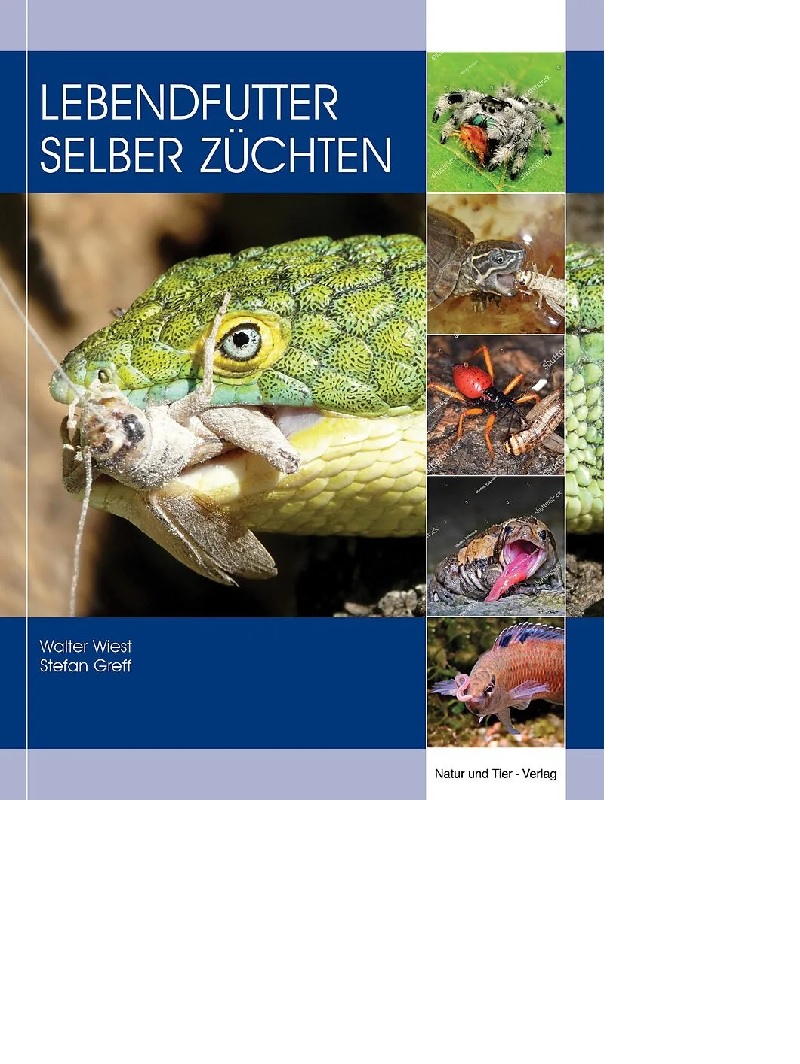
Book Breeding live food yourself
Book "Grow your own live food" - The perfect guide for pet owners Discover practical and detailed instructions on how you can easily breed food for your reptiles, birds, fish or other animals yourself in the book "Breeding live food yourself". With valuable tips on various food insects, their care and breeding, you can save money and ensure a species-appropriate diet for your pets. Contents of the book: Step-by-step instructions for breeding feeder insects Information on the best types of food for reptiles, birds and fish Care instructions and breeding conditions for various live food species Tips for sustainable and cost-effective food production Why breed your own live food? Get healthy, fresh food for your animals Save money and reduce dependence on pet shops Promote the health and well-being of your animals with species-appropriate food Whether you are a beginner or an experienced pet owner, this book provides you with everything you need to successfully breed live food yourself.

CHF 46.50

Marginata 69 - New Guinea tortoises
Marginata 69 - New Guinea tortoises – the genus ElseyaCover storyThe unrecognised beauties: New Guinea tortoises (Andreas S. Hennig)My experiences with Branderhorst's New Guinea tortoise, Elseya (Elseya) branderhorsti (Ouwens, 1914) (Andreas S. Hennig)Keeping and breeding of Rhodin's New Guinea tortoise, Elseya (Hanwarachelys) rhodini Thomson, Amepou, Anamiato & Georges, 2015 (Andreas S. Hennig)PortraitGeoemyda spengleri, Chinese serrated tortoise (Andreas S. Hennig)ReportageMacrochelys temminckii – Experiences and impressions with vulture tortoises part 2 (Reiner Praschag)KeepingAn alternative to year-round keeping of the Egyptian tortoise in the terrarium – my experiences with seasonal outdoor keeping of Testudo kleinmanni (Ricarda Schramm)EtymologySawbacks and living maps part 4: Graptemys gibbonsi, Pascagoula humpback tortoise (Holger Vetter)Classifieds & animal placement

CHF 16.50

Draco 58 - Chameleons
Draco 58 - Chameleons EditorialChameleons in the terrariumManfred RognerThe physiological colour change in chameleonsTobias MachtsChameleons in Burundi and first data on biology from terrarium keepingNicolá Lutzmann, Benoit Nzigidahera, Max Dehling,Eberhard Fischer, Onesphore Masabo, David Hellendrung,Uli Wagner, Walter Herwig, Armin Hummel,Ralph Lademann, Dominik & Natascha RochnaIn search of the Togo chameleonRolf Leptien Where the European chameleon lives up to its nameHans-Jürgen Luef In search of Malta's chameleonsRolf Leptien Now a terrarium classic: the Yemen chameleon, Chamaeleo calyptratusManfred Rogner

CHF 32.00

NTV - Jewelled horn frogs The genus Ceratophrys
In NTV - Jewelled horn frogs, everything about the so-called "Pacman frogs" is explained. 160 pages 198 colour photos Paperback Genus Ceratophrys Authors Wolfgang Schmidt, Friedrich Wilhelm Henkel Big mouth - and what's behind it! Jewelled horn frogs are real character animals. They impress with their primitive, brightly coloured appearance, with the variety of species and colour morphs now available and, of course, with their irrepressible appetite, which has also earned them the name "Pacman frogs". Anyone who observes a few basic rules can easily keep these wonderful animals in a terrarium and, with a bit of luck, even get them to breed.

CHF 35.90

Marginata 15 - Snake-necked turtles
Marginata 15 - Snake-necked turtles Genetic variability of western tortoisesTuscan tortoises part 2Food plants for aquatic turtles part 3 Contents: 2 EDITORIAL 3 READER LETTERS 4 MAGAZINE 8 DATES 10 REPORTAGEThe snake-necked turtles of Indo-AustraliaHans - Dieter Philippen 18 BREEDING IN HUMAN CAREKeeping and breeding the Australian long-necked turtle (Chelodina longicollis)Stefan Thierfeldt & Sabine Höfler-Thierfeldt 24 BREEDING IN HUMAN CAREKeeping and breeding the white-nosed snake-necked turtle (Chelodina spec.) Steffen Szymanski 31 PORTRAITSouth African tent-footed tortoise (Psammobates tentorius, BELL 1828)Irmtraud Jasser-Häger & Matts Blohm 35 REPORTAGEFood plants for aquatic turtles (Part III)Susanne Vogel 40 REPORTAGETuscany – In search of Eurotestudo hermanni (Part II)Michael Wirth & Walter Matzanke 48 REPORTAGEGenetic studies on western tortoisesGiorgio Berorelle, Vassili Goutner, Barbara Livoreill and Stefano Mazzotti 54 REPORTAGENotes on incubation and hatching of a wet clutch of red-bellied slider turtles Martin Leonard Voss 58 SHORT REPORTAGEComments on frequent carcass findings of leatherback turtlesAlfred Schleicher 60 BOOK TIP 61 CLASSIFIEDS 62 REGIONAL GUIDE

CHF 14.70

Draco 52 - Uroplatus Madagascan goblins in nature and terrarium
Draco 52 Magazine Uroplatus Madagascan Goblins in Nature & Terrarium Contents: EditorialSoul-stealers with adhesive lamellae – Madagascan flat-tailed geckos of the genus UroplatusPhilip-Sebastian GehringIn search of flat-tailed geckos in MadagascarPhilip-Sebastian Gehring & Patrick SchöneckerBiology, husbandry and long-term breeding of Uroplatus guentheri Mocquard, 1980 up to the fourth filial generationPatrick Schönecker A ghost in the terrarium – the successful keeping and breeding of Uroplatus phantasticus (Boulenger, 1888)Kai-Uwe Volta & Philipp Höhne Experiences in the keeping and breeding of the lichen flat-tailed gecko (Uroplatus sikorae Boettger, 1913)Philip-Sebastian Gehring Natural treasures of Madagascar: Flat-tailed geckos and their protectionFanomezana Ratsoavina and Philip-Sebastian Gehring Experiences with keeping flat-tailed geckos (Uroplatus fimbriatus) in the Masoala rainforest at Zurich Zoo, SwitzerlandSamuel Furrer

CHF 32.00

NTV, Axolotl
A book about the salamanders that always remain in the larval stage - the axolotl NTV publishing house Jochaim Wistuba 100 pages Axolotls are widely known as the salamanders that can reproduce in the larval stage. However, it is not only this biological peculiarity and their bizarre appearance that make them popular pets, they are also excellent to keep and breed in the indoor aquarium. The author goes into detail about the origin, keeping, reproduction and diseases of the axolotl and also explains the biology of these fascinating "water monsters". Naturally, all colour varieties and hybrid forms are presented.

CHF 34.90

NTV - African white-bellied hedgehog
NTV - African white-bellied hedgehog - All about the small, prickly animals you will learn in this book. 64 pages Format: 14.8 x 21 cm numerous color photos Daniela Guist Content: Hedgehogs are simply sympathizers. Who could escape the curiosity of such a little sting-knight? It is no wonder that especially the pretty Weissbauchigel has mixed the kleinsäugerszene and now belongs in all its attractive color variants among the most popular exotics in the domestic animal husbandry. Its multifaceted behavior, the communication among each other and the family life together inspire the owner. Author Daniela Guist has been holding and breeding Weissbauchigel for a long time and is a proven expert in this field. In this book, she describes her experiences and describes in detail and practical ways how the prickly bladders are nurtured and cultivated. A must for all hedgehogs! The barbed dress distribution and habitat Transport and quarantine The enclosure Feed and water behavior health The handling of white belly offspring color forms

CHF 21.90

Reptilia 80 - South American turtles
Reptilia 80 - South American turtles Reptile of the Year: Dice snakeCrocodile night lizardMadagascar boa Contents: South America is home to a rich and diverse turtle fauna –especially as far as the aquatic species are concerned. Although some species from this continent are very popular in terraristics, such as the charcoal tortoise, little is known about others. Our lavishly illustrated photo story offers you an overview of the South American turtles, and experienced experts then present individual species in detail. MAGAZINEDATES WESTERN HERP PERSPECTIVESBad economic times – and theirconsequences for terraristicsBy B. Love PHOTOSTORYSouth American turtlesby J. Valverde HERPETOFAUNACharcoal tortoises in the Gran Chaco – adaptations to an extreme habitatby T. & S. Vinke 33 HERPETOFAUNAMesoclemmys zuliae – The mysterious toad-headed turtle from the south of Lake Maracaiboby F.J.M. Rojas-Runjaic REPTILE OF THE YEARThe dice snake (Natrix tessellata), Reptile of the Year 2009by A. Kwet & K. Mebert PORTRAIT AND POSTERNatrix tessellataby A. Kwet & K. Mebert TRAVELIn the footsteps of Darwin through South AmericaPart 3: From the cold rainforest to the driest desertby H. Werning KEEPING AND REPRODUCTIONAcrantophis dumerili – Keeping and breeding of the Southern Madagascar boaby M. Borer KEEPING AND REPRODUCTIONThe yellow-spotted crocodile night lizard (Lepidophyma flavimaculatum) in the terrariumby U. Schlüter FAQ – FREQUENTLY ASKED QUESTIONSHarduneby M. Dieckmann LIBRARYSUBSCRIPTION & SERVICE ALSO NEAR YOU PREVIEW INCUBATORWhy we will be standing in front of unconscious civvies in old ageL. Hogeback

CHF 12.00