Handbook of forage plants 2nd revised editionMarion Minch is not only a successful breeder of diverse tortoises for many years, but also an excellent connoisseur of native wild herbs. She founded and runs samenkiste.de, which is well known to many tortoise keepers and nature lovers. Her name is inextricably linked with reptile care and species-appropriate nutrition for tortoises. Her handbook of food plants summarises the most important native food plants for herbivorous and omnivorous reptiles. She not only considers tortoises, but also iguanas, spiny-tailed dragons and even chameleons. From the basics of plant biology to native wild herbs to suitable food plants for hardy tropical reptile species, this comprehensive work provides the basis for species-appropriate keeping. In the expanded and supplemented 2nd edition, the plant section is divided according to flower colour. This makes it even easier to identify wild herbs. The work has also been supplemented with a wealth of additional information and many pictures.
Geckos in the terrarium by Astrid FalkThe book offers a comprehensive introduction to geckos and their species-appropriate keeping in terrariums. It explains what you need to think about before buying a gecko and what preparations should be made. The book describes in detail how the terrarium is technically equipped and set up. The care of the animals, their special features and behaviour, their diet, reproduction and rearing of young animals are described, as well as diseases and husbandry problems with tried and tested suggestions for prevention and treatment. Individual gecko species that are particularly suitable for keeping and breeding in terrariums are portrayed in detail in the second part of the book.
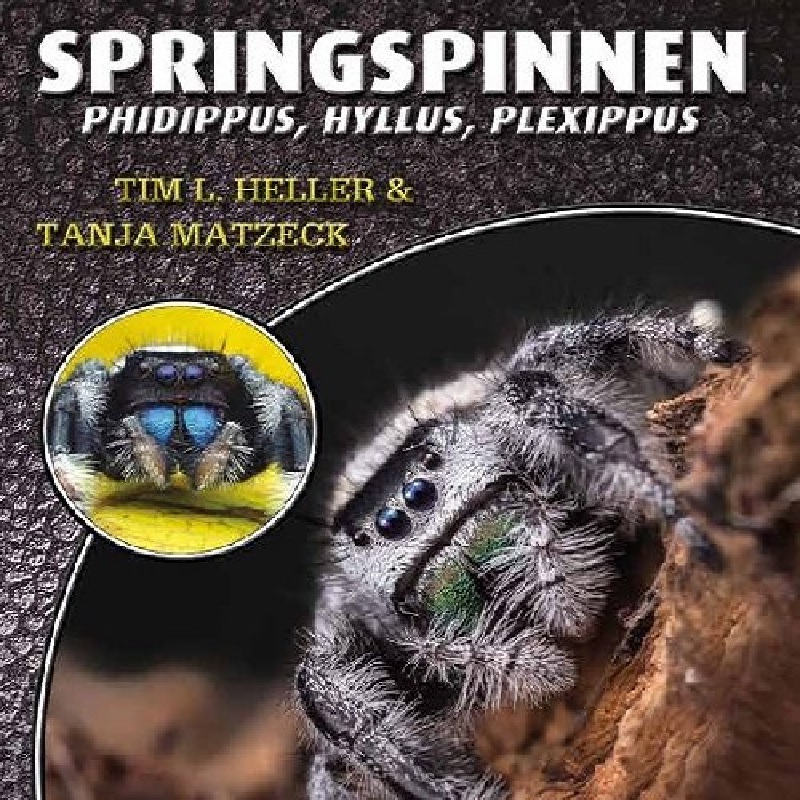
Book Jumping Spiders -
Phidippus, Hyllus & Plexippus
A guide to keeping jumping spiders of the genera Phidippus, Hyllus & Plexippus. Who can resist the charm of jumping spiders? The childlike appearance of their expressive face simply leaves no one cold! In addition, their behavior is extremely exciting to observe, their colors are bright and their requirements for species-appropriate keeping are very easy to meet. No wonder these likeable jumpers are all the rage!
This volume in the "Species by Species" series describes in detail what to look out for when buying and keeping them, introduces the most commonly kept species and color forms and provides plenty of tips on how to keep them successfully - so you can be sure they will breed well!
Species by Species introduces you to the books in this series, which present the most popular terrarium animals. Each volume offers you detailed, practical care instructions and all the information you need to successfully breed your animals.
All important questions from the required tank size to terrarium set-up, technical equipment, species-appropriate nutrition and disease prevention are answered with numerous tricks and tips.
Experienced, long-standing breeders reveal how you can encourage the animals to reproduce and raise healthy young.
All this in full color, generously illustrated and attractively designed - just about your terrarium animal - species by species
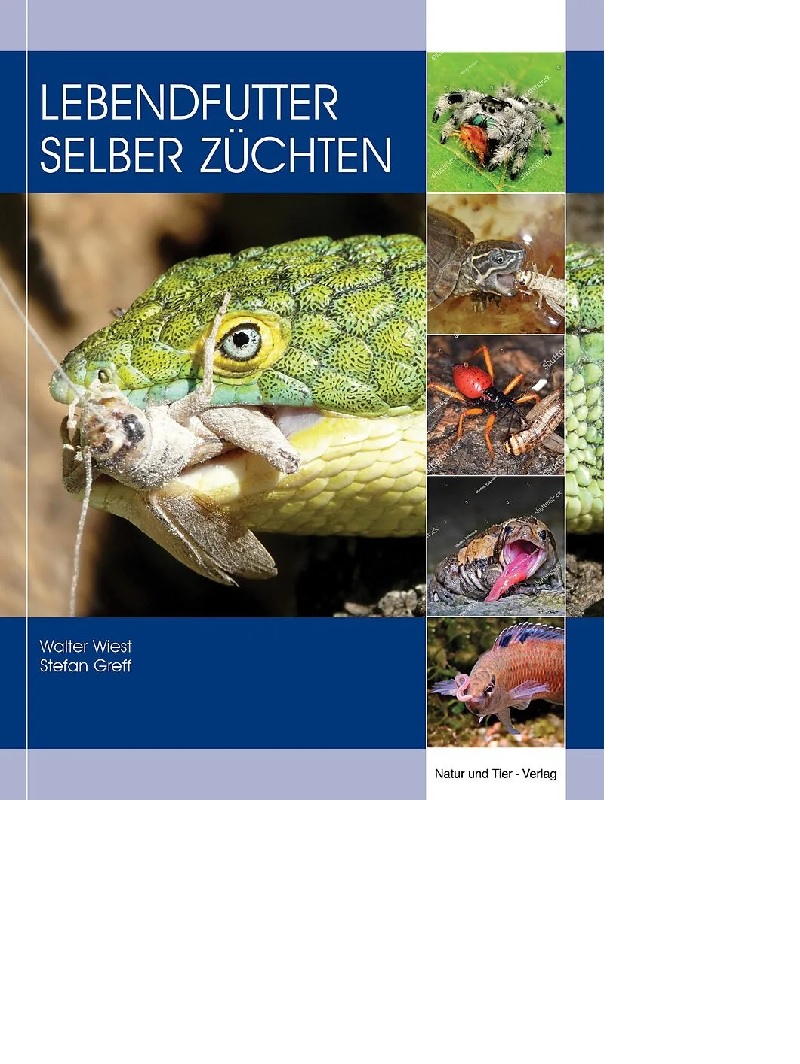
Book "Grow your own live food" - The perfect guide for pet owners
Discover practical and detailed instructions on how you can easily breed food for your reptiles, birds, fish or other animals yourself in the book "Breeding live food yourself". With valuable tips on various food insects, their care and breeding, you can save money and ensure a species-appropriate diet for your pets.
Contents of the book:
Step-by-step instructions for breeding feeder insects
Information on the best types of food for reptiles, birds and fish
Care instructions and breeding conditions for various live food species
Tips for sustainable and cost-effective food production
Why breed your own live food?
Get healthy, fresh food for your animals
Save money and reduce dependence on pet shops
Promote the health and well-being of your animals with species-appropriate food
Whether you are a beginner or an experienced pet owner, this book provides you with everything you need to successfully breed live food yourself.
Marginata 69 - New Guinea tortoises – the genus ElseyaCover storyThe unrecognised beauties: New Guinea tortoises (Andreas S. Hennig)My experiences with Branderhorst's New Guinea tortoise, Elseya (Elseya) branderhorsti (Ouwens, 1914) (Andreas S. Hennig)Keeping and breeding of Rhodin's New Guinea tortoise, Elseya (Hanwarachelys) rhodini Thomson, Amepou, Anamiato & Georges, 2015 (Andreas S. Hennig)PortraitGeoemyda spengleri, Chinese serrated tortoise (Andreas S. Hennig)ReportageMacrochelys temminckii – Experiences and impressions with vulture tortoises part 2 (Reiner Praschag)KeepingAn alternative to year-round keeping of the Egyptian tortoise in the terrarium – my experiences with seasonal outdoor keeping of Testudo kleinmanni (Ricarda Schramm)EtymologySawbacks and living maps part 4: Graptemys gibbonsi, Pascagoula humpback tortoise (Holger Vetter)Classifieds & animal placement
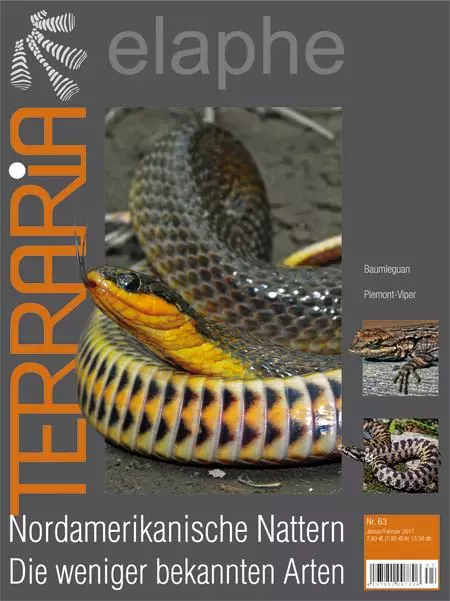
Terraria 63 - North American vipers
Contents:
Cover story: North American vipers – the lesser known species
Everyone immediately thinks of corn and ground snakes, king snakes and perhaps bull snakes when the colubrids of North America are mentioned. However, in addition to these stars of the terrarium hobby, the continent is actually home to a whole range of species that are less popular but no less fascinating and interesting for keeping in terrariums. We go on an excursion to an amazingly species-rich snake habitat and take a closer look at queen snakes, mud snakes and Trans-Pecos rat snakes.
Also in TERRARIA/elaphe 1/2017:
Observations on a newly discovered European pit viper: Vipera walser
What effect does the use of pesticides have on amphibians?
Keeping and breeding the arboreal iguana Urosaurus ornatus
and much more
Territorial
HerpetoramaIt's all about the sausage – Aga toads in AustraliaPrehistoric food chain: snake eats lizard eats beetleCultural followers: Famous basilica inhabitants in CataloniaBlattsteiger: A Nazi frog for Donald TrumpThorny devil: Motorzinho frogs from Brazil
Cover storyHidden treasuresIn search of snakes in Cape Cod, MassachusettsLeo Spinner
The hidden life of mud snakesLeo Spinner
The gentle one from the desert mountainsKeeping and breeding the Trans-Pecos rat snakeLeo Spinner
Long live the Queen! Lifestyle and keeping of the queen snakeLeo Spinner
PanoramaFrogs need friends!Heiko Werning
ResearchNew species. New anoles from Hispaniola: green and lichen-coloured anolesAxel Kwet
Among researchersYears of expeditions in MadagascarFrank Glaw
What effect does the use of pesticides have on amphibian larvae?Norman Wagner
Salamandra
TerraristicsA terrarium classic returns. The Ornate Iguana, Urosaurus ornatusJoschka Schulz
Nature and species conservationField notesFishing water frog in HungaryTamás Tóth
Mass death in larvae of yellow-bellied toadsAxel Kwet
In search of a newly described viper in the Italian Alps: the Piedmont viper (Vipera walser)Benny Trapp
Terrarino – the children's page The "dazzler" among the lizards: The slow wormAlexa Sabarth
Subscription & ServiceAlso in your areaPreview
IncubatorMedia education, part 1Heiko Werning
Schlangen für EinsteigerMadagaskar-HundskopfboaDendrobates auratus
Inhalt:
Viele Vertreter der Gattung Avicularia zählen dank ihres attraktiven Äußeren und des spannenden Verhaltens zu den absoluten Klassikern im Terrarium. Aber gerade in jüngster Zeit werden auch immer wieder spektakuläre neue Arten dieser baumbewohnenden Vogelspinnen importiert.
Unser Titelthema bietet Ihnen einen Überblick über diese prächtigen Kletterkünstler und porträtiert einzelne Arten.
EditorialMAGAZINBestialische Behandlung indonesischer Großreptilien für westliche LuxusprodukteAndré Koch
MAGAZINUngewöhnlich gefärbter GrasfroschMike Zawadzki
MAGAZINGestohlene Geckos zurückKriton Kunz
MAGAZINFührungswechsel im Exotarium TulaKriton Kunz
MAGAZIN"Crocodile Dundee" gestorbenKriton Kunz
TERMINE
WESTERN HERP PERSPECTIVESIst Herping endlich erwachsen geworden?Bill Love
FOTOSTORYDie Gattung Avicularia Russ Gurley
HALTUNG UND VERMEHRUNGHaltung und Nachzucht von Avicularia metallicaI. Zubillaga
HALTUNG UND VERMEHRUNGDie Rotfußvogelspinne Avicularia aviculariaJ. F. Taylor
HALTUNG UND VERMEHRUNGErnährung nord- und westafrikanischer Warane in der Natur und bei TerrarienhaltungUwe Schlüter
PORTRÄT UND POSTERTerrapene carolina carolina (Linnaeus, 1758). Carolina-DosenschildkröteMichael Wirth
RATGEBERWelche Schlange für mich?Mark Mense
HALTUNG UND VERMEHRUNGSanzinia madagascariensis. Haltung und Zucht der Madagaskar-Hundskopfboa oder des Madagassischen HundskopfschlingersM. Borer
HERPETOFAUNACalumma tarzan. Eine neue Chamäleonart aus Madaskar braucht dringend Hilfe! P.-S. Gehring, M. Pabijan, F. M. Ratsoavina, J. Köhler, K. Mebert & F. Glaw
HERPETOFAUNAGoldbaumsteiger in Kolumbien F. Steinmann
REPORTAGEDer Schulzoo des Collegium Josephinum Bonn M. Uhlhaas & P. Pohlscheid
TIERE UNSERER HEIMATDie MauereidechseRolf Leptien
BIBLIOTHEKBuchbesprechung: Auf Schlangenspuren und KrötenpfadenAxel Kwet
Lizards of the American Southwest. A Photographic Field GuideHeiko Werning
Buchbesprechung: Frösche und andere AmphibienSebastian Wolf
ABO & SERVICEAUCH IN IHRER NÄHEVORSCHAU
BRUTKASTENGrenzgebiete Teil 1Heiko Werning
Reptilia 57 - Leopard geckos
2 - Editorial4 - Magazine15 - Dates18 - Western Herp Perspectives: In the trap, by B. Love20 - Photo report: The leopard gecko (Eublepharis macularius), by D.Duscha30 - Herpetofauna: Behaviour and biology of the leopard gecko (Eublepharis macularius) in Pakistan, by M. Sharif Khan36 - Keeping and reproduction: Colour and pattern variations of the leopard gecko (Eublepharis macularius), by R. Kreutz42 - Journey: In the Magic Kingdom of the Quetzal - Dream journeys through the land of "Eternal Spring", by K. Kunz51 - Portrait and poster: Trimeresurus flavomaculatus, by M. Gaulke56 - Hepertomedicine: Herpesvirus infections in tortoises - disease, diagnosis and prophylaxis options, by S. Fischer & M. Homuth65 - Care and reproduction: Monkeys with orange legs - Care and reproduction of the Chaco macifrog Phyllomedusa hypochondrialis azurea, by E. Biggi72 - Keeping and reproduction: On keeping the ventral viper Maticora bivirgata flaviceps (Cantor, 1839) in the terrarium, by G. Vogel & P. Freed78 - Terrarium technology: Building instructions for a polystyrene terrarium according to Marco Beck, by M. Schicker86 - Classifieds93 - Advice and action95 - Library104 - Incubator: My flat-sharing community, part 2: The Grand Coalition has promised to solve the problems in the country, but once again nobody is showing up, by H. Werning
NTV, Discover the spiders
64 pages
colour photos throughout
Large format: 20.7 x 28 cm
Hardcover
Author Kriton Kunz
Publisher NTV
Contents:
No other group of animals exhibits such diverse and fascinating behaviour as spiders. Their different hunting strategies and their exciting abilities arouse children's curiosity. "Discover the spiders" explains all the secrets of these extraordinary animals in a child-friendly, detailed and entertaining way and has lots of amazing things in store: Can spiders fly? Do spiders also walk on water, perhaps they even dive? What's the story behind the triangle spider's strange web, and why does the spitting spider spit on its prey? Children will find answers to all their questions in this book.A highly valuable educational book with a great fun factor!
Welcome to the world of spiders!
What kind of animals are spiders?
The relatives of spiders
Where you can find spiders everywhere
Lots of spiders
Which spiders are there?
It's enough to make your skin crawl!
The senses of spiders
Bon appétit! How spiders hunt and eat
Enemies of spiders
Camouflage, warning and other tricks
Venomous spiders
Loners and communal creatures
Can spiders communicate with each other?
Reproduction
What do spiders do in winter?
Age and diseases
Can spiders fly?EXTRA:
Observe spiders
Little spider quiz
Thanks
Reptilia 105 - Breeding Phelsumene successfullySouth AfricaChicken eaterNutrition-related diseases in tortoisesContents:The magnificent day geckos of the genus Phelsuma are among the classics in terraristics. They are particularly popular due to their attractive colouration and very good durability. However, this well-known group always has new surprises in store. We provide an overview of the Phelsuma successfully bred in our terrariums and offer something for beginners as well as advanced breeders in our breeding reports.EditorialMAGAZINEDATESWESTERN HERP PERSPECTIVESReptile laws in the so-called United StatesLovePHOTOREPORTAGEKeeping phelsums in the terrarium. A success story?P. BerghofKeeping and reproductionThe Madagascar Day Gecko, Phelsuma grandis: Distribution, Care and BreedingM. RognerKeeping and reproductionPhelsuma madagascariensis madagascariensis (Gray, 1831) – An old acquaintance offers surprisesH.-P. BerghofKeeping and reproductionCare and breeding of Phelsuma pronki Seipp, 1994 and Phelsuma vanheygeni Lerner, 2004H.-P. BerghofREPORTAGEThe Phelsuma interest group. An association of more than 200 day gecko specialistsP. KrauseKeeping and breedingChicken eaters - adorable beastsC. KässerHealthNutrition-related diseases in tortoises M. BaurArachnofaunaA portrait of African ground-dwelling tarantulasK. MannsLibraryServicesALSO NEAR YOUJourneySouth Africa. In search of reptiles along the Garden RouteP. SchoeneckerPREVIEWBRUTKASTEN Where love fallsH. Werning
Bugs No. 08 - CentipedeCentipedes are on the rise in terraristics! Christian Kronmüller, a specialist in these fascinating animals and author of a book on the subject, presents these many-legged predators in detail in the next issue of Bugs and reveals tips and tricks on how to keep and breed them.Insights into the way of life of invertebrates in nature provide valuable information on species-appropriate husbandry. Our Colombian author Jorge Cañas-Orozco has compiled exciting details and impressive photos of scorpions of the genus Opisthacanthus.During the hot season, wasps and hornets become a nuisance in some places in this country. In Bugs No. 8, we show you what these insects are used for in the Far East - surprises are guaranteed!Cuba is home to an absolutely spectacular arachnid fauna. Michael Seiter takes you on an expedition in search of flagellate spiders, scorpions and more.In addition, of course, a number of other exciting topics are addressed, so that there will be something for fans of various invertebrate groups. Plus practical tips and news from the world of science and much more ...Table of contentsEditorialFacetsDatesCover storyArmoured hunters and gentle parents - centipedes in the terrariumThe top 10 centipedes for beginnersFlown outIn search of arachnids in Cubareportage Opisthacanthus elatus: Observations from ColombiaKids Corner Colourful hummersreportage Beetle breeding made easy: white rotten wood from sustainable mushroom productionCulture Harvest festival in Japanese - Wasps as a delicacy in the Japanese countrysideBook scorpionAlso in your neighbourhoodService & Imprint
Draco 05 - Giant snakesContents:
Page content
2 Editorial
4 On the systematics and biology of giant snakes (Boidae), by Dr L. Dirksen & M. Auliya
20 Quo vadis, keeping boids in human hands, by Dr H. D. Lehmann
26 record specimens and man-eaters, by Dr L. Dirksen
32 Notes on the green tree python Morelia viridis(SCHLEGEL 1872) - population-related variants, care and breeding, by A. Kirschner & H. Abend
40 Quo vadis, Boa regia, by A. Kirschner
43 The King Python (SHAW 1802), by A. Kirschner
48 Destination: Down under - The giant snakes of Australia, by V. Franz
56 KLeine Riesenschlangen - Care and breeding of sand boas in the terrarium, by H. Seufer
68 Experiences with rarely kept Corallus species Corallus annulatus annulatus, Corallus hortulanus hortulanus and Corallus hortulanus ruschenbergeria, by S. Wirz
78 Book box
93 Magazine
CHF 16.80
❅
❆
❅
❆
❅
❆
❅
❆
❅
❆
❅
❆
This website uses cookies to ensure the best experience possible. More information...