

Pet Info - Birds

Common hill myna
The Beo (Gracula religiosa)
Area of originThe area of origin of the Beo is in Southeast Asia. It belongs to the genus Gracula. The species population is endangered.
HabitatThe Beo occurs in a number of subspecies in parts of South Asia. Beos basically live socially in forested areas. These range from lowland to mountainous regions, which is why there are Beo and Mountain Beo.The Beos learn a great many calls from animals in their environment, with which they can later frighten or attract other animals and birds.Keeping
The Beo is a very good flyer, it needs plenty of space and regular free flight in the home or aviary.Beos do not gnaw on objects which makes them very popular. They cannot gnaw on wood or mesh. Just like parrots, the Beos need UV light, which must be provided indoors with special UV lamps.It is important for the Beo to provide a sleeping box, which is very gladly accepted by the Beos.
The Beo is not available for purchase from the pet trade. It is not imported and captive breeding in Switzerland is extremely rare.Nutrition
The Beo feeds mainly on fruits and insects. The Beo is a soft-feeder, it has a rather pointed, delicate yet also long tweezer-like beak. Soft-feeders are birds whose food is soft.Swiss animal welfare legislation contains legal requirements governing the appropriate keeping of and handling with birds.
The following regulations apply to all bird species:
social species must be kept socially (no solitary keeping)
the enclosures must meet the minimum sizes = minimum requirements
all birds must be offered a bathing opportunity
the enclosures must be structured with various springy perching places of different thicknesses and orientations, whereby one third of the volume must be free of structures
all birds must be provided with suitable sand for uptake
the private keeping of certain bird species requires authorisation (wild animal keeping permit)
the stand keeping of parrots and the keeping of song canaries in Harzerbauern is prohibited
the use of sand tubes as a covering for perches is prohibited

Grey parrot
The grey parrot (Psittacus erithacus)
Area of origin
The grey parrot originates from Central and West Africa - which is why it is often referred to as the African grey parrot. There it inhabits the Ivory Coast to western Kenya and north-west Tanzania. The largest range of the grey parrot is the Republic of Congo and the Democratic Republic of Gabon.Habitat
The grey parrot is a typical tree dweller. Its habitat includes tropical rainforests, mangroves and wet savannahs. The grey parrot prefers to stay at the edges of forests, also visiting cultivated land and gardens, but avoids human settlements.Keeping
Grey parrots are very sociable animals and should therefore never be kept alone. The most species-appropriate way to keep grey parrots is to keep several pairs, making sure the sex ratio is balanced.Grey parrots require a lot of space and can therefore only be kept in spacious aviaries or bird rooms.The aviaries must be provided with several branches of varying thickness, which serve both as perches and for activity. Ropes and swings can also be attached to the branches or to the ceiling.
The grey parrot is no longer available in the pet trade as they can no longer be imported and offspring in Switzerland are very rare.Nutrition
The diet of the grey parrot consists of parrot food made up of grains and seeds. A mixture should be selected that only contains small amounts of sunflower seeds and no nuts. In addition, grey parrots should receive fresh food every day. Suitable foods include apples, pears, rosehips, carrots, cucumbers, cardoons, seed heads, dandelions, nettles, etc.
For a complete diet, grey parrots need protein-rich food such as insects, boiled eggs and curd one to two times a week.
Grey parrots also need water available at all times, which should be offered fresh daily.Swiss animal welfare legislation contains statutory provisions regulating the appropriate keeping and handling of birds.
The following regulations apply to all species of birds:
Socially living species must be kept socially (no solitary keeping)
The enclosures must meet the minimum dimensions = minimum requirements
All birds must be offered the opportunity to bathe
The enclosures must be structured with a variety of springy perches of different thicknesses and orientations, with one third of the volume being free of structures
All birds must be provided with suitable sand for consumption
The private keeping of certain bird species is subject to authorisation (wildlife keeping permit)
The keeping of parrots on stands and the keeping of singing canaries in “Harzerbauern” is prohibited
The use of sand sleeves as a coating for perches is prohibited

Red-rumped parrot
The song parakeet
The song parakeet is found in south-eastern Australia. There it lives in sparsely wooded regions. The distribution area is mainly inland, where there are mature grasses and herbaceous plants. They also live in tree savannahs and grasslands with scattered trees. In some cases, they are also found in parks or gardens. They are trusting birds. Their call is actually not loud, except when they are calling.Appearance
Male song parakeets are usually green in colour, with the back being more olive green. The belly is yellow. Female song parakeets are brownish olive green. The belly is grey and the lower back is greenish. Juveniles closely resemble the females.The song parakeet belongs to the medium-sized parakeets.Keeping song parakeets
Song parakeets must be kept in pairs. They are less suitable for keeping in aviaries. It is better to keep them in a separate room, where the birds have plenty of space and their daily free flight. Climbing facilities and toys must be available. Keeping them in an outdoor aviary is also possible. They are very hardy, but it is still recommended to provide a sheltered hut.Song parakeets can be kept together with other parakeets, but there should always be a possibility for separation, as it can happen that they suddenly do not get along.Diet
In the wild, song parakeets feed mainly on grass seeds and the seeds of herbaceous plants. Therefore, it is recommended to feed the birds a seed mix that contains a lot of millet and hemp seed. Also, greens such as lettuce, dandelion, and chickweed. Fruit and vegetables are also gladly accepted. Fresh branches and their leaves must not be missing. Sunflower seeds should only be fed rarely.Swiss animal welfare legislation contains legal provisions which regulate the animal-friendly keeping of and the handling of birds.
The following regulations apply to all bird species:
social species are to be kept socially (no single keeping)
the enclosures must meet the minimum dimensions = minimum requirements
all birds must be offered a bathing opportunity
the enclosures are to be structured with various, springy perches of different thicknesses and orientation, whereby one third of the volume must be free from structures
all birds must be provided with suitable sand for intake
the private keeping of certain bird species requires a permit (wild animal keeping permit)
the tethered keeping of parrots and the keeping of song canaries in Harzer cages is prohibited
the use of sand tubes as a covering for perches is prohibited
for parrots applies:
minimum enclosure floor area for 4 small parakeets and lovebirds 0.24 m2 (e.g. 60 cm x 40 cm), minimum height 50 cm
Parrots require plenty of natural branches for gnawing and climbingBefore you decide to keep song parakeets, you should definitely have read a relevant specialist book.
For every animal keeping: Children (also adolescents) must be guided, supervised and checked by their parents. Children should know that animals are not toys!
For questions and problems, our trained team at Zoo Roco is at your disposal. They can give you expert advice on all matters.

Lovebirds
Area of origin:
Africa is the home of all agapornids.
Subspecies:
Agapornids with white eye ring:
Black- headed
Peach- faced
Masked- lovebird
Strawberry- headed
Agapornids without white eye ring:
Rosy-faced
Mountain parrot
Grey-headed
Care:
Agapornids live in pairs in closely limited areas. Therefore, they should also be kept with us always in pairs in large cages or indoor aviaries.Agapornids are curious and, if given sufficient attention, become tame even as a pair.The aviary should be placed in a draught-free location.For agapornids to feel comfortable, you need:
Aviary
Perches of various thicknesses or natural branches (willows, poplars or fruit trees)
Sleeping box - must be removed if breeding urge is too much
Bathing or shower option
Food and drinking bowl
Diet:
The diet consists of a special grain mix for large parakeets.Additionally, the birds should have access to:
Mineral stone - serves to meet calcium needs
Bird sand - contains important elements for digestion
unsprayed vegetables (e.g. chicory / spinach / cress / carrots, cucumber slices)
unsprayed fruit (e.g. apple pieces / pears)
unsprayed wild herbs (e.g. chickweed / knotweed / shepherd's purse / young dandelion)
Millet on the cob (once a week, as the fat content is high, otherwise agapornids suffer from obesity).
Egg food and germ food - indispensable during breeding season
Crackers and nibble sticks are healthy treats that also give the bird a task to work for its food.
Food, water and fresh food must be renewed daily.
Breeding:
The parent birds should be at least 12 months old before breeding begins. In special nest boxes, the agapornids lay about 3-5 eggs at intervals of 2 days. As nesting material they use chopped branches, hay, leaves, bark. The chicks are blind, naked and completely helpless when they hatch after 21-25 days of incubation. After about 10 days the eyes open and the first feathers begin to sprout on the back. After 40 days, the agapornids are fledged. The young should be separated from the parent birds at the earliest from 8 weeks of age.Agapornids breed throughout the year and almost always successfully rear their young. However, after 2 to 3 broods, parent birds should be given a break, otherwise the birds could die of exhaustion.
Swiss animal protection legislation contains statutory requirements regulating the animal-friendly keeping and handling of birds.
The following regulations apply to all bird species:
social species must be kept socially (no single animals)
enclosures must comply with the minimum sizes = minimum requirements
all birds must be offered a bathing opportunity
the enclosures must be structured with different, springy perches of varying thickness and orientation, with one third of the volume free of structures
all birds must be provided with suitable sand for intake
the private keeping of certain bird species is subject to authorisation (wild animal keeping permit)
the keeping of parrot birds in stands and the keeping of song canaries in Harz cages is prohibited
the use of sand tubes as coverings for perches is prohibited
for parrot birds applies:
minimum enclosure area for 4 small parakeets and agapornids 0.24 m2 (e.g. 60 cm x 40 cm), minimum height 50 cm
Parrot birds require plenty of natural branches for gnawing and climbing
Regular costs (per month/for 2 pets):
Food: ca. Fr. 15.--
Sand: ca. Fr. 20.--
Vet: The more species-appropriate and cleaner the keeping, the less often a trip to the vet is necessary. Nevertheless, you must always expect that an animal could get ill and incur additional costs.
Before you decide in favour of agapornids, you should definitely have read a specialist book.For each animal keeping applies: Children must be instructed, supervised and controlled by the parents. Children must learn that an animal has its own needs and habits which must be respected. Parents should be aware that it is they who are responsible for the animal.For questions and problems, our trained team at Zoo Roco is at your disposal. They can advise you professionally on all questions.

Canary
Canary (Serinus canaria forma domestica)Area of origin:
Canaries, as the name suggests, originate from the Canary Islands. The wild canary, originally yellow-green, is now available in various bred colours and shapes.
Breeds and colours:
Song canaries
Colour canaries
Type canaries
Canary mules
Sex differences:
Determining the sex is mainly possible through the male's song. Sexually mature male canaries sing to attract a female, mark their territory and as "background music" for nest building. Female canaries also sing, but so rarely and quietly that they are hardly heard.During the breeding season, the male's cloaca is also raised, while the female's is flatter.
Care:
If kept well in an environment attractive to them, canaries feel comfortable. Even if they do not become quite as tame as budgerigars, it is still very enjoyable to watch their activities and to appreciate their colours and song.Canaries feel best when kept in pairs or groups. A large cage or a room aviary is suitable as housing. With a cage, it must be borne in mind that flying is a basic need of a bird. Therefore, the cage should be chosen so that the canary can at least fly a few wing beats.The aviary or the cage should be placed in a bright, draught-free location. The little singers also feel comfortable in the fresh air. Partial shade is ideal; direct sun or frost must be avoided.To ensure canaries feel comfortable you need:
Aviary or cage
Perches of varying thickness or natural branches (willows, poplars or fruit trees)
Bathing or shower facility
Food and water bowl
Food:
The food consists of a special seed mixture for canaries. Branded food contains the right mix of various seeds that covers all nutritional requirements.In addition, the birds should be provided with:
Cuttlebone - to provide for calcium requirements
Bird sand - contains important ingredients for digestion
unsprayed vegetables (e.g. chicory / spinach / cress / carrots, cucumber slices)
unsprayed fruit (e.g. apple pieces / pears)
unsprayed wild herbs (e.g. chickweed / knotweed / shepherd's purse / young dandelion)
Spray millet (once a week, as the fat content is high, otherwise the canaries suffer from obesity).
Egg food and germinated food
Crackers and nibble sticks are healthy treats that ensure the bird has to work for its food.
Drinking water enriched with vitamin drops
Food, water and fresh food must be renewed daily.
Breeding:
Canaries lay 4-6 eggs in open nest baskets. For nesting material, they need cuttlebone, hay and various materials.The chicks are blind, naked and completely helpless when they hatch after 13-14 days of incubation. At 16 days old, the canaries are fledged. Young birds should not be separated from their parent birds until at least 6 weeks old.
Swiss animal welfare legislation contains statutory provisions governing the species-appropriate keeping of and handling with birds.
The following regulations apply to all bird species:
social species must be kept socially (no solitary housing)
the enclosures must have the minimum dimensions = minimum requirements
all birds must be offered a bathing facility
the enclosures must be structured with various, springy perches of different thicknesses and orientations, with one third of the volume remaining free of structures
all birds must be provided with suitable sand for ingestion
the private keeping of certain bird species is subject to authorisation (wild animal keeping licence)
the tethering of parrots and the keeping of song canaries in Harz cages is prohibited
the use of sand tubes as covers for perches is prohibited
for finches:
minimum enclosure area for 4 birds: 0.24 m2 (e.g. 60 cm x 40 cm) minimum height 50 cmBefore you decide to keep canaries, you should definitely have read an appropriate specialist book.The following applies to all animal keeping: Children must be guided, supervised and monitored by their parents. Children must learn that an animal has its own needs and habits and to respect these. Parents should be aware that they are the ones responsible for the animal.For questions and problems, our trained team at Zoo Roco is at your disposal. They can provide you with expert advice on all matters.
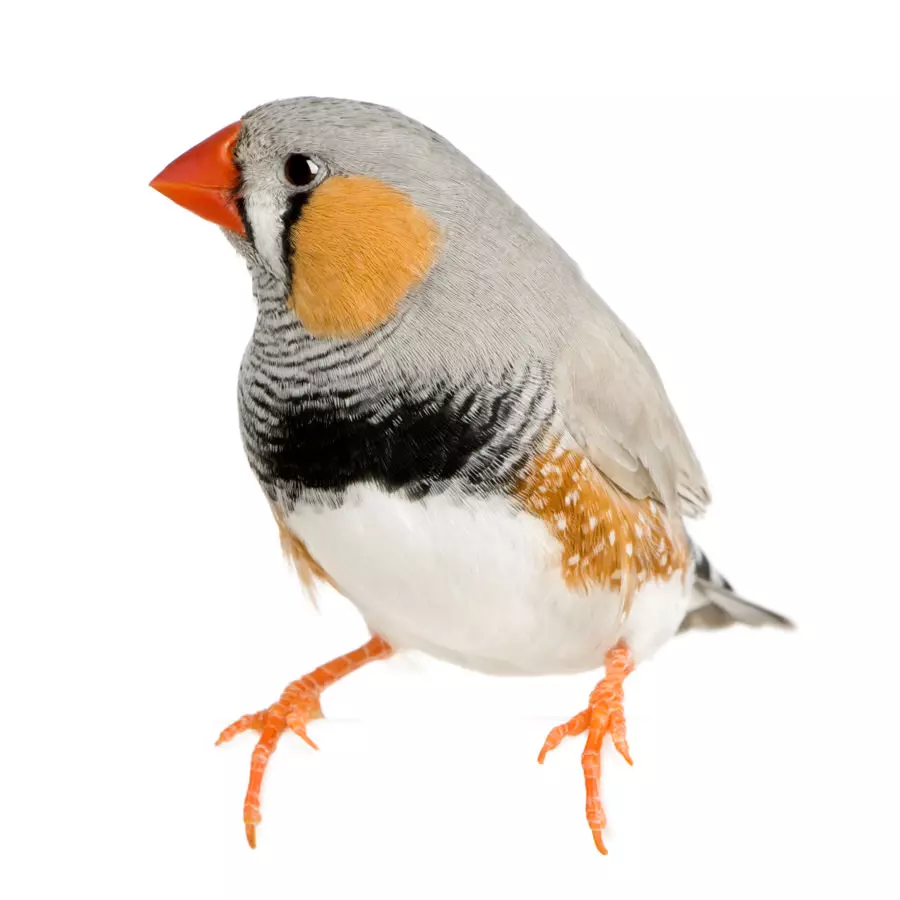
Zebra Finch
Area of origin:
Zebra finches live and breed in the grass and bush steppes of Australia.
Sexual differences:
The males are generally more colourful and have an orange cheek patch. Exceptions are the white varieties. There the male can be recognised by the redder beak.The cheek patch is not yet present in young birds, this only appears after the juvenile moult.
female zebra finch
male zebra finch
Keeping:
In their homeland, wild zebra finches live in large flocks as they are very sociable. Therefore, they should be kept at least in pairs in cages measuring 70x40x40 cm per pair. The optimum is an aviary with several pairs. The cage should be placed in a draught-free location.For zebra finches to feel comfortable you need:
Cage or aviary
Perches of various thicknesses or natural branches
Sleeping, nesting basket = nest sleeper
Bathing opportunity
Food and drinking bowl
Food:
The food consists of a special seed mix for exotic birds.As supplementary food you can give:
unsprayed vegetables (e.g. chicory / lettuce / cress / cucumber slices)
unsprayed fruit (e.g. pieces of apple / banana slices)
unsprayed wild herbs (e.g. chickweed / knotweed / shepherd’s purse / young dandelion)
Millet on the cob (once a week, as the fat content is high, otherwise zebra finches suffer from obesity.
Egg food during breeding
Insect food as a treat
Food, water and fresh food must be renewed daily.
Breeding:
The parent birds should be at least 9 months old before you start breeding. In special nesting baskets, the zebra finches build a nest with sarpie and coconut fibres.Zebra finches breed all year round and almost always raise their young successfully. A clutch consists of 4 to 6 eggs, which are laid at intervals of one day. The young are blind, naked and completely helpless when they hatch. After about 8 days the eyes open and the first feathers begin to sprout on the back. At 20 days the zebra finches fledge.
The Swiss Animal Welfare Act contains legal provisions governing the species-appropriate keeping of and handling with birds.
The following rules apply to all bird species:
social species must be kept socially (no single keeping)
the enclosures must meet the minimum dimensions = minimum requirements
all birds must be offered a bathing opportunity
the enclosures must be structured with various, springy perches of different thicknesses and orientations, whereby one third of the volume must be free of structures
all birds must be provided with suitable sand for consumption
the private keeping of certain bird species is subject to authorisation (wild animal keeping permit)
the keeping of parrots on perches and the keeping of song canaries in Harzer cages is prohibited
the use of sand tubes as covers for perches is prohibited
for Estrildid finches:
minimum enclosure area for 4 birds: 0.24 m2 (e.g. 60 cm x 40 cm) minimum height 50 cm
Before you decide on zebra finches, you should definitely read an appropriate specialist book.The following applies to all animal keeping: Children must be instructed, supervised and monitored by parents. Children must learn that an animal has its own needs and habits and respect these. Parents should be aware that they are responsible for the animal.For questions and problems our trained team at Zoo Roco is at your disposal. They can advise you professionally on all aspects.

Budgerigars
Budgerigars
Region of origin:
Budgerigars live and breed in large swarms in the grass and bush steppes of Australia. In 1840 the English naturalist Sir John Gould brought a pair of budgies to Europe for the first time. These became so to speak the stammer parents of the popular ornamental birds. Today, catching and exporting Australian budgies is forbidden. The birds on the market all come from offspring.
Sex differences:
One recognizes squabs by the pink nose-skin, dark eyes and the wave-drawing on the forehead up to the nose-root. After the young mouse at the age of about 3 months, the nasal skin turns blue in the male and beige-brown in the female. In albinos (white with red eyes) and lutinos (yellow with red eyes) the skin of the nose is pink in both sexes.
female budgerigar
male budgerigar
Attitude:
In its homeland, the wild budgerigars live in big swarms since they are extremely sociable. Therefore they should be kept in cages with at least two of us. A single bird would wither on its own. With a single bird the human being can never replace a conspecific despite intensive affection!The cage should be at least 70x40x40 cm per pair. Better however would be a room aviary, so that the birds can fly also a pair of wing flaps. The cage should be placed in a draught-free location.So that budgerigars feel well one needs:
Cage or aviary
perches of various thicknesses or natural branches (willows, poplars or fruit trees)
Toys, bells, ladders, swings etc.
Bath or shower facilities
Food and drink bowl
Food:
The food consists of a special grain mixture of different millet seeds and peeled oats.In addition, the birds should be provided with food:
Mineral stone or cuttlebone - serves to cover the lime requirement.
Bird sand - contains important ingredients for digestion
unsprayed vegetables (e.g. chicory / spinach / cress / carrots, cucumber slices)
unsprayed fruit (e.g. apple pieces / pears)
unsprayed wild herbs (e.g. chickweed / knotweed / shepherd's purse / young dandelion)
Millet (1x weekly, since the fat content is high, the budgies suffer otherwise from over-fatting).
Egg and germ food
Crackers and snack bars are healthy delicacies that serve to make the bird work for its food.
Food, water and fresh food must be renewed daily.
Breeding:
The parents should be at least 6 months old before starting to breed. In special nesting boxes the budgies lay about 3-5 eggs every 2 days. Nesting material is not necessary, since they lay the eggs directly on the wooden floor of the nesting box.Budgerigars breed the whole year over and raise the offspring almost always successfully. The boys are blind, naked and completely helpless when they hatch. After approx. 10 days the eyes open and on the back the first feathers begin to sprout. With 30 days, the budgerigars are fledged. One should separate the young birds from the parents at the earliest starting from an age of 6 weeks.
The Swiss Animal Welfare Act contains statutory provisions governing the animal-friendly keeping and handling of birds.
The following regulations apply to all bird species:Social species must be kept socially (no individual keeping).
the enclosures must meet the minimum dimensions = minimum requirements
all birds must be offered a bathing opportunity
the enclosures shall be structured with various resilient seating arrangements of varying thickness and orientation, one third of the volume being free of structures
all birds must be provided with suitable sand for reception
the private keeping of certain bird species requires a permit (wildlife keeping permit)
the conservation of parrots and the keeping of singing canaries in Harzer farmers is prohibited
the use of sand husks to cover perches is prohibited
for psittacaries:
minimum enclosure area for 4 small parakeets and agapornids0.24 m2 (e.g. 60 cm x 40 cm), minimum height 50 cm
Parrots need plenty of natural branches for nailing and climbing.
Before you decide for budgerigars, you should absolutely have read an appropriate technical book.For each animal husbandry applies: Children must be led, supervised and controlled by the parents. Children must learn that an animal has its own needs and habits and respect them. Parents should be aware that it is they who are responsible for the animal.Our trained team at Zoo Roco is at your disposal for questions and problems. They can advise you professionally in all questions.

Bourke's parrot
Area of origin:
Western Australia, southern Northern Australia, south-western Queensland, north-western New South Wales, South Australia
Environment and behaviour:
The Bourke's parakeet has a preference for dry and semi-dry areas overgrown with acacia bushes, where no more than 250 mm of rain falls per year. It is considered a typical example of species living in the Australian interior. Under ideal feeding conditions (after sufficient rain), density increases in the distribution area, and it decreases as soon as the food supply is poor. In nature, these birds are rarely encountered, as they live in areas little visited by humans, and are active in the early morning hours and at dusk. During this time, their protective colouring makes them even less conspicuous. At night, especially in clear nights, they also start moving and you can hear the beating of their wings in flight. These nocturnal excursions also explain the large eyes of these parakeets. Most often Bourke's parakeets fly in pairs or small groups, but in dry times they can be found in flocks of more than a hundred individuals at watering places. They roam around depending on the weather and it is extremely difficult to specify where these birds may be encountered. They have retained their behaviour in the aviary. During the day they behave quietly, and in the early morning hours and at sunset they become active.
Subspecies:
Currently there are four mutations of the Bourke's parakeet: yellow, isabell, fawn and pink. The yellow Bourke shows a delicate yellow colouring on its back and wings, and the head and chest appear matt pink. The claws are very light, almost transparent. The males are a little darker than the females, which appear yellowish. Inheritance is autosomal recessive. The isabell is very similar to the yellow Bourke. The colour is more pink and less yellow, and the yellow has a rather brownish character. Feet and claws are greyish. Like the yellow, the isabell has red eyes. Inheritance is sex-linked recessive.
Sexual difference:
Males: Upper side brownish, breast pink with brown, belly pink, feathers with brownish edges. Forehead band, shoulders, underwings, undertail coverts, thighs and flanks blue, wings and central tail feathers grey-olive, outer tail feathers white with blue edges. Beak horn coloured, iris brown, legs grey-brown.Females: duller in colour, blue forehead band missing, white wing stripe present.
Keeping:
To make Bourke's parakeets feel comfortable you need:
Aviary
Perches of various thicknesses or natural branches (willows, poplars or fruit trees)
Sleep box - must be removed in case of excessive breeding drive
Bathing or showering facility
Food and drinking bowl
Food:
Bourke's parakeets search for their food mainly on the ground. Their food consists of the seeds of grasses, herbaceous plants, shrubs and trees. Occasionally they also catch insects.
Mineral stone - serves to cover the calcium requirement
Bird sand - contains important components for digestion
unsprayed wild herbs (e.g. chickweed / knotweed / shepherd's purse / young dandelion)
Millet on the cob (once a week, as the fat content is high, otherwise the Bourke's parakeets suffer from obesity).
Egg food and germ food - indispensable during the breeding season
Crackers and nibble sticks are healthy treats which ensure that the bird has to work for its food.
Food, water and fresh food must be renewed daily.
Breeding:
In nature, they look for tree hollows at one to three metres, and the entrance to a Bourke's nest has also been found at 30 cm. In the aviary, a nest box 30 cm high with a base area of 15 x 15 cm should be installed. The entrance hole should have a diameter of 5 cm.The Bourke is an uncomplicated breeder that can be bred in colonies, but pairs should be kept individually. After choosing the nest site, the female lays three to six eggs and stays on the clutch for about eighteen days. She leaves the nest at most once a day to eat, to be fed by the male, and to defecate. Once the young have fledged after four weeks, they stay with the parents for some time in the wild. As Bourke's parakeets can be quite productive and breed several times in quick succession, the independent young should be housed elsewhere when a new clutch appears. During the breeding period, the nesting material may need to be renewed, as these parakeets do not keep their nursery particularly clean.
Swiss animal welfare legislation contains legal requirements that regulate the animal-friendly keeping of and handling with birds.
The following regulations apply to all types of birds:
social species must be kept socially (no solitary keeping)
the enclosures must comply with the minimum sizes = minimum requirements
all birds must be offered a bathing opportunity
the enclosures must be structured with various, springy perches of different thicknesses and alignments, with one third of the volume being free of structures
all birds must be provided with suitable sand for ingestion
private keeping of certain species of birds requires a licence (wild animal keeping licence)
the keeping of parrots in stands and the keeping of song canaries in Harzer cages is prohibited
the use of sand sleeves as a covering for perches is prohibited
for parrots:
minimum enclosure area for 4 small parakeets and agapornids 0.24 m2 (e.g. 60 cm x 40 cm), minimum height 50 cm
Parrots require plenty of natural branches for gnawing and climbing
Regular costs (per month/for 2 animals):
Food: approx. Fr.15.--
Sand: approx. Fr. 10.--
Veterinarian: The more appropriate and cleaner the keeping, the less often you have to go to the vet. Nevertheless, you must always expect that an animal can also become ill and then causes additional costs.
Before you decide on Bourke's parakeets, you should definitely read an appropriate reference book.For all animal keeping: children must be guided, supervised and controlled by their parents. Children must learn that an animal has its own needs and habits and respect this. Parents should be aware that they are the ones who are responsible for the animal.For questions and problems, our trained team at Zoo Roco is available. They can advise you professionally on all questions.
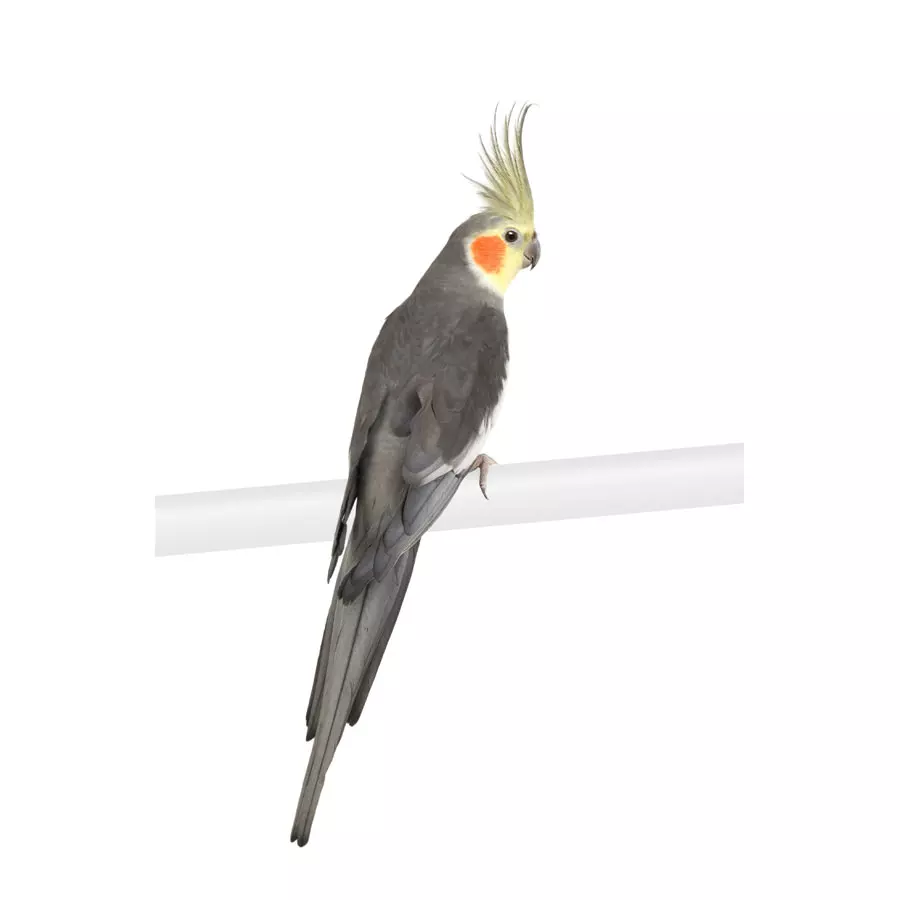
Cockatiel
Area of origin:
In their homeland, cockatiels live in large flocks and, like budgerigars, colonise the whole of Central Australia.
Sexual differences:
The difference between the sexes can only be recognised from about 9 months of age. Until they moult as juveniles, young birds look like female cockatiels. Afterwards, the male's feather colour becomes more intense. The head becomes yellower and the cheek patch an intense orange. The undersides of the tail feathers are plain grey. The female remains paler and the tail feathers become striped yellow-grey.
female cockatiel
male cockatiel
Keeping:
Cockatiels live in large colonies in the wild. Therefore, they should also be kept at least in pairs in indoor aviaries. Outdoor keeping is possible all year round with an aviary with a shelter. A single bird would wither away if left alone. With a single bird, even with intensive human interaction, a conspecific can never be replaced!The aviary should be placed in a draught-free location.For cockatiels to feel comfortable, you need:
Aviary
Perches of various thicknesses or natural branches (willow, poplar or fruit trees)
Toys, bells, ladder, swing etc.
Bathing or showering facility
Food and water bowl
Food:
The food consists of a special grain mixture for large parakeets. In addition, the birds should have access to:
Mineral stone - serves to meet the calcium requirements
Bird sand - contains important components for digestion
unsprayed vegetables (e.g. chicory / spinach / cress / carrots, cucumber slices)
unsprayed fruit (e.g. pieces of apple / pears)
unsprayed wild herbs (e.g. chickweed / knotweed / shepherd's purse / young dandelion)
Millet on the cob (once a week, as the fat content is high, cockatiels otherwise suffer from obesity).
Egg food and sprouted food
Crackers and nibble sticks are healthy treats that also ensure the bird has to work for its food.
Food, water and fresh food must be renewed daily.
Breeding:
The parent birds should be at least 12 months old before breeding begins. In special nest boxes, cockatiels lay about 4-6 eggs every 2 days. Nest material is not necessary, as they lay the eggs directly on the wooden floor of the nest box. Cockatiels breed all year round and almost always raise the offspring successfully. However, it is better to schedule the breeding period for spring or summer. The chicks are blind, naked and completely helpless when they hatch after 21 days of incubation. After about 10 days, the eyes open and the first feathers begin to sprout on the back. At 30 days, the cockatiels are fledged. The young birds should not be separated from their parent birds until they are at least 8 weeks old.
Swiss animal welfare legislation contains legal regulations governing the animal-friendly keeping and handling of birds.
The following regulations apply to all bird species:
social species are to be kept socially (no individual housing)
the enclosures must meet minimum dimensions = minimum requirements
all birds must be offered a bathing opportunity
the enclosures are to be structured with various, springy perches of different thickness and alignment, whereby one third of the volume must be free of structures
all birds must be provided with appropriate sand for intake
the private keeping of certain bird species is subject to authorisation (wild animal keeping permit)
the tethering of parrots and the keeping of song canaries in Harzer cages is prohibited
the use of sand sleeves as a cover for perches is prohibited
for parrots:
minimum enclosure area for 6 medium-sized parakeets up to cockatiel size 0.5 m2 (e.g. 100 cm x 50 cm), minimum height 60 cm
Parrots need plenty of natural branches for gnawing and climbingBefore you decide on cockatiels, you should definitely have read a suitable specialist book.For all animal keeping: Children must be instructed, supervised and monitored by parents. Children must learn that an animal has its own needs and habits and respect this. Parents should be aware that they are the ones responsible for the animal.If you have any questions or problems, our trained team at Zoo Roco is at your disposal. They can advise you professionally on all matters.