Handbook of forage plants 2nd revised editionMarion Minch is not only a successful breeder of diverse tortoises for many years, but also an excellent connoisseur of native wild herbs. She founded and runs samenkiste.de, which is well known to many tortoise keepers and nature lovers. Her name is inextricably linked with reptile care and species-appropriate nutrition for tortoises. Her handbook of food plants summarises the most important native food plants for herbivorous and omnivorous reptiles. She not only considers tortoises, but also iguanas, spiny-tailed dragons and even chameleons. From the basics of plant biology to native wild herbs to suitable food plants for hardy tropical reptile species, this comprehensive work provides the basis for species-appropriate keeping. In the expanded and supplemented 2nd edition, the plant section is divided according to flower colour. This makes it even easier to identify wild herbs. The work has also been supplemented with a wealth of additional information and many pictures.
Geckos in the terrarium by Astrid FalkThe book offers a comprehensive introduction to geckos and their species-appropriate keeping in terrariums. It explains what you need to think about before buying a gecko and what preparations should be made. The book describes in detail how the terrarium is technically equipped and set up. The care of the animals, their special features and behaviour, their diet, reproduction and rearing of young animals are described, as well as diseases and husbandry problems with tried and tested suggestions for prevention and treatment. Individual gecko species that are particularly suitable for keeping and breeding in terrariums are portrayed in detail in the second part of the book.
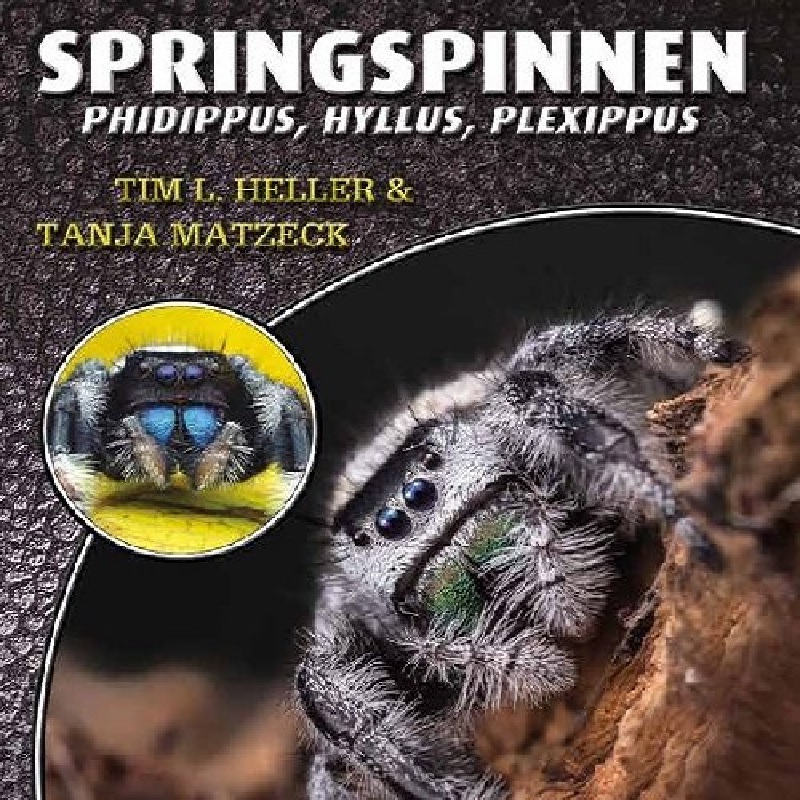
Book Jumping Spiders -
Phidippus, Hyllus & Plexippus
A guide to keeping jumping spiders of the genera Phidippus, Hyllus & Plexippus. Who can resist the charm of jumping spiders? The childlike appearance of their expressive face simply leaves no one cold! In addition, their behavior is extremely exciting to observe, their colors are bright and their requirements for species-appropriate keeping are very easy to meet. No wonder these likeable jumpers are all the rage!
This volume in the "Species by Species" series describes in detail what to look out for when buying and keeping them, introduces the most commonly kept species and color forms and provides plenty of tips on how to keep them successfully - so you can be sure they will breed well!
Species by Species introduces you to the books in this series, which present the most popular terrarium animals. Each volume offers you detailed, practical care instructions and all the information you need to successfully breed your animals.
All important questions from the required tank size to terrarium set-up, technical equipment, species-appropriate nutrition and disease prevention are answered with numerous tricks and tips.
Experienced, long-standing breeders reveal how you can encourage the animals to reproduce and raise healthy young.
All this in full color, generously illustrated and attractively designed - just about your terrarium animal - species by species
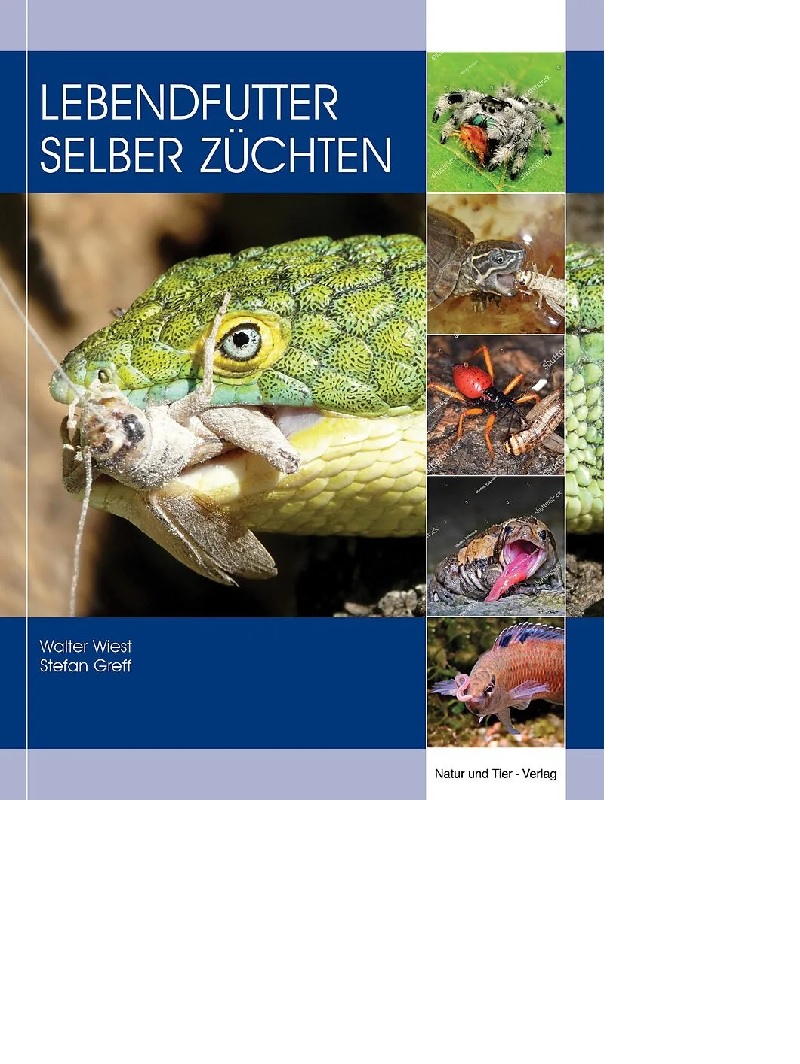
Book "Grow your own live food" - The perfect guide for pet owners
Discover practical and detailed instructions on how you can easily breed food for your reptiles, birds, fish or other animals yourself in the book "Breeding live food yourself". With valuable tips on various food insects, their care and breeding, you can save money and ensure a species-appropriate diet for your pets.
Contents of the book:
Step-by-step instructions for breeding feeder insects
Information on the best types of food for reptiles, birds and fish
Care instructions and breeding conditions for various live food species
Tips for sustainable and cost-effective food production
Why breed your own live food?
Get healthy, fresh food for your animals
Save money and reduce dependence on pet shops
Promote the health and well-being of your animals with species-appropriate food
Whether you are a beginner or an experienced pet owner, this book provides you with everything you need to successfully breed live food yourself.
Marginata 69 - New Guinea tortoises – the genus ElseyaCover storyThe unrecognised beauties: New Guinea tortoises (Andreas S. Hennig)My experiences with Branderhorst's New Guinea tortoise, Elseya (Elseya) branderhorsti (Ouwens, 1914) (Andreas S. Hennig)Keeping and breeding of Rhodin's New Guinea tortoise, Elseya (Hanwarachelys) rhodini Thomson, Amepou, Anamiato & Georges, 2015 (Andreas S. Hennig)PortraitGeoemyda spengleri, Chinese serrated tortoise (Andreas S. Hennig)ReportageMacrochelys temminckii – Experiences and impressions with vulture tortoises part 2 (Reiner Praschag)KeepingAn alternative to year-round keeping of the Egyptian tortoise in the terrarium – my experiences with seasonal outdoor keeping of Testudo kleinmanni (Ricarda Schramm)EtymologySawbacks and living maps part 4: Graptemys gibbonsi, Pascagoula humpback tortoise (Holger Vetter)Classifieds & animal placement
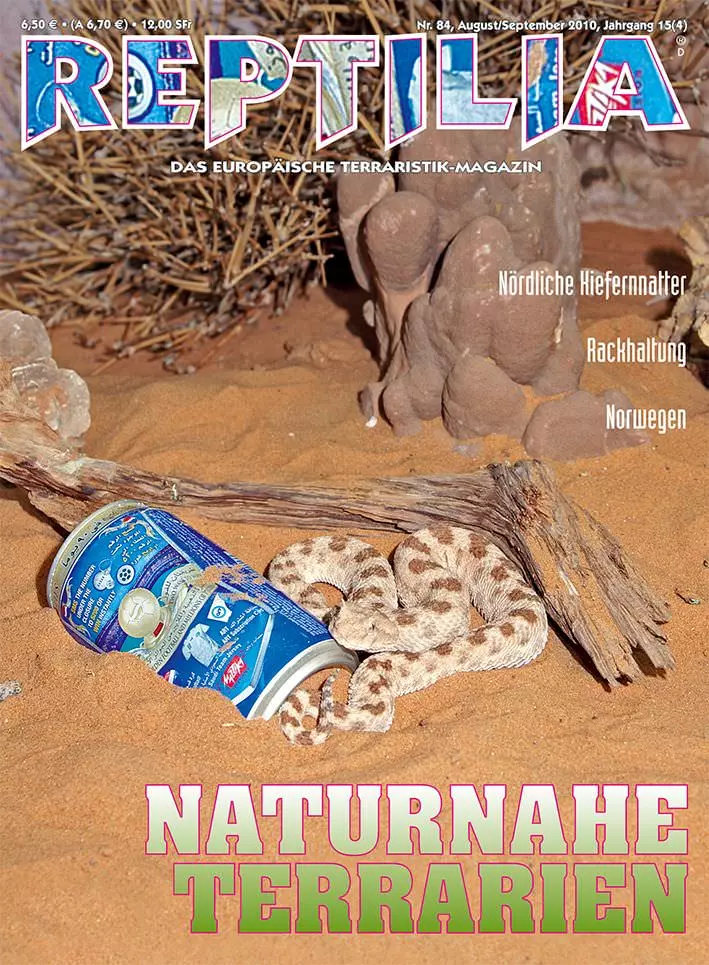
Reptilia 84 - Near-natural Terrariums
Northern pine snakeRack keepingNorway
Contents:
Creating near-natural terrariums – is that even possible? Does it make sense? And what should the so often described “small section of nature” in the literature look like? Or does the future of terraristics lie in rack keeping? In our cover story we discuss controversially and present practical options for designing terrariums.
Editorial
MAGAZINE
REPTILIA in dialogue: John Berry, breeder of "Desighner Morphs"
Dubious caiman, dubious quote – more about the WAZ's working methods
Tobias Fritz
MAGAZINE
World's first captive-bred Batagur tortoise
Axel Kwet
MAGAZINE
Obituary: Prof. Dr Dr h.c. mult. Paul Müller
Chritian Neumann
DATES
PHOTOSTORY
A piece of nature in the living room
Heiko Werning
TERRARIUM PRACTICE
Natural terrarium or pet cage?
Dieter Schmidt
TERRARIUM PRACTICE
Advantages of rack keeping
F. Longhitano
TERRARIUM PRACTICE
Designing hiding places using latex binders
C. Frömberg
TERRARIUM PRACTICE
Construction of a near-natural display terrarium for a Yemen chameleon
S. Braun
TERRARIUM PRACTICE
A greenhouse for green iguanas and panther chameleons
A. Birtel
PORTRAIT
Lychas mucronatus (Fabricius, 1798). Chinese swimming scorpion
Kriton Kunz
TRAVEL
New Jersey – With “Fieldherpers” and “Pineys” in search of the Northern pine snake (Pituophis melanoleucus melanoleucus)
Bernd Skubowius
KEEPING AND REPRODUCTION
Fringed-fingered lizards (Acanthodactylus) in the wild and in the terrarium
Part 5b: The Acanthodactylus-scutellatus group
Uwe Schlüter
HERPETOFAUNA
Reptiles and amphibians at Lake Undeland in southern Norway – ecological and pedagogical aspects
Werner Lantermann & Yvonne Lantermann
TERRARIUM DISPLAYS
100 years aquarium at Leipzig Zoo
Heiko Werning
ANIMALS OF OUR HOME
The smooth snake
Rolf Leptien
WESTERN HERP PERSPECTIVES
Photographing amphibians and reptiles – with style
Bill Love
SUBSCRIPTION & SERVICE
ALSO NEAR YOU
PREVIEW
BRUTKASTEN
Patagonian breakdown. Part 2
Heiko Werning
All about the Mandarin Snake by Andreas Gumprecht
64 pages
Format: 14.8 x 21 cm
numerous colour photos
Author Andreas Gumprecht
Contents:
Despite the high acquisition costs, the fascination that the mandarin snake exerts on a large number of snake lovers remains unbroken.This marvellous Asian climbing snake is universally admired for its extraordinary beauty and aesthetics.In this guide, Andreas Gumprecht, long-time terrarium keeper and snake expert, shares his positive experiences with the care and reproduction of the mandarin snake with the reader.
Systematics and body structure
The fascinating biology: From the life of the mandarin snake
All information on species-appropriate keeping: from suitable terrariums to equipment and technology to feeding
Successful breeding: Mating stimulation, incubation of the eggs and rearing the young
Solutions to problems: How to avoid the most common mistakes in care and how to help sick animals
Brilliant photos
Draco No. 26 Terrarium construction
2 Editorial
4 Terrarium construction – basics and materialsThomas Wilms
30 Experiences with building your own wooden terrarium for reptiles from arid regionsChristian Mütterthies
38 Construction of a large terrarium system for monitor lizards and horned vipersBeat Akeret
48 Planning and building a paludariumChristian Bonora
59 Building a rainforest terrarium for poison dart frogs Thomas Schäffer
64 A rainforest terrarium in the living room – Construction, installation and operation of a system for keeping green water dragons (Physignathus cocincinus)Gitti Engel
70 Basement terrariumsBeat Akeret
79 Construction and operation of a greenhouse for keeping lizardsRolf Kreutz
84 Planning, construction and operation of a polystyrene terrarium with wooden frame constructionTimo Plochowietz
89 An outdoor terrarium for chameleonsPeter Buchert
Marginata 49 - Snake-necked turtles
Broad-shelled tortoiseSpecies protection: Burmese roofed turtleTortoise keepingTable of contents
Editorial Magazine
TOPICMore than "snake-necked turtles" – the family Chelidae Stephan Böhm
TOPICChelodina reimanni, the New Guinea thick-headed tortoise Hans Dieter Lehmann
TOPICKeeping and breeding humpback tortoises – a review after 10 years Stephan Böhm
PORTRAITTestudo marginata Schoepff, 1792 Marginated tortoise Benny Trapp
TRAVELBurmese tortoises come home Steve Platt, Turtle Survival Alliance
HOLDINGThe slightly different way of keeping tortoises Rolf Leptien
Subscription & Service Regional guide
Marginata No. 21 Greek Tortoises
Box turtles Part 2In search of sea turtlesSpanish pond turtle
Contents:
EDITORIALREADER LETTERSMAGAZINEDATES
REPORTAGEThe Greek tortoise (Testudo boettgeri ssp.) – well-known and still fascinatingHans - Dieter Philippen
REPORTAGEThe Greek tortoise (Testudo boettgeri spp.) from the Iron Gate in RomaniaLutz Geissler
BREEDING IN HUMAN CAREBasics of rearing juveniles of the Greek tortoise (Testudo boettgeri ssp.)Thorsten Geier
REPORTAGEAbout Greek tortoises in GreeceMichael Wirth, Peter Fritz & Johann Maier
PORTRAITLarge-headed mud turtle (Claudius angustatus)Hans-Dieter Philippen
REPORTAGENotes on the ecology of Terrapene ornata ornata in the Great Plains region - Part 2Michael Wirth & Hans Peter Mattern
REPORTAGEThreats to, protection and use of sea turtles. Part 1: The relationship of humans to sea turtles through the agesGerald & Christa Benyr
REPORTAGEThe Threat to the Spanish Pond Turtle (Mauremys leprosa)José C. Báez & Davinia Torreblanca
REPORTAGESuccessful year 2008 at the International Centre for Tortoise Conservation (IZS) at Allwetterzoo MünsterElmar Meier, Martina Raffel & Hans-Dieter Philippen
BOOK TIPCLASSIFIED ADSSUBSCRIPTION & SERVICEREGIONAL GUIDE
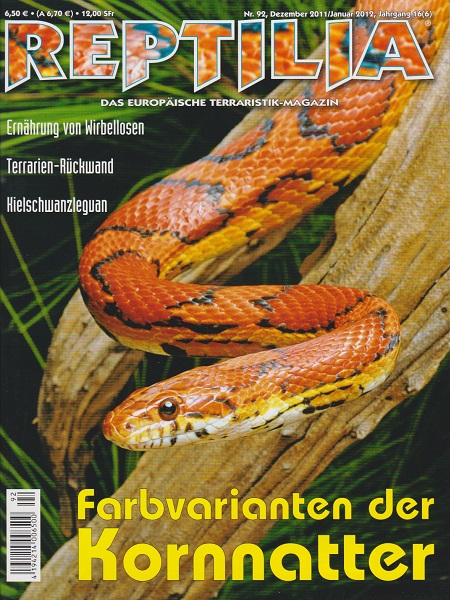
Reptilia 92 - Color variations of the corn snake
Ernährung von WirbellosenTerrarien - RückwandKielschwanzleguan
Inhalt:
InhaltImmer neue, immer spektakulärere Farb- und Zeichnungsformen der Kornnatter drängen ins Hobby. Wie bei kaum einer anderen Art haben die Züchter bei dieser Schlange ihre Kunst auf die Spitze getrieben aus dem Klassiker der Terraristik wurde so auch ein topmodernes Terrarientier. REPTILIA-Kolumnist Bill Love und seine Frau Kathy, selbst langjährig erfahrene Züchter, bieten Ihnen in mehreren prächtig bebilderten Artikeln einen Überblick über die Entwicklung der Farbzuchten und die aktuell erhältlichen Varianten, über das für die gezielte Zucht notwendige Know-how, und last but not least berichten sie aus ihrer persönlichen Erfahrung über eine ganz spezielle Morphe, die sie als Erste überhaupt erzielten.
EDITORIAL
MAGAZIN TERMINEWESTERN HERP PERSPECTIVES Regelungs-Rage Von B. LoveFOTOSTORY Den Guppys auf der Spur 50 Jahre Zucht der Kornnatter, Pantherophis guttatusVon K. & B. Love Haltung und Nachzucht Kornnattern vermehren Ein Rezept für JedermannVon K. & B. Love HALTUNG UND NACHZUCHT Okeetee Rising Mein Vierteljahrhundert in der Welt der KornnatternVon K. LoveReiseÜberleben im Sand Eine Exkursion in die peruanische WüsteVon G. Chavez & A. P. Mendoza PORTRÄT und PosterTriturus carnifexVon B. TrappHerpetofauna Auf dem Weg ins All Die Welt der Buchstaben-Schmuckschildkröte, Trachemys scriptaTeil 2Von A. S. HennigHaltung und VermehrungHaltung und Vermehrung des Halsband-Kielschwanzleguans, Tropidurus torquatusVon J. LuttermannTERRARIENPRAXISSelbstbau der perkeften Terrarienrückwand – ein missglückter VersuchVon L. Pfetzing & J. EgererERNÄHRUNGHochwertige Ernährung wirbelloser Futtertiere und Terrarienbewohner – Teil 2Von R. Lautensack & R. HübersTiere unserer HeimatEin schützenswertes Reptil – die KreuzotterVon R. LeptienBibliothekBRUTKASTENMit den Fleisch der FeindeGastgeschichte von U. Hannemann
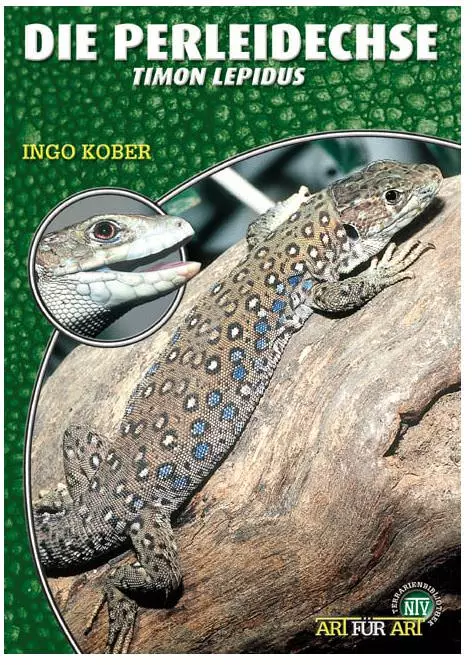
All about the ocellated lizard from Ingo Kober
64 Seiten
14,8 x 21 cm
zahlreiche Farbfotos
Autor Ingo Kober
Verlag NTV
Inhalt:
Nicht nur tropische Gefilde haben wunderschöne Reptilien zu bieten, auch in Europa findet man so manche Kostbarkeit. Eine der schönsten davon ist die attraktiv gefärbte Perleidechse, deren stattliche Größe ihr außerdem einen ganz besonderen Reiz verleiht. Diese aktive und zutrauliche Eidechse eignet sich hervorragend für die Pflege im Terrarium. Ingo Kober, erfahrener Echsenzüchter und langjähriger Terrarianer, zeigt Ihnen in diesem Buch, worauf es bei der Haltung und Pflege der Perleidechse wirklich ankommt. Alle Aspekte werden ausführlich und leicht verständlich dargestellt. Selbstverständlich erfahren Sie hier auch, wie Sie Ihre Eidechsen vermehren, die Eier bebrüten und die adretten Jungen aufziehen können.
Systematik und Körperbau
Die faszinierende Biologie: Aus dem Leben der Perleidechse
Alle Informationen zur artgerechten Haltung: Vom geeigneten Terrarium über Einrichtung und Technik bis hin zur Fütterung
Erfolgreich nachzüchten: Paarungsstimulation, Inkubation der Eier und Aufzucht der Jungtiere
Problemlösungen: Wie man die häufigsten Fehler bei der Pflege vermeidet, und wie man kranken Tieren helfen kann
Brillante Fotos
CHF 21.90
❅
❆
❅
❆
❅
❆
❅
❆
❅
❆
❅
❆
This website uses cookies to ensure the best experience possible. More information...