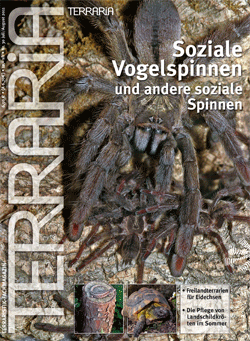
Terraria No. 30 - Social bird spiders and other social spiders

Article no: terraria30

CHF 12.00

Stock: 5

Available, delivery time: 1-3 days

Delivery between Tuesday, 30 June and Wednesday, 1 July
Zahlungsarten
Product information "Terraria No. 30 - Social bird spiders and other social spiders"

Terraria No. 30 - Social bird spiders and other social spiders

Freilandterrarien für Eidechsen
Die Pflege von Landschildkröten im Sommer

Inhalt:

Etliche Vertreter der Vogelspinnen lassen sich im Terrarium in Gruppen halten, beispielsweise Poecilotheria-Arten oder Holothele incei. Die Pflege einer solchen Spinnengemeinschaft zählt zum Faszinierendsten, was man in der Wirbellosenterraristik erleben kann. Boris F. STRIFFLER stellt nicht nur sämtliche Vogelspinnen vor, die für eine solche Haltung infrage kommen, sondern geht außerdem auch auf weitere soziale Spinnen ein – selbst auf solche, die direkt vor unserer Haustür leben!

Editorial
Kriton Kunz

Magazin
Gondwanaland – ein zukunftsweisendes Projekt im Zoo Leipzig. Teil 4: Die Eröffnung der Tropenerlebniswelt / Revision der Familie Cordylidae / Marktplatz / Rechtliches / Wie kommt das Gift in die Beute?

TERRAglobal
In der Bergwelt der Inka
Maik Dobiey

Titelthema
Soziale Vogelspinnen und andere soziale Spinnen
Boris F. Striffler

Soziale Spinnen – ein Widerspruch in sich?
Boris F. Striffler

Soziale Vogelspinnen? Beispiele aus Amerika
Boris F. Striffler, Frank Schneider und Ingo Wendt

Das Schildkrötenjahr. Freilandbiologie und Haltung europäischer Landschildkröten über den Jahreslauf Teil 3: Juli bis August – Sommerhitze

Michael Wirth

Die Gattung Nerodia. Wassernattern aus Nordamerika: Lebensweise sowie Haltung und Vermehrung im Terrarium Teil 1

Dieter Schmidt

Eidechsen im Freilandterrarium
Martin Dieckmann

Reise
Auf Amphibien- und Reptiliensuche in der Umgebung von Iquitos: Ranitomeya reticulata im Wald von Llanchama
Mario Kassat

Neue Arten
Ein psychedelischer Gecko
Axel Kwet

Neuer Pfeilgiftfrosch aus Brasilien
Axel Kwet

Abo & Service
Unter Forschern
Der Weg ist das Ziel – oder: Wie man sich eine Diplomarbeit selbst organisiert
Stephan Böhm

Blickfang
Terrarianernostalgie und tropischer Regenwald in Reutlingen – ein Besuch bei Florian Riedel
Michael Wirth

In Ihrer Nähe
Vorschau

Brutkasten
Schlimme Nächte: Guayaquil Teil 2: Wir Kleinlaut-Touristen
Heiko Werning


Composition
Feeding recommendation
Technical details
Size information

0 of 0 reviews

Give us a rating!

Share your experience with the product with other customers.


Suggested products

Handbook of food plants for tortoises and other reptiles
Handbook of forage plants 2nd revised editionMarion Minch is not only a successful breeder of diverse tortoises for many years, but also an excellent connoisseur of native wild herbs. She founded and runs samenkiste.de, which is well known to many tortoise keepers and nature lovers. Her name is inextricably linked with reptile care and species-appropriate nutrition for tortoises. Her handbook of food plants summarises the most important native food plants for herbivorous and omnivorous reptiles. She not only considers tortoises, but also iguanas, spiny-tailed dragons and even chameleons. From the basics of plant biology to native wild herbs to suitable food plants for hardy tropical reptile species, this comprehensive work provides the basis for species-appropriate keeping. In the expanded and supplemented 2nd edition, the plant section is divided according to flower colour. This makes it even easier to identify wild herbs. The work has also been supplemented with a wealth of additional information and many pictures.

CHF 46.50

Geckos
Geckos in the terrarium by Astrid FalkThe book offers a comprehensive introduction to geckos and their species-appropriate keeping in terrariums. It explains what you need to think about before buying a gecko and what preparations should be made. The book describes in detail how the terrarium is technically equipped and set up. The care of the animals, their special features and behaviour, their diet, reproduction and rearing of young animals are described, as well as diseases and husbandry problems with tried and tested suggestions for prevention and treatment. Individual gecko species that are particularly suitable for keeping and breeding in terrariums are portrayed in detail in the second part of the book.

CHF 28.50

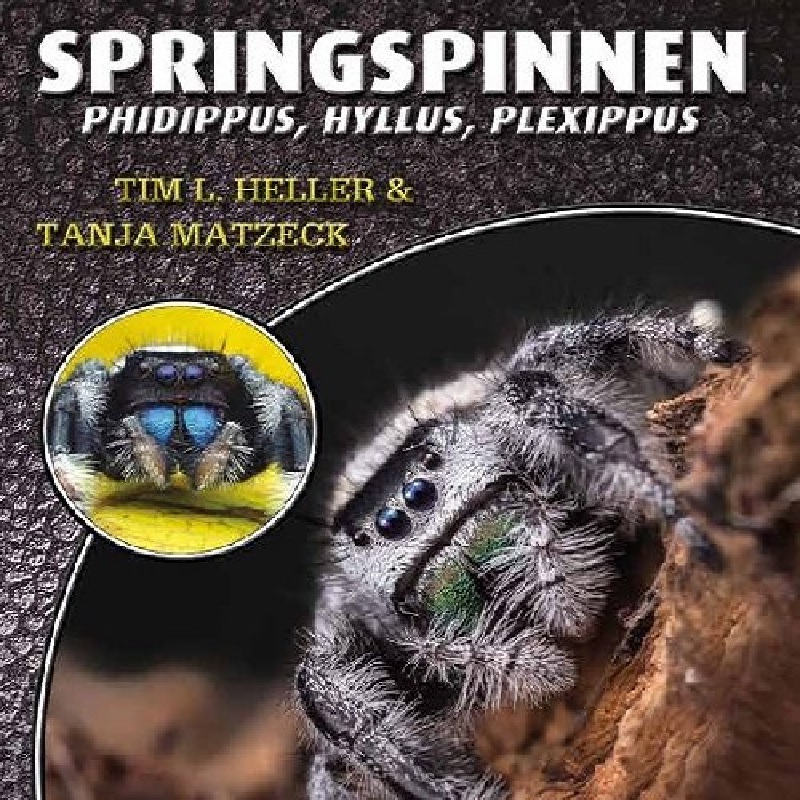
Jumping spiders Phidippus, Hyllus, Plexippus
Book Jumping Spiders - Phidippus, Hyllus & Plexippus A guide to keeping jumping spiders of the genera Phidippus, Hyllus & Plexippus. Who can resist the charm of jumping spiders? The childlike appearance of their expressive face simply leaves no one cold! In addition, their behavior is extremely exciting to observe, their colors are bright and their requirements for species-appropriate keeping are very easy to meet. No wonder these likeable jumpers are all the rage! This volume in the "Species by Species" series describes in detail what to look out for when buying and keeping them, introduces the most commonly kept species and color forms and provides plenty of tips on how to keep them successfully - so you can be sure they will breed well! Species by Species introduces you to the books in this series, which present the most popular terrarium animals. Each volume offers you detailed, practical care instructions and all the information you need to successfully breed your animals. All important questions from the required tank size to terrarium set-up, technical equipment, species-appropriate nutrition and disease prevention are answered with numerous tricks and tips. Experienced, long-standing breeders reveal how you can encourage the animals to reproduce and raise healthy young. All this in full color, generously illustrated and attractively designed - just about your terrarium animal - species by species

CHF 23.90

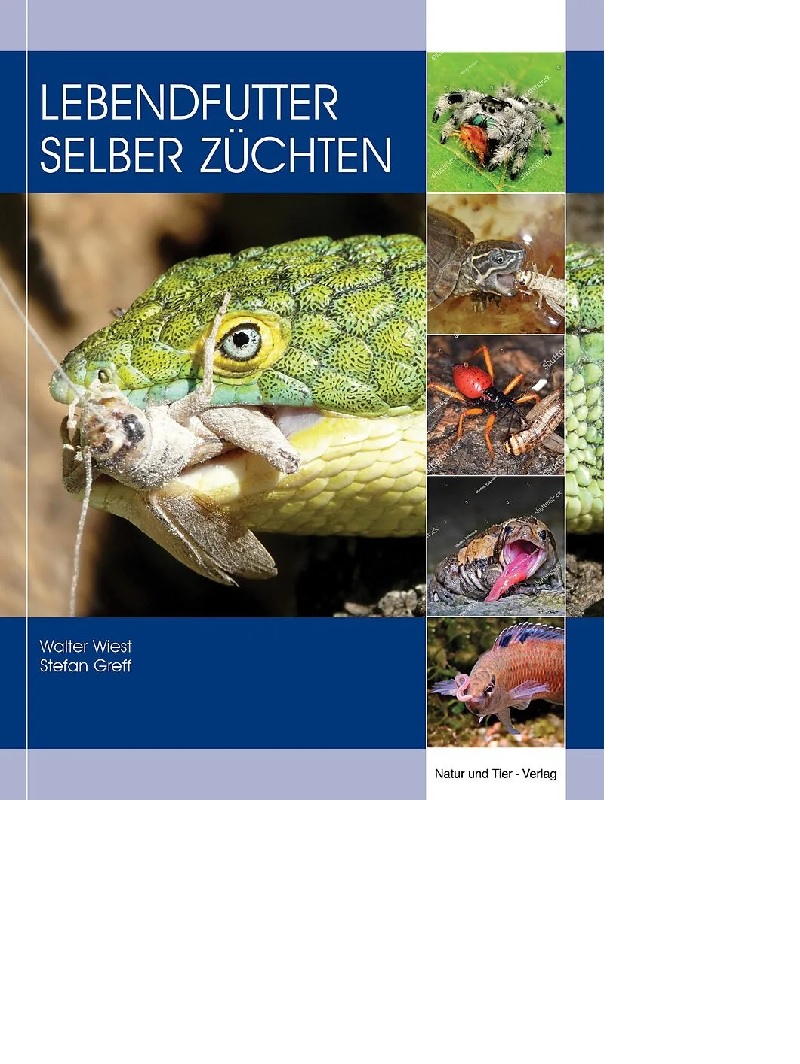
Book Breeding live food yourself
Book "Grow your own live food" - The perfect guide for pet owners Discover practical and detailed instructions on how you can easily breed food for your reptiles, birds, fish or other animals yourself in the book "Breeding live food yourself". With valuable tips on various food insects, their care and breeding, you can save money and ensure a species-appropriate diet for your pets. Contents of the book: Step-by-step instructions for breeding feeder insects Information on the best types of food for reptiles, birds and fish Care instructions and breeding conditions for various live food species Tips for sustainable and cost-effective food production Why breed your own live food? Get healthy, fresh food for your animals Save money and reduce dependence on pet shops Promote the health and well-being of your animals with species-appropriate food Whether you are a beginner or an experienced pet owner, this book provides you with everything you need to successfully breed live food yourself.

CHF 46.50

Marginata 69 - New Guinea tortoises
Marginata 69 - New Guinea tortoises – the genus ElseyaCover storyThe unrecognised beauties: New Guinea tortoises (Andreas S. Hennig)My experiences with Branderhorst's New Guinea tortoise, Elseya (Elseya) branderhorsti (Ouwens, 1914) (Andreas S. Hennig)Keeping and breeding of Rhodin's New Guinea tortoise, Elseya (Hanwarachelys) rhodini Thomson, Amepou, Anamiato & Georges, 2015 (Andreas S. Hennig)PortraitGeoemyda spengleri, Chinese serrated tortoise (Andreas S. Hennig)ReportageMacrochelys temminckii – Experiences and impressions with vulture tortoises part 2 (Reiner Praschag)KeepingAn alternative to year-round keeping of the Egyptian tortoise in the terrarium – my experiences with seasonal outdoor keeping of Testudo kleinmanni (Ricarda Schramm)EtymologySawbacks and living maps part 4: Graptemys gibbonsi, Pascagoula humpback tortoise (Holger Vetter)Classifieds & animal placement

CHF 16.50

Reptilia 67 - Tiger Salamander, Axolotl & Co.
Reptilia 67 - Tiger Salamander, Axolotl & Co.Steve Irwin's legacyHusbandry problems with the green tree pythonBroad-shelled turtles in SardiniaContents: 2EDITORIAL 3MAGAZINE 11TERMINE 14WESTERN HERP PERSPECTIVESRevive the old passionFrom B. Love 6 PHOTO REPORTAGEAmbystomatidae Gray, 1850 ?transverse-toothed newtsBy T. Blanck 22HERPETOFAUNAThe cross-toothed newts, family Ambystomatidae Gray, 1850An overview of the speciesBy T. Blanck 36 KEEPING AND REPRODUCTIONKeeping and breeding the banded tiger salamander Ambystoma mavortiumBy T. Blanck & M. Braun 41HERPETOCULTUREThe axolotl in religion, magic and mythBy F. Cupul 45LETTERS11 years ReptiliaVisiting Bill LoveBy H. Werning 51PORTRAIT AND POSTERZamenis longissimusFrom A. Kwet 56 KEEPING AND REPRODUCTIONFringed-fingered lizards (Acanthodactylus) in the wild and in the terrariumPart 2: Basics of terrarium keeping and reproductive biologyBy U. Schlüter 67HERPETOFAUNATestudo marginata - A view of SardiniaBy E. Cimatti 77KEEPING AND REPRODUCTIONThe most common husbandry problems with the green tree python (Morelia viridis)By G. Maxwell 82TERRARIUM SHOW PLANTSCrickey! - A visit to Australia ZooBy K. Grießhammer 90FAQ - FREQUENTLY ASKED QUESTIONSGarter snakesBy M. Hallmen 94LIBRARY 104BROOD BOX The Silence of the Nose Frogs, Part 2 By H. Werning

CHF 11.20

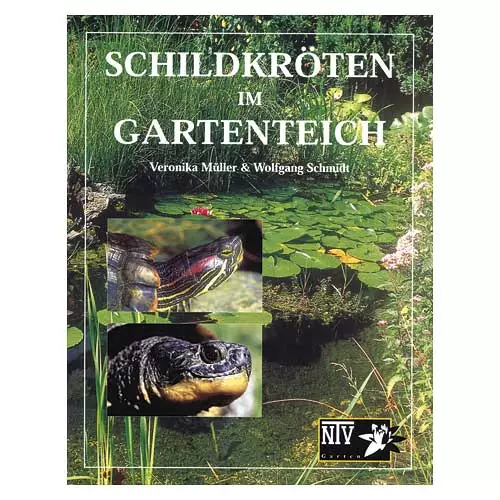
NTV, turtles in the garden pond
NTV, Schildkröten im Gartenteich - Hier werden Wasserschildkröten vorgestellt welche im Gartenteich gehalten werden können. 112 Seiten 88 Abbildungen Format: 16,8 x 21,8 cm Autor Veronika Müller und Wolfgang Schmidt Verlag NTV Inhalt: Schildkröten im Gartenteich? Sicher haben auch Sie sich schon gefragt, ob es nicht möglich ist, eine Schildkröte im Gartenteich zu pflegen. Es ist möglich!In diesem Buch werden u. a. alle Wasserschildkrötenarten vorgestellt, die auch ganzjährig im Garten leben können. Sie finden wertvolle Tips zur Gestaltung des Schildkröten-Biotops, zur Fütterung, zur Vergesellschaftung der Tiere sowie zum Thema Überwinterung. Was tun, wenn Ihre Schildkröte Eier legt? Was geschieht, wenn einmal ein Tier krank wird? Auch auf diese Fragen gehen die Autoren in eigenen Kapiteln ausführlich ein.Es gibt viele Bücher über Schildkröten. Das Buch 'Schildkröten im Gartenteich' befasst sich erstmals ausschliesslich mit den Arten, die auch im Freien gepflegt werden können. Geschrieben für den Natur- und Tierfreund, ist es ein wertvoller Leitfaden für die richtige Pflege von Wasserschildkröten.  

CHF 28.90

Reptilia 72 - Grasshoppers, crickets, house crickets
Reptilia 72 - Grasshoppers, Crickets, House Crickets Jamaican AnoleIndochinese Hinged TurtleSunglow Boas Contents: 2    EDITORIAL 4    REPORTAGE      Potential Dangers of Giant Snakes      by B. Akeret 13  MAGAZINE 21  DATES 24  PHOTOSTORY      Crickets and Grasshoppers      by F. Tomasinelli 32  REPORTAGE      Grasshoppers:      Defence and Survival      by F. Tomasinelli 36  KEEPING AND BREEDING      The Egyptian Migratory Locust     Anacridium aegyptium     by A. Mangoni 40  REPORTAGE      Lord of the Bugs      Visiting Europe’s Largest       Breeding Facility for Feeder Insects      by H. Werning 54  HERPETOFAUNA      The European Tree Frog (Hyla arborea)      “Frog of the Year” in the “Year of the       Frog 2008”      by A. Kwet, A. Nöllert & A. Geiger 64  KEEPING AND BREEDING      Successful Keeping and Offspring of      Cistoclemmys (galbinifrons) bouretti,      the Indochinese Hinged Turtle      by W. & K. Heuberger 73  TRAVEL/KEEPING AND BREEDING      Jamaica, its Iguanas and the      Giant Anole Anolis garmani      by T. Baum 81  KEEPING AND BREEDING      And the Sun Rises … the Sunglow Boa      by R. Ihle & J. Bergman 86  WESTERN HERP PERSPECTIVES      A Turtle Story      by B. Love 91  LIBRARY 104 BRUTKASTEN      Thoughts on the Day of Milk Suffering      by H. Werning

CHF 12.00

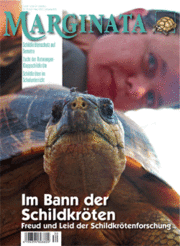
Marginata No. 30 - Under the spell of the turtle - joy and suffering of turtle research
  Schildkrötenschutz auf SumatraZucht der Rotwangen-KlappschildkröteSchildkröten im Schulunterricht Inhalt: EditorialLESERBRIEFEMagazinTermineREPORTAGEJenseits von Afrika – ein Forschungsaufenthalt in MadagaskarJutta HammerREPORTAGESchildkrötenforschung in Vietnam Inga Fischer, Sarah Wahl und Sandra WeimerHALTUNG UND ZUCHT„Kambodscha – ein Königreich der Wunder“. Feldherpetologische Arbeit an Indotestudo elongataFlora IhlowPOSTERDie Turkana-See-Klappbrustschildkröte (Pelusios broadleyi)Hans - Dieter PhilippenZUCHTHaltung und Nachzucht der Madagassischen Strahlenschildkröte Teil 2Michael Wirth und Peter FritzReportageDie Ernährung europäischer Landschildkröten in der freien Wildbahn Wolfgang WegehauptBuchtippKleinanzeigenAbo & ServiceRegionalführer  

CHF 16.50

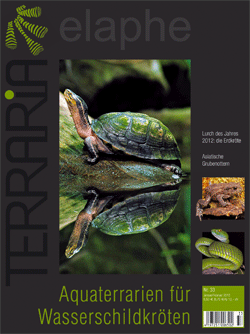
Terraria No. 33 - Aqua terrariums for turtles
Terraria No. 33 - Aqua terrariums for turtles Lurch des Jahres 2012: die ErdkröteAsiatische Grubenottern Inhalt: Wasserschildkröten gehören zu den beliebtesten Reptilien, die häufig auch von Tierhaltern gepflegt werden, die mit Terraristik nichts weiter zu tun haben. Doch aus den häufig in Zoogeschäften und Baumärkten angebotenen eurostückgroßen Babys wachsen schnell kräftige Schildkröten heran, die nach einer angemessenen Unterbringung verlangen. In unserem Titelthema stellen wir die grundlegenden Anforderungen an Aquaterrarien für Wasserschildkröten und ihre Einrichtung vor und zeigen, wie Sie sicher und sinnvoll ganze Anlagen für diese sympathischen Panzerträger errichten.TerritorialHerpetoramaTitelthemaAquaterrarien für WasserschildkrötenAndreas S. HennigSchildkröten im Regal. Vom Bau einer Kompaktanlage zur Haltung von WasserschildkrötenAndreas S. HennigEinrichtungsvorschläge für WasserschildkrötenbeckenSebastian NicklAquaterrarien – Beispiele aus der PraxisAndreas S. HennigTerraglobalSeltenen Schildkröten Namibias auf der SpurAlfred SchleicherWeil ich meinen Eltern nicht gehorcht habeFabio CupulÜberraschendes Arabien 2.0Wolfgang Grossmann, Thomas Kowalski & Hans-Jürgen ZilgerUnter ForschernZerstören für den Aufschwung: Ist es das wirklich wert? Fallstudie aus BrasilienBreno HamdanNeue ArtenDoppelt publiziert hält besser: ein „neues Nilkrokodil“Axel KwetAktuelles zur Taxonomie und Systematik asiatischer GrubenotternAndreas GumprechtStadtkröten vs. LandkrötenSabrina KarlSalamandraTerraristikKlassiker. Der AxolotlAlexander GutscheDie „unscheinbaren Taggeckos“ Oder doch Juwelen aus dem Süden Madagaskars? Phelsuma modesta in Biotop und TerrariumThomas HofmannEuropäische Landschildkröten im WinterMichael WirthHomerange. Vom Vereinsabend zur Reptilienwohnung. Zu Besuch bei Sandra Baus und Steven Arth im SaarlandHeiko WerningNatur- und ArtenschutzFeldnotizen. Fünfbeiniger AlpensalamanderAxel KwetRingelnatter frisst WasserschneckeUrs und Heidi HostDie Erdkröte (Bufo bufo) – Der Lurch des Jahres 2012Axel Kwet & Arno GeigerVermisst. Südliche Florida-Regenbogennatter (Farancia erytrogramma seminola)Alexander GutscheAbo & ServiceAuch in Ihrer NäheGalerie 2012 – Das Jahr des DrachenKriton KunzVorschauBrutkastenBetriebsprüfungHeiko Werning  

CHF 12.00

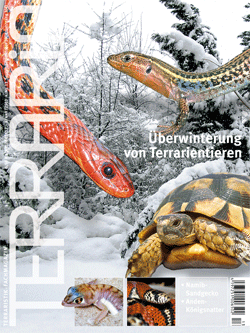
Terraria 13 - Overwintering of terrarium animals
Terraria 13 - Hibernation of terrarium animals Breeding the palmatogecko from the NamibKeeping and reproducing the Andean kingsnake Contents: 2 Editorial by Heiko Werning4 Magazine Dangerous animals in Saarland / Zoo Days in Frankfurt / Liability for escaped pets / Climbing ability of snakes at different temperatures / First imports of vipers12 TERRAglobal The finest hour of Bolivian television: Herpetologist on Canal 21 by Martin Jansen The discovery of a new species by Karl-Heinz Switak 16 Cover story: Hibernation of terrarium animals Hibernation – Adaptations to cold climatic conditions by Beat Akeret23 Hibernation of reptiles and amphibians in the outdoor terrarium by Martin Hallmen32 The refrigerator method by Hans-Dieter Philippen37 Hibernation of turtles in the cellar light well by Xaver Wapelhorst 40 Hibernation in tarantulas Hans-Werner Auer44 Grey giants among themselves – of leopard tortoises and elephants in the Addo Elephant National Park, South Africa Part 2: Size and population ecology by Michael Wirth54 Lampropeltis triangulum andesianus – rare terrarium jewel with a dubious reputation Part 1: Biology and keeping by Thorsten Schmidt60 On keeping and breeding the palmatogecko Pachydactylus rangei Andersson, 1908 by Sebastian Schenk & Sebastian Wolf66 Frog die-off in the hotspot – a case study in eastern Brazil by Dennis Rödder70 Travel Costa Rica’s Hitoy Cerere, the gateway to the land of Sibú by Ivonne Meuche82 New species Leaf-fingered geckos of the genus Phyllodactylus/ Three tree frogs from southern Brazil84 Among researchers Bolivia: still a “terra incognita” of herpetology by Martin Jansen88 Test run Irrigation systems by Kriton Kunz94 Eye-catcher A turtle paradise – from the garden to the bathroom by Kriton Kunz99 Near you103 Preview104 Incubator The child does not speak by Heiko Werning

CHF 12.00

Marginata 37 - Pancake tortoise
Marginata 37 - Slaty turtles Common musk turtleTwo-headed turtles Contents: EditorialMagazineDates Cover storyAn extraordinary species: the split-shell tortoise (Malacochersus tornieri)Hans-Dieter Philippen FIELD RESEARCHA collection stop for split-shelled turtles – what does it do?Reginald Theodor Mwaya PortraitDumeril’s box turtle, Peltocephalus dumerilianus (Schweigger, 1812)Hans-Dieter Philippen ReportageSearch dogs for turtle researchSarah Wahl & Tim McCormack REPRODUCTIONExperiences with the care and breeding of the Common Musk Turtle (Sternotherus odoratus)Thomas Hofmann ReportageTwo-headed turtles – a not so rare phenomenon?Hans–Dieter Philippen ReportageTurtle Watch on Watamu beach. Volunteer work on the east coast of KenyaNadja Schaubhut Book tipClassifiedsSubscription & ServiceRegional guide

CHF 16.50

Customers also saw

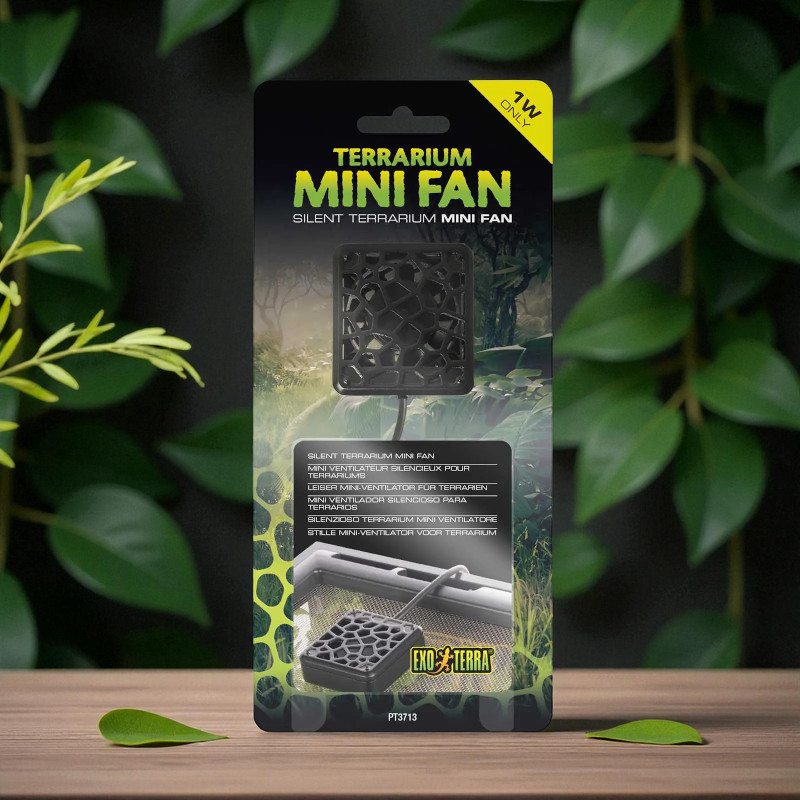
Exo Terra Terrarium Mini Fan
Exo Terra Terrarium Mini Fan Quiet, efficient fan for optimal air circulation in the terrarium The Exo Terra Terr arium Mini Fan is a compact, energy-efficient, low-voltage fan specially designed for terrariums. With its virtually silent operation, it ensures optimal ventilation and fresh air circulation, reduces stagnant air and creates a healthy climate for animals and plants. Good air circulation is crucial for the well-being of reptiles, amphibians and tropical plants. The mini fan improves air exchange, prevents condensation and reliably prevents mold and fungal growth.Product features Improved air circulation: Increases the air exchange and ensures continuously fresh, oxygen-rich air in the terrarium. Virtually silent operation: The high-quality 9-blade fan with ball bearing system runs quietly and reliably - ideal for living spaces. Effective humidity regulation: Prevents condensation, reduces stagnant mist and supports a stable humidity level. Natural climate simulation: Can be combined with a timer to realistically simulate day/night cycles and natural humidity fluctuations. Healthy environment: Prevents respiratory infections in animals, prevents anaerobic bacteria from thriving and eliminates unpleasant odors. Plant-friendly: Reduces heat stress, improves nutrient uptake and promotes vigorous plant growth in tropical terrariums. Energy efficient and safe: Only 1 watt power consumption with safe low-voltage operation. Easy to install: Easy to attach to the mesh grille cover with four fixing pins - no tools required. Flexible orientation: Can both direct air into the terrarium and draw it out - depending on the desired climate effect. Durable and versatile: Robust construction and soft silicone cable for flexible positioning. Advantages of the Exo Terra Terrarium Mini FanThe Exo Terra Mini Fan offers numerous advantages for pet owners and plant lovers. It significantly improves the air quality in the terrarium by removing stagnant air and supplying fresh air. The gentle air flow prevents excessive humidity, reduces the risk of mold and ensures a clear view of the terrarium inhabitants. At the same time, it protects animals from respiratory diseases and supports natural behavior through realistic humidity and temperature cycles. Plants also benefit: The even air flow reduces heat stress, promotes growth and boosts vitality. Thanks to its quiet, energy-efficient operation and simple installation, the mini fan is ideal for everyday use - reliable, safe and low-maintenance.Technical data Power: 1 watt Voltage: Low voltage (safe operation) Fan: 9-blade system with ball bearings Noise level: Very quiet Installation: Plug & play with 4 retaining pins Material: High-quality, durable components Connection: Flexible silicone cable, compatible with standard mains adapters

CHF 24.90