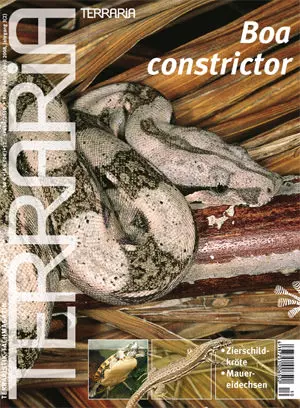
Terraria 10 - Boa Constrictor

Article no: terraria10

CHF 12.00

Stock: 0

Ready for dispatch in 1-3 days, delivery time 7 working days

Delivery between Tuesday, 17 November and Wednesday, 18 November
Zahlungsarten
Product information "Terraria 10 - Boa Constrictor"

Terraria 10 - Boa Constrictor

Ornamental turtle
Wall Lizard

Contents:

2 Editorial
Kriton Kunz

TOPIC
4 Boa babies - Tips and tricks
Erika & Hermann Stöckl
14 "imperator" versus "constrictor" - On the ecology and distribution of selected local forms of Boa constrictor in Venezuela
Christian Neumann
20 Inclusion Body Disease,
IBD, "Boa-Aids") of the giant snakes
Udo Hetzel
24 Leopard Boa, Stars & Stripes and Co - The colour and pattern variations of the dark Mexican boa Boa constrictor imperator
Hans-Jörg Winner

SCIENCE
29 new species
Axel Kwet
40 The fern stick insect Oreophoetes peruana (Saussure, 1868)?
and their diet in the terrarium, special terrariums and planting
Timm Adam
54 The princess among the turtles is asking for it:
Keeping and breeding the southern ornamental turtle Chrysemys picta dorsalis
Andreas S. Hennig
63 Wall lizards in the Ruhr area
Uwe Schlüter

TRAVEL
69 On the road in the south of the Philippines
Maren Gaulke

TERRARIUM PRACTICE
83 Test run
Bug Stop/Kricket Keeper
Kriton Kunz
85 Prelude
Care and breeding of Asian house geckos
Matthias Jurczyk
89 Eye-catcher
An ark for native amphibians and reptiles
Axel Kwet
93 Also near you
96 TERRAnet
Terrarium construction
Kriton Kunz
98 TERRAglobal
Life underground ... until the rain comes
Mirco Solé
Lima - or: All beginnings are difficult
Maik Dobiey
104 TERRAwinn

Composition
Feeding recommendation
Technical details
Size information

0 of 0 reviews

Give us a rating!

Share your experience with the product with other customers.


Suggested products

Handbook of food plants for tortoises and other reptiles
Handbook of forage plants 2nd revised editionMarion Minch is not only a successful breeder of diverse tortoises for many years, but also an excellent connoisseur of native wild herbs. She founded and runs samenkiste.de, which is well known to many tortoise keepers and nature lovers. Her name is inextricably linked with reptile care and species-appropriate nutrition for tortoises. Her handbook of food plants summarises the most important native food plants for herbivorous and omnivorous reptiles. She not only considers tortoises, but also iguanas, spiny-tailed dragons and even chameleons. From the basics of plant biology to native wild herbs to suitable food plants for hardy tropical reptile species, this comprehensive work provides the basis for species-appropriate keeping. In the expanded and supplemented 2nd edition, the plant section is divided according to flower colour. This makes it even easier to identify wild herbs. The work has also been supplemented with a wealth of additional information and many pictures.

CHF 46.50

Geckos
Geckos in the terrarium by Astrid FalkThe book offers a comprehensive introduction to geckos and their species-appropriate keeping in terrariums. It explains what you need to think about before buying a gecko and what preparations should be made. The book describes in detail how the terrarium is technically equipped and set up. The care of the animals, their special features and behaviour, their diet, reproduction and rearing of young animals are described, as well as diseases and husbandry problems with tried and tested suggestions for prevention and treatment. Individual gecko species that are particularly suitable for keeping and breeding in terrariums are portrayed in detail in the second part of the book.

CHF 28.50

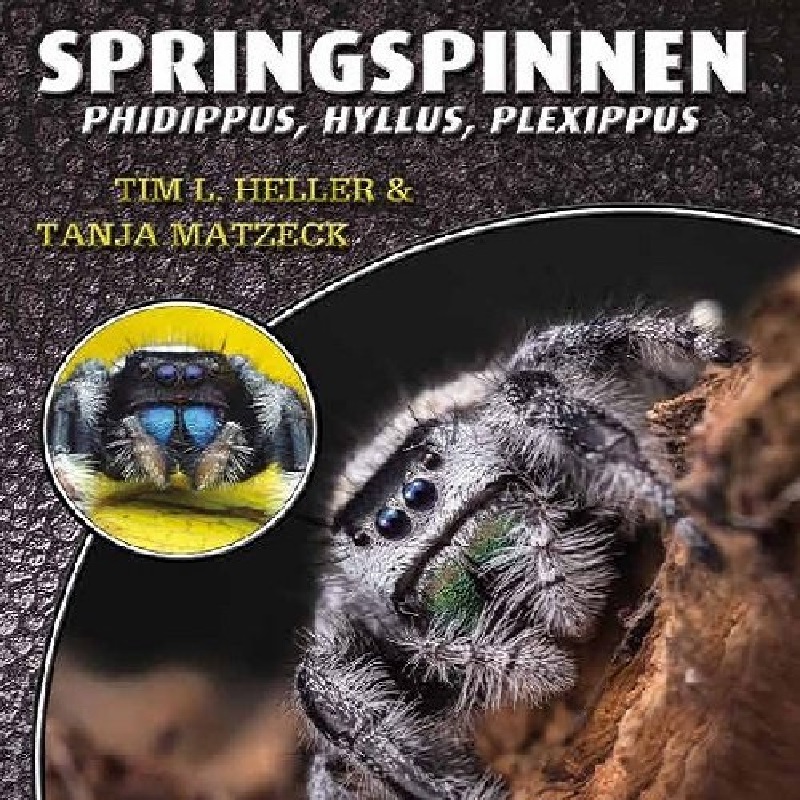
Jumping spiders Phidippus, Hyllus, Plexippus
Book Jumping Spiders - Phidippus, Hyllus & Plexippus A guide to keeping jumping spiders of the genera Phidippus, Hyllus & Plexippus. Who can resist the charm of jumping spiders? The childlike appearance of their expressive face simply leaves no one cold! In addition, their behavior is extremely exciting to observe, their colors are bright and their requirements for species-appropriate keeping are very easy to meet. No wonder these likeable jumpers are all the rage! This volume in the "Species by Species" series describes in detail what to look out for when buying and keeping them, introduces the most commonly kept species and color forms and provides plenty of tips on how to keep them successfully - so you can be sure they will breed well! Species by Species introduces you to the books in this series, which present the most popular terrarium animals. Each volume offers you detailed, practical care instructions and all the information you need to successfully breed your animals. All important questions from the required tank size to terrarium set-up, technical equipment, species-appropriate nutrition and disease prevention are answered with numerous tricks and tips. Experienced, long-standing breeders reveal how you can encourage the animals to reproduce and raise healthy young. All this in full color, generously illustrated and attractively designed - just about your terrarium animal - species by species

CHF 23.90

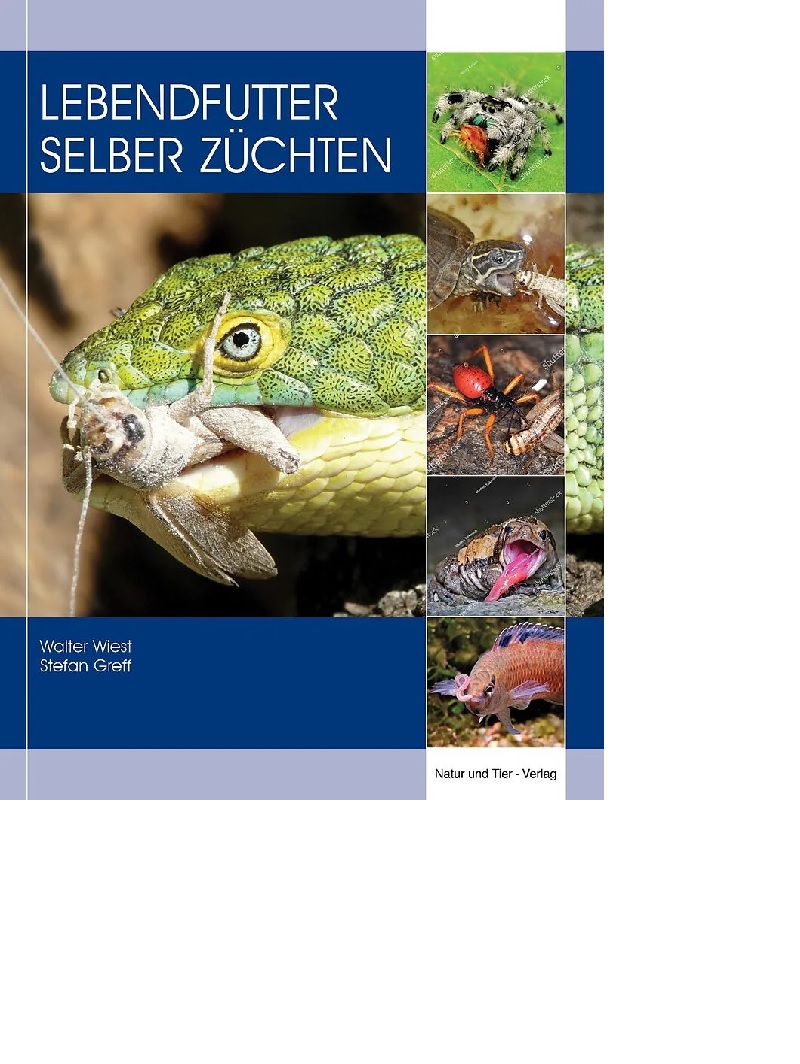
Book Breeding live food yourself
Book "Grow your own live food" - The perfect guide for pet owners Discover practical and detailed instructions on how you can easily breed food for your reptiles, birds, fish or other animals yourself in the book "Breeding live food yourself". With valuable tips on various food insects, their care and breeding, you can save money and ensure a species-appropriate diet for your pets. Contents of the book: Step-by-step instructions for breeding feeder insects Information on the best types of food for reptiles, birds and fish Care instructions and breeding conditions for various live food species Tips for sustainable and cost-effective food production Why breed your own live food? Get healthy, fresh food for your animals Save money and reduce dependence on pet shops Promote the health and well-being of your animals with species-appropriate food Whether you are a beginner or an experienced pet owner, this book provides you with everything you need to successfully breed live food yourself.

CHF 46.50

Marginata 69 - New Guinea tortoises
Marginata 69 - New Guinea tortoises – the genus ElseyaCover storyThe unrecognised beauties: New Guinea tortoises (Andreas S. Hennig)My experiences with Branderhorst's New Guinea tortoise, Elseya (Elseya) branderhorsti (Ouwens, 1914) (Andreas S. Hennig)Keeping and breeding of Rhodin's New Guinea tortoise, Elseya (Hanwarachelys) rhodini Thomson, Amepou, Anamiato & Georges, 2015 (Andreas S. Hennig)PortraitGeoemyda spengleri, Chinese serrated tortoise (Andreas S. Hennig)ReportageMacrochelys temminckii – Experiences and impressions with vulture tortoises part 2 (Reiner Praschag)KeepingAn alternative to year-round keeping of the Egyptian tortoise in the terrarium – my experiences with seasonal outdoor keeping of Testudo kleinmanni (Ricarda Schramm)EtymologySawbacks and living maps part 4: Graptemys gibbonsi, Pascagoula humpback tortoise (Holger Vetter)Classifieds & animal placement

CHF 16.50

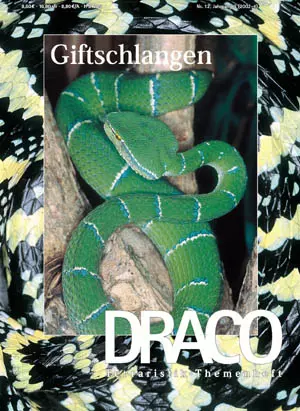
Draco 12 - Poisonous Snakes
Draco 12 - Venomous snakes EDITORIAL The fascination of venomous snakes Pros and cons of keeping terrariumsDieter Schmidt Venomous snakes - Systematic observations on a difficult word Ulrich Kuch The genus Trimeresurus LACÉPÈDE, 1804On the state of knowledge of researchAndreas Gumprecht & Sergei Ryabov Observations of the monocle cobra (Naja kouthia LESSON, 1831) in the wild and in the terrariumLudwig Trutnau Crotalus willardi MEEK, 1905 - a small mountain rattlesnakeLudwig Trutnau The venomous snakes of Costa RicaAndreas Hohmeister Care and breeding of the Central American lancehead Atropoides nummifer (RÜPPELL, 1845)Andreas Hohmeister A visit to the Queen Saovabha Memorial Institute in ThailandJoachim Bulian & Lawan Chanhome The bird that knows the snakesDieter Mahsberg & K. Eduard Linsenmair Venomous snakes in southern Brazil - zoogeography, ecology and "ofidismo"Markus Monzel BOOKBOX MAGAZINE

CHF 16.80

Draco 49 - Outdoor facilities for turtles
Draco 49 - outdoor enclosures for tortoises Contents: Editorial A new home for tortoisesPeter Buchert Cold frame or greenhouse – the perfect shelter in a tortoise enclosureMichael Wirth Preparing to lay eggs: It's the mound that counts!Michael Wirth Always appropriate to size – the successful keeping and rearing of hatchlings and young animals in an outdoor terrariumMichael Wirth All for the sake of warmth – optimising tortoise enclosuresMichael Wirth The zoo moat – the invisible enclosure fencingMichael Wirth

CHF 18.40

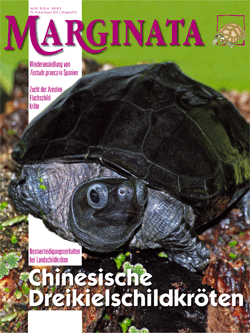
Marginata 35 - Chinese three-legged turtle
Marginata 35 - Chinese three-legged turtleReintroduction of Testudo graeca in SpainBreeding the areolate flat tortoiseTurtle breeding at the Tennessee AquariumContents:EDITORIALMAGAZINEDATESPHOTOSTORYChinese three-keeled turtles (Mauremys [Chinemys] reevesii Gray, 1835)Hans - Dieter PhilippenREPORTAGEGlobal distribution of the Chinese three-keeled turtle (Mauremys [Chinemys] reevesii)Hans - Dieter PhilippenBREEDINGKeeping and breeding Chinese three-keeled turtles (Mauremys [Chinemys] reevesii Gray, 1831) on a slightly different scale – China’s turtle farmsTorsten Blanck, Ting Zhou, & Pi-Peng LiPORTRAITPinta Galápagos tortoise (Chelonoidis nigra abingdoni) – “Lonesome George”Hans - Dieter PhilippenBREEDINGRemarkable breeding successes in the Tennessee aquariumBill HughesREPORTAGEEvidence of viable populations of the Greek tortoise (Testudo graeca) establishing themselves outside their original range in the southof the iberian peninsulaJosé c. Báez, Jesús Duarte, M.A. Farfan & Raimundo RealBREEDINGExperiences with the husbandry and reproduction of the Areolate Flat-shelled Turtle (Homopus areolatus) under different conditions in Namibia and Switzerland. Part I: Husbandry and reproduction of the species in Namibia (Southern Africa)Alfred SchleicherREPORTAGEUnusual hatching of a Hermann’s tortoise (Testudo hermanni hermanni)Robert FröschBOOK TIPSMALL DISPLAYSSUBSCRIPTION & sERVIcEREGIONAL GUIDE

CHF 16.50

Bugs No. 04 - Ants in the terrarium
Bugs No. 04 - Ants in the terrariumThe cover story of Bugs No. 4 is about tiny creatures that achieve great things: ants are the gardeners of nature, pruning grasses, bushes and trees, guarding entire shrubs and ensuring targeted "pest extermination". But they also act as cattle breeders, keeping small colonies of aphids in order to obtain their sweet droppings. Caring for these fascinating animals is highly interesting and there is always something to observe! Reason enough to take you, dear readers, on a journey into the realm of ants and show you how you can keep these colony-forming insects safely and in a species-appropriate way.Table of contentsEditorialFacetsDatesFlown inCover storyThe diversity of the superorganismMyrmecia vindex – archaic AustraliansSnap-jaw ants of the genus MyrmoterasFledgedInvertebrates in MalaysiaIn the crosshairsThe rainbow stag beetleKeeping & BreedingLittle rubies – two Centrobolus speciesReportageExemplary arthropods - Bionics, Part 2Keeping & Breeding The Jewel WaspKeeping & BreedingHorse-headed grasshoppersKeeping & BreedingThe genus PsalmopoeusPotter beeHomemade lime source for snailsBook scorpionAlso in your neighbourhoodKids CornerA small miracleShowcase The master of the MantodeaService & ImprintPreviewMetamorphosesAutumn

CHF 12.00

NTV - Discover the spiders
NTV, Discover the spiders 64 pages colour photos throughout Large format: 20.7 x 28 cm Hardcover Author Kriton Kunz Publisher NTV Contents: No other group of animals exhibits such diverse and fascinating behaviour as spiders. Their different hunting strategies and their exciting abilities arouse children's curiosity. "Discover the spiders" explains all the secrets of these extraordinary animals in a child-friendly, detailed and entertaining way and has lots of amazing things in store: Can spiders fly? Do spiders also walk on water, perhaps they even dive? What's the story behind the triangle spider's strange web, and why does the spitting spider spit on its prey? Children will find answers to all their questions in this book.A highly valuable educational book with a great fun factor! Welcome to the world of spiders! What kind of animals are spiders? The relatives of spiders Where you can find spiders everywhere Lots of spiders Which spiders are there? It's enough to make your skin crawl! The senses of spiders Bon appétit! How spiders hunt and eat Enemies of spiders Camouflage, warning and other tricks Venomous spiders Loners and communal creatures Can spiders communicate with each other? Reproduction What do spiders do in winter? Age and diseases Can spiders fly?EXTRA: Observe spiders Little spider quiz Thanks

CHF 19.90

Bugs No. 08 - Centipede
Bugs No. 08 - CentipedeCentipedes are on the rise in terraristics! Christian Kronmüller, a specialist in these fascinating animals and author of a book on the subject, presents these many-legged predators in detail in the next issue of Bugs and reveals tips and tricks on how to keep and breed them.Insights into the way of life of invertebrates in nature provide valuable information on species-appropriate husbandry. Our Colombian author Jorge Cañas-Orozco has compiled exciting details and impressive photos of scorpions of the genus Opisthacanthus.During the hot season, wasps and hornets become a nuisance in some places in this country. In Bugs No. 8, we show you what these insects are used for in the Far East - surprises are guaranteed!Cuba is home to an absolutely spectacular arachnid fauna. Michael Seiter takes you on an expedition in search of flagellate spiders, scorpions and more.In addition, of course, a number of other exciting topics are addressed, so that there will be something for fans of various invertebrate groups. Plus practical tips and news from the world of science and much more ...Table of contentsEditorialFacetsDatesCover storyArmoured hunters and gentle parents - centipedes in the terrariumThe top 10 centipedes for beginnersFlown outIn search of arachnids in Cubareportage Opisthacanthus elatus: Observations from ColombiaKids Corner Colourful hummersreportage Beetle breeding made easy: white rotten wood from sustainable mushroom productionCulture Harvest festival in Japanese - Wasps as a delicacy in the Japanese countrysideBook scorpionAlso in your neighbourhoodService & Imprint

CHF 12.00

Draco 06 - Local amphibians
Draco 06 - Native amphibians Contents: Page content 2 Editorial 4 The native amphibians - an overview, by Dr B. Thiesmeyer 22 A king without a kingdom, by E. Meier & T. Mutz 30 The moor frog Rana arvalis NILSSON, 1842, by H. Laufer & A. Pieh 38 The green toad Bufo viridis LAURENTI, 1768, by A. Pieh & N. Braitmayer 45 Midwife toads (genus Alytes, discoglossidae): Biology, care and breeding, by H.-J. Schekeler 53 Great crested newts: Little water dragons in our ponds and pools, by A. Kupfer 58 Long time in the forest: Long live the salamander!, by Dr B. Thiesmeyer 69 First photos of the birth of the Alpine salamander (Salamandra atra atra) 78 Book box 89 Magazine

CHF 16.80