Reptilia 80 - South American turtles

Article no: reptilia80

CHF 12.00

Stock: 0

Ready for dispatch in 1-3 days, delivery time 7 working days

Delivery between Wednesday, 30 September and Thursday, 1 October
Zahlungsarten
Product information "Reptilia 80 - South American turtles"

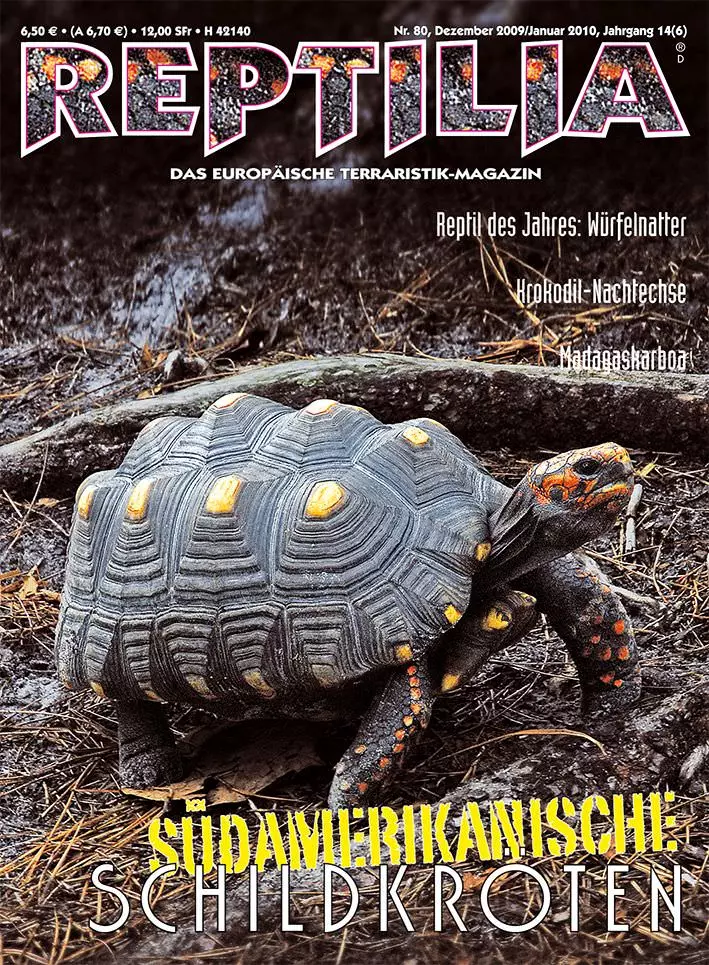
Reptilia 80 - South American turtles

Reptile of the Year: Dice snake
Crocodile night lizard
Madagascar boa

Contents:

South America is home to a rich and diverse turtle fauna –
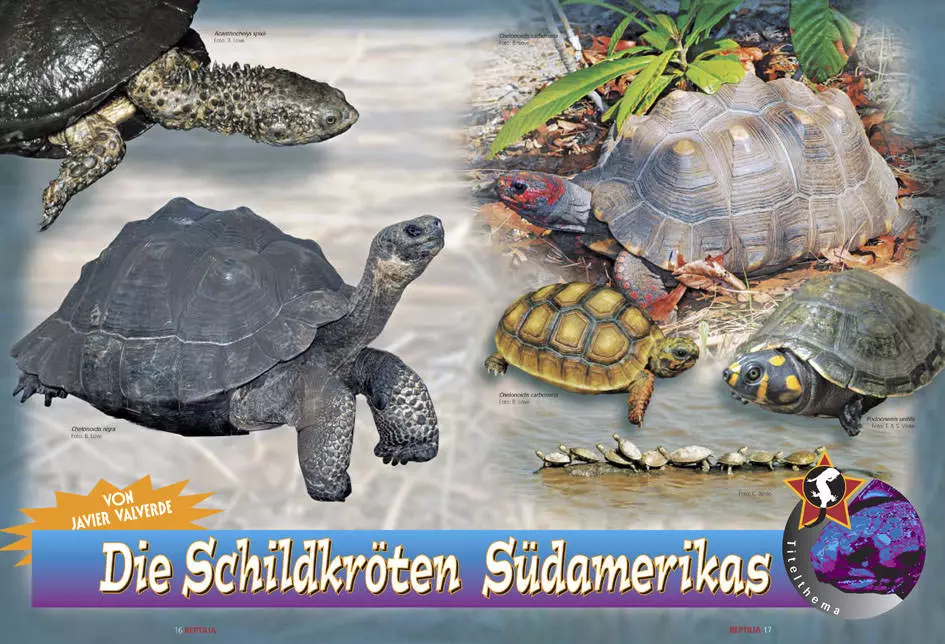
especially as far as the aquatic species are concerned. Although some species from this continent are very popular in terraristics, such as the charcoal tortoise, little is known about others. Our lavishly illustrated photo story offers you an overview of the South American turtles, and experienced experts then present individual species in detail.

MAGAZINE
DATES

WESTERN HERP PERSPECTIVES
Bad economic times – and their
consequences for terraristics
By B. Love

PHOTOSTORY
South American turtles
by J. Valverde

HERPETOFAUNA
Charcoal tortoises in the Gran Chaco – adaptations to an extreme habitat
by T. & S. Vinke

33 HERPETOFAUNA
Mesoclemmys zuliae – The mysterious toad-headed turtle from the south of Lake Maracaibo
by F.J.M. Rojas-Runjaic

REPTILE OF THE YEAR
The dice snake (Natrix tessellata), Reptile of the Year 2009
by A. Kwet & K. Mebert

PORTRAIT AND POSTER
Natrix tessellata
by A. Kwet & K. Mebert

TRAVEL
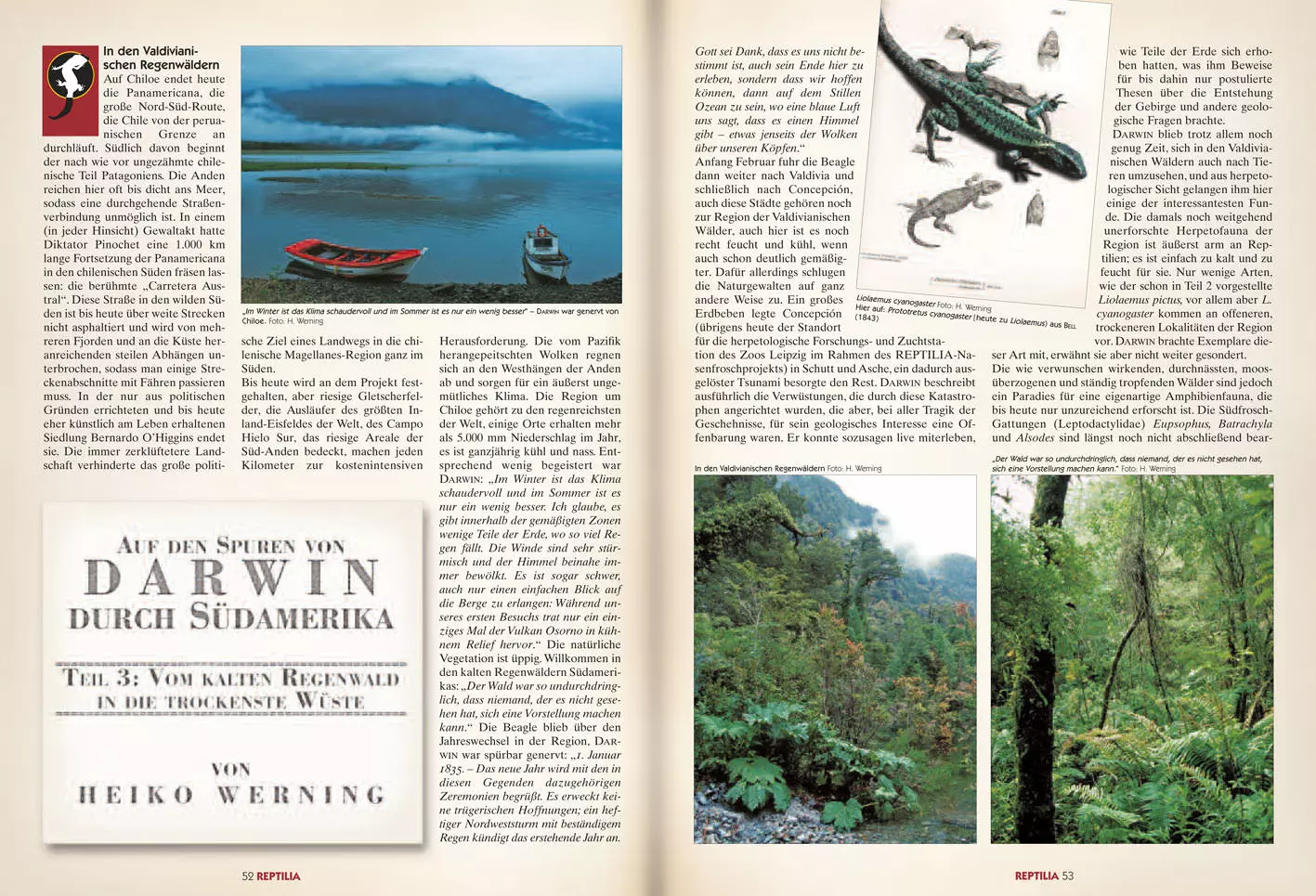
In the footsteps of Darwin through South America
Part 3: From the cold rainforest to the driest desert
by H. Werning

KEEPING AND REPRODUCTION
Acrantophis dumerili – Keeping and breeding of the Southern Madagascar boa
by M. Borer

KEEPING AND REPRODUCTION
The yellow-spotted crocodile night lizard (Lepidophyma flavimaculatum) in the terrarium
by U. Schlüter

FAQ – FREQUENTLY ASKED QUESTIONS
Hardune
by M. Dieckmann

LIBRARY
SUBSCRIPTION & SERVICE
ALSO NEAR YOU
PREVIEW
INCUBATOR
Why we will be standing in front of unconscious civvies in old age
L. Hogeback

Composition
Feeding recommendation
Technical details
Size information

0 of 0 reviews

Give us a rating!

Share your experience with the product with other customers.


Suggested products

Handbook of food plants for tortoises and other reptiles
Handbook of forage plants 2nd revised editionMarion Minch is not only a successful breeder of diverse tortoises for many years, but also an excellent connoisseur of native wild herbs. She founded and runs samenkiste.de, which is well known to many tortoise keepers and nature lovers. Her name is inextricably linked with reptile care and species-appropriate nutrition for tortoises. Her handbook of food plants summarises the most important native food plants for herbivorous and omnivorous reptiles. She not only considers tortoises, but also iguanas, spiny-tailed dragons and even chameleons. From the basics of plant biology to native wild herbs to suitable food plants for hardy tropical reptile species, this comprehensive work provides the basis for species-appropriate keeping. In the expanded and supplemented 2nd edition, the plant section is divided according to flower colour. This makes it even easier to identify wild herbs. The work has also been supplemented with a wealth of additional information and many pictures.

CHF 46.50

Geckos
Geckos in the terrarium by Astrid FalkThe book offers a comprehensive introduction to geckos and their species-appropriate keeping in terrariums. It explains what you need to think about before buying a gecko and what preparations should be made. The book describes in detail how the terrarium is technically equipped and set up. The care of the animals, their special features and behaviour, their diet, reproduction and rearing of young animals are described, as well as diseases and husbandry problems with tried and tested suggestions for prevention and treatment. Individual gecko species that are particularly suitable for keeping and breeding in terrariums are portrayed in detail in the second part of the book.

CHF 28.50

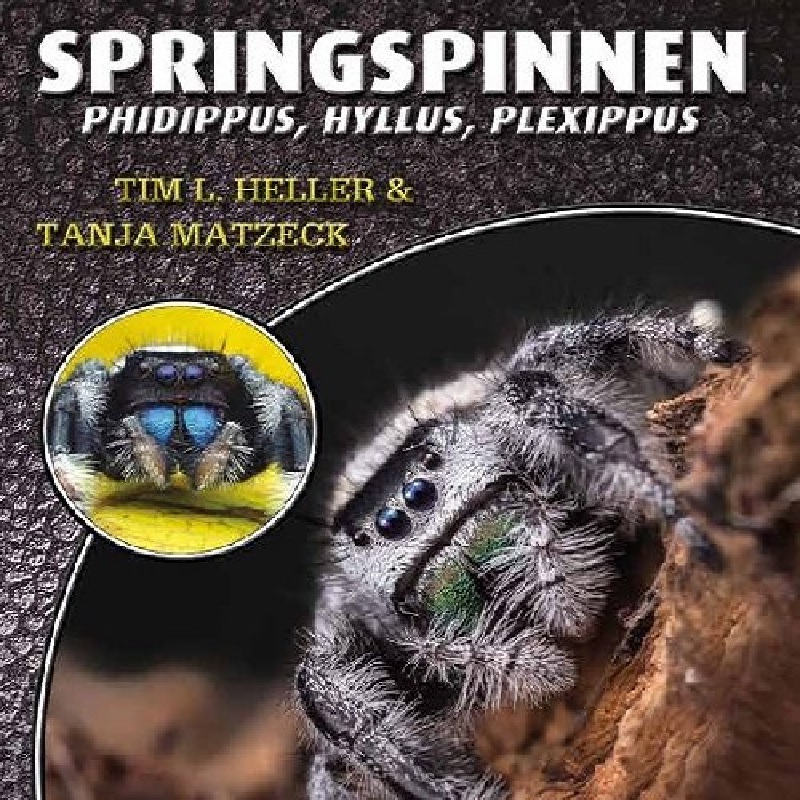
Jumping spiders Phidippus, Hyllus, Plexippus
Book Jumping Spiders - Phidippus, Hyllus & Plexippus A guide to keeping jumping spiders of the genera Phidippus, Hyllus & Plexippus. Who can resist the charm of jumping spiders? The childlike appearance of their expressive face simply leaves no one cold! In addition, their behavior is extremely exciting to observe, their colors are bright and their requirements for species-appropriate keeping are very easy to meet. No wonder these likeable jumpers are all the rage! This volume in the "Species by Species" series describes in detail what to look out for when buying and keeping them, introduces the most commonly kept species and color forms and provides plenty of tips on how to keep them successfully - so you can be sure they will breed well! Species by Species introduces you to the books in this series, which present the most popular terrarium animals. Each volume offers you detailed, practical care instructions and all the information you need to successfully breed your animals. All important questions from the required tank size to terrarium set-up, technical equipment, species-appropriate nutrition and disease prevention are answered with numerous tricks and tips. Experienced, long-standing breeders reveal how you can encourage the animals to reproduce and raise healthy young. All this in full color, generously illustrated and attractively designed - just about your terrarium animal - species by species

CHF 23.90

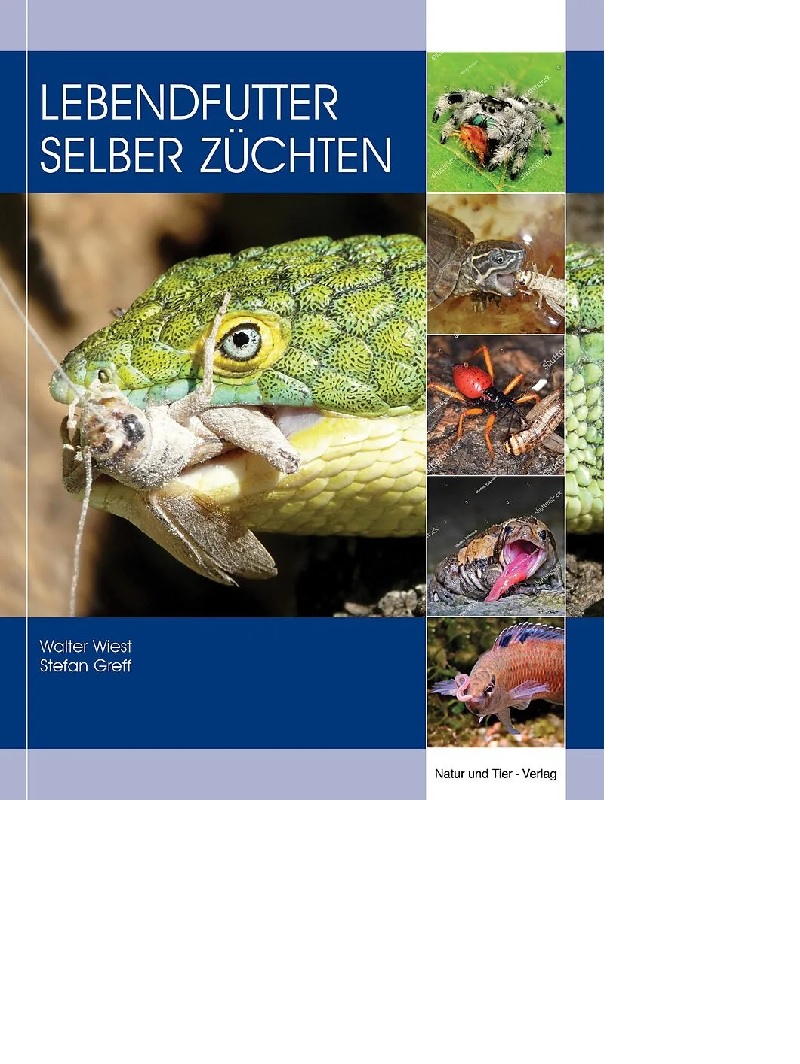
Book Breeding live food yourself
Book "Grow your own live food" - The perfect guide for pet owners Discover practical and detailed instructions on how you can easily breed food for your reptiles, birds, fish or other animals yourself in the book "Breeding live food yourself". With valuable tips on various food insects, their care and breeding, you can save money and ensure a species-appropriate diet for your pets. Contents of the book: Step-by-step instructions for breeding feeder insects Information on the best types of food for reptiles, birds and fish Care instructions and breeding conditions for various live food species Tips for sustainable and cost-effective food production Why breed your own live food? Get healthy, fresh food for your animals Save money and reduce dependence on pet shops Promote the health and well-being of your animals with species-appropriate food Whether you are a beginner or an experienced pet owner, this book provides you with everything you need to successfully breed live food yourself.

CHF 46.50

Marginata 69 - New Guinea tortoises
Marginata 69 - New Guinea tortoises – the genus ElseyaCover storyThe unrecognised beauties: New Guinea tortoises (Andreas S. Hennig)My experiences with Branderhorst's New Guinea tortoise, Elseya (Elseya) branderhorsti (Ouwens, 1914) (Andreas S. Hennig)Keeping and breeding of Rhodin's New Guinea tortoise, Elseya (Hanwarachelys) rhodini Thomson, Amepou, Anamiato & Georges, 2015 (Andreas S. Hennig)PortraitGeoemyda spengleri, Chinese serrated tortoise (Andreas S. Hennig)ReportageMacrochelys temminckii – Experiences and impressions with vulture tortoises part 2 (Reiner Praschag)KeepingAn alternative to year-round keeping of the Egyptian tortoise in the terrarium – my experiences with seasonal outdoor keeping of Testudo kleinmanni (Ricarda Schramm)EtymologySawbacks and living maps part 4: Graptemys gibbonsi, Pascagoula humpback tortoise (Holger Vetter)Classifieds & animal placement

CHF 16.50

NTV, Genetics for Terrarians
NTV - Genetics for Terrarium Keepers 88 pages numerous illustrations Format: 16.8 x 21.8 cm Author Jens R. Poschadel & Martin Plath Publisher NTV Contents: Genetics plays an outstanding role in modern herpetology and terrarium keeping. Not only are new species described and pedigrees compiled on the basis of genetic analyses, but above all, anyone who breeds amphibians or reptiles must at least be familiar with the basics of heredity. Jens R. Poschadel and Martin Plath explain classical as well as molecular genetics in this book in an easily comprehensible manner and describe their significance for research and breeding of terrarium animals.

CHF 32.50

Reptilia 62 - Gopher tortoises
Reptilia 62 - Gopher tortoises Giant crab spiderAgalychnis moreletiiAmeives Contents: 2 EDITORIAL 3 MAGAZINE 16 DATES 18 WESTERN HERP PERSPECTIVESHerp Art - a sign of maturityBy B. Love 20 PHOTO REPORTAGEThe tortoises of North AmericaAn overview of the genus GopherusBy S. Winchell 28 HERPETOFAUNAGopherus flavomarginatus, the Mexican gopher tortoiseBy R. Gonzáles Trápaga & G. Aguirre León 35 HERPETOFAUNAThe gopher tortoise (Gopherus polyphemus) – a civil engineerBy H. R. Mushinsky & E. D. McCoy 41 REPORTAGEScrew trees (Pandanaceae) as microhabitats for reptiles and amphibians in MadagascarBy P.-S. Gehring 43 TRAVELHerpetological excursion to YbbstalBy S. Fallend 51 PORTRAIT AND POSTERRhacophorus pardalisBy M. Gaulke 56 PRACTICEThe diet of ameives and monitor tegus inthe wild and in captivityBy U. Schlüter 63 KEEPING AND BREEDINGKeeping and breeding of Morelet’s leaffrog, Agalychnis moreletii (Duméril, 1853)By T. Eisenberg 72 PRACTICE North American aquatic turtles in the outdoor terrarium Part 3: Description of an outdoor enclosure for the seasonal keeping of North American aquatic turtlesBy A. S. Hennig & D. Symanski 76 KEEPING AND BREEDINGEight-eyed hunters of the nightBrief remarks on the keeping and breeding of Heteropoda venatoria and Holconia sp.By K. Kunz 86 FAQ - FREQUENTLY ASKED QUESTIONSQuestions about purchasing and keeping snakesBy D. Schmidt 92 TERRARIUM EXHIBITSParque "Reptilandia" near Dominical, Costa RicaBy T. Eisenberg 95 LIBRARY 104 INCUBATORHigh mountain hallucinationsBy H. Werning

CHF 11.20

Turtles Volume 2 - The Turtles Gardener
The Turtle Gardener – A Natural Diet for European TortoisesGuide to keeping European tortoises Over 65 suitable food plants, plus instructions, tips and tricks for successful plant cultivation – 14–99 years When keeping tortoises, nutrition plays an essential role. Through a careful selection of safe food plants, we can significantly influence their health and thus ensure a balanced diet for our animals. As a recognised expert and successful author of numerous books on tortoises, Thorsten Geier aims to explain all horticultural aspects to you in an accessible way. This guide is aimed at both beginners in tortoise keeping and those who have been keeping them for many years. In this comprehensive guide, you will find detailed, clear and clearly presented information on species-appropriate nutrition and independent foraging within the enclosure. Numerous instructions, tips and tricks for successful plant cultivation, as well as over 65 highly suitable and varied food plants, are listed in this book. Furthermore, it contains information on feeding behaviour in the wild, on keeping tortoises in a natural environment in the garden, and on poisonous or unsuitable plants. Numerous photos and picture galleries document all the necessary steps for successful plant cultivation, so that every tortoise owner can grow valuable and nutritious food in their garden, even without a ‘green thumb’. A truly fabulous guide to a varied diet.

CHF 34.90

Draco 31 - Uromastyx
Draco 31 - Spiny-tailed Agamas Contents: 2  Editorial  4  Spiny-tailed agamas of the genus Uromastyx– Introduction to the taxonomy and ecology of a lizard group specialised in desertsThomas Wilms  20  An article on the species-appropriate setup and lighting of terrariums for keeping spiny-tailed agamasThomas Wilms, Bernd Strassen, Andreas Oppermann & Claudia Petri  30  The Mali spiny-tailed agama Uromastyx dispar maliensisManfred Rogner  42  A particular problem in terrarium husbandry of Uromastyx: cheilitis of the spiny-tailed agama (Cheilitis of Uromastyx)Jutta Wiechert   45  Project “Spiny-tailed Agama”: The Reptilium field research project in Saudi ArabiaThomas Wilms   54  Observations on the lifestyle of Uromastyx ornata in the Eilat Mountains, IsraelDanny Molco  61  Philby's spiny-tailed agama (Uromastyx ornata philbyi) – about an almost unknown beautyThomas Wilms   67  The spiny-tailed agamas of the Sultanate of OmanHermann Seufer, Thomas Kowalski & Hans Jürgen Zilger      75  Causes and extent of the threat to spiny-tailed agamas – attempt at an inventoryThomas Wilms  82  Book box  87  Magazine

CHF 18.40

The kingsnake
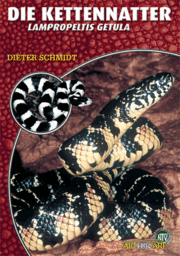
Alles über die Kettennatter von Dieter Schmidt 64 Seiten 14,8 x 21 cm zahlreiche Farbfotos Autor Dieter Schmidt Inhalt: Von kaum einer anderen Schlange gibt es derart viele verschiedene attraktive Farbvarianten wie von der Kettennatter. Dass es sich dazu auch noch um eine recht klein bleibende, friedliche Art handelt, die keine allzu grossen Ansprüche an die Terrarienhaltung stellt, macht sie zu einem äusserst beliebten und geeigneten Pflegling. Schlangenexperte Dieter Schmidt hält und züchtet diese Tiere seit Jahrzehnten und beschreibt in diesem Buch praxisnah ihre artgerechte Haltung und Pflege. Und wenn Sie seine Insider-Tipps zur Paarungsstimulation und zum Bebrüten der Eier beherzigen, werden Sie sicher bald eine Schar reizender Jungschlangen aufziehen können. Systematik und Körperbau Die faszinierende Biologie: Aus dem Leben der Kettennatter Alle Informationen zur artgerechten Haltung: Vom geeigneten Terrarium über Einrichtung und Technik bis hin zur Fütterung Erfolgreich nachzüchten: Paarungsstimulation, Inkubation der Eier und Aufzucht der Jungtiere Problemlösungen: Wie man die häufigsten Fehler bei der Pflege vermeidet, und wie man kranken Tieren helfen kann Brillante Fotos

CHF 21.90

NTV, Discover the Snakes
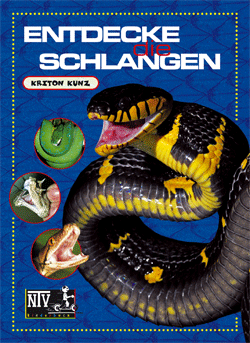
NTV, Discover the Snakes! 48 pages colour photos throughout Large format: 20.7 x 28 cm, hardcover Author Kriton Kunz Contents: Discover the Snakes!Snakes are fascinating animals. Children are particularly aware of this because they still have an unprejudiced view of the beauties and secrets of nature as well as an innate urge to explore and simply want to know everything about these mysterious and beautiful animals. REPTILIA editor Kriton Kunz is completely in tune with the views and needs of his young readers and conveys everything worth knowing about these animals in an exciting way that answers children's questions in an easily understandable and simply fun way. What are snakes, what species are there? How does their body work, why do they flick their tongues? Why do snakes shed their skin, how do they hunt and eat? Are all snakes poisonous? What can you do to protect snakes? And, of course, what particularly interests children: What records exist in the world of snakes, which is the longest, which is the most venomous, which has the most babies...?The author not only deals with these and all other questions in detail and in a child-friendly way, but also offers two Extras on: Portraits of all native snake species to get to know and a big snake quiz in which the young experts can test their knowledge!Conclusion: A highly valuable educational book with a high fun factor!

CHF 23.90

Draco 37 - Florida
Draco 37 - Florida Contents: 2 Editorial 4 Florida – a small herpetological travel guide Heiko Werning 24 Under and above water through the karst waters of Florida Beat Akeret 30 In search of gopher and box turtles Michael Wirth & Hans-Dieter Philippen 38 The National Breeders’ Expo – the catalyst for terraristics in the USA and worldwide Hans-Dieter Philippen 44 Exotic diary Rolf Leptien & Heiko Werning 56 Keeping and breeding of chain snakes, Lampropeltis getula, Florida Bernd Skubowius 64 The Florida pine snake, Pituophis melanoleucus mugitus Barbour, 1921 – so far still a rare terrarium inhabitant Bernd Skubowius 74 Turtle breeding in Central Florida Hans-Dieter Philippen

CHF 18.40