Reptilia 29 - King snakes

Article no: reptilia29

CHF 9.80

Stock: 0

Ready for dispatch in 1-3 days, delivery time 7 working days

Delivery between Tuesday, 27 October and Wednesday, 28 October
Zahlungsarten
Product information "Reptilia 29 - King snakes"

Reptilia 29 King snakes

Spain
Decorated spiny-tailed lizard
Greenhouse terrarium

Contents:

  • 2 Editorial
  • 3 Letters to the editor
  • 6 Magazine
  • 15 Dates
  • 18 Western Herp Perspectives, The role of terrarium clubs, by B. Love
  • 20 Photo report, The genus Lampropeltis, by P. Gérard
  • 28 Care and breeding, Snakes of the genus Lampropeltis in the terrarium, by Dr, D. Schmidt
  • 36 Reportage, Commentary fight in the Mexican king snake, by T. Kölpin
  • 43 Journey, More than just a beach holiday – A herpetological excursion across the Iberian Peninsula, by B. Trapp
  • 51 Portrait and poster, Iguana iguana
  • 56 Care and breeding, Care and breeding of the decorated spiny-tailed lizard Uromastyx ocellata ocellata, by M. Evers
  • 62 Care and breeding, Praying mantids (Mantodea) – An overview. Part 2: Distribution, way of life, care and breeding, identification, by R. Ehrmann
  • 68 Care and breeding, On the care and breeding of clawed frogs (Silurana spec.)– Part 2: Rearing tadpoles and juvenile frogs, discussion and literature, by K. Kunz
  • 73 Herpetoculture, Kambô – The frog vaccination, by R. & B. Pieper
  • 84 Advice and action
  • 89 Classifieds
  • 93 Library
  • 104 Gloss, Uni, by K. Kunz
Composition
Feeding recommendation
Technical details
Size information

0 of 0 reviews

Give us a rating!

Share your experience with the product with other customers.


Suggested products

Handbook of food plants for tortoises and other reptiles
Handbook of forage plants 2nd revised editionMarion Minch is not only a successful breeder of diverse tortoises for many years, but also an excellent connoisseur of native wild herbs. She founded and runs samenkiste.de, which is well known to many tortoise keepers and nature lovers. Her name is inextricably linked with reptile care and species-appropriate nutrition for tortoises. Her handbook of food plants summarises the most important native food plants for herbivorous and omnivorous reptiles. She not only considers tortoises, but also iguanas, spiny-tailed dragons and even chameleons. From the basics of plant biology to native wild herbs to suitable food plants for hardy tropical reptile species, this comprehensive work provides the basis for species-appropriate keeping. In the expanded and supplemented 2nd edition, the plant section is divided according to flower colour. This makes it even easier to identify wild herbs. The work has also been supplemented with a wealth of additional information and many pictures.

CHF 46.50

Geckos
Geckos in the terrarium by Astrid FalkThe book offers a comprehensive introduction to geckos and their species-appropriate keeping in terrariums. It explains what you need to think about before buying a gecko and what preparations should be made. The book describes in detail how the terrarium is technically equipped and set up. The care of the animals, their special features and behaviour, their diet, reproduction and rearing of young animals are described, as well as diseases and husbandry problems with tried and tested suggestions for prevention and treatment. Individual gecko species that are particularly suitable for keeping and breeding in terrariums are portrayed in detail in the second part of the book.

CHF 28.50

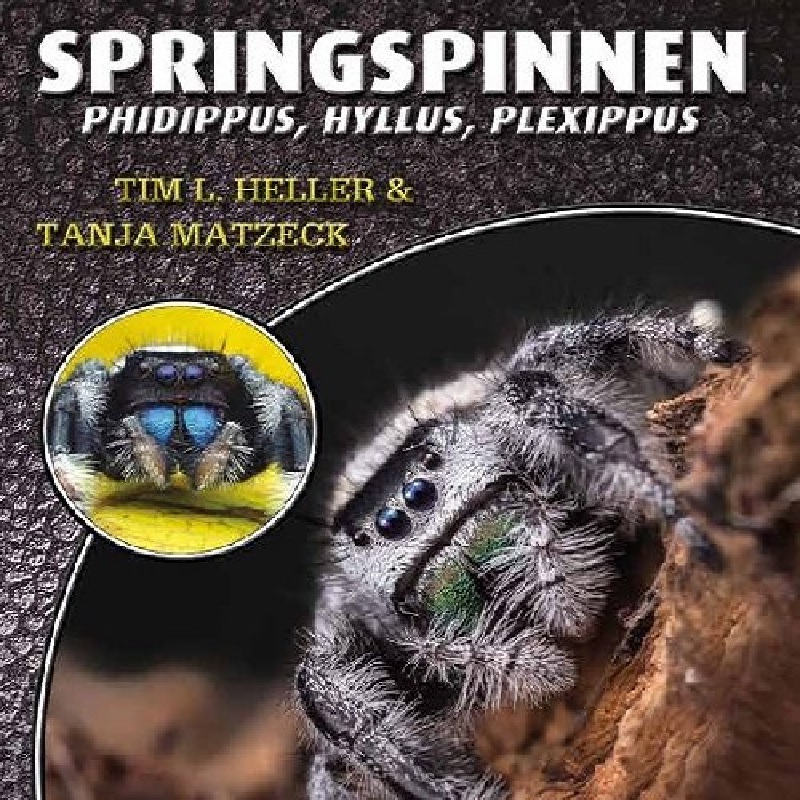
Jumping spiders Phidippus, Hyllus, Plexippus
Book Jumping Spiders - Phidippus, Hyllus & Plexippus A guide to keeping jumping spiders of the genera Phidippus, Hyllus & Plexippus. Who can resist the charm of jumping spiders? The childlike appearance of their expressive face simply leaves no one cold! In addition, their behavior is extremely exciting to observe, their colors are bright and their requirements for species-appropriate keeping are very easy to meet. No wonder these likeable jumpers are all the rage! This volume in the "Species by Species" series describes in detail what to look out for when buying and keeping them, introduces the most commonly kept species and color forms and provides plenty of tips on how to keep them successfully - so you can be sure they will breed well! Species by Species introduces you to the books in this series, which present the most popular terrarium animals. Each volume offers you detailed, practical care instructions and all the information you need to successfully breed your animals. All important questions from the required tank size to terrarium set-up, technical equipment, species-appropriate nutrition and disease prevention are answered with numerous tricks and tips. Experienced, long-standing breeders reveal how you can encourage the animals to reproduce and raise healthy young. All this in full color, generously illustrated and attractively designed - just about your terrarium animal - species by species

CHF 23.90

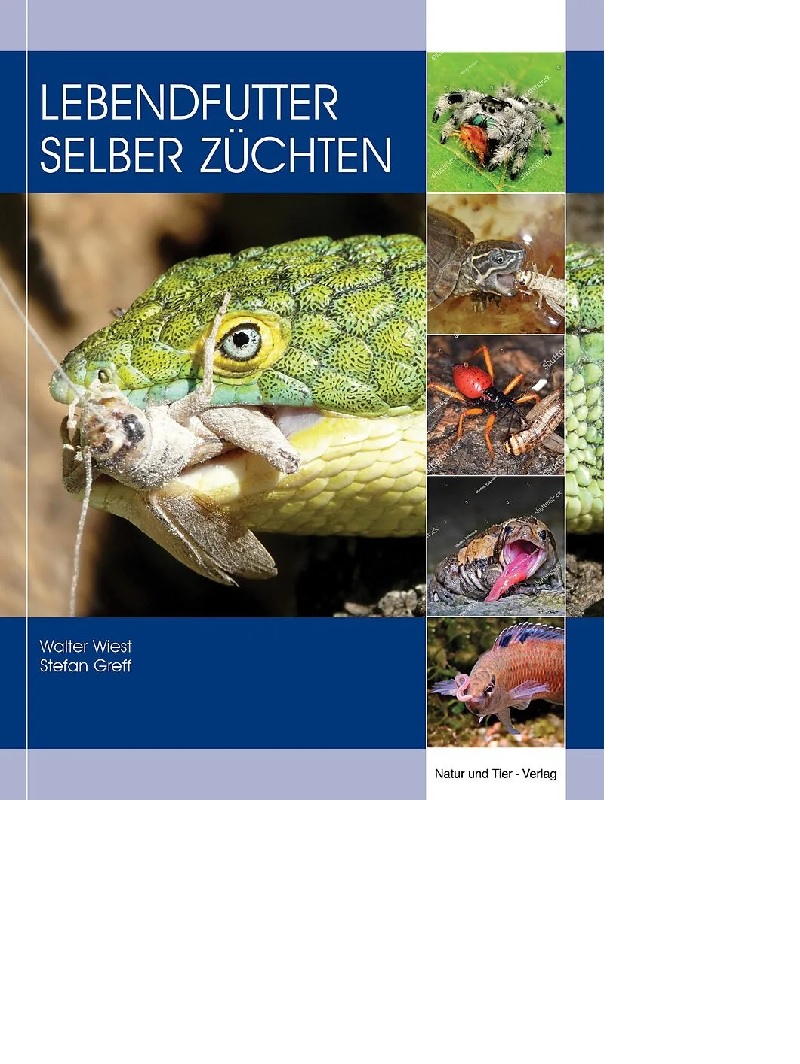
Book Breeding live food yourself
Book "Grow your own live food" - The perfect guide for pet owners Discover practical and detailed instructions on how you can easily breed food for your reptiles, birds, fish or other animals yourself in the book "Breeding live food yourself". With valuable tips on various food insects, their care and breeding, you can save money and ensure a species-appropriate diet for your pets. Contents of the book: Step-by-step instructions for breeding feeder insects Information on the best types of food for reptiles, birds and fish Care instructions and breeding conditions for various live food species Tips for sustainable and cost-effective food production Why breed your own live food? Get healthy, fresh food for your animals Save money and reduce dependence on pet shops Promote the health and well-being of your animals with species-appropriate food Whether you are a beginner or an experienced pet owner, this book provides you with everything you need to successfully breed live food yourself.

CHF 46.50

Marginata 69 - New Guinea tortoises
Marginata 69 - New Guinea tortoises – the genus ElseyaCover storyThe unrecognised beauties: New Guinea tortoises (Andreas S. Hennig)My experiences with Branderhorst's New Guinea tortoise, Elseya (Elseya) branderhorsti (Ouwens, 1914) (Andreas S. Hennig)Keeping and breeding of Rhodin's New Guinea tortoise, Elseya (Hanwarachelys) rhodini Thomson, Amepou, Anamiato & Georges, 2015 (Andreas S. Hennig)PortraitGeoemyda spengleri, Chinese serrated tortoise (Andreas S. Hennig)ReportageMacrochelys temminckii – Experiences and impressions with vulture tortoises part 2 (Reiner Praschag)KeepingAn alternative to year-round keeping of the Egyptian tortoise in the terrarium – my experiences with seasonal outdoor keeping of Testudo kleinmanni (Ricarda Schramm)EtymologySawbacks and living maps part 4: Graptemys gibbonsi, Pascagoula humpback tortoise (Holger Vetter)Classifieds & animal placement

CHF 16.50

Draco 39 - European Snakes
Draco 39 - European Snakes Contents: Editorial The snake fauna of EuropeAndreas Schlüter Vipera ammodytes: on abnormal vipers and hybridsMario Schweiger The four-lined snake – Elaphe quatuorlineata (Lacépède, 1789)Sascha Esser The snakes of northern Spain - travel impressions from the Cantabrian Mountains and neighbouring areasGuido Kreiner European water snakes: Field observations, husbandry and breeding of Natrix natrix (Linnaeus, 1758), Natrix maura (Linnaeus, 1758) and Natrix tessellata (Laurenti, 1768)Michael Wirth & Rainer Hähnlein Queens of European snakes: Four-lined snake (Elaphe quatuorlineata), Aesculapian snake (Zamenis longissimus) and Leopard snake (Zamenis situla)Michael Wirth

CHF 18.40

NTV - Discover the spiders
NTV, Discover the spiders 64 pages colour photos throughout Large format: 20.7 x 28 cm Hardcover Author Kriton Kunz Publisher NTV Contents: No other group of animals exhibits such diverse and fascinating behaviour as spiders. Their different hunting strategies and their exciting abilities arouse children's curiosity. "Discover the spiders" explains all the secrets of these extraordinary animals in a child-friendly, detailed and entertaining way and has lots of amazing things in store: Can spiders fly? Do spiders also walk on water, perhaps they even dive? What's the story behind the triangle spider's strange web, and why does the spitting spider spit on its prey? Children will find answers to all their questions in this book.A highly valuable educational book with a great fun factor! Welcome to the world of spiders! What kind of animals are spiders? The relatives of spiders Where you can find spiders everywhere Lots of spiders Which spiders are there? It's enough to make your skin crawl! The senses of spiders Bon appétit! How spiders hunt and eat Enemies of spiders Camouflage, warning and other tricks Venomous spiders Loners and communal creatures Can spiders communicate with each other? Reproduction What do spiders do in winter? Age and diseases Can spiders fly?EXTRA: Observe spiders Little spider quiz Thanks

CHF 19.90

Bugs No. 08 - Centipede
Bugs No. 08 - CentipedeCentipedes are on the rise in terraristics! Christian Kronmüller, a specialist in these fascinating animals and author of a book on the subject, presents these many-legged predators in detail in the next issue of Bugs and reveals tips and tricks on how to keep and breed them.Insights into the way of life of invertebrates in nature provide valuable information on species-appropriate husbandry. Our Colombian author Jorge Cañas-Orozco has compiled exciting details and impressive photos of scorpions of the genus Opisthacanthus.During the hot season, wasps and hornets become a nuisance in some places in this country. In Bugs No. 8, we show you what these insects are used for in the Far East - surprises are guaranteed!Cuba is home to an absolutely spectacular arachnid fauna. Michael Seiter takes you on an expedition in search of flagellate spiders, scorpions and more.In addition, of course, a number of other exciting topics are addressed, so that there will be something for fans of various invertebrate groups. Plus practical tips and news from the world of science and much more ...Table of contentsEditorialFacetsDatesCover storyArmoured hunters and gentle parents - centipedes in the terrariumThe top 10 centipedes for beginnersFlown outIn search of arachnids in Cubareportage Opisthacanthus elatus: Observations from ColombiaKids Corner Colourful hummersreportage Beetle breeding made easy: white rotten wood from sustainable mushroom productionCulture Harvest festival in Japanese - Wasps as a delicacy in the Japanese countrysideBook scorpionAlso in your neighbourhoodService & Imprint

CHF 12.00

Terraria 62 - Unusual food animals
Terraria 62 - Unusual Food Animals Campbell’s Tree Lizard Succulents Contents: Cover Story: Unusual Food Animals A healthy diet plays a decisive role in the successful care and breeding of our terrarium animals. The famous mealworm as a standard food is far from sufficient. Fortunately, specialist retailers now offer a wide range of suitable food insects such as house crickets, crickets, flies or cockroaches, which are available all year in any quantity. However, many pets also like to eat food animals outside the mainstream and some specialists are even dependent on a special diet for their well-being. In this issue of TERRARIA/elaphe, we take a closer look at some of these little-known, rather unusual food animals such as field slugs, woodlice, moth flies or a small-growing fruit fly variant. 3          Territorial 8          Herpetorama             Results of the 17th CITES Conference in Johannesburg – new regulations for some reptiles and amphibians             Synanthrope: Creeping Schnapps             Leaf Climber: Wasted “Time”             Thorny Devil: A Rural Keel-Tailed Iguana   Cover Story 14        Food Animals             A perennial topic in terraristics             Krition Kunz 20        Slippery Snacks             Breeding and use of the Mediterranean field slug as live food             Frank Täufer 25        Woodlice as Food Animals             Dominik Hoffses 30        A Small-Growing Variant of the Fruit Fly: Drosophila melanogaster “Ant”             Boris Stockmann 34        A Frog Farm for Feeding Reptiles and Amphibians: the Painted Disk-Tongued Frog (Discoglossus pictus)             Frank Pasmans, Sergé Bongaerts & An Martel 39        Moth Flies             A new food animal for small nocturnal hunters             Ingo Fritzsche   Panorama 42        Snake searching in the Ecuadorian Chocó rainforest             Daniel Jestrzemski   Research 50        New Species             A new slender boa from the Bahamas: the Conception Silver Boa (Chilabothrus argentum)             Axel Kwet             A new Borneo bush frog from Mt. Kinabalu             Axel Kwet 52        Among Researchers             The Comoros, a forgotten hotspot of diversity             Oliver Hawlitschek 56        Salamandra   Terraristics 60        Ant plants, leaf cacti and other succulent epiphytes for the terrarium             Beat Akeret   Nature and Species Conservation 70        Field Notes             Grass snake eating             Günther Vater             The feeding behaviour of the wall lizard Part 2             Malte Hornig 72        Project to protect the critically endangered tree lizard Abronia campbelli in eastern Guatemala             Brad Lock & Mónica Torres 84        Terrarino – the children’s page              The fire salamander – not a lucky animal             Alexa Sabarth   81        Subscription & Service 86        Also in your area 88        Preview 90        Incubator              No mercy for Mouse Z             Part 2             Heiko Werning

CHF 12.00

Reptilia 54 - Terrarium construction
Reptilia 54 - Terrarium construction PrachtskinkAtelopus zetekiRainbow boas Contents: 2 EDITORIAL 6 MAGAZINE 14 DATES 18 PHOTO REPORTAGE Terrarium constructionby H. Werning 26 REPORTAGEBiotopArt - the terrariums of the Dresden artist Andreas Deißig by J. Jungnickel & U. Prokoph 28 REPORTAGEDetermining the weight of terrariums by P.M. Müller 34 REPORTAGEThe rock wall in the living room on I. Kober 39 REPORTAGEA conservatory for iguanas by S. Winkle 44 TRAVELHerpetological observations in the Dalyan delta by U. Thieme 51 PORTRAIT AND POSTERQuedenfeldtia trachyblepharusby U. Schlüter 56 KEEPING AND BREEDINGKeeping and breeding the Red Rainbow Boa (Epicrates cenchria cenchria) by H. Bellosa 62 KEEPING AND BREEDINGArgentine rainbow boa (Epicrates cenchria alvarezi) by V. Knietsch 66 KEEPING AND BREEDINGOn keeping and breeding the Prachtskink(Mochlus fernandi)by I. Veltum El Copé - In the forest of the Atelopus zetekiby P. Janzen 76 KEEPING AND BREEDINGA pirate's lifeKeeping and breeding Ancylometes fishing spiders - Part 2by K. Kunz 85 LIBRARY 89 CLASSIFIED ADS 94 RAT & TAT 96 WESTERN HERP PERSPECTIVESMorphsby B. Love 104 INCUBATORBegging flight periodBy H. Werning

CHF 11.20

Terraria No. 31 - Collared lizards
Nordamerikanische WassernatternAufzucht europäischer Landschildkröten Inhalt: Halsbandleguane gehören schon lange zu den beliebtesten Echsen im Terrarium. Sie sind farbenprächtig, werden sehr zutraulich und können gut vermehrt werden. Aber auch bei diesen scheinbar so bekannten Evergreens der Terraristik gibt es viel Neues zu berichten. So stellen wir nicht nur in Bild und Text einige „exotische“ Crotaphytus-Arten vor, sondern auch spektakuläre Farbformen des Östlichen Halsbandleguans, von denen einige glücklicherweise bei uns inzwischen gehalten werden. Natürlich darf ein ausgiebiger Haltungs- und Nachzuchtbericht zu C. collaris nicht fehlen. Und über neue Erkenntnisse zur Überwinterung berichtet der wohl bekannteste Experte für diese Tiere, Robert Schumacher. EditorialMagazinKennzeichnung von Reptilien durch neuen Mini-Transponder / Verschollene Regenbogenkröte auf Borneo wiederentdeckt / Beobachtungen an Europäischen Chamäleons (Chamaeleo chamaeleon) auf Malta / Gemeinschaftsbaue bei sozialen Skinken / RechtlichesTERRAglobalGiftige SchönheitenMaik Dobiey TitelthemaSympathieträger aus dem Wilden Westen – Halsbandleguane Heiko Werning & Michael WirthClowns im Terrarium – Langjährige Haltung und Nachzucht Östlicher Halsbandleguane, Crotaphytus collaris Michael Wirth & Florian RiedelDurch die Jahreszeiten der Halsbandleguane in Natur und TerrariumYvonne & Robert SchumacherZu Besuch beim Mountainboomer, dem Staatsreptil von Oklahoma Robert SchumacherDas Schildkrötenjahr Freilandbiologie und Haltung europäischer Landschildkröten über den Jahreslauf Teil 4: Spätsommer und HerbstbeginnMichael WirthDie Gattung Nerodia. Wassernattern aus Nordamerika: Lebensweise sowie Haltung und Vermehrung im Terrarium Teil 2Dieter SchmidtSoziale Vogelspinnen? – Teil 2 Beispiele aus Asien und Europa Frank Schneider, Ingo Wendt & Boris F. StrifflerErste Erfahrungen bei der Haltung und Nachzucht des Chinesischen Wasserskinks (Tropidophorus sinicus) Steven ArthNeue ArtenAus eins mach zwei: neue Gopherschildkröte aus der Sonora-Wüste beschrieben Axel KwetAbo & ServiceUnter Forschern Malpelo – lebender Fels im PazifikMatthias JurczykBlickfangSchildkrötenhimmel im Schnäppchenparadies. Zu Gast in der „Villa Testudo“ in Metzingen Michael WirthIn Ihrer Nähe Vorschau BrutkastenTouristisch im Dschungel Teil 1: Reisende soll man nicht ansprechen Heiko Werning  

CHF 12.00

Reptilia 94 - Terrarium photography
  Philippinen-KrokodilCumberland-SchmuckschildkröteHalsbandleguane im Freilandterrarium Inhalt: Die Terraristik bietet eine unendliche Fülle wunderbarer Fotomotive, ein Eldorado für Hobby-Fotografen! Und wohl jeder Halter hat den Wunsch, seine Pfleglinge, seine Nachzuchten und seine Anlage im Bild festzuhalten. Zumal Fotografieren nie einfacher war als heute, wo jedes Telefon die schnelle Aufnahme erlaubt, die dann direkt ins virtuelle Fotoalbum auf Facebook hochgeladen werden kann, wo alle Freunde sie anschauen können.Profi-Fotograf Benny Trapp aber gibt zahlreiche Tipps und Tricks, wie Sie zu Bildern kommen, bei denen garantiert jeder den „Gefällt mir“-Button drückt, ganz gleich, ob Sie mit einer Kompaktkamera oder einer hochwertigen Spiegelreflexkamera arbeiten. EDITORIALMAGAZINTERMINEIN 5 JAHREN UM DIE WELT Menschen und SchildkrötenA. PachmannWESTERN HERP PERSPECTIVESBörsenbesuch down under B. LoveFOTOSTORYBild schön! Fotografie von Terrarientieren K. KunzPRAXISTerrarientiere fotografieren. Einsatz von Licht und Blitz bei SpiegelreflexkamerasB. TrappPRAXISTipps für bessere Bilder mit KompaktkamerasB. TrappHALTUNG UND VERMEHRUNGPhilippinenkrokodile (Crocodylus mindorensis) im Aquarium des Kölner Zoos. Teil 1: Erfahrungen mit „Off-Exhibit“- Haltung einer der am stärksten bedrohten Krokodilarten der Welt T. Ziegler, R. Sommerlad, W. Brass, K. van der Straeten, D. Karbe & A. RauhausHERPETOFAUNAAuf dem Weg ins All. Die Welt der Buchstaben-Schmuckschildkröte, Trachemys scripta Teil 4: Cumberland- und Südtexas-Schmuckschildkröte A. S. HennigWIRBELLOSEDie Isles of Scilly. Ein Paradies nicht nur für Phasmidenfreunde H.-J. LuefHALTUNG UND VERMEHRUNGErfahrungen mit der Haltung von Halsbandleguanen im FreilandterrariumM. DieckmannTIERE UNSERER HEIMATDie AspisviperR. LeptienBIBLIOTHEKTIPPS & TRICKSTESTLAUFABO & SERVICEAUCH IN IHRER NÄHEREISEThe Rock. Die Herpetofauna GibraltarsU. SchlüterVORSCHAUBRUTKASTENIguana chilenaH. Werning  

CHF 12.00