Reptilia 21 - Terrarium equipment

Article no: reptilia21

CHF 9.80

Stock: 0

This article is currently not available

Product information "Reptilia 21 - Terrarium equipment"

Reptilia 21 - Terrarium equipment

Sand otters
Phrynops Dahli - a rare tortoise from Colombia
Skolopender - Schnapps and scorpion snacks

Contents:

Page 2 - Editorial
Page 3 - Letters to the editor
Page 6 - Magazine
Page 13 - Dates
Page 16 - Western Herp Perspectives: Broadening horizons abroad, by B. Love
Page 18 - Photo report: The biotope in the living room, by J. Rauh
Page 24 - Report: An uncomplicated indoor terrarium, by M. Schmidt
Page 29 - Report: Artificial rocks in the terrarium, by H. Zwartepoorte and M. Vries
Page 33 - Report: Substrates and back wall design, by J. Rauh
Page 40 - Journey: On a tail lizard excursion in northern Oregon. Part 2: From the coast to Eugene, by H. Wallays
Page 47 - Portrait and poster: Chlamydosaurus kingii, by M. Aresé and J. L. Farriols
Page 51 - Report: The sand adder Vipera ammodytes, by P. Katke and B. Trapp
Page 58 - Keeping and breeding: Keeping and breeding of some Andean keel-tailed iguanas (Stenocercus) from the Peruvian highlands. Part 3, by U. Schlüter
Page 63 - Herpetofauna Phrynops dahli - A little known turtle species from the Caribbean coast of Colombia, by J. L. de la Osa Velásquez
Page 68 - Keeping and breeding: Rare in the terrarium: The desert dragon Trapelus mutabilis, by H. D. Müller
Page 73 - Report: A drink with a bite and the liver with a sting, by I. and B. Fritzsche
Page 80 - REPTILIA on the road: Reptile Zoo Iguana in Visslingen/NL, by A. Hauschild
Page 83 - Advice and action
Page 89 - Library
Page 96 - Glossary: The crisis of statutory health insurance for reptiles and amphibians, by M. Vanselow

Composition
Feeding recommendation
Technical details
Size information

0 of 0 reviews

Give us a rating!

Share your experience with the product with other customers.


Suggested products

Handbook of food plants for tortoises and other reptiles
Handbook of forage plants 2nd revised editionMarion Minch is not only a successful breeder of diverse tortoises for many years, but also an excellent connoisseur of native wild herbs. She founded and runs samenkiste.de, which is well known to many tortoise keepers and nature lovers. Her name is inextricably linked with reptile care and species-appropriate nutrition for tortoises. Her handbook of food plants summarises the most important native food plants for herbivorous and omnivorous reptiles. She not only considers tortoises, but also iguanas, spiny-tailed dragons and even chameleons. From the basics of plant biology to native wild herbs to suitable food plants for hardy tropical reptile species, this comprehensive work provides the basis for species-appropriate keeping. In the expanded and supplemented 2nd edition, the plant section is divided according to flower colour. This makes it even easier to identify wild herbs. The work has also been supplemented with a wealth of additional information and many pictures.

CHF 46.50

Geckos
Geckos in the terrarium by Astrid FalkThe book offers a comprehensive introduction to geckos and their species-appropriate keeping in terrariums. It explains what you need to think about before buying a gecko and what preparations should be made. The book describes in detail how the terrarium is technically equipped and set up. The care of the animals, their special features and behaviour, their diet, reproduction and rearing of young animals are described, as well as diseases and husbandry problems with tried and tested suggestions for prevention and treatment. Individual gecko species that are particularly suitable for keeping and breeding in terrariums are portrayed in detail in the second part of the book.

CHF 28.50

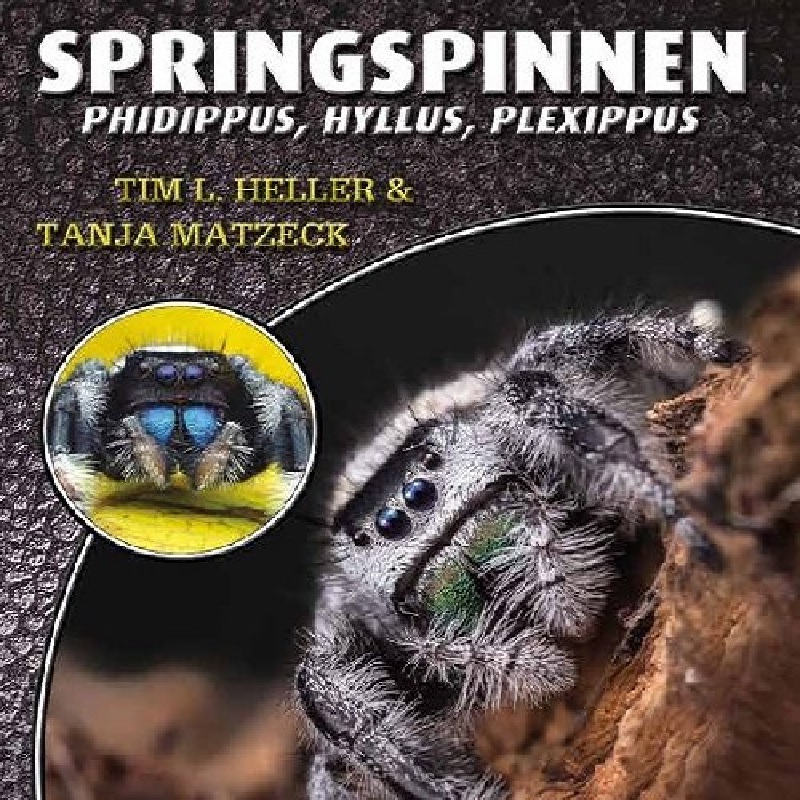
Jumping spiders Phidippus, Hyllus, Plexippus
Book Jumping Spiders - Phidippus, Hyllus & Plexippus A guide to keeping jumping spiders of the genera Phidippus, Hyllus & Plexippus. Who can resist the charm of jumping spiders? The childlike appearance of their expressive face simply leaves no one cold! In addition, their behavior is extremely exciting to observe, their colors are bright and their requirements for species-appropriate keeping are very easy to meet. No wonder these likeable jumpers are all the rage! This volume in the "Species by Species" series describes in detail what to look out for when buying and keeping them, introduces the most commonly kept species and color forms and provides plenty of tips on how to keep them successfully - so you can be sure they will breed well! Species by Species introduces you to the books in this series, which present the most popular terrarium animals. Each volume offers you detailed, practical care instructions and all the information you need to successfully breed your animals. All important questions from the required tank size to terrarium set-up, technical equipment, species-appropriate nutrition and disease prevention are answered with numerous tricks and tips. Experienced, long-standing breeders reveal how you can encourage the animals to reproduce and raise healthy young. All this in full color, generously illustrated and attractively designed - just about your terrarium animal - species by species

CHF 23.90

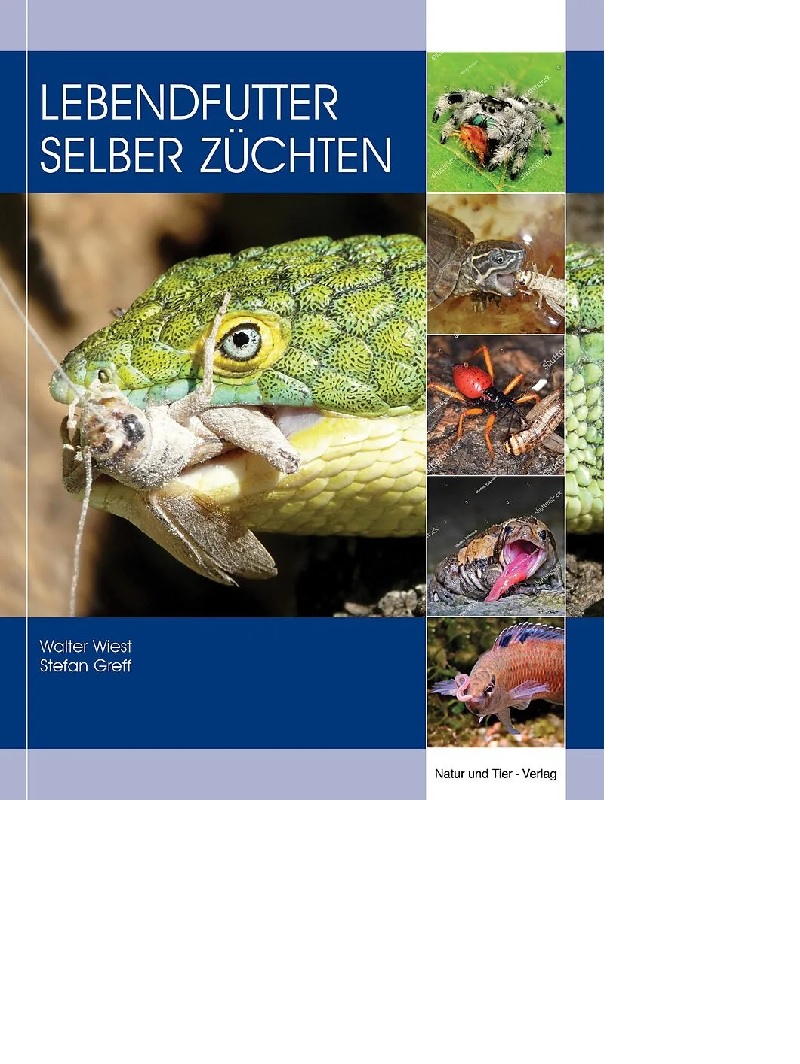
Book Breeding live food yourself
Book "Grow your own live food" - The perfect guide for pet owners Discover practical and detailed instructions on how you can easily breed food for your reptiles, birds, fish or other animals yourself in the book "Breeding live food yourself". With valuable tips on various food insects, their care and breeding, you can save money and ensure a species-appropriate diet for your pets. Contents of the book: Step-by-step instructions for breeding feeder insects Information on the best types of food for reptiles, birds and fish Care instructions and breeding conditions for various live food species Tips for sustainable and cost-effective food production Why breed your own live food? Get healthy, fresh food for your animals Save money and reduce dependence on pet shops Promote the health and well-being of your animals with species-appropriate food Whether you are a beginner or an experienced pet owner, this book provides you with everything you need to successfully breed live food yourself.

CHF 46.50

Marginata 69 - New Guinea tortoises
Marginata 69 - New Guinea tortoises – the genus ElseyaCover storyThe unrecognised beauties: New Guinea tortoises (Andreas S. Hennig)My experiences with Branderhorst's New Guinea tortoise, Elseya (Elseya) branderhorsti (Ouwens, 1914) (Andreas S. Hennig)Keeping and breeding of Rhodin's New Guinea tortoise, Elseya (Hanwarachelys) rhodini Thomson, Amepou, Anamiato & Georges, 2015 (Andreas S. Hennig)PortraitGeoemyda spengleri, Chinese serrated tortoise (Andreas S. Hennig)ReportageMacrochelys temminckii – Experiences and impressions with vulture tortoises part 2 (Reiner Praschag)KeepingAn alternative to year-round keeping of the Egyptian tortoise in the terrarium – my experiences with seasonal outdoor keeping of Testudo kleinmanni (Ricarda Schramm)EtymologySawbacks and living maps part 4: Graptemys gibbonsi, Pascagoula humpback tortoise (Holger Vetter)Classifieds & animal placement

CHF 16.50

Greek Land Turtles
Book Greek tortoises The Greek tortoise is a true classic of terraristics. 167 pages with numerous mostly coloured illustrations and maps Paperback Author Manfred Rogner Publisher NTV Their attractive appearance and friendly character mean that they are rightly at the top of the list of favourites among tortoise lovers. For decades, the experienced terrarium keeper Manfred Rogner has been caring for and breeding this attractive species with great success, which he has also observed in their habitat.In this guide, he describes everything you need to know about the species-appropriate keeping and breeding of your armoured pets in a clear and practical way.

CHF 35.50

Draco 54 - Nutrition of European tortoises
Draco 54 - Nutrition of European tortoises Contents: EditorialModelled on nature: The diet of European tortoises in their natural habitatMichael Wirth  Tortoise nutrition, but species-appropriate – a practical guideMichael Wirth   Herb collecting made easy – an introduction to identifying and collecting wild plants Michael Wirth   The 1x 1 of meadow herbs Michael Wirth    Hay in tortoise nutrition – valuable and vital Michael Wirth    Ten questions about tortoise nutrition Markus Baur    Bibliography    In your neighbourhood     Services

CHF 32.00

Beetle Fibula
Beetle Primer - 96 pages on everything you need to know about successfully keeping different types of beetles. 96 pages 150 photos hardback Author Timm Adam Publisher Dähne Verlag Not everyone can imagine keeping a beetle as a pet, but these fascinating little animals are becoming increasingly popular. The book shows different species and describes everything you need to know about keeping and reproducing them.

CHF 24.90

Reptilia 118 - Morelia
Reptilia 118 - MoreliaMadagascarHumpback turtlesProfessional reptile breeding Contents:Cover story: Morelia - tree python, diamond python & Co.Everyone knows the green tree python. The animals are admired for their colouring and their favourite position, curling up over a branch, almost symbolises our idea of a tree-dwelling snake. This species has been successfully kept and bred in terrariums for a long time. However, the other pythons of the Morelia genus are also very popular. We offer an overview of these exceptionally beautiful giant snakes, describe new ways of setting up a terrarium for Morelia viridis in a naturalistic way and look at the keeping and breeding of a species that is still little known, the python with a scaly scales, Morelia carinata.EditorialMAGAZINEDATESWESTERN HERP PERSPECTIVESThe fate of books part 2B. LovePhoto storyPython beauties from the other side of the world: Morelia, the tree and diamond pythonsM. MenseKeeping and breedingKeeping a green tree python in a naturally designed large terrariumR. StallingerKeeping and breedingMorelia carinata – The Python with a Difference!O. JugReportageRare exhibition animal: Morelia bredli at Frankfurt ZooD. RösselKeeping and breedingHumpback turtles – The genus GraptemysM. RognerKeeping and breedingProfessional breeding of terrarium animals for the pet tradeSimone P. ReportageUnder the spell of the big telescopic eyes: jumping spiders on the lookoutU. & J. SchimmelpfennigAnimals of our homelandThe sand lizardR. LeptienSERVICELIBRARYALSO NEAR YOUJourneySearching for reptiles in MadagascarC. SchneiderPREVIEWBRUTKASTEN Why do pigeons of all things have to be the symbol of peace?H. Werning

CHF 12.00

Reptilia 02 - Day geckos
Reptilia 02 - Day geckosChameleo caylptratusAxolotlSnakes in Greek mythologyContents:Page 2 - EditorialPage 3 - Letters to the editor and discussionPage 7 - MagazinePage 17 - Photo report: Phelsuma, by J. KrügerPage 23 - Keeping and reproduction: Phelsuma standingi, by G. HallmannPage 26 - Report: Phelsuma and species conservation: The Round Island project, by G. HallmannPage 29 - Herpetofauna: Diurnal geckos, by Dr M. MeyerPage 33 - Travelogue: Baja California Part 2: The island world in the Gulf of California, by H. WerningPage 39 - Portrait and poster: Anolis marmoratus marmoratus, by M. SchmidtPage 43 - Keeping and breeding: Axolotl, by J. WistubaPage 47 - Terraristics: Sex determination in reptiles, by Dr M. Bachs TabernerPage 47 - Terraristics: Sexual dimorphism in African spurred tortoises, by A. Romairone / I. Iglesias IzquierdoPage 53 - Herpetofauna: Horned frogs, by M. BatllePage 56 - Herpetology and culture: Mythology: The snakes of Olympus, by L. B. Carissimi-PrioriPage 61 - Keeping and reproduction: Chamaeleo calyptratus, by W. SchmidtPage 69 - Veterinary medicine: Internal parasites in reptiles and amphibians, by Dr C. López del CastilloPage 73 - LibraryPage 75 - Advice and actionPage 80 - Incubator: Glossary by H. Werning

CHF 9.80

Draco 12 - Poisonous Snakes
Draco 12 - Venomous snakes EDITORIAL The fascination of venomous snakes Pros and cons of keeping terrariumsDieter Schmidt Venomous snakes - Systematic observations on a difficult word Ulrich Kuch The genus Trimeresurus LACÉPÈDE, 1804On the state of knowledge of researchAndreas Gumprecht & Sergei Ryabov Observations of the monocle cobra (Naja kouthia LESSON, 1831) in the wild and in the terrariumLudwig Trutnau Crotalus willardi MEEK, 1905 - a small mountain rattlesnakeLudwig Trutnau The venomous snakes of Costa RicaAndreas Hohmeister Care and breeding of the Central American lancehead Atropoides nummifer (RÜPPELL, 1845)Andreas Hohmeister A visit to the Queen Saovabha Memorial Institute in ThailandJoachim Bulian & Lawan Chanhome The bird that knows the snakesDieter Mahsberg & K. Eduard Linsenmair Venomous snakes in southern Brazil - zoogeography, ecology and "ofidismo"Markus Monzel BOOKBOX MAGAZINE

CHF 16.80

Draco 11 - Day geckos
Draco 11 - Day geckos Contents: 2 Editorial 4 day geckos of the genus PhelsumaJens Krüger 20 A terrarium for PhelumenHartmut Lipp 27 On the diet of day geckos of the genus Phelsuma Gerhard Hallmann 30 Group keeping and socialisation of PhelsumaHartmut Lipp 38 Phelsuma berghofi Krüger, 1996Biology, care and reproductionHand Peter Berghof 43 Experiences in the care and breeding of Phelsuma hielscheri Rösler, Obst & Seipp, 2001 from Isalo National Park Hans Peter Berhof & Roland Gebhard 47 On the keeping and breeding of Phelsuma inexpectata Mertens, 1966Oliver Pürkel 51 Taxonomy, care and breeding of the subspecies of Phelsuma lineata Hartmut Lipp 58 Selective colour breeding in Phelsuma madagascariensis grandis Rudolf Gerhardt 61 It doesn’t always have to be green – the less colourful representatives of the genus Phelsuma Hand Peter Berghof 68 Phelsums on Mauritius – A situation study Holger Schneider 77 To Madagascar – For the sake of day geckos Klaus Liebel & Wolfgang Schmidt 85 Book box 91 Magazine

CHF 16.80

Customers also saw

Jumping spiders Phidippus, Hyllus, Plexippus
Book Jumping Spiders - Phidippus, Hyllus & Plexippus A guide to keeping jumping spiders of the genera Phidippus, Hyllus & Plexippus. Who can resist the charm of jumping spiders? The childlike appearance of their expressive face simply leaves no one cold! In addition, their behavior is extremely exciting to observe, their colors are bright and their requirements for species-appropriate keeping are very easy to meet. No wonder these likeable jumpers are all the rage! This volume in the "Species by Species" series describes in detail what to look out for when buying and keeping them, introduces the most commonly kept species and color forms and provides plenty of tips on how to keep them successfully - so you can be sure they will breed well! Species by Species introduces you to the books in this series, which present the most popular terrarium animals. Each volume offers you detailed, practical care instructions and all the information you need to successfully breed your animals. All important questions from the required tank size to terrarium set-up, technical equipment, species-appropriate nutrition and disease prevention are answered with numerous tricks and tips. Experienced, long-standing breeders reveal how you can encourage the animals to reproduce and raise healthy young. All this in full color, generously illustrated and attractively designed - just about your terrarium animal - species by species

CHF 23.90

Exo Terra Terrarium Mini Fan
Exo Terra Terrarium Mini Fan Quiet, efficient fan for optimal air circulation in the terrarium The Exo Terra Terr arium Mini Fan is a compact, energy-efficient, low-voltage fan specially designed for terrariums. With its virtually silent operation, it ensures optimal ventilation and fresh air circulation, reduces stagnant air and creates a healthy climate for animals and plants. Good air circulation is crucial for the well-being of reptiles, amphibians and tropical plants. The mini fan improves air exchange, prevents condensation and reliably prevents mold and fungal growth.Product features Improved air circulation: Increases the air exchange and ensures continuously fresh, oxygen-rich air in the terrarium. Virtually silent operation: The high-quality 9-blade fan with ball bearing system runs quietly and reliably - ideal for living spaces. Effective humidity regulation: Prevents condensation, reduces stagnant mist and supports a stable humidity level. Natural climate simulation: Can be combined with a timer to realistically simulate day/night cycles and natural humidity fluctuations. Healthy environment: Prevents respiratory infections in animals, prevents anaerobic bacteria from thriving and eliminates unpleasant odors. Plant-friendly: Reduces heat stress, improves nutrient uptake and promotes vigorous plant growth in tropical terrariums. Energy efficient and safe: Only 1 watt power consumption with safe low-voltage operation. Easy to install: Easy to attach to the mesh grille cover with four fixing pins - no tools required. Flexible orientation: Can both direct air into the terrarium and draw it out - depending on the desired climate effect. Durable and versatile: Robust construction and soft silicone cable for flexible positioning. Advantages of the Exo Terra Terrarium Mini FanThe Exo Terra Mini Fan offers numerous advantages for pet owners and plant lovers. It significantly improves the air quality in the terrarium by removing stagnant air and supplying fresh air. The gentle air flow prevents excessive humidity, reduces the risk of mold and ensures a clear view of the terrarium inhabitants. At the same time, it protects animals from respiratory diseases and supports natural behavior through realistic humidity and temperature cycles. Plants also benefit: The even air flow reduces heat stress, promotes growth and boosts vitality. Thanks to its quiet, energy-efficient operation and simple installation, the mini fan is ideal for everyday use - reliable, safe and low-maintenance.Technical data Power: 1 watt Voltage: Low voltage (safe operation) Fan: 9-blade system with ball bearings Noise level: Very quiet Installation: Plug & play with 4 retaining pins Material: High-quality, durable components Connection: Flexible silicone cable, compatible with standard mains adapters

CHF 24.90

Book Breeding live food yourself
Book "Grow your own live food" - The perfect guide for pet owners Discover practical and detailed instructions on how you can easily breed food for your reptiles, birds, fish or other animals yourself in the book "Breeding live food yourself". With valuable tips on various food insects, their care and breeding, you can save money and ensure a species-appropriate diet for your pets. Contents of the book: Step-by-step instructions for breeding feeder insects Information on the best types of food for reptiles, birds and fish Care instructions and breeding conditions for various live food species Tips for sustainable and cost-effective food production Why breed your own live food? Get healthy, fresh food for your animals Save money and reduce dependence on pet shops Promote the health and well-being of your animals with species-appropriate food Whether you are a beginner or an experienced pet owner, this book provides you with everything you need to successfully breed live food yourself.

CHF 46.50