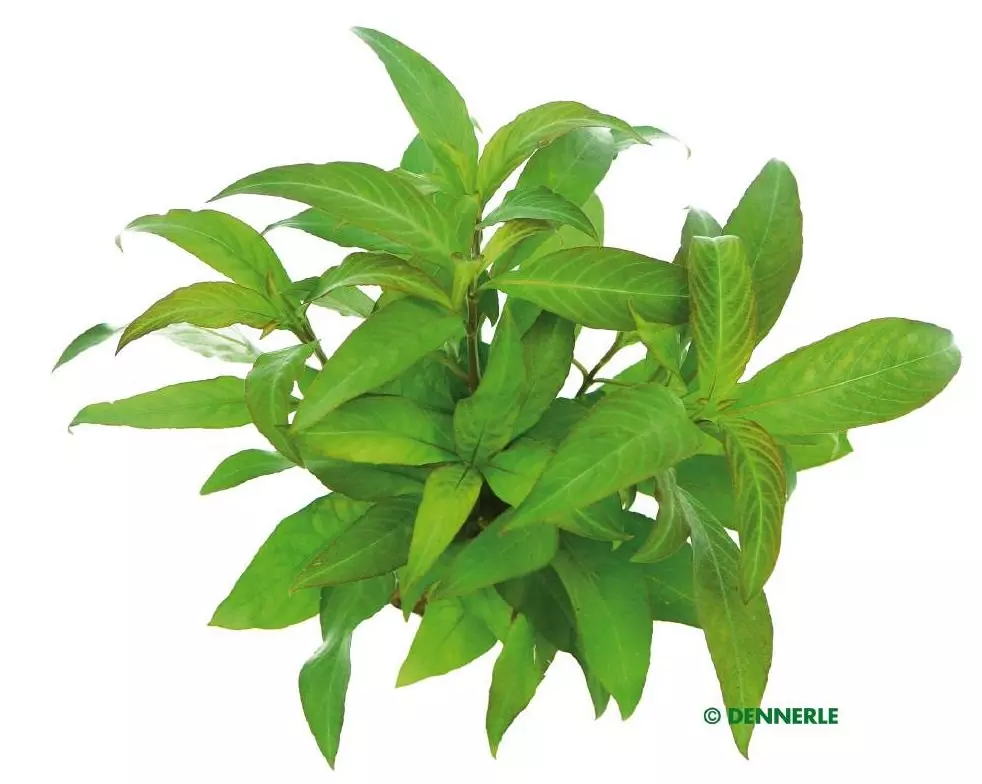
Product information "Hygrophila corymbosa Thailand - Narrow-leaved giant hygro"
Hygrophila corymbosa Thailand
Narrow-leaved giant hygrophila
max. growth height
- 50 cm
Country of origin
Suitability
Type
Family
Acanthaceae
Genus
Hygrophila
Propagation
Cuttings, side shoots
Growth rate
fast
pH
5 - 8
Water hardness
0 - 30 °dh
Notes
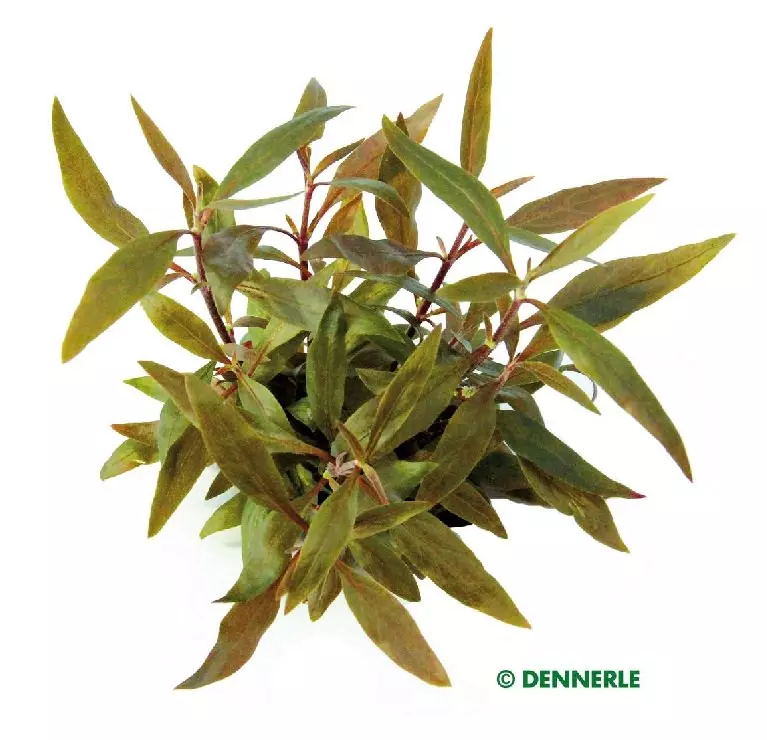
The "Thailand" variety has the narrowest leaves of the three different H. corymbosa varieties. Under good lighting, the leaves turn a reddish brown colour, under normal lighting medium to light green. The small, purple-coloured flowers can also be observed in open aquaria. Typical of their emersed shoots is the hairiness of the stems and the generally firmer and stiffer growth. Hygrophila species are also well suited to paludariums and humid terrariums.
Composition
Feeding recommendation
Technical details
Size information
3 of 3 reviews
5 out of 5 stars
Give us a rating!
Share your experience with the product with other customers.
Hygrophila corymbosa / Cherry Leaf - Giant Waterleaf
max. growth height
- 50 cm
Country of origin
Southeast Asia
Suitability
Discus aquarium
Type
Stem plant
Family
Acanthaceae
Genus
Hygrophila
Propagation
Tip cutting
Growth rate
fast
pH
5 - 8
Water hardness
0 - 30 °dh
Notes
Beginner plant
Hygrophila corymbosa is a widespread stem plant in Southeast Asia. There are some varieties that differ in leaf shape. Generally, the emergent leaves are considerably darker in colour than in the submerged stage. The giant waterleaf is a good beginner‘s plant for the background. Its rapid growth absorbs excess nutrients and thus deprives algae of their food source. As soon as the shoots reach the water surface, they should be cut back by half. A tiered arrangement of the stems is recommended.
Cryptocoryne wendtii green / Green calyx
max. growth height
10 - 25 cm
Country of origin
Sri Lanka
Suitability
NanoCube, aquascaping and community aquariums
Type
Rosette plant
family
Araceae
Genus
Cryptocoryne
Propagation
Stolons
Growth rate
medium
pH
5 - 8
Water hardness
0 - 20 °dh
Notes
This water calyx has been one of the most popular aquarium plants for decades. Its robustness and high adaptability make this plant an indispensable part of an underwater landscape, especially for newcomers. Whether in a small Nano Cube as a small group or in a large display aquarium as a large plant cushion - this water calyx combines optimum growth characteristics with a very decorative appearance! With good lighting, the plants remain significantly lower.
Microsorum pteropus (Java fern)
max. growth height
- 40 cm
Country of origin
Southeast Asia
Suitability
Discus aquarium, NanoCube
Type
family
Scrophulariaceae
Genus
Microsorum
Propagation
Daughter plants from leaves and roots
Growth rate
medium
pH
5 - 8
Water hardness
0 - 20 °dh
Notes
The Java fern is the most popular fern species in the aquarium hobby and is widespread in tropical Asia. The species is very variable with many leaf shapes and sizes. Its undemanding nature makes it the perfect plant for beginners. The plants grow best with their rhizomes tied up on stones and roots. Moderate to normal lighting is sufficient, although the plant also grows well in stronger light. Daughter plants are often formed on older leaves, which can be tied up again elsewhere with a thin fishing line.
Anubias nana on stone (dwarf spear leaf on lava stone)
The dwarf spear leaf is one of the most popular aquarium plants. This is an excellent foreground plant with very low requirements. The rhizome, a thickened shoot, must not be covered with substrate. It is best to tie the Anubias barteri nana to a stone or root. This is the best way for the plant to grow. It is not only suitable for community aquaria or nano cubes, but is also ideal for cichlids from Lake Malawi or Lake Tanganyika. The small Anubias barteri nana look beautiful and very decorative between these stone structures.
max. growth height
5-10 cm / foreground
Country of origin
West Africa
Suitability
Community aquarium, NanoCube and cichlid aquarium (cichlids)
Type
Epiphyte
Family
Araceae
Genus
Anubias
Propagation
Division of the rhizome
Growth rate
slowly
pH
5-9
Water hardness
very soft to very hard
Notes
Tie onto a stone or root
Echinodorus Ozelot - aquarium plant
max. growth height
- 30 cm
Country of origin
cultivated form
Suitability
Perch aquarium, community aquarium
Type
Rosette plant
family
Alismataceae
Genus
Echinodorus
Propagation
Adventitious plants on the flower stalk
Growth rate
medium
pH
5 - 8
Water hardness
5 - 20 °dh
Notes
The popular variety Echinodorus 'Ozelot' has been on the market for some time. Its striking pattern of spots is striking, reminiscent of the fur of the ocelot cat. The plant is very vigorous with narrow elliptical leaves. New leaves show an intense brown-red to dark red color. Over time, they turn dark olive green with the typical spotted pattern. The growth height of this attractive variety is only 20-30 cm. It is therefore also suitable for use in medium-sized aquaria.
Microsorum pteropus on root (Java fern on root)
max. growth height
up to 40cm
Country of origin
Southeast Asia
Suitability
community aquarium, perch aquarium
Type
Perennial plant
family
Scrophulairiaceae
Genus
Microsorum
Propagation
Daughter plants from leaves and roots
Growth rate
slowly
pH
5-8
Water hardness
very soft to hard
Notes
Ludwigia ovalis invitro cup
This plant, with a characteristic oval leaf
oval leaf shape in orange-pink color, is easy to grow and an interesting addition to the aquarium.
interesting addition to the aquarium. The leaves are slightly smaller
than those of the popular Repens variety. Due to their rapid growth
the clumps must be trimmed and thinned out regularly to prevent excessive growth.
prevent excessive growth. The original shape of the leaf blade
makes it an attractive addition to the plant composition in the aquarium.
aquarium.To use this plant, remove it from the cup and rinse the gel.
cup and rinse the gel thoroughly under running water.
Then divide it into small clumps of 1-2 cm and plant them at short intervals.
them at short intervals. As it grows, it will form a
form a uniform group of adult plants.This plant
comes from in vitro cultivation and is free from snails, parasites and algae.
and algae. High-quality gel was used as a medium, so it will establish itself
quickly establish itself in the aquarium.
Light requirement: medium to intensive
Optimum temperature: 10 to 28 °C
Water values: soft to hard
pH value: 4 to 7
CO2 and nutrients: recommended
Propagation: cuttings
Ludwigia ovalis invitro cup
This plant, with a characteristic oval leaf
oval leaf shape in orange-pink color, is easy to grow and an interesting addition to the aquarium.
interesting addition to the aquarium. The leaves are slightly smaller
than those of the popular Repens variety. Due to their rapid growth
the clumps must be trimmed and thinned out regularly to prevent excessive growth.
prevent excessive growth. The original shape of the leaf blade
makes it an attractive addition to the plant composition in the aquarium.
aquarium.To use this plant, remove it from the cup and rinse the gel.
cup and rinse the gel thoroughly under running water.
Then divide it into small clumps of 1-2 cm and plant them at short intervals.
them at short intervals. As it grows, it will form a
form a uniform group of adult plants.This plant
comes from in vitro cultivation and is free from snails, parasites and algae.
and algae. High-quality gel was used as a medium, so it will establish itself
quickly establish itself in the aquarium.
Light requirement: medium to intensive
Optimum temperature: 10 to 28 °C
Water values: soft to hard
pH value: 4 to 7
CO2 and nutrients: recommended
Propagation: cuttings
Ludwigia ovalis invitro cup
This plant, with a characteristic oval leaf
oval leaf shape in orange-pink color, is easy to grow and an interesting addition to the aquarium.
interesting addition to the aquarium. The leaves are slightly smaller
than those of the popular Repens variety. Due to their rapid growth
the clumps must be trimmed and thinned out regularly to prevent excessive growth.
prevent excessive growth. The original shape of the leaf blade
makes it an attractive addition to the plant composition in the aquarium.
aquarium.To use this plant, remove it from the cup and rinse the gel.
cup and rinse the gel thoroughly under running water.
Then divide it into small clumps of 1-2 cm and plant them at short intervals.
them at short intervals. As it grows, it will form a
form a uniform group of adult plants.This plant
comes from in vitro cultivation and is free from snails, parasites and algae.
and algae. High-quality gel was used as a medium, so it will establish itself
quickly establish itself in the aquarium.
Light requirement: medium to intensive
Optimum temperature: 10 to 28 °C
Water values: soft to hard
pH value: 4 to 7
CO2 and nutrients: recommended
Propagation: cuttings
🌿 Proserpinaca palustris - Decorative aquarium plant with serrated foliage
Structure and color for the middle to background layout
Proserpinaca palustris from Aqua Art is an unusual aquarium plant with finely toothed, fern-like leaves that can take on a fascinating copper-orange coloration in good light. It grows upright and gives the aquascape a special depth effect and structure thanks to its unique texture.
In well-lit tanks with a CO₂ supply, it develops vibrant colors and healthy growth. Its eye-catching appearance makes it ideal as an accent plant in the middle or background.
✅ Advantages at a glance
Unique leaf shape with serrated foliage
Color gradient from green to copper-orange in strong light
Ideal for structured middle and background design
Demanding, but very decorative under optimal conditions
Grown in vitro - free from snails and pesticides
Particularly striking in layouts with contrasting plants
📋 Product details
Name: Proserpinaca palustris
Origin: North and South America
Type: Stem plant
Growth height: approx. 20-40 cm
Light requirement: medium to high
CO₂ supply: recommended to necessary
Growth: medium
Propagation: Cuttings after pruning
Delivery form: In vitro cup (sterile)
Manufacturer: Aqua Art
💡 Zoo Roco tip
Proserpinaca palustris looks particularly impressive when planted in groups and combined with fine-leaved plants such as Myriophyllum or Rotala. Strong light and regular micronutrient fertilization are crucial for intensive colouring.
With Proserpinaca palustris from Aqua Art, you can add variety, color and structure to your aquascape - ideal for sophisticated layouts with character.Customers also searched for: Proserpinaca palustris, Aqua Art, structure-rich aquarium plant, stem plant aquarium, serrated leaves, InVitro plant aquarium, aquascaping plant, buy Proserpinaca, reddish aquarium plant, background plant aquarium
🌿 Hygrophila sp. 'Araguaia' InVitro Reddish-brown accent plant with unique growth habit
Hygrophila sp. 'Araguaia' from Aqua Art is a particularly attractive, compact stem plant with a reddish-bronze color and finely branched growth. It is ideal for the foreground to midground and provides structured contrasts and warm color accents in aquascapes.
This plant is one of the slow-growing Hygrophila species and can be easily shaped and thickened by regular pruning. Supplied as an in-vitro plant, it is free from algae, snails and pesticides - ideal for shrimp tanks and sensitive aquariums.✅ Advantages at a glance:
Compact Hygrophila with reddish-bronze leaves
InVitro - sterile, snail-free & pesticide-free
Ideal for the foreground or middle ground
Slow-growing - easy to shape and grow bushy
Good effect with strong lighting & CO₂ supply
Very decorative in natural aquariums and layouts with contrasting colors📋 Product details:
Name: Hygrophila sp. 'Araguaia'
Type: Stem plant
Placement: Foreground to midground
Growth height: approx. 5-15 cm
Light requirement: medium to high
CO₂ supply: recommended
Growth: slow
Delivery form: In vitro cup (sterile cultivated)
Manufacturer: Aqua Art💡 Zoo Roco tip:
Combine Hygrophila 'Araguaia' with light green plants such as Micranthemum or Hydrocotyle sp. 'Japan'
- to show off the darker coloring particularly well. For a
dense carpet, regular pruning is recommended.Hygrophila 'Araguaia' provides subtle color accents and fine structure in the lower section of the aquarium - ideal for sophisticated layouts and harmonious plant design.
Ludwigia sphaerocarpa 'Pilosa' InVitro Red accent plant for aquascaping
Ludwigia sphaerocarpa 'Pilosa' is a decorative and rare stem plant with a particularly intense red coloration and fine leaf structure - a real eye-catcher for any natural aquarium. This variety is ideal for the mid to background area and adds color depth and contrast to groups of green plants.
As an Aqua Art in vitro plant, it is free from snails, algae and pesticides, making it perfect for shrimp tanks and sensitive aquariums. With good lighting and CO₂ supply, it develops its full color intensity and grows vigorously but controllably.✅ Advantages at a glance:
Intensely red-colored stem plant with a fine texture
Grown in vitro - sterile, free from harmful substances
Ideal for color contrasts in the middle or background
Safe for shrimps and sensitive aquariums
Grows compact & controllable with good care📋 Product details:
Name: Ludwigia sphaerocarpa 'Pilosa'
Type: Stem plant
Placement: Middle to background
Growth height: approx. 20-40 cm
Light requirement: medium to high
CO₂ supply: recommended
Color effect: red to reddish-green
Growth: medium
Delivery form: In vitro cup (sterile cultivation)
Manufacturer: Aqua Art💡 Zoo Roco tip:
For strong red coloration, the plant should be kept under intensive lighting and regularly supplied with iron and micronutrients. A good supply of CO₂ also has a positive effect on growth and color.Ludwigia sphaerocarpa 'Pilosa' from Aqua Art brings structure, contrast and an intense play of colors to the aquarium - perfect for modern aquascaping layouts.
Invitro aquarium plant Rotala rotundifoliaColorful stem plant for the background
Rotala rotundifolia is one of the most popular stem plants in the aquarium hobby - versatile, easy to care for and particularly attractive thanks to its delicate, round leaves. Depending on the light intensity and nutrient supply, it develops a vibrant green to bright red, adding lively color accents to any aquarium layout.
The in vitro version is grown under sterile conditions and is therefore free from algae, snails and pesticides - ideal for sensitive aquariums, especially shrimp tanks. Fast-growing and adaptable, Rotala rotundifolia is ideal for the mid to background and harmonizes wonderfully with other fine stem plants in the natural aquarium.
Advantages at a glance:
✅ Changes color depending on the light - from green to red
✅ Fast-growing & ideal for dense groups of plants
✅ InVitro - guaranteed free from harmful substances & snails
✅ Safe for shrimps & sensitive tanks
✅ Perfect for aquascaping & classic plant aquariumsProduct details:
Name: Rotala rotundifolia
Type: Stem plant
Position in aquarium: Middle to background
Growth height: approx. 30-50 cm
Light requirement: Medium to high
CO₂ supply: Recommended for more intense colorationTemperature: 22 - 28°C
Delivery form: In vitro cup (grown sterile)
Color effect: Green to reddish, depending on light & nutrients
Invitro aquarium plant Bacopa myriophylloidesDelicate aquarium plant for the background
Bacopa myriophylloides is an elegant stem plant with delicate, finely pinnate leaves - a real eye-catcher for the background of your aquarium. Its special structure brings lightness and movement to the layout and is ideal for aquascaping and natural aquariums.
As a high-quality in vitro plant, it is free from algae, snails and pesticides, making it particularly safe for shrimps and sensitive tanks. With good lighting and CO₂ supply, Bacopa myriophylloides grows compactly and healthily - with a beautiful, delicate appearance.
Advantages at a glance:
✅ Delicate stem plant with feathery leaves
✅ Ideal for the background & textured layouts
✅ InVitro - sterile, pesticide-free & shrimp-safe
✅ Healthy growth with light & CO₂ addition
✅ Perfect for aquascaping & natural aquariumsProduct details:
Name: Bacopa myriophylloides
Type: Stem plant
Location in the aquarium: Background
Growth height: approx. 30-50 cm
Light requirement: Medium to high
CO₂ supply: Recommended
Delivery form: In vitro cup (grown sterile)
Special feature: Very fine, decorative leaf structure
InVitro Ammania senegalensis from Aqua ArtThe Ammania senegalensis InVitro from Aqua Art is an impressive aquarium plant with intense red coloration that is a real eye-catcher, especially in the middle and background of your aquarium. Thanks to InVitro cultivation, you get a 100 % sterile, pesticide-free plant that is also ideal for sensitive shrimps and aquascaping projects.
With sufficient light, nutrients and CO₂, Ammania senegalensis develops strong, red stems and oval leaves - perfect for colorful contrasts in plant aquariums.
Advantages at a glance:
✅ Bright red stem plant for the middle & background
✅ InVitro - free from algae, snails & pesticides
✅ Safe for shrimps & sensitive aquarium inhabitants
✅ Ideal for aquascaping & natural aquariums
✅ Fast-growing with good lighting & CO₂ supplementationProduct details:
Name: Ammania senegalensis
Origin: Africa
Type: Stem plant
Position in the aquarium: Middle to background
Growth height: approx. 20-40 cm
Light requirement: Medium to high
CO₂ supply: Recommended
Delivery form: In vitro cup (lab-grown, sterile)Planting: The plant must be removed from the cup and thoroughly
rinsed thoroughly from the gel under running water. This is best done
best done by placing the plant in a container with lukewarm water.
lukewarm water. Most of the gel will then fall off by itself. Divide
the contents of the cup into 1-2 cm clumps and place these a short distance apart in the
then place them a short distance apart in the substrate or on the selected
objects.
Micranthemum umbrosum
Micranthemum Umbrosum is a light green stem plant with small round leaves. Depending on how it is pruned, it is suitable for both the foreground and background of the aquarium. Difficulty of cultivation: easy Light requirement: medium, to high CO₂ requirement: medium Height of the adult plant: 20 cm Growth: fast Temperature: 22-26 °C Placement in the aquarium: Second level Origin: North and Central America Cup diameter: 6 cm Micranthemum Umbrosum (Round-leaved meadowfoam) is a naturally occurring plant in North and Central America. It grows both in water and in marshy areas. It is prized by aquarists for its unique appearance.
The plant forms long stems with paired, alternate, small, round, light green leaves. It has a fairly well developed root system. It needs regular pruning and is easy to shape into a desired form. It is propagated vegetatively by cutting off the shoot tips and planting them in the ground.
It likes water with a hardness of 2-12°N, a pH of 5.5-7.7 and a temperature of 24-26°C. It is sensitive to trypaflavin and can be damaged by snails. It has fairly high light requirements. With insufficient light, it pulls upward, and distinct gaps can be seen between the leaves. With sufficient light, it forms dense clumps that are pleasing to the aquarist's eye.Micranthemum umbrosum is usually placed in the background of the aquarium, but it also looks good in the foreground when cut short. It does not require absolute CO₂ fertilization, but grows much faster in its presence. When growing this plant, pay special attention to the proper concentration of iron in the aquarium water..
Planting:The plant must be removed from the cup and thoroughly rinsed from the gel under running water. This is best done by placing the plant in a container of lukewarm water. Most of the gel will then fall off by itself. Divide the contents of the cup into 1-2 cm lumps and then set them at intervals of 1 to 2 cm.
Rotala Rotundifolia 'Green'
Rotala Rotundifolia 'Green' (Round-leaved Rotala) is a mid-ground plant. It is characterized by fast growth and moderate light requirements. The color is usually light green.Difficulty of growing: easy Light requirements: medium CO₂ requirements: not necessary Height of mature plant: 50-60 cm Growth: fast Temperature: 20-28°C Placement in aquarium: third level Origin: South Asia, Southeast Asia Cup diameter 6 cm The natural range of the round-leaved Rotalas (Rotala rotundifolia) is South, Southeast and East Asia. It has been spread by humans to Australia, the United States and Brazil, among other places. She is thus already almost a globetrotter.Rotala rotundifolia 'Green' is very similar to Rotala rotundifolia, but its leaves remain bright green even in bright light.
This plant is characterized by its fast growth and its tendency to spread profusely, especially when regularly pruned. It tolerates medium light levels, but the higher the light, the more intense the plant's growth and colors. If left to grow freely, it reaches a length of 30-60 cm, cutting off access to light to the lower parts, where it begins to lose its leaves. Under favorable conditions, if left uncontrolled, it can dominate an entire tank, especially if it is a tank with a small capacity. Once it reaches the surface of the water, it begins to float on it. It does not need additional carbon dioxide fertilization unless you want to accelerate its growth even more.
It is tolerant of pH and water hardness, although like most plants, it cannot tolerate extremes.
It tolerates temperatures between 20 and 28 °C, but thrives better in the upper end of this range. It can grow in both an active and a poor substrate, but in this case it is advisable to fertilize under the roots. In well-lit, CO2-fertilized aquariums, it may require additional fertilization with macronutrients due to its rapid growth. Otherwise, it will lose its color and the leaves will become smaller. Rotala rotundifolia is propagated in the aquarium by cutting off stem pieces and placing them in a selected spot in the substrate. When transplanted to a new tank, it will need some time to acclimate and grow faster.Planting: The plant must be removed from the cup and thoroughly rinsed from the gel under running water. This is best done by placing the plant in a container of lukewarm water. Most of the gel will then fall off by itself. Divide the contents of the cup into 1-2 cm lumps and then place them at a small distance into the substrate.
Lobelia cardinalis 'Mini'Lobelia cardinalis 'Mini' is a green plant, recommended for the second level of the aquarium and for the paludarium. A very decorative species that is not particularly demanding.Difficulty of growing: easy Light requirements: medium CO₂ requirements: low Outgrown plant height: up to 20 cm Growth: medium Temperature: 15-28°C Placement in aquarium: second level Origin: North America Shell diameter: 6 cm Lobelia Cardinalis mini is a plant native to North America. In nature, it is found in wetlands and riverbanks. It is distributed from the Gulf of Mexico through the eastern states of the United States to southern Canada.
It grows in the ground and has a well-developed root system. The feathery stems can develop auxiliary roots in leafless areas. Its small leaves are bright green, oval with a conspicuous pale central vein.Lobelias can be cultivated in aquariums and paludariums. It thrives in muddy soil as well as underwater. It tolerates temperatures from 15 to 28 °C and can also be kept in a pond. It thrives best at 20-23°C and requires soft to medium-hard water with a pH between 6.5 and 7.2.Without sufficient light, the leaves turn yellow, but in bright light the undersides of the leaves turn purple. It is not particularly demanding, but regular water changes, fertilizer and CO₂ support its growth.In the aquarium, lobelia should be planted in a group in the middle ground, but it is also well suited as a foreground plant. Pruning is necessary for the plant to grow well; use scissors to remove older leaves. You can also cut back the entire plant and use the cut tips as cuttings.
Planting: The plant must be removed from the cup and thoroughly rinsed from the gel under running water. This is best done by placing the plant in a container of lukewarm water. Most of the gel will then fall off by itself. Divide the contents of the cup into 1-2 cm lumps and then set them at intervals of 1 to 2 cm.
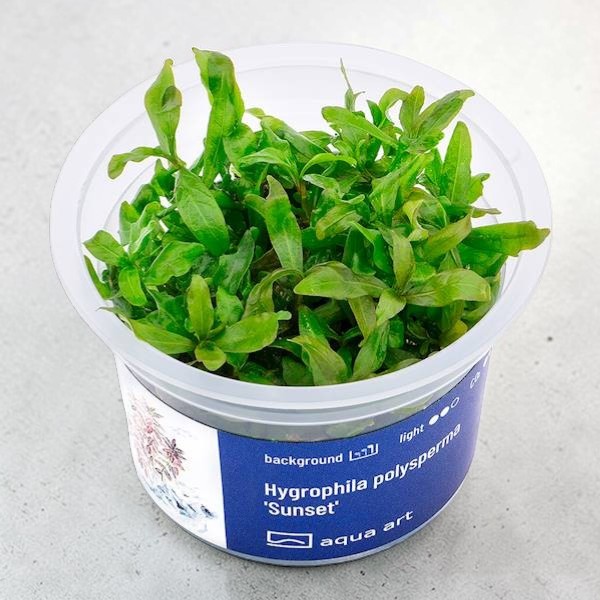
Hygrophila polysperma (Indian water lily)
max. growth height
- 50 cm
Country of origin
India, Sri Lanka and Thailand
Suitability
Discus aquariumCommunity aquarium
Type
Stem plant
Family
Acanthaceae
Genus
Hygrophila
Propagation
Cuttings
Growth rate
fast
pH
5 - 9
Water hardness
10 - 30 °dh
Notes
Cut back regularly.
Hygrophila polysperma is one of the "easiest" plants in the aquarium hobby. Even under the worst conditions, it can continue to grow to some extent. If the growing conditions are improved, the plant naturally thrives much better. With good lighting, the tips of its shoots turn a reddish brown colour. It grows very quickly, so it needs to be cut back more often than other stem plants. Highly recommended for initial planting and as an algae preventative.
Pogostemon erectus - aquarium plant from South Asia
max. growth height
- 40 cm
Country of origin
South Asia
Suitability
Aquascaping, community aquarium, NanoCube
Type
Stem plant
family
Lamiaceae
Genus
Pogostemon
Propagation
Head cuttings, side shoots
Growth rate
medium
pH
5 - 7
Water hardness
10 - 25 °dh
Notes
Another novelty from India is Pogostemon erectus. This stem plant forms very fine leaf needles in a beautiful light green colour. It is not too difficult to cultivate if sufficient light and Co2 are available. This Indian beauty is very suitable for aquascaping in combination with red or brownish plants. The growth rate is in the medium range. A group of plants can be radically pruned - the stems quickly sprout many new side shoots and the plant population becomes denser and more compact.
Alternanthera reineckii Mini - aquarium plant
max. growth height
- 10 cm
Country of origin
Cultivated form
Suitability
Aquascaping, community aquarium, NanoCube
Type
Stem plant
family
Amaranthaceae
Genus
Alternanthera
Propagation
Cuttings, side shoots
Growth rate
slow
pH
5 - 8
Water hardness
10 - 20 °dh
This new variety has only been on the market for a few years and is a colourful highlight in the foreground. In the emersed above-water culture, the growth is very similar to the stems of other Alternanthera species. The compact miniature growth can only be recognised under water. This little beauty is particularly recommended as a splash of colour for nano cubes. In combination with a light green Hemianthus carpet, a strong colour contrast can be achieved. However, a very bright, well-lit location is required.
Egeria densa "Dense-leaved" (Dense-leaved waterweed)
max. growth height
60 - 80 cm
Country of origin
Argentina, Brazil, Uruguay
Suitability
Community aquarium, garden pond
Type
Stem plant
Family
Hydrocharitaceae
Genus
Egeria
Propagation
Cuttings
Growth rate
fast
pH
5 - 9
Water hardness
0 - 30 °dh
Notes
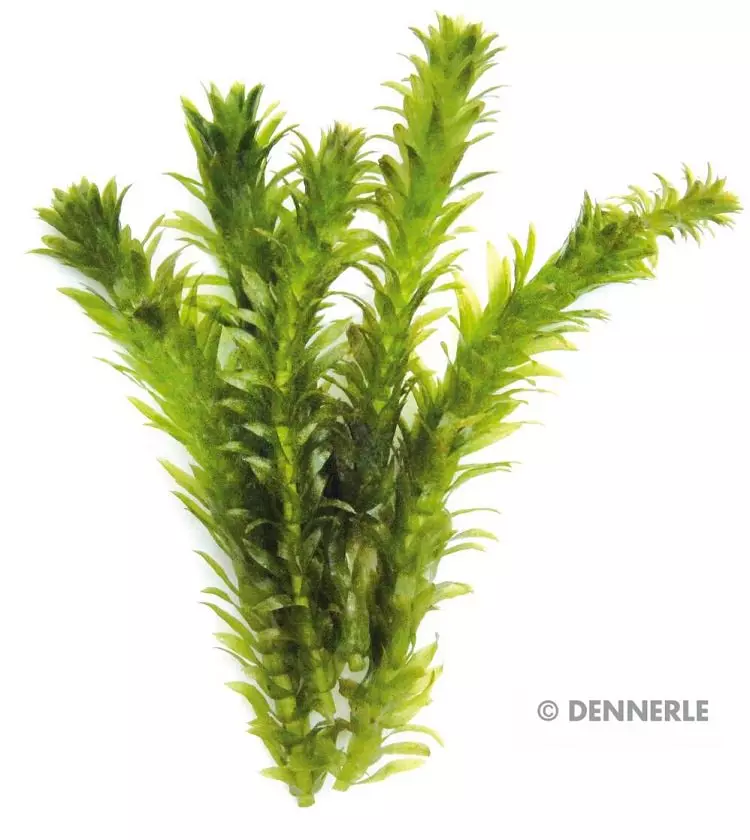
The waterweed, as it is known by its German trade name, already indicates its growth characteristics. Egeria densa is probably one of the best-growing plants of all and is completely unproblematic to cultivate. Native to south-east Brazil and Argentina, it is now naturalised on all continents. In the "dense-leaved" variety, the leaves on the stem are extremely dense and compact. It also grows very well planted or free-floating in a garden pond, but is only hardy to a limited extent.We make every effort to ensure that our plants arrive healthy and undamaged. Despite the greatest care, it can happen that plants are slightly damaged due to postage or other unforeseen events. This includes brown leaves as well as broken branches. We accept no liability for this.
Hygrophila corymbosa Stricta / Giant Waterweed
max. growth height
- 50 cm
Country of origin
Suitability
Type
Rosette plant
Family
Acanthaceae
Genus
Hygrophila
Propagation
Cuttings, side shoots
Growth rate
fast
pH
5 - 8
Water hardness
0 - 20 °dh
Notes
This variety has large but narrower leaves than the standard form H. corymbosa. Here too, the underwater leaves turn light green, but underwater the spacing between the leaf pairs is denser. In open aquariums, the shoot tips can grow out and quickly revert to their vibrant dark green colour. Good lighting and CO2-supplementation significantly promote growth. Large-leaved Hygrophila are best shown to their best advantage in aquariums of 100 cm or more. To achieve a beautiful effect, a group of plants comprising at least 10–15 stems should be planted.
CHF 8.90
❅
❆
❅
❆
❅
❆
❅
❆
❅
❆
❅
❆
This website uses cookies to ensure the best experience possible. More information...