
Exo Terra Pro Terrarium X-Small Tall - 30 x 30 x 45cmInnovative natural terrarium for reptiles, amphibians & invertebrates.The Pro Terrarium X-Small Tall from Exo Terra combines modern design with well thought-out functionality and offers a high format, versatile habitat on a compact footprint. Developed by European herpetologists, this innovative natural terrarium was specifically designed for species that like to climb, are vertically oriented or live in more humid habitats.With its deep glass pane, sturdy front door and fully optimized ventilation system, the terrarium provides perfect living conditions - both visually and climatically.Highlights & advantages at a glanceInnovative natural terrarium - vertically alignedElegant design with seamless combination of aesthetics & functionUnique, 3-stage adjustable ventilation system - prevents condensationSecure, lockable front door with spring-loaded pressure lockRemovable & lockable stainless steel mesh coverOptimum UVB penetration thanks to high-quality mesh grille structureRaised base frame - ideal for heat matsIntegrated cable & hose managementCompatible with the Exo Terra Monsoon irrigation system (optional)Access from the front and top - particularly easy to maintainDeep, waterproof base for wetland habitatsLarge, vertical habitat - perfect for climbing speciesMaximum visibility & natural habitatThe particularly deep front glass pane significantly improves the view of the terrarium inhabitants and creates an intensive, clear viewing experience. Thanks to the higher design, a vertical, structure-rich habitat can be created inside - ideal for:
small climbing geckosamphibians such as tree frogsinvertebrate climbing species
Plant and moist terrarium set-upsThe terrarium offers sufficient space for various microhabitats such as temperature gradients, humid zones and natural retreats.Innovative ventilation system to prevent condensationThe three-stage adjustable ventilation system ensures precise air flow. The patented vertical air circulation reliably prevents condensation and ensures a clear view. The integrated dirt trap retains dust or substrate particles and ensures a permanently hygienic climate.Safe & convenient maintenanceThe front-opening door is equipped with a secure pressure lock that prevents unintentional opening - ideal as escape protection.
The removable stainless steel mesh cover makes cleaning particularly easy and also offers maximum UVB permeability for lighting systems.Perfectly prepared for technology & accessoriesSeveral lockable cable and hose inlets at the rear and integrated guide channels in the interior facilitate the installation of:Irrigation systems (e.g. Exo Terra Monsoon)sensorslightingFoggersThe raised base frame also ensures that heat mats can be used safely and effectively.Technical data
Model: Pro Terrarium X-Small TallDimensions (W × D × H): 30 × 30 × 45 cmAccess: Front door & removable mesh coverMaterial: Glass & stainless steel mesh
Repti Planet Nephrolepis artificial plant 20 cm - Decorative plant for terrariums
The Repti Planet Nephrolepis artificial plant is the perfect choice for adding a lively atmosphere to your terrarium. With a height of 20 cm and a realistic design, this artificial plant creates an appealing look while being easy to care for and durable.
Product features:
Realistic design: The Nephrolepis artificial plant has a detailed finish and imitates the look of real ferns, allowing it to blend harmoniously into any terrarium. It provides a natural, green decoration that offers both reptiles and amphibians a pleasant environment.
Perfect for small terrariums: With a height of 20 cm, the plant is ideal for smaller terrariums, nanos or as a complement to larger plant designs. It blends in perfectly with the terrarium design while providing an attractive green element.
Easy to care for: Unlike living plants, the Repti Planet Nephrolepis artificial plant requires no maintenance. It does not need to be watered or pruned regularly and retains its fresh appearance.
Versatile: This artificial plant is not only suitable for terrariums, but also for aquariums, vivariums or other decorative landscapes. It is a practical replacement for natural plants and remains permanently beautiful.
Safe for animals: As it is an artificial plant, there is no risk of your animals nibbling or damaging it, making it a safe choice for terrarium inhabitants.
Zoo Roco tips for use:
Use the Repti Planet Nephrolepis artificial plant as a supplement to natural plants to create a varied and low-maintenance terrarium landscape. Make sure to position the plant in a stable place in the terrarium so that it does not tip over or get damaged by animals. Clean the artificial plant regularly with a damp cloth to remove dust and dirt and maintain its fresh appearance.
Monstera decorative plant on a pedestal - stylish elegance for the terrariumBring tropical flair to your terrarium with the artistic Monstera decorative plant on a pedestal. The characteristically shaped leaves of the Monstera create an elegant, natural look - without any care or water.Thanks to the sturdy base, the plant stands securely and can be placed flexibly in the terrarium. It is ideal for creating tropical habitats and offers animals a place to retreat and visual structure at the same time. The robust, animal-friendly material is durable and completely harmless.Product details:Decorative artificial plant in monstera designWith fixed base for easy placementMaintenance-free & permanently greenMade from non-toxic, safe materialPerfect for tropical terrariums or as an eye-catcher
Dimensions: 27x25x30 cm
Make a green statement in your terrarium with the Monstera decorative plant on a base - decorative, safe and uncomplicated!
Handbook of forage plants 2nd revised editionMarion Minch is not only a successful breeder of diverse tortoises for many years, but also an excellent connoisseur of native wild herbs. She founded and runs samenkiste.de, which is well known to many tortoise keepers and nature lovers. Her name is inextricably linked with reptile care and species-appropriate nutrition for tortoises. Her handbook of food plants summarises the most important native food plants for herbivorous and omnivorous reptiles. She not only considers tortoises, but also iguanas, spiny-tailed dragons and even chameleons. From the basics of plant biology to native wild herbs to suitable food plants for hardy tropical reptile species, this comprehensive work provides the basis for species-appropriate keeping. In the expanded and supplemented 2nd edition, the plant section is divided according to flower colour. This makes it even easier to identify wild herbs. The work has also been supplemented with a wealth of additional information and many pictures.
Geckos in the terrarium by Astrid FalkThe book offers a comprehensive introduction to geckos and their species-appropriate keeping in terrariums. It explains what you need to think about before buying a gecko and what preparations should be made. The book describes in detail how the terrarium is technically equipped and set up. The care of the animals, their special features and behaviour, their diet, reproduction and rearing of young animals are described, as well as diseases and husbandry problems with tried and tested suggestions for prevention and treatment. Individual gecko species that are particularly suitable for keeping and breeding in terrariums are portrayed in detail in the second part of the book.
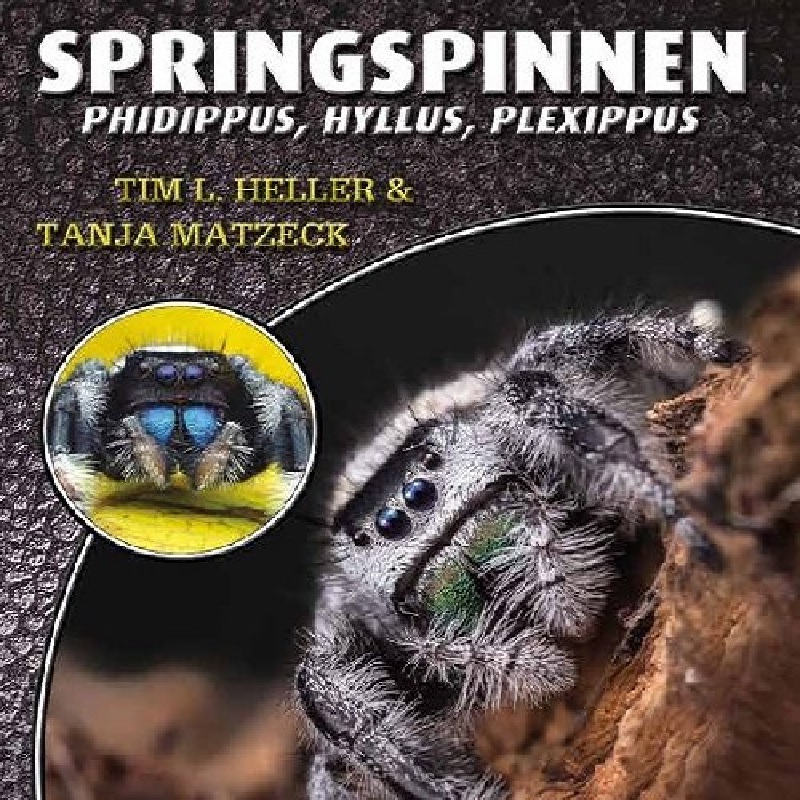
Book Jumping Spiders -
Phidippus, Hyllus & Plexippus
A guide to keeping jumping spiders of the genera Phidippus, Hyllus & Plexippus. Who can resist the charm of jumping spiders? The childlike appearance of their expressive face simply leaves no one cold! In addition, their behavior is extremely exciting to observe, their colors are bright and their requirements for species-appropriate keeping are very easy to meet. No wonder these likeable jumpers are all the rage!
This volume in the "Species by Species" series describes in detail what to look out for when buying and keeping them, introduces the most commonly kept species and color forms and provides plenty of tips on how to keep them successfully - so you can be sure they will breed well!
Species by Species introduces you to the books in this series, which present the most popular terrarium animals. Each volume offers you detailed, practical care instructions and all the information you need to successfully breed your animals.
All important questions from the required tank size to terrarium set-up, technical equipment, species-appropriate nutrition and disease prevention are answered with numerous tricks and tips.
Experienced, long-standing breeders reveal how you can encourage the animals to reproduce and raise healthy young.
All this in full color, generously illustrated and attractively designed - just about your terrarium animal - species by species
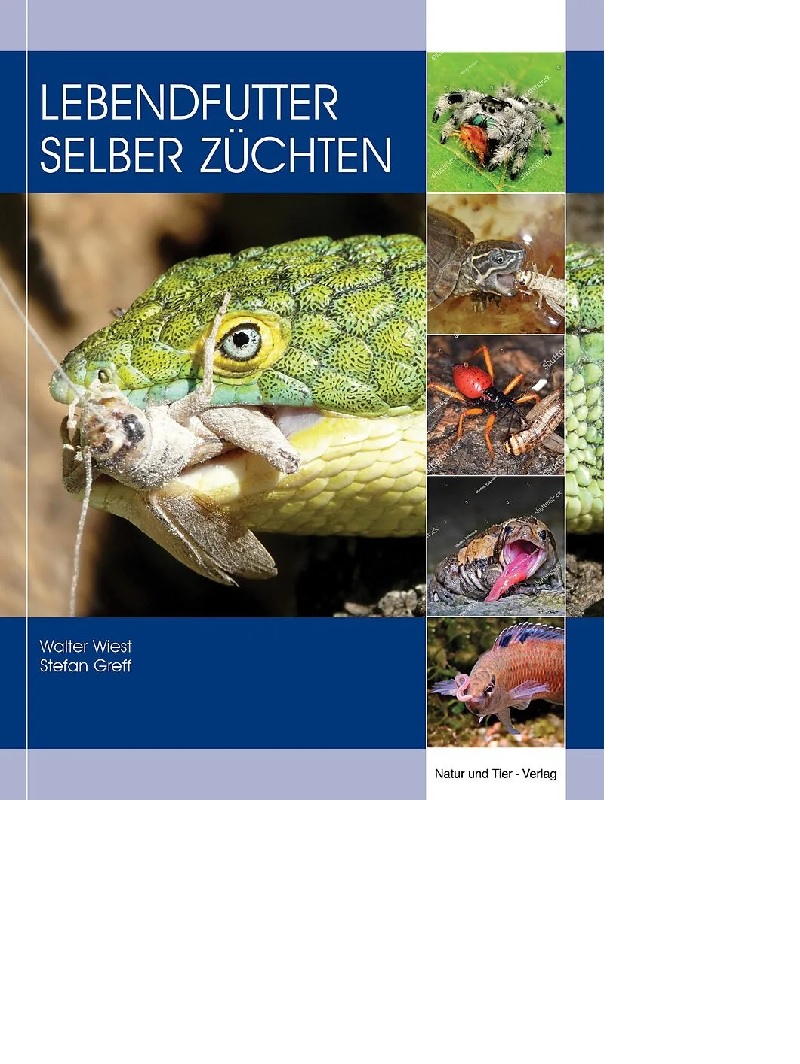
Book "Grow your own live food" - The perfect guide for pet owners
Discover practical and detailed instructions on how you can easily breed food for your reptiles, birds, fish or other animals yourself in the book "Breeding live food yourself". With valuable tips on various food insects, their care and breeding, you can save money and ensure a species-appropriate diet for your pets.
Contents of the book:
Step-by-step instructions for breeding feeder insects
Information on the best types of food for reptiles, birds and fish
Care instructions and breeding conditions for various live food species
Tips for sustainable and cost-effective food production
Why breed your own live food?
Get healthy, fresh food for your animals
Save money and reduce dependence on pet shops
Promote the health and well-being of your animals with species-appropriate food
Whether you are a beginner or an experienced pet owner, this book provides you with everything you need to successfully breed live food yourself.
Marginata 69 - New Guinea tortoises – the genus ElseyaCover storyThe unrecognised beauties: New Guinea tortoises (Andreas S. Hennig)My experiences with Branderhorst's New Guinea tortoise, Elseya (Elseya) branderhorsti (Ouwens, 1914) (Andreas S. Hennig)Keeping and breeding of Rhodin's New Guinea tortoise, Elseya (Hanwarachelys) rhodini Thomson, Amepou, Anamiato & Georges, 2015 (Andreas S. Hennig)PortraitGeoemyda spengleri, Chinese serrated tortoise (Andreas S. Hennig)ReportageMacrochelys temminckii – Experiences and impressions with vulture tortoises part 2 (Reiner Praschag)KeepingAn alternative to year-round keeping of the Egyptian tortoise in the terrarium – my experiences with seasonal outdoor keeping of Testudo kleinmanni (Ricarda Schramm)EtymologySawbacks and living maps part 4: Graptemys gibbonsi, Pascagoula humpback tortoise (Holger Vetter)Classifieds & animal placement
Ulmer Pocket Atlas of TurtlesAll turtles at a glanceDetailed portraits of all turtle speciesTerrarium types organised according to group characteristicsPictograms for a quick overviewDetailed portraits of 111 commercially available turtle species inform you about their origin, appearance and all the important data on care in the terrarium. You will also learn everything you need to know about terrarium types, natural habitats and keeping conditions. Practical pictograms provide you with the most important information at a glance.
Marginata 41 - Steppe tortoisesKeeping and breeding big-headed tortoises part 3Wintering of Mediterranean tortoisesForest tortoise breeding at Dortmund ZooContents:EditorialMagazineDatesPHOTOSTORYNews about steppe tortoisesHans - Dieter PhilippenKEEPING AND BREEDINGKeeping and breeding of the steppe tortoise in the Alpine regionWilli HoferBREEDINGNature-identical carapace proportions and shapes in the breeding of steppe tortoisesPetr Velensky & Natasha VelenskaHOLDINGWintering of steppe tortoises and European tortoisesThorsten GeierPORTRAITChinese three-keeled turtle. Chinemys[Mauremys] reevesii (Grey, 1831)Hans - Dieter PhilippenBREEDINGBig-headed tortoises in nature and human care. Part 3Reiner PraschagBREEDINGKeeping and breeding the red-headed box turtle (Podocnemis erythrocephala) Part 2David DrajeskeKEEPING AND BREEDINGBreeding of forest tortoises at Dortmund ZooSimone Karlowski & Stephanie ZechREPORTAGEThe European Studbook Foundation: off to new shores!Henk ZwartepoorteREPORTAGESurprising observation of charcoal tortoisesSusanne VogelBook tipSubscription & ServiceRegional guide
Terraria 09 - Asian tarantulas
ArabiaHardunContents:
2 EditorialKriton KUNZTOPIC4 The unrecognised tarantulas of AsiaVolker VON WIRTH & Martin HUBER10 Experiences with keeping and breeding Chilobrachys fimbriatus Martin HUBER & Volker VON WIRTH 21 Haplopelma longipes - Terrarium keeping and breeding,with new findings on the distribution area Martin HUBER & Volker VON WIRTHSCIENCE29 Herpetorama"Deep-sea toad" in Loch Ness?/Fast eaters31 New speciesCalumma-brevicorne group & Vibrissaphora promustache34 Among researchersAmphibian diversity in the Andes of PeruEdgar LEHR38 Fascinating climbing artists - The sling-tailed agamaLaudakia stellio brachydactylaMichael FRANK47 A dream in black-red-grey - Keeping and breeding Lampropeltis alterna "blairi"Thomas BAMANN54 North American soft-shelled turtles of the genus ApalonePart 3: Keeping and breedingAndreas S. HENNIG64 Frogs in and around bromeliads in the Atlantic rainforestin Espirito Santo, BrazilWeslei PERTEL, Rodrigo B. FERREIRA, Dennis RÖDDER & Rogerio L. TEIXEIRATRAVEL70 Surprising ArabiaThomas KOWALSKI, Jürgen ZILGER & Wolfgang GROSSMANNTERRARIUM PRACTICE83 Test runTerrarium introductionKriton KUNZ85 Prelude Good start: Cross-banded day gecko, Phelsuma standingiMETHUEN & HEWITT, 1913Sven ZEEB88 Eye-catcherA terrarium room dedicated exclusively to bog and teardrop turtlesHans - Dieter PHILIPPEN92 Also in your area 95 TERRAnetLizards96 TERRAglobalSea snakes from the Banda Sea (Indonesia)Mark AULIYAA day of hunting in South Africa's LowveldKarl-Heinz SWITAK104 TERRAwinn
Reptilia 49 - Food animal breedingScorpion crust lizardSpotted pythonChinese mountain dragonContents:
2 EDITORIAL
4 READER LETTERS
5 MAGAZINE
14 DATES
18 WESTERN HERP PERSPECTIVESHurricane Sale in Floridaby B. Love
20 PHOTO REPORTAGE Breeding food animals yourself - a problem?by F. Bruse & H. Werning
27 REPORTAGEEfficient and productive cricket breeding
by F. Bruse
33 REPORTAGEBreeding the chocolate cockroach (Shellfordella tartara)
by F. Bruse
36 REPORTAGEA simple Drosophila breeding project
by F. Bruse
40 HERPETOFAUNANotes on the Motagua lizard (Cnemidophorus motaguae)
by U. Schlüter
43 TRAVELHerpetological observations and more from Gambia
by U. Thieme
51 PORTRAIT AND POSTERGeoclemys hamiltoniby H. - D. Philippen
56 KEEPING AND BREEDINGKeeping and Breeding the Chinese Mountain Agame (Japalura splendida) by H. Schradin
68 HERPETOFAUNADendrobates pumilioThe strawberry frog on the Bocas Islands by B. Schwarz
72 KEEPING AND BREEDING The black Mexican chain snake (Lampropeltis getula nigrita in the terrariumby M. Thums
79 REPORTAGEAntaresia maculosa (PETERS, 1873)Spotted pythonby D. Hasselberg
85 CLASSIFIED ADS
90 RAT & TAT
93 LIBRARY
104 GLOSSESIn search of Uracentron azureumPart 1by H. Werning
Terraria 02 - Monitor lizards and crustacean lizards
Puebla King SnakeDevil's Flower
Contents:
2 Editorial Axel Kwet TITLE TOPIC
4–23 • Crustacean lizards and monitor lizards: New and familiar facts about the four-footed poisonous clan Hans-Georg Horn SCIENCE
24 Herpetorama New amphibian family tree highly controversial / New names for well-known poison dart frogs
30 New species Melanophryniscus admirabilis – a brightly coloured “black toad”
32 Among researchers In the shadow of the saw – Amphibian communities in selectively logged tropical forests Raffael Ernst
36 My Home Is My Castle Experiences with the self-construction of a terrarium for a Yemen chameleon Frank Angermann
40 A new way to disinfect terrariums Hans-Peter Berghof and Ulf Schwabe
44 Melanophryniscus – not just black toads Part 1: General information on the genus Melanophryniscus Axel Kwet
54 Ornate turtles – the genus Pseudemys Part 1: Introduction, systematics, production and trade Andreas S. Hennig
59 Keeping and breeding the Puebla King Snake, Lampropeltis triangulum campbelli Thorsten Schmidt
63 The devil's flower Idolomantis diabolica (Saussure, 1869) Part 1 Christian J. Schwarz, Jürgen E. Mehl and Jürg Sommerhalder TRAVEL
71 In the land of the Jacarés – the Pantanal Part 2 Heiko Werning TERRARIUM PRACTICE
82 Test run Artificial rock furnishings from Exo Terra84 Prelude A good start: the leopard gecko (Eublepharis macularius) Sven Zeeb
88 Eye-catcher The rainforest in your living room Mike Zawadzk
93 Also in your neighbourhood
96 TERRAnet Of snakes and poisonous snakes
98 TERRAglobal Santa Catalina – Island of the rattleless rattlesnakes Karl H. Switak A new workplace, a plethora of new animals Mirco Solé
103 Preview
104 TERRAwinn
Draco 52 Magazine
Uroplatus Madagascan Goblins in Nature & Terrarium
Contents:
EditorialSoul-stealers with adhesive lamellae – Madagascan flat-tailed geckos of the genus UroplatusPhilip-Sebastian GehringIn search of flat-tailed geckos in MadagascarPhilip-Sebastian Gehring & Patrick SchöneckerBiology, husbandry and long-term breeding of Uroplatus guentheri Mocquard, 1980 up to the fourth filial generationPatrick Schönecker A ghost in the terrarium – the successful keeping and breeding of Uroplatus phantasticus (Boulenger, 1888)Kai-Uwe Volta & Philipp Höhne Experiences in the keeping and breeding of the lichen flat-tailed gecko (Uroplatus sikorae Boettger, 1913)Philip-Sebastian Gehring Natural treasures of Madagascar: Flat-tailed geckos and their protectionFanomezana Ratsoavina and Philip-Sebastian Gehring Experiences with keeping flat-tailed geckos (Uroplatus fimbriatus) in the Masoala rainforest at Zurich Zoo, SwitzerlandSamuel Furrer
Terraria 59 - The Fire Salamander
Newly described reptiles 2015Tyrol
Contents:
Cover story: The Fire Salamander - Amphibian of the Year 2016The colourful fire salamander, which was named Amphibian of the Year 2016, has achieved great popularity worldwide. Not only in terraristics, where the animals have been successfully kept and bred for decades, but also as a symbolic and flagship species in national and international species conservation. We present the different aspects of this species in detail and address the current threat posed by a microscopic fungus that is currently threatening wild populations, but also discuss measures that terrarium keepers can take to prevent or control its rapid spread.
TerritorialHerpetoramaA headbutt with consequences – tree frogs with deadly venomDornteufel: Grass snakes without ringletsCultural follower: Frog with castleBlattsteiger: Lizards against Stuttgart 21A frog as acrobatSecond helping
Cover storyLong live the salamander: Amphibian of the Year 2016Axel Kwet, Philine Werner & Ulrich Schulte
Fire salamander – keeping and breeding a famous amphibian. Part 1: Terrarium, set-up and careYvonne & Thomas Klesius
Batrachochytrium salamandrivorans. The new threat to tailed amphibiansPaul Bachhausen
The fire salamander as a favourite and flagship species in the Thuringian Slate Mountains. Experiences from a volunteer projectManfred Klöppel
PanoramaExcursion between the Grossglockner and Lienz DolomitesRolf Leptien
In search of the Lebanese mountain viper (Montivipera bornmuelleri)Alexander Eppler
Research
New speciesList of reptiles newly described in 2015Axel Kwet
Salamandra
TerraristicsElaphe dione – an attractive snake in the terrariumHelmut Kantz
Nature and species conservation
Field notesMorphology follows genetics: A characteristic to distinguish two crested newt species from TurkeyUwe Gerlach & Michael Fahrbach
Juvenile adder consumes adult common lizardChristoph Klaus, Andreas Nöllert & Siegfried Klaus
The American Crocodile Education Sanctuary (ACES) in BelizePeter Janzen
Terrarino – the children's page Comb on, newt!Ute Nüsken
Subscription & Service Also in your areaPreview
Incubator Herpetologists' Hostel WeddingHeiko Werning
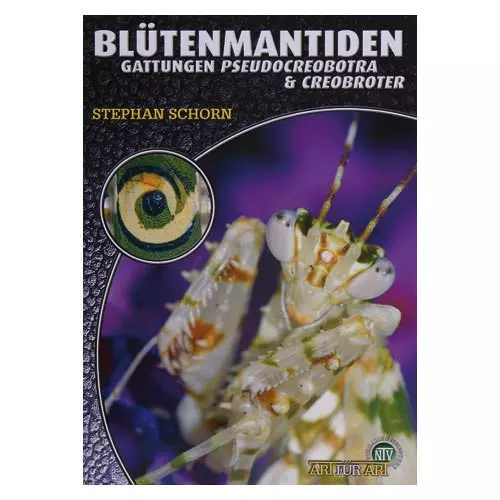
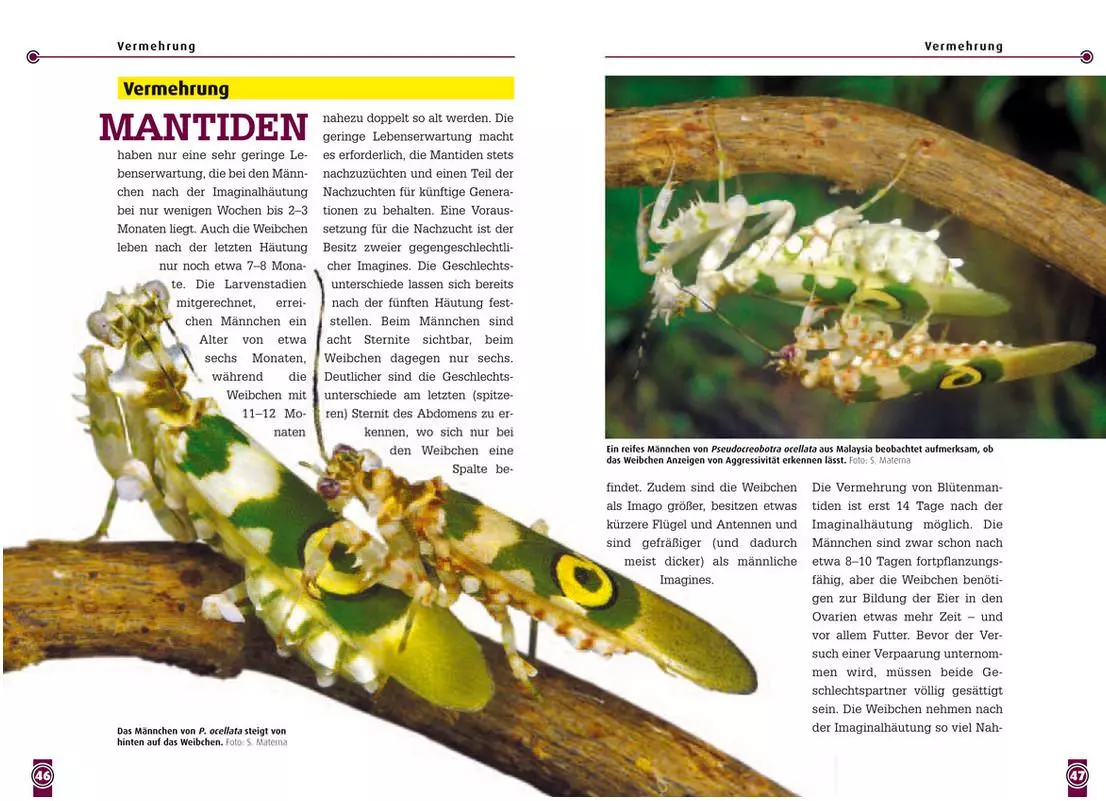
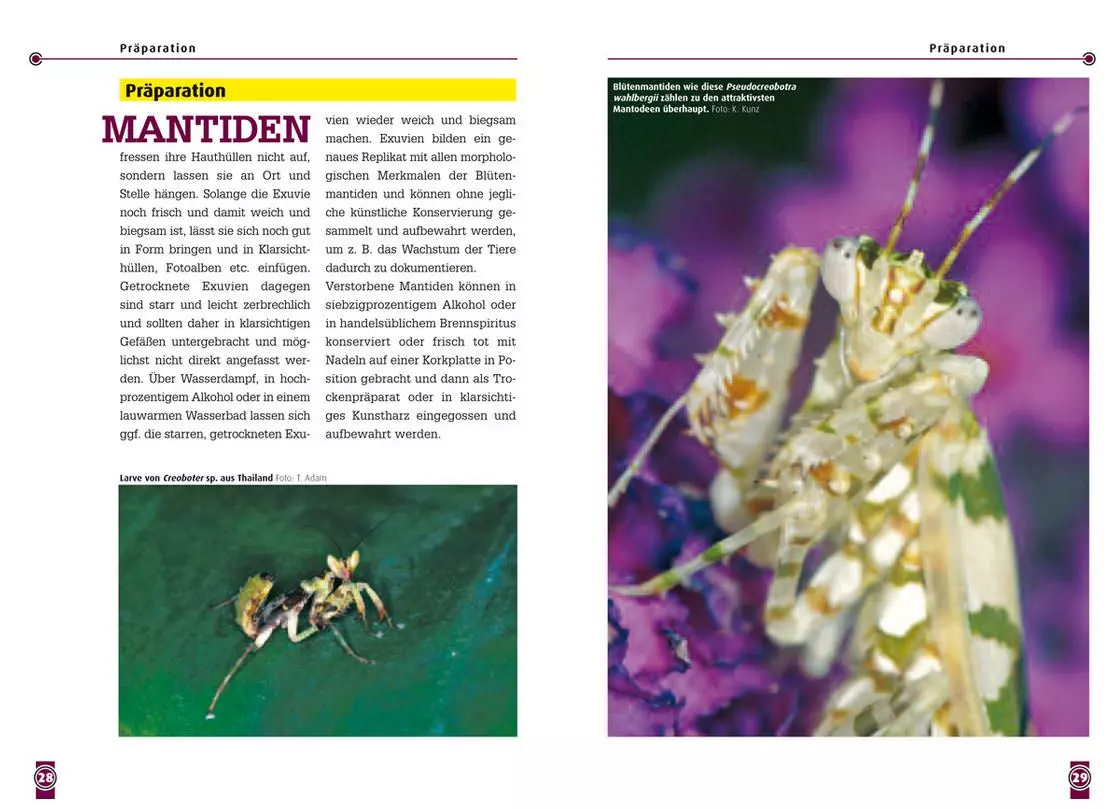
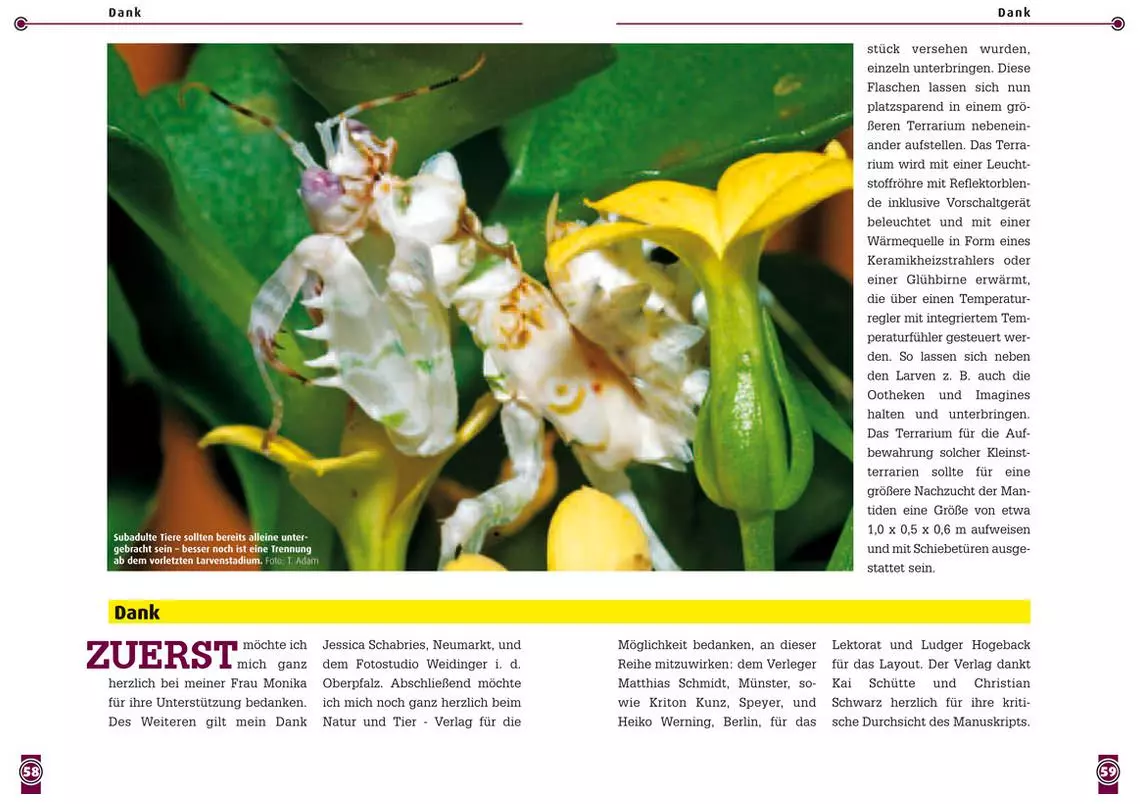
West African Mantis
Pseudocreobotra ocellata (flower mantis)
This West African mantis (flower mantis) lives in West and East Africa. There it is found in scrubland and grassland, where flowering plants also occur. The male lives for approx. 3-5 months after the last moult and the female for up to 10 months.
Food
The West African mantis feeds mainly on small, flying insects such as Drosophila, houseflies and moths. However, it also eats small crickets, crickets and cockroaches.
Care
A terrarium measuring 30x30x45cm is required to keep a West African mantis. Terrarium soil is ideal as a substrate. Live plants and branches are essential. The plants improve the climate in the terrarium. The temperature should be between 30-35°C. It can also be warmer directly under the heat lamp. The humidity should be 50-70%.
Special features
If the mantis is fed regularly and well, it can also be kept in a group. There must be enough plants and hiding places. However, losses are always to be expected.
Bernstein chains with leather strap for dogs
Amber stone strung on thread and decorated with leather strap.
in different sizes
The collar is closed with the leather straps (make knots)
The size indicates the neck circumference.
The amber, one of the oldest healing stones ever, contains natural essential oils and unfolds through friction on the fur of the animal a resinous-spicy smellLet this piece of nature convince you and relieve your pet and also your immediate environment of unpleasant, toxic chemicals.
Lore has it that amber is also said to be effective against the following symptoms:
Allergy
eczema
Allergic skin diseases.
Inflammation, arthritis
Vomiting
Axiety to touch
Fear of new things
Missing confidence due to negative experiences.
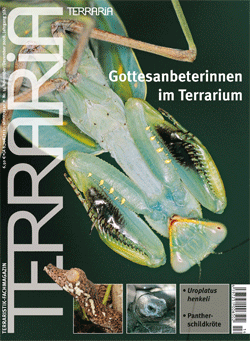
Terraria 14 - Praying Mantises in the Terrarium
Uroplatus henkeliPanther tortoise
Contents:
2 Editorial Kriton Kunz4 Magazine Gondwanaland – a future-orientated project at Leipzig Zoo / New findings on the taxonomy of pythons / snakes and culture at the Potsdam Natural History Museum / The Frankfurt Zoological Society and their activities on Galápagos12 TERRAglobal Snake dealer Joachim Bulian On the road in the Andes Maik Dobiey Cover story: Praying Mantises16 Praying Mantises: Fascinating terrarium inhabitants Timm Adam 28 A terrarium for praying mantises Timm Adam33 How to: Tips for species-appropriate care for praying mantises Timm Adam42 Breeding of Mantodea Timm Adam46 Lampropeltis triangulum andesianus – rare terrarium jewel with a dubious reputation Part 2: Reproduction Thorsten Schmidt54 Grey giants among themselves – about panther tortoises and elephants in Addo Elephant National Park, South Africa Part 3: Reproduction and lifestyle of the panther tortoise Michael Wirth63 Biology, keeping and breeding of Henkel's flat-tailed gecko, Uroplatus henkeli Christian Müttherthies71 Travel Herpetological impressions during iguana search on the French Antilles: Martinique Stefanie Bach & Patrick Schönecker82 New Species Greek wall lizards with a new name / Two new tree frogs from New Guinea85 Among Researchers In the valleys of the Andes: still unknown and already threatened Claudia Koch89 Test run Aquarium internal filter for terrarium keepers Kriton Kunz95 Eye-catcher Visiting Betty Heiko Werning99 Near You 103 Preview 104 Incubator The invasion of the stray mantises Heiko Werning