The Dachshund - Dachshund
History of the Dachshund
The Dachshund was bred in Germany as a hunting dog. Its physique is no "coincidence", but a tool: short-legged, long in the torso, very muscular and equipped with a lot of courage so that it could work under the ground and take defensive game such as the badger or the fox in the den. Over many decades, the now common varieties developed in three coat types and three sizes, so that the right dachshund could be used depending on the terrain, type of game and task.
Appearance
Body shape: The Dachshund is low, elongated and yet compact. It appears strong and agile, with an alert expression and a self-confident demeanour. The distinct musculature is typical, because as a working dog it needs a lot of "body".
A special feature of the Dachshund is that the sizes in the FCI standard are described by the chest circumference. Roughly speaking, there are standard, dwarf and rabbit dachshunds, which differ mainly in the size of their chest.
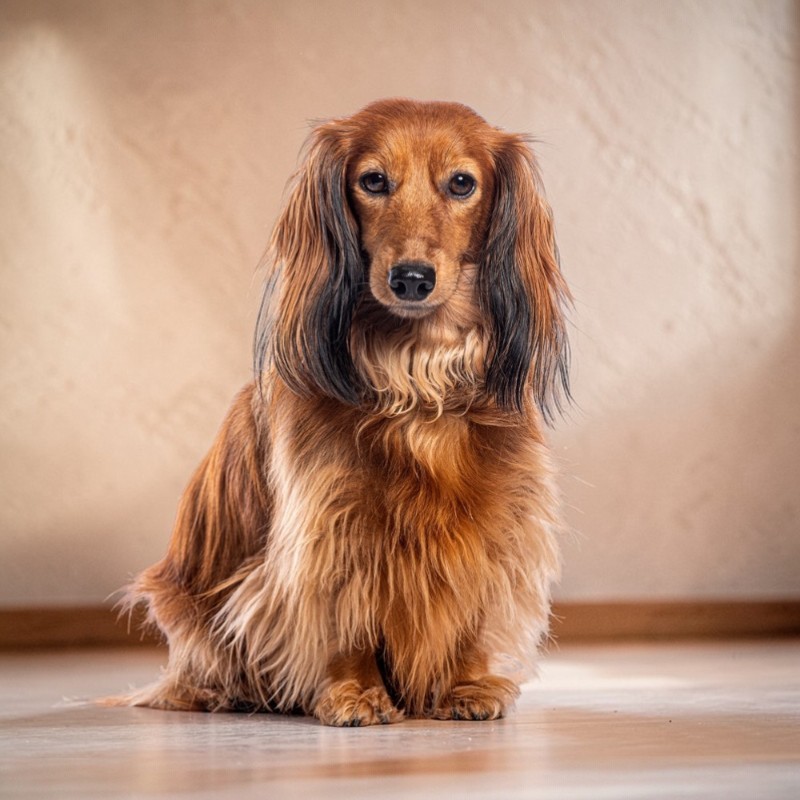
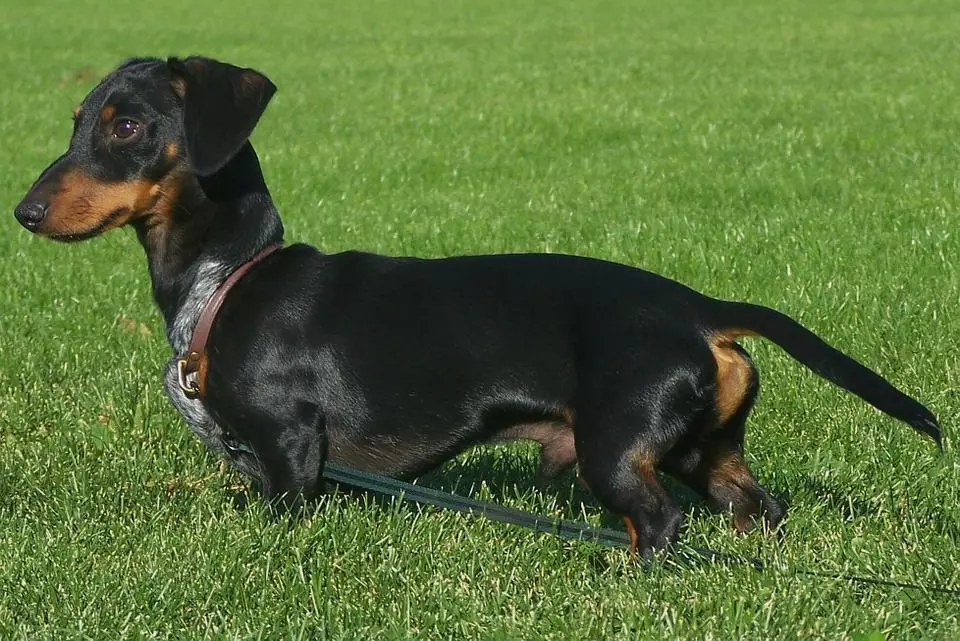
Coat: There are three coat types in the Dachshund: the short-haired variety has a smooth, close-lying coat; the wire-haired variety has a wiry coat with a dense undercoat; and the long-haired variety has a softer, longer coat with feathering on the ears, chest and tail.
Nature and character
Dachshunds are often courageous, clever and very independent. This independence comes from their hunting role, where they have to make decisions in the den. At the same time, they can be very affectionate, but often have a mind of their own and like to test the rules. With people who lead in a friendly, clear and consistent manner, they develop into cheerful, alert companions with lots of personality.
Grooming
Grooming depends heavily on the type of coat. Short-haired Dachshunds are usually uncomplicated and mainly need occasional brushing and the usual grooming ritual for ears, claws and teeth. Long-haired dachshunds should be brushed regularly to prevent tangles from forming behind the ears, on the chest and on the "trousers". Rough-haired dachshunds often benefit from regular trimming to ensure that their coat remains functional and does not become matted.
Regardless of the type of coat, it is particularly worthwhile ensuring that dachshunds have good body awareness: controlled stair climbing, no wild jumps from the sofa or bed and preferably work with ramps or low climbing aids, as their backs can be sensitive.
Health
The Dachshund's back is a central issue. The breed is considered to be significantly more susceptible to intervertebral disc disease (IVDD) than many other breeds, which can lead to severe pain or paralysis.
Studies and analyses describe a relevant frequency depending on the variety; there are indications that certain varieties may be more affected than others.
In practical terms, this means keeping slim, building up muscles, reducing jumping and lifting correctly (supporting the chest and hindquarters at the same time so that the back does not sag). These simple everyday measures are often cited as sensible preventative measures.
Education
Dachshunds are smart and independent. Training works best with clear rules, short exercises and positive rewards. Train recall and leash behaviour early on, take hunting instinct seriously (drag lead). Calmly control alertness and barking.
What special features does the Dachshund have?
- Independent and "stubborn" in appearance: he thinks for himself and likes to make his own decisions - clear rules are important.
- Often has a pronounced hunting instinct: tracks, mouse holes and the smell of game are extremely exciting; recall needs training.
- Alert and eager to bark: many reliably report noises.
- Keep an eye on their back: Because of the long back, weight control, musculature and few jumps/steps are particularly important.
- Very people orientated: Many Dachshunds love closeness, but are not always "submissive".
Suitable for first-time dog owners?
Yes, but only to a limited extent.
If you are prepared to train consistently (in a friendly but clear manner), establish a clean recall/leash and manage the hunting instinct, a Dachshund can be a good first dog. If you are looking for an "obedient" dog without discussion, it is often not ideal.
Family dog or not?
Yes - with conditions.
It works well as a family dog if children are respectful, rules apply and the dog has places to retreat to. It is less suitable for very hectic households or rough children because it quickly becomes irritated and sets clear boundaries.