Bearded dragons

Article no: ZR-LT1164-7

CHF 12.90

Stock: 1

Available, delivery time: 1-3 days

Delivery between Tuesday, 30 June and Wednesday, 1 July
Zahlungsarten
Product information "Bearded dragons"

GU Bearded Dragon Book

The expert beginner's guide to the "mini dragons" from Australia.

  • 64 pages
  • coloured photos
  • Paperback
  • Author Manfred Au
  • Published by Gräfer & Unzer

Like creatures from another planet! Bearded dragons are right at the top of the popularity scale for terrarium animals. They fascinate with their bizarre appearance and inquisitive nature. The mini dragons from Australia are also easy to care for and quickly become trusting. In GU Tierratgeber Bartagamen, bearded dragon expert Manfred Au explains everything you need to know about keeping these diurnal lizards: what to look out for when choosing them - detailed portraits of bearded dragons help with this -, how to acclimatise and care for them properly, what tastes good and keeps them fit. There are also tried and tested tips on health care, hibernation and care in the event of illness. In addition, there are many ideas and suggestions for species-appropriate and varied design of the terrarium, so that the animals are completely comfortable. The behaviour interpreter also explains typical bearded dragon behaviour. And with SOS - what to do? help is guaranteed in an emergency.

Composition
Feeding recommendation
Technical details
Size information

0 of 0 reviews

Give us a rating!

Share your experience with the product with other customers.


Suggested products

Handbook of food plants for tortoises and other reptiles
Handbook of forage plants 2nd revised editionMarion Minch is not only a successful breeder of diverse tortoises for many years, but also an excellent connoisseur of native wild herbs. She founded and runs samenkiste.de, which is well known to many tortoise keepers and nature lovers. Her name is inextricably linked with reptile care and species-appropriate nutrition for tortoises. Her handbook of food plants summarises the most important native food plants for herbivorous and omnivorous reptiles. She not only considers tortoises, but also iguanas, spiny-tailed dragons and even chameleons. From the basics of plant biology to native wild herbs to suitable food plants for hardy tropical reptile species, this comprehensive work provides the basis for species-appropriate keeping. In the expanded and supplemented 2nd edition, the plant section is divided according to flower colour. This makes it even easier to identify wild herbs. The work has also been supplemented with a wealth of additional information and many pictures.

CHF 46.50

Geckos
Geckos in the terrarium by Astrid FalkThe book offers a comprehensive introduction to geckos and their species-appropriate keeping in terrariums. It explains what you need to think about before buying a gecko and what preparations should be made. The book describes in detail how the terrarium is technically equipped and set up. The care of the animals, their special features and behaviour, their diet, reproduction and rearing of young animals are described, as well as diseases and husbandry problems with tried and tested suggestions for prevention and treatment. Individual gecko species that are particularly suitable for keeping and breeding in terrariums are portrayed in detail in the second part of the book.

CHF 28.50

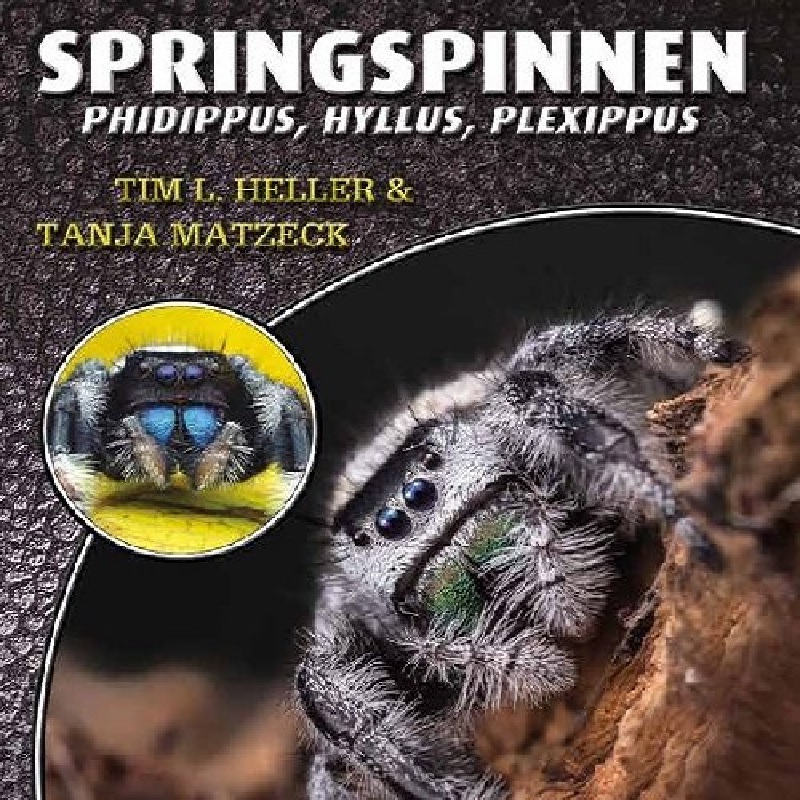
Jumping spiders Phidippus, Hyllus, Plexippus
Book Jumping Spiders - Phidippus, Hyllus & Plexippus A guide to keeping jumping spiders of the genera Phidippus, Hyllus & Plexippus. Who can resist the charm of jumping spiders? The childlike appearance of their expressive face simply leaves no one cold! In addition, their behavior is extremely exciting to observe, their colors are bright and their requirements for species-appropriate keeping are very easy to meet. No wonder these likeable jumpers are all the rage! This volume in the "Species by Species" series describes in detail what to look out for when buying and keeping them, introduces the most commonly kept species and color forms and provides plenty of tips on how to keep them successfully - so you can be sure they will breed well! Species by Species introduces you to the books in this series, which present the most popular terrarium animals. Each volume offers you detailed, practical care instructions and all the information you need to successfully breed your animals. All important questions from the required tank size to terrarium set-up, technical equipment, species-appropriate nutrition and disease prevention are answered with numerous tricks and tips. Experienced, long-standing breeders reveal how you can encourage the animals to reproduce and raise healthy young. All this in full color, generously illustrated and attractively designed - just about your terrarium animal - species by species

CHF 23.90

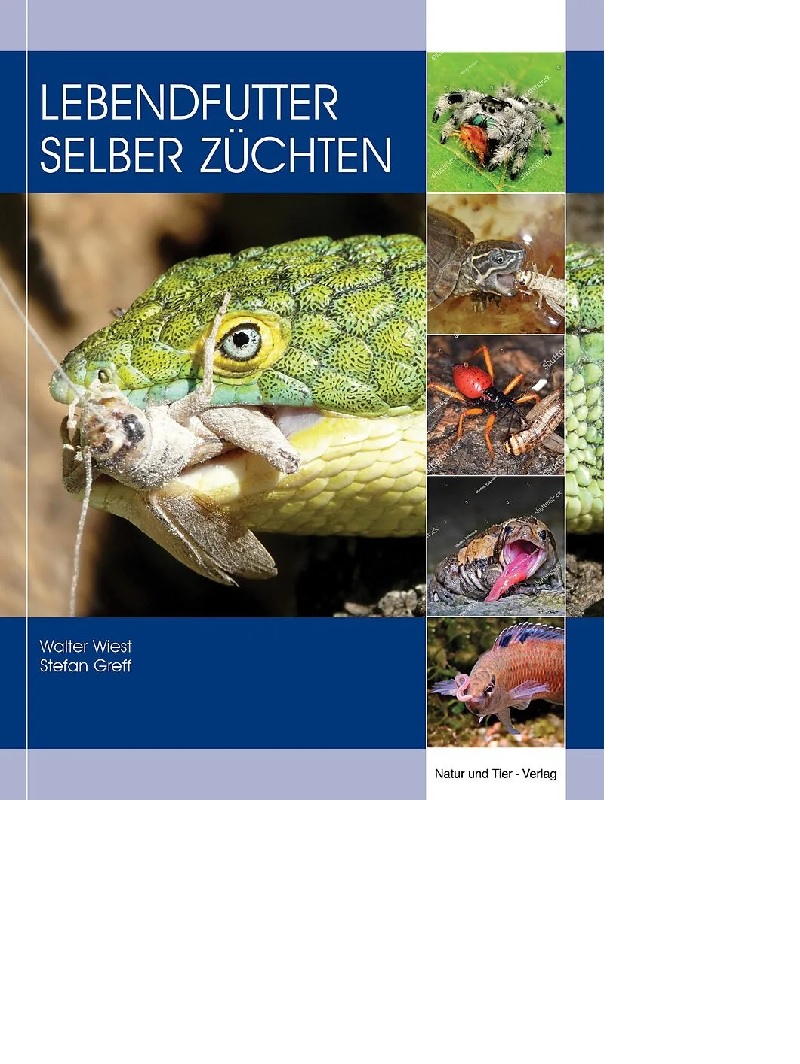
Book Breeding live food yourself
Book "Grow your own live food" - The perfect guide for pet owners Discover practical and detailed instructions on how you can easily breed food for your reptiles, birds, fish or other animals yourself in the book "Breeding live food yourself". With valuable tips on various food insects, their care and breeding, you can save money and ensure a species-appropriate diet for your pets. Contents of the book: Step-by-step instructions for breeding feeder insects Information on the best types of food for reptiles, birds and fish Care instructions and breeding conditions for various live food species Tips for sustainable and cost-effective food production Why breed your own live food? Get healthy, fresh food for your animals Save money and reduce dependence on pet shops Promote the health and well-being of your animals with species-appropriate food Whether you are a beginner or an experienced pet owner, this book provides you with everything you need to successfully breed live food yourself.

CHF 46.50

Marginata 69 - New Guinea tortoises
Marginata 69 - New Guinea tortoises – the genus ElseyaCover storyThe unrecognised beauties: New Guinea tortoises (Andreas S. Hennig)My experiences with Branderhorst's New Guinea tortoise, Elseya (Elseya) branderhorsti (Ouwens, 1914) (Andreas S. Hennig)Keeping and breeding of Rhodin's New Guinea tortoise, Elseya (Hanwarachelys) rhodini Thomson, Amepou, Anamiato & Georges, 2015 (Andreas S. Hennig)PortraitGeoemyda spengleri, Chinese serrated tortoise (Andreas S. Hennig)ReportageMacrochelys temminckii – Experiences and impressions with vulture tortoises part 2 (Reiner Praschag)KeepingAn alternative to year-round keeping of the Egyptian tortoise in the terrarium – my experiences with seasonal outdoor keeping of Testudo kleinmanni (Ricarda Schramm)EtymologySawbacks and living maps part 4: Graptemys gibbonsi, Pascagoula humpback tortoise (Holger Vetter)Classifieds & animal placement

CHF 16.50

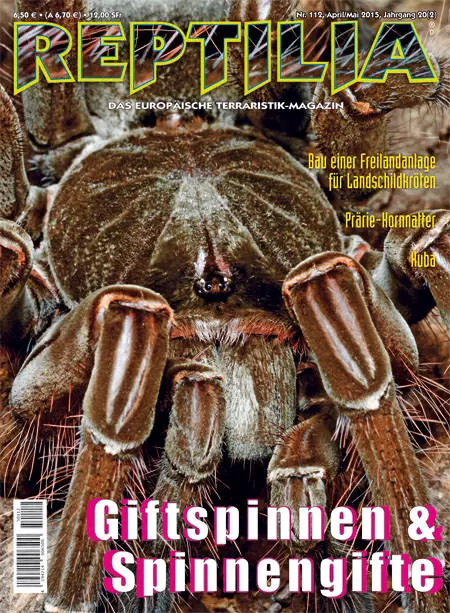
Reptilia 112 - Poison spiders & spider poisons
Reptilia 112 - Venomous Spiders & Spider Venoms Building an outdoor enclosure for tortoisesPrairie horned snakeCubaContents: Cover story: Venomous spiders & spider venomsAll spiders are venomous, including tarantulas, which are particularly popular in terrariums. Nevertheless, they are largely harmless to humans, but are often considered dangerous. This becomes a problem when legislators believe they need to protect the public from these “dangerous animals”. But how dangerous are venomous spiders really? We provide an overview, take a tour of the spider fauna in Australia, the kingdom of all venomous animals, and cover the keeping of venomous spiders in terrariums, from tarantulas to black widows. EditorialMAGAZINEDATES WESTERN HERP PERSPECTIVESFrog paradise EuropeB. Love Photo story“Venomous spiders” in terraristicsK. Kunz ReportageQueensland’s spiders and their venoms Part 1: The mygalomorph spidersT. J. Hauke Bibliography Keeping and breedingVenomous yet harmless – the genera Loxosceles and Sicarius in the terrariumG. Ackermann & A. Leetz ReportageStung by a tarantula? The South Russian tarantula (Lycosa singoriensis) in BurgenlandH.-J. Luef TERRARIUM PRACTICEOutdoor enclosure for tortoises 2.0M. Hallmen KEEPING AND BREEDINGRediscovering an old acquaintance: the Prairie Corn Snake (Pantherophis emoryi emoryi)K. Kessler Animals of our homelandThe smooth newtR. Leptien ServiceLibraryALSO NEAR YOU JourneyCuba all inclusive. Beaches, cocktails, anoles and roll-tailed iguanasI. Kober PREVIEW BRUTKASTEN Chuckwalla anecdotes Part 1H. Werning

CHF 12.00

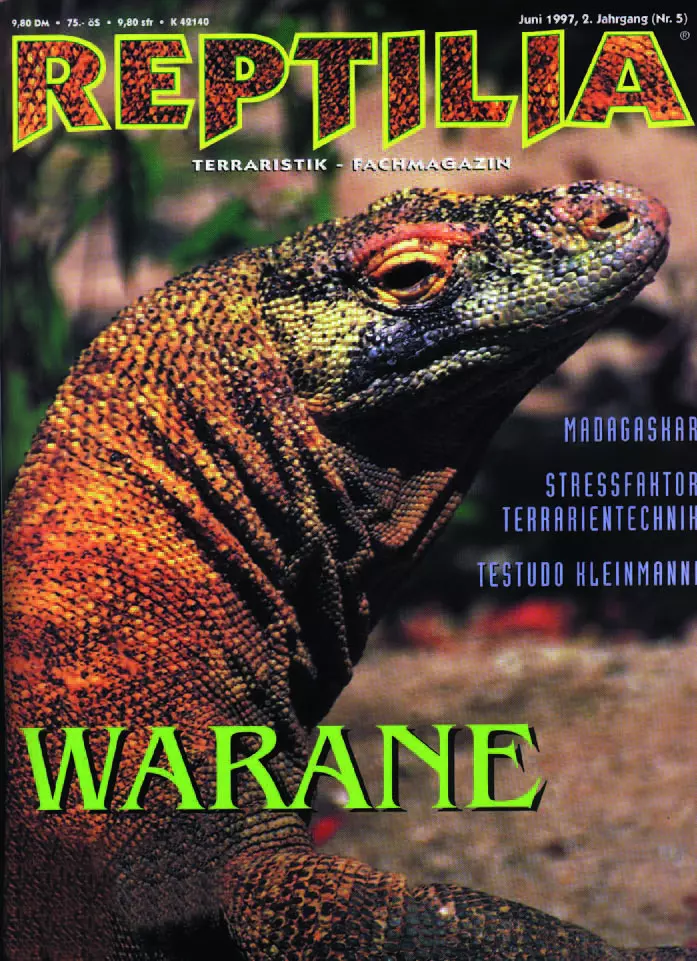
Reptilia 05 - Monitor Lizards
Reptilia 05 - Monitor lizards MadagascarStress factor terrarium technologyTestudo Kleinmanni Contents: Page 2 - EditorialPage 3 - Letters to the editorPage 4 - Discussion: What to do after snake bites?Page 6 - MagazinePage 16 - Photo reportage: Monitor lizards, by J. de Ávalos and P. Martínez CarriónPage 22 - Keeping and breeding: Keeping and breeding monitor lizards, by B. EidenmüllerPage 26 - Herpetofauna: The spoilt dragons of Komodo, by H. WerningPage 28 - Monitor lizards - Use by humans, by Dr M. GaulkePage 33 - Travelogue: Journey to the south-east of Madagascar, by W. Schmidt and K. LiebelPage 39 - Portrait and poster: Dendrobates tinctorius, by M. SchmidtPage 43 - Herpetofauna: Testudo kleinmanni, by B. DevauxPage 52 - Terraristics: Stress in the terrarium, by G. VossPage 56 - Herpetofauna: Frogs of the genus Eleutheradactylus in Costa Rica, by J. EhmckePage 60 - Herpetology and Culture: Magic and superstition, Part 2: Snakes and lizards, by L. B. Carissimi-PrioriPage 69 - Reptilia on the road: Terrazoo Moers, by W. SchmidtPage 74 - Advice and actionPage 75 - LibraryPage 80 - Incubator: Column by H. Werning

CHF 9.80

Reptilia 108 - Manless
Reptilia 108 Unlabelled AmazonasPraying mantisMotorised brooderContents:Cover story: Masterless! – About animal shelters, rescue centres and fire brigade operationsWith the increasing popularity of terrarium keeping, problems have also arisen that were previously only known from classic pets. Overburdened owners abandon animals or let them fall into neglect, and when personal circumstances change, there is suddenly no space for a terrarium. Traditional animal shelters are overwhelmed, and animal welfare activists use this as an argument against the keeping of wild animals. We examine the issue, show solution approaches, present the largest German reptile rescue centre in Munich along with its spectacular new project “Chelonia”, and see how firefighters prepare to rescue a snake as well as a cat. EditorialMAGAZINEEVENTS WESTERN HERP PERSPECTIVESNew horizonsB. Love ReportageTerrarium animals – a problem for animal shelters?K. Kunz REPORTAGENot just home, but a home for a while. The reptile rescue centre MunichH. Werning ReportageExotic emergency call. How the professional fire brigade equips itself for operations with reptilesS. Müller          ReportageDifferent continents – similar problems:? About the work of a reptile rescue centre in ArizonaS. Kalopp HUSBANDRYThe praying mantis Mantis religiosa. An insect of superlativesU. & J. Schimmelpfennig PracticeConcept and construction of a motorised brooderP. Schönecker ALSO IN YOUR AREA ANIMALS OF OUR HOMEThe tree frogR. Leptien Service TravelAlong the mighty Amazonas. In the herpetological paradiseK.-H. Switak PREVIEW INCUBATOR Television is coming – Part 1H. Werning

CHF 12.00

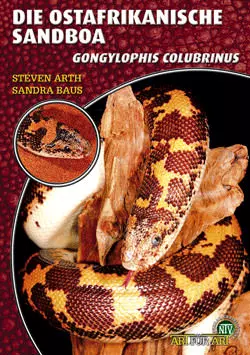
The East African sand boa
All about the East African Sand Boa 64 pages Format 14.5 x 21 cm Colour photos Author Steven Arth & Sandra Baus Contents: Foreword Description of the species Relationship Behaviour and lifestyle Colour variations Legal regulations Considerations before acquisition Acquisition of the animals Transport and quarantine Socialisation Keeping in the terrarium Terrarium and terrarium design Terrarium technology and climate Keeping in the "rack" Care work Feeding Breeding Sexual differences and sexual maturity Mating trigger Pregnancy and birth of the young animals Housing, feeding and further rearing of the young animals Diseases Thanks Further information Literature used and further reading

CHF 19.90

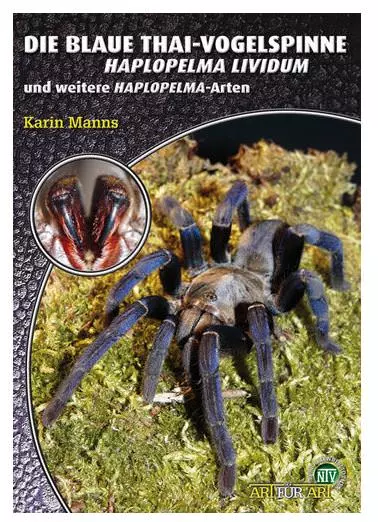
NTV - Haplopelma lividum
Haplopelma lividum - All about the blue Thai tarantula 64 pages numerous colour photos Series species by species A5 Paperback Author Karin Manns Publisher NTV The booklet explains everything about the systematics, anatomy, distribution, appearance, life expectancy and natural enemies. It also explains how poisonous the Haplopelma lividum is, which legal regulations apply to it and acquiring this tarantula. From the contents: Foreword Systematics and anatomy Distribution Appearance and behaviour Natural enemies Life expectancy How poisonous is Haplopelma lividum Legal regulations Acquisition and transport Keeping and care The terrarium Technology and climate Socialisation Nutrition How to handle the tarantula Moulting Diseases and injuries Reproduction - Mating - Cocoon construction and rearing Conclusion

CHF 19.90

NTV Green snakes
NTV - Grass snakes Thorsten Schmidt 88 pages 17 x 0.9 x 22.3cm many colour photos The splendidly green-coloured, diurnal and completely harmless grass snakes are much sought-after terrarium animals. The fact that they can be easily fed with insects and other invertebrates is another plus point in favour of keeping these lively snakes.This guide tells you everything you need to know to keep and breed grass snakes successfully.Thorsten Schmidt explains here from his rich experience with the animals that properly cared for grass snakes are not at all problematic, but can be easily cared for and also bred. The author explains what to look out for and gives specific tips on setting up and equipping species-appropriate terrariums.

CHF 33.50

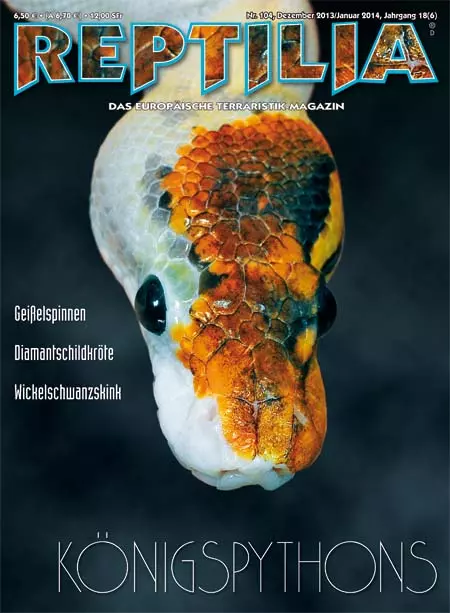
Reptilia 104 - King Pythons
Reptilia 104 - King PythonsFlagellate spidersDiamondback terrapinWraptail skinkContents:What a rise! From an eccentric that was almost impossible to feed to an almost domesticated animal bred hundreds of thousands of times in just two decades - the royal python has had an unparalleled terrarium career. We offer a colourful overview of the breeding varieties of this giant snake, present the latest new breeds, take a close look at possibly the most expensive morph and discuss the controversial issue of rack keeping in this species.EditorialMAGAZINEDATESPHOTOREPORTAGEFrom problem animal to superstarK. KunzTERRARIUM PRACTICENot animal-friendly? Comments on the rack keeping of royal pythonsS. BroghammerKEEPING AND REPRODUCTIONNew colours for the kingS. BroghammerKEEPING AND REPRODUCTION"Not without a Yellowbelly"S. BroghammerREPORTAGEChampagneS. BroghammerKEEPING AND REPRODUCTIONBreeding the diamondback terrapin, Malaclemys terrapinX. WapelhorstReportageWraptail skinks - or: Some are the same, others are more equalM. ZollwegKEEPING AND BREEDINGKeeping and breeding the African whip spider Damon variegatusE. BruinsKEEPING AND BREEDINGLong-tailed lizards from Okinawa. Terrarium keeping and breeding of Takydromus smaragdinusA. DanierLibraryWESTERN HERP PERSPECTIVESThe white magicB. LoveServicesJourneyHerpetological impressions on safaris in East AfricaM. HeartALSO NEAR YOUPREVIEWBRUTKASTEN Sexual dimorphismM. Zawadzki

CHF 12.00

Customers also saw

Rankin's dragon
The dwarf bearded dragon (Pogona henrylawsoni) Area of origin: The origin of the dwarf bearded dragon (Pogona henrylawsoni) is Australia. Habitat: The bearded dragon can be found in semi-deserts, steppes and tree steppes. The bearded dragon is actually quite common in its natural habitat. The bearded dragon likes to live alone. However, its territory in the wild is close to other members of the same species. The males occupy a territory that covers several square metres. They sit and nap frequently. They also like to stay in populated and agricultural areas. The matching camouflage colouring and the spiny scales help the contours of the bearded dragons to disappear in their surroundings. Care: Temperature and humidity are very important when keeping dwarf bearded dragons. The average temperature during the day is 35 °C, at night it may cool down to 20 °C. However, the bearded dragon should have different temperature zones that you can switch between. Stones illuminated by a lamp provide a basking spot. Wood and roots are very attractive and provide the dwarf bearded dragons with the necessary climbing opportunities and sleeping places. It is always important to observe the distance between the lamps and the furniture when setting up the enclosure, as bearded dragons are animals that are alternately warm and cold, they usually realise too late if they are already burnt.The humidity should be between 30 % and 40 % during the day and between 50 % and 60 % at night. Dwarf bearded dragons should be given the opportunity to dig. A thick layer of clay and sand is therefore a suitable substrate. The terrarium should be at least 120 cm x 60 cm x 8 cm for two animals. Food: Bearded dragons are so-called omnivores. They need fresh green food as well as insects. You have to be very careful with too many insects, as this unfortunately leads to them becoming overweight. The older the bearded dragon gets, the more they become vegetarians and sometimes refuse to eat insects altogether. Feeding example:MO: courgette, chicory, chives, carrot, hay, Golliwoog food plantMI: Endive, daisies, dandelion, hay and two insects (crickets, desert locusts or zophobas etc.)FR: Pumpkin, rocket, hazelnut leaves, hay, Golliwoog food plantSO: chicory, dandelion, desert locusts, Argentine cockroaches, hay When feeding green food, care must be taken to ensure that it is not too wet and is cut into bite-sized pieces, as bearded dragons do not often have access to juicy greenery in the wild. Hay is well tolerated as it is dried.If diarrhoea occurs, more hay can be added to the food, it usually disappears after a week, otherwise a vet who is familiar with reptiles should be consulted.