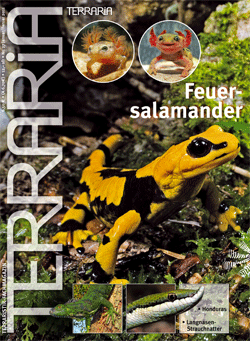
Terraria No. 28 - Fire salamander

Article no: terraria28

CHF 12.00

Stock: 4

Available, delivery time: 1-3 days

Delivery between Wednesday, 23 September and Thursday, 24 September
Zahlungsarten
Product information "Terraria No. 28 - Fire salamander"

Terraria No. 28 - Fire salamander

Langnasen-Strauchnatter
Honduras

Inhalt:

Die wundervollen Feuersalamander zählen zu den schönsten Amphibien überhaupt und – nicht erst seit Lurchis Abenteuern – auch zu den bekanntesten. Grund genug, den sympathischen Gesellen ein Titelthema zu widmen. Die Übersicht über die europäischen Unterarten – mit prächtigen Bildern von Benny Trapp – gerät zu einem wahren Farbenrausch in Gelb und Schwarz. Umso erfreulicher für Terrarianer ist, dass Feuersalamander einfach und ohne technischen Aufwand zu halten und nachzuziehen sind – wie Thomas und Yvonne Klesius zu berichten wissen. Und umso erstaunlicher für Herpetologen ist, dass manches im Leben dieser vermeintlich gut bekannten Art doch noch unerforscht ist – wie Wolfgang Sauer an seinen über viele Jahre im Aquarium lebenden „Feuer-Wasser-Salamandern“ herausfand, den ersten sicher nachgewiesenen neotenen Salamanderlarven.

Editorial
Magazin
Seltenes Phänomen: Erfolgreiche zweite Reifehäutung eines Männchens von Brachypelma schroederi
Suzette Sprengel

30 Tage im Reptiliencenter Alice Springs
Sandra Fallend

Alarmierender Rückgang von Schlangenpopulationen
Kriton Kunz

Auch Echsen in höchster Gefahr
Kriton Kunz

Nachschlag - Rhinoclemys funerea/Kinosternon scorpioides

TERRAglobal
Der Garten – ein Freilandterrarium
Joachim Bulian

Titelthema
Der Europäische Feuersalamander (Salamandra salamandra) und seine Unterarten
Axel Kwet

„Feuer-Wasser-Salamander“ – meine neotenen Salamanderlarven
Wolfgang Sauer

Biologie, Haltung und Nachzucht des Portugiesischen Feuersalamanders, Salamandra salamandra gallaica
Thomas Klesius und Yvonne Klesius

Grüne Schönheit mit langer Nase – Haltung und Nachzucht der Langnasen-Strauchnatter (Philodryas baroni)
Christian Ehrlich

Das Schildkrötenjahr Freilandbiologie und Haltung europäischer Landschildkröten über den Jahreslauf Teil 1: März bis April – Frühlingserwachen
Michael Wirth

Reise
„Exo Terra“-Expedition 2010 nach Honduras
Roland Zobel

Neue Arten
Liste der im Jahr 2010 neu beschriebenen Amphibien
Axel Kwet

Blickfang
Die Schildkrötenanlage von Irmhild und Klaus Glückert
Michael Wirth

In Ihrer Nähe
Abo & Service
Vorschau

Brutkasten
Bis aufs Blut
Heiko Werning


Composition
Feeding recommendation
Technical details
Size information

0 of 0 reviews

Give us a rating!

Share your experience with the product with other customers.


Suggested products

Handbook of food plants for tortoises and other reptiles
Handbook of forage plants 2nd revised editionMarion Minch is not only a successful breeder of diverse tortoises for many years, but also an excellent connoisseur of native wild herbs. She founded and runs samenkiste.de, which is well known to many tortoise keepers and nature lovers. Her name is inextricably linked with reptile care and species-appropriate nutrition for tortoises. Her handbook of food plants summarises the most important native food plants for herbivorous and omnivorous reptiles. She not only considers tortoises, but also iguanas, spiny-tailed dragons and even chameleons. From the basics of plant biology to native wild herbs to suitable food plants for hardy tropical reptile species, this comprehensive work provides the basis for species-appropriate keeping. In the expanded and supplemented 2nd edition, the plant section is divided according to flower colour. This makes it even easier to identify wild herbs. The work has also been supplemented with a wealth of additional information and many pictures.

CHF 46.50

Geckos
Geckos in the terrarium by Astrid FalkThe book offers a comprehensive introduction to geckos and their species-appropriate keeping in terrariums. It explains what you need to think about before buying a gecko and what preparations should be made. The book describes in detail how the terrarium is technically equipped and set up. The care of the animals, their special features and behaviour, their diet, reproduction and rearing of young animals are described, as well as diseases and husbandry problems with tried and tested suggestions for prevention and treatment. Individual gecko species that are particularly suitable for keeping and breeding in terrariums are portrayed in detail in the second part of the book.

CHF 28.50

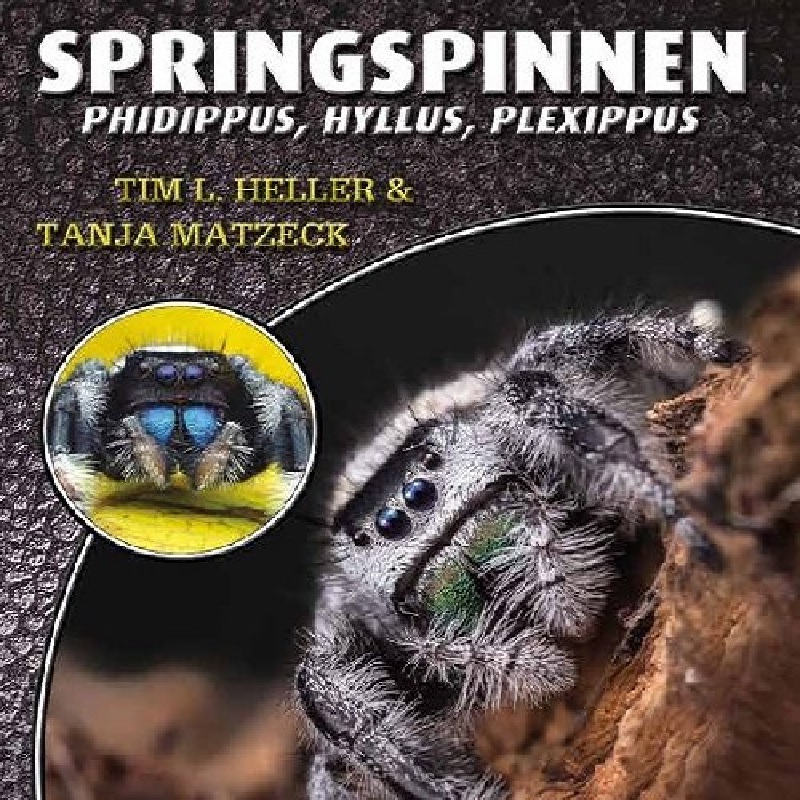
Jumping spiders Phidippus, Hyllus, Plexippus
Book Jumping Spiders - Phidippus, Hyllus & Plexippus A guide to keeping jumping spiders of the genera Phidippus, Hyllus & Plexippus. Who can resist the charm of jumping spiders? The childlike appearance of their expressive face simply leaves no one cold! In addition, their behavior is extremely exciting to observe, their colors are bright and their requirements for species-appropriate keeping are very easy to meet. No wonder these likeable jumpers are all the rage! This volume in the "Species by Species" series describes in detail what to look out for when buying and keeping them, introduces the most commonly kept species and color forms and provides plenty of tips on how to keep them successfully - so you can be sure they will breed well! Species by Species introduces you to the books in this series, which present the most popular terrarium animals. Each volume offers you detailed, practical care instructions and all the information you need to successfully breed your animals. All important questions from the required tank size to terrarium set-up, technical equipment, species-appropriate nutrition and disease prevention are answered with numerous tricks and tips. Experienced, long-standing breeders reveal how you can encourage the animals to reproduce and raise healthy young. All this in full color, generously illustrated and attractively designed - just about your terrarium animal - species by species

CHF 23.90

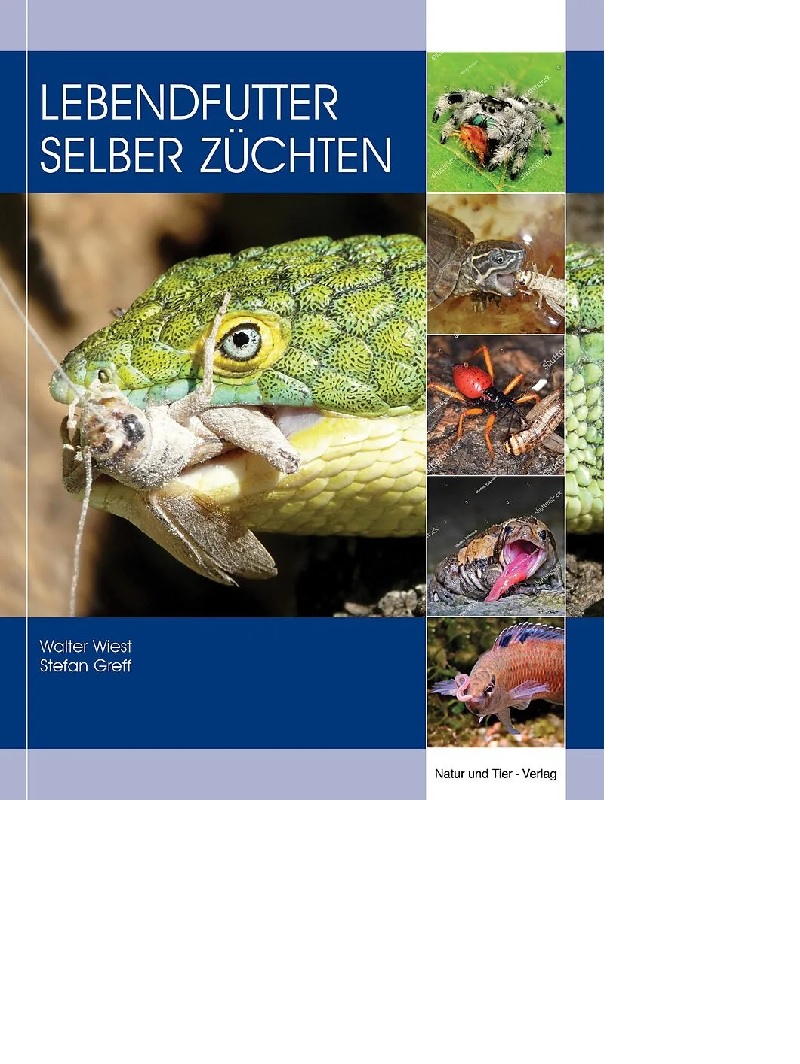
Book Breeding live food yourself
Book "Grow your own live food" - The perfect guide for pet owners Discover practical and detailed instructions on how you can easily breed food for your reptiles, birds, fish or other animals yourself in the book "Breeding live food yourself". With valuable tips on various food insects, their care and breeding, you can save money and ensure a species-appropriate diet for your pets. Contents of the book: Step-by-step instructions for breeding feeder insects Information on the best types of food for reptiles, birds and fish Care instructions and breeding conditions for various live food species Tips for sustainable and cost-effective food production Why breed your own live food? Get healthy, fresh food for your animals Save money and reduce dependence on pet shops Promote the health and well-being of your animals with species-appropriate food Whether you are a beginner or an experienced pet owner, this book provides you with everything you need to successfully breed live food yourself.

CHF 46.50

Marginata 69 - New Guinea tortoises
Marginata 69 - New Guinea tortoises – the genus ElseyaCover storyThe unrecognised beauties: New Guinea tortoises (Andreas S. Hennig)My experiences with Branderhorst's New Guinea tortoise, Elseya (Elseya) branderhorsti (Ouwens, 1914) (Andreas S. Hennig)Keeping and breeding of Rhodin's New Guinea tortoise, Elseya (Hanwarachelys) rhodini Thomson, Amepou, Anamiato & Georges, 2015 (Andreas S. Hennig)PortraitGeoemyda spengleri, Chinese serrated tortoise (Andreas S. Hennig)ReportageMacrochelys temminckii – Experiences and impressions with vulture tortoises part 2 (Reiner Praschag)KeepingAn alternative to year-round keeping of the Egyptian tortoise in the terrarium – my experiences with seasonal outdoor keeping of Testudo kleinmanni (Ricarda Schramm)EtymologySawbacks and living maps part 4: Graptemys gibbonsi, Pascagoula humpback tortoise (Holger Vetter)Classifieds & animal placement

CHF 16.50

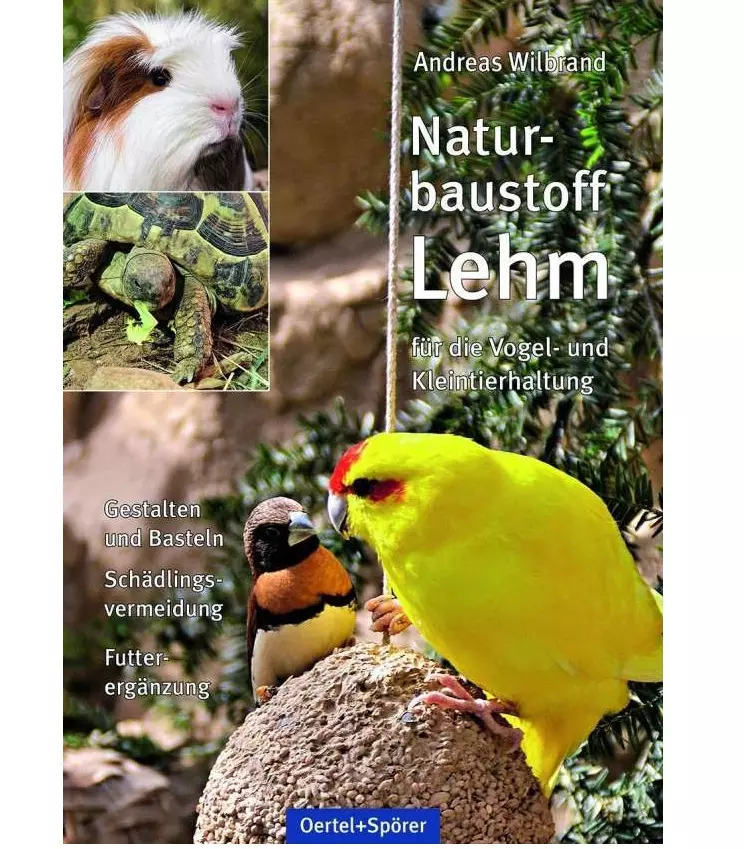
Natural building material clay for keeping birds and small animals
Natural building material clay for keeping birds and small animals The first clay DIY book for animal lovers - a practical guide with simple instructions, new ideas and health tips! Designing and crafting Pest prevention Feed supplement Clay is the oldest and most universal building material in the world. The animal world has been demonstrating for millions of years how it can be used to build safe dwellings. And humans also utilised this building material a long time ago and even created huge and artistic buildings from it. Clay can also be used perfectly for our pets. Building projects for animal housing of all kinds, landscaping in terrariums, soil construction for aquariums, pest control in aviaries, pigeon coops and stables - this book will show you how to do all this and what you need for it.Clay is not only a building material that can almost always be reused, but also contributes to the health of humans and animals. Clay binds toxins, displaces pests and is suitable as a fertiliser. For this reason, the health maintenance of our protégés through clay is also described in detail

CHF 27.90

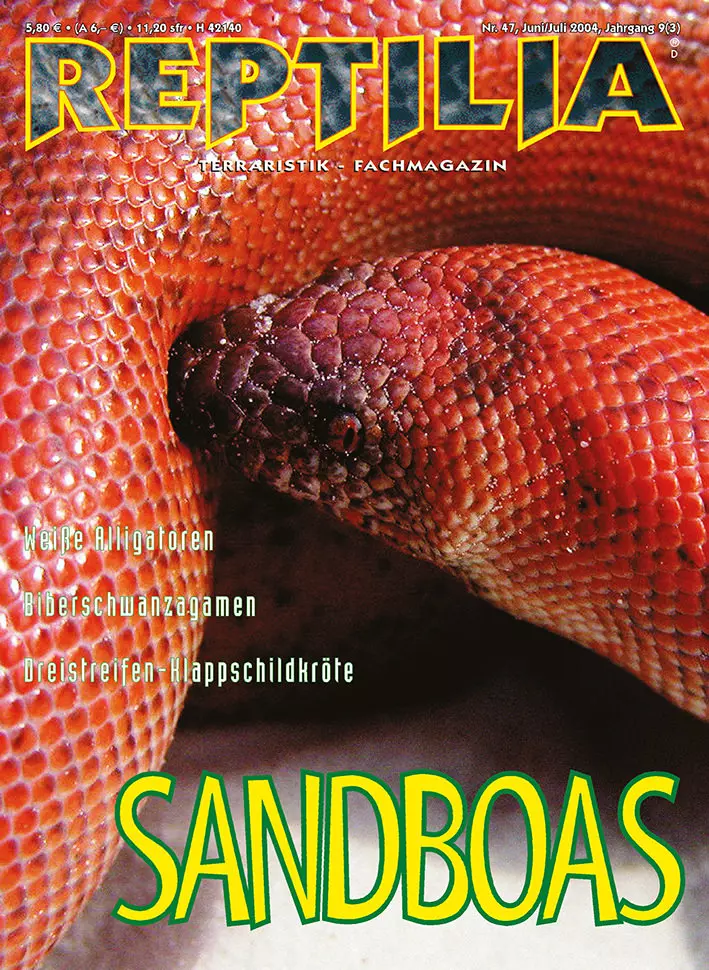
Reptilia 47 - Sand boas
Reptilia 47 - Sandboas White alligatorsBeavertail dragonsThree-striped folding tortoise Contents: 2 EDITORIAL 3 MAGAZINE 16 DATES 18 WESTERN HERP PERSPECTIVESThe Mecca of a reptile photographerby B. Love 20 PHOTO REPORTAGE Sandboasby C. Jones 31 KEEPING AND BREEDINGOn keeping and caring for sandboas by C. Jones 35 KEEPING AND BREEDINGOn breeding Eurasian sandboas: Eryx jaculus, Eryx miliaris and Eryx tataricus by C. Jones 42 REPORTFascination record snakePart 3: Don't let them bite you… by Henry Bellosa 45 TRAVELThe white alligators of the MississippiOf ancient Indian trails, bald cypresses and crocodiles by W. Ise 51 PORTRAIT AND POSTERLialis burtonisby U. Schlüter 56 KEEPING AND BREEDINGThe Three-striped Box Turtle Kinosternon baurii) – A turtle for small aquariums?by A. M. Glaser 64 HERPETOFAUNAKeeping and breeding some Andean keel-tailed iguanas Stenocercus from the Peruvian highlandsPart 4: Observations on behaviour, sexual dimorphism and ecology of Stenocercus melanopygus BOULENGER, 1900by U. Schlüter 72 KEEPING AND BREEDINGExperiences in keeping and breeding Xenagama batillifera (VAILLANT, 1882), with observations on the behaviour of Xenagama taylori (PARKER, 1935)by M. Barts 78 REPORTAGEPlanning and building a reptile zoo: "Reptilium - Terrarien- und Wüstenzoo" in Landau is being built - Part 2: The construction phaseby T. Wilms 87 CLASSIFIED ADS 91 RAT & TAT 94 LIBRARY 104 GLOSSA family story. Part 1by H. Werning

CHF 11.20

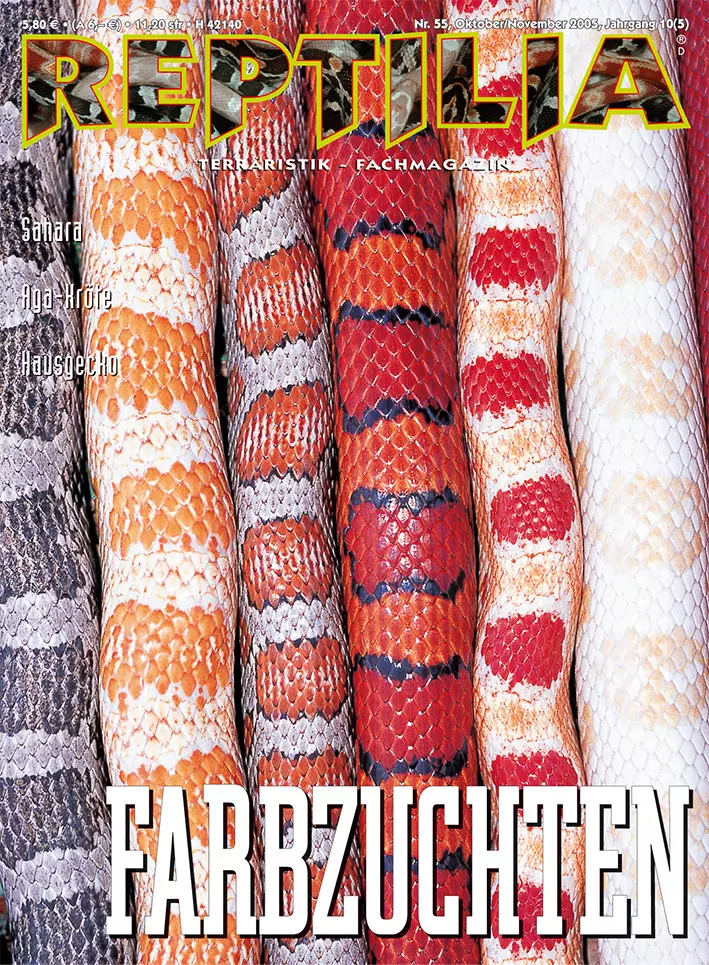
Reptilia 55 - Colour breeding
Reptilia 55 - Colour breedingSaharaAga toadFlorida soft-shelled turtleContents: 2 EDITORIAL 3 MAGAZINE 11 DATES 14 WESTERN HERP PERSPECTIVESTerrarium animals suitable for investmentFrom B. Love 16 PHOTO REPORTAGEColour and pattern breeding in the terrarium hobbyBy M. Hallmen 23 REPORTAGECrash course in crossbreeding geneticsBy M. Hallmen 33 REPORTAGEThe king's new clothesNew colour and pattern variations in the royal python(Python regius)By T. Kölpin 42 OPINIONRebuttal: On the sense and nonsense of "colour breeding"From H. Schneider 44 TRAVELChott el Djerid From U. Schlüter 51 PORTRAIT AND POSTERChondrodactylus anguliferBy M. Barts 56 REPORTAGEBufo marinus – on the fatal consequences of faunal distortionFrom H.-G. Horn 60 KEEPING AND BREEDINGThe European half-fingered geckoHemidactylus turcicusBy M. C. Haupt 63 HERPETOFAUNAThe black desert cobra - Ecological and behavioural biology Observations on Walterinnesia aegyptiaBy H. Esterbauer 68 HERPETOFAUNAThe Florida soft-shelled turtle (Apalone ferox)and the benefits of knowing scientific namesBy S. Barone 73 REPORTAGEHealing with snake venomsSnake venom as pain therapy for disc problemsBy W. Schäberle 76 REPORTAGESeven decades a friend of reptiles - once upon a timeFrom W. Rohdich 86 CLASSIFIED ADS 91 RAT & TAT 94 LIBRARY 104 BRUTKASTENBreakfast televisionFrom H. Werning

CHF 11.20

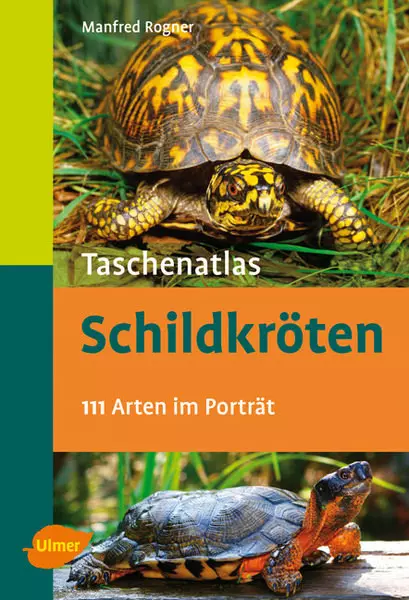
Ulmer, pocket atlas Turtles
Ulmer Pocket Atlas of TurtlesAll turtles at a glanceDetailed portraits of all turtle speciesTerrarium types organised according to group characteristicsPictograms for a quick overviewDetailed portraits of 111 commercially available turtle species inform you about their origin, appearance and all the important data on care in the terrarium. You will also learn everything you need to know about terrarium types, natural habitats and keeping conditions. Practical pictograms provide you with the most important information at a glance.

CHF 14.90

Marginata 41 - Steppe tortoises
Marginata 41 - Steppe tortoisesKeeping and breeding big-headed tortoises part 3Wintering of Mediterranean tortoisesForest tortoise breeding at Dortmund ZooContents:EditorialMagazineDatesPHOTOSTORYNews about steppe tortoisesHans - Dieter PhilippenKEEPING AND BREEDINGKeeping and breeding of the steppe tortoise in the Alpine regionWilli HoferBREEDINGNature-identical carapace proportions and shapes in the breeding of steppe tortoisesPetr Velensky & Natasha VelenskaHOLDINGWintering of steppe tortoises and European tortoisesThorsten GeierPORTRAITChinese three-keeled turtle. Chinemys[Mauremys] reevesii (Grey, 1831)Hans - Dieter PhilippenBREEDINGBig-headed tortoises in nature and human care. Part 3Reiner PraschagBREEDINGKeeping and breeding the red-headed box turtle (Podocnemis erythrocephala) Part 2David DrajeskeKEEPING AND BREEDINGBreeding of forest tortoises at Dortmund ZooSimone Karlowski & Stephanie ZechREPORTAGEThe European Studbook Foundation: off to new shores!Henk ZwartepoorteREPORTAGESurprising observation of charcoal tortoisesSusanne VogelBook tipSubscription & ServiceRegional guide

CHF 16.50

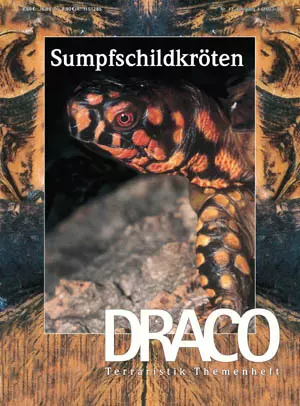
Draco 13 - Pond turtles
Draco 13 - terrapins Contents: 2 Editorial 4 terrapinsFritz Jürgen Obst 19 The European pond turtle Emys orbicularis (LINNAEUS, 1759) – the ideal turtle for the garden pondMatthias Mähn 25 Glass fibre reinforced Plastic (GRP) – a perfect material for the construction of ponds for the Outdoor keeping of aquatic turtlesAlfred Langer 32 Experiences in keeping and breeding the marsh turtle Glyptemys muhlenbergii SCHOEPFF (1801)Helgard and Klaus Lambertz 37 The spiny turtles of the genus Cyclemys BELL, 1834Maik Shields 42 Care and breeding of the three-keeled pond turtle Mauremys muticaUlrich Hennen 46 Notes on the keeping and breeding of the Spiny-backed Tortoise (Geoemyda spengleri GMELIN 1789) Irmtraud Jasser-Häger & Hans-Dieter Philippen 53Construction of a facility for keeping large aquatic turtles at Landau ZooPeter Buchert & Jens-Ove Heckel 59 On the keeping, care and breeding of the three-toed box turtle – Terrapene carolina triunguis (AGASSIZ, 1857) – up to the F2 generationBeate Löhr &Thomas Wilms 66 Notes on the keeping and breeding of the Japanese pond turtle Mauremys japonica (TEMMINCK & SCHLEGEL, 1835)Herbert Becker 73 Ornate turtles from North America Andreas S. Hennig 81 Book box 87 Magazine

CHF 16.80

Reptilia 49 - Food animal breeding
Reptilia 49 - Food animal breedingScorpion crust lizardSpotted pythonChinese mountain dragonContents: 2 EDITORIAL 4 READER LETTERS 5 MAGAZINE 14 DATES 18 WESTERN HERP PERSPECTIVESHurricane Sale in Floridaby B. Love 20 PHOTO REPORTAGE Breeding food animals yourself - a problem?by F. Bruse & H. Werning 27 REPORTAGEEfficient and productive cricket breeding by F. Bruse 33 REPORTAGEBreeding the chocolate cockroach (Shellfordella tartara) by F. Bruse 36 REPORTAGEA simple Drosophila breeding project by F. Bruse 40 HERPETOFAUNANotes on the Motagua lizard (Cnemidophorus motaguae) by U. Schlüter 43 TRAVELHerpetological observations and more from Gambia by U. Thieme 51 PORTRAIT AND POSTERGeoclemys hamiltoniby H. - D. Philippen 56 KEEPING AND BREEDINGKeeping and Breeding the Chinese Mountain Agame (Japalura splendida) by H. Schradin 68 HERPETOFAUNADendrobates pumilioThe strawberry frog on the Bocas Islands by B. Schwarz 72 KEEPING AND BREEDING The black Mexican chain snake (Lampropeltis getula nigrita in the terrariumby M. Thums 79 REPORTAGEAntaresia maculosa (PETERS, 1873)Spotted pythonby D. Hasselberg 85 CLASSIFIED ADS 90 RAT & TAT 93 LIBRARY 104 GLOSSESIn search of Uracentron azureumPart 1by H. Werning

CHF 11.20