Terraria 57 - Reptiles and amphibians in danger

Article no: terraria57

CHF 12.00

Stock: 0

Ready for dispatch in 1-3 days, delivery time 7 working days

Delivery between Wednesday, 30 September and Thursday, 1 October
Zahlungsarten
Product information "Terraria 57 - Reptiles and amphibians in danger"

Terraria 57 - Reptiles and amphibians in danger

Breeding rare crocodiles
Giant lizards on La Gomera

Contents:

Cover story: Reptiles and amphibians in danger

Reptiles and amphibians are among the most endangered animal groups on the planet. The main reason is that humans are destroying their habitats. But environmental factors that have become unbalanced, diseases, environmental toxins, traffic and hunting are also harming them. Herpetologists and terrarium keepers are fighting a desperate but committed battle against the extinction of many species. We are dedicating this probably most important topic of our field of interest an entire special issue of TERRARIA/elaphe and not only trace the current threat situation, but also present encouraging species conservation projects from scientists, conservationists and terrarium keepers on site, in zoos and in private terrariums.

Territorial
Herpetorama
Import ban on salamanders and newts to Switzerland: Why?
Cultural followers: Amphibian muralism
Thorny devil: The gecko beast with the leaf-like flat tail
Private individuals and zoos protect highly endangered salamanders together
First aid in the wild: Antifungal agent for the Mallorca midwife toad
Blattsteiger: Moat 2.0

Cover story
The biodiversity crisis Amphibians and reptiles in danger
Axel Kwet & Heiko Werning

Honeycomb toads from French Guiana.  Observations in the habitat and establishing a conservation breeding project
David Massemin & Cédric Libert

Panorama
Concern for a small frog. How a project for nose frogs was initiated and continues to grow
Frank Oberwemmer

Research

New species
Newly described, threatened with extinction: the Galápagos giant tortoises of Cerro Fatal
Axel Kwet

Among researchers
Green toads on the island of Fehmarn
Moritz Ott

Current situation and endangerment of Madagascar's amphibians
Jörn Köhler, Frank Glaw & Miguel Vences

Salamandra

Terrarium husbandry
Private care and breeding of endangered crocodiles
Alexander Meurer

Nature and species conservation

Field notes
Aquatic turtles with “fur” – observations in Greece
Benny Trapp

An unusually coloured Redi viper (Vipera aspis francisciredi) from the Swiss Münstertal
Jürgen Gebhart

The return of the giants from La Gomera
Sergi Conde Lázaro

 Terrarino – the children’s page
Cool diversity. Endangered and protected
Ute Nüsken & Alexa Sabarth

Also in your area
Subscription & Service
Preview

Incubator
The forest is a village
Heiko Werning

Composition
Feeding recommendation
Technical details
Size information

0 of 0 reviews

Give us a rating!

Share your experience with the product with other customers.


Suggested products

Handbook of food plants for tortoises and other reptiles
Handbook of forage plants 2nd revised editionMarion Minch is not only a successful breeder of diverse tortoises for many years, but also an excellent connoisseur of native wild herbs. She founded and runs samenkiste.de, which is well known to many tortoise keepers and nature lovers. Her name is inextricably linked with reptile care and species-appropriate nutrition for tortoises. Her handbook of food plants summarises the most important native food plants for herbivorous and omnivorous reptiles. She not only considers tortoises, but also iguanas, spiny-tailed dragons and even chameleons. From the basics of plant biology to native wild herbs to suitable food plants for hardy tropical reptile species, this comprehensive work provides the basis for species-appropriate keeping. In the expanded and supplemented 2nd edition, the plant section is divided according to flower colour. This makes it even easier to identify wild herbs. The work has also been supplemented with a wealth of additional information and many pictures.

CHF 46.50

Geckos
Geckos in the terrarium by Astrid FalkThe book offers a comprehensive introduction to geckos and their species-appropriate keeping in terrariums. It explains what you need to think about before buying a gecko and what preparations should be made. The book describes in detail how the terrarium is technically equipped and set up. The care of the animals, their special features and behaviour, their diet, reproduction and rearing of young animals are described, as well as diseases and husbandry problems with tried and tested suggestions for prevention and treatment. Individual gecko species that are particularly suitable for keeping and breeding in terrariums are portrayed in detail in the second part of the book.

CHF 28.50

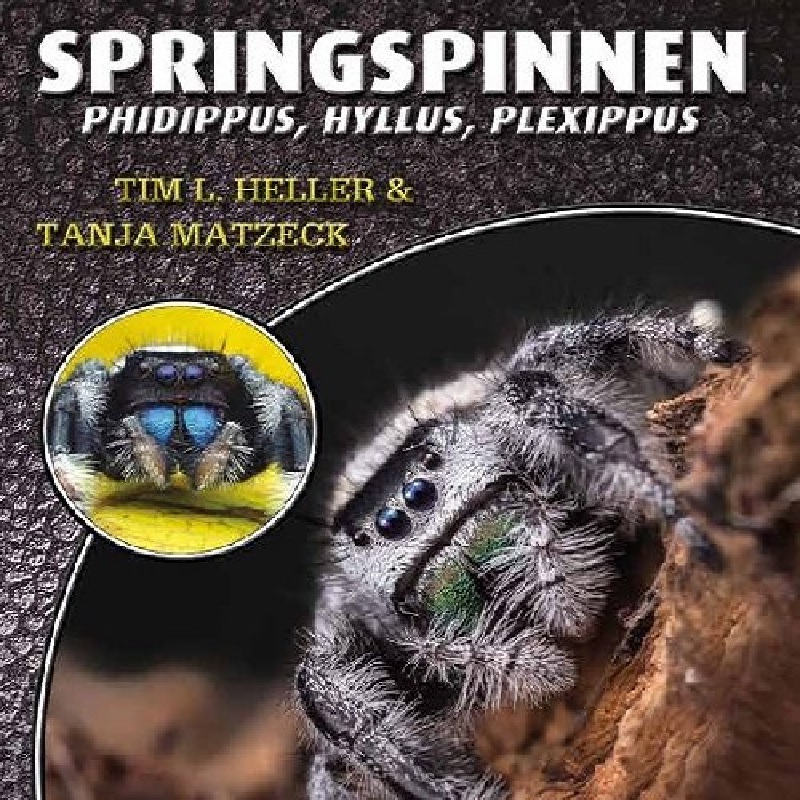
Jumping spiders Phidippus, Hyllus, Plexippus
Book Jumping Spiders - Phidippus, Hyllus & Plexippus A guide to keeping jumping spiders of the genera Phidippus, Hyllus & Plexippus. Who can resist the charm of jumping spiders? The childlike appearance of their expressive face simply leaves no one cold! In addition, their behavior is extremely exciting to observe, their colors are bright and their requirements for species-appropriate keeping are very easy to meet. No wonder these likeable jumpers are all the rage! This volume in the "Species by Species" series describes in detail what to look out for when buying and keeping them, introduces the most commonly kept species and color forms and provides plenty of tips on how to keep them successfully - so you can be sure they will breed well! Species by Species introduces you to the books in this series, which present the most popular terrarium animals. Each volume offers you detailed, practical care instructions and all the information you need to successfully breed your animals. All important questions from the required tank size to terrarium set-up, technical equipment, species-appropriate nutrition and disease prevention are answered with numerous tricks and tips. Experienced, long-standing breeders reveal how you can encourage the animals to reproduce and raise healthy young. All this in full color, generously illustrated and attractively designed - just about your terrarium animal - species by species

CHF 23.90

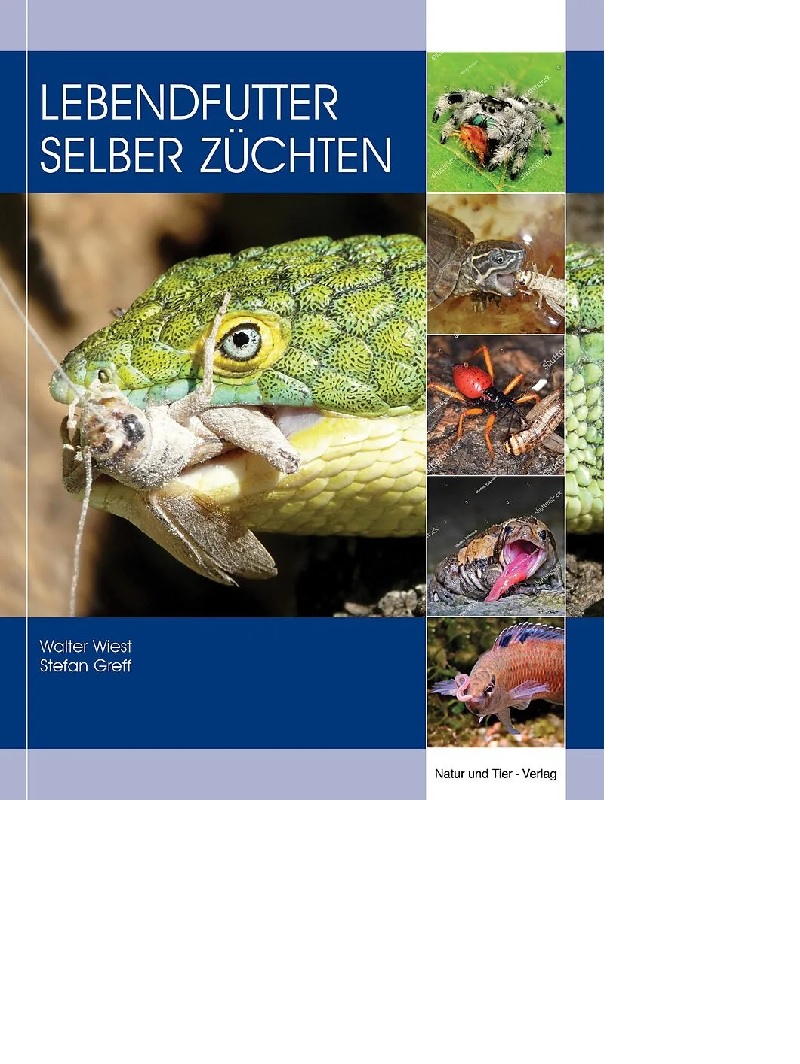
Book Breeding live food yourself
Book "Grow your own live food" - The perfect guide for pet owners Discover practical and detailed instructions on how you can easily breed food for your reptiles, birds, fish or other animals yourself in the book "Breeding live food yourself". With valuable tips on various food insects, their care and breeding, you can save money and ensure a species-appropriate diet for your pets. Contents of the book: Step-by-step instructions for breeding feeder insects Information on the best types of food for reptiles, birds and fish Care instructions and breeding conditions for various live food species Tips for sustainable and cost-effective food production Why breed your own live food? Get healthy, fresh food for your animals Save money and reduce dependence on pet shops Promote the health and well-being of your animals with species-appropriate food Whether you are a beginner or an experienced pet owner, this book provides you with everything you need to successfully breed live food yourself.

CHF 46.50

Marginata 69 - New Guinea tortoises
Marginata 69 - New Guinea tortoises – the genus ElseyaCover storyThe unrecognised beauties: New Guinea tortoises (Andreas S. Hennig)My experiences with Branderhorst's New Guinea tortoise, Elseya (Elseya) branderhorsti (Ouwens, 1914) (Andreas S. Hennig)Keeping and breeding of Rhodin's New Guinea tortoise, Elseya (Hanwarachelys) rhodini Thomson, Amepou, Anamiato & Georges, 2015 (Andreas S. Hennig)PortraitGeoemyda spengleri, Chinese serrated tortoise (Andreas S. Hennig)ReportageMacrochelys temminckii – Experiences and impressions with vulture tortoises part 2 (Reiner Praschag)KeepingAn alternative to year-round keeping of the Egyptian tortoise in the terrarium – my experiences with seasonal outdoor keeping of Testudo kleinmanni (Ricarda Schramm)EtymologySawbacks and living maps part 4: Graptemys gibbonsi, Pascagoula humpback tortoise (Holger Vetter)Classifieds & animal placement

CHF 16.50

Ulmer, Salamander and newts
Ulmer , Salamanders and newts – Everything about these fascinating creatures 96 pages 58 colour photos, 19 drawings hardback 1st edition Author Kurt Rimpp Ulmer Eugen Verlag A piece of the primeval world in the terrarium? Amphibians such as the axolotl, tiger salamander and alpine newt are the descendants of primeval amphibians that have survived to this day. In this book, you will find out how they can be kept optimally in the terrarium and what there is to observe and discover. Tips and advice provide information on the following important points: Where and how do amphibians live in nature? Considerations before purchase  Terrarium and furnishings Care and hibernation  Health and nutrition  A portrait of suitable species

CHF 26.90

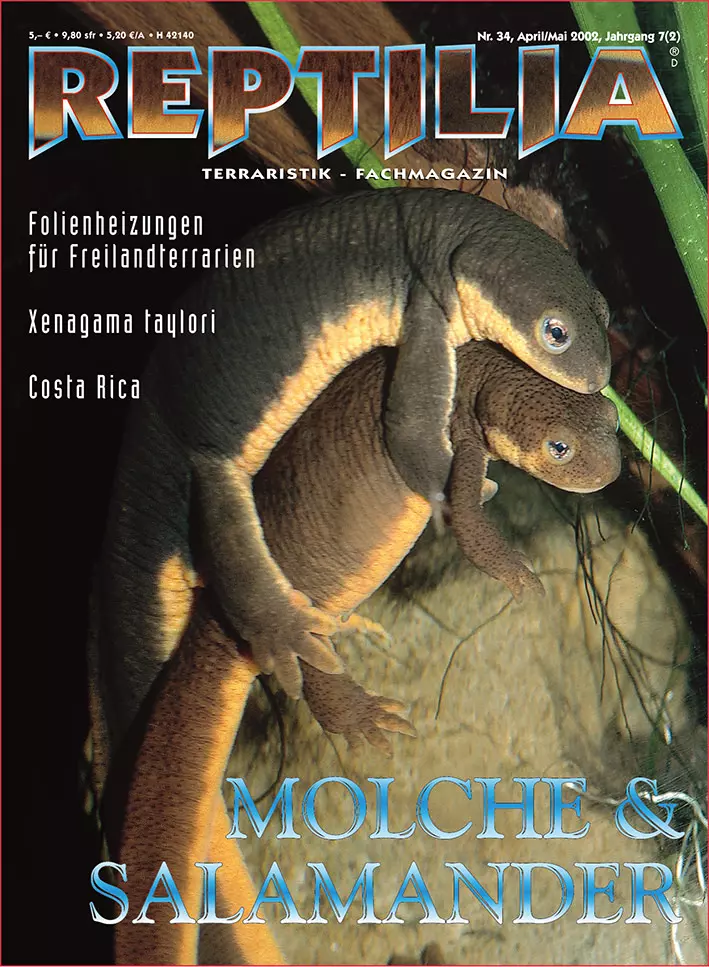
Reptilia 34 - Efts & Salamanders
Reptilia 34 Efts & Salamanders Foil heaters for outdoor terrariumsXenagama tayloriIn the roof of the rainforestContent:2 EDITORIAL4 READER'S LETTERS6 MAGAZINE16 DATES20 WESTERN HERP PERSPECTIVESSeptember - Ambush Attackfrom B. Love22 PHOTO REPORTAGEcaudatesby M. Staniszewski30 HUSBANDRY AND BREEDINGThe band newt Triturus vittatus ophryticusby Uwe Dost35 REPORTUnequal Brothers - The European Mountain Creek Newt (Genus Euproctus)by B. Thiesmeier & C. Hornberg43 TRAVELIn search of beavertail agams (Xenagama - A journey to Somalilandby A. Roos51 PORTRAIT AND POSTERAgalychnis callidryasby M. Schmidt56 HUSBANDRY AND BREEDINGThe Indian star turtle Geochelone elegans (Schoepff, 1795) - a problematic tropical land turtle? - Part 3: Offspringby H.-J. Bidmon63 REPORTLife above our heads: Amphibians and reptiles in the treetops of the Central American rainforestby T. Leenders70 HUSBANDRY AND BREEDINGBiology, Care and Breeding of Snakes of the Genus Pseustes (Fitzinger, 1834)by A. Hohmeister & F. Fiegenbaum75 REPORT"The foil heating - a simple and inexpensive possibility for the heat addition in free systemsby U. Strathemann78 REPORTThe oven fish (Thermobia domestica) - an ideal addition to the menu for numerous terrarium birdsby W. Schmidt81 REPTILIA ON THE ROADInnsbruck Alpine Zooby M. Hallmen88 CLASSIFIEDS92 ADVICE AND ACTION94 LIBRARY104 GLOSSERecently at the WG-Partyby Heiko WerningAnd here is an overview of the contents:This time your terraristics magazine is titled Molche & Salamander!It goes without saying that there should be a beautifully illustrated photo story in which an excerpt from the great variety of shapes of the tail amphibians is presented to you. And of course you will also get an overview of the essential facts about this amphibian order, its systematics, habitat, development and much more!The band newt Triturus vittatus ophryticusIn the wedding robe, the males of this subspecies of the band newt from Turkey and the Caucasus are certainly among the most spectacular amphibians of all: Apart from the magnificent coloration, the high and serrated ridge of the back makes the animals, which can reach a length of almost 20 cm in extreme cases, look like bizarre little dragons! Uwe Dost describes in detail and practically how to keep and breed these jewels among the newts, how to set up a suitable tank, how to care for the animals, and how to avoid possible problems from the beginning. In principle, however, the keeping and reproduction of the "water dragons" are not too difficult, so that after reading this article every amphibian friend will surely wish to take care of the beautiful newts himself! Unequal Brothers - The European Mountain Creek Newt (Genus Euproctus)For a long time, little was known about the three species of the genus Euproctus in every respect, and they were regarded as not or only very difficult to keep and breed. Burkhard Thiesmeier and Claudia Hornberg describe here as examples, how a deepened knowledge of the habitat and the living conditions of a species has a positive effect on the care results. What do the biotopes of the respective species actually look like, and what consequences does this have for husbandry? Do the animals need an aquarium or a terrarium? These and all other relevant questions for a successful breeding of the rarely maintained mountain stream newts are answered by the authors in detail and competently. Try these highly interesting newts with their unique mating behaviour!Life above our heads: Amphibians and reptiles in the treetops of the Central American rainforestIt is well known that the deep sea is still a largely unexplored "continent". However, it is far less known that the canopy of the tropical rainforest contains an unbelievable wealth of species, only a fraction of which has so far been recorded. Twan Leenders himself has been researching the "treetop" habitat for a long time and now offers you an insight into this fascinating foreign world: the bizarre Bolitoglossa salamanders with their oversized feet, flying frogs, giant anole, bromeliad lizards, they all have amazing adaptations to their biotope high above the ground. How, for example, do the amphibians that are normally bound to water reproduce up there, how do they find partners in this extensive habitat? And what is a snake known as a digging species looking for at lofty altitudes? An extraordinary contribution with extraordinary insights!"The foil heating" - a simple and inexpensive possibility for the heat supplement for free plantsAnyone who cares for reptiles in the field knows the problem: In our latitudes it is difficult to ensure sufficient heat supply. If the weather is too cool and humid, the animals become ill quite quickly. One creates remedy with expensive and current eating radiators - or with the cleveren foil heating , whose production and effectiveness Udo Strathemann describes to you. This article will show you two different ways to help you offer your reptiles adequate conditions outside, which will of course also have a positive effect on their vitality and probably their reproductive success!The Indian star turtle Geochelone elegans (Schoepff, 1795), a problematic tropical tortoise? Several years of keeping and reproduction in GermanySo here is the third part of this incredibly detailed and highly descriptive report by Hans-J. Bidmon. This time the author dedicates himself to the successful breeding of his animals, describes mating behaviour, egg laying and incubation. Exact details and data - especially for the solution of problem cases - make this contribution interesting not only for all keepers of the beautifully drawn Indian star tortoise, but each tortoise friend can deduce from it conclusions, which surely benefit his own animals!The oven fish (Thermobia domestica): An ideal enrichment of the menu for numerous terrarium birds. If you feed your insect-eating terrarium birds day in, day out with crickets or crickets, you are certainly doing something wrong. Here Wolfgang Schmidt presents a possible alternative with the oven fish, a relative of the well-known silver fish. This urine insect offers many obvious advantages for breeding as a food animal: For example, it can be easily kept and reproduced, does not make any special demands on the food, and escaped specimens normally cannot reproduce in the home and therefore do not become a plague. Particularly important: not immediately eaten Ofenfischchen nibble neither the planting nor the terrarium animals themselves! Wolfgang Schmidt gives all important tips for the breeding, from the equipment of the containers over the attitude conditions up to the efficient feeding. The oven fish - a change in the menu that you should treat your amphibians or lizards to! In search of beavertail agamas (Xenagama) - A journey to SomalilandDo you know anything about beaver tail agams? Have you ever been to Somaliland? If you answered both questions with "no", you certainly do not belong to the minority! There was hardly anything known about the genus Xenagama until now, and Somaliland is not exactly the main destination of sun-hungry African tourists. Alexander Roos, who carried out field biological studies on these very special animals there, describes the difficulties one has to struggle with when travelling to this region. The author's enthusiasm for the soon to be very trustful little agamas in the terrarium will certainly be passed on to the REPTILIA readers, especially as it is difficult to escape the impression of the beautiful photos of the cute guys anyway!Biology, care and breeding of snakes of the genus Pseustes (Fitzinger, 1843)And also with this article by Andreas Hohmeister and Franz Fiegenbaum we can offer you information about reptiles, of which so far practically no data from the terrarium keeping was available! The attractive, tree-dwelling species of the genus Pseustes are unfortunately still very rare guests in Central European terrariums, but the authors were able to cultivate two species successfully and even bring one of them several times to offspring. This probably fails with the other species only because of the lack of a female, because Hohmeister and Fliegenbaum describe the large, powerful vipers as very suitable fosterlings.A real treat for all snake fans!In addition to the above-mentioned articles, you will of course also find in this REPTILIA all the services you are accustomed to from your trade magazine, such as the sections Advice & Action, Dates, Posters, Classifieds, Library and of course the popular incubator not to forget!

CHF 9.80

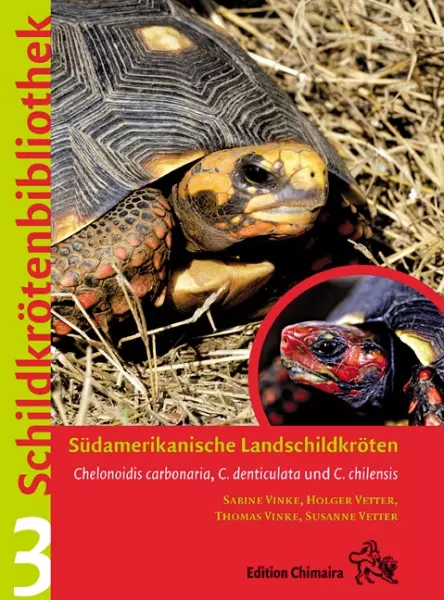
Turtle library 3 - South American tortoises
Turtle library 3 - The South American tortoises Sabine & Thomas Finke, Susanne & Holger Vetter 355 pages 285 color photos 2 drawings 4 distribution maps Format: 15 x 21.5 cm Content: This book is by far the most comprehensive collection of information from all parts of the Southern Turtle's tortoise range: Chelonoidis carbonaria, C. denticulata and C. chilensis.

CHF 42.90

Stick insects
Everything about keeping stick insects by Ingo Fritzsche 64 pages Format: 14.8 x 21 cm with numerous colour photos Author Ingo Fritzsche Publisher NTV Contents: Foreword Distribution and habitat    Relationship and body structure The eggs The terrariums     • Glass terrariums        • Gazeterrariums     • Plastic terrariums The substrate     • Earth     • Sand     • Vermiculite and perlite     • Peat and coco substrates     • Paper Further accessories Lighting Care measures Egg laying and incubation Climate    Food plants Handling the food plants Where do I buy my stick insects? Transport and quarantine Reproduction Growth What to do with the offspring? Defence behaviour Species section Thanks    Further information Literature used and further reading

CHF 17.90

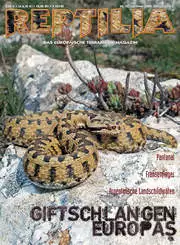
Reptilia 76 - Poisonous snakes of Europe
Reptilia 76 - Venomous Snakes of Europe PantanalFringed FingersArgentine Tortoises Contents: Venomous snakes are undoubtedly some of the most fascinating andattractive species in the snake fauna of Europe. Horned viper, asp viper, adder & co. impress with their aesthetics as well as with their sophisticated survival strategies. Mario Schweiger is one of the best experts on these reptiles and presents to youin REPTILIA the European venomous snake faunain detail and up to date. And for terrarium keepers, the report on the many years of successful breeding of Vipera ammodytes should be a particular highlight. Table of Contents:2 EDITORIAL3 MAGAZINE11 DATES14 PHOTOSTORY The Venomous Snakes of Europe An Overview of the Species and Remarks on Individual Taxa by M. Schweiger26 KEEPING AND BREEDING Keeping, Breeding and Rearing of the European Horned Viper Vipera ammodytesby M. Schweiger34 HERPETOFAUNA The Black Adders of the Northern Black Forest by M. Wirth41 KEEPING AND BREEDING Findings on Reproduction of the Argentine Tortoise, Chelonoides chilensis, under Human Care by T. & S. Vinke47 PORTRAIT and Poster Anolis sagrei by H. Werning52 HERPETOFAUNA Fringed-fingered Lizards (Acanthodactylus) in the Wild and in the Terrarium Part 4: The Acanthodactylus-pardalis- Group by U. Schlüter61 TRAVEL A Piece of Paradise. The Pouso Alegre in the Brazilian Pantanal from the Perspective of a Reptile Enthusiast. Part 1 by M. Hallmen70 REPORTAGE The Scorpions of Morocco Part 2 by H. Nickel, J. Hornung & M. Koch77 Library 82 WESTERN HERP PERSPECTIVES Which Venomous Snake is Best for Beginners? by B. Love84 ALSO NEAR YOU89 SUBSCRIPTION & SERVICE91 FAQ – Frequently Asked Questions Terrarium Lighting – Part 2 by I. Kober & U. Geissel94 PREVIEW96 INCUBATOR In the Wild Wedding. An Eastern in Two Parts for Three Young Men “of Southern Appearance”, a Reptile Researcher and a Cockroach Part 1 by H. Werning

CHF 12.00

Reptilia 123 - Planting of poison dart frog terrariums
Reptilia 123 - Planting of poison dart frog terrariums Contents: Cover story: Planting poison dart frog terrariumsPoison dart frog terrariums can be real gems. Not only because of the "jewels from the rainforest" themselves – but also because of the rainforest around them. Poison dart frogs come to us from biotopes that are also home to countless attractive tropical plants, many of which are available to us and can be cultivated excellently. The experienced terrarium plant specialist Beat Akeret explains in the cover story of this REPTILIA exactly which plants are suitable for poison dart frog terrariums, so that these not only look great and meet the needs of the frogs, but even conjure up an authentic Latin American rainforest section in the living room.Also in REPTILIA No. 123Keeping and breeding one of the most mystical reptiles of all: the Bornean earless monitor in the terrariumDanger in the magic of blossoms: crab spidersThe great trek 3: with REPTILIA editor-in-chief Heiko Werning from coast to coast through the south of the USAand much more 4          editorial             6          MAGAZINE             14        DATES             16        WESTERN HERP PERSPECTIVES                                    Only in America                                    By B. Love             18        PHOTOSTORY                                    Plants in the poison dart frog terrarium                                    By B. Akeret             26        Terrarium technology                                    Plant care in the poison dart frog terrarium                                    Basic considerations                                    By B. Akeret             32        plants                                    Suitable plants for poison dart frog terrariums                                    By B. Akeret             44        KEEPING AND BREEDING                                    Notes on keeping and breeding of the earless monitor, Lanthanotus borneensis                                    By M. Zollweg & R. Seipp             54        Terrarium technology                                    Even more light                                    Comments by S. Wunderlich and O. Fischer             61        SERVICE             64        travel                                    The great trek                                    Part 3: Georgia on my Mind                                    By H. Werning             76        ALSO NEAR YOU             80        PREVIEW             82        INCUBATOR                                     If this sets a precedent                                    Part 2                                    By H. Werning

CHF 13.50

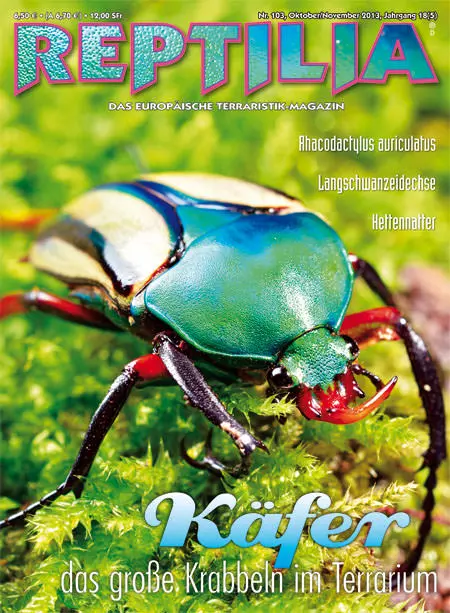
Reptilia 103 - Beetle - The big crawling in the terrarium
Reptilia 103 - Beetles - the big crawl in the terrarium Hibernation of tortoisesRhacodactylus auriculatusChain snake Contents: Beetles are right on trend in terrariums! In addition to a large number of beautiful rose beetles, many stag beetles and giant beetles are now also being successfully bred – thanks in part to new substrates such as flake soil and Kinshi. In addition, splendid, agile ground beetles, social sugar beetles or whimsical black beetles also make it into terrariums time and again. REPTILIA introduces these beautiful animals and reveals how you can achieve breeding success with these colourful Juwel. MAGAZINEDATESWESTERN HERP PERSPECTIVESAnnoying contemporariesB. Love PHOTOREPORTAGEBeetles in the terrarium – A feast of colourF. Rossow TERRARIUM PRACTICEIt all depends on the substrate!F. Rossow KEEPING AND REPRODUCTIONBeetle breeding made easy!F. Rossow KEEPING AND REPRODUCTIONRose chafer beetles – living JuwelH.-G. Kaiser KEEPING AND REPRODUCTIONThe hump-headed gecko Rhacodactylus auriculatus – a colourful representative of the New Caledonian giant geckosK.-U. Volta KEEPING AND REPRODUCTIONThe Speckled Chain Snake, Lampropeltis getula holbrooki – An underrated beautyD. Renner TERRARIUM PRACTICEHibernation of Hermann’s tortoises (Testudo hermanni boettgeri)N. Schaible ANIMALS OF OUR HOMEThe sea frogR. Leptien LibraryTips & tricksServices ALSO NEAR YOU TRAVELAmphibians and reptiles in northern AfghanistanF. Joisten PREVIEW BRUTKASTEN Island of the iguanas part 2H. Werning

CHF 12.00