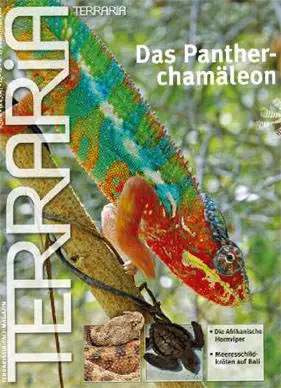
Terraria 27 - The panther chameleon

Article no: terraria27

CHF 12.00

Stock: 0

Ready for dispatch in 1-3 days, delivery time 7 working days

Delivery between Tuesday, 7 July and Wednesday, 8 July
Zahlungsarten
Product information "Terraria 27 - The panther chameleon"

Terraria 27 - The Panther Chameleon

The African Horned Viper
Sea turtles in Bali

Contents:

With its spectacular colours, the panther chameleon, Furcifer pardalis. enchants every reptile enthusiast. Fortunately, however, it is not only one of the most beautiful lizards of all, but is also easy to keep and breed for a chameleon. Carsten Schneider presents the basics of caring for and breeding these beautiful animals step by step. And it goes without saying that this cover story will be particularly colourful.

EDITORIAL
MAGAZINE
Gondwanaland – a pioneering project at Leipzig Zoo, Part 3
Andreas S. Henning

Change of staff at Museum Koenig in Bonn: Wolfgang Böhme leaves, Dennis Rödder arrives
Axel Kwet & Heiko Werning

A brief encounter with Alpine newts (Salamandra atra)
Chritiane Kohlruss

Supersilk
Kriton Kunz

Lookup

News on the pointed-head agamas of the genus Pseudocalotes
Jakob Hallermann

TERRAglobal
Hard days in Tabaconas
Maik Dobiey

TOPIC
The colourful panther. About the chameleon Furcifer pardalis
Carsten Schneider

The keeping of panther chameleons
Carsten Schneider

The breeding of the panther chameleon
Carsten Schneider

Diseases and treatment options for the panther chameleon
Carsten Schneider

The Tierra Caliente red-kneed tarantula, Brachypelma auratum – a highland tarantula from the Mexican highlands?
Boris F. Striffler

The African horned viper, Cerastes cerastes cerastes
Georg Jachan

Small but nice: Proyek Penyu – the sea turtle breeding station in Pemuteran on Bali
Martin Hallmen

Ranas de Cristal. In search of glass frogs in north-east Honduras
Alexander Gutsche

New species
Fat prey from Madagascar
Jörn Köhler

… and new “fat frogs” from Brazil
Axel Kwet

AMONG RESEARCHERS
Who belongs to whom? In search of tadpoles and frogs in the eastern lowlands of Bolivia
Arne Schulze

CATCH THE EYE
Large and small large ones – the terrarium system of Stefanie and Jochen Geiger
Michael Wirth

NEAR YOU
SUBSCRIPTION & SERVICE
PREVIEW

INCUBATOR
In reality, I was always completely indifferent to clothing (for Wolfgang Böhme)
Heiko Werning

Composition
Feeding recommendation
Technical details
Size information

0 of 0 reviews

Give us a rating!

Share your experience with the product with other customers.


Suggested products

Handbook of food plants for tortoises and other reptiles
Handbook of forage plants 2nd revised editionMarion Minch is not only a successful breeder of diverse tortoises for many years, but also an excellent connoisseur of native wild herbs. She founded and runs samenkiste.de, which is well known to many tortoise keepers and nature lovers. Her name is inextricably linked with reptile care and species-appropriate nutrition for tortoises. Her handbook of food plants summarises the most important native food plants for herbivorous and omnivorous reptiles. She not only considers tortoises, but also iguanas, spiny-tailed dragons and even chameleons. From the basics of plant biology to native wild herbs to suitable food plants for hardy tropical reptile species, this comprehensive work provides the basis for species-appropriate keeping. In the expanded and supplemented 2nd edition, the plant section is divided according to flower colour. This makes it even easier to identify wild herbs. The work has also been supplemented with a wealth of additional information and many pictures.

CHF 46.50

Geckos
Geckos in the terrarium by Astrid FalkThe book offers a comprehensive introduction to geckos and their species-appropriate keeping in terrariums. It explains what you need to think about before buying a gecko and what preparations should be made. The book describes in detail how the terrarium is technically equipped and set up. The care of the animals, their special features and behaviour, their diet, reproduction and rearing of young animals are described, as well as diseases and husbandry problems with tried and tested suggestions for prevention and treatment. Individual gecko species that are particularly suitable for keeping and breeding in terrariums are portrayed in detail in the second part of the book.

CHF 28.50

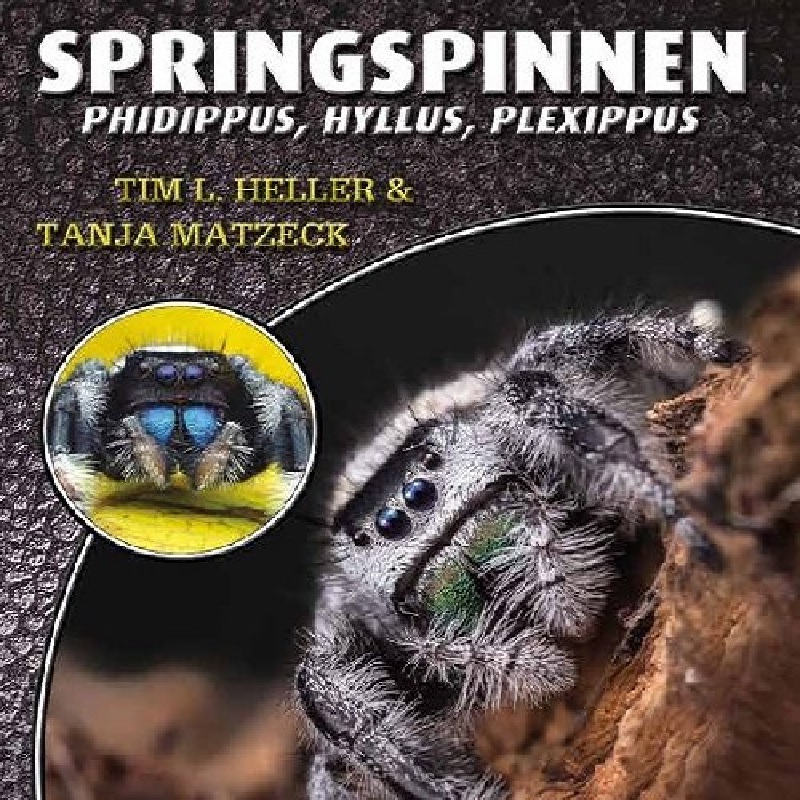
Jumping spiders Phidippus, Hyllus, Plexippus
Book Jumping Spiders - Phidippus, Hyllus & Plexippus A guide to keeping jumping spiders of the genera Phidippus, Hyllus & Plexippus. Who can resist the charm of jumping spiders? The childlike appearance of their expressive face simply leaves no one cold! In addition, their behavior is extremely exciting to observe, their colors are bright and their requirements for species-appropriate keeping are very easy to meet. No wonder these likeable jumpers are all the rage! This volume in the "Species by Species" series describes in detail what to look out for when buying and keeping them, introduces the most commonly kept species and color forms and provides plenty of tips on how to keep them successfully - so you can be sure they will breed well! Species by Species introduces you to the books in this series, which present the most popular terrarium animals. Each volume offers you detailed, practical care instructions and all the information you need to successfully breed your animals. All important questions from the required tank size to terrarium set-up, technical equipment, species-appropriate nutrition and disease prevention are answered with numerous tricks and tips. Experienced, long-standing breeders reveal how you can encourage the animals to reproduce and raise healthy young. All this in full color, generously illustrated and attractively designed - just about your terrarium animal - species by species

CHF 23.90

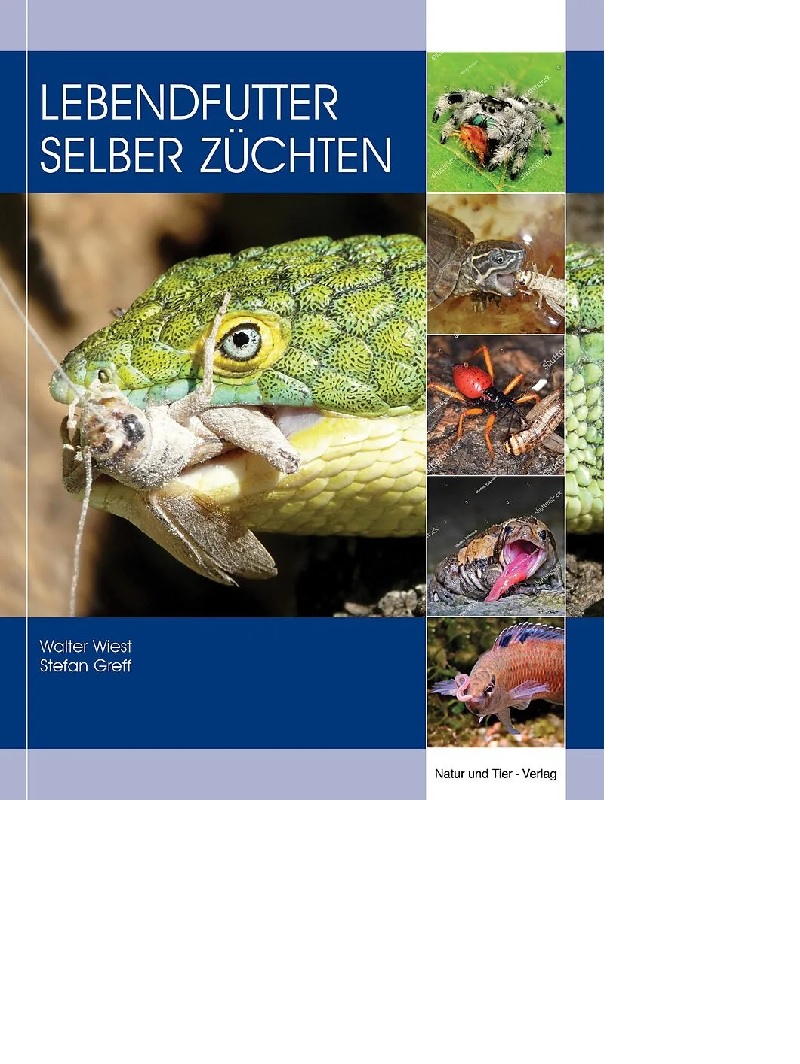
Book Breeding live food yourself
Book "Grow your own live food" - The perfect guide for pet owners Discover practical and detailed instructions on how you can easily breed food for your reptiles, birds, fish or other animals yourself in the book "Breeding live food yourself". With valuable tips on various food insects, their care and breeding, you can save money and ensure a species-appropriate diet for your pets. Contents of the book: Step-by-step instructions for breeding feeder insects Information on the best types of food for reptiles, birds and fish Care instructions and breeding conditions for various live food species Tips for sustainable and cost-effective food production Why breed your own live food? Get healthy, fresh food for your animals Save money and reduce dependence on pet shops Promote the health and well-being of your animals with species-appropriate food Whether you are a beginner or an experienced pet owner, this book provides you with everything you need to successfully breed live food yourself.

CHF 46.50

Marginata 69 - New Guinea tortoises
Marginata 69 - New Guinea tortoises – the genus ElseyaCover storyThe unrecognised beauties: New Guinea tortoises (Andreas S. Hennig)My experiences with Branderhorst's New Guinea tortoise, Elseya (Elseya) branderhorsti (Ouwens, 1914) (Andreas S. Hennig)Keeping and breeding of Rhodin's New Guinea tortoise, Elseya (Hanwarachelys) rhodini Thomson, Amepou, Anamiato & Georges, 2015 (Andreas S. Hennig)PortraitGeoemyda spengleri, Chinese serrated tortoise (Andreas S. Hennig)ReportageMacrochelys temminckii – Experiences and impressions with vulture tortoises part 2 (Reiner Praschag)KeepingAn alternative to year-round keeping of the Egyptian tortoise in the terrarium – my experiences with seasonal outdoor keeping of Testudo kleinmanni (Ricarda Schramm)EtymologySawbacks and living maps part 4: Graptemys gibbonsi, Pascagoula humpback tortoise (Holger Vetter)Classifieds & animal placement

CHF 16.50

Reptilia 40 - Terrarium Planting
Reptilia 40 - Terrarium Planting MarajóCopperheadFrogs of Costa Rica Contents: 2 EDITORIAL 3 READER LETTERS 7 MAGAZINE 17 DATES 20 WESTERN HERP PERSPECTIVESA juvenile snake hunting fiascoby B. Love 22 PHOTO REPORTAGE Terrarium plantingby B. Akeret 31 REPORTAGEPlanting of desert terrariums by B. Akeret 36 REPORTAGEPlanting an epiphyte branch for the terrarium by B. & W. Schwarz 40 REPORTAGECarnivorous plants in the terrarium by A. Glück 47 HERPETOFAUNABiology and distribution of Podocnemis vogli in Venezuelaby M. Merchán, A. M. Fidalgo & C. Pérez 51 PORTRAIT AND POSTERWrestling match in the rainforestby M. Ruckgaber 56 HUSBANDRY AND BREEDINGThe copperhead (Agkistrodon contortrix) – a “beginner's” snake?by D. Schmidt 65 HUSBANDRY AND BREEDINGHusbandry and breeding of Sind rock geckos, Cyrtopodion kachhensis (STOLICKA, 1872)by U. Schlüter 69 REPTORTAGEIn search of frogs in Costa Ricaby T. Eisenberg 75 TRAVELMarajó – Hot and humid Amazon paradiseby L. Dirksen 84 CLASSIFIEDS 90 TIPS & TRICKS 93 LIBRARY 104 GLOSSELiving in scalesby L. Hogeback

CHF 11.20

Reptilia 22 - Still hope for Asian turtles?
Reptilia 22 - Still hope for Asian turtles?Incubation of phelsum eggsHomeopathyCosta RicaContents:Page 2 - EditorialPage 4 - MagazinePage 13 - DatesPage 16 - Western Herp Perspectives: A rattlesnake under every bush, by B. LovePage 18 - Photo report: The incredible diversity of Asian turtles, by E. MeierPage 26 - Report: The turtles of Asia: Sacred animals, food and medical wonder weapon, by E. MeierPage 30 - Report: The end of Asian turtles? The live animal markets of Southeast Asia, by E. MeierPage 34 - Report: An ark for the last of their kind: The planned conservation breeding centre at the Allwetterzoo Münster, by E. MeierPage 40 - Travelling: Herpetological travel impressions from Costa Rica, Part 1: Rara Avis rainforest lodge, by T. EisenbergPage 47 - Portrait and poster: Parasphendale affinis, by I. & R. BischoffPage 51 - Report: Elaphe mandarina: A problem animal in terraristics? by Dr R. Fesser & H. SommerauerPage 57 - Keeping and breeding: Notes on egg laying in day geckos of the genus Phelsuma, by J. KrügerPage 63 - Herpetofauna: The poison dart frog Epipedobates tricolor, by J. & J. Canela Agraz & J. Vazquez SuñéPage 67 - Herpetology and culture: The arachno- and herpetofauna in homeopathic medicine, by K. KunzPage 78 - REPTILIA on the move: The Exotarium in Frankfurt am Main Zoological Garden, by T. WilmsPage 81 - Help and advicePage 87 - LibraryPage 96 - Glossary: Moving with lizards, once again. Part 1: Good preparation is half the move, by H. Werning

CHF 9.80

Draco 32 - Mediterranean tortoises
Draco 32 - Mediterranean tortoises Contents: 2 Editorial 4 Mediterranean tortoises Alexander Pieh & Hans - Dieter Philippen 35 The natural outdoor enclosure for species-appropriate keeping Mediterranean tortoises Peter Buchert 42 Construction and operation of a small greenhouse for keeping Mediterranean tortoises Thomas Wilms & Beate Löhr 47 A rare ectoparasite infestation: snake mites (Ophionyssus natricis) among Greek tortoises of the subspecies Testudo hermanni boettgeri Jutta Wiechert 50 The tortoises of IranPersian populations of the Moorish tortoise Markus Auer & Mario Herz 56 The tortoises of IranSteppe tortoises in Persia Mario Herz & Markus Auer 61 Species-appropriate husbandry and reproduction of the Greek tortoise Peter Kern 74 The Egyptian Tortoise (Testudo kleinmanni)Very popular and critically endangered Henk Zwartepoorte 79 Behind the scenes at a Slovenian tortoise farm Hans - Dieter Philippen 88 Book box 96 Magazine

CHF 18.40

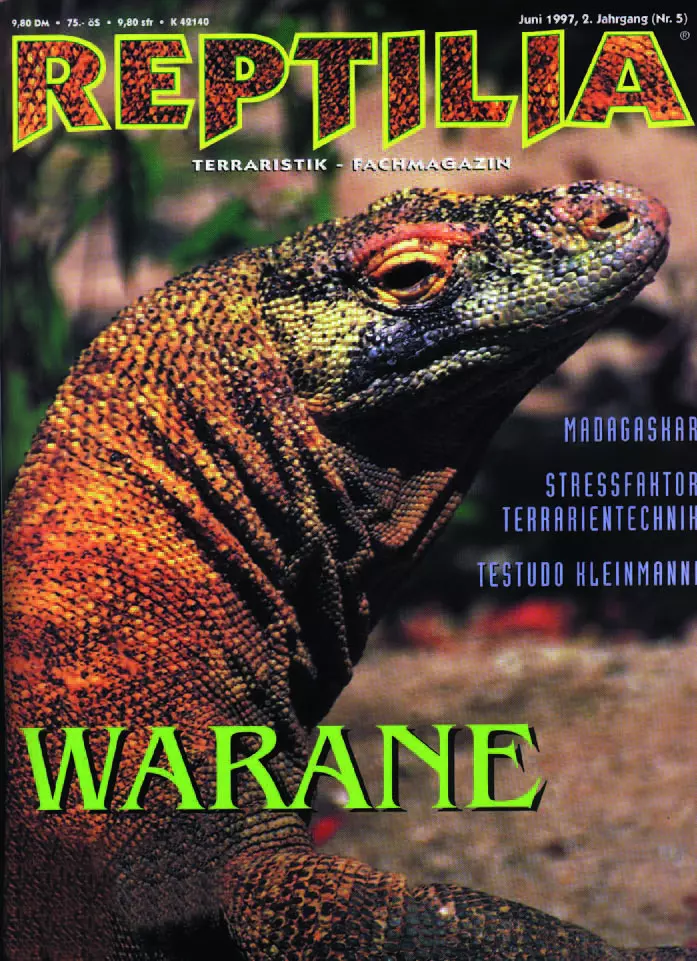
Reptilia 05 - Monitor Lizards
Reptilia 05 - Monitor lizards MadagascarStress factor terrarium technologyTestudo Kleinmanni Contents: Page 2 - EditorialPage 3 - Letters to the editorPage 4 - Discussion: What to do after snake bites?Page 6 - MagazinePage 16 - Photo reportage: Monitor lizards, by J. de Ávalos and P. Martínez CarriónPage 22 - Keeping and breeding: Keeping and breeding monitor lizards, by B. EidenmüllerPage 26 - Herpetofauna: The spoilt dragons of Komodo, by H. WerningPage 28 - Monitor lizards - Use by humans, by Dr M. GaulkePage 33 - Travelogue: Journey to the south-east of Madagascar, by W. Schmidt and K. LiebelPage 39 - Portrait and poster: Dendrobates tinctorius, by M. SchmidtPage 43 - Herpetofauna: Testudo kleinmanni, by B. DevauxPage 52 - Terraristics: Stress in the terrarium, by G. VossPage 56 - Herpetofauna: Frogs of the genus Eleutheradactylus in Costa Rica, by J. EhmckePage 60 - Herpetology and Culture: Magic and superstition, Part 2: Snakes and lizards, by L. B. Carissimi-PrioriPage 69 - Reptilia on the road: Terrazoo Moers, by W. SchmidtPage 74 - Advice and actionPage 75 - LibraryPage 80 - Incubator: Column by H. Werning

CHF 9.80

Terraria 44 - Keep poisonous snakes responsibly
Terraria 44 - Responsible care for venomous snakesCeylon pigeon dragonCanarian giant lizardsContents:Debates about keeping exotic animals are particularly focussed on animals that are dangerous to humans, such as venomous snakes. Their care is of course reserved for particularly responsible specialists. However, in the next issue, we will show just how successful such private terrarium keepers can be and what valuable information they contribute to our knowledge of these fascinating and epidemiologically significant reptiles with detailed husbandry and breeding reports on various venomous snake species. TerritorialHerpetoramaCover storyResponsible care for venomous snakesAndré WeimaThe Desert Massasauga (Sistrurus catenatus edwardsii)Mark RoggenkampThe puff adder (Bitis arietans)Chandra Alexander Krutwik SagredoPanoramaTerraglobalCrocodiles as an offering for the Aztec gods Fabio CupulAbout a small animal park in north-east CubaRonny BakowskieResearchNew speciesTailed amphibians I: A new fire salamander from North Africa Axel KwetTailed amphibians II: A new crested newt from south-eastern Europe Axel KwetAmong researchersFrog hunting in Madagascar - Herping in and around AndasibeSebastian WolfSalamandraTerraristicsCophotis ceylanica – Biology, care and breeding of theCeylonese deaf agamaHartmut Mohr & Jonathan CabreraNature and species conservationField notesDead spots in Iberian grass snakesRudolf Malkmus & Horst SauerVoracious spawn predators - horse leeches in grass frog spawn Axel Kwet & Nicole GehringerThe new breeding and research centre for the Canarian giant lizards on El Hierro Jürgen SämannCheckered water snakes (Natrix tessellata) at Lake Pécs in south-west Hungary – an updateWerner & Yvonne LantermannSubscription & ServiceAlso in your neighbourhoodGalleryWhich page goes to the top?PreviewIncubator Lost Dutchman Part 1Heiko Werning

CHF 12.00

NTV, bromeliads, orchids and ferns in the tropical terrarium
NTV - Bromeliads, orchids and ferns in tropical terrariums 128 pages 181 colour photos 1 graphic Format: 16.8 x 21.8 cm Author Benjamin & Wolfgang Schwarz Publisher NTV Contents: A tropical terrarium without lush plant splendour? Unthinkable! The plants not only ensure a balanced climate and high humidity, but also provide the animals with hiding places or even egg-laying sites. Bromeliads and orchids in particular, but also ferns, are also wonderful to look at and an ornament for any terrarium. How to care properly for these jewels among plants is shown by the experienced “tropical terrarium keepers” Wolfgang and Benjamin Schwarz in this guide. They convey from their own many years of practice what is particularly important in caring for these plants, give tips on lighting, temperature, humidity and of course also on species-appropriate watering and fertilising. The authors offer detailed advice on the construction, technology and sensible setup of a beautifully planted tank and clearly explain, step by step, how to tie and attach epiphytes or how to plant a cork oak trunk. A comprehensive species section, lavishly illustrated with colour photos, presents in detail those bromeliads, orchids and ferns suitable for care and addresses their particular requirements. The overview with all species particularly recommended for beginners also makes it easier for less experienced terrarium keepers to select suitable plants. And, as the icing on the cake, the construction of an artificial waterfall is described – vividly illustrated by a large photo series – an adornment for every tropical terrarium.Named Book of the Month by DATZ!Beautifully planted tropical terrariums – no problem with this book!Wolfgang and Benjamin Schwarz reveal the best tips and tricks from their many years of experience with the jewels among plants: everything you need to know about bromeliads, orchids, ferns and their care set up the tropical terrarium close to nature the right terrarium technology: how to invest your money wisely tying epiphytes consistently practical instructions all species suitable for beginners at a glance huge species section with wonderful colour photos Extra: building an artificial waterfall

CHF 35.90

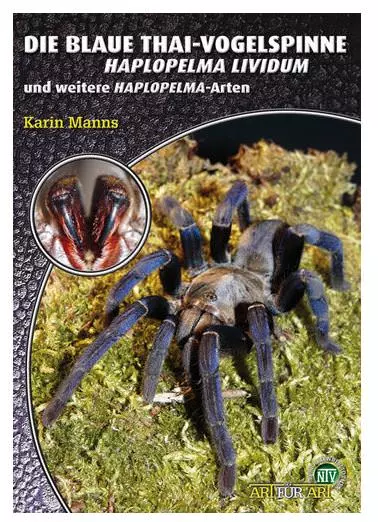
NTV - Haplopelma lividum
Haplopelma lividum - All about the blue Thai tarantula 64 pages numerous colour photos Series species by species A5 Paperback Author Karin Manns Publisher NTV The booklet explains everything about the systematics, anatomy, distribution, appearance, life expectancy and natural enemies. It also explains how poisonous the Haplopelma lividum is, which legal regulations apply to it and acquiring this tarantula. From the contents: Foreword Systematics and anatomy Distribution Appearance and behaviour Natural enemies Life expectancy How poisonous is Haplopelma lividum Legal regulations Acquisition and transport Keeping and care The terrarium Technology and climate Socialisation Nutrition How to handle the tarantula Moulting Diseases and injuries Reproduction - Mating - Cocoon construction and rearing Conclusion

CHF 19.90