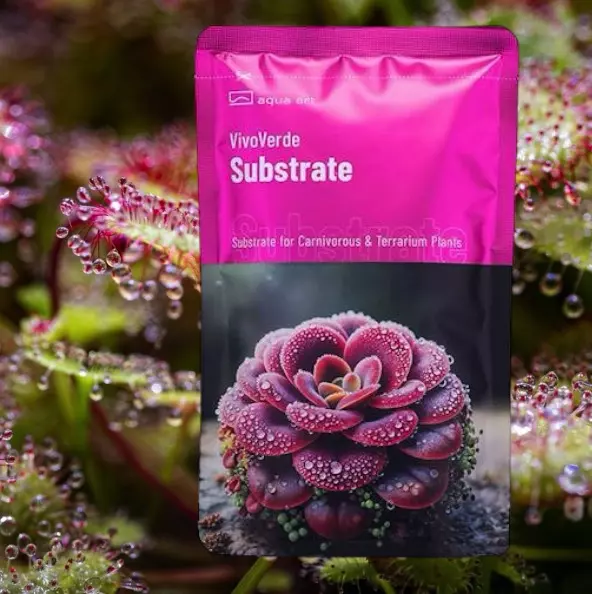
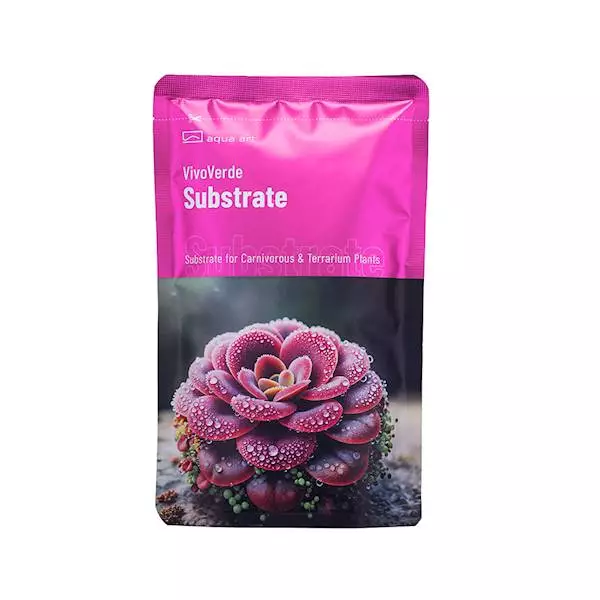
Substrate for carnivorous plants

  • special substrate
  • carnivorous plants
  • granules
  • 0,3 liter
Article no: ZJ-350678

CHF 5.90

Stock: 11

Available, delivery time: 1-3 days

Delivery between Monday, 10 August and Tuesday, 11 August
Zahlungsarten
Product information "Substrate for carnivorous plants"

VioVerde substrate for carnivorous plants

VivoVerde substrate for carnivorous plants - perfect soil for carnivores

VivoVerde substrate for carnivorous plants is the ideal choice for all lovers of Venus flytraps, tubular plants, sundews and other carnivores. Specially developed to meet the natural needs of these unique plants, the high-quality special substrate ensures optimum water retention, a loose structure and a low nutrient content - exactly what carnivorous plants need.

Why should you buy this substrate from VivoVerde?

  • Perfectly balanced - High-quality mixture of peat and perlite for ideal air permeability
  • Low in nutrients & pH-neutral - Supports healthy root growth and prevents waterlogging
  • No artificial fertilizers - Natural for species-appropriate cultivation
  • Ideal for Venus flytraps, tubular plants, sundew & co.

With VivoVerde substrate, your carnivorous plants will grow healthy and strong - without any additional fertilizer.

Zoo Roco tip!

Carnivorous plants must not be planted in normal potting soil. They need a substrate that is free of fertilizer, as these plants grow in poor soil in the wild. This is why they have specialized in catching insects in order to obtain nutrients. If you want to fill large containers, you can use pure white peat.

Composition
Feeding recommendation
Technical details
Size information

1 of 1 reviews

5 out of 5 stars


100%

0%

0%

0%

0%


Give us a rating!

Share your experience with the product with other customers.


6 March 2026 07:24

très bon substrat

très bon substrat

Customers also bought

Pinguicula Cherry Blossom - carnivorous plant
Carnivorous plant - Pinguicula Cherry Blossomsupplied in an in vitro cupDiameter up to 5.5cmHumidity: 50-80%Temperature: 22-29 °C Purple flowerPinguicula 'Cherry Blossom' is a unique plant that stands out due to its special appearance. It is similar to Pinguicula agnata, but differs in its purple flower. The adult plant reaches a diameter of 5.5 cm. The color of the leaves can vary from light green to pink, depending on the light intensity.Size: The diameter of the rosette can reach up to 5.5 cm. Flowers: Flowering time: Mainly in spring and summer. The cherry blossom-like flowers are usually pink with a white or light-colored throat. The stem is long and slender, with a single flower per stem.Light: Pinguicula Cherry Blossom prefers bright, indirect light with occasional direct sunlight.Substrate: A well-drained mixture often consisting of peat, perlite and sand.Feeding/fertilizing: Avoid fertilizing the substrate! The plant gets all the nutrients it needs from the prey it catches or eats.Humidity: The humidity should be between 50-80%. Temperature: The ideal temperature for this plant is 22-29 °CPropagation: Propagation is by leaf cuttingsThe combination of carnivorous plants with reptiles reptiles in a terrarium can create an aesthetically pleasing and ecologically interesting environment. Carnivorous plants such as Drosera, Nepenthes, Pinguicula and Sarracenia are not only exotic and beautiful, they also they also contribute to a balanced ecosystem by controlling the population of small insects. small insects.

CHF 12.90

Pinguicula Florian - carnivorous plant
Carnivorous plant - Pinguicula Floriansupplied in an in vitro cupeasy to keepThe diameter of the rosette is approx. 1 cmSunlight, 16-hour dayHumidity: 50-80%Temperature: 22-29 °CPale pink flowerPinguicula 'Florian' is a hybrid of Pinguicula 'Debbertiana' and Pinguicula. 'Esseriana'. Pinguicula 'Florian' was registered as a cultivar in 2004 and is named after the breeder's eldest son. The plant Pinguicula 'Florian' has leaves that turn an intense red color in strong light.This is an easy-to-grow species of carnivorous plant and therefore also suitable for beginners.Size: The rosette reaches a diameter of only 1-2 cm. Excellent for cultivation in the small WabiKusa jars. Flowers: The flower emerges from the winter rosette and is pale pink.Light: The plant prefers partial to full sun, 16 hours of light per day Substrate: An airy and well-drained mixture, usually consisting of peat moss and perlite or coarse sand. Feeding/ fertilizing: The plant does not require special fertilization as it absorbs nutrients through insects. The plant can be fed Drosophila from time to time. Springtails that stray onto the plant are also eaten.Humidity: The ideal humidity is between 50 % and 80 % with sufficient air circulation. During the insectivorous phase, provide sufficient distilled water to keep the medium moist. The plant can also tolerate dry periods. Temperature: The plant grows well at temperatures between 22°C and 29°C.Propagation: Propagation takes place via leaf cuttings. The leaf is broken off at the base and placed on the moist substrate. New plants will form after a few weeks. The combination of carnivorous plants with reptiles reptiles in a terrarium can create an aesthetically pleasing and ecologically interesting environment. Carnivorous plants such as Drosera, Nepenthes, Pinguicula and Sarracenia are not only exotic and beautiful, but they also contribute to a balanced ecosystem by controlling the population of small insects. small insects.

CHF 12.90

Pinguicula Tina - carnivorous plant
Carnivorous plant - Pinguicula Tina supplied in an in vitro cupDiameter up to 10-15 cmHumidity: 50-80%Temperature: 22-29 °CAttractive flowers, mostly lavender to light purplePinguicula Tina is a cross between Pinguicula agnata and Pinguicula zecheri and is also known as "Hans". It produces large, light green leaves that grow in a rosette. Although the leaves can be large, they are rather thin and can droop a little. This variety retains a consistent light green color and blooms profusely with large light purple flowers that have a darker center and distinct veins and edges.size: The diameter of the rosette can be up to 10-15 cm Flowers: Blooms in spring and summer. Delicate and attractive flowers, mostly lavender to light purple with a white or lighter throat. One flower is produced per stem.Light: Pinguicula Tina prefers bright, indirect light with occasional direct sunlight.Substrate: A well-drained mixture often consisting of peat, perlite and sand.Feeding/fertilizing: Avoid fertilizing the substrate! The plant gets all the nutrients it needs from the prey it catches or eats.Humidity: The humidity should be between 50-80%. Temperature: The ideal temperature for this plant is 22-29 °CPropagation: Propagation is by leaf cuttings or division.The combination of carnivorous plants with reptiles reptiles in a terrarium can create an aesthetically pleasing and ecologically interesting environment. Carnivorous plants such as Drosera, Nepenthes, Pinguicula and Sarracenia are not only exotic and beautiful, they also they also contribute to a balanced ecosystem by controlling the population of small insects. small insects.

CHF 12.90

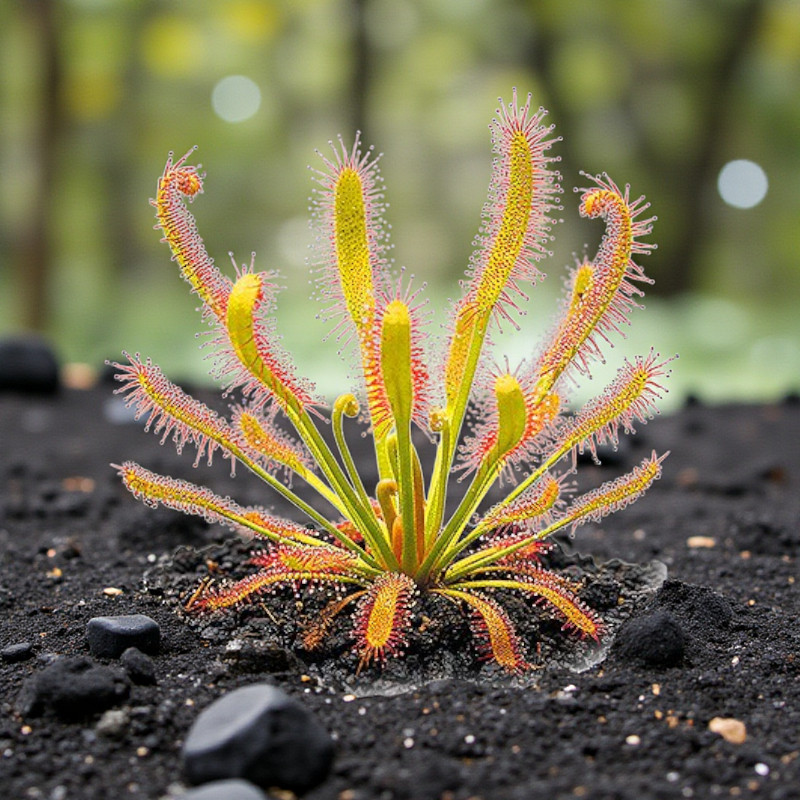
Drosera capensis - carnivorous plant
Aqua Art Drosera capensis - Sundew for terrarium & WabiKusaDrosera capensis (Cape Sundew) fascinates with long catch leaves that form glittering sticky drops to catch small insects. As an in vitro plant, it starts clean and compact - ideal for bright, humid setups such as paludariums, carnivorous terrariums or Wabi-Kusa.Product features:Cultivated in vitro (sterile in a pot)Carnivorous plant with sticky trapping leaves (sundew principle)Suitable for humid terrariums/paludariums and very bright locationsRobust and also suitable for beginnersImportant advantages:Exciting observation effect: trapping leaves shine and react to preySupports a near-natural microclimate in humid terrarium setupsNo fertilization necessary - the plant covers its needs by catching small insectsInformation:Origin (species): Cape region / South Africa; grows in nutrient-poor, permanently moist habitats (e.g. swamps, banks, streams)Size/growing height: approx. 5-20 cm (depending on conditions)Temperature requirements: approx. 10-35 °C; as frost-free as possible in winter (guideline: not below approx. 5 °C)Air humidity: at least approx. 50 % recommendedLight: bright to sunny (for strong coloration and good catching drops)Water/substrate: soft/low-lime (e.g. rainwater/osmosis water), acidic, nutrient-poor substrate; permanently moist to wet Drosera capensis, the Cape sundew, is a real classic among carnivorous plants - and for good reason: the long, narrow catch leaves are covered with many fine tentacles that form glistening adhesive droplets. These droplets attract small insects and hold on to them so that the plant can supplement its low nutrient requirements. At the same time, Drosera capensis is comparatively uncomplicated to care for and is therefore also attractive for beginners . The species originates from the Cape region of South Africa, where it grows in permanently moist, nutrient-poor areas such as swamps, on banks and along watercourses. You can easily replicate this principle at home: The decisive factors are plenty of light and a constantly moist to wet, acidic and nutrient-poor substrate. Soft, low-lime water (e.g. rainwater or osmosis water) is recommended for watering. Fertilizing is not necessary.In suitable conditions, Drosera capensis typically grows to a height of around 5 to 20 cm. It does particularly well in bright, humid terrariums, paludariums or similar humid setups where the catching droplets are formed stably. A humidity level of around 50 % is a good guideline, although the plant is particularly reliable in a constantly humid environment.Drosera capensis is pleasantly tolerant when it comes to temperature requirements: a range of approx. 10-35 °C is suitable for cultivation. In the cooler months of the year, it should be kept frost-free; as a guide, temperatures should not fall below approx. 5 °C in winter. This will keep the plant vital and allow it to sprout vigorously again in spring.Zoo Roco tip:For in vitro plants, it is worth acclimatizing them gently: rinse the gel carefully, place them in a carnivorous substrate and keep them in a very bright place for the first 7-14 days, but only gradually give them extreme midday sun. If the catching drops decrease, this is usually an indication of too little light or too dry air - first increase the light intensity and ensure that the substrate is constantly moist.

CHF 9.90

Stylidium debile - carnivorous plant
Carnivorous plant - Stylidium debilesupplied in an in vitro cupdiameter up to 10cmfull sunlight to partial shadeHumidity: 50-80%Temperature: 22-29°C very attractive inflorescencesStylidium debile does not feed on insects, but scientists have found that the flowers have a small area on the underside that is capable of catching and digesting very small insects. The plant uses a special trapping mechanism based on the sensitivity of the stamens. When an insect lands on the flower and triggers the trapping mechanism, the stamens collapse abruptly and hold the insect against the pistil, which also promotes pollination.Stylidium debile has a moderate water requirement. This plant prefers the soil to dry out slightly between waterings. Size:Forms a compact clump of small rosettes of leaves and flowering stems. Mature specimens can reach a height of 5 to 15 cm Flowers: Delicate and attractive flowers, mostly pink to purple, with a distinctive lip.Light: Full sun to partial shade - requires at least 6 hours of direct sunlight per day.Substrate: A well-drained mix often consisting of peat, perlite and sand.Feeding/fertilizing: Avoid fertilizing the substrate! The plant gets all the nutrients it needs from the prey it catches or eats.Humidity: The humidity should be between 70-90%. Temperature: Tolerates a wide range of temperatures, prefers a temperate to warm climate.The combination of carnivorous plants with reptiles reptiles in a terrarium can create an aesthetically pleasing and ecologically interesting environment. Carnivorous plants such as Drosera, Nepenthes, Pinguicula and Sarracenia are not only exotic and beautiful, but they also contribute to a balanced ecosystem by controlling the population of small insects. small insects.

CHF 9.90

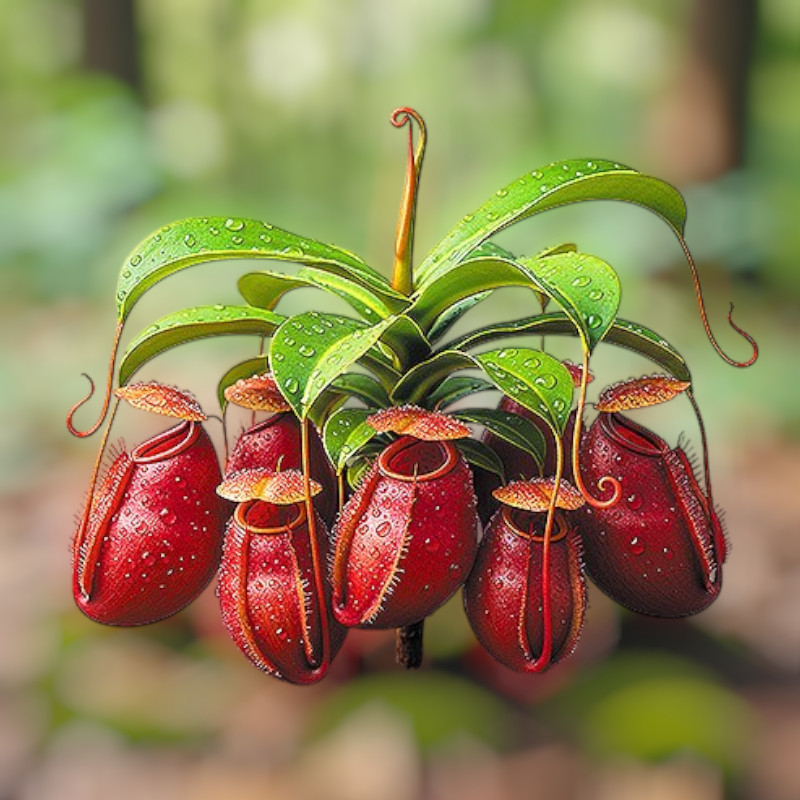
Nepenthes ampullaria red - carnivorous plant
Aqua Art Nepenthes ampullaria 'Red'Compact, red ground pots for the humid terrariumNepenthes ampullaria 'Red' forms a particularly large number of amphora-shaped ground pots in attractive shades of red, giving it the appearance of a dense "carpet of pots". It is ideal for warm, very humid terrariums and paludariums with bright, indirect light.Characteristics and requirements:Origin (species): Southeast Asia; natural distribution from Thailand to western Malaysia and Maluku to New Guinea, among othersHabitat: humid lowland habitats, including (swamp) forestsTemperature: warm; often approx. 21-24 °C in the terrariumLight: bright to very bright, preferably indirect/diffuse (no prolonged blazing sun)Water: As low in minerals as possible (rain/osmosis water)Lowland Nepenthes with numerous potsPots typically urn/amphora-shaped, approx. 2-10 cm long in natureRequires high humidity (70-90%)Warm climate: as a lowland species, rather constantly warmVery decorative in humid setups because many pitchers are visible at the same timeExciting plant to observe: pitcher formation and coloration clearly react to light and climateNo fertilization necessary; nutrient-poor substrate is expressly desiredNepenthes ampullaria 'Red' is a tropical pitcher plant that looks particularly impressive in humid lowland biotopes. Instead of only forming individual pitchers on long tendrils, this species develops many pitchers in the lower area - often in dense groups directly at the base of the plant. It is precisely this "pitcher carpet" effect that makes it so popular in terrariums, paludariums or warm, humid plant showcases.In the wild, Nepenthes ampullaria is widespread in Southeast Asia and grows predominantly in humid, tropical lowland habitats, including swamp and rainforest areas. Accordingly, it appreciates conditions that are constantly warm and very humid. High humidity (often in the range of around 70-90% or more) and temperatures in the warm lowland spectrum of around 22-26°C are considered a good orientation.For Nepenthes, "lowland spectrum" simply means the climate profile of lowland species - i.e. conditions similar to those in tropical lowland and swamp areas. "Spectrum" does not mean a hard fixed value, but a range of temperatures/humidity in which these plants grow reliably and form pitchers.The plants like bright light, but not burning midday sun. Many cultivation instructions recommend very bright, but diffuse or indirect light over longer periods of time (e.g. under plant light or in a well-shaded greenhouse) so that leaves and pitchers remain healthy and the plant reliably "pitches" (produces pitchers)Water quality is particularly important for everyday care: if possible, use water that is low in minerals (rain or osmosis water). The substrate should be airy, acidic and low in nutrients - typical Nepenthes mixtures are often based on sphagnum and structural components so that the roots remain moist but do not suffocate.Zoo Roco tip:If Nepenthes ampullaria 'Red' makes few pitchers at first, this is usually a sign of too low humidity or too little light. First increase the humidity (e.g. in the terrarium/with good ventilation) and provide bright, indirect light. Water consistently with rain/osmosis water - depending on the region, tap water is often too rich in minerals for carnivores.

CHF 15.90

Suggested products

New
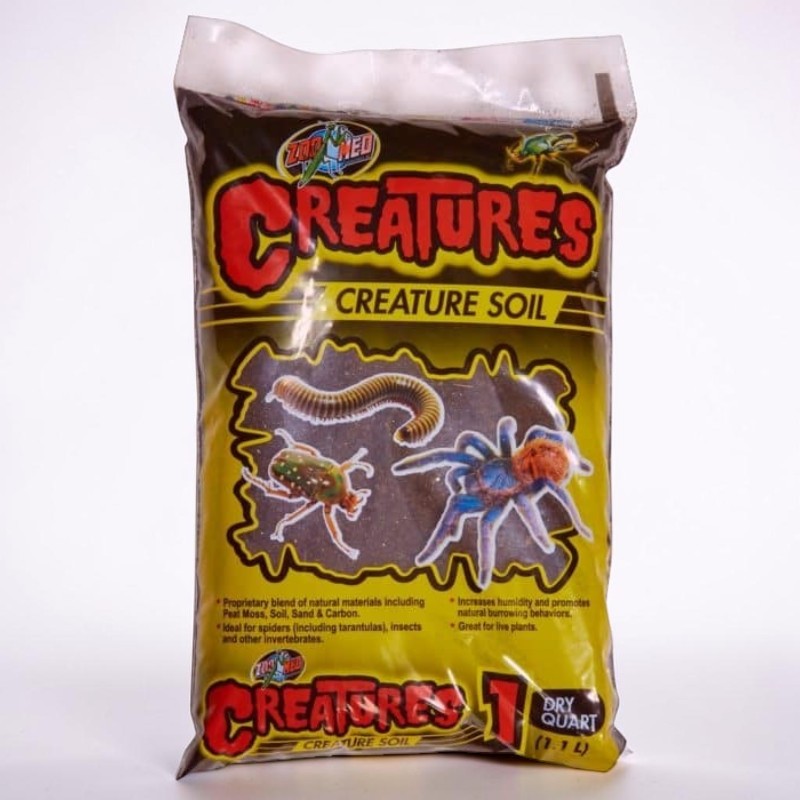
ZooMed Creature Soil 1.1 litres
Creatures® Creature Soil – natural substrate for terrariumsCreatures® Creature Soil is a safe, natural substrate for the species-appropriate design of terrariums and habitats for invertebrates. The special blend of sphagnum moss, soil, sand and carbon creates a natural environment and is ideal for various crawling creatures. The substrate helps to increase humidity in the terrarium and encourages natural behaviours such as burrowing and hiding. This makes it particularly suitable for spiders, including tarantulas, insects and other invertebrates. Creature Soil is also ideal for planted terrariums, as it provides a good base for live plants and contributes to the natural appearance of the habitat.Benefits at a glance:A special natural mixture of sphagnum moss, soil, sand and carbonIdeal for spiders, tarantulas, insects and other invertebratesHelps maintain higher humidity levels in the terrariumEncourages natural burrowing and hiding behaviourAlso suitable for live plantsPerfect for natural-looking terrarium design

CHF 4.90

Mixed foliage 5 liters
HabiStat mixed foliage100% natural terrarium leaves for bioactive enclosures HabiStat leaves are the perfect choice for creating a natural look in your terrarium. 100% natural leaves replicate the larger elements of the undercanopy and enhance the look and function of any enclosure. Ideal for bioactive setups and for use under the HabiStat leaf litter range. Also suitable for rodents such as hamsters, gerbils and degus as adventure bedding. Keep the bedding for small animals dry and do not moisten. Product advantages 100% natural: No chemical additives - safe for reptiles, amphibians and invertebrates. Enriches the enclosure: Creates hiding places, burrows and water deposits for small species. Promotes microclimate: Supports the formation of valuable moisture zones in the substrate. Supports bioactive terrariums: Provides food, shelter and habitat for cleaning fauna. Natural aesthetics: Gives the enclosure a lively, realistic look. Ideal for combining: Perfect under HabiStat leaf litter or in bioactive ecosystems. Areas of application Bioactive terrariums with reptiles, amphibians or invertebrates Near-natural design of rainforest, woodland or deciduous forest layouts Combination with substrate and leaf litter for stabilized microclimates Zoo Roco tip For a particularly realistic ecosystem, we recommend regularly moving the leaves slightly and combining them with moss or pieces of bark. This creates varied structures that burrowing and feeding species particularly like to use.

CHF 11.90

Forest floor leaf litter 5 liters
HabiStat forest floor leaf litterNatural litter for terrariums (5 L) HabiStat Forest Floor Leaf Litter provides a lifelike replica of the foliage layer of a real forest floor. The diverse mixture of high-quality, dried leaves creates an authentic habitat and promotes species-appropriate behavior in reptiles, amphibians and invertebrates. The natural structure conveys a sense of security, encourages searching, digging and hiding and at the same time enhances the appearance of any terrarium.Also suitable for rodents such as hamsters, gerbils and degus as adventure bedding.Keep the bedding dry and do not moisten. Advantages and properties Natural mixture of leaves for realistic imitation of forest floor Creates stable microclimates and regulates moisture levels Promotes a healthy substrate and supports bioactive processes Ideal for cleaning fauna such as isopods, millipedes and beetles - serves as cover and as a food source Perfect for tropical and temperate terrarium set-ups 100% natural, without additives - fully compostable Contents: 5 liters Use in the terrarium The foliage can be applied over a large area as a cover layer and thus supports humidity regulation. At the same time, it provides retreats and food for invertebrates, which enrich the soil with valuable nutrients and thus promote plant growth. Ideal for use in bioactive terrariums with auxiliary fauna and natural planting. Zoo Roco tip For a particularly stable microclimate, we recommend regularly loosening the HabiStat Leaf Litter slightly and combining it with other natural materials such as moss or pieces of bark. This creates an even more varied soil structure, which reptiles and invertebrates particularly like to use.

CHF 11.90

Black peat sods
Black peat sod from PetfactoryBlack peat sods are compact blocks of black peat, a highly decomposed, humus-rich peat. They are often used in aquariums and terrariums, especially in tropical terrariums.Due to their ability to store moisture, they help to stabilize the climate in the terrarium and are of completely natural origin. They can be planted with mosses and ferns. Another advantage of black peat sods is that they are easy to work with using standard tools such as saws, drills or files. This enables the individual design of back or side walls as well as the creation of terraces or hilly landscapes in the terrarium. They are also ideal for tying up bromeliads or orchids.This is a natural product, which is why not every piece is identical.Size approx: Length 30 cm ∅ 7 cm

CHF 5.90

Cocodream Premium substrate
Copacabana Cocodream Premium bedding, 20 lThe coconut shells are ideal as terrarium substrate as they naturally increase the humidity in the terrarium due to their high water retention. They also have a germ-inhibiting effect and prevent mold growth. Thanks to their low weight, they are easy to move and offer ideal conditions for digging. Coconut bedding for reptiles100% vegetableMade from renewable raw materialsInhibits germsCompostable and environmentally friendlyEffectively odor-bindingContents: 20 liters

CHF 13.90

Repti Planet Substrate Creative
Creative Substrates from Repti PlanetWith these substrates they can real landscapes creatively model and generate. A natural blend of sand and clay, without added colorants or chemicals. After drying, the resulting landscape remains solid and does not collapse. Stimulates the natural behavior of reptiles and does not limit their creativity .These substrates contain minerals that support physiological processes and are great conductors of heat. The REPTI PLANET Natural Habitat CREATIVE terrarium substrates imitate real conditions of the steppe, semi-desert and arid regions of our planet. Based on our knowledge from previous Repti Planet expeditions observing reptiles and amphibians around the world, we have taken inspiration from their real environments to create a unique blend of sand and clay that allows us to recreate the natural habitat of these reptiles. All-natural formulation of clay and sandAvailable in two colors; red and yellowFor sculpting, molding and building For reptiles and amphibiansExcellent thermal propertiesWeight per bag 4 kgUse:After adding water (ratio 4:1), you can sculpt burrows, shelters, rods, resting places and anything else you can imagine. You can combine the moldable substrate with stones, roots and other natural materials. After drying, the landscape is solid and does not collapse. To create a realistic environment, we recommend combining with other Repti Planet substrates.  Make the base dense and let it dry. The drying time depends on the ambient temperature and the amount of substrate used. Do not put reptiles and amphibians in the terrarium until the substrate is completely dry (when it is solid). Combine the substrate with roots, stones, branches and other natural materials to create a realistic environment. The CREATIVE substrate stimulates natural behavior in digging burrows, sheltering and laying eggs. RP Natural Habitat CREATIVE substrate is ideal for rearing many species of reptiles and amphibians due to the mineral substances, excellent heat conduction properties, natural origin without dyes and support of natural instincts (burrowing, laying). .

CHF 7.50

Repti Planet Natural Habitat Earth
Natural Habitat Earth by Repti PlanetA natural blend of clay and sand, with no added dyes or chemicals. Stimulates the natural behavior of reptiles ( burrowing, burrowing) and has excellent thermal conductivity. Provides you with the Earth Habitat to create and shape real environments.It works well with ReptiPlanet's CREATIVE SUBSTRATES to create great terrarium setups. The completely natural terrarium substrates REPTI PLANET Natural Habitat EARTH imitate the real conditions in the steppes, grasslands, semi-deserts and mountainous regions of our planet. Based on the previous knowledge of our various expeditions in search of reptiles and amphibians around the world, we have taken inspiration from the real environment, creating a unique mixture of sand, pebbles and clay that mimics the habitat in which these reptiles and amphibians live wildly. Few reptiles live on pure substrates, so the use of EARTH optimally supports the natural behavior of digging burrows, hiding places and laying eggs. We only need to moisten the substrate and then we can immediately start forming a landscape inspired by its original natural environment. Thanks to the enrichment with mineral substances, the excellent heat-conducting properties, the natural origin without the addition of colorants, as well as the support of natural instincts (digging, building), the Natural Habitat EARTH substrate is ideal for breeding many species of reptiles and amphibians in our terrariums. Remove dirt regularly and depending on the number of animals kept, change the substrate regularly.pure natural recipe of clay and sandavailable in four colors: black, brown, red, yellowto model, shape and build for reptiles and amphibiansexcellent thermal propertiesWeight per bag 4 kg.

From CHF 7.50

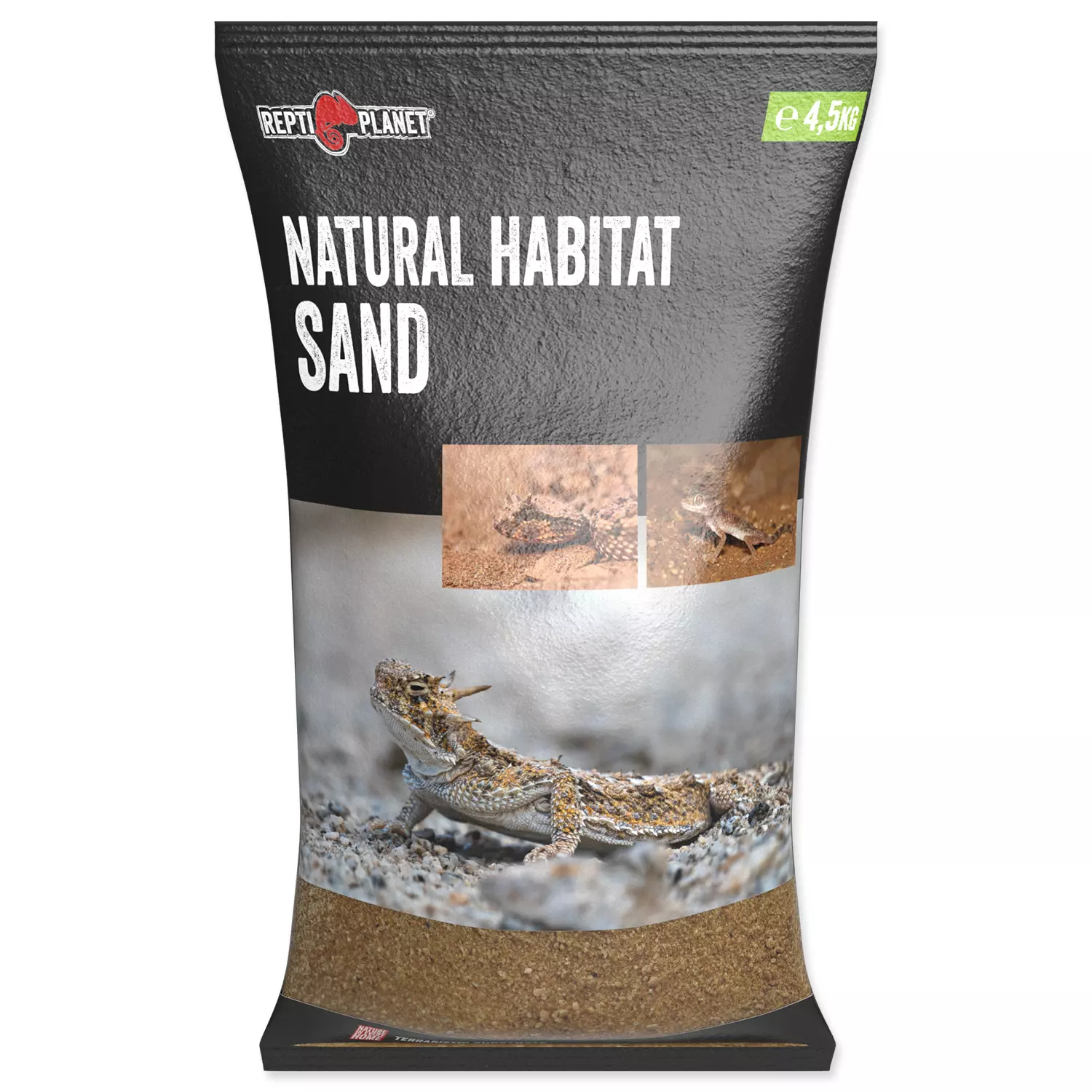
Repti Planet Natural Habitat Sand
Natural Habitat Earth by Repti PlanetA natural mixture of sand, without added dyes and chemicals. Stimulates natural behavior (burrowing, digging) of amphibians and reptiles.ReptiPlanet Natural Habitat SAND terrarium substrates create real conditions found in the desert regions of our planet. Based on the findings of previous ReptiPlanet expeditions observing reptiles and amphibians around the world, ReptiPlanet drew inspiration from the real environment to develop a unique substrate blend. Thus, ReptiPlanet has managed to define a mixture that most closely matches the natural operations of these animals. The substrate Natural Habitat SAND stimulates natural behavior (hunting, protection from predators or temperature regulation) or when laying eggs. Natural Habitat SAND substrate is ideal for breeding many species of reptiles and amphibians in our terrariums. Thanks to the mineralized substances, excellent heat conduction properties, natural origin without the addition of dyes, the natural instincts (burying, laying eggs) are encouraged. Regularly remove dirt and change the substrate accordingly often depending on the number of animals living in the terrarium.purely natural formula made of sandavailable in four colors: red, orange, black, yellowfor reptiles and amphibiansexcellent thermal propertiesweight per bag 4.5 kg.

From CHF 8.50

Coconut shred for terrariums
Coconut Fiber SubstrateCoconut Fiber Bedding for your TerrariumCoconut fiber are an optimal moisturizer and are perfect for a rainforest environment. The coconut bedding is also completely free of additional fertilizers. The bedding was also produced heat sterilized and is free of germs and fungi. The coconut fiber bedding will also expand slightly after filling and with 4.5 L bedding package, you will get about 20 L of bedding.100 % organic coconut fiberOptimal for rainforest terrariums

CHF 4.20

Coconut Bark Chips 1kg
Coconut Nature Chips 1 kg coconut chips compressed into a brick for your terrarium, as a soil substrate.The coconut nature chips serve as a soil substrate and also make ideal as one. The coconut chips absorb and retain moisture incredibly well, which is why you can use it perfectly for a rainforest in the terrarium. It also retains its good looks for a very long time. So the substrate does especially well for tropical snakes and lizards. 100% natural and free of chemicalsSoaks up and retains moisture perfectlyPerfect for tropical animalsMust first be soaked in water for half an hour.Under no circumstances should they use the substrate dry, otherwise the substrate loses its suction power.

CHF 7.20

Terrarium moss
Terrarium moss - terrarium substrateThis tropical terrarium substrate helps to ensure that the humidity in terrariums is increased or not reduced. This terrarium substrate is also suitable as a breeding ground for plants such as orchids and is produced without chemical additives.Content 100g

CHF 7.90

Vita-Sand
Color (1): orange
Vita-SandNatural calcium carbonate substrate containing vitamins as a substrate in your terrariumExtra fine substrate to prevent impaction when consumedHealth benefits due to increased calcium supply and enrichment with vitamins and beta-caroteneExcellent substrate for bearded dragons, Uromastys lizards, monitor lizards, geckos, desert tortoises and many other terrarium animals.Available in the colours: WhiteGoldOrangeContent: 4,5kgDirections for use:Pour the contents of the bag onto the terrarium floor. The depth of the Vita-Sand should be 4cm or less. If more than 4cm of sand is poured on, do not use under heaters (tank warmers or heating pad-like devices).Remove contamination as necessary with a sieve or similar. Replace all sand if an unpleasant odour develops or after 6 months.Warning:If your animals show a strong tendency to consume substrate, we recommend the following:1. check your husbandry - read a good reference book on reptile husbandry, insebsodere of your particular species, as this behaviour may be a sign of other problems.2. make sure you provide sufficient light sources with UVB for your animal.

CHF 19.90

Customers also saw

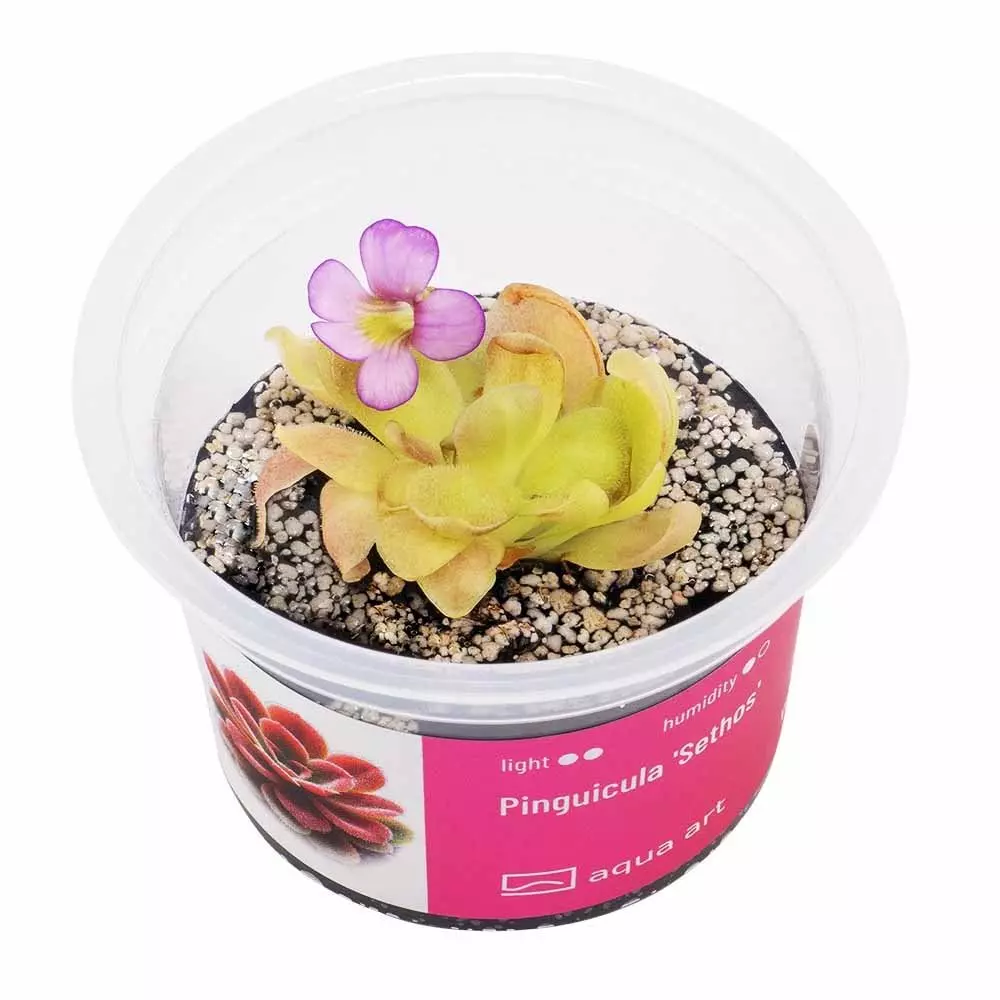
Pinguicula Sethos - carnivorous plant
Carnivorous plant - Pinguicula Sethos supplied in an in vitro cupDiameter up to 5 to 7.6 cmHumidity: 50-80%Temperature: 22-29 °CAttractive flowers, mostly bright pink to magenta-coloredPinguicula Sethos is a carnivorous plant. It is a cross between 'Ehlersiae' and 'Moranensis'. Its name refers to the Egyptian pharaoh, which makes it even more mysterious.The adult plant reaches a diameter of 5 to 7.6 cm. The color of the leaves can vary from green to light pink depending on the incidence of light.Size: The diameter of the rosette can be up to 5 to 7.6 cm Flowers: Blooms in spring and summer. Delicate and attractive flowers, usually bright pink to magenta with a white or light throat. One flower is produced per stem.Light: The Pinguicula Sethos prefers bright, indirect light with occasional direct sunlight.Substrate: A well-drained mixture often consisting of peat, perlite and sand. Feeding/ fertilizing: Avoid fertilizing the substrate! The plant gets all the nutrients it needs from the prey it catches or eats.Humidity: The humidity should be between 50-80%. Temperature: The ideal temperature for this plant is 22-29 °CPropagation: Propagation is by leaf cuttings or division.The combination of carnivorous plants with reptiles reptiles in a terrarium can create an aesthetically pleasing and ecologically interesting environment. Carnivorous plants such as Drosera, Nepenthes, Pinguicula and Sarracenia are not only exotic and beautiful, but they also contribute to a balanced ecosystem by controlling the population of small insects. small insects.

CHF 12.90

Pinguicula Florian - carnivorous plant
Carnivorous plant - Pinguicula Floriansupplied in an in vitro cupeasy to keepThe diameter of the rosette is approx. 1 cmSunlight, 16-hour dayHumidity: 50-80%Temperature: 22-29 °CPale pink flowerPinguicula 'Florian' is a hybrid of Pinguicula 'Debbertiana' and Pinguicula. 'Esseriana'. Pinguicula 'Florian' was registered as a cultivar in 2004 and is named after the breeder's eldest son. The plant Pinguicula 'Florian' has leaves that turn an intense red color in strong light.This is an easy-to-grow species of carnivorous plant and therefore also suitable for beginners.Size: The rosette reaches a diameter of only 1-2 cm. Excellent for cultivation in the small WabiKusa jars. Flowers: The flower emerges from the winter rosette and is pale pink.Light: The plant prefers partial to full sun, 16 hours of light per day Substrate: An airy and well-drained mixture, usually consisting of peat moss and perlite or coarse sand. Feeding/ fertilizing: The plant does not require special fertilization as it absorbs nutrients through insects. The plant can be fed Drosophila from time to time. Springtails that stray onto the plant are also eaten.Humidity: The ideal humidity is between 50 % and 80 % with sufficient air circulation. During the insectivorous phase, provide sufficient distilled water to keep the medium moist. The plant can also tolerate dry periods. Temperature: The plant grows well at temperatures between 22°C and 29°C.Propagation: Propagation takes place via leaf cuttings. The leaf is broken off at the base and placed on the moist substrate. New plants will form after a few weeks. The combination of carnivorous plants with reptiles reptiles in a terrarium can create an aesthetically pleasing and ecologically interesting environment. Carnivorous plants such as Drosera, Nepenthes, Pinguicula and Sarracenia are not only exotic and beautiful, but they also contribute to a balanced ecosystem by controlling the population of small insects. small insects.

CHF 12.90

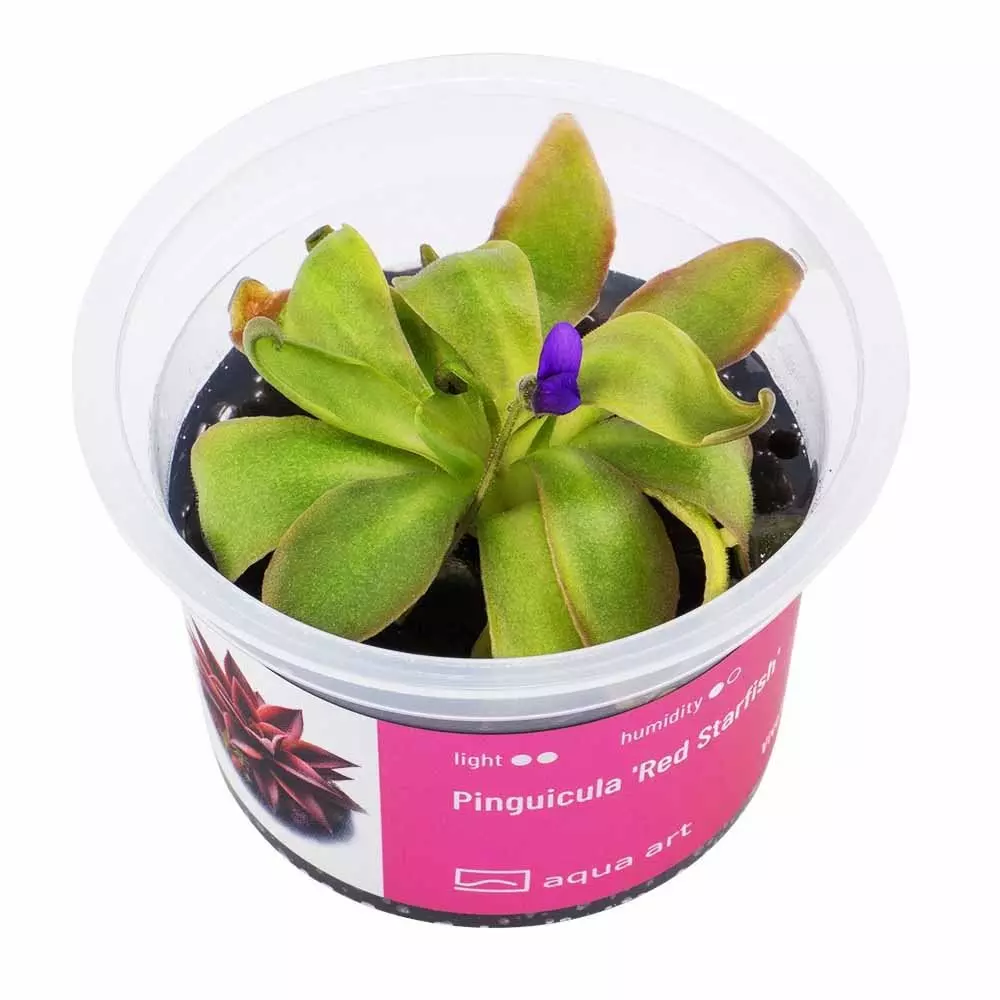
Pinguicula Red Starfish - carnivorous plant
Carnivorous plant - Pinguicula Red Starfish supplied in an in-vitro cupDiameter up to 6-9 cm Humidity: 50-80%Temperature: 15-25 °CDelicate, mostly pale pink to purple flowersPinguicula 'Red Starfish' is a species of insectivorous plant that stands out for its beautiful appearance. It is a cross between Pinguicula moranensis and Pinguicula heterophylla. In summer they form a rosette with a diameter of usually 6-9 cm and consist of 12-20 leaves. In bright light they turn an intense red-purple color.Size: The diameter of the rosette can reach up to 6-9 cm. Flowers: Blooms in spring and summer. Delicate, mostly pale pink to violet flowers with an often lighter throat.Light: Pinguicula 'Red Starfish' prefers bright, indirect light with occasional direct sunlight.Substrate: A well-drained mixture often consisting of peat, perlite and sand.Feeding/fertilizing: Avoid fertilizing the substrate! The plant gets all the nutrients it needs from the prey it catches or eats.Humidity: The humidity should be between 50-80%. Temperature: The ideal temperature for this plant is 15-25 °CPropagation: Propagation is by leaf cuttings or division.The combination of carnivorous plants with reptiles reptiles in a terrarium can create an aesthetically pleasing and ecologically interesting environment. Carnivorous plants such as Drosera, Nepenthes, Pinguicula and Sarracenia are not only exotic and beautiful, but they also contribute to a balanced ecosystem by controlling the population of small insects. small insects.

CHF 12.90

Repti Planet Natural Habitat Earth
Natural Habitat Earth by Repti PlanetA natural blend of clay and sand, with no added dyes or chemicals. Stimulates the natural behavior of reptiles ( burrowing, burrowing) and has excellent thermal conductivity. Provides you with the Earth Habitat to create and shape real environments.It works well with ReptiPlanet's CREATIVE SUBSTRATES to create great terrarium setups. The completely natural terrarium substrates REPTI PLANET Natural Habitat EARTH imitate the real conditions in the steppes, grasslands, semi-deserts and mountainous regions of our planet. Based on the previous knowledge of our various expeditions in search of reptiles and amphibians around the world, we have taken inspiration from the real environment, creating a unique mixture of sand, pebbles and clay that mimics the habitat in which these reptiles and amphibians live wildly. Few reptiles live on pure substrates, so the use of EARTH optimally supports the natural behavior of digging burrows, hiding places and laying eggs. We only need to moisten the substrate and then we can immediately start forming a landscape inspired by its original natural environment. Thanks to the enrichment with mineral substances, the excellent heat-conducting properties, the natural origin without the addition of colorants, as well as the support of natural instincts (digging, building), the Natural Habitat EARTH substrate is ideal for breeding many species of reptiles and amphibians in our terrariums. Remove dirt regularly and depending on the number of animals kept, change the substrate regularly.pure natural recipe of clay and sandavailable in four colors: black, brown, red, yellowto model, shape and build for reptiles and amphibiansexcellent thermal propertiesWeight per bag 4 kg.

From CHF 7.50

Terrarium Repto -Clear
Repto Terra Clean TerrariumThese terrariums are suitable for keeping terrarium invertebrates or for breeding. Repto Terra clear acrylic terrariumIdeal for small terrarium inhabitantsTop mesh panel for lampEasy to assemble, self-assembly kitWith a hinged door at the frontAvailable in five sizesDiscover the Repto Terra Clear acrylic terrariums - the perfect home for small terrarium inhabitants such as praying mantises, beetles, walking branches and tarantulas etc.These compact terrariums are available in five sizes and offer an incomparable view of your animals. This terrarium is made of high-quality, clear acrylic glass , which provides a crystal-clear view. The top grid panel not only offers the option of attaching a lamp for optimum lighting, but also comes with a matching acrylic panel to cover it to increase humidity - perfect for the well-being of your terrarium animals.The practical folding door at the front allows effortless access to the terrarium and makes feeding and caring for your animals a breeze.As a DIY kit, this terrarium is very easy to assemble without any technical knowledge or tools and is supplied flat-packed. With its compact size and user-friendly design, the Repto Terra Clear Acrylic Terrarium provides an excellent home for small terrarium animals while offering you, the owner, optimum visibility and ease of use.Provide the perfect habitat for your animals with this clear, functional and easy to assemble terrarium. Assembly:Remove the protective film from the elementsput togethersecure with the rubber ringsfinished

From CHF 32.90

Mangrove wurzeln
Mangrove roots for aquariums and terrariums - pure nature for your tankOur mangrove roots are the ideal natural product for aquariums and terrariums. Each root is unique and gives your set-up an authentic, natural look. The pictures serve as examples, as each root looks slightly different.The unusual growth forms offer fish, shrimps and reptiles a safe hiding place and promote a healthy climate. As a natural product, size and shape vary slightly, so your tank will always look individual and lively. Mangrove wood is robust, durable and supports the water quality. Bring a piece of nature into your home with these unique roots! The roots are suitable for: Natural aquariumsterrariumspaludariumsfor decorating nagariumsfor use in aviariesThe wood must be soaked in water before use, otherwise it will float. The wood can also be weighted down with a stone or glued to a slate plate to prevent it from floating. The humic acid in the wood can cause the aquarium water to turn brown, but this is only a visual nuisance and poses no danger to the living organisms.Size: approx. 20 - 30 cm

CHF 15.90