
Handbook of forage plants 2nd revised editionMarion Minch is not only a successful breeder of diverse tortoises for many years, but also an excellent connoisseur of native wild herbs. She founded and runs samenkiste.de, which is well known to many tortoise keepers and nature lovers. Her name is inextricably linked with reptile care and species-appropriate nutrition for tortoises. Her handbook of food plants summarises the most important native food plants for herbivorous and omnivorous reptiles. She not only considers tortoises, but also iguanas, spiny-tailed dragons and even chameleons. From the basics of plant biology to native wild herbs to suitable food plants for hardy tropical reptile species, this comprehensive work provides the basis for species-appropriate keeping. In the expanded and supplemented 2nd edition, the plant section is divided according to flower colour. This makes it even easier to identify wild herbs. The work has also been supplemented with a wealth of additional information and many pictures.
Geckos in the terrarium by Astrid FalkThe book offers a comprehensive introduction to geckos and their species-appropriate keeping in terrariums. It explains what you need to think about before buying a gecko and what preparations should be made. The book describes in detail how the terrarium is technically equipped and set up. The care of the animals, their special features and behaviour, their diet, reproduction and rearing of young animals are described, as well as diseases and husbandry problems with tried and tested suggestions for prevention and treatment. Individual gecko species that are particularly suitable for keeping and breeding in terrariums are portrayed in detail in the second part of the book.
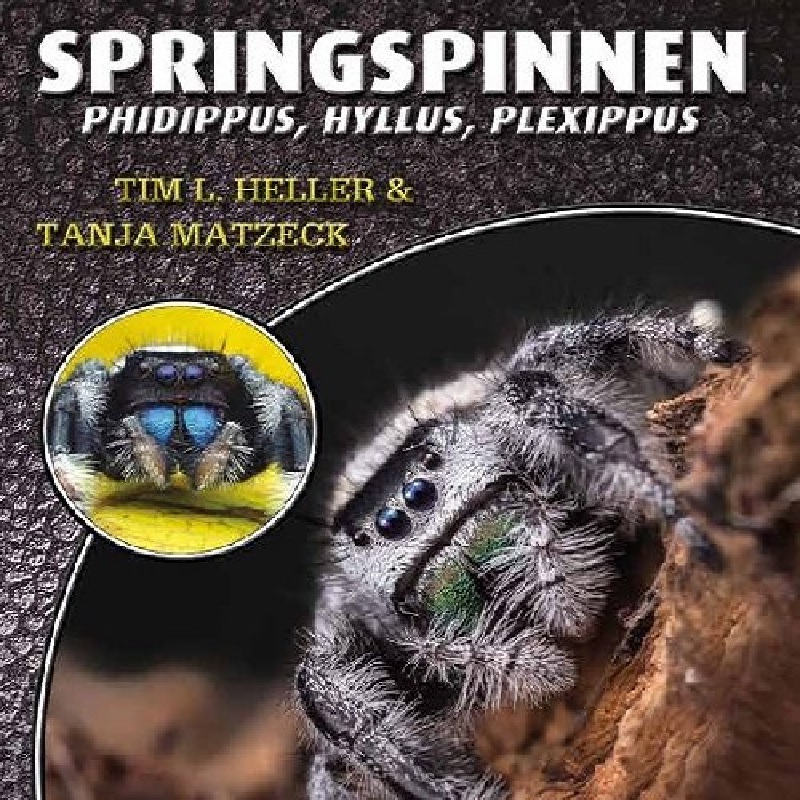
Book Jumping Spiders -
Phidippus, Hyllus & Plexippus
A guide to keeping jumping spiders of the genera Phidippus, Hyllus & Plexippus. Who can resist the charm of jumping spiders? The childlike appearance of their expressive face simply leaves no one cold! In addition, their behavior is extremely exciting to observe, their colors are bright and their requirements for species-appropriate keeping are very easy to meet. No wonder these likeable jumpers are all the rage!
This volume in the "Species by Species" series describes in detail what to look out for when buying and keeping them, introduces the most commonly kept species and color forms and provides plenty of tips on how to keep them successfully - so you can be sure they will breed well!
Species by Species introduces you to the books in this series, which present the most popular terrarium animals. Each volume offers you detailed, practical care instructions and all the information you need to successfully breed your animals.
All important questions from the required tank size to terrarium set-up, technical equipment, species-appropriate nutrition and disease prevention are answered with numerous tricks and tips.
Experienced, long-standing breeders reveal how you can encourage the animals to reproduce and raise healthy young.
All this in full color, generously illustrated and attractively designed - just about your terrarium animal - species by species
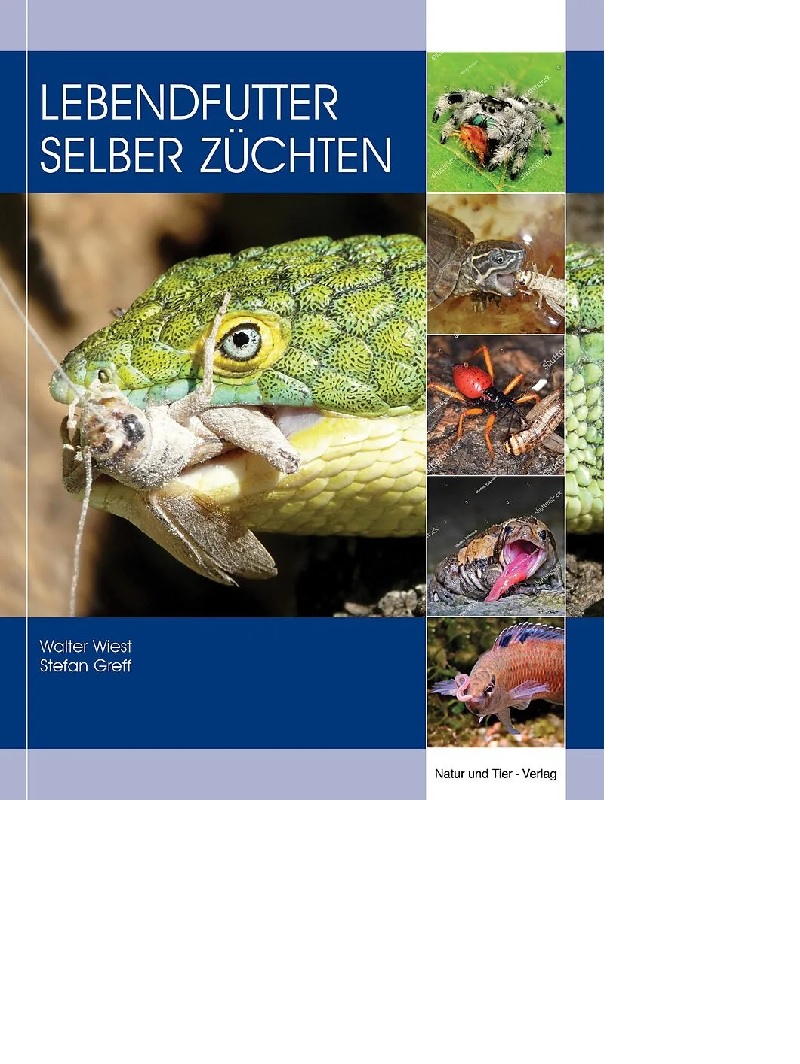
Book "Grow your own live food" - The perfect guide for pet owners
Discover practical and detailed instructions on how you can easily breed food for your reptiles, birds, fish or other animals yourself in the book "Breeding live food yourself". With valuable tips on various food insects, their care and breeding, you can save money and ensure a species-appropriate diet for your pets.
Contents of the book:
Step-by-step instructions for breeding feeder insects
Information on the best types of food for reptiles, birds and fish
Care instructions and breeding conditions for various live food species
Tips for sustainable and cost-effective food production
Why breed your own live food?
Get healthy, fresh food for your animals
Save money and reduce dependence on pet shops
Promote the health and well-being of your animals with species-appropriate food
Whether you are a beginner or an experienced pet owner, this book provides you with everything you need to successfully breed live food yourself.
Marginata 69 - New Guinea tortoises – the genus ElseyaCover storyThe unrecognised beauties: New Guinea tortoises (Andreas S. Hennig)My experiences with Branderhorst's New Guinea tortoise, Elseya (Elseya) branderhorsti (Ouwens, 1914) (Andreas S. Hennig)Keeping and breeding of Rhodin's New Guinea tortoise, Elseya (Hanwarachelys) rhodini Thomson, Amepou, Anamiato & Georges, 2015 (Andreas S. Hennig)PortraitGeoemyda spengleri, Chinese serrated tortoise (Andreas S. Hennig)ReportageMacrochelys temminckii – Experiences and impressions with vulture tortoises part 2 (Reiner Praschag)KeepingAn alternative to year-round keeping of the Egyptian tortoise in the terrarium – my experiences with seasonal outdoor keeping of Testudo kleinmanni (Ricarda Schramm)EtymologySawbacks and living maps part 4: Graptemys gibbonsi, Pascagoula humpback tortoise (Holger Vetter)Classifieds & animal placement
Marginata 45 - The Turtles of the Indian Subcontinent
Yellow-margined Box TurtleTurtle villageEurasian pond turtle
Contents:
EditorialMagazineTOPICThe turtles of the Indian subcontinentSebastian NicklTOPICTurtles in IndiaBernd WolffTOPICA journey to the turtles of Sri LankaHerbert and Regina BeckerTOPICKeeping and breeding the black-bellied terrapin (Melanochelys trijuga thermalis) in the terrariumSebastian NicklPORTRAITMauremys rivulata Valenciennes, 1833. Eurasian pond turtleBenny TrappREPORTAGEThe turtle village in the Mauren massif Martin DieckmannKEEPING AND BREEDINGThe Yellow-margined Box Turtle (Cuora flavomarginata) Part 2: Breeding in the terrarium and endangerment in the wildUlrich HennenSubscription & ServiceRegional guide
Reptilia 01 - CrocodilesBearded dragonsFire SalamandersBaja californiaGAUDÍ and herpetologyContents:2 - Editorial6 - Magazine14 - Keeping and breeding: Bearded crocodiles, by J. Bergadá and J. Pether23 - Travelogue: Crocodiles in Ghana, by S. Zwernemann26 - Report: Hamburger made from crocodile meat, by M. Schmidt29 - Terraristics: Keeping guidelines for crocodiles30 - Pros and cons: keeping crocodiles33 - Travelogue: Baja California, by H. Werning39 - Portrait and poster: Hyla meridionalis, by M. Aresté and J. L. Farriols43 - Terraristics: Sexing of snakes, by Dr M. Bachs46 - Keeping and reproduction: Acrantophis dummeriliby W. Wengler49 - Herpetofauna, Fire Salamanders, by X. Rivera and A. de Saint Paul58 - Herpetology and culture: Gaudí and herpetology, by E. Filella64 - Veterinary medicine - Shell necrosis in turtles, by C. Lopez del Castillo71 - Report: Species conservation in the jungle of French Guiana, by S. Alviani73 - Library77 - Advice and action80 - Incubator: Glossary by H. Werning
All about the Prairie Garter Snake by Martin Hallmen
64 pages
Format: 14.8 x 21 cm
numerous colour photos
Contents:
The prairie garter snake has a very alert nature. It is usually particularly active and interested in the terrarium. It remains very calm when handled and does not tend to bite.This volume from the "Species by Species" series is intended to provide the basic knowledge for keeping them in a species-appropriate way and shows how easy the prairie garter snake makes it for you if you decide to keep it.
Systematics and body structure
The fascinating biology: From the life of the prairie garter snake
All information on species-appropriate keeping: from suitable terrariums to equipment and technology to feeding
Successful breeding: Mating stimulation and rearing young animals
Solutions to problems: How to avoid the most common mistakes in care and how to help sick animals
Brilliant photos
Reptilia 69 - Shield lizards
Aldabra giant tortoisesEpicrates fordiiEastern Cuba
Contents:
2 EDITORIAL
3 MAGAZINE
13 DATES
16 WESTERN HERP PERSPECTIVESTurtles in troubleBy B. Love
18 PHOTO REPORTAGEShield lizardsGenera and species at a glance By M. Barts
26 HERPETOFAUNARing-tailed shield lizardsThe genus ZonosaurusBy M. Rogner
32 KEEPING AND BREEDINGA short report on the Sudan-shield lizard (Gerrhosaurus major)By S. Dassow
37 KEEPING AND BREEDINGThe rock shield lizard(Gerrhosaurus vallidus)By F. Schmidt
44 TRAVEL Herpetological between Columbus' landing point and the CaribbeanCuba's middle eastBy B. Krüger
51 PORTRAIT AND POSTERRhinella ictericaBy A. Kwet
56 KEEPING AND BREEDINGThe Aldabra giant tortoiseDipsochelys dussumieriBy B. Devaux - SOPTOM
64 KEEPING AND BREEDINGEpicrates fordii – a giant snake in miniatureBy S. Einolf
67 REPORTAGEThe "asthma beetle" and its use in folk medicineBy K. Kunz
76 TERRARIUM EXHIBITSThe Avilon Montalban Zoological Park, PhilippinesBy M. Gaulke
85 REPORTAGEThe Good, the Bad and the UglyVisiting Thomas Wilms in Saudi Arabia -a guest article about living and researchingin a beautiful countryBy P. Wagner
89 FAQ - FREQUENTLY ASKED QUESTIONSRed-eyed tree frogsBy T. Eisenberg
94 LIBRARY
104 INCUBATORFlorida Diaries (Part 2)By H. Werning
Reptilia 33 European snakes
Dwarf honeycomb toadFishing chameleonCuban Anolis
Contents:
2 Editorial
4 Magazine
16 Western Herp PerspectivesSnake searchfrom B. Love
18 Photo reportageThe snakes of Europefrom B. Trapp
26 Keeping and breedingSome vipers from Europe in the terrariumby K. Orth
32 Keeping and breedingRearing and eighteen years of caring for a common viper (Vipera berus berus)by K. Orth
34 Reportage'Snake diving' - Encounter with the dice snake (Natrix tessellata)by W. Pölzer
39 Keeping and breedingGood times, bad times: Experiences with the chameleon Bradypodion fischeri (REICHENOW, 1895)by P. Müller
46 JourneyCuba: In search of Anolis smallwoodiby M. Rogner
51 Portrait and posterAmeiva undulataby U. Schlüter
56 Keeping and breedingThe Indian star tortoise Geochelone elegans (SCHOEPFF, 1795) - a problematic tropical tortoise? - Part 2: Careby H.-J. Bidmon
64 Keeping and breedingKeeping and breeding the dwarf honeycomb toad Pipa parvaby M. Beier
72 ReportageA popular feed insect, the green cockroach Panchlora nivea (LINNAEUS, 1758)by I. Fritzsche
76 REPTILIA on the roadReptile house Sipplingenby H. Werning
85 Classifieds
89 Advice and help
93 Library
104 ColumnNew recipes!by K. Kunz
Draco 63 - Amphibians of Europe
Contents:
Editorial
Frogs and tailed amphibians in Europe – species diversity and biology Axel Kwet & Benny TrappAmphibian of the Year 2016 – Morphological diversity in Salamandra salamandraAxel Kwet & Benny Trapp
New amphibians in EuropeAxel Kwet & Benny Trapp
The amphibian fauna of the Iberian PeninsulaAxel Kwet & Benny Trapp
Corsica, Sardinia and Sicily: Amphibian diversity in the MediterraneanAxel Kwet & Benny Trapp
List of the amphibians of Europe Axel Kwet & Benny Trapp
Draco 33 - Lance adders
Contents:
2 Editorial
4 Neotropical pit vipers – evolution, biogeography and ecologyMarkus Monzel & Wolfgang Wüster
28 The scaly lance adder – Bothrops asper (Garman, 1884)D. Matthias Dehling & J. Maximilian Dehling
35 Keeping, care and breeding of neotropical lance adders of the genus Bothrops using the example of Bothrops asper and Bothrops venezuelensisRichard Sethao
39 Moments from the life of the Chaco lance adder Bothrops diporus Garman, 1862Ludwig Trutnau
44 The Bothriechis species of Guatemala – data on biology and breeding Lester Meléndez
50 The lance adders of the genus Bothrops in BoliviaMartin Jansen
57 Bite accidents caused by lance adders – venoms, epidemiology and snakebite managementMarkus Monzel
66 Bothriechis schlegelii (Berthold, 1846) – In search of the prehensile-tailed lance adder in Costa Rica Michael Wirth
76 Breeding and rearing of the half-moon lance adder (Bothrops alternatus)C. Meyer
80 Remarks on the natural history, care and breeding of Bothrops atrox (Linnaeus, 1758)Ludwig Trutnau
88 Magazine
💡 Lucky Reptile Light Strip LED Mini Modular LED lighting for every terrarium
The Lucky Reptile Light Strip LED Mini is a modern, energy-efficient basic lighting system for terrariums that impresses with its ultra-flat design, modular expandability and individually adjustable light. Whether for tropical, temperate or desert-like habitats - this LED system allows the lighting to be adjusted in a targeted and flexible manner.
Thanks to the 10-stage dimming function and three selectable color temperatures (3000K, 4000K, 6500K), you can adjust the light precisely to the needs of your animals. The integrated 90° beam angle ensures even illumination without disturbing shadows. Also suitable for bird-friendly lighting - thanks to flicker-free LED technology.Good to know:Modules of up to 12 watts can be connected to a plug, regardless of whether they are 2 or 4 watt elements. The cable for the extension measures 14 cm.All combined elements can only be programmed to one light color.✅ Advantages at a glance:
Ultra-flat, space-saving design - ideal for all terrarium sizes
3 light colors selectable: 3000K (warm), 4000K (neutral), 6500K (daylight-like)
10-stage dimmable - precise adjustment to animal species & habitat
Modularly expandable - up to 12 W output can be switched in series
Flicker-free - easy on the eyes, also suitable for birds
90° light angle - uniform light distribution without shadows
Flexible installation - can be surface-mounted, glued or screwed in place
Long-lasting - over 25,000 hours of operating time📋 Product details:
Product name: Lucky Reptile Light Strip LED Mini
Power: 2 W or 4 W per module
Max. Chain power: 12 W in series
Color temperatures: 3000K / 4000K / 6500K
Dimming: 10 levels
Mounting: glass, gauze, screws or adhesive pads
Beam angle: 90°
Suitable for: Reptiles, amphibians, birds
Service life: approx. 25,000 h
System: modularly expandable with plug-in connection
Supply voltage: 12 V DC💡 Zoo Roco tip:
Combine several modules according to animal species and terrarium size. For jungle-like setups, for example, a 3000K setting is recommended, while 6500K creates optimum lighting conditions for desert dwellers. Also ideal for breeding terrariums with changing light requirements.Whether you want to illuminate a single terrarium or extend an entire shelf: the Lucky Reptile Light Strip LED Mini provides flexibility, quality and efficiency in a well thought-out system.