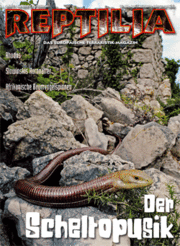
Reptilia 88 - The Cryptopusics

Article no: reptilia88

CHF 12.00

Stock: 0

Ready for dispatch in 1-3 days, delivery time 7 working days

Delivery between Tuesday, 28 April and Wednesday, 29 April
Zahlungsarten
Product information "Reptilia 88 - The Cryptopusics"

Reptilia 88 - The Scheltopusik

Rhodes
Meaning of UV irradiation
Colour forms of the western hook-nosed snake

Contents:

Europe's largest and at the same time strangest lizard captivates all reptile enthusiasts: the Scheltopusik. This equally awe-inspiring and elegant species, with its snake-like shape and lizard head, is one of the best-known reptiles and a classic in terrarium keeping. Nevertheless, reports of successful breeding remain rare. In the upcoming REPTILIA, Benny Trapp and Michael Wirth present Scheltopusiks from all parts of the range, both in text and fantastic photos, while Sascha Esser and his team from the Alexander Koenig Zoological Research Museum also report on breeding in indoor terrariums. This extraordinary cover story is rounded off by Peter Fritz, who describes in a very comprehensible way the construction of an outdoor enclosure for this species – something sure to interest every other outdoor terrarium keeper as well.

Table of contents

Editorial
MAGAZINE
DATES

WESTERN HERP PERSPECTIVES
Insufficiently recognised reptiles
B. Love

PHOTOSTORY
Europe's largest lizard – the Scheltopusik, Pseudopus apodus 
M. Wirth

PRACTICE
An outdoor enclosure for the Scheltopusik, Pseudopus apodus 
P. Fritz

REPORTAGE
Keeping and breeding of the Scheltopusik, Pseudopus apodus, at the Alexander Koenig Zoological Research Museum 
S. Esser

REPORTAGE
The Scheltopusik in Croatia 
M. Wirth

PORTRAIT AND POSTER
Gopherus polyphemus
H. Werning

Reportage
Colour forms of the western hook-nosed snake (Heterodon nasicus
F. Longhitano

PRACTICE
How important are UV light, vitamin and mineral supplements? New findings on bone metabolic diseases and their prevention using the example of the Yemen chameleon 
A. Kwet & S. Hoby

TRAVEL
The herpetofauna of Rhodes 
U. Schlüter

Animals of our homeland. The dice snake 
R. Leptien

TERRARIUM DISPLAYS
The paradise of the unloved – the Scheidegg reptile zoo 
M. Wirth

SUBSCRIPTION & SERVICE 
ALSO NEAR YOU 
PREVIEW 

INCUBATOR 
Ilha de Marchanteria   

Composition
Feeding recommendation
Technical details
Size information

0 of 0 reviews

Give us a rating!

Share your experience with the product with other customers.


Suggested products

Handbook of food plants for tortoises and other reptiles
Handbook of forage plants 2nd revised editionMarion Minch is not only a successful breeder of diverse tortoises for many years, but also an excellent connoisseur of native wild herbs. She founded and runs samenkiste.de, which is well known to many tortoise keepers and nature lovers. Her name is inextricably linked with reptile care and species-appropriate nutrition for tortoises. Her handbook of food plants summarises the most important native food plants for herbivorous and omnivorous reptiles. She not only considers tortoises, but also iguanas, spiny-tailed dragons and even chameleons. From the basics of plant biology to native wild herbs to suitable food plants for hardy tropical reptile species, this comprehensive work provides the basis for species-appropriate keeping. In the expanded and supplemented 2nd edition, the plant section is divided according to flower colour. This makes it even easier to identify wild herbs. The work has also been supplemented with a wealth of additional information and many pictures.

CHF 46.50

Geckos
Geckos in the terrarium by Astrid FalkThe book offers a comprehensive introduction to geckos and their species-appropriate keeping in terrariums. It explains what you need to think about before buying a gecko and what preparations should be made. The book describes in detail how the terrarium is technically equipped and set up. The care of the animals, their special features and behaviour, their diet, reproduction and rearing of young animals are described, as well as diseases and husbandry problems with tried and tested suggestions for prevention and treatment. Individual gecko species that are particularly suitable for keeping and breeding in terrariums are portrayed in detail in the second part of the book.

CHF 28.50

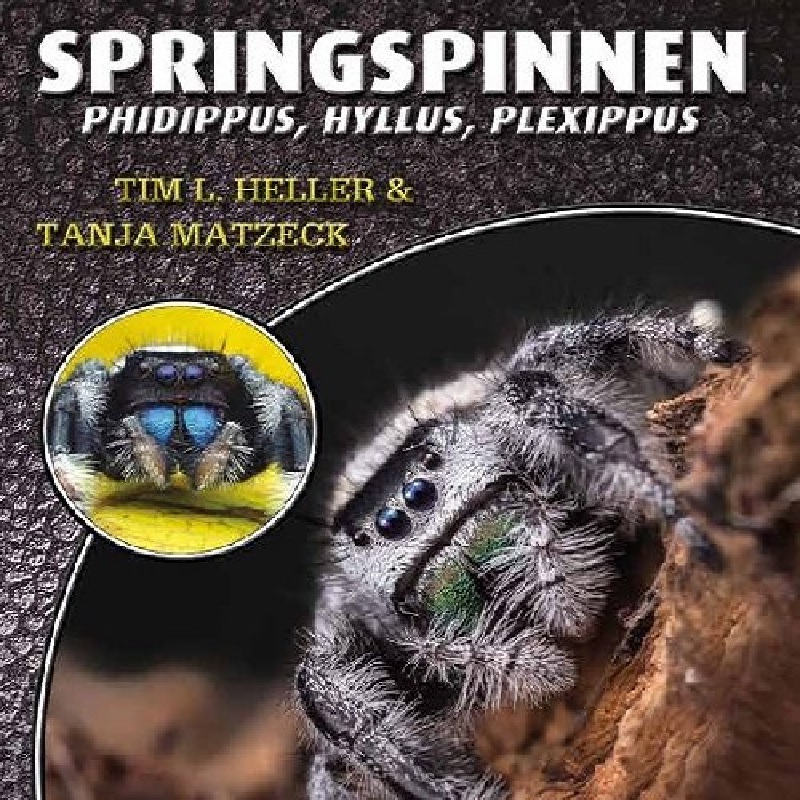
Jumping spiders Phidippus, Hyllus, Plexippus
Book Jumping Spiders - Phidippus, Hyllus & Plexippus A guide to keeping jumping spiders of the genera Phidippus, Hyllus & Plexippus. Who can resist the charm of jumping spiders? The childlike appearance of their expressive face simply leaves no one cold! In addition, their behavior is extremely exciting to observe, their colors are bright and their requirements for species-appropriate keeping are very easy to meet. No wonder these likeable jumpers are all the rage! This volume in the "Species by Species" series describes in detail what to look out for when buying and keeping them, introduces the most commonly kept species and color forms and provides plenty of tips on how to keep them successfully - so you can be sure they will breed well! Species by Species introduces you to the books in this series, which present the most popular terrarium animals. Each volume offers you detailed, practical care instructions and all the information you need to successfully breed your animals. All important questions from the required tank size to terrarium set-up, technical equipment, species-appropriate nutrition and disease prevention are answered with numerous tricks and tips. Experienced, long-standing breeders reveal how you can encourage the animals to reproduce and raise healthy young. All this in full color, generously illustrated and attractively designed - just about your terrarium animal - species by species

CHF 23.90

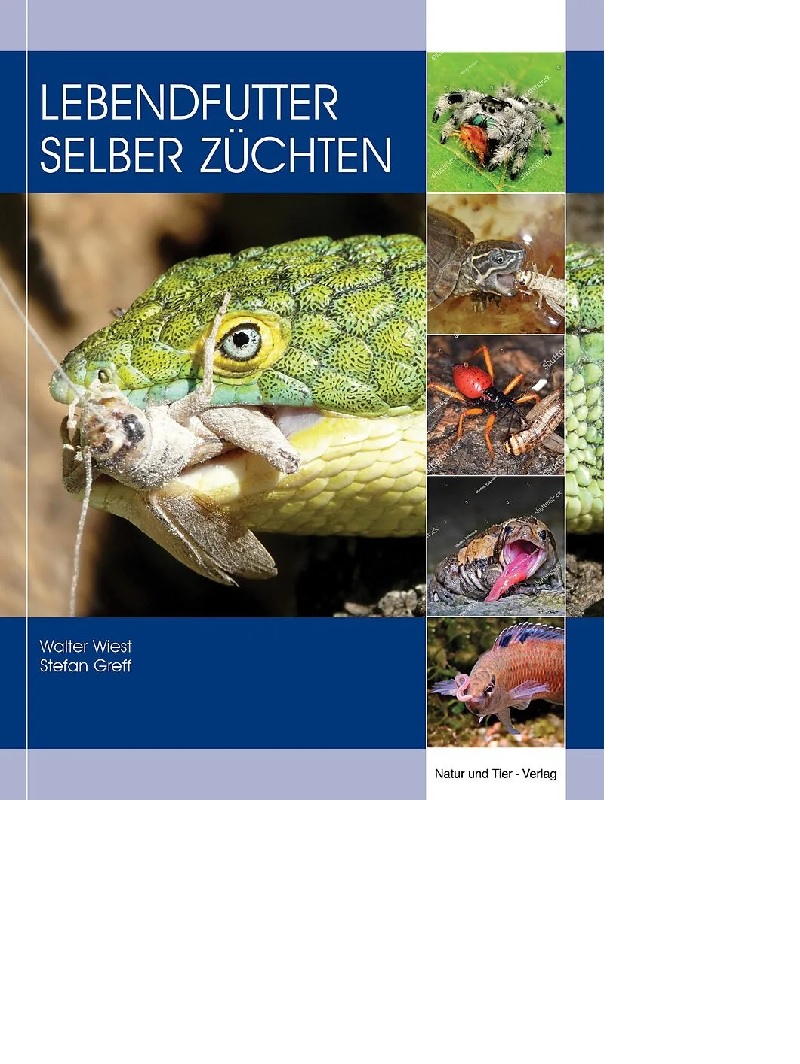
Book Breeding live food yourself
Book "Grow your own live food" - The perfect guide for pet owners Discover practical and detailed instructions on how you can easily breed food for your reptiles, birds, fish or other animals yourself in the book "Breeding live food yourself". With valuable tips on various food insects, their care and breeding, you can save money and ensure a species-appropriate diet for your pets. Contents of the book: Step-by-step instructions for breeding feeder insects Information on the best types of food for reptiles, birds and fish Care instructions and breeding conditions for various live food species Tips for sustainable and cost-effective food production Why breed your own live food? Get healthy, fresh food for your animals Save money and reduce dependence on pet shops Promote the health and well-being of your animals with species-appropriate food Whether you are a beginner or an experienced pet owner, this book provides you with everything you need to successfully breed live food yourself.

CHF 46.50

Marginata 69 - New Guinea tortoises
Marginata 69 - New Guinea tortoises – the genus ElseyaCover storyThe unrecognised beauties: New Guinea tortoises (Andreas S. Hennig)My experiences with Branderhorst's New Guinea tortoise, Elseya (Elseya) branderhorsti (Ouwens, 1914) (Andreas S. Hennig)Keeping and breeding of Rhodin's New Guinea tortoise, Elseya (Hanwarachelys) rhodini Thomson, Amepou, Anamiato & Georges, 2015 (Andreas S. Hennig)PortraitGeoemyda spengleri, Chinese serrated tortoise (Andreas S. Hennig)ReportageMacrochelys temminckii – Experiences and impressions with vulture tortoises part 2 (Reiner Praschag)KeepingAn alternative to year-round keeping of the Egyptian tortoise in the terrarium – my experiences with seasonal outdoor keeping of Testudo kleinmanni (Ricarda Schramm)EtymologySawbacks and living maps part 4: Graptemys gibbonsi, Pascagoula humpback tortoise (Holger Vetter)Classifieds & animal placement

CHF 16.50

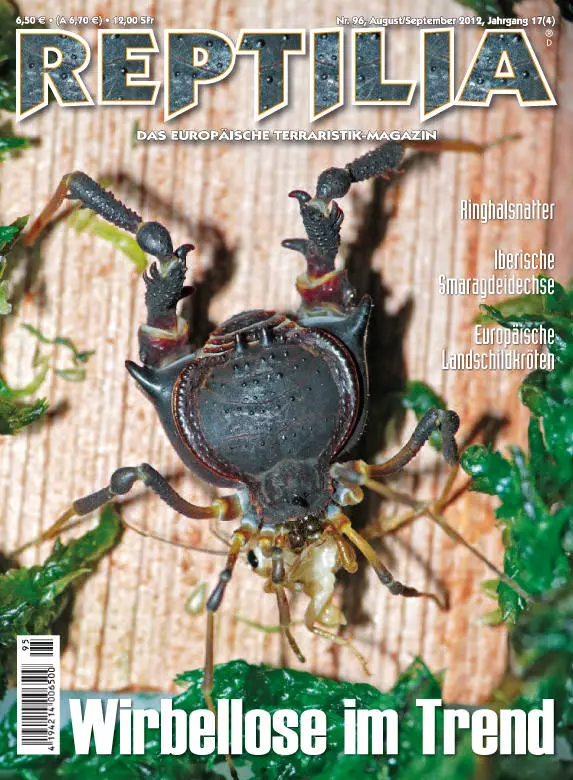
Reptilia 96 - Invertebrates in trend
Reptilia 96 - Invertebrates in Trend Ring-necked snakeIberian emerald lizardTortoises of Mallorca Contents: A wide variety of different invertebrates can be kept in a species-appropriate, space- and energy-saving manner in a small space. However, it would be far too short-sighted to attribute the growing enthusiasm for the mostly many-legged co-inhabitants solely to such practical aspects: More and more terrarium keepers are simply being carried away by the often bizarre beauty of the animals, by extremely exciting behaviours and lifestyles that could not be more different from our world. In our photo story, we offer you an up-to-date overview of the keeping of a wide variety of species. With chameleon crabs, Madagascan giant crickets and praying mantises, our authors also present some “trendy” invertebrates in detail. EDITORIALMAGAZINEDATESAround the world in 5 yearsBuzzers in the webA. PachmannWESTERN HERP PERSPECTIVESSecret PlacesB. LovePHOTOSTORY Invertebrates. The new rulers in the terrarium hobbyK. KunzKEEPING AND BREEDINGBeetles in the terrarium. Evolutionary wonders of natureI. Fritzsche & F. RossowKEEPING AND BREEDINGExperiences with the Red Chameleon Crab (Metasesarma aubryi) U. DostKEEPING AND BREEDINGPredatory bugs of the genus Platymeris in the terrariumI. FritzscheREPORTAGE/KEEPING AND BREEDINGJourney into the microcosm. In search of mantids in MalaysiaJ. KühneKEEPING AND BREEDINGKeeping and breeding of Parymenopus davisoni T. RönischHERPETOFAUNADiscovery of a new colour variant of the Iberian emerald lizard (Lacerta schreiberi) C. JeschullHERPETOFAUNAThe tortoises of Son Real on Mallorca M. RognerKEEPING AND BREEDINGRing-necked snakes (Diadophis punctatus) in the terrariumU. SchlüterSHOW FACILITIESThe Bonn Museum Alexander KoenigS. EsserANIMALS OF OUR HOMEThe alpine newtR. LeptienSUBSCRIPTION & SERVICELibraryTips & TricksTest runALSO IN YOUR AREATRAVELChameleon holiday – a Madagascar trip K. PawlikPREVIEWINCUBATORDangerous encountersM. Zawadzki

CHF 12.00

Marginata 24 - Pointed Red-bellied Pond Turtle
Marginata 24 - Red-bellied Pointed Pond Turtle South African Beaked Tortoise Part 2Sea turtles of AustraliaHibernation and dry hibernation Part 1 Contents: EditorialLetters to the editorMagazineDates REPORTAGEThe red-bellied pointed pond turtle, Emydura subglobosa (Krefft, 1876) – long known and yet virtually unknownHans - Dieter Philippen & John Cann BREEDINGLong-term breeding experiences with the red-bellied pointed pond turtle (Emydura subglobosa) – compilation of personal and published data spanning over 40 yearsHans - Dieter Philippen & Martin Leonard Voss POSTERThe Black-bellied Box Turtle, Pelusios niger (Dumeril & Bibron, 1835)Hans - Dieter Philippen REPORTAGEThe African Beaked Tortoise (Chersina angulata). Part 2: Behavioural observationsMichael Wirth REPORTAGEThreats, protection and use of sea turtles. Part 4: Green Turtle (Chelonia mydas) and Loggerhead Turtle (Caretta caretta) in Northwest Australia Gerald & Christa Benyr REPORTAGEPhysiology of rest phases in reptiles, especially tortoises – Part 1: Hibernation – a literature overviewMarkus Baur & Tobias Friz Book tipClassifiedsSubscription & ServiceRegional guide

CHF 16.50

Reptilia 38 - Tarantulas in terrariums
Reptilia 38 - Tarantulas in the terrariumGreen iguana in a greenhouseFire-bellied newtsEarth pythonContents: 2 EDITORIAL 3 READER LETTERS 7 MAGAZINE 15 DATES 16 WESTERN HERP PERSPECTIVES The hymn of natural terrariumsfrom B. Love 18 PHOTO REPORTAGE Large, hairy spiders - An introduction to the Theraphosidae familyby F. Tomasinelli 26 KEEPING AND BREEDINGBreeding of tarantulas with special consideration of their way of life in the wildby B. F. Striffler 32 KEEPING AND BREEDINGThe ‘Malaysian Earth Tiger’ – Keeping and Breeding the Asian Tarantula Cyriopagopus thorelliby F. de Vita & F. Tomasinelli 36 KEEPING AND BREEDINGPoecilotheria subfusca POCOCK, 1895: Group housing and breedingby B. F. Striffler 42 TRAVELAdventure Oman Mountainsby R. Leptien 51 PORTRAIT AND POSTERAzemiops feaeby A. Gumprecht 56 REPORTAGEA life like in paradise - experiences with keeping a green iguana in a tropical hallby C. Ströhlein, idea-Schmetterlings-Paradies Neuenmarkt 61 HERPTOFAUNAThe fire-bellied newts of the genus CynopsPart 1: Keeping and speciesby P. Bachhausen 68 KEEPING AND BREEDINGObservations on the ecology and terrarium husbandry of the Eastern lizard snake, Malpolon monspessulanus insignitus Geoffroy, 1827by H. Esterbauer 74 HERPTOFAUNAThe Burrowing Python (Calabaria reinhardtii)by S. Seidel 78 REPORTAGEThe school vivariumPart 3: Behavioural practical course for a biology classby M. Hallmen 85 RAT & TAT 87 CLASSIFIED ADS 92 LIBRARY 104 GLOSSESFeed animal breeding magazineby N. Nadolny This issue of your specialist terrarium magazine REPTILIA is dedicated to tarantulas. Alongside a photo feature richly illustrated with impressive photographs, which provides an overview of the family of these popular animals, there are expert and detailed reports on keeping and breeding them. The focus is on the magnificent Poecilotheria species, which – unusually for tarantulas – can almost without exception be kept in groups, as well as the “Malaysian Earth Tiger” Cyriopagopus thorelli. The article by B. Striffler on the breeding of tarantulas, with particular attention to their natural behaviour, also deserves special mention. Here you will discover interesting facts that you will search for in vain in standard books on tarantulas, and which will enable you to draw valuable conclusions regarding husbandry and breeding conditions.Spectacular finds and a life-threatening attack - the result of the exciting travelogue Adventure Oman, which you should not miss. After the brilliant photos of the extremely rarely shown venomous snake Azemiops feae comes a report on an unusual way of keeping the green iguana that could not be more exemplary.Extremely colourful animals that can reach a great age when kept properly are the fire-bellied newts of the genus Cynops, which newt expert P. Bachhausen presents to you in detail through text and images.Observing animals in the wild not only provides fascinating insights into their way of life, but also makes it easy to draw conclusions about the successful care and breeding of these species. The proof of this simple yet effective strategy: the article by H. Esterbauer on the ecology and terrarium husbandry of the Eastern lizard snake, Malpolon monspessulanus insignitus.In this issue of REPTILIA, we are also able to present one of the first reports on the breeding of the unusual ground python Calabaria reinhardtii. S. Seidel, who achieved this success, describes in detail here, amongst other things, the husbandry conditions that stimulated his animals to mate.In the last part of his article on the school vivarium, M Hallmen finally reports on the concrete possibilities that arise from keeping animals in the classroom.As always, REPTILIA once again offers you the full range of comprehensive services: events, classifieds, the magazine featuring interesting facts about Hobby, advice and practical tips, and the library are all included, as is the column, this time offering a satirical take on RODENTIA, the specialist magazine on small mammals published by Natur und Tier Verlag.

CHF 11.20

Marginata 44 - European tortoises observe in nature
Marginata 44 Magazine Observing European tortoises in the wild Yellow-banded box turtleTortoise rescue centreMauremys hybrids Contents: Cover story: Observing European tortoises in the wild EditorialMagazine ReportageObserving European tortoises in the wildBenny Trapp ReportageOn a turtle tour at the foot of OlympusBenny Trapp BiologyIn search of tortoises in BulgariaThorsten Geier PhotographyPhotographing tortoises in the wildBenny Trapp PortraitGopherus agassizii (Cooper, 1863), Mojave Desert tortoiseHeiko Werning Keeping and breedingThe Yellow-banded Box Turtle (Cuora flavomarginata). Part 1: Biology and careUlrich Hennen Species protectionTortoise catastrophe in the PhilippinesEditorial team, with material from ZGAP and Katala Foundation Inc. ReportgeCan love be a sin? A side note on hybrids from Mauremys leprosa and Mauremys reevesiiSebastian Nickl Subscription & ServiceRegional guide

CHF 16.50

NTV, Genetics for Terrarians
NTV - Genetics for Terrarium Keepers 88 pages numerous illustrations Format: 16.8 x 21.8 cm Author Jens R. Poschadel & Martin Plath Publisher NTV Contents: Genetics plays an outstanding role in modern herpetology and terrarium keeping. Not only are new species described and pedigrees compiled on the basis of genetic analyses, but above all, anyone who breeds amphibians or reptiles must at least be familiar with the basics of heredity. Jens R. Poschadel and Martin Plath explain classical as well as molecular genetics in this book in an easily comprehensible manner and describe their significance for research and breeding of terrarium animals.

CHF 32.50

Reptilia 60 - Darwin's frogs
Reptilia 60 - Nose frogs Aquatic turtles in the outdoor terrariumAustralian spiny-tailed skinkMauritius Contents: 4 EDITORIAL 5 MAGAZINE 12 DATES 15 PHOTO REPORTAGEFrom Darwin's treasure trove: Nose frogs By H. Werning 22 KEEPING AND BREEDINGThe breeding of the nose frogRhinderma darwinii for more than twodecadesBy K. Busse 30 REPORTAGEThe REPTILIA project "Nose Frogs":Field studies on Rhinodermadarwinii, the Darwin's frogBy P. Ulmer 39 REPORTAGEHalf-swimmers in sight? The search for Rhinoderma rufum continues.By M. Solé 43 TRAVELMauritius for beginnersBy M. Rogner 51 PORTRAIT AND POSTERMontivipera xanthinaBy N. Stümpel & B. Trapp 55 KEEPING AND BREEDINGOn keeping and breeding the Australianspiny-tailed skink Egernia stokesii stokesii (Gray, 1845), with notes on feeding-management. Part 1By S. Knauf 62 PRACTICEUse of a conservatory as a terrarium-location for a desert terrariumPart 2: The inhabitants: Tympanocryptis tetra-porophora (Lucas & Frost, 1895)By T. Ackermann 68 PRACTICE North American aquatic turtles in the outdoor terrarium Part 1: General remarksBy A. S. Hennig 72 HERPETOFAUNASand lovers - The psammophilous snakesof North AfricaBy U. Schlüter 86 FAQ - FREQUENTLY ASKED QUESTIONSAcquisition of tarantulasBy K. Kunz 90 LIBRARY 100 WESTERN HERP PERSPECTIVESAlterna feverBy B. Love 104 INCUBATOR"How do you even get something like this"?By H. Werning

CHF 11.20

Turtles Volume 2 - The Turtles Gardener
The Turtle Gardener – A Natural Diet for European TortoisesGuide to keeping European tortoises Over 65 suitable food plants, plus instructions, tips and tricks for successful plant cultivation – 14–99 years When keeping tortoises, nutrition plays an essential role. Through a careful selection of safe food plants, we can significantly influence their health and thus ensure a balanced diet for our animals. As a recognised expert and successful author of numerous books on tortoises, Thorsten Geier aims to explain all horticultural aspects to you in an accessible way. This guide is aimed at both beginners in tortoise keeping and those who have been keeping them for many years. In this comprehensive guide, you will find detailed, clear and clearly presented information on species-appropriate nutrition and independent foraging within the enclosure. Numerous instructions, tips and tricks for successful plant cultivation, as well as over 65 highly suitable and varied food plants, are listed in this book. Furthermore, it contains information on feeding behaviour in the wild, on keeping tortoises in a natural environment in the garden, and on poisonous or unsuitable plants. Numerous photos and picture galleries document all the necessary steps for successful plant cultivation, so that every tortoise owner can grow valuable and nutritious food in their garden, even without a ‘green thumb’. A truly fabulous guide to a varied diet.

CHF 34.90