Reptilia 45 - Health of terrarium animals

Article no: reptilia45

CHF 11.20

Stock: 0

Ready for dispatch in 1-3 days, delivery time 7 working days

Delivery between Tuesday, 7 July and Wednesday, 8 July
Zahlungsarten
Product information "Reptilia 45 - Health of terrarium animals"

Reptilia 45 - Health of terrarium animals

Moorish tortoises
Sword-tailed anoles
Texas rattlesnake

Contents:

    • 2 EDITORIAL
    • 4 MAGAZINE
    • 12 DATES
    • 14 WESTERN HERP PERSPECTIVES
      The rise of the "Köpys"
      By B. Love
    • 18 PHOTO REPORTAGE
      Prophylaxis instead of therapy – avoiding husbandry-related diseases in terrarium animals
      By T. Eisenberg
    • 26 REPORTAGE
      Buying reptiles – What should you look out for? By J. Rauh
    • 30 HERPETOFAUNA
      Salmonella in reptiles By T. Eisenberg
    • 36 REPORTAGE
      The animal welfare relevance of the castration of male green iguanas (Iguana iguana). Indications, procedure, results By M. Baur, E. Härtel, R.W. Hoffmann & F. Weber
    • 42 TRAVEL
      The herpetofauna of the Middle Atlas of Morocco By U. Schlüter
    • 51 PORTRAIT AND POSTER
      Pachydactylus kochii
      By M. Barts
    • 56 KEEPING AND BREEDING
      On the mating behaviour of tropical clawed frogs Silurana sp. – Part 2
      By K. Kunz
    • 64 HERPETOFAUNA
      Moorish tortoises (Testudo graeca) on the Turkish Riviera
      By H.W. Köhler
    • 72 KEEPING AND BREEDING
      On the knowledge, keeping and breeding of the sword-tailed anole (Anolis valencienni) (DUMERIL & BIBRON, 1837))
      By R. & R.J. Hilgenhof
    • 77 RAT & TAT
    • 79 SMALL ADVERTS
    • 82 HERPETOFAUNA
      North America’s king of rattlesnakes – Crotalus atrox – Part 1
      By H.W. Köhler
    • 92 LIBRARY
  • 104 GLOSS
    All the happiness of this earth – Part 2: Descent
    By H. Werning
Composition
Feeding recommendation
Technical details
Size information

0 of 0 reviews

Give us a rating!

Share your experience with the product with other customers.


Suggested products

Handbook of food plants for tortoises and other reptiles
Handbook of forage plants 2nd revised editionMarion Minch is not only a successful breeder of diverse tortoises for many years, but also an excellent connoisseur of native wild herbs. She founded and runs samenkiste.de, which is well known to many tortoise keepers and nature lovers. Her name is inextricably linked with reptile care and species-appropriate nutrition for tortoises. Her handbook of food plants summarises the most important native food plants for herbivorous and omnivorous reptiles. She not only considers tortoises, but also iguanas, spiny-tailed dragons and even chameleons. From the basics of plant biology to native wild herbs to suitable food plants for hardy tropical reptile species, this comprehensive work provides the basis for species-appropriate keeping. In the expanded and supplemented 2nd edition, the plant section is divided according to flower colour. This makes it even easier to identify wild herbs. The work has also been supplemented with a wealth of additional information and many pictures.

CHF 46.50

Geckos
Geckos in the terrarium by Astrid FalkThe book offers a comprehensive introduction to geckos and their species-appropriate keeping in terrariums. It explains what you need to think about before buying a gecko and what preparations should be made. The book describes in detail how the terrarium is technically equipped and set up. The care of the animals, their special features and behaviour, their diet, reproduction and rearing of young animals are described, as well as diseases and husbandry problems with tried and tested suggestions for prevention and treatment. Individual gecko species that are particularly suitable for keeping and breeding in terrariums are portrayed in detail in the second part of the book.

CHF 28.50

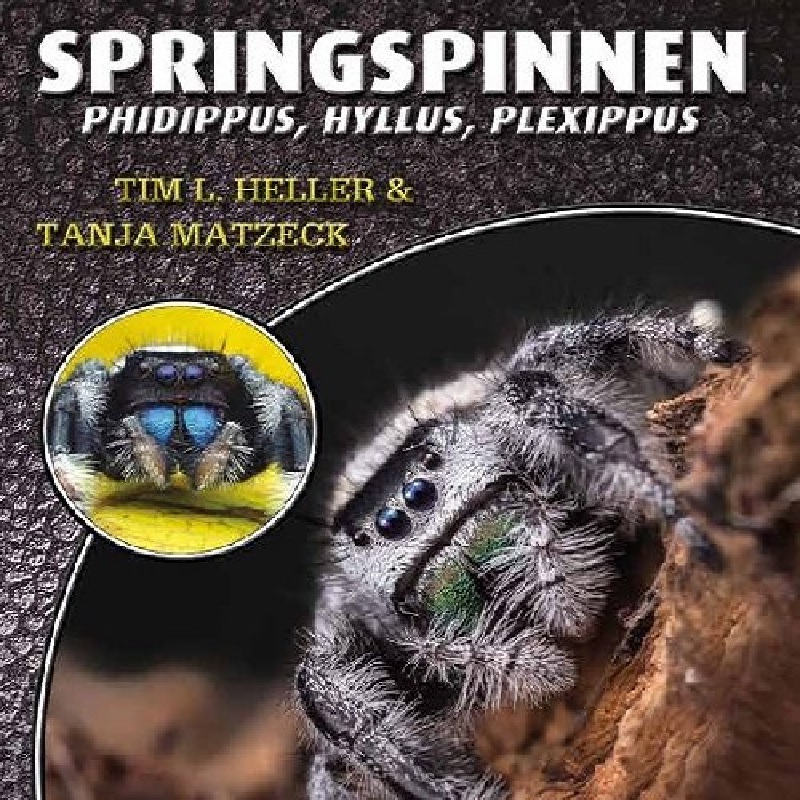
Jumping spiders Phidippus, Hyllus, Plexippus
Book Jumping Spiders - Phidippus, Hyllus & Plexippus A guide to keeping jumping spiders of the genera Phidippus, Hyllus & Plexippus. Who can resist the charm of jumping spiders? The childlike appearance of their expressive face simply leaves no one cold! In addition, their behavior is extremely exciting to observe, their colors are bright and their requirements for species-appropriate keeping are very easy to meet. No wonder these likeable jumpers are all the rage! This volume in the "Species by Species" series describes in detail what to look out for when buying and keeping them, introduces the most commonly kept species and color forms and provides plenty of tips on how to keep them successfully - so you can be sure they will breed well! Species by Species introduces you to the books in this series, which present the most popular terrarium animals. Each volume offers you detailed, practical care instructions and all the information you need to successfully breed your animals. All important questions from the required tank size to terrarium set-up, technical equipment, species-appropriate nutrition and disease prevention are answered with numerous tricks and tips. Experienced, long-standing breeders reveal how you can encourage the animals to reproduce and raise healthy young. All this in full color, generously illustrated and attractively designed - just about your terrarium animal - species by species

CHF 23.90

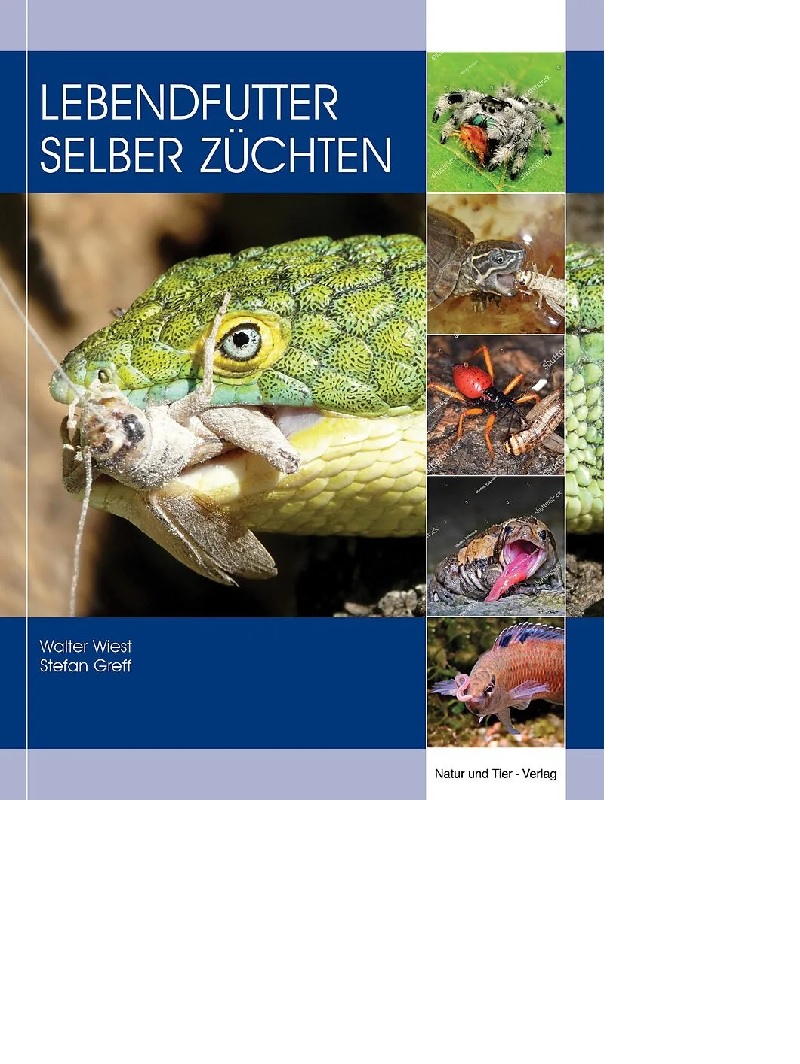
Book Breeding live food yourself
Book "Grow your own live food" - The perfect guide for pet owners Discover practical and detailed instructions on how you can easily breed food for your reptiles, birds, fish or other animals yourself in the book "Breeding live food yourself". With valuable tips on various food insects, their care and breeding, you can save money and ensure a species-appropriate diet for your pets. Contents of the book: Step-by-step instructions for breeding feeder insects Information on the best types of food for reptiles, birds and fish Care instructions and breeding conditions for various live food species Tips for sustainable and cost-effective food production Why breed your own live food? Get healthy, fresh food for your animals Save money and reduce dependence on pet shops Promote the health and well-being of your animals with species-appropriate food Whether you are a beginner or an experienced pet owner, this book provides you with everything you need to successfully breed live food yourself.

CHF 46.50

Marginata 69 - New Guinea tortoises
Marginata 69 - New Guinea tortoises – the genus ElseyaCover storyThe unrecognised beauties: New Guinea tortoises (Andreas S. Hennig)My experiences with Branderhorst's New Guinea tortoise, Elseya (Elseya) branderhorsti (Ouwens, 1914) (Andreas S. Hennig)Keeping and breeding of Rhodin's New Guinea tortoise, Elseya (Hanwarachelys) rhodini Thomson, Amepou, Anamiato & Georges, 2015 (Andreas S. Hennig)PortraitGeoemyda spengleri, Chinese serrated tortoise (Andreas S. Hennig)ReportageMacrochelys temminckii – Experiences and impressions with vulture tortoises part 2 (Reiner Praschag)KeepingAn alternative to year-round keeping of the Egyptian tortoise in the terrarium – my experiences with seasonal outdoor keeping of Testudo kleinmanni (Ricarda Schramm)EtymologySawbacks and living maps part 4: Graptemys gibbonsi, Pascagoula humpback tortoise (Holger Vetter)Classifieds & animal placement

CHF 16.50

Marginata 18 - Moorish Turtles
Marginata 18 - Moorish Tortoises Philippine Pond TurtleGalapagos Tortoise BreedingTortoise Genetics II Contents: 2EDITORIAL 3READERS' LETTERS 4MAGAZINE 8DATES 10REPORTAGEComments on the Iberian TortoiseHans - Dieter Philippen 16REPORTAGEObservations on Testudo graeca iberaPetr Velensky & Natasha Velenská 26REPORTAGE Sympatric occurrence of two forms of Testudo graeca in ArmeniaMarine Arakelyan, James F. Parham, Oguz Türkozan & Felix Danielyan 31 PORTRAITMeier's Three-striped Box Turtle (Cuora cyclornata meieri Blanck, McCord & Le, 2006)Hans - Dieter Philippen 35 REPORTAGELive food Part 1Hans - Dieter Philippen 39BREEDING IN HUMAN CAREObservations on the Indochinese Box Turtle Part 2Arwin & Irmhild Hiller 44REPORTAGEFrom the pea experiment to the decoding of the human genome – Genetics yesterday and today Part 2Jens R. Poschadel & Martin Platz 52 REPORTAGEInformation on the growth of Siebenrockiella leytensisSabine Schoppe 58 REPORTAGEAn early Easter blessing of eggs Samuel Furrer 60BOOK TIP 61CLASSIFIEDS 62 REGIONAL GUIDE

CHF 14.70

The prairie garter snake
All about the Prairie Garter Snake by Martin Hallmen 64 pages Format: 14.8 x 21 cm numerous colour photos Contents: The prairie garter snake has a very alert nature. It is usually particularly active and interested in the terrarium. It remains very calm when handled and does not tend to bite.This volume from the "Species by Species" series is intended to provide the basic knowledge for keeping them in a species-appropriate way and shows how easy the prairie garter snake makes it for you if you decide to keep it. Systematics and body structure The fascinating biology: From the life of the prairie garter snake All information on species-appropriate keeping: from suitable terrariums to equipment and technology to feeding Successful breeding: Mating stimulation and rearing young animals Solutions to problems: How to avoid the most common mistakes in care and how to help sick animals Brilliant photos

CHF 16.90

Reptilia 33 - European snakes
Reptilia 33 European snakes Dwarf honeycomb toadFishing chameleonCuban Anolis Contents: 2 Editorial 4 Magazine 16 Western Herp PerspectivesSnake searchfrom B. Love 18 Photo reportageThe snakes of Europefrom B. Trapp 26 Keeping and breedingSome vipers from Europe in the terrariumby K. Orth 32 Keeping and breedingRearing and eighteen years of caring for a common viper (Vipera berus berus)by K. Orth 34 Reportage'Snake diving' - Encounter with the dice snake (Natrix tessellata)by W. Pölzer 39 Keeping and breedingGood times, bad times: Experiences with the chameleon Bradypodion fischeri (REICHENOW, 1895)by P. Müller 46 JourneyCuba: In search of Anolis smallwoodiby M. Rogner 51 Portrait and posterAmeiva undulataby U. Schlüter 56 Keeping and breedingThe Indian star tortoise Geochelone elegans (SCHOEPFF, 1795) - a problematic tropical tortoise? - Part 2: Careby H.-J. Bidmon 64 Keeping and breedingKeeping and breeding the dwarf honeycomb toad Pipa parvaby M. Beier 72 ReportageA popular feed insect, the green cockroach Panchlora nivea (LINNAEUS, 1758)by I. Fritzsche 76 REPTILIA on the roadReptile house Sipplingenby H. Werning 85 Classifieds 89 Advice and help 93 Library 104 ColumnNew recipes!by K. Kunz

CHF 9.80

Draco 39 - European Snakes
Draco 39 - European Snakes Contents: Editorial The snake fauna of EuropeAndreas Schlüter Vipera ammodytes: on abnormal vipers and hybridsMario Schweiger The four-lined snake – Elaphe quatuorlineata (Lacépède, 1789)Sascha Esser The snakes of northern Spain - travel impressions from the Cantabrian Mountains and neighbouring areasGuido Kreiner European water snakes: Field observations, husbandry and breeding of Natrix natrix (Linnaeus, 1758), Natrix maura (Linnaeus, 1758) and Natrix tessellata (Laurenti, 1768)Michael Wirth & Rainer Hähnlein Queens of European snakes: Four-lined snake (Elaphe quatuorlineata), Aesculapian snake (Zamenis longissimus) and Leopard snake (Zamenis situla)Michael Wirth

CHF 18.40

Draco 63 - Amphibians of Europe
Draco 63 - Amphibians of Europe Contents: Editorial Frogs and tailed amphibians in Europe – species diversity and biology              Axel Kwet & Benny TrappAmphibian of the Year 2016 – Morphological diversity in Salamandra salamandraAxel Kwet & Benny Trapp New amphibians in EuropeAxel Kwet & Benny Trapp The amphibian fauna of the Iberian PeninsulaAxel Kwet & Benny Trapp Corsica, Sardinia and Sicily: Amphibian diversity in the MediterraneanAxel Kwet & Benny Trapp List of the amphibians of Europe     Axel Kwet & Benny Trapp

CHF 32.00

Reptilia 58 - Crustacean lizards
Reptilia 58 - Crustacean lizards Bush crocodileAgate snailsPlains snake Contents: 2 EDITORIAL 4 MAGAZINE 8 DATES 12 REPORTAGEExperience with keeping and breedingof dinos in the terrariumBy D. Schmidtwith a review by H. Werning 16 WESTERN HERP PERSPECTIVESThe Madagascan turtle crisisBy B. Love 18 PHOTO REPORTAGECrustacean lizards – the genus HelodermaBy T. Wilms 26 KEEPING AND BREEDINGThe successful and continuouskeeping and breeding of the scorpion-crustacean lizard Heloderma horridumexasperatumBy M. Reisinger 36 HERPETOFAUNAThe Guatemalan scorpion crustacean lizard, Heloderma horridum charlesbogertiCampbell & Vannini, 1998By L. S. Meléndez Garcia 39 SPECIES CONSERVATIONPoisonous giants facing extinction?REPTILIA project for the protection of theGuatemalan scorpion crustacean lizardBy K. Kunz 44 REPORTAGEHunting anacondas with sonar and guillotineBy L. Dirksen 51 PORTRAIT AND POSTERBufo brongersmaiBy U. Schlüter 55 KEEPING AND BREEDINGThe bush crocodile – secret beauty in theterrariumBy M. Evers 63 KEEPING AND BREEDINGKeeping and breeding of the ChineseDione snake (Elaphe dione)By M. Diekmann & A. Weyers 72 KEEPING AND BREEDING Agate snails in the terrariumBy K. Wandtke 81 REPTILIA ON THE ROAD30 years Reptile Zoo HappBy D. Schmidt 88 CLASSIFIED ADS 93 RAT & TAT 94 LIBRARY 104 INCUBATORProtocol of a failed attempt at acautious approach, at first sight based on mutualsympathy and intersexualattraction, during a jubilantcelebrationBy H. Werning

CHF 11.20

Corn snakes
All about corn snakes from Wolfgang Schmidt 88 Seiten 62 Abbildungen Format: 16,8 x 21,8 cm Autor Wolfgang Schmidt Inhalt: Kornnattern gehören schon seit jeher zu den beliebtesten Terrarientieren. Nahezu jeder engagierte Terrarianer hat sie schon kennen gelernt. Doch woher kommt das starke Interesse gerade an dieser Kletternatter? Die Antwort liegt sicherlich in erster Linie im Wesen der Schlange begründet. Als besonders friedfertige Natur ist sie daher nicht nur dem fortgeschrittenen Terrarianer zu empfehlen, sondern sie eignet sich auch ausgezeichnet für den Einstieg in die Terraristik.Der Autor geht intensiv auf die Pflege und Zucht der Tiere ein, spart aber auch Themen wie Krankheiten und deren Behandlung nicht aus. Neben den drei Unterarten stellt er Farbformen vor, die sich mittlerweile auch hierzulande grosser Beliebtheit erfreuen. Über den Autor: Wolfgang Schmidt, Jahrgang 1962, ist verheiratet und hat zwei Kinder. Seit seinem 12. Lebensjahr hält und züchtet er erfolgreich die verschiedensten Amphibien und Reptilienarten. Durch seine zahlreichen Bücher und Zeitschriftenpublikationen auf dem Gebiet der Herpetologie und Terrarienkunde ist der Autor einem breiten Publikum als Fachmann bekannt, der seine Leser in fundierter und dennoch leicht verständlicher Form von seinem reichen Erfahrungsschatz profitieren lässt.

CHF 28.90