Reptilia 12 - Geckos

Article no: reptilia12

CHF 9.80

Stock: 0

This article is currently not available

Product information "Reptilia 12 - Geckos"

Reptilia 12 - Geckos

Discussion Terraristikbörsen
Snake-necked turtles
Peru - In search of poison dart frogs

Contents:

Page 2 - Editorial
Page 3 - Reptilia in dialogue: Terrarium fairs
Page 14 - Lookup
Page 16 - Photo report: Geckos, by J. Bergadá and J. Pether
Page 22 - Report: Calling goblins of the night, geckos and their voices, by M. Rickert
Page 26 - Report: From egg laying to hatching: When offspring develop in the gecko terrarium, by M. Rickert
Page 30 - Keeping and breeding: The leopard gecko Eublepharis macularius, by H. Wilhelm
Page 33 - Travelogue: In search of frogs in Peru, by M. Schulte
Page 39 - Portrait and poster: The garter snake Thamnophis sirtalis, by T. Bourguignon
Page 43 - Keeping and breeding: Two snake-necked tortoises that are easy to keep: Chelodina longicollis and Chelodina naovaeguinea, by Dr U. Thieme
Page 50 - Keeping and breeding: The Giant Ghost Grasshopper Extatosoma tiaratum, by M. A. Guerrero Adán
Page 55 - Herpetofauna: The Nuevo Leon Kingsnake Lampropeltis mecicanum thayeri, by C. Mattison
Page 60 - Report: Crocodiles and international species conservation policy - CITES and Sustainable Use, by H. Werning
Page 69 - Dates
Page 74 - Library
Page 76 - Advice and action
Page 80 - Incubator: History of the development of a private small animal zoo, by H. Kossow

Composition
Feeding recommendation
Technical details
Size information

0 of 0 reviews

Give us a rating!

Share your experience with the product with other customers.


Suggested products

Handbook of food plants for tortoises and other reptiles
Handbook of forage plants 2nd revised editionMarion Minch is not only a successful breeder of diverse tortoises for many years, but also an excellent connoisseur of native wild herbs. She founded and runs samenkiste.de, which is well known to many tortoise keepers and nature lovers. Her name is inextricably linked with reptile care and species-appropriate nutrition for tortoises. Her handbook of food plants summarises the most important native food plants for herbivorous and omnivorous reptiles. She not only considers tortoises, but also iguanas, spiny-tailed dragons and even chameleons. From the basics of plant biology to native wild herbs to suitable food plants for hardy tropical reptile species, this comprehensive work provides the basis for species-appropriate keeping. In the expanded and supplemented 2nd edition, the plant section is divided according to flower colour. This makes it even easier to identify wild herbs. The work has also been supplemented with a wealth of additional information and many pictures.

CHF 46.50

Geckos
Geckos in the terrarium by Astrid FalkThe book offers a comprehensive introduction to geckos and their species-appropriate keeping in terrariums. It explains what you need to think about before buying a gecko and what preparations should be made. The book describes in detail how the terrarium is technically equipped and set up. The care of the animals, their special features and behaviour, their diet, reproduction and rearing of young animals are described, as well as diseases and husbandry problems with tried and tested suggestions for prevention and treatment. Individual gecko species that are particularly suitable for keeping and breeding in terrariums are portrayed in detail in the second part of the book.

CHF 28.50

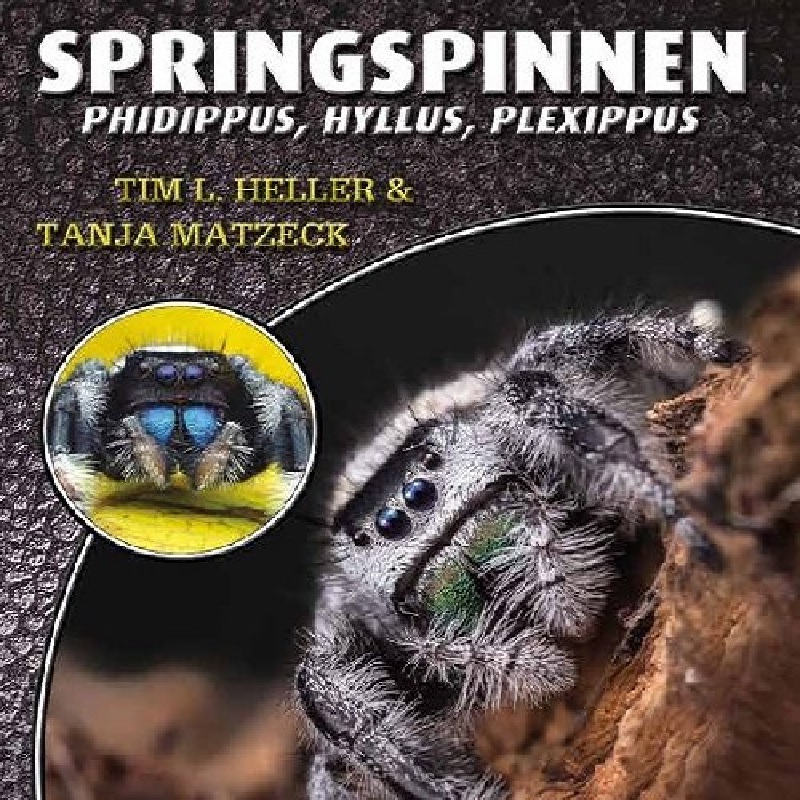
Jumping spiders Phidippus, Hyllus, Plexippus
Book Jumping Spiders - Phidippus, Hyllus & Plexippus A guide to keeping jumping spiders of the genera Phidippus, Hyllus & Plexippus. Who can resist the charm of jumping spiders? The childlike appearance of their expressive face simply leaves no one cold! In addition, their behavior is extremely exciting to observe, their colors are bright and their requirements for species-appropriate keeping are very easy to meet. No wonder these likeable jumpers are all the rage! This volume in the "Species by Species" series describes in detail what to look out for when buying and keeping them, introduces the most commonly kept species and color forms and provides plenty of tips on how to keep them successfully - so you can be sure they will breed well! Species by Species introduces you to the books in this series, which present the most popular terrarium animals. Each volume offers you detailed, practical care instructions and all the information you need to successfully breed your animals. All important questions from the required tank size to terrarium set-up, technical equipment, species-appropriate nutrition and disease prevention are answered with numerous tricks and tips. Experienced, long-standing breeders reveal how you can encourage the animals to reproduce and raise healthy young. All this in full color, generously illustrated and attractively designed - just about your terrarium animal - species by species

CHF 23.90

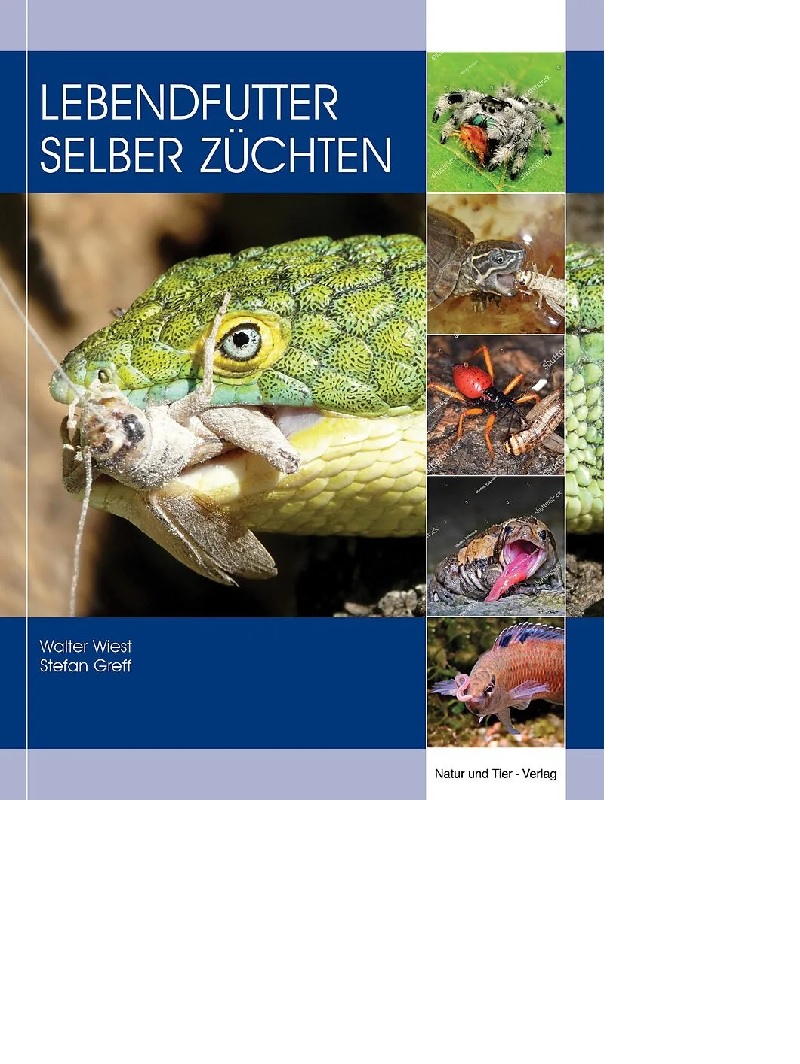
Book Breeding live food yourself
Book "Grow your own live food" - The perfect guide for pet owners Discover practical and detailed instructions on how you can easily breed food for your reptiles, birds, fish or other animals yourself in the book "Breeding live food yourself". With valuable tips on various food insects, their care and breeding, you can save money and ensure a species-appropriate diet for your pets. Contents of the book: Step-by-step instructions for breeding feeder insects Information on the best types of food for reptiles, birds and fish Care instructions and breeding conditions for various live food species Tips for sustainable and cost-effective food production Why breed your own live food? Get healthy, fresh food for your animals Save money and reduce dependence on pet shops Promote the health and well-being of your animals with species-appropriate food Whether you are a beginner or an experienced pet owner, this book provides you with everything you need to successfully breed live food yourself.

CHF 46.50

Marginata 69 - New Guinea tortoises
Marginata 69 - New Guinea tortoises – the genus ElseyaCover storyThe unrecognised beauties: New Guinea tortoises (Andreas S. Hennig)My experiences with Branderhorst's New Guinea tortoise, Elseya (Elseya) branderhorsti (Ouwens, 1914) (Andreas S. Hennig)Keeping and breeding of Rhodin's New Guinea tortoise, Elseya (Hanwarachelys) rhodini Thomson, Amepou, Anamiato & Georges, 2015 (Andreas S. Hennig)PortraitGeoemyda spengleri, Chinese serrated tortoise (Andreas S. Hennig)ReportageMacrochelys temminckii – Experiences and impressions with vulture tortoises part 2 (Reiner Praschag)KeepingAn alternative to year-round keeping of the Egyptian tortoise in the terrarium – my experiences with seasonal outdoor keeping of Testudo kleinmanni (Ricarda Schramm)EtymologySawbacks and living maps part 4: Graptemys gibbonsi, Pascagoula humpback tortoise (Holger Vetter)Classifieds & animal placement

CHF 16.50

Terraria 50 - Monitor lizards in the terrarium
Terraria 50 - Monitor lizards in a terrariumDrinking behaviour of snakesAndaman lizardsContents:Cover story: Monitor lizards and terrariumsMany monitor lizards are among the most sought-after species in the terrarium hobby. Hobby keepers have made a decisive contribution to our knowledge of these charismatic lizards, discovering species and describing their behaviour. Some island monitor lizards are considered endangered and their trade represents a risk factor. At the same time, breeding successes are now also regularly achieved with rare species. In the cover story of the upcoming TERRARIA/elaphe, we will be focussing on the many facets of the mutual relationship between monitor lizards and terraristics.TerritorialHerpetoramaCover storyHistory of keeping monitor lizards in Germany and SchweizerBeat AkeretThe blue monitor lizard. The incredible story of the discovery of Varanus macraeiManfred Reisinger7 years of keeping and breeding the Blue-spotted Tree Monitor (Varanus macraei) at Cologne Zoo: A look back and a look aheadAnna Rauhaus, Lorraine Gutjahr, Johannes Oberreuter & Thomas ZieglerFirst evidence of parthenogenesis in Varanus rainerguentheri, a Pacific monitor lizard from the indicus groupJulian GrabbePanoramaThe Andaman Islands - A little known animal paradiseGernot VogelResearchNew speciesConfusion about new vulture turtlesAxel KwetNew wolf tooth snake from CambodiaAxel KwetAmong researchersA road in the primary rainforest - a small cause with a big effectRudolf MalkmusHerat: We meet again. As a lecturer in a war zonePhilipp WagnersSalamandraTerraristicsLook smart, snake keeper Observations on the drinking behaviour of snakesRalf HöroldAlso in your neighbourhoodNature and species conservationField notesCrow catches grass snakeRalf GramlichGrass frog cannibals in the spawning watersAxel KwetSubscription & ServiceThe introduced wall lizards of KamenzDieter GramentzPreviewIncubator ElvisHeiko Werning

CHF 12.00

NTV - The African dwarf frog
Kriton Kunz 62 Seiten 14,8 x 21 cm zahlreiche Farbfotos Inhalt: Vielleicht die liebenswertesten Pfleglinge im Aquarium sind Zwergkrallenfrösche. Dem heiteren Anblick einer munter und etwas tollpatschig durchs Becken rudernden Schar dieser kleinen Fröschchen vermag sich wohl niemand zu entziehen. Da es sich außerdem um äußerst pflegeleichte Tiere handelt, kann man diese netten Amphibien auch dem Einsteiger empfehlen. REPTILIA-Redakteur Kriton Kunz hielt als Kind bereits seine ersten Zwergkrallenfrösche und züchtet sie seit Jahren regelmäßig erfolgreich nach. Praxisnah und kompetent, aber jederzeit leicht verständlich geht er detailliert auf alle Aspekte rund um Haltung und Pflege der reizenden Kerlchen ein und verrät Ihnen überdies, wie man Zwergkrallenfrösche zur Paarung bewegt und ihre Kaulquappen sowie die Jungtiere aufzieht. Systematik und Körperbau Die faszinierende Biologie: Aus dem Leben der Zwergkrallenfrösche Alle Informationen zur artgerechten Haltung: Vom geeigneten Aquarium über Einrichtung und Technik bis hin zur Fütterung Erfolgreich nachzüchten: Paarungsstimulation, Aufzucht der Kaulquappen und Jungtiere Problemlösungen: Wie man die häufigsten Fehler bei der Pflege vermeidet, und wie man kranken Tieren helfen kann Brillante Fotos

CHF 19.90

Reptilia 06 - Mimicry - The perfect deception
Reptilia 06 - Mimicry - The perfect illusion MaltaBuilding polystyrene terrariumsNutrition of tortoises Contents: Page 2 - EditorialPage 3 - Letters to the editorPage 5 - MagazinePage 11 - DatesPage 14 - Western Herp Perspectives: The Queen of Snakes, by B. LovePage 16 - Photo reportage: Mimicry, by L. AissefairePage 24 - Report: Mimicry - Saving energy through camouflage, by Dr M. GaulkePage 32 - Keeping and breeding: Like a leaf in the wind. The walking leaf Phyllum celebicum in the terrarium, by H. FischerPage 38 - Travelogue: Temples, disc-tongued frogs and reptiles – impressions of a trip to Malta, by U. SchlüterPage 43 - Photographic profile: Reptiles and amphibians in the Du Tsingy de Bamaraha nature reserve (West Madagascar), by G. Hallmann, E. Hoffmann, J. Krüger, P. Schlagböhmer and G. TrautmannPage 47 - Portrait and poster: Gastrotheca riobambae, by H. WerningPage 51 - Report: Nutrition of European tortoises, Part 2, by Dr C. DennertPage 59 - Keeping and breeding: A mini-crocodile for the paludarium – The keeled skink Tropidophorus grayi, by U. DostPage 64 - Terrarium practice: Styrofoam terrariums, by D. HasselbergPage 69 - Herpetofauna: The Bismarck Dwarf Python Liasis boa – keeping and breeding a colourful giant snake, by V. FranzPage 72 - Herpetology and culture: Snakes go to school – Part 2, by M. HallmenPage 81 - Reptilia on the road: Zoo Berlin-Friedrichsfelde, by H. WerningPage 84 - Advice and HelpPage 90 - LibraryPage 96 - Satire: Something different, by A. Scheffler

CHF 9.80

The plumed basilisk
Alles über den Stirnlappenbasilisk von Ingo Kober 64 Seiten 14,8 x 21 cm zahlreiche Farbfotos 2. Auflage Autor Ingo Kober Verlag NTV Inhalt: Eindrucksvolle grosse Echsen sind sie, die Stirnlappenbasilisken. Den Betrachter erinnern sie unwillkürlich an drachenartige Fabelwesen. Dabei handelt es sich bei diesen attraktiven Echsen um völlig harmlose und äusserst interessante Tiere, die sich zur Pflege im Terrarium vorzüglich eignen. Ingo Kober beschäftigt sich seit vielen Jahren mit Stirnlappenbasilisken. In diesem Buch geht er auf alle Aspekte rund um die Haltung und artgerechte Pflege dieser spannenden Echsen ein und zeigt Ihnen, wie Sie Ihre Tiere zur Vermehrung bringen, die Eier ausbrüten und die Kleinen aufziehen können. Systematik und Körperbau Die faszinierende Biologie: Aus dem Leben der Stirnlappenbasilisken Alle Informationen zur artgerechten Haltung: Vom geeigneten Terrarium über Einrichtung und Technik bis hin zur Fütterung Erfolgreich nachzüchten: Paarungsstimulation, Inkubation der Eier und Aufzucht der Jungtiere Problemlösungen: Wie man die häufigsten Fehler bei der Pflege vermeidet, und wie man kranken Tieren helfen kann Brillante Fotos

CHF 21.90

Reptilia 97 - Nano terraristics
Reptilia 97 - Nano terraristicsGarter snake colour mutationReady-made food for geckosCharcoal tortoiseContents:Nano terraristics, i.e. small animals in small terrariums - can this be species-appropriate at all? We introduce you to the concept behind the current nano boom and show you how it can fit into modern, animal-friendly terraristics.Birgit Kaup also portrays the tiny, but often brightly coloured and extremely lovable orb-fingered geckos of the genus Sphaerodactylus, and Hans-Werner Auer reports on tree-dwelling mini tarantulas, including exciting novelties.EDITORIALMAGAZINEDATESAROUND THE WORLD IN 5 YEARSTravelling with the bestA. PachmannWESTERN HERP PERSPECTIVESCatching the eyeB. LovePHOTOSTORYSmall animals, small terrariums, high standards: nano terraristics!K. KunzKEEPING AND BREEDINGDwarf Avicularia: small tree tarantulas for the nano terrariumH.-W. AuerKEEPING AND BREEDINGColourful tiny creatures - puffer-fingered geckos in the living room at homeB. KaupHOLDINGInsect-free feeding of omnivorous gecko species in the terrarium - A food from the USA finds its way into gecko keepingP. SchoeneckerKEEPING AND BREEDINGThe charcoal tortoise. Keeping and reproduction of a tropicalbeautyM. RognerREPORTAGEGarter snake on fire. The story of an exceptional specimenof Thamnophis sirtalis sirtalisM. HallmenKEEPING AND BREEDINGThe desert toad lizard (Phrynosoma platyrhinos). A dietary specialist in captive careK. HaaseSHOW FACILITIESArmoured animals in the church - the sea turtles of the Sea Museum StralsundAndreas S. HennigANIMALS OF OUR HOMEThe natterjack toadR. LeptienLIBRARYTIPS & TRICKSTEST RUNSUBSCRIPTION & SERVICEALSO NEAR YOUTRAVELPemba - Herpetological treasure trove in the Indian OceanO. Hawlitschek, F. Glaw & D. RödderPREVIEWBRUTKASTENFurciferM. Zawadzki

CHF 12.00

Reptilia 11 - Galapagos
Reptilia 11 - Galapagos Cultural history of the Solomon IslandsSea turtles off MadeiraWrinkled gecko Contents: EditorialLetters to the editorMagazinesDatesWestern Herp Perspectives: The Terrarium TrapB. Love Photo reportageGalápagosH. Werning HerpetofaunaThe Galápagos giant tortoiseB. Schramm ReportageSpecies conservation hunt on GalápagosH. Stoldt ReportageEl niño and the Galápagos reptilesH. Stoldt Keeping and breedingThe Egg Snake Dasypeltis atraD. Modry and P. Neças Portrait and posterBrachypelma emiliaP. Klaas HerpetofaunaSea turtles off MadeiraProf. T. Dellinger and Prof. P. Wirtz Keeping and breedingThe poison dart frog Minyobates minutusM. Schulte TerraristicsProphylaxis and quarantineProf. P. Kölle and Prof. R. Hoffmann Herpetology and cultureAmphibian and reptile myths of the MelanesiansDr. H.-J. Hermann Reptilia on the roadLeipzig ZooS. Hennig LibraryAdvice and actionIncubator

CHF 9.80

Draco 28 - Live food
Draco 28 - Live food Contents: 2 Editorial 4 Live food for amphibians and reptiles– History and basicsUrsula Friedrich 22 The professional handling of food animals – Basic requirement for a species- and animal-appropriate diet for reptiles and amphibiansThomas Wilms 32 Some aspects of breeding your own food animalsStefan Ziesmann 39 The pea aphid – an unusual food animalLars Österdahl 42 Breeding the common fruit fly (Drosophila melanogaster)– Many paths lead to successMarco Wagemann 50 Tropical cockroaches – lively insect lovers, valuable food animals or even both?Andreas Bauer 58 Oven fish breeding – a way to provide a little variety in the diet of our vivarium animals with little effort!Marco Wagemann 64 The breeding of aquatic snails Cornelia Gabler 67 Agate snails – not only an extraordinary food animalUwe Geissel 71 Tubifex breedingCornelia Gabler 74 Small mammals as food animals – using the house mouse (Mus musculus) as an exampleThomas Wilms & Beate Löhr 86 Book box

CHF 18.40