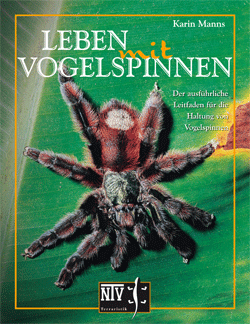
NTV, Life with tarantulas

Article no: CZ-AB10838

CHF 28.50

Stock: 0

Ready for dispatch in 1-3 days, delivery time 14 working days

Delivery between Monday, 7 September and Tuesday, 8 September
Zahlungsarten
Product information "NTV, Life with tarantulas"

NTV, Life with tarantulas

ISBN: 978-3-86659-042-7

Karin Manns

  • 176 pages
  • numerous colour photos
  • Format: 16.8 x 21.8 cm

Contents:

Karin Manns is an animal psychologist and loves tarantulas. She was not deterred by the fact that little is known about diseases of these animals and their treatment, but sought contact with an experienced vet to find out more about this topic. In this book, she not only describes some revealing case studies of successful treatments and the methods used, but also shares very personal experiences of keeping tarantulas together and considers whether distinguishing between "aggressive" and "less aggressive" species makes sense. 
Life with tarantulas – intense and very close to the animal!

  • Foreword and acknowledgements
  • The tarantula as a pet
  • Keeping and care
  • Breeding tarantulas
  • Species portraits
  • Morphology and anatomy
  • Morphology
  • Anatomy
  • Diseases and treatment options in tarantulas
  • Bacterial diseases: cause, diagnosis, treatment
  • Case studies
  • Neurotoxic diseases: cause, diagnosis, treatment
  • Metabolic diseases: cause, diagnosis, treatment
  • Fungal diseases: cause, diagnosis, treatment
  • Further risks for our tarantulas
  • Injuries
  • Moulting problems
  • Motor disorders
  • “Tarantula cancer”
  • Nematodes
  • Moulting delay
  • Apathy
  • Cessation of venom production
  • Deformation of the limbs and body structure
  • Anus closure
  • Administration of medication
  • Social behaviour in tarantulas
  • Coexistence of two males Avicularia avicularia
  • Coexistence of a female and a male Avicularia avicularia
  • Joint rearing and keeping of Avicularia metallica
  • Inter-species communal housing of tarantulas of the genus Avicularia
  • Joint rearing and care ofPoecilotheria regalis
  • Joint rearing and keeping ofPoecilotheria ornata
  • Summary
  • Aggressive vs. tame tarantulas: a meaningful distinction?
  • Case study: Pterinochilus murinus
  • Closing words
  • References

Press reviews

Karin Manns is an animal psychologist and loves tarantulas. She was not deterred by the fact that little is known about the diseases of these animals and their treatment, but sought contact with an experienced vet to find out more about this topic. Species portraits and a chapter on social behaviour round off this fascinating book.

Zoologischer Zentral Anzeiger 2/2009

Composition
Feeding recommendation
Technical details
Size information

0 of 0 reviews

Give us a rating!

Share your experience with the product with other customers.


Suggested products

Handbook of food plants for tortoises and other reptiles
Handbook of forage plants 2nd revised editionMarion Minch is not only a successful breeder of diverse tortoises for many years, but also an excellent connoisseur of native wild herbs. She founded and runs samenkiste.de, which is well known to many tortoise keepers and nature lovers. Her name is inextricably linked with reptile care and species-appropriate nutrition for tortoises. Her handbook of food plants summarises the most important native food plants for herbivorous and omnivorous reptiles. She not only considers tortoises, but also iguanas, spiny-tailed dragons and even chameleons. From the basics of plant biology to native wild herbs to suitable food plants for hardy tropical reptile species, this comprehensive work provides the basis for species-appropriate keeping. In the expanded and supplemented 2nd edition, the plant section is divided according to flower colour. This makes it even easier to identify wild herbs. The work has also been supplemented with a wealth of additional information and many pictures.

CHF 46.50

Geckos
Geckos in the terrarium by Astrid FalkThe book offers a comprehensive introduction to geckos and their species-appropriate keeping in terrariums. It explains what you need to think about before buying a gecko and what preparations should be made. The book describes in detail how the terrarium is technically equipped and set up. The care of the animals, their special features and behaviour, their diet, reproduction and rearing of young animals are described, as well as diseases and husbandry problems with tried and tested suggestions for prevention and treatment. Individual gecko species that are particularly suitable for keeping and breeding in terrariums are portrayed in detail in the second part of the book.

CHF 28.50

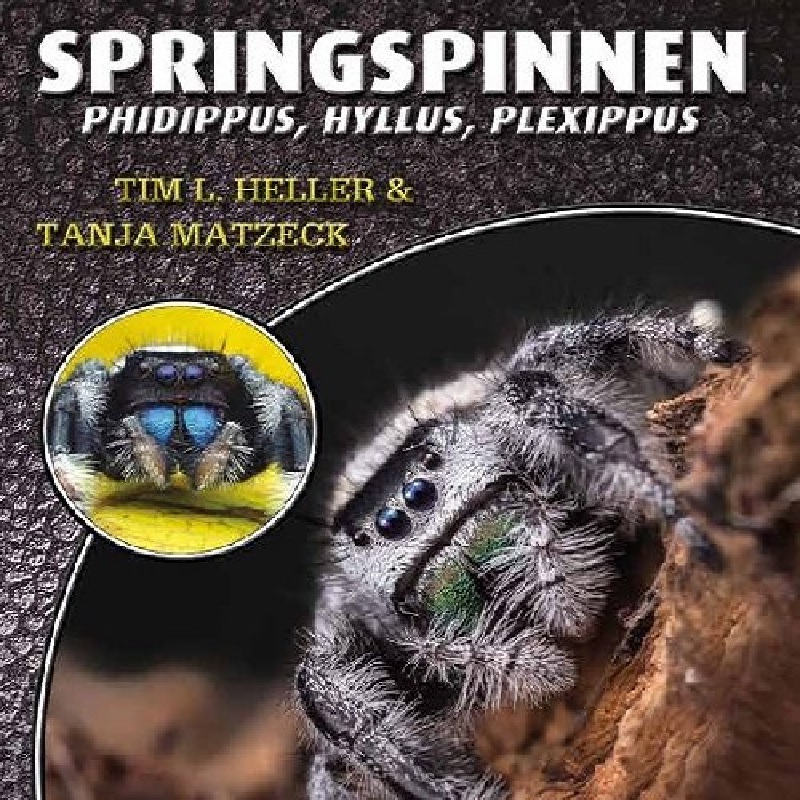
Jumping spiders Phidippus, Hyllus, Plexippus
Book Jumping Spiders - Phidippus, Hyllus & Plexippus A guide to keeping jumping spiders of the genera Phidippus, Hyllus & Plexippus. Who can resist the charm of jumping spiders? The childlike appearance of their expressive face simply leaves no one cold! In addition, their behavior is extremely exciting to observe, their colors are bright and their requirements for species-appropriate keeping are very easy to meet. No wonder these likeable jumpers are all the rage! This volume in the "Species by Species" series describes in detail what to look out for when buying and keeping them, introduces the most commonly kept species and color forms and provides plenty of tips on how to keep them successfully - so you can be sure they will breed well! Species by Species introduces you to the books in this series, which present the most popular terrarium animals. Each volume offers you detailed, practical care instructions and all the information you need to successfully breed your animals. All important questions from the required tank size to terrarium set-up, technical equipment, species-appropriate nutrition and disease prevention are answered with numerous tricks and tips. Experienced, long-standing breeders reveal how you can encourage the animals to reproduce and raise healthy young. All this in full color, generously illustrated and attractively designed - just about your terrarium animal - species by species

CHF 23.90

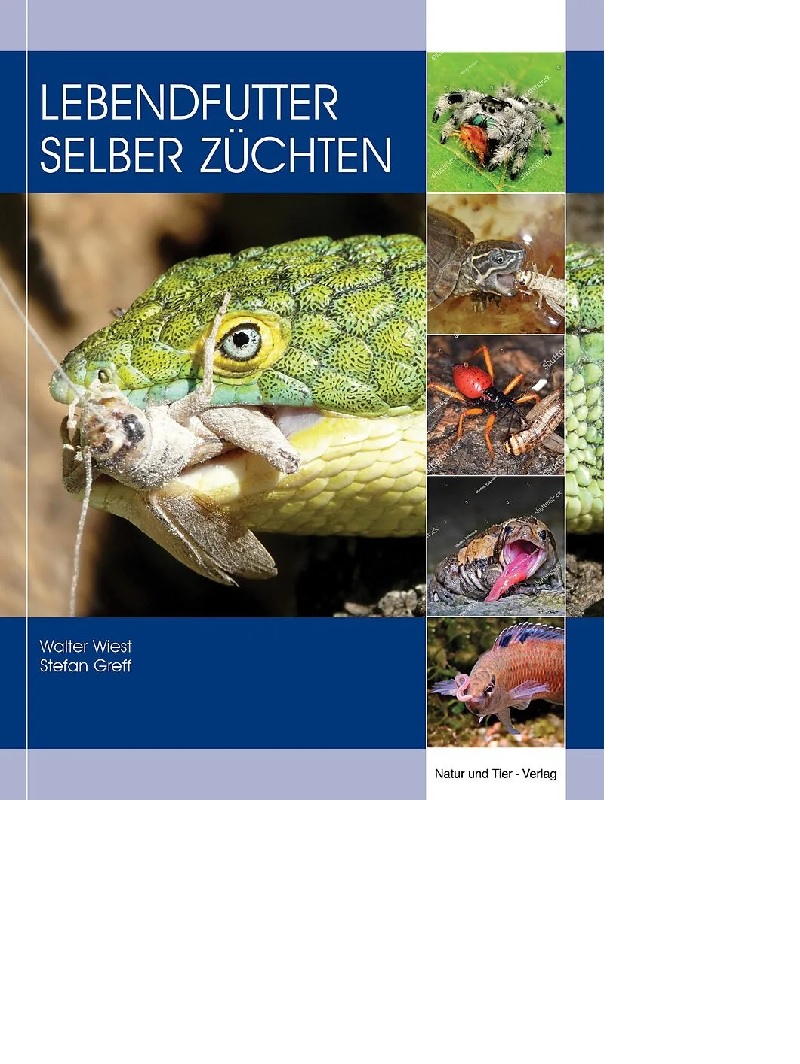
Book Breeding live food yourself
Book "Grow your own live food" - The perfect guide for pet owners Discover practical and detailed instructions on how you can easily breed food for your reptiles, birds, fish or other animals yourself in the book "Breeding live food yourself". With valuable tips on various food insects, their care and breeding, you can save money and ensure a species-appropriate diet for your pets. Contents of the book: Step-by-step instructions for breeding feeder insects Information on the best types of food for reptiles, birds and fish Care instructions and breeding conditions for various live food species Tips for sustainable and cost-effective food production Why breed your own live food? Get healthy, fresh food for your animals Save money and reduce dependence on pet shops Promote the health and well-being of your animals with species-appropriate food Whether you are a beginner or an experienced pet owner, this book provides you with everything you need to successfully breed live food yourself.

CHF 46.50

Marginata 69 - New Guinea tortoises
Marginata 69 - New Guinea tortoises – the genus ElseyaCover storyThe unrecognised beauties: New Guinea tortoises (Andreas S. Hennig)My experiences with Branderhorst's New Guinea tortoise, Elseya (Elseya) branderhorsti (Ouwens, 1914) (Andreas S. Hennig)Keeping and breeding of Rhodin's New Guinea tortoise, Elseya (Hanwarachelys) rhodini Thomson, Amepou, Anamiato & Georges, 2015 (Andreas S. Hennig)PortraitGeoemyda spengleri, Chinese serrated tortoise (Andreas S. Hennig)ReportageMacrochelys temminckii – Experiences and impressions with vulture tortoises part 2 (Reiner Praschag)KeepingAn alternative to year-round keeping of the Egyptian tortoise in the terrarium – my experiences with seasonal outdoor keeping of Testudo kleinmanni (Ricarda Schramm)EtymologySawbacks and living maps part 4: Graptemys gibbonsi, Pascagoula humpback tortoise (Holger Vetter)Classifieds & animal placement

CHF 16.50

Bede your hobby chameleons
Bede - Your Hobby Chameleons Rolf Müller and Ulrike Walbröl have been successfully breeding chameleons for years. As members of the DGHT’s Chameleon Working Group and contact persons for the Chameleon Hotline, they are thoroughly familiar with the problems faced by beginners in chameleon keeping. Here, they have brought together their knowledge and experience for the first time and, in collaboration with Dominik Kieselbach, have created a book for beginners unlike any other previously available on the German market.

CHF 23.50

The yellow-bellied slider
The yellow-cheeked tortoise is one of the most popular tortoises among young and old. 64 pages 14.8 x 21 cm numerous colour photos Author Andreas S. Hennig Contents: Hardly any other turtle species is as popular with young and old as the yellow-cheeked tortoise. And rightly so, as it is a beautifully coloured species with interesting behaviour that can also be recommended to beginners. Experienced tortoise keeper Andreas S. Hennig will give you lots of tips and tricks on how to keep and feed this attractive species correctly from the outset. Of course, you will also learn how to breed your turtles, hatch the eggs and raise the adorable young. Systematics and body structure The fascinating biology: From the life of the yellow-cheeked tortoise All information on species-appropriate keeping: from suitable terrariums to equipment and technology to feeding Successful breeding: Mating stimulation, incubation of the eggs and rearing the young Solutions to problems: How to avoid the most common mistakes in care and how to help sick animals Brilliant photos

CHF 11.90

Reptilia 101 - Outdoor terrariums
Reptilia 101 - Outdoor terrariums Planting of poison dart frog terrariumsSouth American tarantulasTravelling through the USA in a motorhome Contents: Many terrarium animals flourish in natural sunlight and fresh air. Keeping them outdoors, even if only for a few weeks in summer, is good for almost all of our reptiles. However, many species can also live outside all year round.REPTILIA presents the most beautiful outdoor enclosures, documents the construction of two different terrariums as examples and deals with keeping lizards in the garden. EDITORIALMAGAZINEDATES PHOTOREPORTAGELet's get out! The fascination of outdoor terrariumsMartin Hallmen HOLDINGOutdoor keeping of pearl lizardsIngo Kober TERRARIUM PRACTICEUp close to the little adders - building a raised terrarium in the garden and first experiencesH. Kreyerhoff TERRARIUM PRACTICEFear of loss - the protection of outdoor enclosures for tortoisesMichael Wirth KEEPING AND BREEDINGUnusual South American tarantulas of the genus EphebopusKarin Manns TERRARIUM PRACTICEJewels in stainless steel Building a terrarium for poison dart frogs Part 2: PlantingMichael Schulte Animals of our homelandThe yellow-bellied toadRolf Leptien LIBRARYTIPS AND TRICKS WESTERN HERP PERSPECTIVESBoa fantasiesBill Love ServiceALSO NEAR YOU JourneyBest of Southwest. Travelling with the family in search of reptiles. A small travel guide through the south-west of the USAHeiko Werning PREVIEW BRUTKASTENProblem discussionJörg Hofmann

CHF 12.00

Reptilia 93 - Terraristics in the crossfire
Reptilia 93 - Terraristics in the crossfire Dreistreifen-BlattsteigerTürkis-ZwerggeckoRotschwanzboa Inhalt: EDITORIALLESERBRIEFENACHSCHLAGMAGAZINTERMINEIN 5 JAHREN UM DIE WELT Meine zweite herpetologische Exkursion: Lateinamerika A. PachmannWESTERN HERP PERSPECTIVES Total cool: Winterherping B. LoveFOTOSTORY Terraristik im Kreuzfeuer. Ein Hobby in der Kritik K. KunzInterview „Denen ist jedes Mittel recht!“ K. KunzREPORTAGE„Wir sind im Ausnahmezustand!“. Der Kölner Schmuggelfall K. KunzHerpetofauna Der Türkis-Zwerggecko. Ein Juwel vor dem Aus? H. SchneiderHALTUNG UND NACHZUCHTBoa constrictor constrictor. Haltung und Nachzucht der RotschwanzboaM. BorerHerpetofaunaAuf dem Weg ins All. Die Welt der Buchstaben-Schmuckschildkröte, Trachemys scripta Teil 3: Die Gelbwangen-Schmuckschildkröte, Trachemys scripta scripta A. S. HennigHaltung und Vermehrung Der Dreistreifen-Blattsteiger, Epipedobates anthonyi. Der trillernde Guppy unter den Pfeilgiftfröschen U. DostTiere unserer Heimat Der Moorfrosch R. LeptienBibliothekABO & SERVICETipps & TricksTestlaufAUCH IN IHRER NÄHEReiseSüdamerikas „Big One“ – Auf Anakondasuche in der unberührten Wildnis von GuyanaL. DirksenVORSCHAUBRUTKASTENDas Chamäleon-GebetB. Trapp  

CHF 12.00

Draco 34 - The global amphibian crisis
Draco 34 - The global amphibian crisis Contents: 2 Editorial4 The global amphibian crisis by Axel Kwet & Stefan Lötters 18 Of zoos and frogs by Peter Dollinger 22 Batrachochytrium dendrobatidis – a small fungus causes big problems by Dr med vet Frank Mutschmann 28 The case of Atelopus – extinction at a high level by Stefan Lötters 31 The threat status of anurans in Peru by Edgar Lehr & Andreas Schlüter 37 Dangerous guests – The role of invasive species in global amphibian decline by Ivan Arinin 46 Climate change as a catalyst for the amphibian decline by Dennis Rödder & Wolfgang Böhme 52 Afrotropical amphibians: far from conservation breeding by Stefan Lötters 55 African anurans: unexplored and highly endangered? by Mark-Oliver Rödel 62 Amphibian decline in Canada and the USA by Andreas Nöllert 70 Project “Mountain Chicken” – the Antillean bullfrog (Leptodactylus fallax) by Gerardo Garcia 80 Chytrid in snouted frogs – news from the REPTILIA project by Mirco Solé, Johara Bourke & Heiko Werning 87 The contribution of Cologne Zoo to the Amphibian Ark: breeding projects, research and educational work for the conservation of amphibians by Thomas Ziegler & Theo Pagel

CHF 18.40

Marginata 13 - False map turtles
Marginata 13 - False map turtles Food plants for aquatic turtles 1The power of scentsKyrgyz four-toed tortoise Contents: 2 EDITORIAL 3 READER LETTERS 4 MAGAZINE 8 DATES 10 REPORTAGE False map turtles – colourful and easy-to-keep humpback turtles Hans - Dieter Philippen 16 BREEDING IN HUMAN CARE Keeping and breeding the false map turtle Siegbert Schulz 24 BREEDING IN HUMAN CARE The Mississippi humpback turtle in human care Elmar Meier 31 PORTRAIT South African beaked tortoise Erica Staelenberg & Hans - Dieter Philippen 35 REPORTAGE Food plants for aquatic turtles (Part I) Susanne Vogel 40 REPORTAGE The language of scents: European pond turtles use water-soluble messengers Jens R. Poschadel & Martin Plath 48 REPORTAGE Hope for the four-toed steppe tortoise Valentina Ismailovna Toropova, Thorsten Harder & Heike Finke 51 SHORT REPORT Discovery of an unusually marked brown tortoise on the island of Sumatra Elva Gemita 52 REPORTAGE Distribution of Cuora pani aurocapitata Part 1 Torsten Blanck & Tanja Kremser 57 SHORT REPORT The slider turtle issue Thomas Türbl, Markus Baur, Rudolf Hoffmann, Tobias Friz, Sabine Öfner & Friederike Weinzierl 60 BOOK TIP 61 CLASSIFIED ADS 62 REGIONAL GUIDE

CHF 14.70

Turtle Library 4 - European Pond Turtle
European Pond Turtle - Emys orbicularis Turtle Library 4 This book covers everything from tried-and-tested advice on successful breeding to a scientific overview of current populations in the countries where they are found. The book includes a short article on the following countries and regions: North Africa (Morocco, Algeria, Tunisia); the Iberian Peninsula (including the Balearic Islands); France (including Corsica); the Benelux countries; Switzerland; Germany; Italy (including Sicily and Sardinia);  Denmark; Austria; Czech Republic; Slovenia, Poland; Hungary; Slovakia; Albania; Greece; Romania; Lithuania; Latvia; Bulgaria; Ukraine; Belarus; Turkey; Russia and the Caucasus region.

CHF 46.90