Handbook of forage plants 2nd revised editionMarion Minch is not only a successful breeder of diverse tortoises for many years, but also an excellent connoisseur of native wild herbs. She founded and runs samenkiste.de, which is well known to many tortoise keepers and nature lovers. Her name is inextricably linked with reptile care and species-appropriate nutrition for tortoises. Her handbook of food plants summarises the most important native food plants for herbivorous and omnivorous reptiles. She not only considers tortoises, but also iguanas, spiny-tailed dragons and even chameleons. From the basics of plant biology to native wild herbs to suitable food plants for hardy tropical reptile species, this comprehensive work provides the basis for species-appropriate keeping. In the expanded and supplemented 2nd edition, the plant section is divided according to flower colour. This makes it even easier to identify wild herbs. The work has also been supplemented with a wealth of additional information and many pictures.
Geckos in the terrarium by Astrid FalkThe book offers a comprehensive introduction to geckos and their species-appropriate keeping in terrariums. It explains what you need to think about before buying a gecko and what preparations should be made. The book describes in detail how the terrarium is technically equipped and set up. The care of the animals, their special features and behaviour, their diet, reproduction and rearing of young animals are described, as well as diseases and husbandry problems with tried and tested suggestions for prevention and treatment. Individual gecko species that are particularly suitable for keeping and breeding in terrariums are portrayed in detail in the second part of the book.
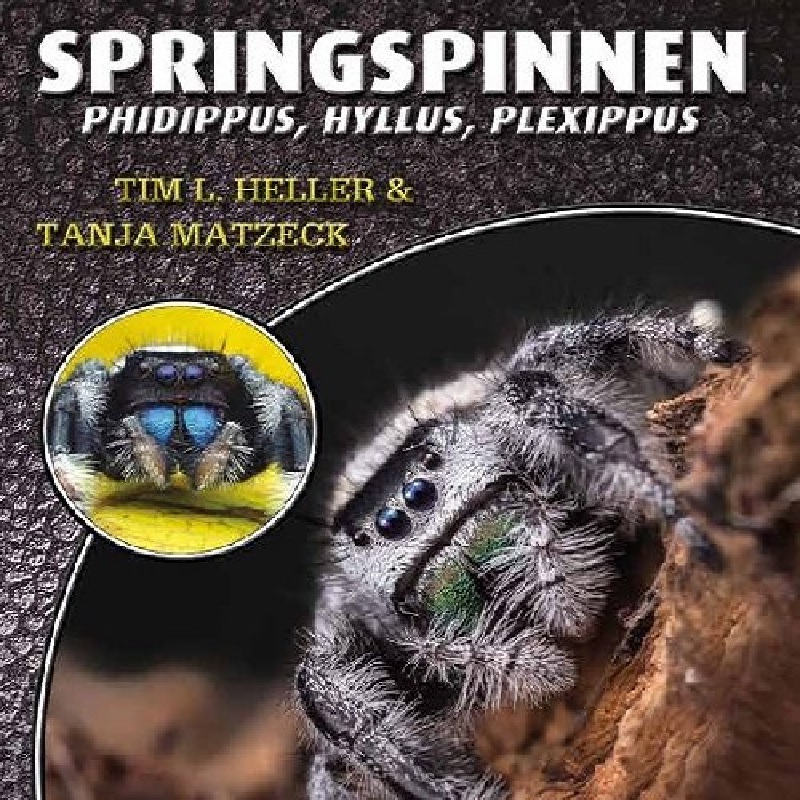
Book Jumping Spiders -
Phidippus, Hyllus & Plexippus
A guide to keeping jumping spiders of the genera Phidippus, Hyllus & Plexippus. Who can resist the charm of jumping spiders? The childlike appearance of their expressive face simply leaves no one cold! In addition, their behavior is extremely exciting to observe, their colors are bright and their requirements for species-appropriate keeping are very easy to meet. No wonder these likeable jumpers are all the rage!
This volume in the "Species by Species" series describes in detail what to look out for when buying and keeping them, introduces the most commonly kept species and color forms and provides plenty of tips on how to keep them successfully - so you can be sure they will breed well!
Species by Species introduces you to the books in this series, which present the most popular terrarium animals. Each volume offers you detailed, practical care instructions and all the information you need to successfully breed your animals.
All important questions from the required tank size to terrarium set-up, technical equipment, species-appropriate nutrition and disease prevention are answered with numerous tricks and tips.
Experienced, long-standing breeders reveal how you can encourage the animals to reproduce and raise healthy young.
All this in full color, generously illustrated and attractively designed - just about your terrarium animal - species by species
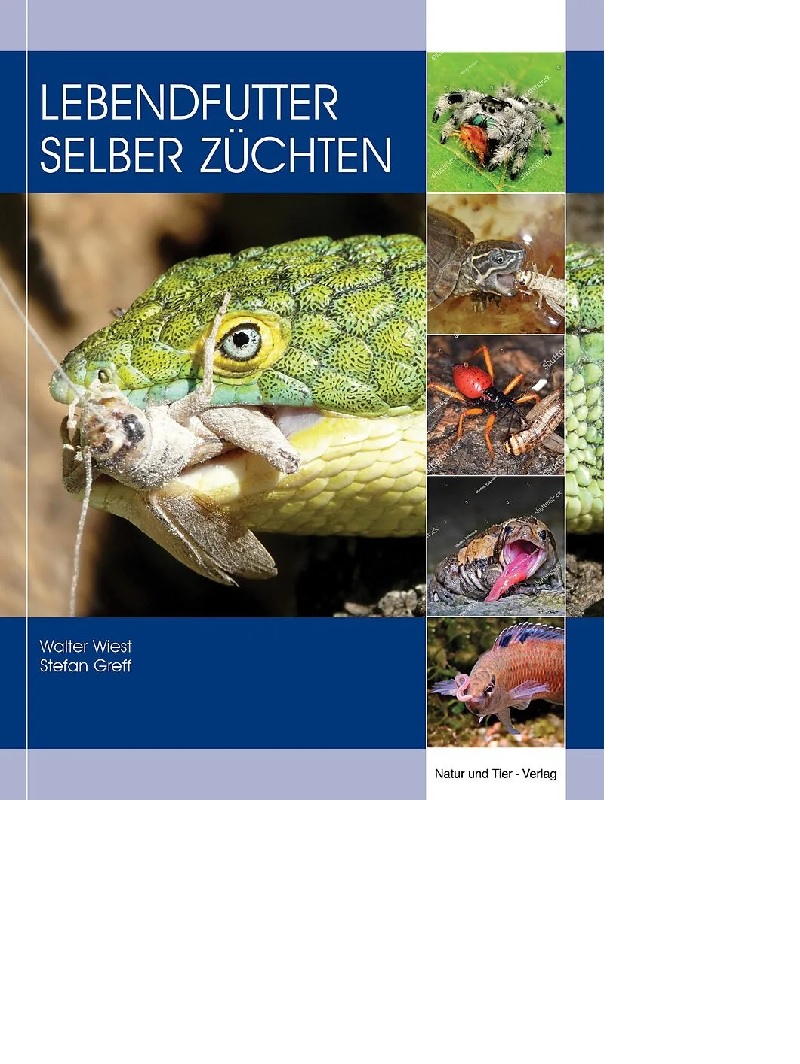
Book "Grow your own live food" - The perfect guide for pet owners
Discover practical and detailed instructions on how you can easily breed food for your reptiles, birds, fish or other animals yourself in the book "Breeding live food yourself". With valuable tips on various food insects, their care and breeding, you can save money and ensure a species-appropriate diet for your pets.
Contents of the book:
Step-by-step instructions for breeding feeder insects
Information on the best types of food for reptiles, birds and fish
Care instructions and breeding conditions for various live food species
Tips for sustainable and cost-effective food production
Why breed your own live food?
Get healthy, fresh food for your animals
Save money and reduce dependence on pet shops
Promote the health and well-being of your animals with species-appropriate food
Whether you are a beginner or an experienced pet owner, this book provides you with everything you need to successfully breed live food yourself.
Marginata 69 - New Guinea tortoises – the genus ElseyaCover storyThe unrecognised beauties: New Guinea tortoises (Andreas S. Hennig)My experiences with Branderhorst's New Guinea tortoise, Elseya (Elseya) branderhorsti (Ouwens, 1914) (Andreas S. Hennig)Keeping and breeding of Rhodin's New Guinea tortoise, Elseya (Hanwarachelys) rhodini Thomson, Amepou, Anamiato & Georges, 2015 (Andreas S. Hennig)PortraitGeoemyda spengleri, Chinese serrated tortoise (Andreas S. Hennig)ReportageMacrochelys temminckii – Experiences and impressions with vulture tortoises part 2 (Reiner Praschag)KeepingAn alternative to year-round keeping of the Egyptian tortoise in the terrarium – my experiences with seasonal outdoor keeping of Testudo kleinmanni (Ricarda Schramm)EtymologySawbacks and living maps part 4: Graptemys gibbonsi, Pascagoula humpback tortoise (Holger Vetter)Classifieds & animal placement
All about the fascinating steppe turtles
64 Seiten
14,8 x 21 cm
zahlreiche Farbfotos
Autor Thomas Wilms
Inhalt:
Schildkröten sind die Sympathieträger unter den Reptilien. Urtümliches Äusseres gepaart mit liebenswertem Wesen und sprichwörtlicher Gemütlichkeit machen sie bei allen Altersgruppen beliebt. Die Steppenschildkröte bildet da keine Ausnahme, ganz im Gegenteil: Ihr „handliches“ Format und die einfach zu erfüllenden Haltungsanforderungen machen sie zu einem äusserst geeigneten Terrarientier. Thomas Wilms, DRACO-Redakteur und Leiter des „Reptiliums“, schildert aus seiner langjährigen erfolgreichen Haltungspraxis sämtliche Aspekte rund um Haltung und Pflege dieser attraktiven Schildkröten. Ausserdem lesen Sie, wie Sie Ihre Tiere zur Paarung stimulieren, die Eier ausbrüten und die niedlichen Jungen aufziehen können.
Systematik und Körperbau
Die faszinierende Biologie: Aus dem Leben der Steppenschildkröte
Alle Informationen zur artgerechten Haltung: Vom geeigneten Terrarium über Einrichtung und Technik bis hin zur Fütterung
Erfolgreich nachzüchten: Paarungsstimulation, Inkubation der Eier und Aufzucht der Jungtiere
Problemlösungen: Wie man die häufigsten Fehler bei der Pflege vermeidet, und wie man kranken Tieren helfen kann
Brillante Fotos
Marginata 41 - Steppe tortoisesKeeping and breeding big-headed tortoises part 3Wintering of Mediterranean tortoisesForest tortoise breeding at Dortmund ZooContents:EditorialMagazineDatesPHOTOSTORYNews about steppe tortoisesHans - Dieter PhilippenKEEPING AND BREEDINGKeeping and breeding of the steppe tortoise in the Alpine regionWilli HoferBREEDINGNature-identical carapace proportions and shapes in the breeding of steppe tortoisesPetr Velensky & Natasha VelenskaHOLDINGWintering of steppe tortoises and European tortoisesThorsten GeierPORTRAITChinese three-keeled turtle. Chinemys[Mauremys] reevesii (Grey, 1831)Hans - Dieter PhilippenBREEDINGBig-headed tortoises in nature and human care. Part 3Reiner PraschagBREEDINGKeeping and breeding the red-headed box turtle (Podocnemis erythrocephala) Part 2David DrajeskeKEEPING AND BREEDINGBreeding of forest tortoises at Dortmund ZooSimone Karlowski & Stephanie ZechREPORTAGEThe European Studbook Foundation: off to new shores!Henk ZwartepoorteREPORTAGESurprising observation of charcoal tortoisesSusanne VogelBook tipSubscription & ServiceRegional guide
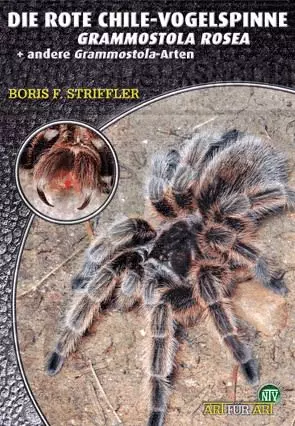
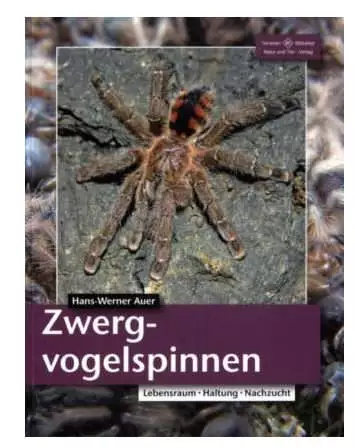
NTV - Dwarf tarantulas all about keeping and caring for these amazing tiny creatures.
160 pages
179 photos
Paperback
Publication date 24.06.2011
1st edition
Author Hans-Werner Auer
Anyone interested in dwarf tarantulas, i.e. very small species, has hit the jackpot: These tiny creatures include some of the most exciting, spectacular and colourful species of all!What's more, spider lovers can keep and observe a large number of different tree and ground dwellers in a very small space. And this hobby never gets boring anyway, as new, wonderful species are constantly being discovered and introduced to terraristics.
Reptilia 49 - Food animal breedingScorpion crust lizardSpotted pythonChinese mountain dragonContents:
2 EDITORIAL
4 READER LETTERS
5 MAGAZINE
14 DATES
18 WESTERN HERP PERSPECTIVESHurricane Sale in Floridaby B. Love
20 PHOTO REPORTAGE Breeding food animals yourself - a problem?by F. Bruse & H. Werning
27 REPORTAGEEfficient and productive cricket breeding
by F. Bruse
33 REPORTAGEBreeding the chocolate cockroach (Shellfordella tartara)
by F. Bruse
36 REPORTAGEA simple Drosophila breeding project
by F. Bruse
40 HERPETOFAUNANotes on the Motagua lizard (Cnemidophorus motaguae)
by U. Schlüter
43 TRAVELHerpetological observations and more from Gambia
by U. Thieme
51 PORTRAIT AND POSTERGeoclemys hamiltoniby H. - D. Philippen
56 KEEPING AND BREEDINGKeeping and Breeding the Chinese Mountain Agame (Japalura splendida) by H. Schradin
68 HERPETOFAUNADendrobates pumilioThe strawberry frog on the Bocas Islands by B. Schwarz
72 KEEPING AND BREEDING The black Mexican chain snake (Lampropeltis getula nigrita in the terrariumby M. Thums
79 REPORTAGEAntaresia maculosa (PETERS, 1873)Spotted pythonby D. Hasselberg
85 CLASSIFIED ADS
90 RAT & TAT
93 LIBRARY
104 GLOSSESIn search of Uracentron azureumPart 1by H. Werning
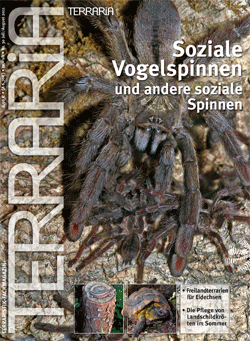
Terraria No. 30 - Social bird spiders and other social spiders
Freilandterrarien für EidechsenDie Pflege von Landschildkröten im Sommer
Inhalt:
Etliche Vertreter der Vogelspinnen lassen sich im Terrarium in Gruppen halten, beispielsweise Poecilotheria-Arten oder Holothele incei. Die Pflege einer solchen Spinnengemeinschaft zählt zum Faszinierendsten, was man in der Wirbellosenterraristik erleben kann. Boris F. STRIFFLER stellt nicht nur sämtliche Vogelspinnen vor, die für eine solche Haltung infrage kommen, sondern geht außerdem auch auf weitere soziale Spinnen ein – selbst auf solche, die direkt vor unserer Haustür leben! EditorialKriton KunzMagazinGondwanaland – ein zukunftsweisendes Projekt im Zoo Leipzig. Teil 4: Die Eröffnung der Tropenerlebniswelt / Revision der Familie Cordylidae / Marktplatz / Rechtliches / Wie kommt das Gift in die Beute?TERRAglobalIn der Bergwelt der Inka Maik DobieyTitelthemaSoziale Vogelspinnen und andere soziale SpinnenBoris F. StrifflerSoziale Spinnen – ein Widerspruch in sich?Boris F. StrifflerSoziale Vogelspinnen? Beispiele aus Amerika Boris F. Striffler, Frank Schneider und Ingo WendtDas Schildkrötenjahr. Freilandbiologie und Haltung europäischer Landschildkröten über den Jahreslauf Teil 3: Juli bis August – SommerhitzeMichael WirthDie Gattung Nerodia. Wassernattern aus Nordamerika: Lebensweise sowie Haltung und Vermehrung im Terrarium Teil 1 Dieter SchmidtEidechsen im Freilandterrarium Martin DieckmannReise Auf Amphibien- und Reptiliensuche in der Umgebung von Iquitos: Ranitomeya reticulata im Wald von Llanchama Mario KassatNeue Arten Ein psychedelischer Gecko Axel Kwet Neuer Pfeilgiftfrosch aus Brasilien Axel KwetAbo & ServiceUnter Forschern Der Weg ist das Ziel – oder: Wie man sich eine Diplomarbeit selbst organisiertStephan BöhmBlickfang Terrarianernostalgie und tropischer Regenwald in Reutlingen – ein Besuch bei Florian Riedel Michael WirthIn Ihrer Nähe Vorschau Brutkasten Schlimme Nächte: Guayaquil Teil 2: Wir Kleinlaut-Touristen Heiko Werning
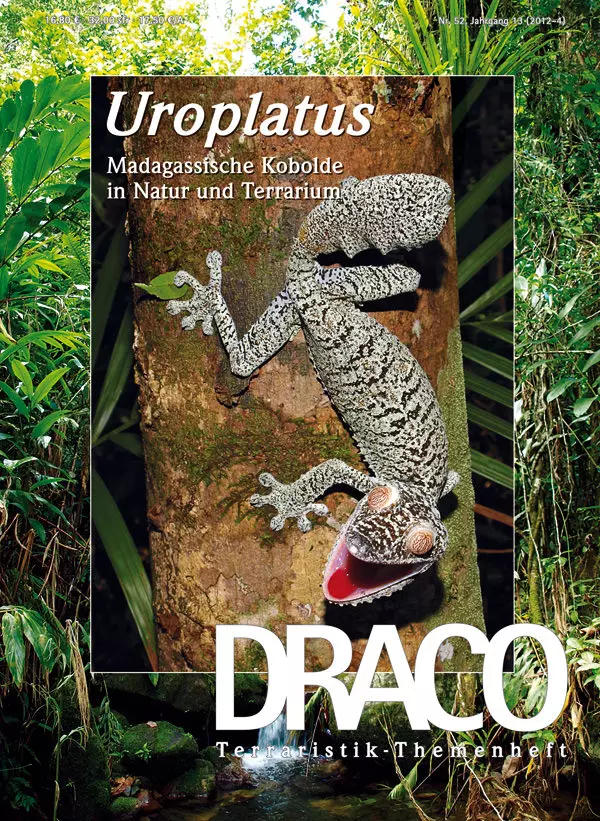
Draco 52 Magazine
Uroplatus Madagascan Goblins in Nature & Terrarium
Contents:
EditorialSoul-stealers with adhesive lamellae – Madagascan flat-tailed geckos of the genus UroplatusPhilip-Sebastian GehringIn search of flat-tailed geckos in MadagascarPhilip-Sebastian Gehring & Patrick SchöneckerBiology, husbandry and long-term breeding of Uroplatus guentheri Mocquard, 1980 up to the fourth filial generationPatrick Schönecker A ghost in the terrarium – the successful keeping and breeding of Uroplatus phantasticus (Boulenger, 1888)Kai-Uwe Volta & Philipp Höhne Experiences in the keeping and breeding of the lichen flat-tailed gecko (Uroplatus sikorae Boettger, 1913)Philip-Sebastian Gehring Natural treasures of Madagascar: Flat-tailed geckos and their protectionFanomezana Ratsoavina and Philip-Sebastian Gehring Experiences with keeping flat-tailed geckos (Uroplatus fimbriatus) in the Masoala rainforest at Zurich Zoo, SwitzerlandSamuel Furrer
Reptilia 52 - Maci frogs
Wrath snakesSnake processionFishing spiders
Contents:
2 EDITORIAL
6 MAGAZINE
16 DATES
20 PHOTO REPORTAGE The fairies of the forestThe Maci frogs of the genus Phyllomedusaby E. Biggi
31 HERPETOFAUNAThe Brazilian Maci frog Phyllomedusa burmeisteri
by J. Bertoluci, P. S. Santos, M. A. S. Canelas & J. Cassimiro
35 KEEPING AND BREEDINGThe breeding of the giant Maci frog, Phyllomedusa bicolor
by S. Soden
41 TRAVELThe emerald lizard forest of CaorleHerpetological observations between Venice and Trieste
by S. Meyer
51 PORTRAIT AND POSTERLeiocephalus carinatusby K. Kunz
56 HERPETOFAUNAThe wrath snakes of North Africa
by U. Schlüter
66 KEEPING AND BREEDINGA pirate's lifeKeeping and breeding the fishing spiders Ancylometes - Part 1 by K. Kunz
72 HERPTOCULTUREThe snake procession of Coculloby M. Meyer
79 REPTILIA ON THE ROADThe South America rainforest house in Krefeld Zooby A. Hauschild
86 LIBRARY
90 CLASSIFIEDS
95 WESTERN HERP PERSPECTIVESA lovely herping placeby B. Love
104 GLOSSSpider webs – spider lifeby H. Werning
CHF 11.20
❅
❆
❅
❆
❅
❆
❅
❆
❅
❆
❅
❆
This website uses cookies to ensure the best experience possible. More information...